Piece on Earth

The news that Manga Entertainment have licensed One Piece for the UK brings one of the last unreleased anime greats to these shores. Its absence has been noticeable for the last decade – One Piece is often the tentpole and keystone of foreign anime fandoms. It’s also the real money-spinner, selling in its millions. Although it’s sure not to go quite as wide in Britain, it will certainly bring in some new fans.

I’m at the end of my four-month exile in China, where Japanese animation is largely absent from the mainstream. Effectively banned from broadcast or sales since 2006, the sole showings in legal Chinese stores are the Studio Ghibli catalogue, which sneaks in via Disney. But pirate shops are loaded with shelves of Japanese material, usually spun off legal releases in Hong Kong or Taiwan. And I keep jumping in surprise on the Beijing metro when adverts leap out of the dark to sell me One Piece… the games.

On the streets of Xi’an, the lower-rent hawkers have taken images from One Piece and Dragon Ball Z, mounted them on plywood and cut them into jigsaws. Manga, however, are largely invisible, since much of modern Chinese teenagers’ entertainment is sourced illegally and digitally – I would need to get into their bedrooms to see if they are reading scanlations, and the police won’t let me. But the widespread visibility of those titles in particular suggests a cultural affinity – Dragon Ball had its distant origins as a retelling of the Chinese legend of the Monkey King, and so, too, did One Piece. In other words, even though they are foreign, they don’t feel that way to the Chinese.

The catch-all Chinese title for this is dongman, literally ‘animation and comics’, although suggestively Japanese animation and comics. Dongman shops are all over China, but many concentrate not on anime and manga themselves, but on gaming spin-offs. It’s the games that seem to lead the way here, encouraging Chinese kids to seek out the originals. But when they find them, there is no way of paying for them legally. And so, the great tale of anime pirates gets pirated.

Jonathan Clements is the author of Schoolgirl Milky Crisis: Adventures in the Anime and Manga Trade. This article first appeared in NEO #109, 2013.

The Left Side of the Beast

Gossip galore in Manga UK’s 17th podcast… or should that be ON our 17th podcast

podcastJeremy Graves and Jerome Mazandarani (with Jonathan Clements of Schoolgirl Milky Crisis joining from the interwebs) are on hand to discuss new releases, upcoming releases, behind-the-scenes gossip, and a whole bunch of topics from Tom Cruise to the Tibet Code in our latest podcast, available to download now.

00:00 Jeremy’s grovelling apology for audio issues that probably only exist in his head.

01:00 Reasons why Jonathan Clements is like Jack Reacher, none of which anyone believes. Jerome’s claim that 1990s fashions are coming back, and celebrations of thirteen years married to Mrs Jerome.

03:20 Horizon in/on the Middle of Nowhere, and translation issues arising. So much anguish over one bloody preposition, leading to cancelled printing runs, recalled designs, and a run-in with the BBFC. The politics of advanced information sheets at film fairs, and the dangers of being the poor sod who has to translate them. The bad old days of the “spotting list”.

17:00 Jerome’s interest in the animated film based on George Akiyama’s Asura.

19:00 And we finally, officially start, with news that Andrew Hewson has sold his mum into white slavery in Marrakesh. Shopping recommendations in Perth for all of our… dozens of Western Australian listeners.

21:00 New releases since our last podcast, including Naruto Shippuden Box Set 12, Mardock Scramble: Second Combustion, Code Geass Season 2, FMA Conqueror Of Shamballa on BD, FMA Movie Double Pack on BD, Oblivion Island, Persona 4 Box 2, Redakai Vol.1, Okami-san & Her Seven Companions, Nura Rise Of The Yokai Clan, Loups=Garous, Fractale, King of Thorn and Tiger & Bunny Vol.2. And a shout-out to HMV, still fighting the bricks-and-mortar corner on a high street hopefully near you.

Redakai-1.jpg25:00 Redakai crops up in Asda, and Halo 4: Forward Unto Dawn, coming out on the 27th May, and Warhammer 40K: Ultramarines coming soon, and Jerome’s man-love for Sean Pertwee.

28:00 Another plug for Supernatural the Anime series, coming from Warners and exclusive to Amazon UK on 27th May.

31:00 Upcoming Manga UK releases 29th April: Fullmetal Alchemist Brotherhood Vol.3 on Bluray; 6th May: Penguin Drum Part 1 on DVD; 13th May: Street Fighter II The Movie on Bluray,; Dragonball Z Season 7, Bleach Complete Series 10 on DVD and the sub-only releases of Black Rock Shooter on DVD; 20th May: K-On! Season 2 Part 1 on DVD, Hellsing Ultimate 5-8 on DVD and Bluray, and an announcement of something else. No, wait, it’s not an announcement. As you were.

cat_planet_cuties.jpg33:00 Cat Planet Cuties delayed till 8th July, because of a subtitling issue, with a bonus explanation of the difference between NTSC and PAL. The pitfalls of screening anime without watching them first, as confessed by Jerome.

38:40 Fullmetal Alchemist Brotherhood Complete Blu-ray box, will now be appearing in a slightly different format, due to matters beyond our control.

44:00 A Ghost in the Shell Stand Alone Complex blu-ray box set – is it possible, and how much would people pay for it? Is £35 too much…?

48:00 Jonathan reports on Dublin’s Japanese Film Festival, and why so many Japanese people turned up to watch the films.

tibet_code_10.jpg53:00 Oriental DreamWorks announces that it’s doing The Tibet Code as its first live-action film in China; we discuss what it is about and why it could be a whole new can of worms regarding author He Ma, and allegations over the casting. Iron Man 3 and Skyfall and their odd Chinese sequences.

63:00 Tom Cruise options Yukikaze; although the anime is not available in the UK, you can order yourself the original novel in English right now!

67:00 Guillermo del Toro options Naoki Urasawa’s Monster.

72:00. Ask Manga UK. A list of titles that listeners would like to see in the UK, and Jerome dodging giving straight answers to a bunch of them.

76:00 What determines which shows get a Blu-ray release? It’s all about commerciability, which is apparently a word.

80:00 What is your favourite special feature on DVDs?

83:00 What’s the chance of seeing Naruto Shippuden Movie 3: The Will of Fire?

84:00 Do you think the time from Japanese air-date to DVD release in English is too slow…?

90:00 And we’re done.

The Podcast is available to download now HERE, or find it and an archive of previous shows at our iTunes page. For a detailed contents listing of previous podcasts, check out our Podcasts page.

The Impossible Dream

summer wars

I realised things had gone wrong when Yoshiyuki Tomino started hitting Takami Akai with a plastic fan. It was at a European event where the organisers had prided themselves on inviting dozens of Japanese guests, but had fatally decided to put them on the same stage. Industry figures, used to holding court at deferent advertorial public events, suddenly shared the limelight with other celebrities, before a clueless crowd that didn’t know its Arslan from its elbow. On this particular day, questions aimed at members of Gainax kept rehashing the studio’s well-rehearsed performance of being fans made good. Anime was all a bit crap, it was agreed, and then those otaku kids came along and made it better, and fan-friendly.

Tomino lost it after about six minutes. I timed him. He grabbed his microphone and scowled at the audience.

“So,” he began in halting English, his teeth bared, “I… am… also… otaku?”

Then the slapping began, as he turned on Akai, the Gainax member closest to him. His point, buried in all the horseplay, was that the people who made Gundam hadn’t sat around declaiming their hatred of anime. They loved it, too. They had fans, too. They had a following and a tribe who dug what they did, and Gainax might have made their work in reaction to it, but otaku, that self-styled group of the world’s greatest anime fans, didn’t actually own the high ground on deciding what anime was.

Tomino was annoyed that his work in the 1970s was being presented as some sort of ossified establishment against which the young kids were railing, when in fact he’d been the one in 1981 standing at the front of a riotous crowd of fanboys, including the youngsters who would go on to set up Gainax, proclaiming the “new anime century”. Meanwhile, Gainax were getting annoyed themselves, at all the questioners who kept on referring to them as if they were snot-nosed punks – the translation “Gainax ragazzi” repeatedly hissing from the headphones of the Italians to either side of me.

“I have been a company executive,” protested Takami Akai, “for TWENTY YEARS.” Both sides were irked at other people co-opting, as an anthropologist would say, the stories they told themselves about themselves, which worked fine in press releases and soundbites, but collapsed under the weight of due diligence. However, it was clear that anime had many tribes, and that some clans of creatives were rarely confronted by the others.

soulIan Condry’s new book, The Soul of Anime, goes in search of that nebulous something, that Tomino supposedly had and lost, and which Gainax supposedly grabbed and hung onto. What is it that makes Japanese animation different? And by association, successful? The best answer to this question has been offered by the director Peter Chung, in numerous lectures and in an interview for Condry’s book, although it is most accessible in a forum post from 2007. Chung offers a series of important, technical-determinist suggestions as to why anime looks and works the way it does. Nobody has really been able to top Chung’s assessment, but Condry tries a different tack by focussing on how creators consider their implied audience, and what the audience (or people who claim to be that audience) do with the works they get from the creators.

In the hands of the worst kind of cultural theorist, this could have all too quickly turned into a book about nothing, denying all creativity in favour of tedious weaboo self-regard. But Condry is true to his role as a cultural anthropologist, creeping Attenborough-like through the jungles of the anime industry, observing the animators as they pick lice from their fur and fling faeces at each other. He witnesses Mamoru Hosoda pitching the storyboards for Summer Wars, and shadows Kou Matsuo in a variety of meetings on the story, look, script, audio and artwork for Red Garden. Condry’s fieldwork seems to have been largely undertaken in 2006, at the very peak of the anime industry’s output, mere months before loans were called in, crates of DVDs were returned, and the early noughties gravy train came tumbling off the rails. For that alone, it’s a valuable snapshot of a precious, halcyon moment, when Gonzo staffers rubbed their chins and talked of expanding into China, and Bandai technicians drank coffee through the night trying to work out why the hell Pokémon had worked.

imagesIn searching for “the soul of anime”, Condry has set himself a grandly impossible task, not the least because nobody knows what a “soul” is, and the jury’s frankly still out on the slippery and polysemic nature of “anime”. Condry engages with some of the tribes of the anime world, and allows them to tell some of their stories, allowing his definition of anime to embrace everything from an Oscar-winning feature to a TV series that nobody can remember. It will come as no surprise to readers of this blog that I wish he had devoted more space to the actual creators, or other nooks and crannies of the industry, rather than two chapters spent wallowing in the shallow waters of fandom. But part of Condry’s argument is that the fans are also creators.

Is fandom a crucial element to understanding modern anime? Yes, undoubtedly. But for every good work on fandom studies, there are a hundred pointless navel-gazing articles about what someone did during their vacation, people who dress up as elves and call it research, and interviews selected from a population comprising the next table at a convention bar. Fortunately, Condry is one of the good guys, and refuses to skimp on the actual hard work, going to Japan, getting his foot in the door at actual studios, and actually doing the legwork, observing the people who actually make anime, actually making it.

gundamCondry’s work uncovers some precious facts and incidental details. His analysis of Gundam’s first season from the perspective of the toy company that failed to capitalise on it, and indeed which regarded Gundam itself as a failure, presents a strong challenge to prevailing historiography. It counters, as it were, the story that the fans tell themselves about themselves, and suggests that, if anything, the Bandai toy conglomerate saw the otaku revolution coming two years before the otaku did.

Condry outlines a modern industry where producers grimly concoct half a dozen cookie-cutter characters designed to sell mascot toys, and then pull a story out of thin air that vaguely gives them something to do. But is that really the “soul” of anime? It sounds to me more like the very poison that is destroying the soul of anime, abrogating authorial responsibility, and dumping half-formed, ill-conceived camp on a dwindling bunch of consumers who may or may not be the audience. Furthermore, if you’ve spent all your money on sequins for your costume and have actually stolen the cartoon you purport to love, then I question whether you’re a “fan” at all.

Not that that refutes Condry’s argument in any way. Much of the solipsistic world of moe, another contender for the “soul” of anime, flourishes because of its very appeal to the one audience that producers know will put their money where their mouth is. The kids might have disappeared in a miasma of fanzines and cosplay parties, but there’s always more money to be wrung from the lonely thirty-something otaku, who’ll pay through the nose for a pillow bearing the image of his imaginary girlfriend. As Condry observed, the animators are usually concerned solely with the Japanese market, and disregard most aspects of foreign appeal. This, in turn, generates a body of work aimed at friendless shut-ins, which then gets dumped on the foreign market as indicative of “cool Japan.”

Of course, not every anime fan is a chump who’ll pay £500 for a box set of Schoolgirl Milky Crisis. Some are I.T. prodigies and cultural bricoleurs who actively appropriate Japanese animation for their own uses. A chapter on fansubbing perceptively refers to it as “dark energy”, matching the similar pronouncements of Ramon Lobato about the need to engage with the contributions of “informal” distributions networks. There is, to be sure, some interesting stuff to be written about informal networks, although discussions of fansubbing can all too often turn into a dreary recounting of the justifications of its practitioners, and a coy avoidance of the real issue, which is not fansubbing at all, but true piracy.

I would much rather have had another couple of pages of Condry interviewing Studio Ghibli’s Toshio Suzuki than more quotes from an Internet spat between a couple of pompous fanboys, but unfortunately one of the phenomenological problems with cultural studies is that everyone gets their say, no matter how ill-informed, because even being wrong makes you part of the conversation. Condry omits what, for me, would be more interesting discussions of “dark energy”, such as the story of the high-profile film festival organiser, left in the lurch by a tardy courier, who secretly decided to screen a fansub for paying customers and hoped that nobody would notice. But Condry has other revelations on hand, and they are awesome, such as the story that that Toei itself, the behemoth of the anime world, is not above giving away an entire season of a series to a foreign TV channel, for free, as a loss-leader against being able to charge for later instalments. Wait till the pro-downloading lobby hears about that! He also includes some handy ammunition to use against those authors who think that anime fandom is one joyous international consensus, quoting from a Japanese author who regards the reaction of American fans to Haruhi Suzumiya as so entirely at odds with the reaction of Japanese fans that they might as well have been watching totally different shows.

I wish there had been a little more cross-cultural comparison. Condry does allude on occasion to Disney and Pixar, not the least in a stinging comment that even lesser American cartoons ran rings around Spirited Away at the American box office. But his plea for a special quality to animation from Japan surely requires a deeper appreciation of how things are done elsewhere. Does he think Brad Bird doesn’t pitch his storyboards at Pixar like Mamoru Hosoda pitched Summer Wars? Does he think that European toy companies don’t knock up their characters first before asking a scriptwriter to bolt a story around them? Three years before Condry uncovered this working method in Japan, I was already doing it in a writers’ room in Slough, working for a well-known Danish company … but in that case, how Japanese is any of this? Has he instead uncovered the soul of a globalised animation business, rather than Japan’s?

redgardencollection1For an anthropologist, Condry sometimes seems surprisingly accepting of whatever presentations of self are paraded before him. He rarely seems to consider the effect that his own presence might have on the performances around him, and occasionally could have benefited from a little cynical distance. That’s not to say he can’t bring the distance when he wants. His brief voice-acting role in Red Garden leads to a rather charming account of the bashful, spluttering academic, roped in for a cameo, and is followed by a smart paragraph on the sense of being stage-struck, and the adrenalin rush of being in the centre of things. Condry offers a spark of true insight into why actors put themselves through what they do, but oddly does not consider the likelihood that the director has planned this all along, and is buttering up the foreign guest by giving him a walk-on.

As the onstage fight between Tomino and Akai should suggest, there is a performative element in the public behaviour of anime figures, which crosses over to the way they treat journalists and academics. Toshio Suzuki, for example, rolls out his usual schtick about Miyazaki the childish creative, while he does all the grown-up business stuff. And sometimes, people are just wrong, and even a nodding, smiling anthropologist ought to say so. Toshio Suzuki offers an assessment of the ratings success of Heidi (1974), which makes for a good story, but it is statistically inaccurate. Three decades after the events described, in an off-hand comment in an interview with an academic, Suzuki seems to misremember the facts, and compounds his error by then interpreting them in a manner that would require 1970s Japan to have three times as many children in it as it did.

So Suzuki mis-spoke – not a big deal; we all do it a dozen times a day. But check the ratings themselves, particularly considering that Space Cruiser Yamato was up against it in the schedules, and you will see that the high audience numbers for Heidi can only have come from adults tuning in alongside their children. This fact renders Suzuki’s own child-focussed analysis meaningless, and although it would actually help Condry make another of his points, it goes unaddressed because he takes what Suzuki says as gospel. But this rare lapse of due diligence should not detract from a welcome book that offers a genuine insider’s view of the anime industry at work, worth a hundred accounts of What Some Fans I Met Think Of Some Anime They’ve Seen. Such was Condry’s quest, to follow that star, no matter how hopeless, no matter how far. More like this, please.

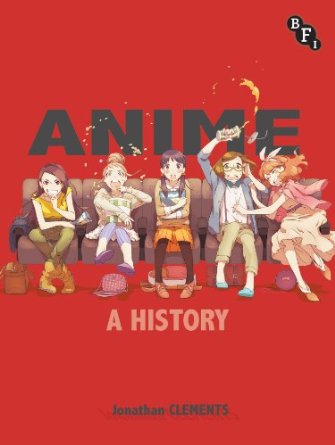
The Soul of Anime is available from Duke University Press in paper and on the Kindle. Jonathan Clements is the author of Anime: A History of Japanese Animation, coming later this year from the British Film Institute.

Sinners and Winners

News just in from the United States reveals that errors on the subtitles for the bespoke Garden of Sinners release have caused Aniplex USA to issue replacement discs for one of the DVDs.

There has been a round of exasperated tutting throughout fandom about this, with a recurring comment that if fans are paying the premium price of $190 for a box set, the least the release company can do is check the discs before sending them out. But from the sound of it, the error on Garden of Sinners was a reading glitch that many viewers might have even shrugged off. For those who bought their discs through the Right Stuf, replacements were sent out automatically, meaning in some cases that the discs arrived before fans had had the chance to put the defective original in the player to be shocked in the first place. And yes, mistakes happen, and Aniplex USA have rushed to correct theirs, which is surely better than just sniffing contemptuously and telling their consumers to like it or lump it.

Would that all film companies were as committed to aftercare as Aniplex. It would be nice, for example, if I woke up one morning to discover that had Kiseki mailed me a better quality DVD of Gunbuster and apologised for the piss-poor tape-transfer edition that they originally sold me.

There have been some awful mistakes in anime releases over the years, and many of them have been simply left. In the subtitle world, we’ve had to put up with spelling errors, mis-timings and that popular bugbear of modern fandom, “dubtitles”, when a voice-track rewrite is used to supply a very rough subtitle file, which often doesn’t match the Japanese at all.

What about it, Hollywood? It would be awfully sweet of Ridley Scott if he snuck into my house one night and left a gift-wrapped copy of Prometheus that has a coherent plot. But there’s a slippery slope right there… as film archivists start to argue about whether lighting and colour timing is right even on modern versions of classic movies, we might find ourselves in a situation where hypothetical tinkerers are replacing your discs every other week….

Jonathan Clements is the author of Schoolgirl Milky Crisis: Adventures in the Anime and Manga Trade. This article first appeared in NEO #108, 2013.

Tie Me Up, Tie Me Down

When advertisers and sponsors first became involved in the anime business, it was tentative and haphazard. Masaki Tsuji reports phone early calls arriving at TV Asahi from pencil manufacturers and card companies, who wanted to stick some of the earliest 1960s characters on their merchandise. When he picked up the phone, he realised that, quite by accident, the TV channel completely owned the relevant rights in Eightman. By the time of Sailor Moon, interests in tie-ins had ballooned to such an extent that one beleaguered Bandai official complained he had “literally no time to go to the toilet” when the phone was ringing. Literally…?

But how can sponsors get returns on their investment, apart from advertising in the commercial breaks? There is, of course, simple product placement, where cans of soft drink, storefronts and even blatant advertising billboards are placed in-shot. This is mostly harmless, although if you have a fantasy film like Berserk, it’s difficult to have the cast setting aside their roast dolphin for a Happy Meal. In such cases, extra artwork is often generated, such as the Lotteria tie-up campaign, which featured the powerful mercenary Guts and albino general Griffith tucking into a hamburger and a milkshake. The androgynous Griffith was also depicted with a shopping bag over his shoulder, looking like a Lady Who Lunches, in a campaign for a department store.

But some anime go beyond product placement into context integration – imagine a hypothetical anime movie, let’s call it Schoolgirl Milky Crisis Goes to London, where five minutes are set aside for characters to travel on a well-known airline, and then get mixed up trying to locate their hotel, causing them to repeat its name a dozen times. But this has been going on in anime for decades, most notably with the Gundam series, for which a company wanted its toys to be part of the story. Yoshiyuki Sadamoto once called Yoshiyuki Tomino the “pro’s pro”, for being able to take such behind-the-scenes demands and to fashion them into a story that still entertained the viewers. It’s being able to still be creative, amid such immovable limitations, that contributes to the unique look and style of anime.

Jonathan Clements is the author of Schoolgirl Milky Crisis: Adventures in the Anime and Manga Trade. This article first appeared in NEO #106, 2012.

2012: The Year in Anime Books

Possibly for the last time, we return to my annual round-up of books I have read about the animation industry in Japan. This year I have published several extensive reviews of some of my anime reading, including Marc Steinberg’s Anime’s Media Mix, Nobuyuki Tsugata’s Before the Dawn of TV Anime, Liliane Lurcat’s Alone With Goldorak, and Tobin’s book on the Pokemon phenomenon.

Behind the scenes, I have also been wading away through Japanese-language works on the subject, including two accounts of anime in China, Tomoyuki Aosaka’s Contents Business in China: Fluctuating Markets, Emerging Industry, and Homare Endo’s The New Breed of Chinese ‘Dongman’: Japanese Cartoons and Comics Animate China. Both authors must write in a tense environment, with evidence pointing to a strong potential market for Japanese animation and comics in China, but also to a strong anti-Japanese feeling all over China. It’s a fascinating dichotomy, where there is minimal evidence of anime and manga in Chinese stores, but anecdotal evidence everywhere you look that illegal downloaders and torrenters form a significant silent population. Meanwhile, even though only 35 foreign films are permitted in Chinese cinemas each year, you can guarantee that two of the slots otherwise reserved for Tom Cruise, or James Cameron, or Pixar, or whoever will go to the year’s Conan the Boy Detective film and the year’s One Piece movie. Anime and manga in China are not only on a critical cusp, but have been teetering there for the last decade and could still fall either way.

There was also an account of the life and work of Osamu Dezaki, and another about the achievements of Akiyuki Shinbo, adding welcome detail to the public profiles of two prolific directors. At the edge of the anime field, Yasuo Nagayama published an interesting “occasionalist” history of science fiction in Japan, concentrating not on the texts themselves but on the events that surrounded them. In the wrong hands, this could have all too easily turned into a tedious account of things that happened at conventions, but Nagayama keeps closely to his methodology, discussing not only the fan politics of the Japanese con scene, but also the effects of media fads and scares, and the public performances of popularity every time certain anime break box office records.

A few books disappointed me. A new work that purported to offer an insiders’ view of Sazae-san had nowhere near the detail I was hoping for, and Mitsuhisa Ishikawa’s account of his “revolution” at Production IG lacked the kind of nitty-gritty details that I personally go for. Much more fun was to be had in a series of books about the Japanese animation business, particularly the wonderful Otaku Marketing by the Nomura Research Institute, which offers hard data about the various types of otaku to be found in numerous consumer sectors, and how best to sell them stuff. Another book on the industry, This is the Anime Business, by Makoto Tada offered a run-down of the ten secret “Rules of the Devil” recited at the Dentsu corporation by its loyal minions. They are, apparently, a secret handbook to understanding the way the best animation studios work, too:

Rule 1: Work is something you should create not something that should be given.

Rule 2: Work is something where you take initiative and not something you do passively.

Rule 3: Tackle an important job. A small job will make you small.

Rule 4: Target a difficult job. You can progress by accomplishing it.

Rule 5: Once you tackle, don’t let it go. Hold on like grim death, until you achieve the target.

Rule 6: Drag the people around you. It will be worlds apart between the one who drags and who is dragged in a long term.

Rule 7: Plan. If you have a long-term plan, patience, devices, correct effort and hope will be born.

Rule 8: Have confidence. Without confidence, your work does not have punch or tenacity or even depth.

Rule 9: Use your brain in full all the time. Be always on the alert. Don’t slip your guard. That is what service is.

Rule 10: Don’t be afraid of friction. Friction is the mother of progress and manure of drive. Otherwise you will be obsequious and irresolute.

If it seems like I am reading less anime books than usual this year, it’s because this year saw me come to the end of the long writing process on my doctorate. I handed it in back in July, and the prospect of reading it so terrified my superviser that he ran away to China. As a result, it’s still languishing at the faculty waiting for the committee to get its act together; I didn’t help matters by running for China myself for four months this year, making it a little difficult to turn up for my viva; I shall have to sort out all of that in the new year, or else I shall never be Dr Clements. Meanwhile, the book version, some 60,000 words longer (in fact, as one wag commented, a whole other PhD worth of stuff) makes its way through the peer review process at the British Film Institute. I am just about to deliver the second draft of that, and with any luck you should see the published result – ANIME: A History of the Japanese Animation Industry, published in late 2013. As the name implies it is a massive chronicle of animation in Japan since the year 1909 (yes, 1909, you will have to read it to find out why), based almost entirely on the Japanese-language testimonials of the actual creators, rather than the speculations of foreign pundits. If you are the kind of person who has read this far on this blog, then I think you will like it very much.

Nakama Britannica

The folks over at Nakama Britannica have moved heaven and earth to get their podcast interview with me, Jonathan Clements, out in time for Scotland Loves Anime. If you’re at all interested in the history and direction of the anime industry, there is a lot of information in here, real-world statistics and behind-the-scenes gossip. You can download the podcast here.

0:00 The loss of Schoolgirl Milky Crisis, the great unseen anime, disappeared from the record in an unfortunate boating accident. Scotland Loves Anime — the logistics of getting Japanese guests to Glasgow. And a quick plug for my latest book, the new translation of the Art of War.

10:00 What is anime? Nowhere near as dull a question as it sounds, leading to all sorts of gossip about the battle for anime’s soul between the spirits of Osamu Tezuka and Hayao Miyazaki. Includes the words: “Communists”, “witchhunts” and “crappy”.

20:00 Anime as Soft Power. The size of otakudom. The meaning of TV ratings. How anime form follows function. How much is the anime business worth? Includes the words: “chimpanzee”, “over-engineering” and “popular”.

30:00 What is a silver otaku? The impact of Heidi and Yamato.The phenomenology of fandom and misremembering Evangelion and Gundam. The influence of Tadao Nagahama and Yoshiyuki Tomino. Includes the words “pander”, “toss” and “Aznable”.

40:00 Traditional concepts of storytelling, and how unlikely you are to find them. How “traditional” was the Hakkenden. The ethics of tying anime directors to chairs and slapping them. Noh drama and Gasaraki. Jinzo Toriumi’s Introduction to Anime Scenario Writing. Includes the words: “fallacy”, “posh” and “pervy”.

47:00 Wimmin. Do 125 million Japanese people all like hentai? The demographics of female anime fans and the birth of Noitamina. Fujiko Mine and the line between sexy and sexist. The role of women within the anime industry. Includes the words: “mind bleach”, “boobs” and “jellyfist”.

57:00 The chivalry of chauvinism and its impact on anime staff rosters. The evolutionary role of colour recognition. Women in powerful positions, like CLAMP. Includes the words: “xerography”, “concordance” and “primal.”

67:00 Aloha Higa and the unpleasantness over Polar Bear Cafe. How many fingers am I holding up? Includes the words: “sod off”, “Disney”, and “torpid”.

69:00 The nature of originality: giant robots and schoolgirl witches. Downton Abbey the anime, and what a production committee might do to it. Creativity within limits. Includes the words: “tropes”, “Metallica” and “Minovsky particles”.

73:00 Three trends for the future: Kickstarter, mobiles and China. The size of the informal anime market. Issues for intellectual property. What’s changed in Sino-Japanese relations since the publication of the Dorama Encyclopedia. Includes the words: “crowd-sourcing”, “Margaret Thatcher cyborg”, and “sandwich-making”.

84:00 The Death Note backlash in north-east China. Cosplay in China. And goodbye. Includes the words “boobs” and “grabbed”.

Amazeballs

The Manga UK podcast is back for its eighth episode, in which Jerome Mazandarani offers sage advice on dealing with school bullies, Andrew Partridge of Scotland Loves Anime plugs his film festival in Edinburgh and Glasgow, Jeremy Graves on what’s coming up at the MCM Expo, and Jonathan Clements on the dangers of sharing a bed with a third-degree blackbelt. And when Jerome is suddenly caught short, Andrew Hewson steps in to the breach.

0:00:00 – 0:04:55 : Pre-Show chatter.

0:04:55 – 0:24:03 : New releases, production snafus, the certification of Madoka Magica, and how new releases ‘sound’, Ninja Scroll and why pre-ordering is a good idea.

0:24:03 – 00:38:35  Manga UK & Kaze UK plans for London MCM Expo, free hugs at conventions,

00:38:35 – 00:49:28 A preview of Scotland Loves Anime in Glasgow and Edinburgh. Also, reasons why “amazeballs” really is a word.

00:49:38 – 1:28:19 [END] Ask Manga UK, featuring questions on older series, licensing titles, best sellers and more! Favourite manga, including Domu and Shooting Stars in the Twilight. The history of Dark Horse Comics in the UK, and their strange transformation. Details of Toshio Maeda at the Expo, and how not to ask him for a “controversial” image. The problems caused by middlemen in acquiring anime rights. Sales figures for Manga Entertainment’s top sellers, including Akira, Naruto and a couple of surprises.

Available to download now, or find it and an archive of previous shows at our iTunes page. For a detailed contents listing of previous podcasts, check out our Podcasts page.