

My great-grandfather was one of the men that Tim Burrows writes of in his new book, one of the grime-smeared workers toiling in the Essex brickyards. He literally dug up the mud around him, compacting it and firing it into uniform rectangles of baked building material, shipping it west out of the county to build that ever-growing metropolis of London. Even as London looked down upon the people of the low-lying marshes to the east, those same people were working long hours, digging up the very ground they stood on, in order to raise their masters ever higher.
“Many nations have an Essex,” writes Burrows, “a much-mocked place that has grown up in the shadow of a major city to become the supposed spiritual homeland of the nouveau riche.” His book, The Invention of Essex is a well-told history of how this vaste swathe of what was once regarded as a “Home County” somehow became the butt of national jokes.
Burrows is in love with his birthplace. He recognises the many criticisms directed against it, but also takes infectious pleasure in recounting its tall tales and grotesque historical figures. In a gesture of heart-stopping romance, he chooses to marry his bride at the end of Southend Pier, transforming its mile-long stretch into the Thames Estuary into “the longest aisle in the world.”
Southend Pier forms a recurring topic in his narrative, not the least for the way in which it encapsulates the county’s long-running class warfare. Affronted at the sight of steamers passing the town by, Southend’s inhabitants built the first structure into deep water in 1830, extending and improving it repeatedly in the decades that followed. But just as Southend created a new anchorage for respectable middle-class travellers, the opening of the railway in 1856 suddenly brought the town within the reach of working-class day-trippers from the East End of London.
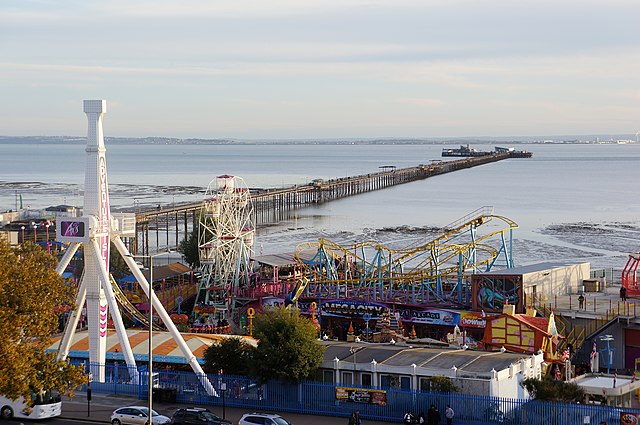
A local councillor, Alderman Brightwell, even made the modest proposal that Southend should practice some sort of class-based apartheid, with the hallowed pier as the line of division. In a demarcation that still can be glimpsed today, he suggested that the west of the pier should comprise the pursuits and habitats of Victorian ladies and gentlemen, while the east of the pier – today’s “Golden Mile” of amusement arcades and chip shops that stretches down to the remnants of the Kursaal amusement park (now a rough council estate), should be the playground of the shit-shovellers, factory-workers, barrow boys and slappers of the London “excursionists”.
But Burrows has a winning sympathy for that same underclass, taking the time to observe the awful conditions of their London lives, and the transformative effects that a trip to the “Essex riviera” might offer them. His history of Essex county thrills in the technological determinism of new inventions that transform daily lives and of new laws (such as the invention of the Bank Holiday in 1871) that create new opportunities.
Modern history is his main interest – particularly the two hundred years that saw Essex as we know it “invented” – but he also harks back to many earlier moments. There’s time for the bold Saxon noble taking a stand against the Vikings in Maldon; for the Boleyn family whose daughter Anne was the first infamous and defamed Essex girl; the experiments in social housing and new lifestyles, many of which were subsequently perfected elsewhere with no credit given to the pioneers. There’s the King of Bling whose Saxon grave put my own native Prittlewell on the map, and the historiography of Essex as a place “much-maligned”, from several centuries in the past to the year 2020, when the Oxford English Dictionary tardily removed the term “Essex girl” from its lists.
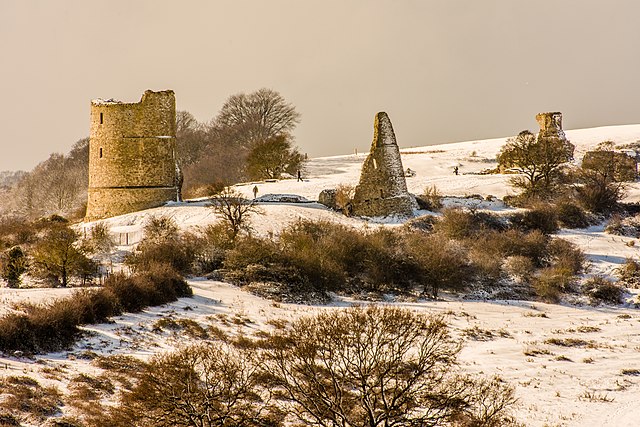
Burrows offers fascinating glimpses of the changes in the landscape, from its prehistoric origins in meltwater and retreating ice, to its many centuries of malarial swampland – no wonder the locals love their G&Ts, since the medical use of quinine was also discovered here. But before the marshes were drained of their mosquito-harbouring ponds, the “ague” fever was so notorious that the churchmen began to dread an ill-starred posting to “Killpriest Country.”
His book has a nobility to it, and a sympathy for its subject, as well as a ready eye for those moments in history and literature that have a poetry all of their own. In William Morris’s News from Nowhere, a time-traveller arrives in the 19th century to warn its inhabitants of the perils of the future.
“I come not from heaven,” he says, “but from Essex.”
Jonathan Clements is the author of The Emperor’s Feast: A History of China in Twelve Meals, which begins and ends with the Garden of China restaurant in Southend-on-Sea. Tim Burrows’ The Invention of Essex is published by Profile Books.
 The Official Schoolgirl Milky Crisis Blog