
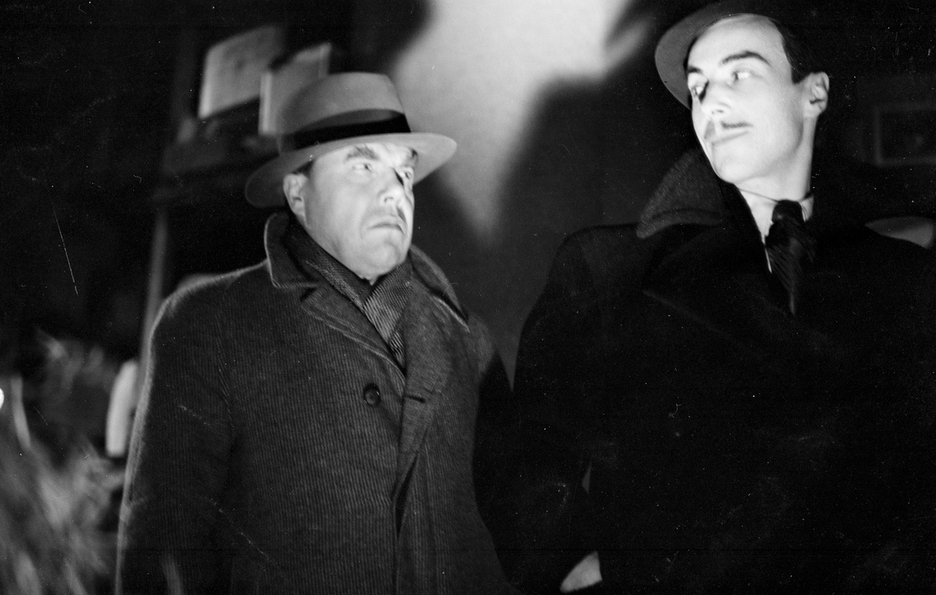
Commissioner Puosu (Hugo Hytönen) and the journalist Harni (Hannes Häyrinen) become reluctant partners as they try to solve the murder case of Nelly, a smuggler found dead in the Helsinki apartment where Harni had been the last… or presumably second-to-last person to see her alive. Their investigations plunge them into the middle of a menagerie of black-market spivs and shysters, many of whom might have had a motive or opportunity for offing their sometime supplier of contraband goods.
Puoso thinks he has uncovered the murderer – the shopkeeper Herttamo (Eino Jurkka), whose kerchief matches a thread found on the victim, but Herttamo is himself murdered on a train. It transpires that Nelly’s murder is the latest iteration of a decade-long drama unfurling from a bank robbery ten years earlier, as its survivors seek to cover their tracks and preserve their identities in hiding. Of particular note here is Irma Seikkula, star of Juurakon Hulda (1937), in the role of Ane, a seemingly unimportant secretary who turns out to be the daughter of a cashier killed in the robbery, whose subsequent life has been steered by a series of anonymous donations from the criminals.
Well, that escalated quickly. After years of shonky adaptations of repertory theatre-plays, unfunny sitcoms and musty old children’s books, Suomi-Filmi suddenly explode into the 1940s with an up-to-date thriller, drawing on H. R. Halli’s novel And the Murders Continued (1939, Yhä murhat jatkuivat). The original was set in Finland’s post-WW1 Prohibition era, but had a subject matter that lent itself well to being upgraded to a contemporary thriller in the wake of the Winter War.
And the critics went wild for it. Only a few days after they had been eviscerating The Solemn Hornblower for wasting literally everybody’s time and money, the Finnish press piled on with unbridled enthusiasm to welcome the dawning of a new and noirish age.
Olavi Vesterdahl in Aamulehti was fulsome in praise for “Finland’s first home-made detective film,” thrilling to its shadowy lighting and the “pleasant surprise” of its thriller narrative. Toini Aaltonen in Suomen Sosialidemokraati called it “exciting and fast-paced” and dared to suggest that it gave Hollywood a run for its money. The final level boss of any Finnish film’s critical response, Paula Talaskivi in the Helsingin Sanomat, was delighted by its impressive photography and naturalistic dialogue, and if she had any objections, it was to a somewhat muddled plot that came apart at the seams as the film went on, for which she was happy to lay the blame at the feet of the source novel, and not the film company that adapted it.
Posterity is not quite so kind – something that is repeatedly noticeable about Talaskivi’s reviews is how accurately they can predict the long view of a film. She is rarely caught up in the moment, but has a concision of appreciation and a frankly prophetic sense of how something like The Last Guest would be viewed not merely years, but decades after its premiere.
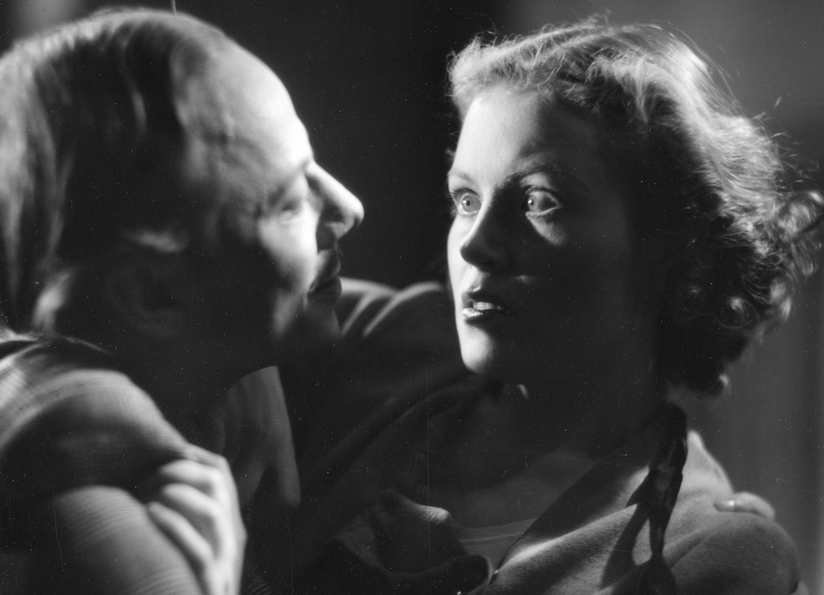
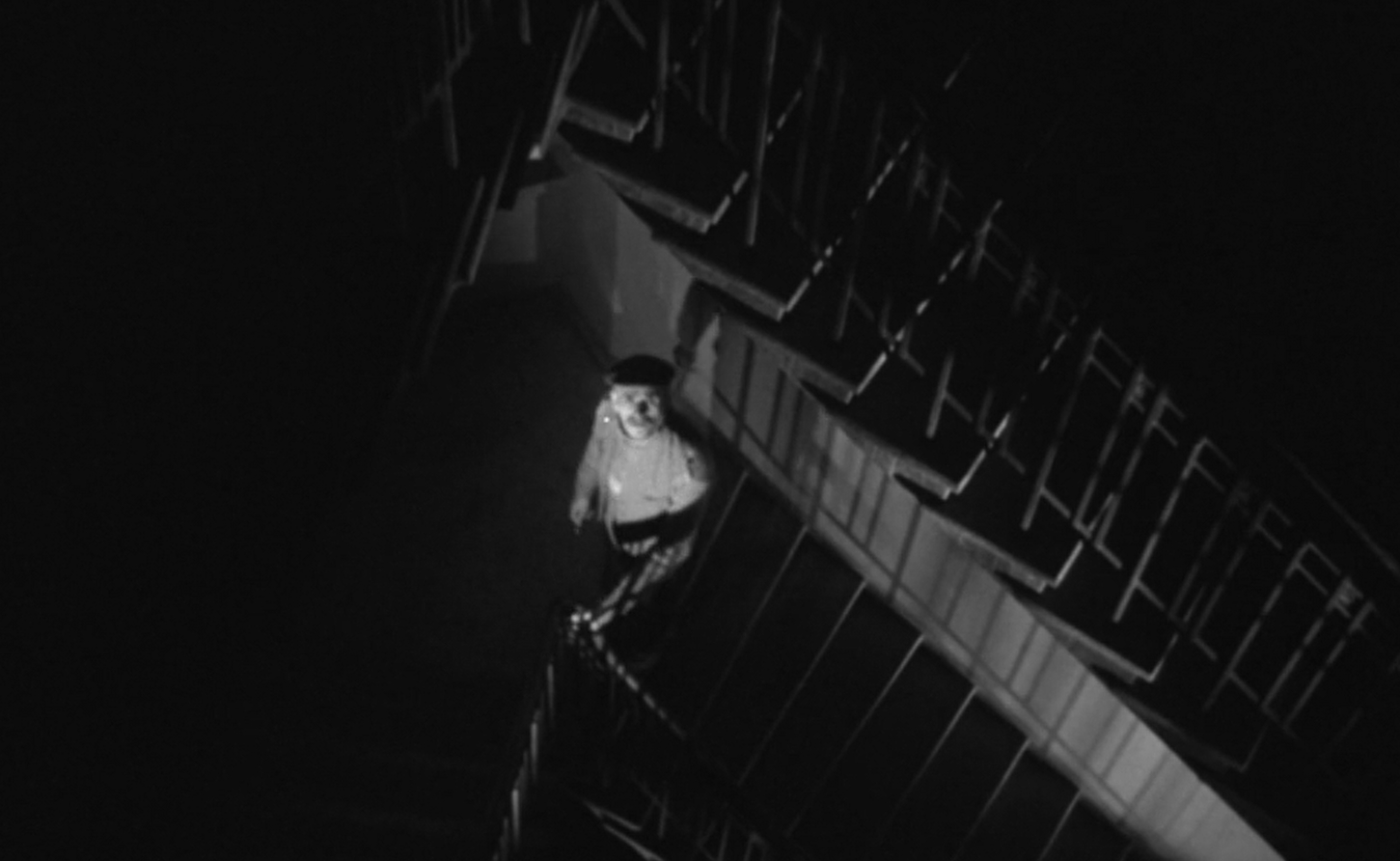
It’s worth mentioning that despite the enthusiasm of the critics of 1941, Finnish audiences were plainly not ready for such a kick up the creative arse. Box office receipts were below average for the film, which took two years to recoup its production costs. Co-director Arvi Tuome would not helm another film again, although his collaborator Ville Salminen, who also designed the sets and appeared in the role of the suspicious wholesaler Rajapalo, would be back in front of the camera before long, and behind it once more in the 1950s. I also find it interesting that none of the press stills preserved in the archives really showcase the film’s best and most creative camerawork. Suomi-Filmi’s photographers came up with the usual shots of men sitting in rooms and women about to be snogged, whereas Tuome and Salminen’s much-praised framing was not documented by their own studio. To get that shot of the man on the staircase that adorns this review, I had to do a screen grab from the film itself – an interesting aside in terms of the materials available for the discussion of historical media.
Jonathan Clements is the author of A Short History of Finland. He is watching all the Finnish films, so you don’t have to.
 The Official Schoolgirl Milky Crisis Blog