
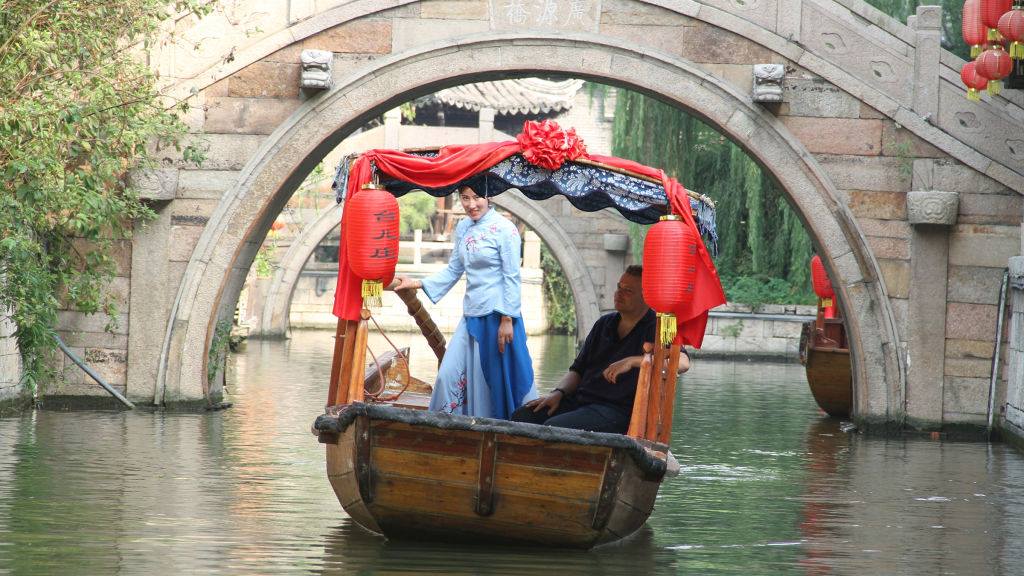
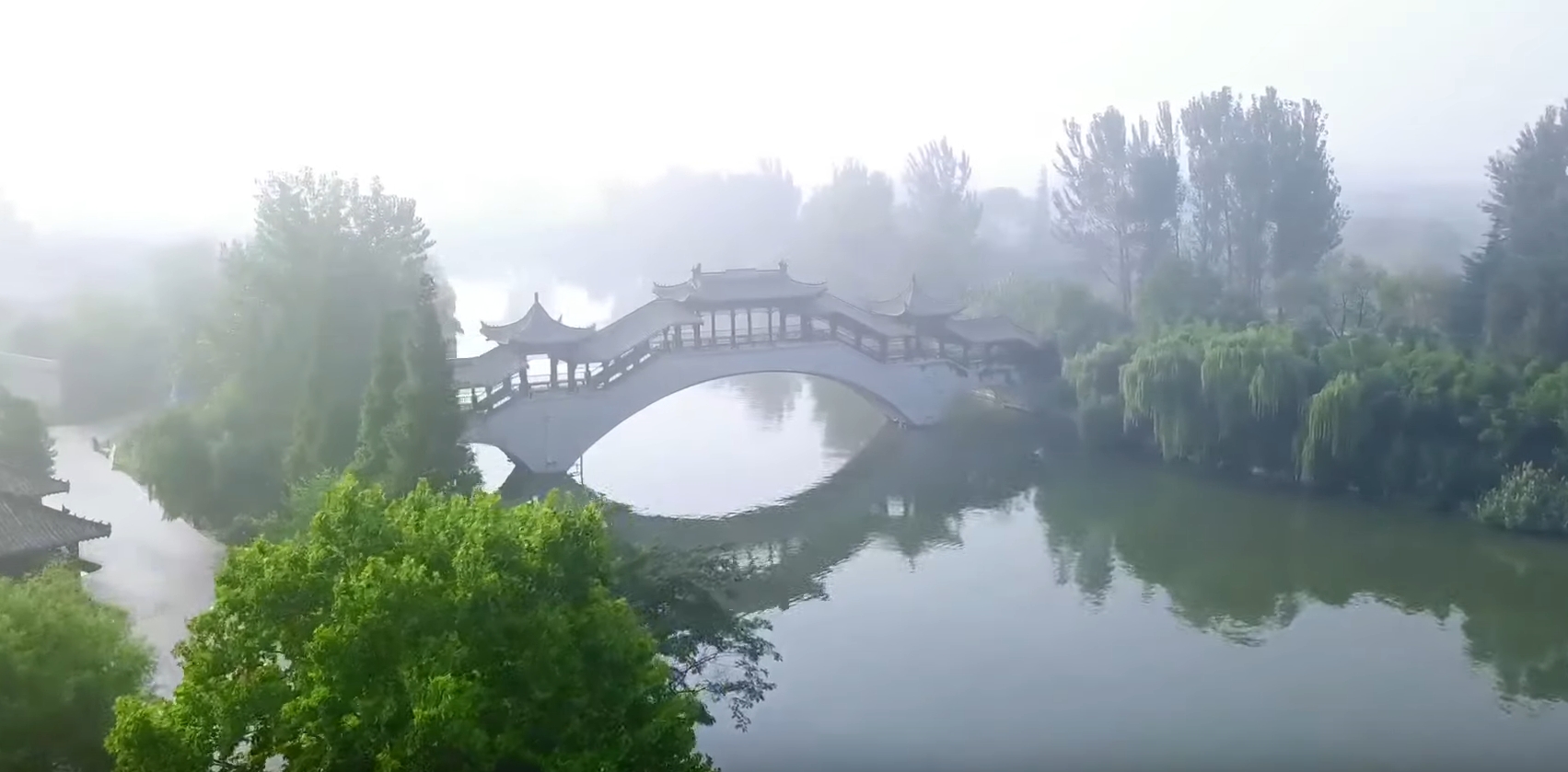
Taierzhuang is a charming “old town”, full of little bridges and temples in alleys. It’s new, of course. Most of it dates from 2008, but it is a faithful reconstruction of the town that previously existed on this spot, which was torn apart in 1938 in a famous battle with the Japanese army. It sat in ruins until the 21st century, and then got toshed up. “I like it,” I tell the camera as I walk through the streets, “because the reconstruction isn’t just about the buildings. This place also seems to reconstruct the visitors. Everybody is encouraged to leave in peace and harmony, and to indulge in traditional pursuits…, it’s the sort of place that Confucius would have loved.”
It won’t last, of course. I give it five years before the leases run out on the classier places, and they transform into mobile phone franchises and plastic machine-gun shops. There are already three bongo stores, which is my litmus test for the decline of civilisation. But for now, it is lovely, and so are the boatwomen.
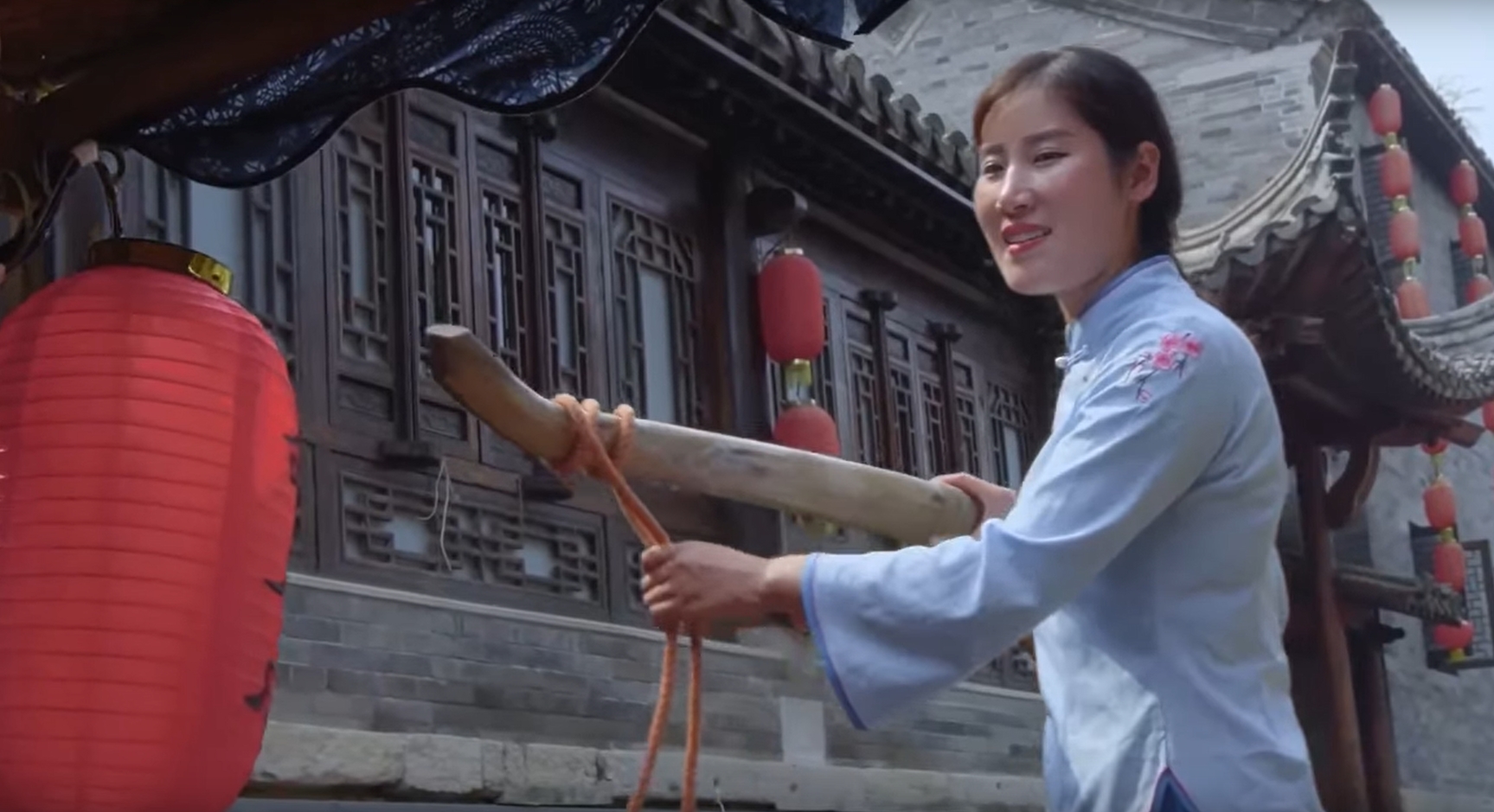
Xu Zhenzhen is a graceful lady in a blue cheongsam, who sculls a gondola through the nearby canals, singing songs about the neighbourhood and delivering a constant tour-guide patter. I spend most of the day being squired through the canals with a film crew in the boat, then again along the same course with the crew chasing me in another boat, then again with a drone following us under the arches of the nearby bridges. She shows me how to flip the big oar back and forth, and sings a song about the wonders of Beautiful Taierzhuang.
The lyrics seem a little too simple to me, devoid of classical allusions and tonal assonance, leaning too heavily on rather simple concepts like “beauty”. It smells way too modern for me, and so I ask if it is an old song.
Oh yes, she says, it dates all the way back to 2005.
“I’ll stop you there,” says Frances the producer, literally rocking the boat. “National Geographic will need to clear the rights on any song that isn’t in the public domain. Something knocked up by the marketing department isn’t going to cut it.”
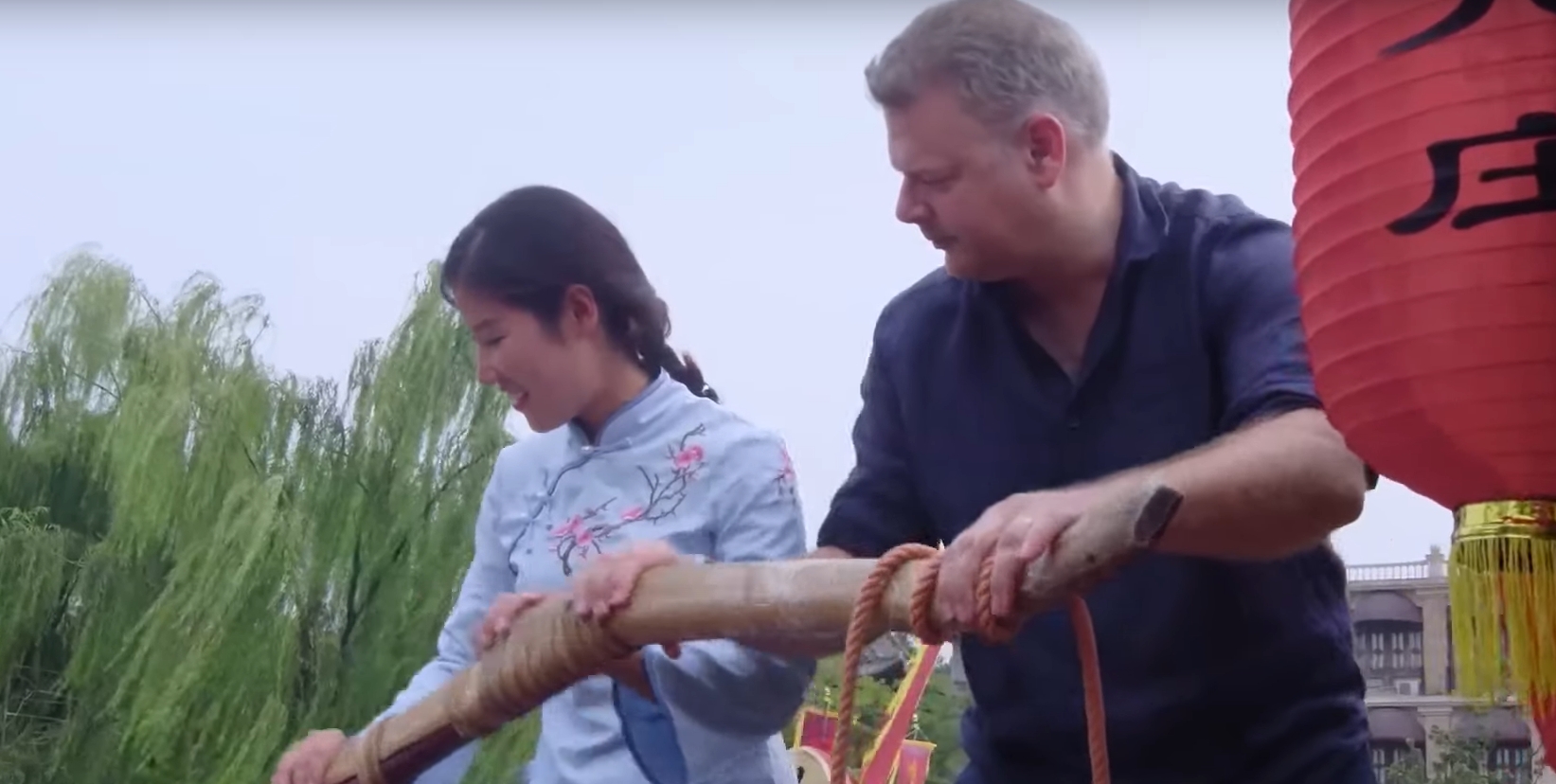
Xu protests that other film crews have recorded her singing without complaint, but other film crews aren’t planning on broadcasting outside China. She will have to sing something else.
I am very careful not to address her as a “sing-song girl”, which carries with it implications of Qing dynasty prostitution. The Girlfriend Experience in the 18th century would involve buying a night on a boat with a girl, who would punt you around for a while, cook you dinner, sing you some songs and then climb into bed with you, all on the boat. I carefully address her as Teacher Xu, using the same levels of honorific that I have used with all the middle-aged men who have formed most of the interviewee population on this shoot. Jonathan and I have already been debating the gender balance among our interviewees, and there is a degree of pressure on Xu to supply a bit of femininity among all the blokes. She’ll appear quite early in the show, which is handy, and she has plenty to say about her town.
I ask her if any tourists fall in the water.
“Not this year,” she replies. “We had a couple of drunks fall in last year, though, so we’ve actually put an underwater deck in the harbour. The canals are two metres deep over most of the town, but if you fall in near the dockside, the water’s actually barely deep enough for the boats.”
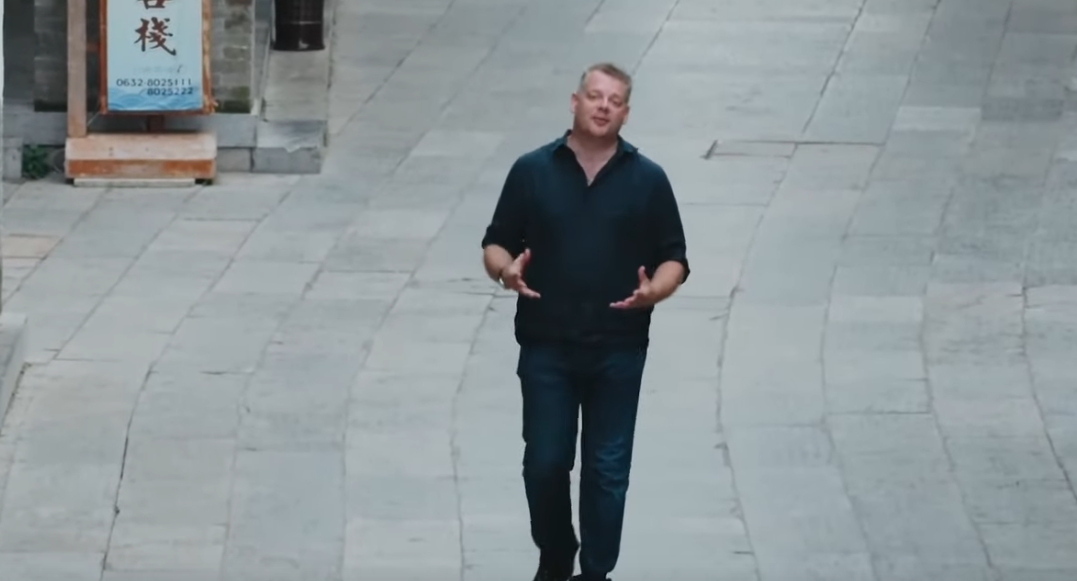
It’s time to record the opening words of the documentary, which we get in record time because Taierzhuang in the daytime is so sparsely populated, and I am the man who can recite pertinent passages of The Analects from memory. There are no distractions as I walk along the canal side and say: “Confucius said: ‘It is a pleasure to learn, and to put your knowledge to good use. It is a joy to welcome friends from afar.’ Well, I’ve come from afar, and I want to learn. I want to find out what’s so special about his homeland, the north-east province of Shandong, and how it has shaped the culture and history of the whole of China.” It’s the big opening for the whole show, and we shoot it so fast that the director gets whiplash.
Pieces to camera are not so much written as devised. Jonathan the director and I wander around the streets brainstorming what needs to be in them, and I supply a quote or an observation that might justify my particular presence. Then he argues about how it ought to sound, and whether it is too NHK (“Let’s have a look, shall we…”), or too ITV “CHINA! A LAND OF CONTRASTS…”).
It was Jonathan who put the full stop after “want to learn”, to create a momentary lull to be filled with “I want to find out…”
“It’s good to have a caesura there,” he says. “And wonderful to have a presenter who knows what a caesura is when I ask for one.”
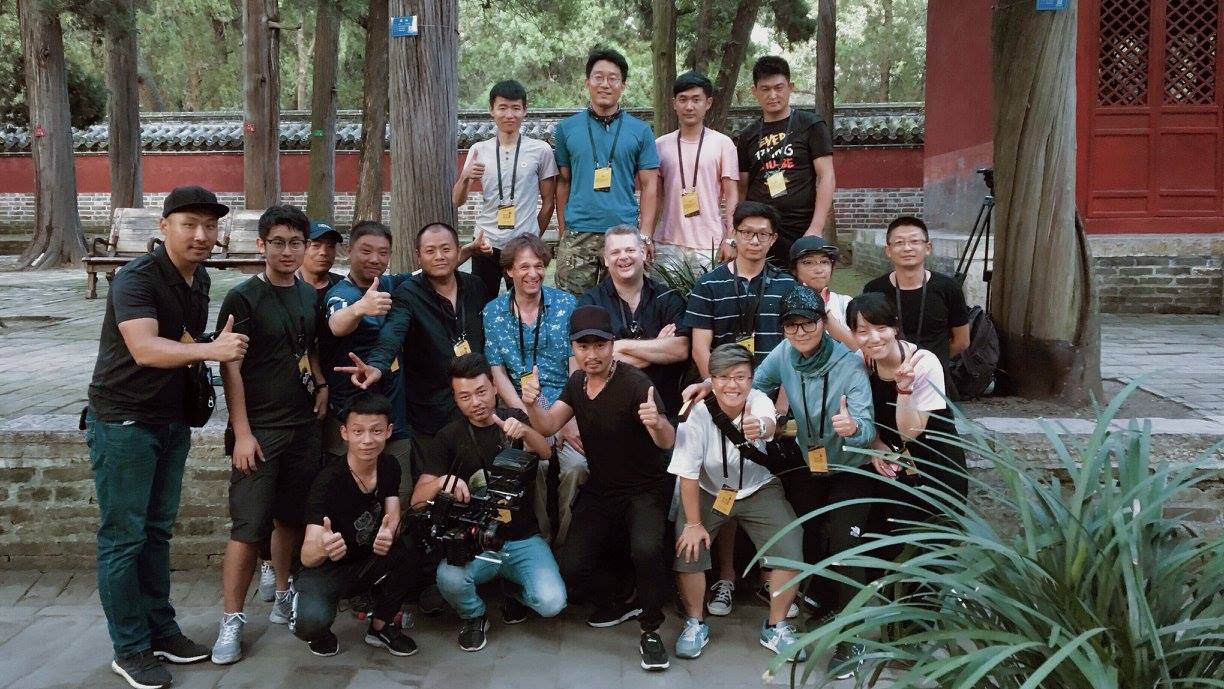
Tomorrow is the last scheduled day of shooting, and the Chinese director will be leaving early, so tonight is a wrap party of sorts. There is lots of toasting and many proclamations of friendship. The Chinese director apologises repeatedly for shouting so much. Little Fish the sound guy apologises for ripping out all my chest hairs every time he has to adjust the microphone, and I make everyone laugh by telling him they are my gift to him. Bumfeely the grip gets so drunk he can hardly stand, and there are multiple toasts from Chunky the A cameraman, Specs the B cameraman, Baldyhat the grip, and a bunch of crewmembers as yet unassigned nicknames. Because the two foreign men on the production are both called Jonathan, I am constantly addressed hectoringly as “CLEMENTS!” as if I am still at school.
I am pleased. I have not troubled anyone by being crap. I have hit my marks and rarely fluffed my lines. Having two cameramen reduces the number of pick-ups, because they can shoot a wide and a close-up on the same take, so if I get my lines right, we can be done in mere minutes, even if it takes them an hour to rig the lights. So here’s hoping that the producer gets what she wants, and that this Shandong travelogue turns out to be a backdoor pilot for an entire series on China. If it is, then there should be other provinces for me to explore.
Jonathan Clements is the author of Confucius: A Biography. These events occurred during the filming of Shandong: Land of Confucius (2018).
 The Official Schoolgirl Milky Crisis Blog
I always thought David Attenborough was a master of the caesura. Glad this went by-the-numbers for you guys.