
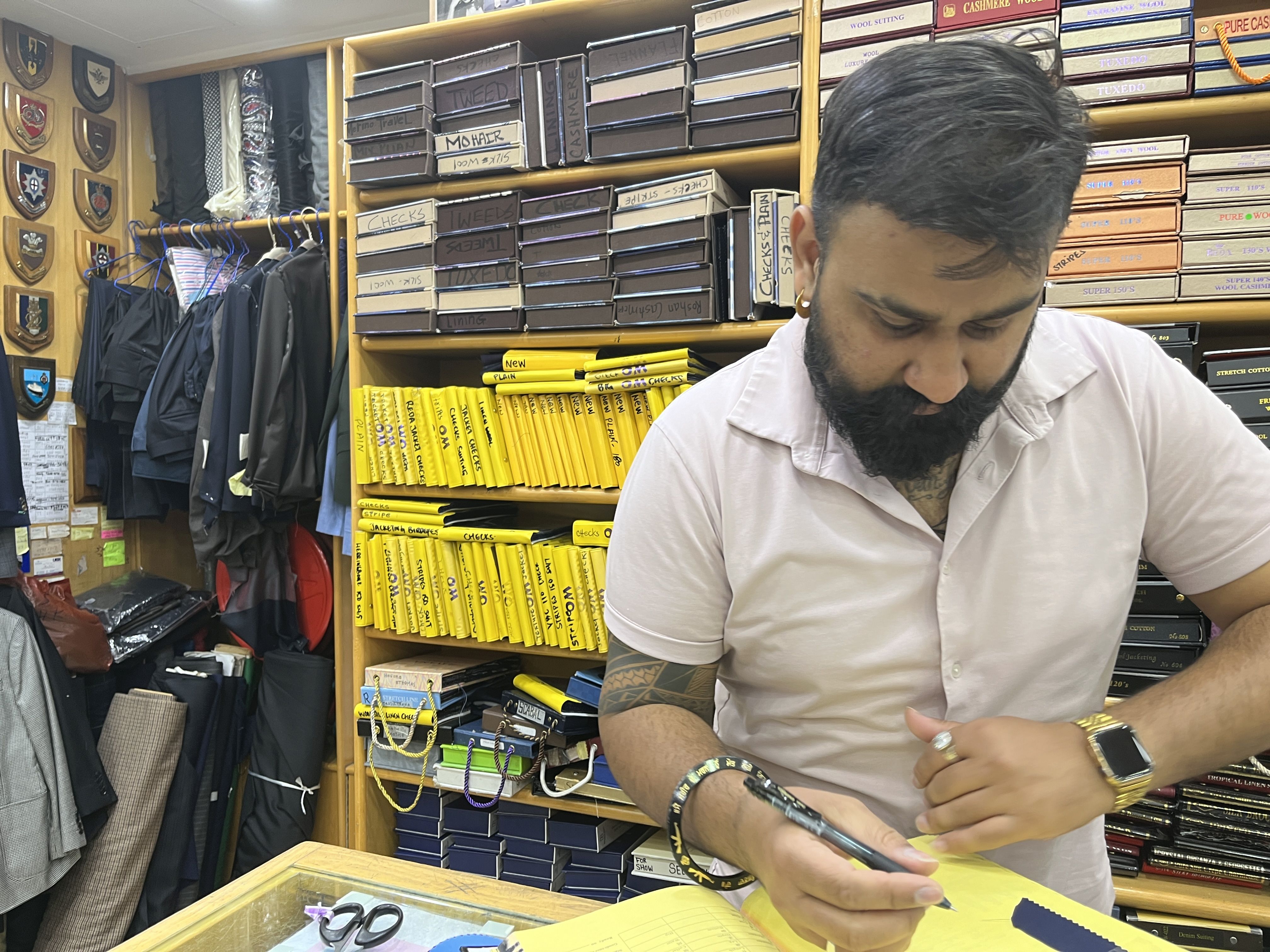
“I can make you look taller,” says Tarzan. “I can make you look thinner.”
“Can you make me look more fun?” I ask.
“Almost certainly,” he says, pretending not to notice my Marks & Spencer’s trousers.
He is already leafing through samples of cloth discarding the plaids and herring-bones that would create a distracting moiré effect on camera. He sketches out a plan for a three-piece suit, with peak collars to draw the eye, and a ticket pocket to… keep a ticket in. When I can’t make up my mind between cufflinks and buttons on the shirt, he offers to do both, like I have become an international plug adapter for wrists.
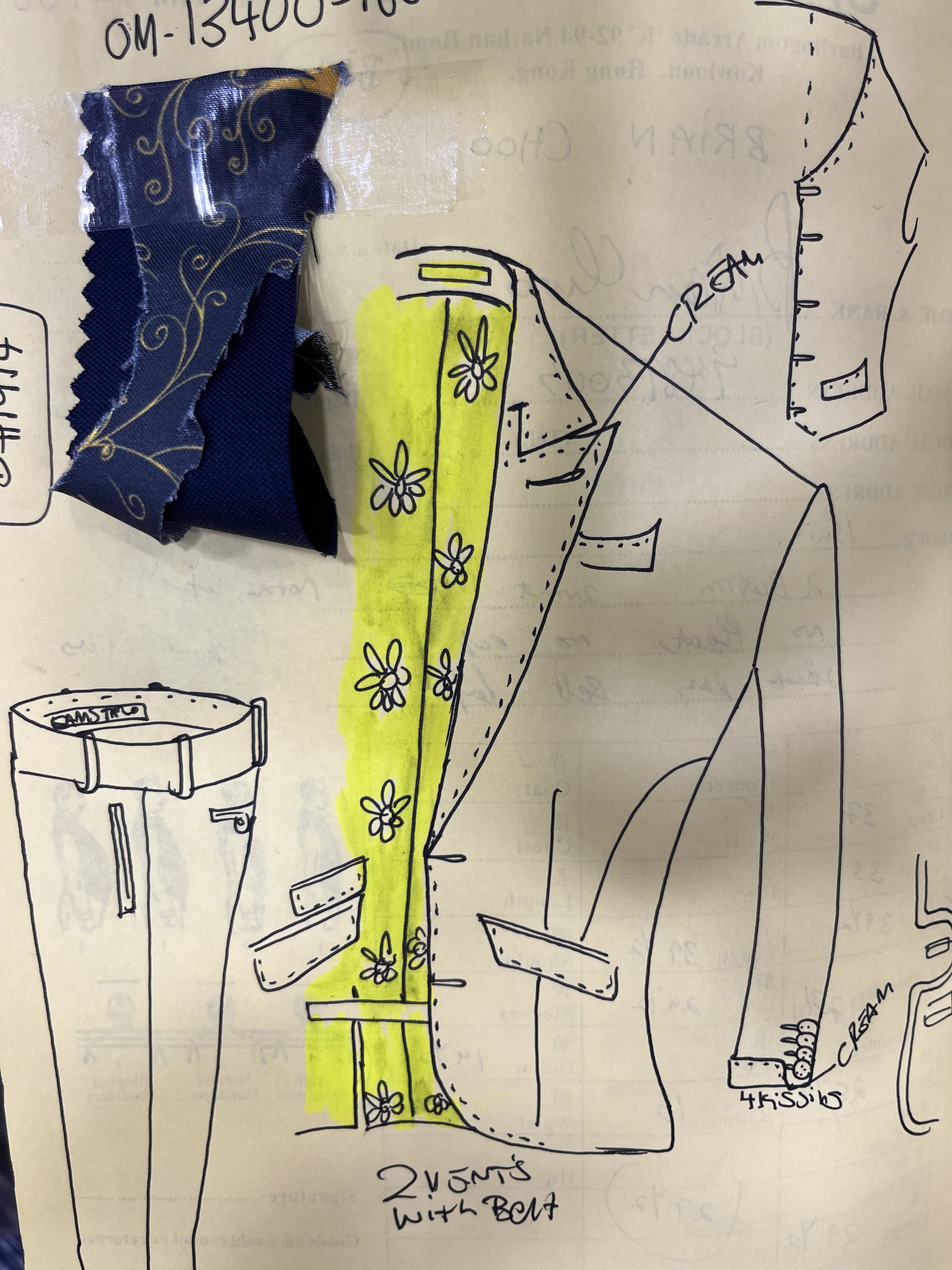
“You can have a little JC monogram,” he adds, “and I think some cream edging on the buttonholes. Thick buttons. Do you want thick buttons?”
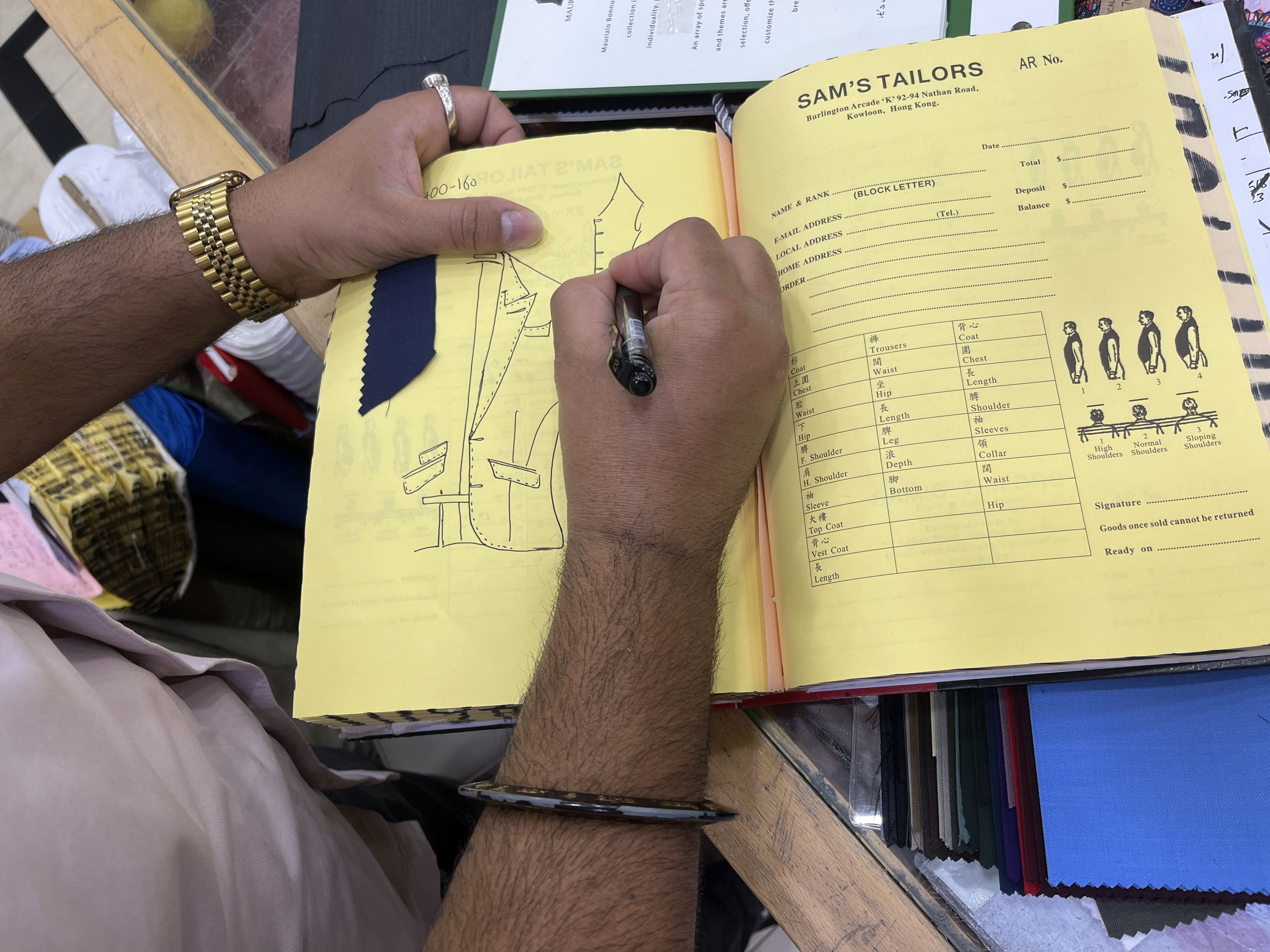
“I don’t know,” I say. “Do I?”
“Yes,” says Tarzan. “Now what about the lining?”
“Something Chinesey would be nice,” I say.
“You mean like dragons or something?”
“Yes. Can you do that?”
“I can do anything you want. You’re in charge.” He hands me a scrapbook of wacky silk linings, including the Bitcoin logo, skulls and crossbones, the poster for The Godfather, and some dragons.
“Oh yes,” I say. “Those.”
“You like them now,” says Tarzan. “But will you still feel that way in a few weeks?”

He’s right, the dragons are a bit naff. I keep poking around in the book until I see a pattern called “Queen of Dragons”, which is actually a series of repeating phoenix designs, gold on black.
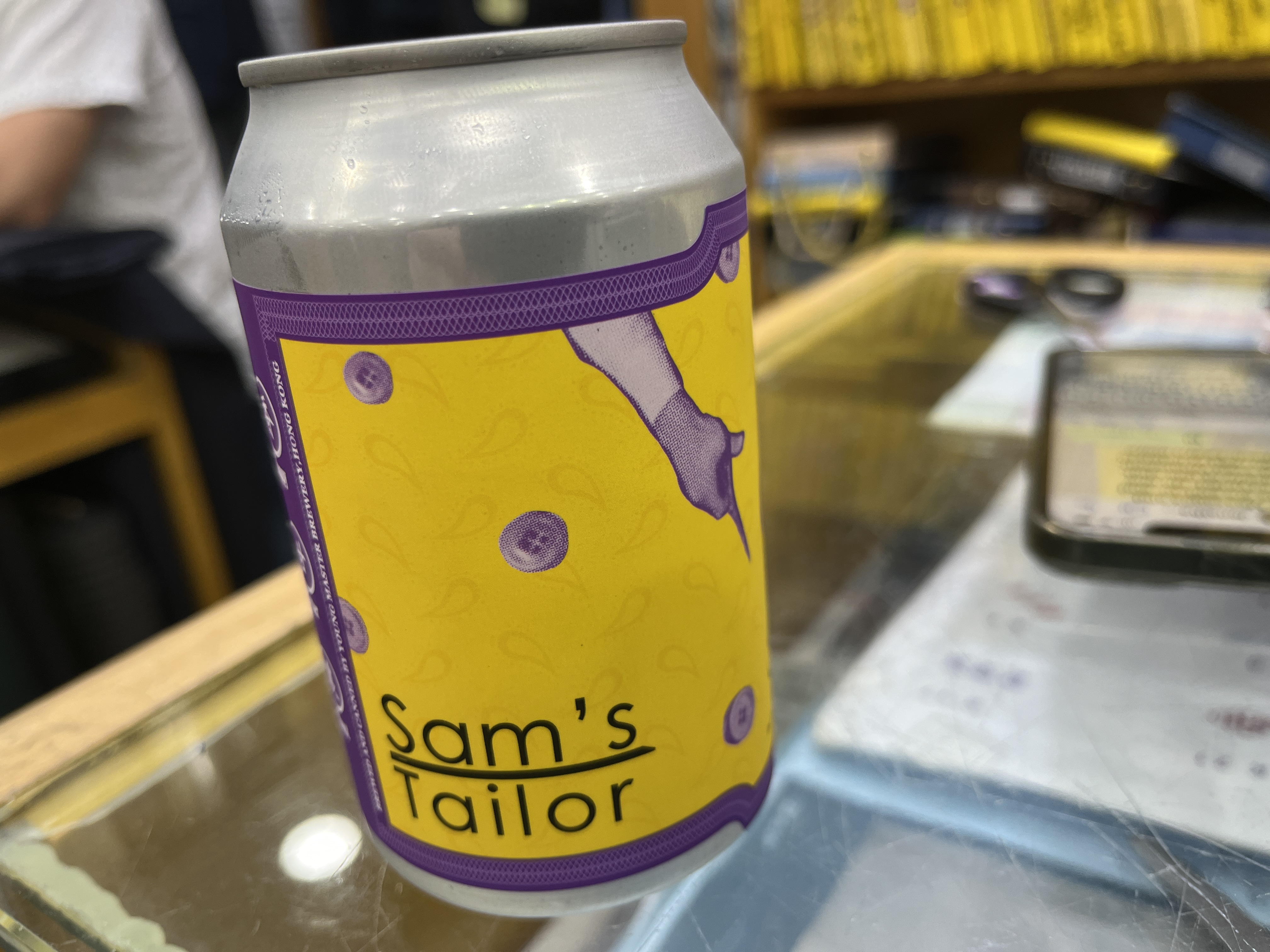
“Thatsh the one,” I say, slurring a bit, because Sam’s Tailor, on Hong Kong’s Nathan Road, also make their own signature beer, and it’s a terrifying imperial IPA with 8.8% ABV. I’ve had three cans while Tarzan is talking through the design, and now I can’t feel my legs.
The first-generation founder, Sam Melwani, arrived in Hong Kong in 1952, and worked for another tailor before going it alone in 1957. By the end of the decade, his son Sham tells me, he had cornered the lucrative market in uniforms for the servicemen of the colonial administration. Which explains why the form I am filling in includes a space for my rank. Sham and his brother Manu can still be found lurking on the premises – it’s Manu who hands me what might have been my fourth beer, but by that point I had lost the ability to count. But it’s Manu’s son Roshan who is the modern face of the family business, rocking a waistcoat design that Tarzan has already sold me as “boss-style” (I realise now that he meant his boss), and with a clash of vibrant patterns on a shirt that has elbow patches just to show off.
“We get staff discounts on fabrics,” says Tarzan with a shrug. “We try stuff out.”
“Covid was a disaster for us,” says Roshan. “It used to be there was a queue going out the door. We were so busy. But then we had month after month where nobody was coming.”
I ask about the regulars. Because one of the delights of Sam’s is that they now have all my details on file, and I can literally send a WhatsApp message asking for a two-piece safari suit in Marimekko camo pattern with a purple paisley party shirt, and they will post it to me three days later, possibly just before they call the fashion police.
“Yeah,” says Roshan thoughtfully. “But everybody spent a year indoors. Nobody needed a suit.” Even so, he pursued them on social media. One of the reasons I can reach out to Roshan at seven thousand miles distance is that he has spent the last couple of years perfecting online consultations. If I do ask for that Marimekko safari suit next week, he’ll be there on a digicam trying to discreetly talk me out of it and save me from myself. But if I insist, he will do what I want and let me endure the ridicule.
And business hasn’t picked up?
“Maybe only twenty, thirty per cent of what it was,” says Sham.
Which makes me wonder what chaos there must have been pre-Covid, because when I come back a mere five hours later for my first fitting, the shop is heaving. There’s a picky Frenchman who isn’t sure he wants a suit at all (testing even Roshan’s patience), and a thick-necked man with a crew-cut who seems likely to be a holdover from the military days; a repeat customer dropping in to pick up something new and he’s arrived with three friends of his who all want suits of their own. They’ve never had a tailor before. I’m a bit surprised I got through the first five decades of my life without one myself.
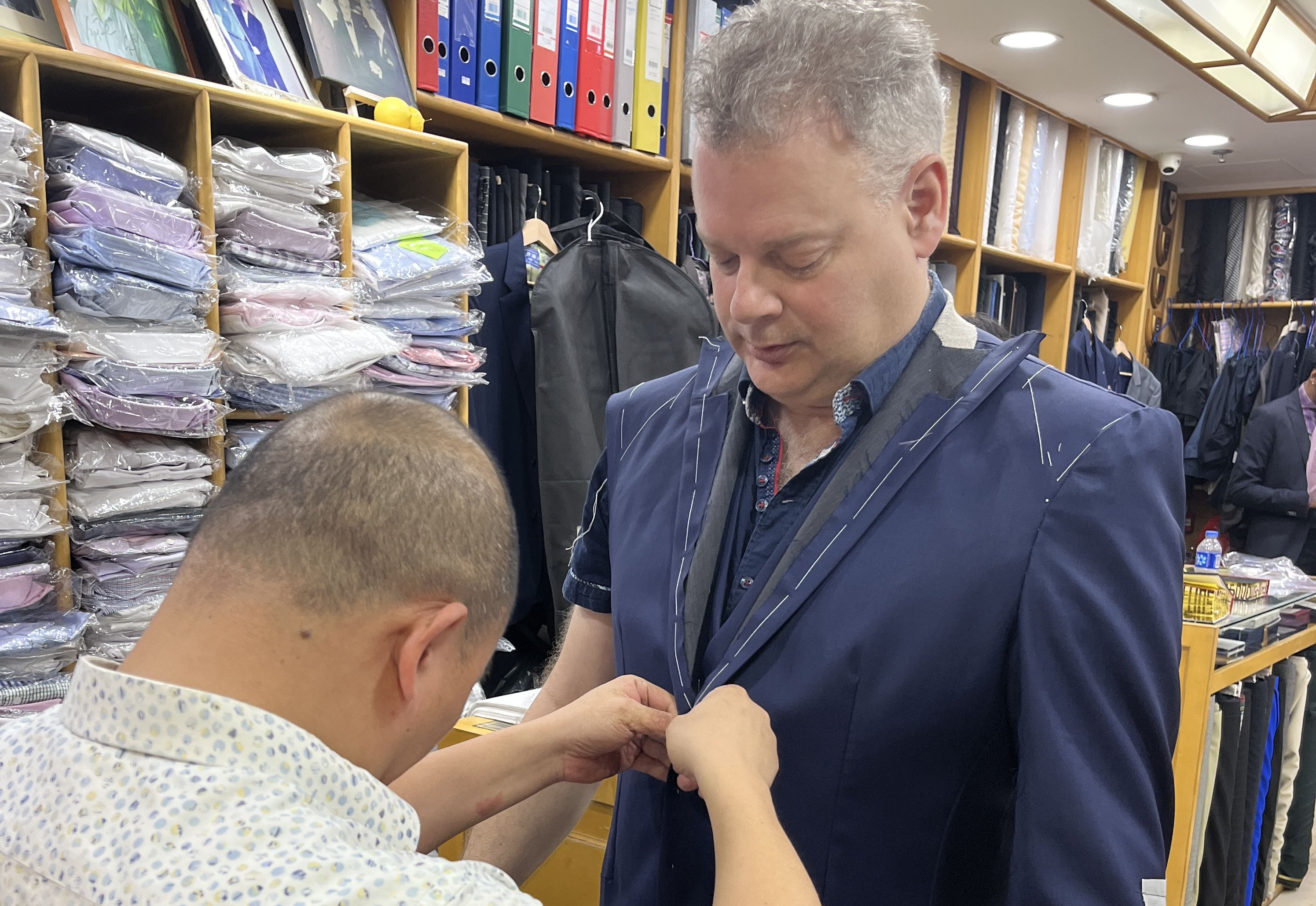
In the last five hours, a Nanjing-born tailor called Mr Zhang has run up the first draft of my suit, and now he wants to stick pins in me to make sure that the cuffs show just enough shirt.
“Can you tell him to stand up straighter,” he mumbles at Manu.
“Tell him yourself,” laughs Manu in perfect Cantonese, “he speaks Mandarin.”
“No, he doesn’t,” says Mr Zhang.
“Yes, I blimmin’ do,” I say in Chinese, and we’re off, with Mr Zhang interrogating me thorough a mouthful of pins about how I could have possibly ended up in Xi’an, and what kind of temperatures I had at home, as that was going to affect the way the suit was built.
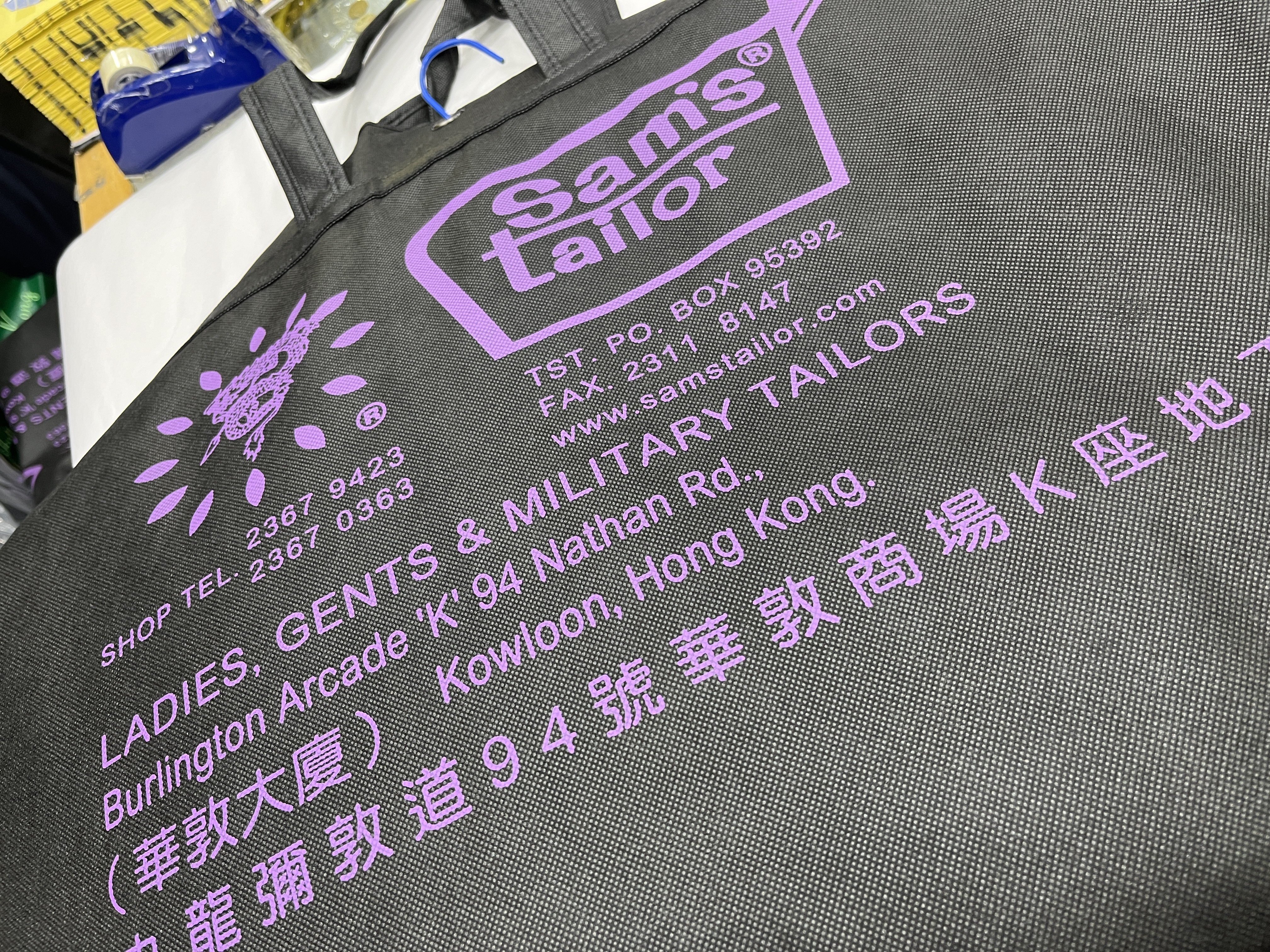
“I doubt very much,” I say, “I will ever have a chance to wear this suit at home. It’s probably only going to get outings in Scotland and on telly.”
“Ah yes,” says Tarzan. “The other shirts!” He is intrigued about the mechanics of shooting a television series, and his eyes light up at the thought of a schedule so punishing that I need up to five duplicate shirts for continuity purposes. One on; one off; one in the wash; one supposed to be in the wash but actually held hostage by a chamber maid in Gansu; and one irredeemably spattered with mud from a tribal fish-throwing ritual. I learned my lesson after my first big National Geographic job, where the shirt I wore on day one had to be worn again on days two, three and four, and never quite recovered. And on the Confucius shoot in Shandong, my biggest problem was our sound-man’s lavalier microphone glue, which ruined several mercifully cheap shirts as well as a few sizeable clumps of my chest hair.
I bring Tarzan one of my current crop of shooting shirts, and he sets about it with professional precision, tutting at the sleeves and scowling at the edging, and telling me that a shirt worn tucked out needs to have a certain kind of pointy thing. Tarzan knows his stuff, and if I let him steer me, it will look like I do, and that is surely the nature of good tailoring.
I walked into Sam’s on Wednesday morning. My suit is ready by the Saturday. When I walk back into the office, there is a small crowd admiring it as if it is a painting on the wall.
“I love the gauntlet cuffs,” says one man to me. I mutter something about not knowing what they are but… ooh, that’s what they are. Tarzan insists on putting the waistcoat and jacket on me himself, in order to demonstrate his dual cufflink/buttoned cuffs, the secret band that holds the suit in place, and the way to adjust the waistcoat shape.
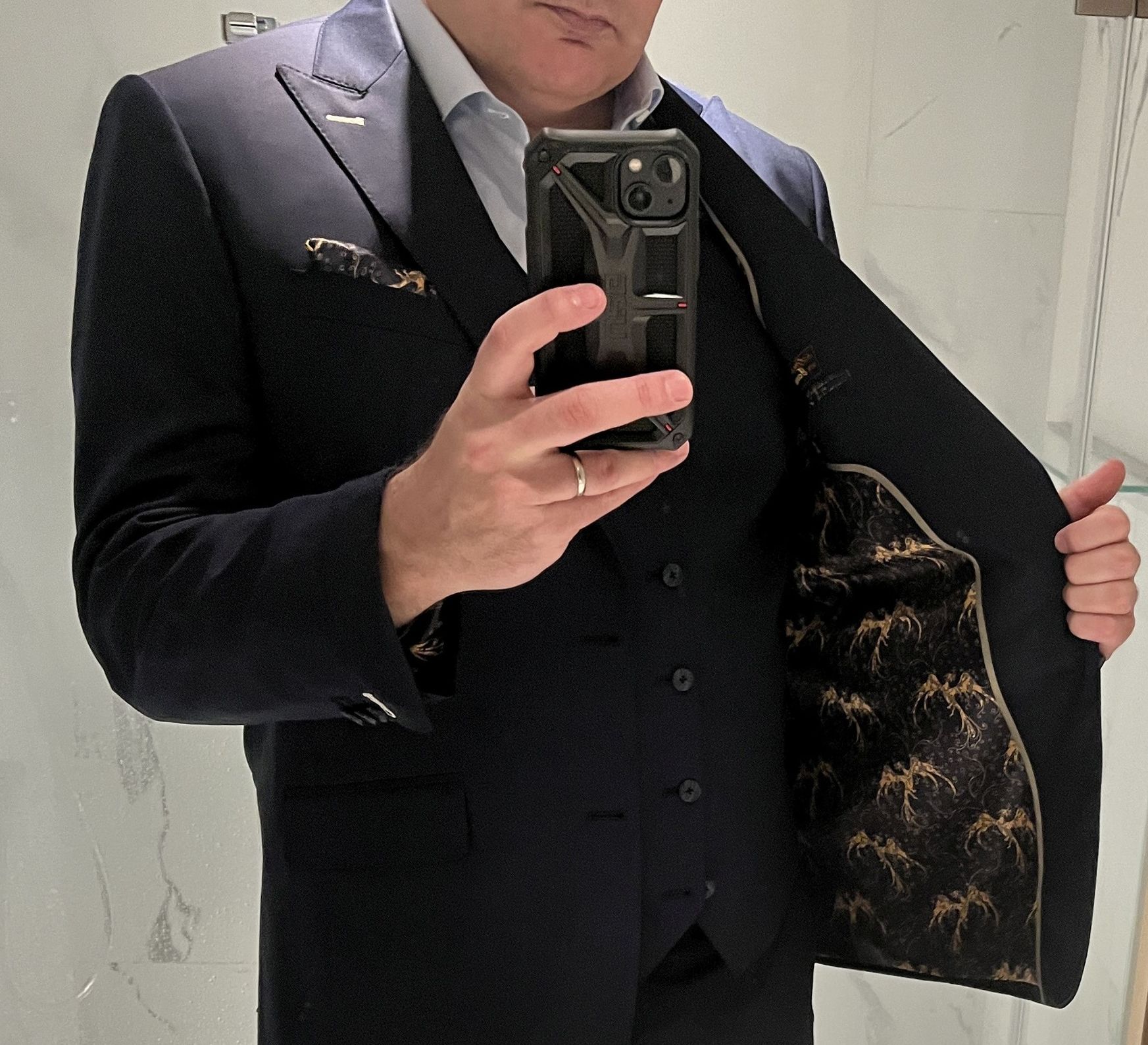
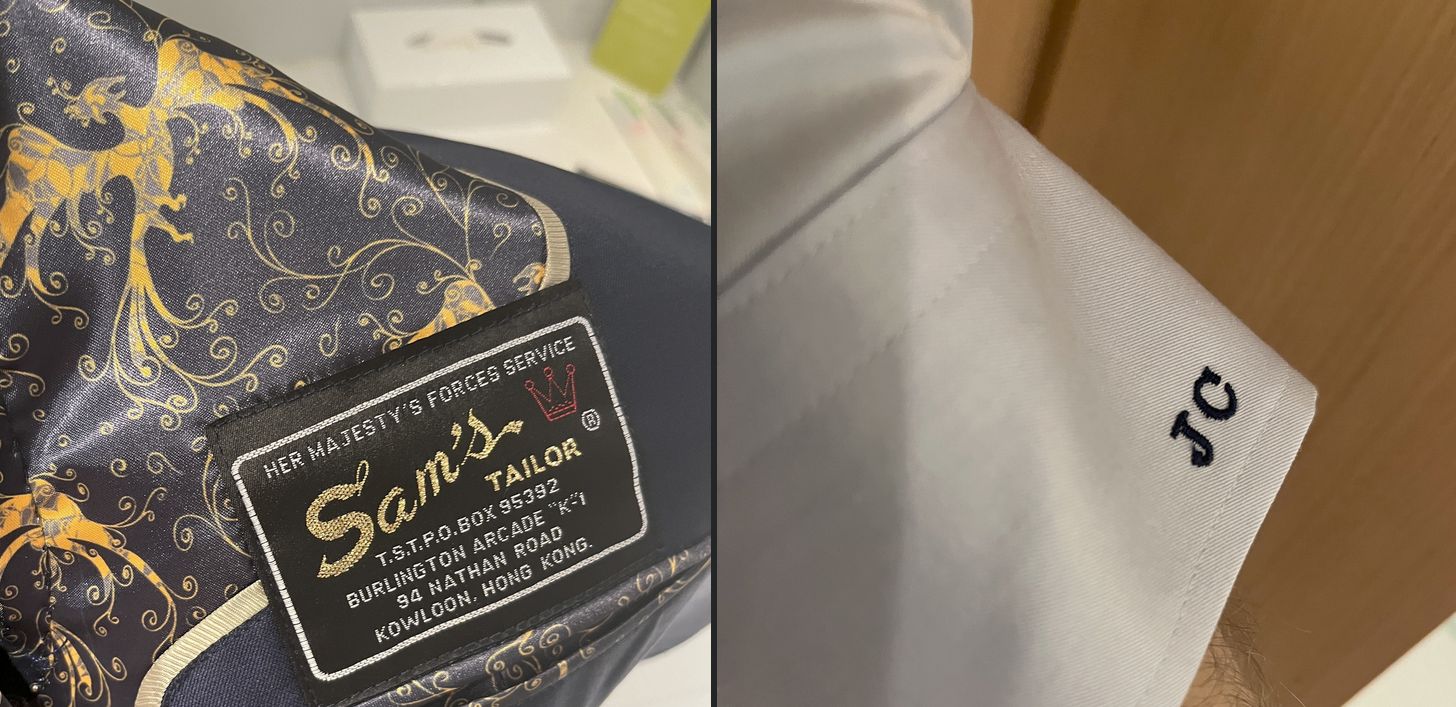
The finished item comes complete with carefully stitched piping, a little pen pocket, and the Queen of Dragons motif repeated throughout. The shirts have my initials on the cuffs, and the act of putting them on feels strangely familiar… as if they had been made for me… which they were.
I am similarly happy with the sample shirt for on-camera appearances, and approve two more duplicates on the spot. Tarzan asks Tony the shirt-maker if he can turn them around before I leave tomorrow, and Tony tells him it’s too much of a faff — so they will just send them to me at home. Now I know I can just ask for whatever I want, and they can just make it happen, I fear they may have created a monster.
What if, I ask Tarzan, I come back with my wife? Can they fit her out with whatever she wants?
“Yes, we can,” says Tarzan. “But we can’t turn it around as fast as your suit. Women’s clothes can take one to two weeks. There’s more…. variables.”

Jonathan Clements is the author of A Brief History of China and Rebel Island: The Incredible History of Taiwan.
 The Official Schoolgirl Milky Crisis Blog