

On 15th May 2022, a sixty-eight-year-old man turned up late for a church service at the Geneva Presbyterian Church in Laguna Woods, California, and sat through the ceremony conspicuously reading a newspaper at the back. When the service ended, he chained and glued the doors shut. He then pulled out a gun and started shooting into the crowd of aging Taiwanese people, in the middle of a church luncheon. One man, Dr John Cheng, heroically charged the shooter, but was shot dead. Having run out of bullets, the gunman paused to reload, at which point pastor Billy Chang hit him with a chair. Several other attendees then piled onto him, holding him down while he was restrained with an extension cord.
The incident was swiftly over, with one death and five people with gunshot wounds. The shooter was subsequently indicted on 98 federal charges, including murder, attempted murder with intent, weapons charges, transporting explosives (he had brought a bunch of Molotov cocktails) and hate crime.
Media reporting on the incident was confused and multi-faceted. Some outlets justifiably termed it a “hate crime” – an act by an individual who had singled out a group of victims specifically on the basis of their ethnicity or beliefs. But the shooter was himself a “Taiwanese” man, David Chou – born in Taiwan to parents who were refugees from the mainland. He had a master’s degree from an American university, and a former career as a translator. In later life, he had suddenly become an outspoken critic of “Taiwanese people”, referring not to his own kind, who were simply born there, but specifically to those who rejected the notion of themselves as “Chinese”. Earlier that year in Las Vegas, he had unfurled a banner calling for “ERADICATION OF PRO-INDEPENDENCE DEMONS.” Before embarking upon his shooting spree in Orange County, he had posted a manifesto to a Chinese-language newspaper, titled Diary of the Independence-Slaying Angel.
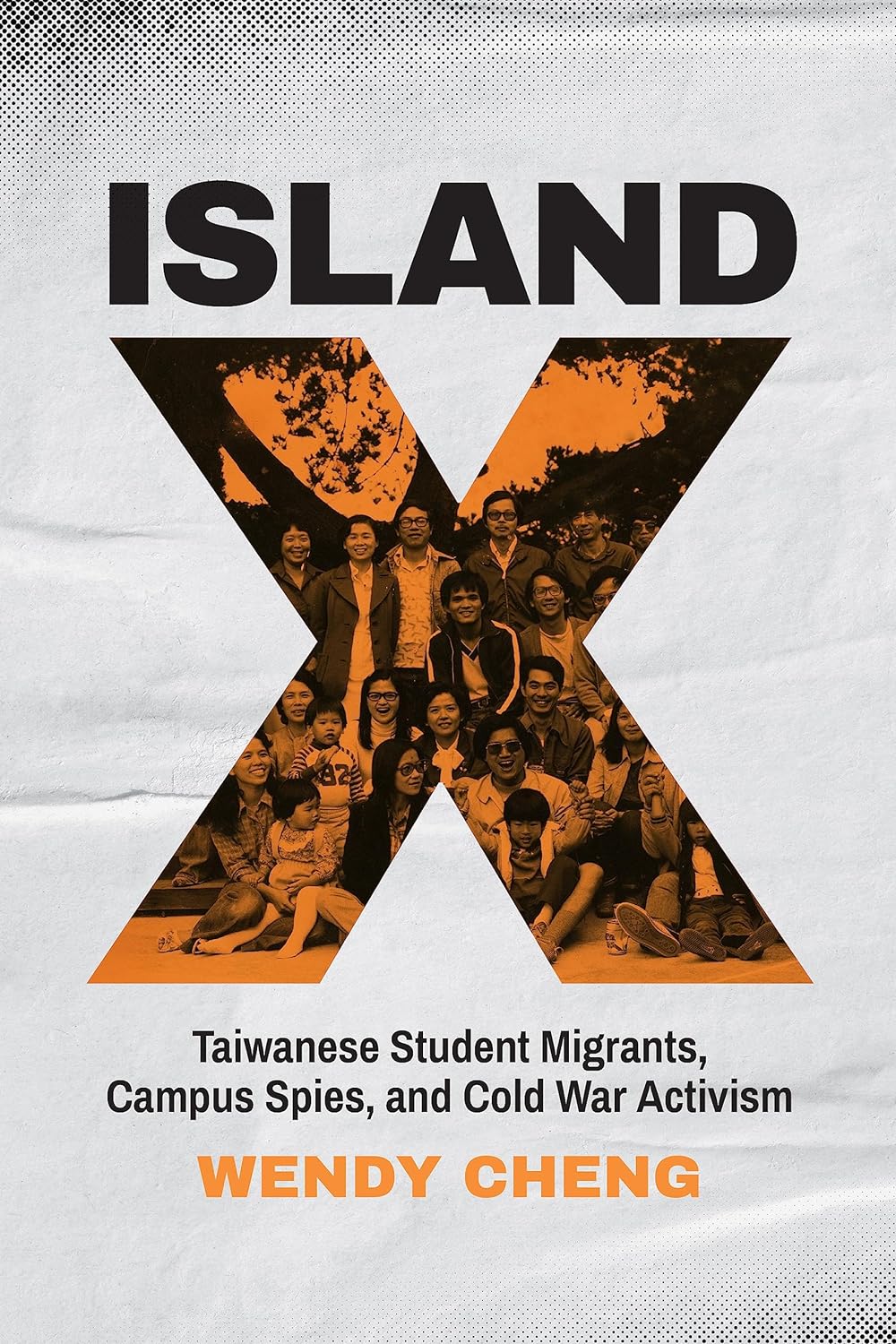
The incident was a shocking example of the way that foreign politics can suddenly manifest overseas, the playing out of decades of East Asian history in what first appears to be yet another crazy guy with a gun on the American news. Chou was, indeed, yet another crazy guy with a gun – but saw himself as the tip of the spear for a struggle that has played out in Taiwan for the last seventy years. As Wendy Cheng argues in her book Island X, it was also nothing new. Since the 1950s, America has been a crucible and a cradle for Taiwanese politics, and a battleground between its factions.
The name “Island X” derives from the codename given to Taiwan in the wartime training programme run by George Kerr, preparing a group of Allied officers for the island’s invasion and takeover. Cheng employs it in a broader sense, discussing the way in which the Nationalist government on Taiwan was so beholden to America that its very education system fatefully funnelled its best students towards the American university system. “English was taught beginning in junior high,” she writes, “and students were taught to ‘specialise in skills needed in the American job market’.”
A 1949 report by the US National Security Council suggested that the “indigenous population has a strong sense of regional autonomy… The Formosans are anti-Chinese, as well as anti-Japanese, and would welcome independence under the protection of the United States or the UN.” However, it went on to point out that fifty years of suppression under the Japanese, as well as the savage purges of the Nationalist government in the late 1940s, has left any potential independence movement rudderless, leaderless and “politically inarticulate.” Intentionally or otherwise, the United States then spent a generation nurturing not only the future leaders of the Taiwanese establishment, but their future opposition.
It was the hope of the American advisers on Taiwan that sending students back to the States would inculcate them with liberal values and support for the Free West. In some cases, this is what happened. In others, a sojourn in the US exposed Taiwanese scholars not only to life in America, but America’s own political turmoil, and the right of Americans to freely speak up about their misgivings. Like many other political movements both within the US and overseas, they were inspired by the United States’ own origin story – as a revolutionary democracy, taking a stand on broad philosophical issues, and demanding release from the bonds of colonial or imperial rule. As one student put it, it gave her “opportunities [to] actually identify myself as Taiwanese.”
They also became painfully aware that the Nationalist government on Taiwan was entirely buttressed by the United States. “They reached the island aboard American transports,” she quotes George Katsiaficas, “and American arms and subsidies enabled them to stay.” Such observations led activists to question the degree to which Taiwan was anything but an American airstrip in the Cold War.
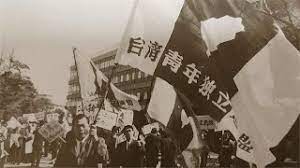
To describe things in cheekily Maoist terms, America itself was in a state of “permanent revolution”, ready to self-correct and self-criticise, amending its own Constitution to reflect changing attitudes, and with a populace not above taking to the streets to protest about civil rights or the war in Vietnam. Many Taiwanese students were caught up in such protests, what Cheng calls a “contradictory but fantastic thing,” only to discover that their involvement in left-wing activism would lead to their cards being marked back home. Cheng’s own father was one such student, told that there would be no professorial job for him when he returned to Taiwan. Effectively blacklisted, he chose to remain in the United States. Another student observed that it took just six to eight hours’ informed conversation after arriving in America for him to cast aside “twenty-four years of Chinese education,” and to become an ardent supporter of Taiwanese independence.
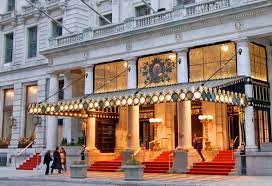
Such activism could take extreme forms on both sides. In 1970, the Taiwan-born PhD student Peter Huang attempted to assassinate Chiang Kai-shek’s son, Chiang Ching-kuo, at the lavish Plaza Hotel in New York. Shoved aside by a bodyguard, he succeeded only in shooting the hotel’s revolving doors, shouting: “LET ME STAND UP LIKE A TAIWANESE!” as he was dragged away.
Cheng’s book chronicles the aftermath of the White Terror on Taiwan, and the undeniable fact that the surveillance and control of Chinese citizens extended far beyond the island itself, under martial law from 1949-87, to the activities of Chinese people abroad, particularly in the United States of America. For if you were a Taiwanese exchange student at an American university in the third quarter of the twentieth century, you were subject to the unwelcome intrusions of a party cadre, not from the Red Book-waving People’s Republic, but from the “free” government of the Republic of China on Taiwan.
These paid informants or “professional students” were the strongmen (and women) of Taiwan’s “Rainbow” project, so named because the word for rainbow, caihong, is also a homonym for “destroy the Reds.” And by “Reds”, they did not merely mean the proportion of students who were taken in by the rhetoric of the PRC – some did indeed embrace the ideals of the mainland regime, even in the midst of the Cultural Revolution – but anyone challenging the one-party rule of the Kuomintang on Taiwan.

In 1971, the American hosts let down their Taiwanese guests in a spectacular fashion, by proposing to hand over the Diaoyu (Senkaku) islands off the coast of Taiwan to Japan. This has famously become one of the few issues that unites both Communist and Republican China, both of which regard the islands as Chinese. Such a betrayal was soon followed by Nixon’s famous visit to China, which set the United States on the path of recognising Beijing, not Taipei, as the rightful government of the country. And it was not merely the Americans who swung towards Beijing – the news propelled a bunch of Taiwanese students in America to give up on Taiwan as well.
Someone participating in the “Protect the Diaoyu Islands” movement, or Bao-Diao turned out to be super-triggering for the Nationalists, who instituted a new “blacker blacklist” that not only barred people from certain jobs or positions in Taiwan, but rendered them stateless. In several case studies, Cheng chronicles the persecution of students on trumped-up charges, their arrests on returning home for having merely participated in a discussion on Taiwanese independence, the removal of their civil rights and the harassment of their families. She also notes a “rash of bombings” in 1979-80 by WUFI, the World United Formosans for Independence, which led to WUFI being added to the State Department’s list of terrorist organisations.
The Taiwanese authorities fought back, also on American soil. In the most infamous incident in 1984, Henry Liu, a naturalised American journalist who had published a biography critical of Chiang Ching-kuo, was murdered in his own driveway in Daly City, California. He was shot by members of the Bamboo Union Triad, who had been working under orders from Taiwanese military intelligence – a fantastic jackpot of dodgy deals, which, as Stephen Solarz noted, amounted to “frightening examples of the long arm of Taiwanese martial law tearing at the fabric of American democracy.”
Cheng’s book is a fascinating exercise in, as she puts it, “locating Taiwanese-Americans in global history”, and reclaiming the lost stories of a generation of activists and students before it fades away and takes it memories with it. One would be forgiven for thinking that the lifting of martial law on Taiwan, and the subsequent swift rise of the Democratic Progressive Party, moved much of the action back to its homeland, but as the murderous act of David Chou demonstrates, there is no “over there” for Americans of Taiwanese origin if they are not safe in their own churches. The tensions in the Taiwan Strait, over whether Taiwan is part of China or a sovereign island, reach far beyond the local, and indeed, still threaten to engulf us all.
Peter Huang’s words as he was dragged out of the Plaza Hotel would become a touchstone of Taiwanese independence activism. Their most conspicuous appearance is in “Supreme Pain for the Tyrant”, by the death metal band Chthonic, which ends with the words “Let me stand up as a Taiwanese” repeated several times, like a mantra of resistance.
Jonathan Clements is the author of Rebel Island: The Incredible History of Taiwan. Wendy Cheng’s Island X: Taiwanese Student Migrants, Campus Spies and Cold War Activism is published by the University of Washington Press.
 The Official Schoolgirl Milky Crisis Blog