
Thomas David DuBois’ deceptively chatty introduction to China in Seven Banquets artfully digests a bunch of important food-studies concepts for the general reader, including the nature of sources, the metadata of meals, and precedents in the study of foodways. Before giving examples from China, he dazzles the reader with a bunch of examples that are liable to be closer to home, including Irish folklore that prevented butchers from obtaining meat from cows that were away with the fairies (i.e. “mad”), and an old working-man’s stipulation that labourers should not be fed something so common as lobster for lunch… this was back when lobsters weren’t so scarce.
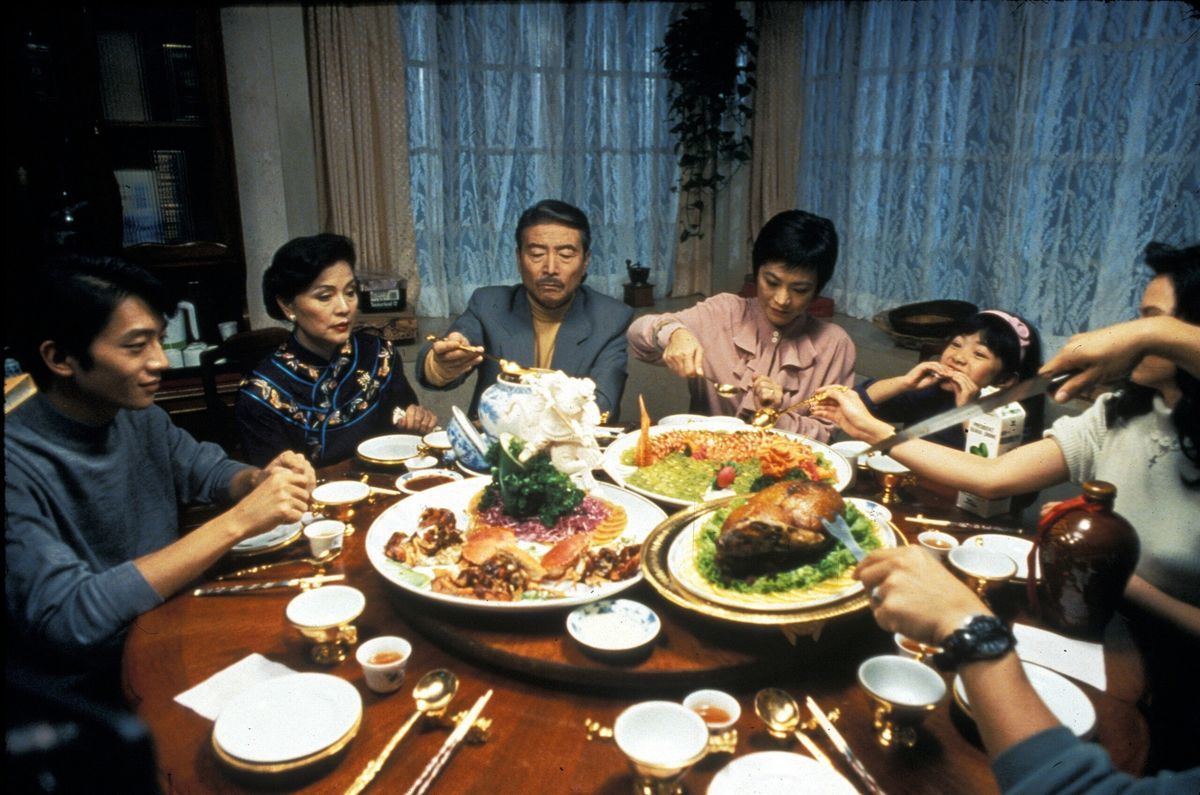
With only seven meals to distil the 5000-year span of Chinese history, DuBois takes what I suspect to be a tutorial delight in using different research methods. Sure, anyone can take a recipe from a Ming dynasty cookbook, but DuBois wants to investigate where the ingredients came from, and which ones were new. He pokes around the foods seen on display in Ang Lee’s film Eat Drink Man Woman to illustrate what constituted a home-cooked meal in the yuppie 1990s, and in a lovely 21st century touch, deconstructs the menu for a modern phone-based hotpot restaurant.

DuBois even gets his hands dirty with forensic archaeology, trying to recreate Zhou dynasty booze in his home with some millet, barley and mold. I would have liked to have seen more of such experimentation, along the lines of Serra and Tunberg’s Viking cookbook, in which our earnest academic tries to get to grips with ancient cooking methods, and is forced to confront ancient standards in taste.
DuBois is particularly good at reading between the lines, with abductive analyses of everything that’s missing from cookbooks and recipes. He points out, for example, the basic processes that are omitted from classical texts, because it is assumed that the average reader already knows them, as well as the rudiments that have to be reintroduced in the 1980s for housewives who have never had a chance to learn. He also luxuriates in the many processes and techniques that today we farm out to third parties – a traditional Chinese cook might make their own pickles and ferment their own sauces, transforming the nature and time-stamp of food preparation in all sorts of ways.
For his second chapter, he jumps ten centuries ahead, to a China reeling from the impact of Silk Road contacts – tea-drinking Buddhists, dairy-loving Persian traders, and new food stuffs from the barbarian West, as well as a shoreline that introduced a diversity of new seafoods, and even exotica like romaine lettuce, arriving from Japan and hence still known today as Woju – i.e. lettuce from the land of the dwarves of Wa. He also points to the absolutely revolutionary impact of fast-growing rice in the Song dynasty, doubling or even tripling the annual output of Chinese farms.
When it comes to the “Columbian Exchange” – which is to say, the transformative Ming dynasty, when new crops flowed into China from the New World – DuBois reminisces about his student days in north China, where he was forced to subsist on a diet of maize-based porridges and derivatives. He notes how corn remained a largely foreign element in cookbooks, but still became an integral part of the Chinese diet, flung into local recipes to create enduring hybrids like the baba cakes of Guizhou and Yunnan.
DuBois makes welcome statistical forays into Chinese recipes, observing, for example, that the ingredients for a particular Manchu dish would amount to a vanishingly small amount of spice per diner by the time it was eventually served. It is a recurring theme in his history – that today’s chili- or pepper-heavy dishes, our salty fast food and sugary snacks, would be almost entirely alien to many of our forebears, and possibly even inedible to them.

As he enters modern times, DuBois alludes to the “culture war” as China was exposed to European ways and technologies, such as the sudden spread of canned condensed milk after its invention in the 1850s, introducing a particular kind of sweetened dairy product to far-flung places that had never seen it before. Chinese authors scoff that foreign food is “raw and primitive” and that even the most lavish meal at Buckingham Palace pales in comparison to a “budget banquet” in Shanghai. DuBois takes an entertaining detour through the 1925 book Secrets of Western Cooking, which tries to educate Chinese chefs about exotica like cold salads, bread pudding and fried chicken.
He mentions the desire of Chinese arrivistes to be seen in Western restaurants, even if they found the food unpleasant – a comment which suddenly instilled in me a powerful memory of winter 1991, when my students at the China Trust bank in Taipei decided to give me a send-off by taking me out for an expensive meal at an American steakhouse, and I was forced to smile wanly through the very opposite of the kind of food I liked, looking longingly across the street at a Sichuan restaurant.
Feigning ignorance of the concept of the Chicken Kiev (or these days, Kyiv), DuBois recounts the preparation of one at Beijing’s Moscow Restaurant as it must have looked to incredulous Chinese eyes, wastefully packing a chicken breast around a puck of butter, and repeatedly frying and rebreading it. He observes that butter in the 1950s was only available to foreign customers at the Friendship store, rendering a home-cooked version of the meal as likely as a sprinkling of moon dust.

As China opens up, DuBois is present in person to remember some of the anecdotes that might have otherwise been lost to history. He recalls, in his student days, the national excitement over the opening of a Nestlé factory in north China, and the subsequent migration all over the country of unopened tins of powdered milk, repeatedly gifted and regifted as prestige items with no obvious use. For DuBois, the continued success of McDonald’s in China is partly due to a sense of nostalgia among the grown-up “Little Emperors” for whom a childhood trip to the newly arrived Golden Arches was a rare and welcome treat.
After China joins the WTO in 2000, DuBois identifies a “firehose” of exports, indirectly changing local foodways by putting more money in everybody’s pockets. He also identifies some of the perils of industrialised food production and franchising, and has a refreshingly cynical eye when it comes to certain legal clampdowns. He scoffs at the possibility that street markets might be shut down for reasons of food safety – far more likely that it’s hard to get them to pay tax. He adopts a novel business-based approached to the famous duck restaurant Quanjude, discussing not its signature meal, but the catastrophic attempt to grow it into a franchise big enough to float on the Shenzhen stock market. The whole point of Quanjude was that it was bespoke; you couldn’t just open one in every town like a Pizza Hut and expect to keep the same quality or cachet. I was also fascinated to read about the business models of the Luckin coffee bars, which charged exorbitant prices on the premises, but actually functioned as home delivery points, offering coffee to your door so cheaply that it was cheaper to order one than make one yourself, with the bonus feeling that you were getting something at a high discount. Even then, seven years after being founded, Luckin still isn’t in profit.
In the 2020s, DuBois has plenty to say about modern trends, such as the waimai custom of ordering out, and the army of delivery drivers that has sprouted up to support it. There is a melancholy cast to the recipes in his penultimate chapter, which lack the verve of days past and instead favour sad little hacks to pimp up a Cup Noodle, and the concept of the “distracted diner”, who is too busy gazing at her phone to pay much attention to the food anyway.
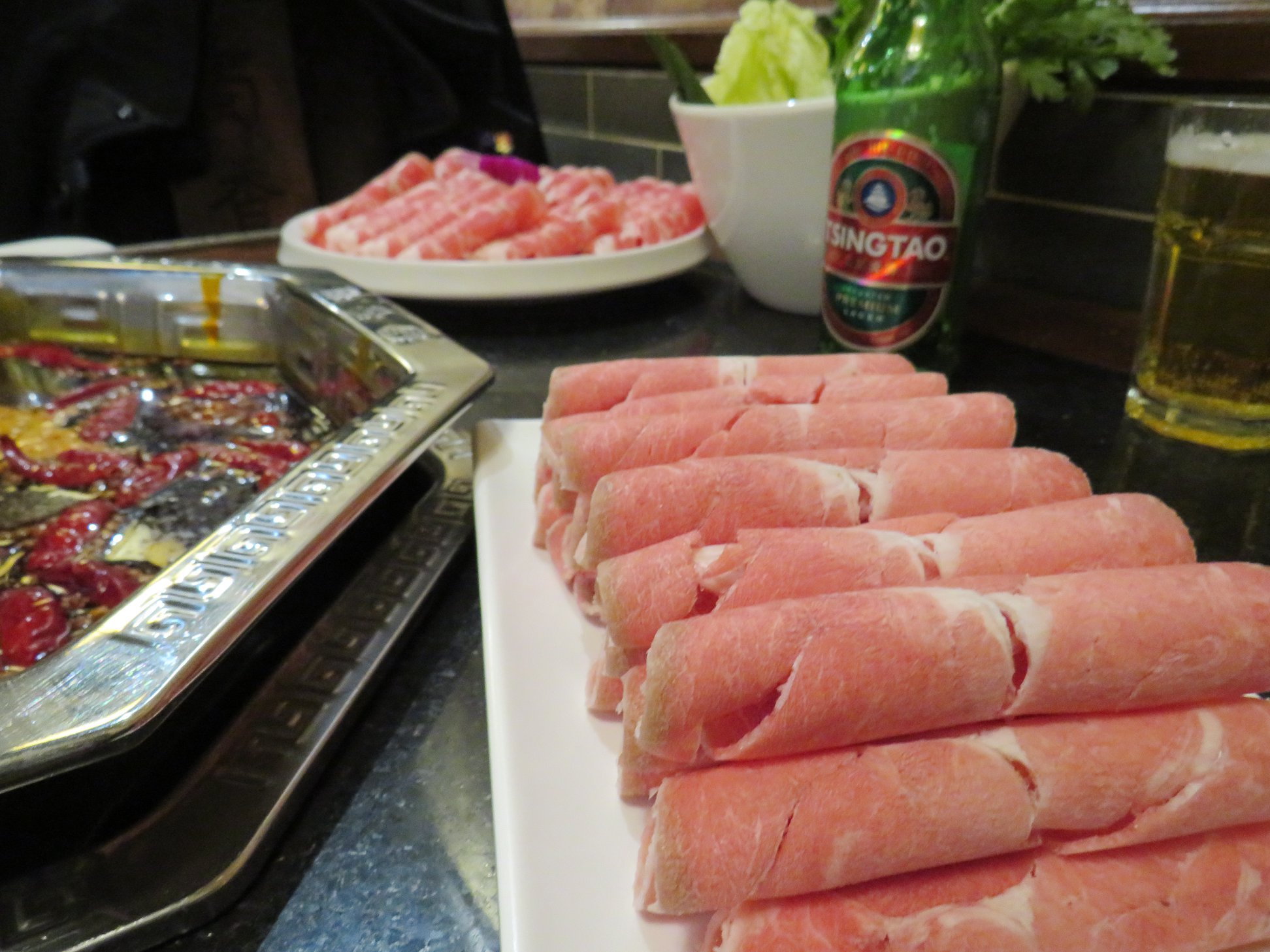
He mounts an impassioned defence of the hotpot as a dish to savour outside the home – DuBois argues that they belong in restaurants, because of the ridiculous faff of having to get all the ingredients yourself. He supports his thesis with a potted history of the Haidiliao chain, which not only industrialised “chefless kitchen” hotpot meals at franchises all over China, but even diversified abroad – I was quite boggled, walking along London’s Piccadilly one day, to find the local branch advertising for a ”Noodle Dancer.” Today, Haidilao will even come to your house, and pick up the hotpot when you’re done.
He finishes by looking into his crystal ball at what Chinese meals might look like a decade hence, steered by food security, food safety and green concerns. He points to the highlighting of “Green Biomanufacturing” as a key R&D issue in the last Five-Year Plan; localised hydroponics, and A.I. steering algorithms that condense big data on everything from weather patterns to football matches to predict which food products need to be ordered on a daily Just-in-Time system. DuBois foresees the ultimate end of waimai trends – the removal of kitchens entirely from newly built apartments, by architects desperate to save space.
Inspired by the sight of Russian economic trends post-Ukraine, DuBois imagines supplies sourced entirely from friendly nations, and familiar retail sites thinly rebranded as patriotic chains with names like “Rising China”, even if they still have the old McDonald’s interior designs. As China’s surveillance society even begins to invade eating habits, he wonders if some futuristic café will greet each arrival with a personalised menu, based in part on what its algorithms have decided the customer needs after what he was up to last night, and what he had for breakfast this morning. With a perceptive science fictional eye, DuBois imagines sitting down to a meal made with “freshly printed shrimp.”
Jonathan Clements is the author of The Emperor’s Feast: A History of China in Twelve Meals. China in Seven Banquets: A Flavourful History by Thomas David DuBois, is published by Reaktion Books.
 The Official Schoolgirl Milky Crisis Blog