

Back in March, Mark Schilling interviewed me as part of a piece he was writing for Variety. As ever, a long answer gets distilled into a couple of soundbites, so here is the unexpurgated version of my replies.
Deals are being signed between Japanese companies and their Korean and Chinese partners, but I’m hearing the pace is slower that might be expected due to everything from structural barriers (the Japanese production committee system) to political and cultural issues (Japanese fan criticism of Japanese anime adaptation of the Korean web novel “Solo Leveling” due to latter’s supposed anti-Japanese bias).
Ten years ago, Chinese investment was looking like it was going to be a game-changer in Japanese animation. We had Chinese companies bailing out troubled productions and snapping up ailing studios, and the potential market for Japanese animation in China was conservatively estimated at twenty times the size of that in Japan.

But China has become increasingly restrictive for foreign media. There was a lot of celebration in the foreign press about the likes of Kung Fu Panda and Mulan making it through to Chinese audiences, but they have come to be derided in China as unwelcome distortions of Chinese culture. The People’s Republic is becoming increasingly bullish about “cultural security” and there are calls in recent Five-Year Plans for it to become a “strong film nation”, in control of its own cultural content rather relying on whatever leaks in from overseas.
In 2020 China introduced the new Law on the Protection of Minors. There were a whole bunch of clauses in that law that gutted the potential for anime in China, including the banning of ownership of a streaming account for anyone under sixteen, and the forbidding of “obscenity, pornography, violence, cults, superstitions, gambling, inducements to suicide, terrorism, separatism, or extremism” for any viewers under eighteen. Now, of course, not all anime is sex and violence, but a good half of modern productions are aimed a late-teen demographic sweet-spot that is now forbidden.

That doesn’t destroy Chinese investment by any means, but it heavily skews the willingness of Chinese corporations to get involved in Japanese production. Pre-COVID, many were happy just to throw in some cash and distribute the result in their home territory. Now, they are well aware that if they pay out for the wrong sort of anime, their investment is worthless in the Chinese market. So, we get an increased focus on “anime with Chinese characteristics,” which won’t necessarily play well in Japan.
That’s the politics. Structurally, I think the real issue that we’re facing (and this applies to both Korea and China as outside investors) is an incredible choke-point in labour flows at the moment. There isn’t just the ongoing aftermath of COVID; there’s the fact that the big streamers like Amazon and Netflix have booked some studios up years in advance.
Meanwhile, Japan has introduced the new Work-Style Labor Reforms. These were actually passed six years ago, but they only phased in during 2020-1, and they severely curtail the amount of overtime that companies are allowed to authorise. Anime companies used to work miracles by working around the clock, but now they have their hands tied. They could bring in more freelancers, but freelancers are hobbled by changes to Japanese tax law (October 2023), which obliged them to collect sales tax on all their invoices. So, if you are a Korean or a Chinese company hoping to lean on Japanese labor, you have all these issues to contend with before someone’s even picked up a mouse.

It’s only then that we get to the content issues. Anime has been through many transformations in the last few decades, with a widely fluctuating relationship to overseas demand, or rather to the degree to which the producers were ready to acknowledge it. There was a point in the 2010s where it was all about making local, domestic content for Japan, and if foreigners liked it, too, that was gravy. Now anime companies talk about foreign investors as the “Black Ships” – comparing them to the American gunboats that rammed open the doors to Japan in the 1850s, imposing an international outlook on a nation that was trying to stay shut away in its own little world.
People are drawn to anime because it’s different. But so many overseas investors are trying to use anime talent to make shows that are focus-grouped to within an inch of their life to appeal to audiences in 70 countries at once. And if you are trying to please viewers in London and New York, Nairobi and Dubai, Buenos Aires and Beijing it can be incredibly limiting, artistically.
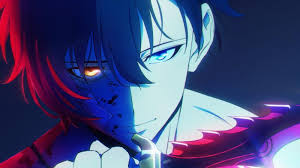
I don’t know if I want to get involved in the hoo-ha over Solo Leveling. Because you have people online getting offended at a hand gesture that they think means animators are making insinuations about Koreans having small penises, even though the studio that made the opening animation was Korean…. I mean, I am already boring myself. One of the corollaries of truly international, immediate streaming productions is that you now have the chance to offend several million people at once, and that they have the ability to make a stink about it in real time. Companies can be quick to pivot, not only in how they steer their content in production, but also in reaction to such drama after broadcast before their share prices drop. That’s the problem when everything is connected: everything is connected.
Do you consider Japan’s production committee system a co-production barrier? Or have foreign partners learned to live with it and even use it to their advantage?
In my experience, it is often a terrifyingly tedious chicane of obstacles, particularly with old shows where things that you could once agree with a handshake and a whisky now have to be run past a group of disparate strangers, some of whom are inheritors or purchasers of someone else’s intellectual property, with no real interest in making useful decisions. It’s one thing to be dealing with the original manga creator and the woman who runs the studio. It’s another to have to track down the dead producer’s ex-wife and the venture capitalist who accidentally purchased a dormant animation company.
I suppose the one way in which foreigners were able to use the production committee system to their advantage was by buying into one as a means of securing overseas rights without having to get into a bidding war. Manga Entertainment did that with Ghost in the Shell in 1995 in order to head off local competition in UK and European markets, and there were some similar shenanigans recently over who got to own the new Shinkai. So, in that sense, the ability to buy into the “ownership” of a new anime while it is being made can save a canny investor hundreds of thousands of dollars at the distribution end.
Jonathan Clements is the author of Anime: A History.
 The Official Schoolgirl Milky Crisis Blog