
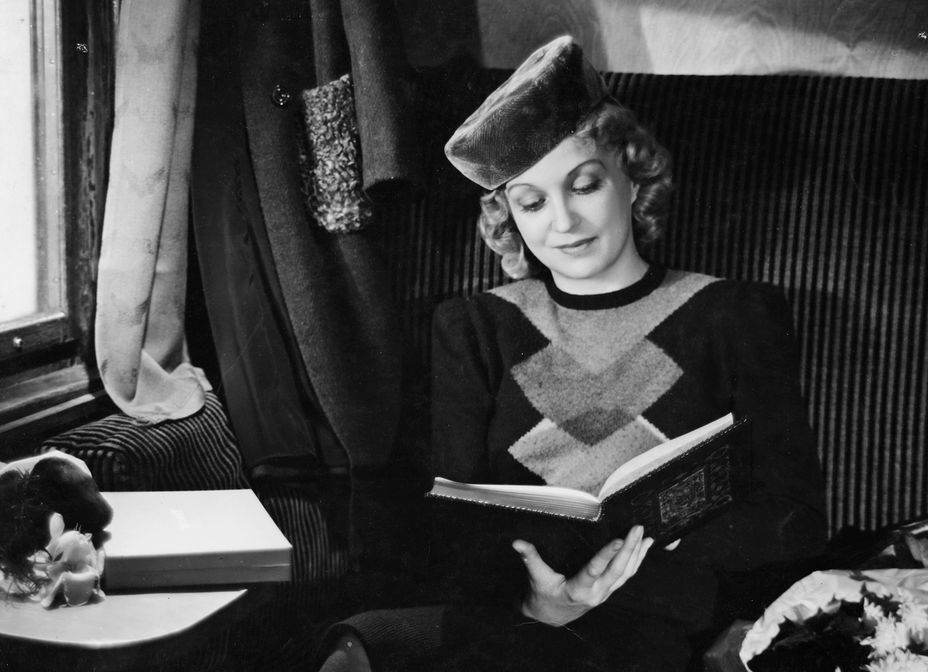
Liisa Harju (Lea Joutseno) is a quick-witted, vivacious girl from Savo who has been posted to Ostrobothnia, the uppity west coast of Finland where the locals think that she is no better than she ought to be. She thinks she is just being friendly to the handsome local doctor Eino Korpinen (Tapio Nurkka), but their increasingly flirtatious interactions meet with umbrage and annoyance from local womankind, who regard Eino as theirs to fight over. In particular, her arrival seems to irritate the school principal Mr Iipo (Eino Jurkka), whose snooty wife Kristiina (Elli Ylimaa) expects Eino to propose to her insufferable daughter Ester (Rakel Linnanheimo, sister not only to the more famous Regina, but also to the woman who is playing her own mother!).
We have, in a sense, been here before. The tensions and conflicts in Varaventtiili are almost exactly the same as those in Suomi-Filmi’s earlier The Women of Niskavuori (1938), and indeed, Niskavuori’s fearsome matriarch Olga Tainio has a far less substantial role here as a sulking matron. Both films are based on novels written two decades after Finnish women won the right to vote in 1907, grappling in their own way with the impact and attitudes of the first generation to grow up in such an environment. Whereas The Women of Niskavuori ultimately presented its go-getting lady teacher as a clueless, home-wrecking hussy, Safety Valve is more sympathetic to the fact that times are changing. True enough, Liisa doesn’t turn up and steal another woman’s husband, but in the eyes of the townsfolk, she pretty much steals another woman’s potential fiancé. The difference is that Eino is there for the wooing, and if the local girls don’t like it, they’d better up their game and bring something to the party.
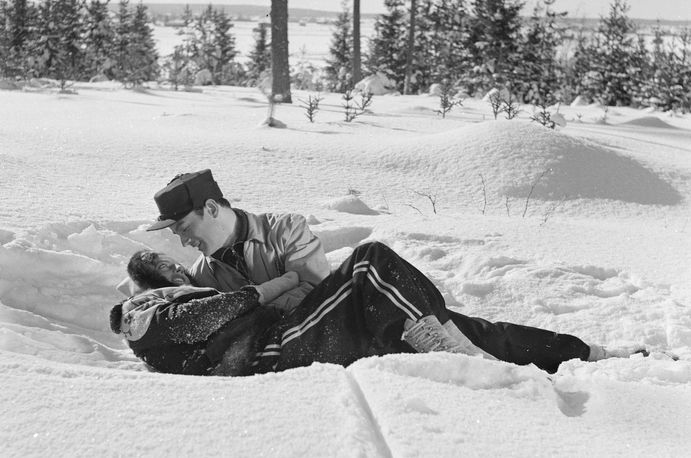
Safety Valve wonderfully encapsulates the town-versus-country issues that lie beneath many a Finnish movie of the era, here landing firmly on the side of urban urbanity. The Ostrobothnians think of the people of Savo as uncultured hicks, whereas the Savonians find themselves in close proximity to the growing new towns of Kuopio and Tampere, and Jyväskylä, the “Athens of the North”, the site of the first Finnish-speaking teacher-training college, and hence the engine that churned out thousands of women like Liisa to go out into the world and force gurning farmers’ children to learn about stuff.
The children are the low point of the film – listless child-actors bored by their own lines in the scenes where Lea Joutsena is obliged to pretend to be teaching them. Meanwhile the locals harp on about “traditional values” and the “way things are done” to a ridiculously obsessive degree, acting as if they are preserving the heritage of Western civilisation, but coming across like drunken tramps fighting over a cardboard box in a skip – much of the drama circles around whether the teaching staff are allowed to use the school sauna.
An intriguing subtext of the film revolves around the application of reading and writing. Eino’s true love is destined to be the woman who reciprocates his bizarre interest in “a volume of Chinese poetry, translated into German”, while Liisa’s constant companion is her “safety valve” – the diary that allows her to blow off steam about some of the outrageously dismissive things that the local women say to her.
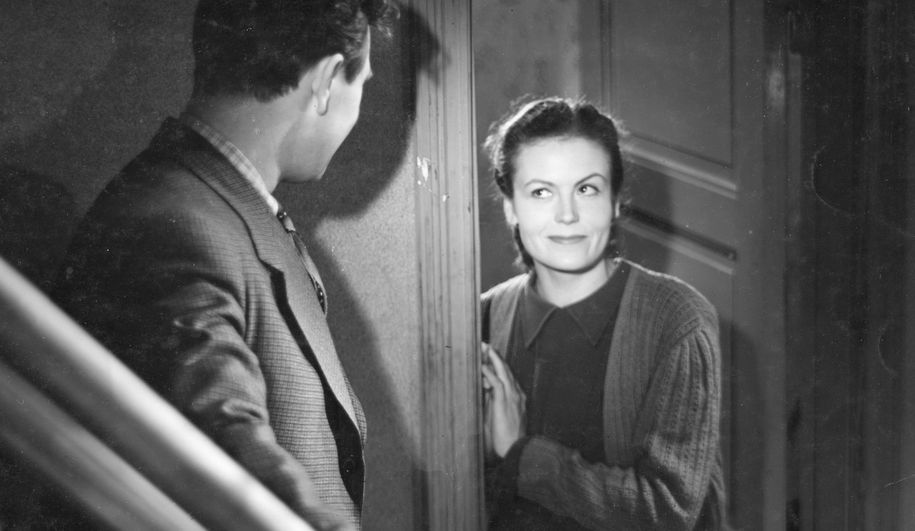
At least Liisa isn’t left alone to face the yokels. Her fellow teacher Rauha is played by the lovely Irma Seikkula, still displaying the vim and poise that brought her fame as the similarly pro-active Juurakon Hulda (1937). There are moments when the film threatens to break out into genuine humour, with Liisa and Rauha as a pair of icon-busting jokers, like Melissa McCarthy and Sandra Bullock telling everyone to go eff themselves, but sadly that potential never quite manifests.
Safety Valve was based on Hilja Valtonen’s debut novel The Safety Valve of the Young Teacher (1926), a roman à clef about the life of a young woman transplanted to a distant Ostrobothnian town, that had somehow made its way into eight reprintings. This adaptation by scriptwriter Yrjö Kivimiehen sets the action in a timeless rural setting entirely untroubled by the rumblings of the Continuation War that clearly concerned the production team. While the cast of Valentin Vaara’s film go about their business without a care in the world, the backstage crew are dashing feverishly to get the film in the can and into cinemas before wartime austerity bites again – a behind-the-scenes panic that can largely be held responsible for some rushed shots, shaky camera work from a moving train, and substandard location work, clearly shot on cloudy days.
Jonathan Clements is the author of A Short History of Finland. He is watching all the Finnish films, so you don’t have to.
 The Official Schoolgirl Milky Crisis Blog