
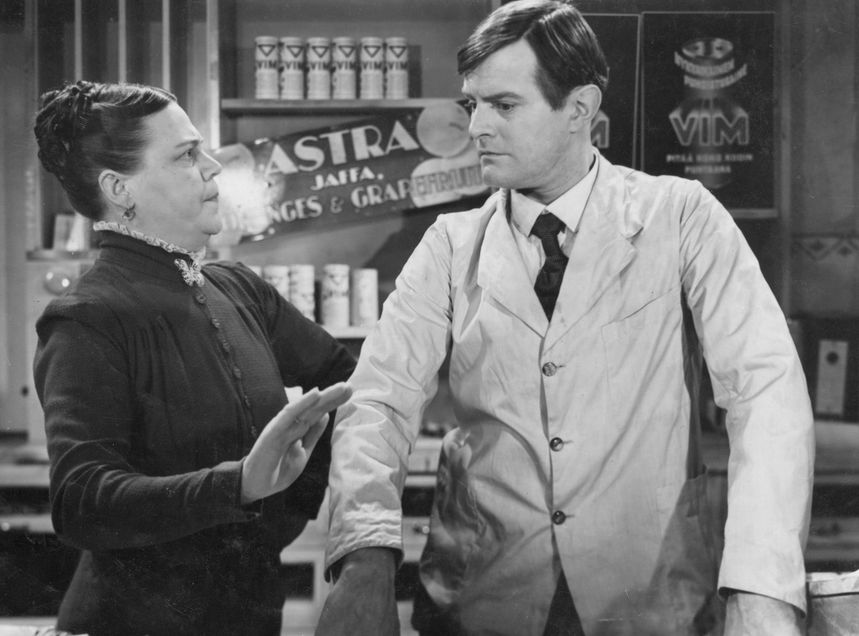
Orphan Kauko (Tauno Palo) dreams finding his place in life and marrying his childhood sweetheart Ulla (Ulla Ilona). He is dispatched to the big city of Helsinki to work for the stern shop manager Mrs Kankkunen (Siiri Angerkoski), who soon “educates” him about the double standards of the city – he is expected to be fawningly obliging to the rich, and brusquely dismissive to the poor.
An innocent buffeted along by the company in which he finds himself, Kauko learns to flirt and dance, but also gets dragged into conflicts not of his own making, and is thrown in jail after an altercation with a youth in a park. The fact of his incarceration is used to blame him for missing company funds that are actually the fault of his boss. Down on his luck, he ends up at the Salvation Army, where the grey-bearded Urho (Hugo Hytönen) comforts him with the words: “Fate is a wheel, the wheel spins and it spins beautifully.”
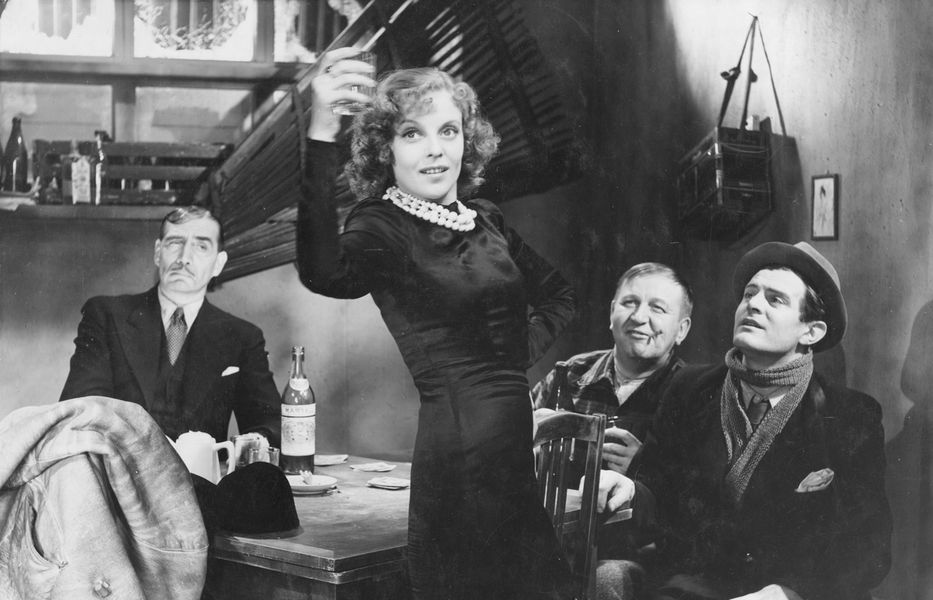
These sentiments echo those of “Väliaikainen” (Temporary) the popular song that Kauko sings at several moments in the film, which encapsulates the recurring message that whatever fates befall him in the film, they, too, shall pass: “Life with human worries and sorrows / It’s only temporary Moments in life that shine with joy / Are only temporary, too / This joy and richness of our life / And the love raging in the chest / And that disappointment, really / Everything is temporary.” If the song seems familiar, it’s because it was already used in The Two Vihtors (1939), a similar tale of fluctuating fortunes, but here it is so integral to the story that it is credited as being the inspiration for the entire movie.
Trying to work his way back up the ladder, Kauko takes a job at a sawmill, but at a dance he meets the vivacious and bewitching Eeva (Regina Linnanheimo), who drags him into the orbit of her gang of thieves. Kauko is drafted into a big heist at a furriers, but flees the scene when the police arrive, throwing away the gang’s takings. In punishment, the criminal boss orders him to “take a walk with the Bear and the Butterfly,” two heavies whose ministrations are interrupted by Clauson (Aku Korhonen), a painter who nurses Kauko back to health and intends to use him as a model for his new depiction of the tragic hero Kullervo.
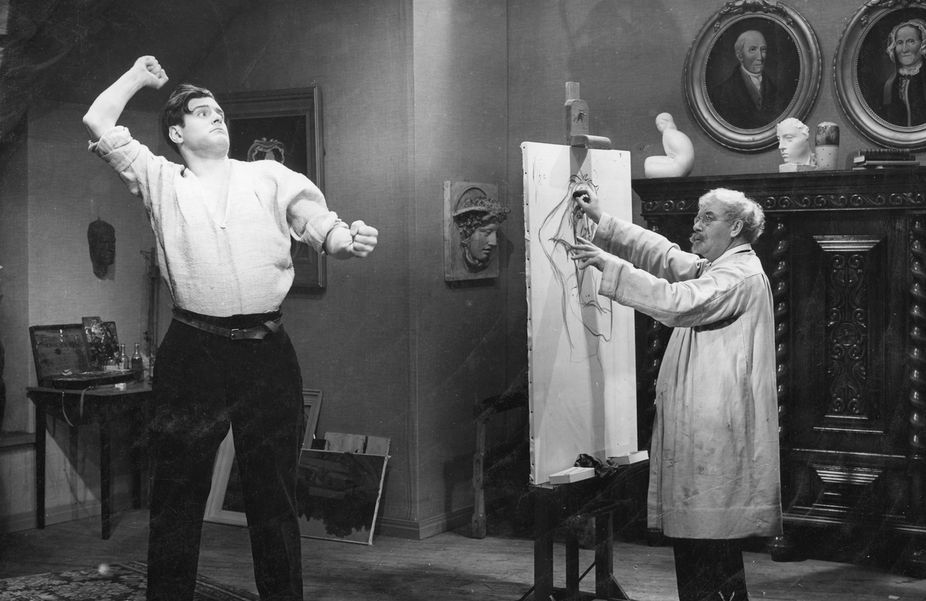
Meeting the elegant Mrs Heimonheimo (Hanna Taini) at the studio, Kauko is smitten, but Clauson warns him that: “She has no heart, only money.” A similarly blunt assistant is delivered to Kauko by his would-be singing teacher, who tells him that he has no real prospects as a professional, but real talent for singing with his heart. Kauko gives up on improving his singing, but nevertheless finds that his raw, untrained voice has a certain folk appeal, and soon leads to a bestselling record.
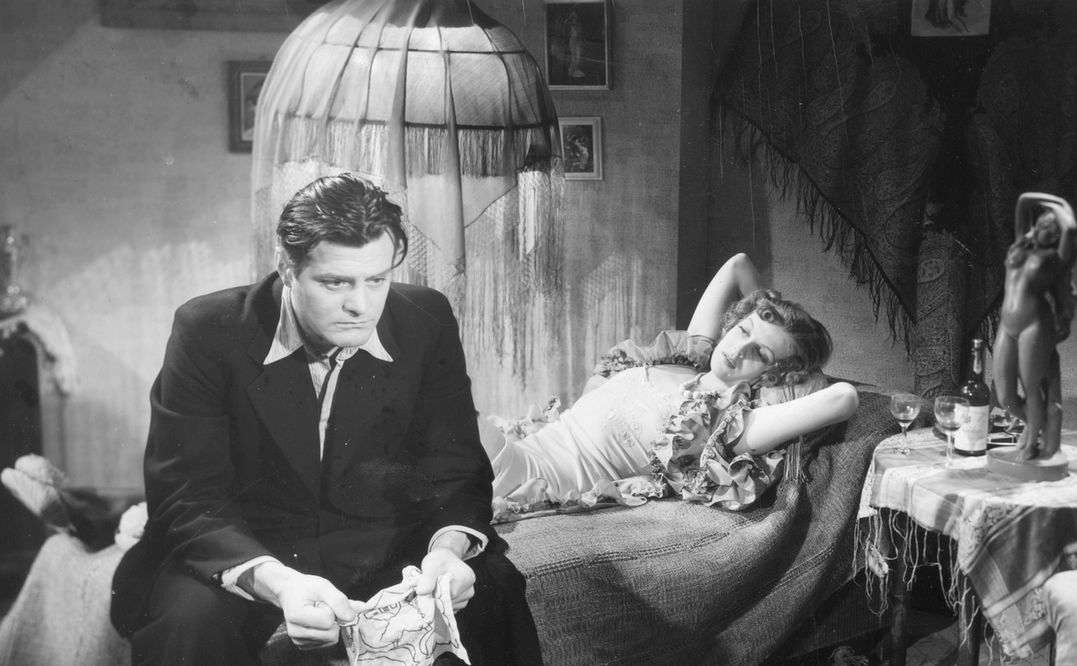
Kauko is well aware that his fame and fortune is equally fleeting and delivers an embittered performance of “Väliaikainen” at the unveiling of Clauson’s portrait of Mrs Heimonheimo, intending it as a warning to the smug and wealthy patrons that their fortunes, too, might fall at any moment. He falls in with theatre folk who, not for the first time in Finnish cinema, are portrayed as holy fools with some sort of appreciation of life denied mere civilians. He rediscovers the handkerchief gifted to him by the faithful Ulla, and returns to marry her, announcing that she alone brings him true joy.
The cast gather around the table to sing a reprise of “Väliaikainen”, which is supposed to be a happy ending, although the song is probably the last thing you want to sing at a wedding: “The gentle beauty of your girl / As well as the purple blush on her lips / And her smile, really, really / Everything is temporary.” Except the version of the song as used in the film includes new lyrics by Mika Waltari that speak directly to the matter of Finland in 1942: “War, poverty, hunger and anxiety / It’s only temporary / Famine, illness, lack and longing / It’s also temporary.”
The Finnish film world is full of rural innocents facing up to the big city (everywhere from Juurakon Hulda to Forbidden Fruit), but since this is a script by the peerless Mika Waltari, The Wheel of Chance clicks together with clockwork precision. Shot in the winter of 1942, where the requisitioning of snow ploughs to the war effort has led to markedly higher snow banks in the Helsinki streets, it amounts to a rather obvious retread of the earlier Tauno Palo vehicle, The Vagabond’s Waltz (1941), which similarly deconstructs a song into its component stories.
Finnish critics were not so impressed. Paula Talaskivi in the Helsingin Sanomat thought that The Vagabond’s Waltz did a much better job of telling an “airy fairy tale” and found Wheel of Chance (Onni pyöri) disappointingly jejune. Toini Aaltonen in the Suomen Sosialidemokraatti similarly decried it as a throwaway diversion for a “naïve and simple” audience, and blamed Waltari himself for cynically assembling a set of triggers that would distract the groundlings without delivering any artistic merit.
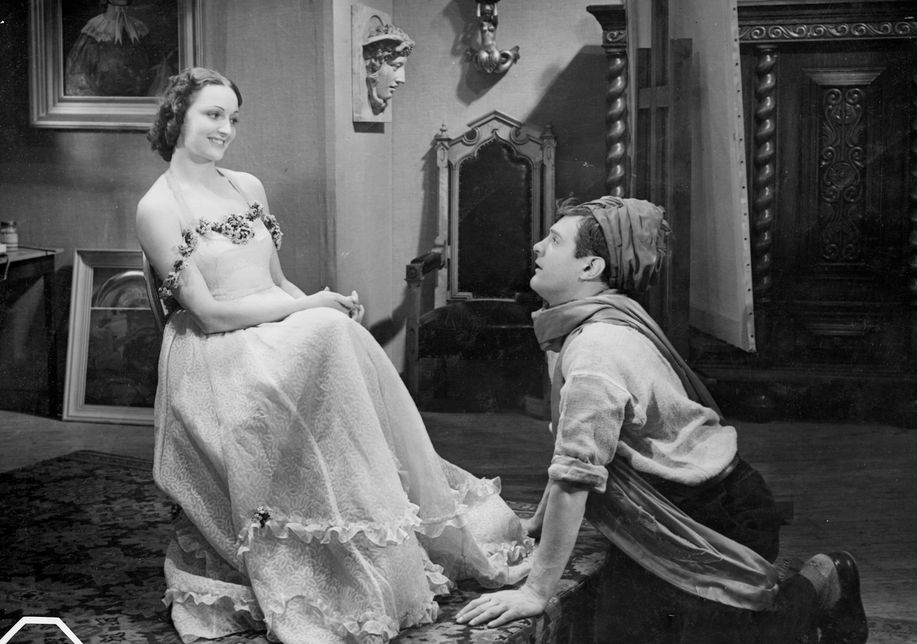
Olavi Vesterdahl in Aamulehti also put the boot into the poor writer. “It seems incomprehensible how Mika Waltari has allowed his name to be published in connection with such a film,” he fumed, “a film that summarises almost all of the awkwardness of domestic cinema so far, a film that does not even satisfy even a mediocre Finnish viewer, but drops to the level of the most basic comedy and the cheapest means of making people laugh.”
While it’s certainly not Waltari’s best work, I still think it displays a greater awareness of its time than its contemporary critics allowed. Waltari’s script zoomed in on the wainscot society of Helsinki’s spivs and wartime wheeler-dealers, in a creative decision a year ahead of a boom in similar movies – by 1943, everybody was doing it.
Jonathan Clements is the author of A Short History of Finland. He is watching all the Finnish films, so you don’t have to.
 The Official Schoolgirl Milky Crisis Blog