
Jaqueline Berndt’s curation of the Cambridge Companion to Manga and Anime delivers a series of informative one-two punches, each one gradually firing a potential student reader up with new materials and ideas for approaching a new area of study.
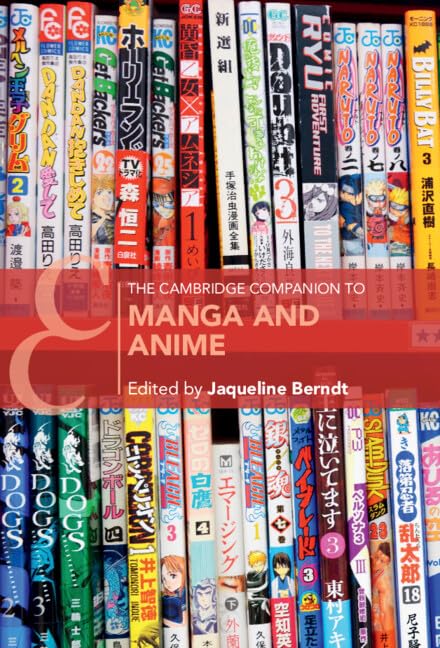
I own several Cambridge Companions already, and they are often on subjects I was approaching as a putatively intelligent layman, hoping to get up to academic speed fast on topics as varied as Old English Literature or Viking Sagas. I tried to bear that in mind when reading the new Cambridge Companion to Manga and Anime, considering the degree to which the book would serve to allow a newcomer to slice through the noise and junk that inevitably accrue around a discipline, in order to understand its most important elements and examples.
The Companion certainly ticks the boxes for the series – it is authoritative, it has chapters by most of the leading figures in the contemporary field, it’s lively and it’s accessible. It also repeatedly manages a neat trick of doubled chapters, in which one writer sets up a theoretical idea, to be followed by another who applies it with immediate effect. In particular Lukas R.A. Wilde, examines the chara, rather than a character as an element in the construction of anime. The takeaway here is his discussion of “ludic realism”, in which so many manga and anime adopt a sense of reality that owes less to our world than it does to the respawns and gamified narratives of modern gaming.
Yeah, you might be thinking, but so what? As if by magic, you turn the page, and here’s Stevie Suan discussing the way that the characters in anime act, not only through the replication of human movements and emotions, but through all sorts of little cues like the way their hair moves. Here, Suan zooms in on Yuri!!! On Ice to demonstrate the way that anime can uniquely employ its toolkit to tell a complex story about the way that ice skating scores its performances.

Stand-out chapters in this volume, for me at least, include an incisive essay by Koo Boonwon that crunches the statistics of manga sales. Koo points out the massive digital elephant in the room, which was that even as sales figures for paper manga magazines continued to plummet, the medium’s move in the 2010s into pixels has continued to grow from strength to strength. Row after row of Japanese commuters staring at their phones are not necessarily playing Chucky Egg – many of them are reading, and 2019 was the year in which digital manga sales first outstripped those for magazines and compilations volumes combined. Manga on paper peaked in 1995; but manga as a whole enjoyed its highest-ever sales year in 2020, largely buoyed by digital transactions, and doubtless nudged along by a global pandemic keeping everybody shut indoors.
Koo offers some fantastic nuggets of information about the manga business, including the observation that Shonen Jump was a relative newcomer to an established manga scene, and hence found a new gimmick to sell itself – pushing new artists. This, in turn, forced the magazine’s editors to adopt a substantially more hands-on policy with their creators, since many of them were fresh off the figurative boat. The shape of the manga publishing field is given a vital introduction elsewhere in the volume by Dalma Kálovics, who also deals with digital publishing, but only after siting it within the history of other forms of presentation, from the post-war akahon, through the rise of the magazine and its contemporary decline. Hers is such a useful foundation for understanding manga, in fact, that I query its location near the back of the book – this is a chapter that could really do with having been front-loaded.
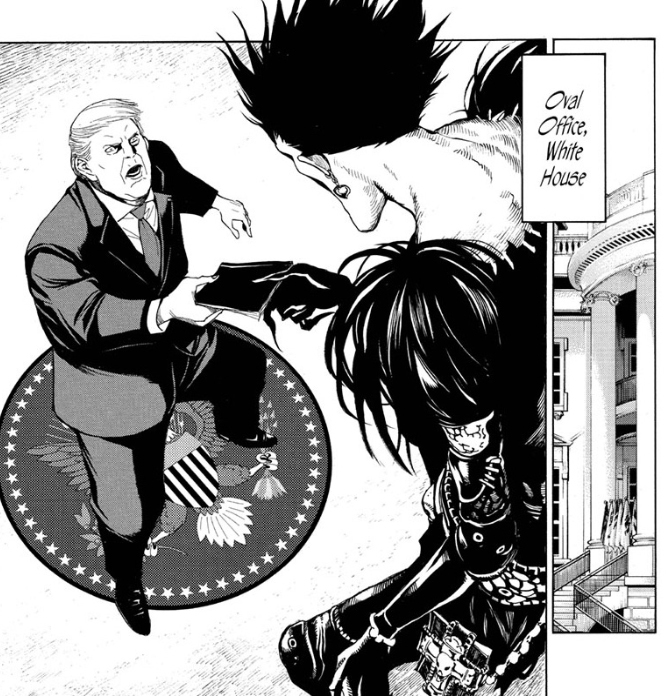
Jaqueline Berndt has always been a stickler for definitions, and tries hard in her introduction to warn people off making errors of tradition – arguing strongly that both manga and anime are modern artforms that owe remarkably little to their supposed antecedents. In doing so, I fear she might have scared some of the contributors away from drawing useful historical parallels or chronological approaches. However, this may have been necessary purely in terms of space. Opening my copy of the Companion, I was boggled by the size and scope of the table of contents, but there simply isn’t the space in a single volume to contain all the possible iterations of its aims. In that regard, excluding historical whataboutery from the outset may have allowed Berndt to focus more concisely on pertinent issues, and make the book compact enough to lift.
Sometimes, this places unfair restrictions on the stories that some writers are trying to tell. Deborah Shamoon, for example, approaches the world of manga genres, pointing out the way in which the broad definitions of shonen, shojo, and so on were first arrived at, and noting that such rigid boundaries have come under fire elsewhere in literary studies for establishing arbitrary rules that then become pointlessly rigid. She investigates two the genres of sports manga and isekai stories in search of ultimate truths, although she barely has a page to cram such applications in – see Jeannette Ng here, for example, on a broader analysis of isekai fiction, in contexts that Shamoon was unable to fit into her wordcount.

But like so many other chapters in this collection, what first appears to be a sudden truncation turns out to be the lead-in for a levelling up. After Shamoon has primed the reader, Bryan Hikari Hartzheim is soon on the scene to discuss genres in anime, rewardingly as a subject that researchers should consider approaching on the basis not of authors or content, but of studios. Hartzheim chooses as his example the peerless Gainax, outlining the way in which the studio came to be associated with a particular look and feel. However, as Rayna Denison has pointed out elsewhere, in her deconstruction of myths about Studio Ghibli, such an approach can risk missing the wood for the trees. We need to ask difficult questions, like the degree to which we can determine an effable Gainax-ness in both Wings of Honneamise and Gunbuster, when even the studio staff themselves regarded them as very different projects. Space forbids Hartzheim from advancing any further than Gunbuster in the story of Gainax anime, which is a shame considering all the contentious titles that were barrelling down the pipeline after it.
Olga Kopylova concocts a vocabulary for describing some of the tropes and traditions of manga and anime artwork – not just the obvious ones like super deformation, but many subtle nuances and hacks. She notes, for example, that part of the “iconic abstraction” employed by manga artists means that heroes never have double-chins, regardless of the angle they are shot from. In doing so, she takes Santiago Iglesias’ concept of “ratio dynamics”, conceived to help explain how anime creators assign workloads, and points out that it also applies in the comics world, where some pages are more detailed than others. I think she could have gone a lot further with this – she does point out the various impacts of digitisation on the creation of Japanese graphic arts, but a more historically focussed account would have also pointed out the various technological determinants of earlier periods – the uses of offset printing, for example, the impact of Letraset and Screentone, or the uses and abuses of art assistants. It’s not Kopylova’s fault, but she simply lacks the space to investigate anything beyond the most modern developments in a long chronology.
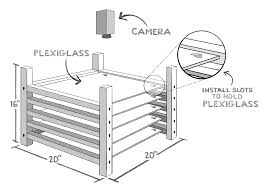
Gan Sheuo Hui sneaks some history into her account of anime graphics, arguing that even though multiplane cameras are often museum pieces today, the formats of their operation have largely steered the way that digital animation programs composite their frames. This is a lovely idea, and I wish there was more of it in other aspects of anime studies – I have long been fascinated, for example, by the fact it took the some OAVs literally decades to shake off the legacy format of being anything more than a TV episode that happens to be on video, even to the extent of fake ad breaks in the vague hope that TV-senpai might one day notice you and put you on the air.
Gan’s account, not only of the rise and fall of the multiplane camera, but of the way that its absence steered some productions, culminates in a breakdown of some sequences from Demon Slayer, illustrating not only her own thesis, but helping some of Kopylova’s points land, as well.

Ronald Stewart writes a welcome chapter on four-panel (yonkoma) newspaper strips, outlining their close connections to foreign “funnies”, and investigating the impact and content of things that are undoubtedly Japanese comics, seen by huge domestic readerships that would not necessarily identify themselves as manga fans, and often unseen abroad.
Such nescience can be aesthetic. There are, for example, entire magazines of nothing but yonkoma comics like Manga Times, but I have never covered them in my Manga Snapshot column in NEO magazine because illustration is problematic – “fair comment for criticism and review” might permit me to use sample images, but when it comes to yonkoma, it’s difficult to show a sample that doesn’t also show the strip in its entirety, and thereby exceeds the bounds of fair dealing.
Stewart offers a fascinating outline of the theory of yonkoma, beginning with a form allegedly derived from classical Chinese poetry, and then examining the approaches of contending artists, with Ippei Okamoto so invested in the third panel that he even suggests the artist draw it first, while Osamu Tezuka advises putting all the stress on the fourth-panel punchline.
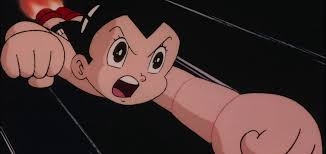
Kim Joon Yang relates Astro Boy to wartime science stories for children – asking how it is that a children’s superhero and friend to all can be designed with machine guns built into his body. In doing so, he wanders into some intriguing areas of military history, such as a study that suggested children of the war era, hot-housed in “absolute-pitch training” to teach them how to identify aircraft by their engine noises, were unable to enjoy music in later life.
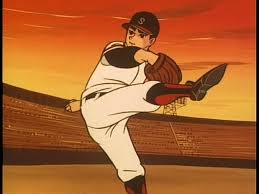
Blanche Delabord, as far as I can tell, breaks new ground in her account of “hearing manga”, going beyond the well-established discussions of sound effects and onomatopoeia to discuss the sound-picture that can be evoked through syllabaries and fonts. She carefully defines “mimetic words” – which is to say, those sound effects that denote emotions rather than actual sounds, such as the infamous “sound of silence” shiiin, or her example here, the gan noise that once signified a tolling bell, but came to mean an emotional shock after its use in an iconic scene in Star of the Giants.
Again, she could have gone on for much longer, and any manga translator worth their salt will tell you of the awful minefield of unexplained in-jokery, not to be found in any dictionary, that confronts an editor who thinks everything is just POW and WHOOSH. I fondly remember a sound effect in Ranma ½ that was specifically “the sound of an explosion, but amusing” as opposed to any other explosion.
When it comes to sound in anime, the world authority is undeniably Minori Ishida, and she’s here in person for a chapter on the subject, detailing the effects of pre-scoring and the dynamics of voice acting. She doesn’t disappoint, with a riveting account of the “Dubbing Controversy of 1962”, a spat in the newspapers about whether or not voice acting was a noble art or a slumming craft. With evident relish, Ishida charts the rise of voice actors as celebrities in their own right to a mere three years after the argument, when the magazine Television Age began covering not only the stars of shows like The Man from U.N.C.L.E., but the actors who provided their Japanese voices.
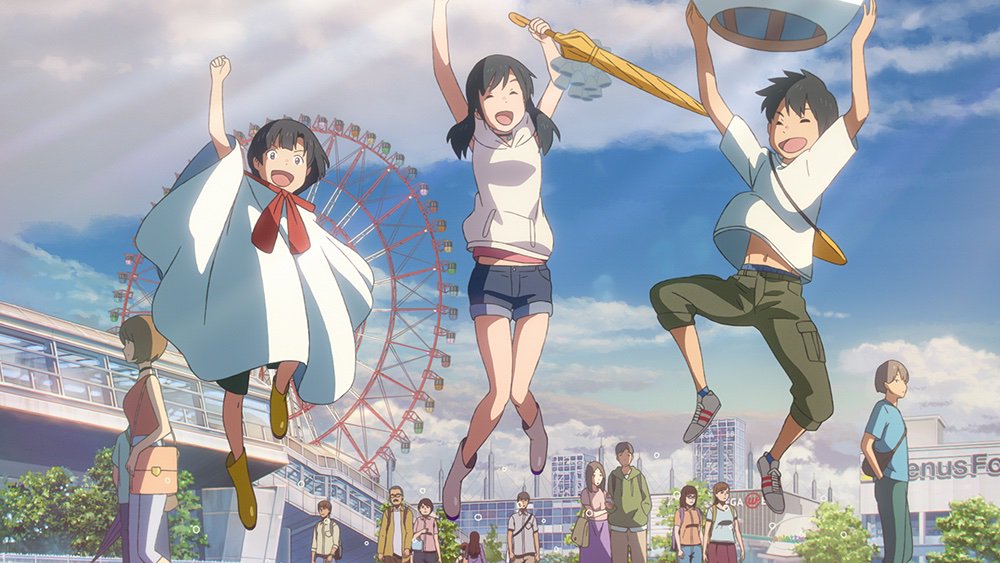
Renato Rivera Rusca offers an overview of modern anime production, noting that an industry that was once literally concentrated in just a couple of Tokyo neighbourhoods now sprawls across the whole country and beyond, at least in part thanks to the sudden disruption caused by having to cope with the COVID pandemic. In one moving example, he points to Ekakiya, a studio that contributed to the production of Weathering with You, but did so from a house in Okayama, where the owner had moved in order to care for her ailing father.
In a lovely historical insight, Rivera Rusca also adds a prologue to histories of “holy land” tourism, pointing out that first anime-inspired tourism boom was outwardly focussed in the 1970s, as fans flocked to see the Alps of Heidi – Akiko Sugawa-Shimada also makes this point later in the book.
COVID also looms large in Patrick W. Galbraith’s account of the erotic manga market, in which he points to the unexpected own-goal caused by the migration of fan-created dojinshi events online. For many years, Galbraith argues, certain publishers had turned a blind eye to pornographic parodies of their titles, only for the sheer visibility of an online appearance obligating them to take legal action.
Koichi Morimoto breaks down the act of reading a manga story into a panel-by-panel process. Selen Çalik Bedir breaks down the use of the 3DCG in Gantz 0, examining in the process the ways in which a medium that luxuriates in unpredictability and absences can work with a digital tool that laboriously creates every element of every process. How, asks Bedir, can 3DCG inject a note of unpredictability or noise into a cartoon?
Finishing with fandom, Akiko Sugawa-Shimada points out that there is more than one type of fan, suggesting that the 1970s success of Space Cruiser Yamato derived from its overlapping appeal to fans of anime and sci-fi, which, then as now, were not necessarily the same thing. Drawing on Frenchy Lunning’s history of cosplay, she narrates the arrival of the critic Mari Kotani at a 1978 convention, dressed as Tavia, the six-armed green fugitive slave girl from Edgar Rice Burroughs’ Fighting Man of Mars. Kotani had been inspired to do so by the sight of costuming at an American convention, but was mistaken in Japan for a character from the obscure anime Triton of the Sea.

Dario Lolli examines the phenomenon of Gundam’s fortieth anniversary, asking what it tells us about the way in which anime is marketed to different generations. This was an interesting thesis, although I was asking myself throughout how these events different from Gundam’s 39th anniversary, or 20th, or 10th. One of the things that soon infuriates the anime professional is how much ink is wasted any year “celebrating” the tenth birthday of Schoolgirl Milky Crisis, or five weeks since the last time we mentioned Nausicaa. It’s not quite the once-a-minute “comebacks” of Korean pop, but nearly…! However, that’s not what Lolli is getting at here – instead he is identifying the implicit elements of the market for anime today, in the sense that a show made for ten-year-old children can have a 40th birthday, and to what extent those former ten-year-olds, some of them now grandparents, might be expected to spend money on it.
It should not be taken as a failing of the book that I was left repeatedly wanting more from many of the chapters. It is after all, an introduction to the field, and brings with it a challenge to the reader, that the next step is all theirs.
Jonathan Clements is the author of Anime: A History. The Cambridge Companion to Manga and Anime is published by Cambridge University Press.
 The Official Schoolgirl Milky Crisis Blog