
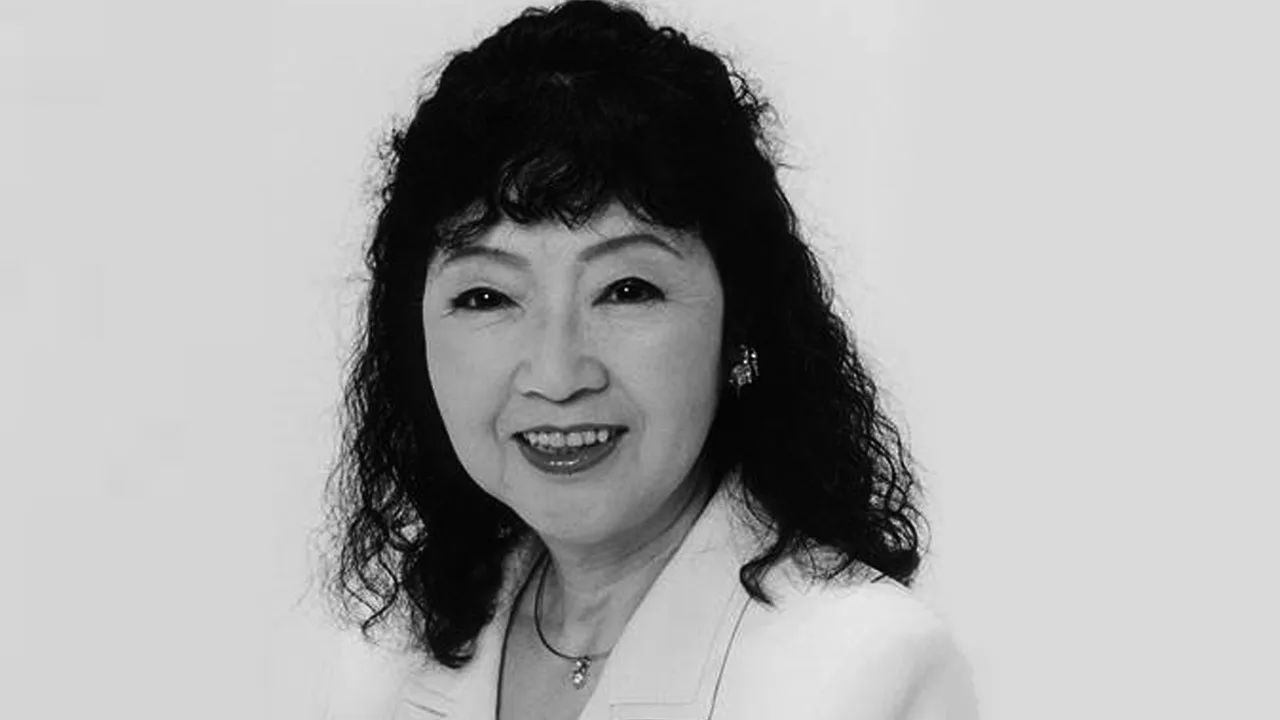
Noriko Ohara, who died in July, truly spent her whole life in the media, starting as a child actress, “retiring” as she reached her teens, but unable to resist the school drama club and sneaking back onstage after graduation. After starting a family in the 1950s, she drifted into voice acting, initially specialising in breathless, sexy roles. She became the Japanese dubbing voice of Bridget Bardot and Shirley MacLaine, as well as Hotlips in M*A*S*H and Miss Moneypenny in the David Niven Casino Royale. Inevitably, she also lent her voice to cartoons, including Penelope Pitstop in The Wacky Races.
In the anime world, her early women’s roles soon gave way to a newfound talent for putting on boys’ voices. Anime often records at unforgiving times, making the most of all-night, round-the-clock recording facilities, excluding genuine child-actors from all but the most high-budget of movies. After playing the hero Nobi Nobita’s mother in Doraemon, Ohara took over the role of Nobi himself, inhabiting the part for decades. She appeared as many other iconic figures, including the Peter the shepherd boy in Heidi, the titular Future Boy Conan and multiple roles in the Time Bokan series.

As a mark of how far anime has come during her long career, her death was marked by obituaries as far afield as the Straits Times in Singapore and the New York Times. Nobody, however, mentioned her unique position in anime history as an author, as the co-writer of the 1978 memoir The Frontline of Television Anime with the director Noboru Ishiguro. Ohara’s presence in the book, alternating Ishiguro’s chapters on animation with her own memoirs of acting, made her one of the inadvertent curators of the anime industry’s historical memory, and one of the first figures to set down backstage stories in an enduring medium of record.
It’s Ohara, for example, that we have to thank for what we known about the shenanigans in the dubbing booth on Future Boy Conan, as the cast fell in love with a show that they were sure would go onto great things – although they were right, they had to wait a long time for it to attain cult status. In Ohara’s case, determined to honour the vision of Hayao Miyazaki, she struggled in the studio to cling onto her voice, toking on an inhaler between lines, and saving her big scream, “Lana, don’t die!” to record very last at three in the morning.
As she did, her voice gave out. A doctor subsequently signed her off work for two weeks with bleeding vocal cords, causing the part of Nobi to fall to a stand-in for several weeks on Doraemon.
“Conan was important to me,” she confesses. “I know I should have known better, but I could not resist the charm of the boy who so infatuated me.”
Jonathan Clements is the author of Anime: A History. This article first appeared in NEO #244, 2024.
 The Official Schoolgirl Milky Crisis Blog