
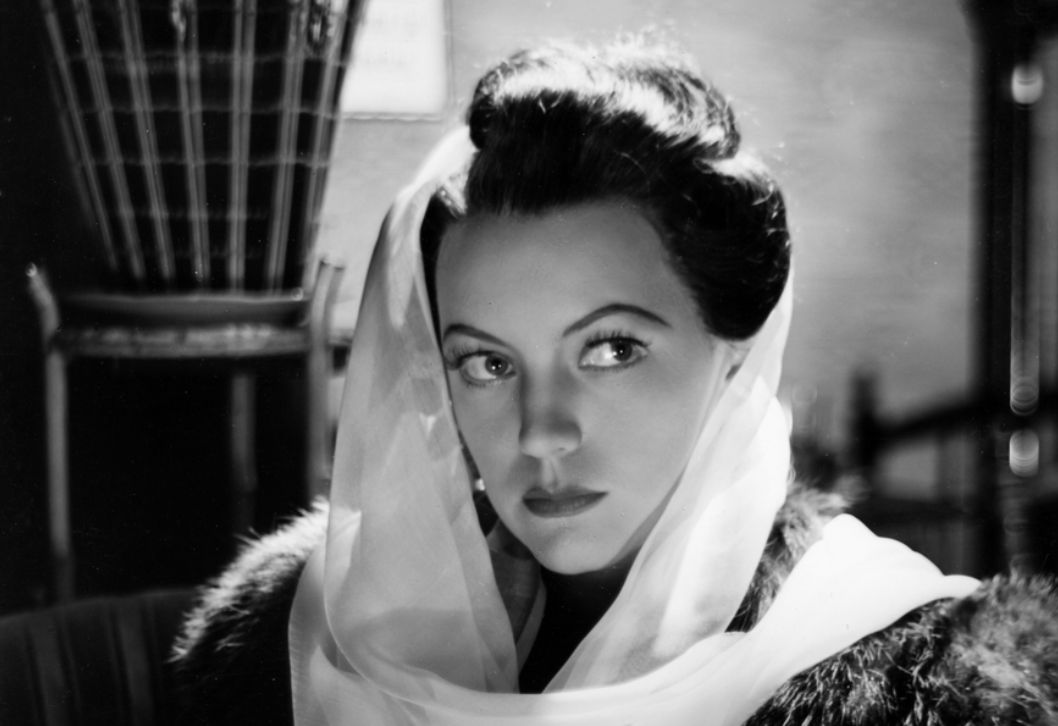
Consul Ahrman (Paavo Jännes) and his son Timo (Tauno Majuri) believe that they are being followed by enemy agents. Timo is dispatched to Muursalo with a sealed envelope, and confesses to the family’s loyal military friend Rainer Sarmo (Joel Rinne) that he might need help in outrunning would-be saboteurs. Nor are the men paranoid – it turns out that their housemaid Leena (Rauha Rentola) is indeed working for foreign powers, as is revealed when Sarmo catches her doctoring the consul’s tea so she will have time to search his safe.
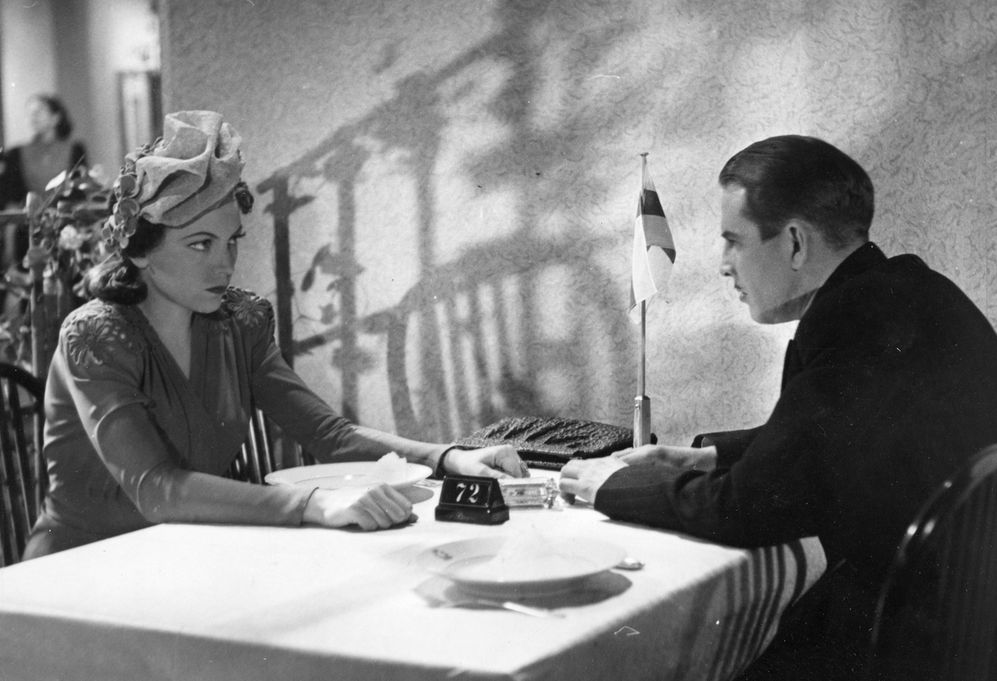
Sarmo apprehends Leena, only to be disturbed in turn by a masked agent (Hilkka Helinä), who helps her escape. Later on, Sarmo runs into Berita Lopez in a restaurant, falls in love with her, and also realises that she was the masked agent. Berita is the daughter of Luigi Lopez (Wilho Imari), once the richest man in Bueno Aires, ruined by the machinations of the enemy agent Thomas Gardner (Santeri Karilo), who is somehow also responsible for Timo’s fiancée breaking up with him.
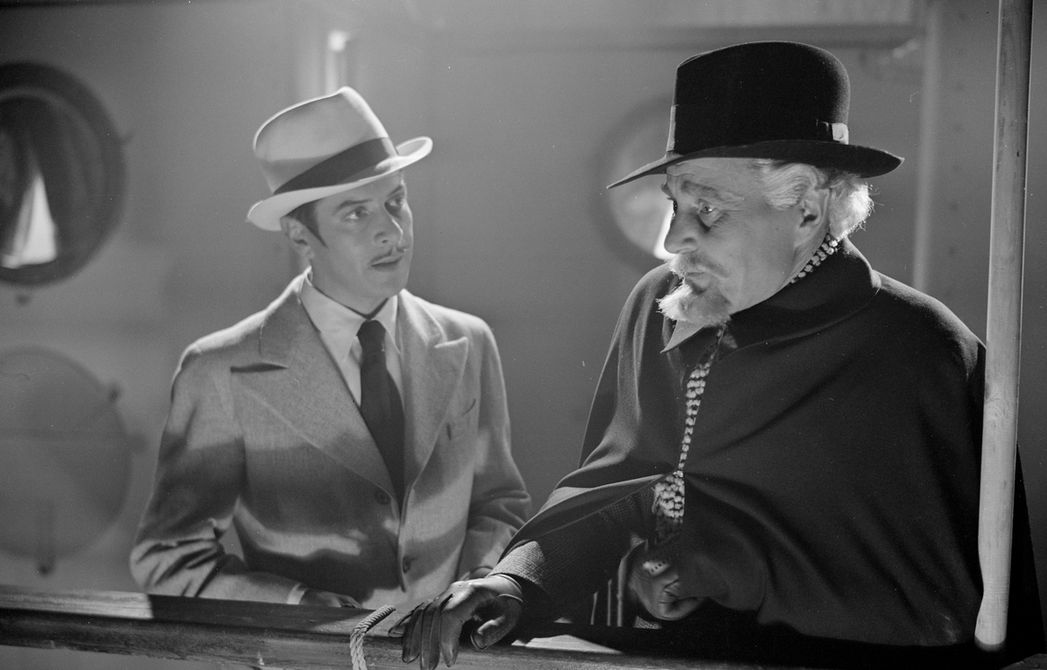
Oh dear, what a mess, like trying to make sense of Casablanca through its reflection in a dented kettle. Believe it or not, this was the winning entry in a 1940 script competition hosted by Suomi-Filmi, netting a 50,000-mark prize for its author, the journalist Uuno Hirvonen, who would go on to pen two further adventures for Rainer Sarmo, a.k.a. Dettman, a.k.a. Deadman, in international espionage. The miracle, of course, with Casablanca, which was made a year after this, is that it, too, went into production as a forgettable retooling of the conventions of bedroom farce into espionage with papers and letters of transit and whatnot. It happened to work, in exactly the same way that this film… doesn’t.
The critics, however, loved it, like a breath of freshly noir air, a worthy successor to the earlier The Last Guest (1941). “”The suspenseful atmosphere is especially enhanced by the excellent cinematography,” enthused Toini Aaltonen in the Suomen Sosialidemikraatti. “The camera angles are varied, the lighting effects are inventive and generally the dark tone of the filming is so effective that you are startled when you come out and notice the bright daylight around you.” And, indeed, while the script might be an incomprehensible garbage fire, further compromised by the traditional coyness about revealing who the dastardly enemy power might be (Russia – it’s always Russia), the camerawork is superb. The stills from the film make it look far, far more exciting than it actually is. Hilkka Helina, in particular, is a smoldering onscreen presence, managing to make even an argument over coffee look like a battle to save the world.
Posterity has been less kind. When the film was released on television in 1989, Tapani Maskula in the Turun Sanomat let it have it with both barrels: “Watching the film today, one inevitably wonders about how bad the other stories submitted to the competition must have been when the one that won first prize doesn’t even make any sense.”
Jonathan Clements is the author of A Short History of Finland. He is watching all the Finnish films, so you don’t have to.
 The Official Schoolgirl Milky Crisis Blog