
Asked recently if I could “recommend” ten manga for an unspecified group, I wondered if I could come up with ten that I had encountered in my recent (and now cancelled) Manga Snapshot columns that had yet to be legally translated into English. It turned out that almost everything I had most enjoyed in the last few years remains unavailable. Not that these titles are best-sellers in waiting – many are niche titles that only appeal to weirdos like me. But nevertheless, this is my top ten of untranslated manga at the time of writing. Comments have been harvested from the last couple of years of the Manga Snapshots.
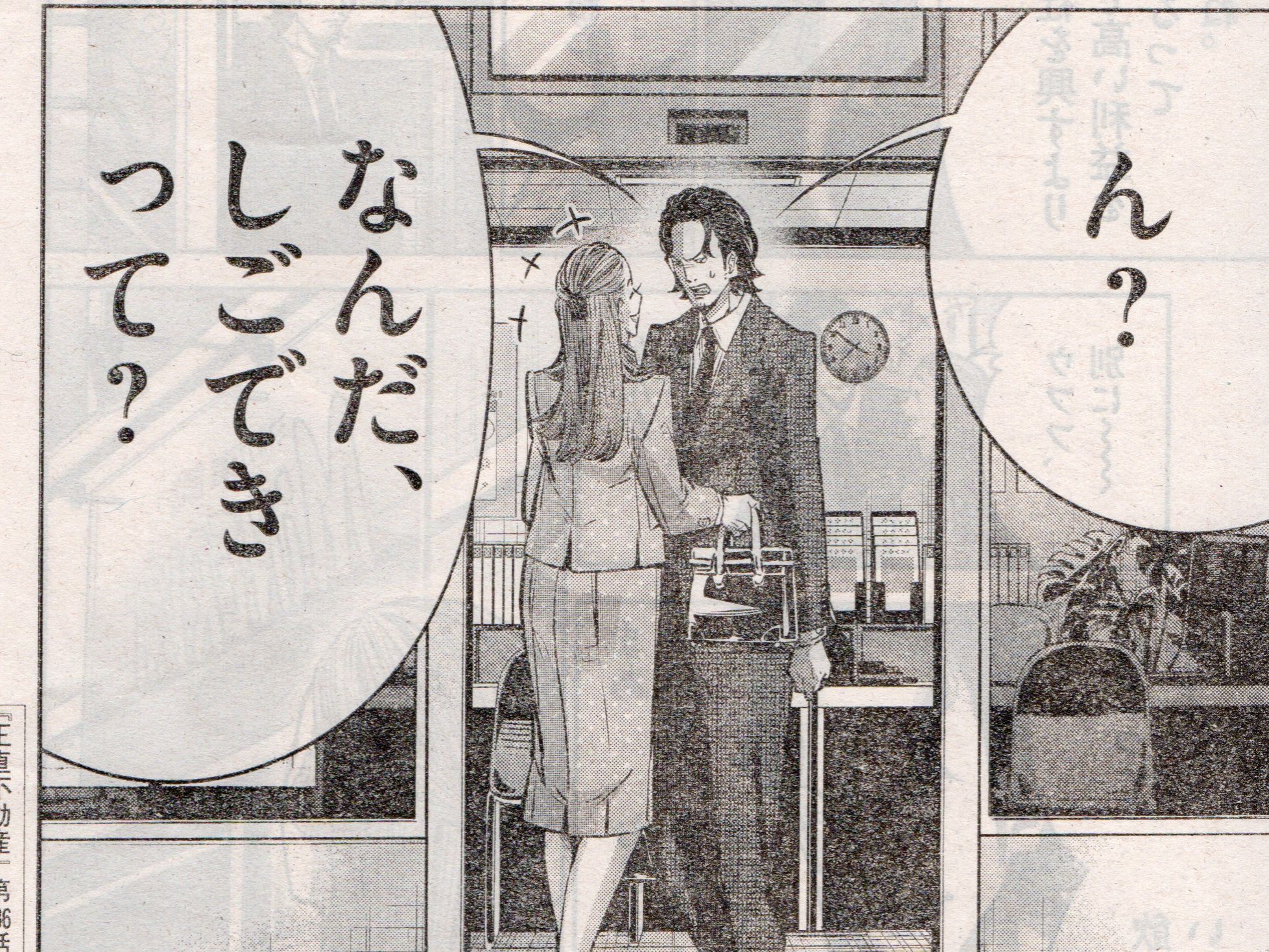
The Honest Real Estate Agent (Shōjiki Fudōsan, Big Comic), based on a book by Takeshi Natsuhara, adapted for manga by Mitsuhiro Mizuno and drawn by Akira Otani. Our leading man, Nagase, is an estate agent, and initially a proud exponent of the industry known in Japan as the “1003” – as in, for every thousand words spoken, only three are true. However, after bullishly desecrating a Shinto shrine during a ground-breaking ceremony, he is cursed to only tell the truth, and forced to radically rethink the way he sells houses, homes, apartments and development plots to the Japanese public. I know, right – it’s a lovely idea, and again one that is sure to appeal to older readers who have ever had to go through the misery of trying to buy a house. Somehow, it’s managed to run in Big Comic for the last six years… there is obviously a market for honest real-estate. Or for people who like watching the conniptions that Nagase has to go into in order to still close a deal. Turned into a live-action TV series in 2022.
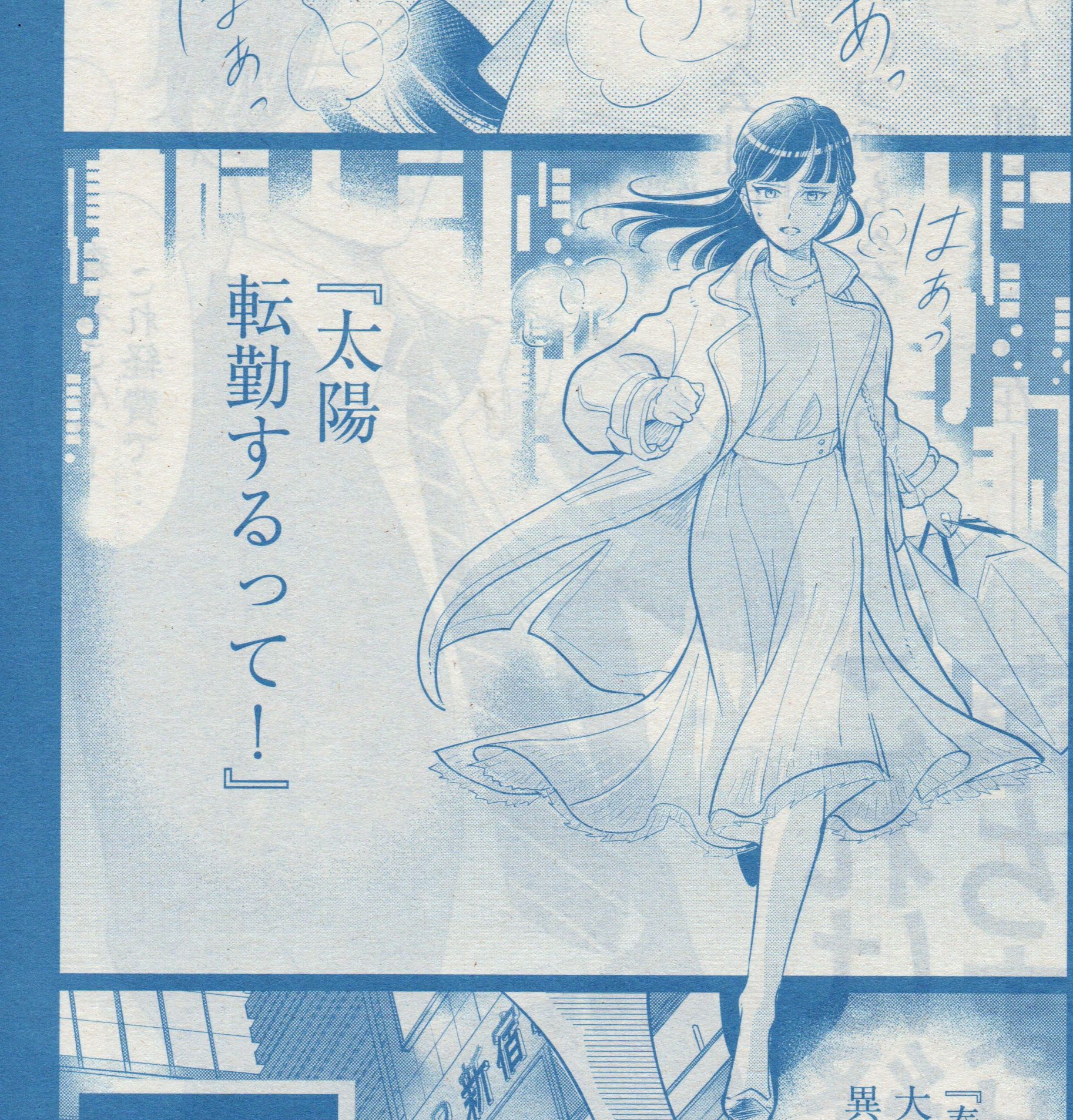
This Does Not Fall Under Expenses! (Kore wa Keihi de Ochimasen, Cookie) drawn by Kosachi Mori from the light novel series by Yuko Aoki, is the tale of 27-year-old accountant Sanako Moriwaka, who has landed the unenviable position of processing expense receipts at the large Tenten Corporation. Unlike the patronisingly dismissed “office ladies” of many a corporate manga, Sanako is a woman with qualifications and power, but also a minion who has to police the invoices of people substantially higher-ranking than herself. Sanako is thrown into the middle of an ongoing territorial dispute between Sales and Accounts, the constant chancers of the Publicity department upstairs, and a high-up personal assistant with a hand-wavingly vague attention to receipts. In particular, she is thrown into tense stand-offs with Taiyo Yamada, the ace of the sales department whose new project, Paradise Café, involves so many entertainment expenses and travel boondoggles that he and Sanako see a lot more of each other than either is comfortable with…. At least at first.
This Does Not Fall Under Expenses! is that most amazing and rare of new creations, a criminal procedural that often runs without crime; a drama of reluctant partners investigating corporate skulduggery, a deeply involved study of due diligence in the workplace, and a fantastically forensic account of just what we can tease out of the metadata of receipts. So if you were in Kyoto on the night of the 26th, why are you putting in an receipt for an evening bowl of noodles in Fukuoka? Only a bullet train ticket from before 4pm on that day will save you…. But please don’t tell me you went first-class, because THAT DOES NOT FALL UNDER EXPENSES! In this issue’s chapter, Sanako and Taiyo fight in the street over his slapdash expense claims, and her personal policy of “not chasing rabbits” – which appears to be an attempt to get the staff at the company to police their own expensing. Turned into a live-action TV series in 2019.
Tempus Ethicae (Big Comic Superior) by Yuichiro Okamoto and Yukio Tamai, is set in a near future where advanced artificial intelligence is on the verge of breaking through, it features the hapless humans whose job it is to teach thinking to computers. AI machines will make their own decisions unless they can be steered into having a bit of empathy for humans, which means as various elements of government and society are handed over to machines, someone has to walk our future metal masters through the pros and cons of making difficult decisions.
And these aren’t black and white decisions like “is it a good idea to support a cataclysmic isolation policy that will destroy your country’s economy for the next decade and make you the laughing stock of Europe?” Oh no, these are far more unanswerable questions, much more akin to the lose-lose scenario of Star Trek’s infamous Kobayashi Maru test. Terrorist attacks, unstoppable accidents and situations which are sure to kill someone are all presented as case studies for the humans, who have to debate in front of the machines in the hope that some sort of ethics will rub off. Of course, what makes it all so chilling is the fact that these things have to be taught at all, and that should someone’s debating powers go wrong, an AI somewhere will make Donald Trump dictator for life, cancel NEO magazine, or otherwise create some other terrible situation.
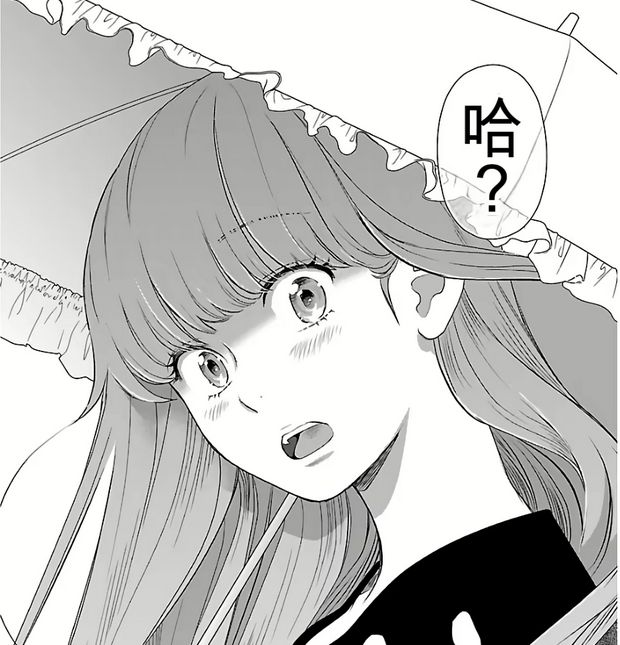
The Departed Become Distant Over Time (Sarumono wa Hibi ni Utoshi, Young Champion) by Ryo Orikasa and Kyo Hatsuki derives its title from an early medieval Chinese anthology of poetry and literature, the Wen Xuan… which makes it all the more surprising when the opening pages of this chapter feature an adult movie being shot on the quiet in a deserted gymnasium. The Departed… zooms in on the lives of the young adult-video actresses who bunk together in a Tokyo flat, presided over by their stern-faced matron, Ms Itadori. The action sweeps from eye-poppingly explicit sequences of the filming underway to the mundane downtimes of the cast and crew, some of whom throw themselves into their work with gung-ho pragmatism, while others wish they were anywhere but here. Anywhere…? Ah, that’s where Mikoto comes in – a handsome, bespectacled young man who works at a Buddhist altar shop, and has a mysterious sixth sense that allows him to detect when a human being is approaching the end of their life. And one of Ms Itadori’s girls has that aura about her.
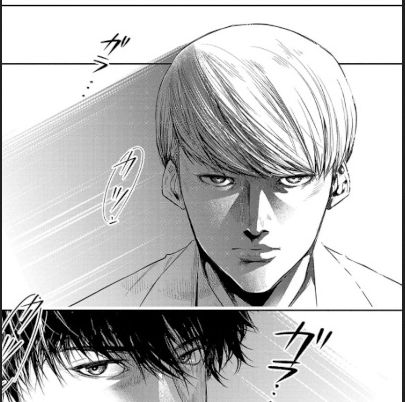
Hospital Cop: The Snake of Aesclapius (Innai Keisatsu: Asclepius no Hebi, Young Champion) based on a story by Tsutomu Sakai but adapted for manga by Ichi Hayashi. As the main title suggests, the setting is a mega-hospital so large that it counts as an entire city district, and hence has its own police box. And that means that the local bobby Osamu Murai, a rakish youth plainly destined for detective, walks a beat that is largely indoors, around a teaching hospital thick with wacky students, a cancer ward plagued by serious illnesses, a research wing where bespectacled boffins might be up to no good, and an emergency room with a bunch of suspicious gunshot wounds. Sakai’s storyline is a brilliant idea for creating a clash of popular dramatic styles, as if Holby City were mashed into Line of Duty in a BBC cost-cutting exercise, and it is an idea so winningly populist that I am amazed nobody has thought of it before, not the least because there should be sirens and police tape all around resident surgeon Moeko Kamijo, a smouldering sawbones whose clashes over jurisdiction and boundaries with Sakai may well conceal a mutual attraction that neither of them is prepared to acknowledge. Also, I think there might be ghosts.
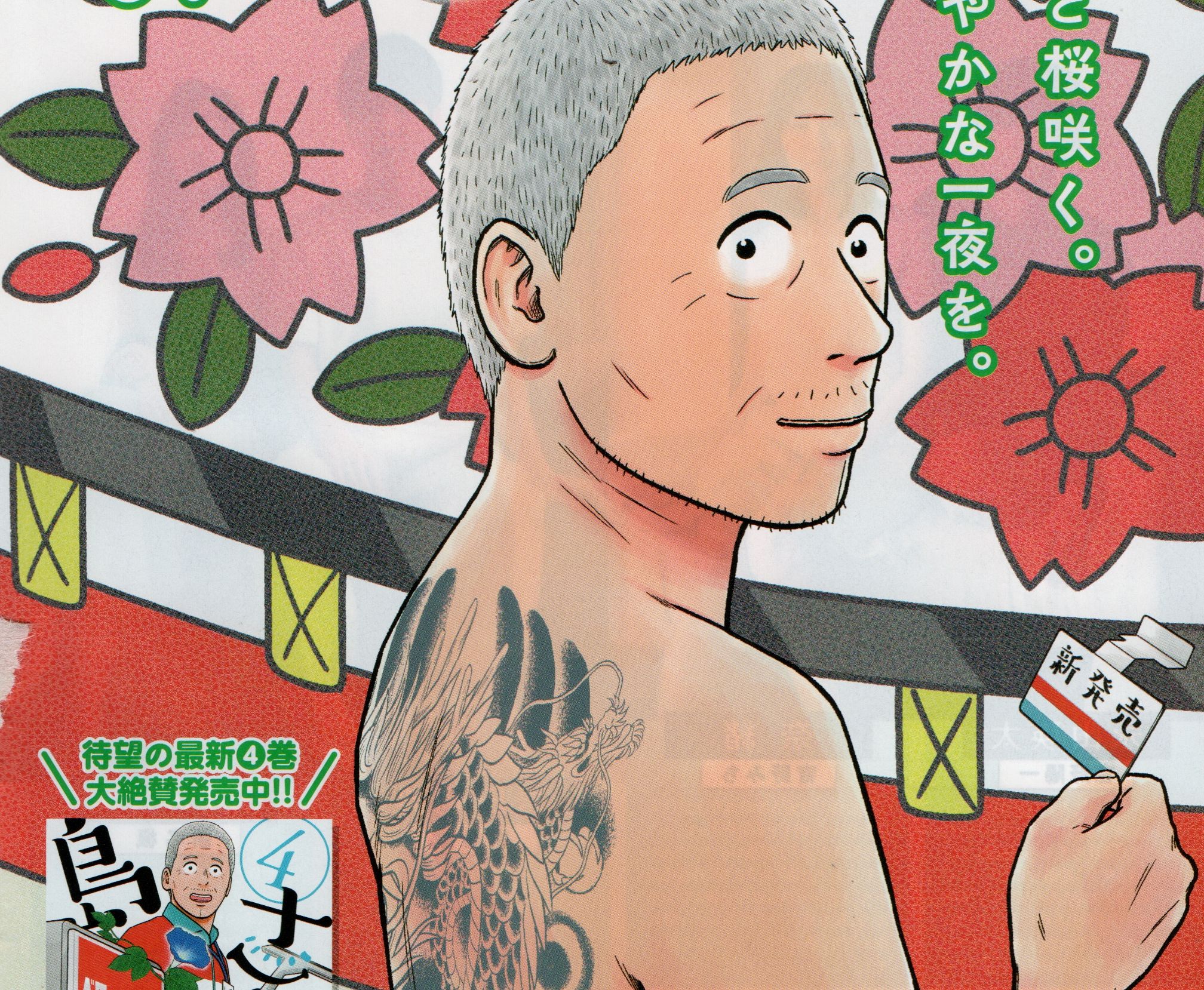
The hero of Kawano Yobundo’s Shima-san (Manga Action) is an old man who really should be retired by now, but instead holds down two menial jobs. By day, he works as a “traffic security guard” – one of the glorified human traffic cones whose sad fate in corporation car parks often disguises a management figure being constructively dismissed, shunted into a lower-paid menial position. In the evenings, Shima-san comes to work at the Better Days convenience store, where his younger coworkers are aghast at his attitude. When a young woman brings in a radio, complaining that the batteries are already dead, Shima replaces them with an apology, even though she didn’t buy the radio at Better Days.
Shima-san’s staid, unimaginative artwork belies its charming examination of Japan’s generation gap. Shima is a throwback to the literal “better days”, a shop assistant who believes in customer care, even when he is merely the frontman for a faceless corporation. He’s a man who carefully nurtures a sense of community in an anonymous suburban street, ready to bend the rules when it’s the right thing to do, and to enforce them with steely resolve when people try it on – woe betide the giggling underage teenagers who try to buy a packet of fags.
But there’s more, because Shima has a past. He alludes in conversations with Hiroyuki, his teenage coworker, to “making mistakes” in his youth, but its only when you see the elaborate dragon tattoo on his back that you put two and two together. Shima-san is the last of a long line of yakuza – his dead-end jobs are not merely a sign of dropping out of the mainstream rat-race, but of having somehow failed at being a gangster. Artist Kawano’s story suggests that back in the good old days, even the criminals had a better sense of honour and duty. Shima-san is the quintessential 2020s manga – a gentle workplace reverie about trying to make a difference where it counts, in the hope of paying it forward.
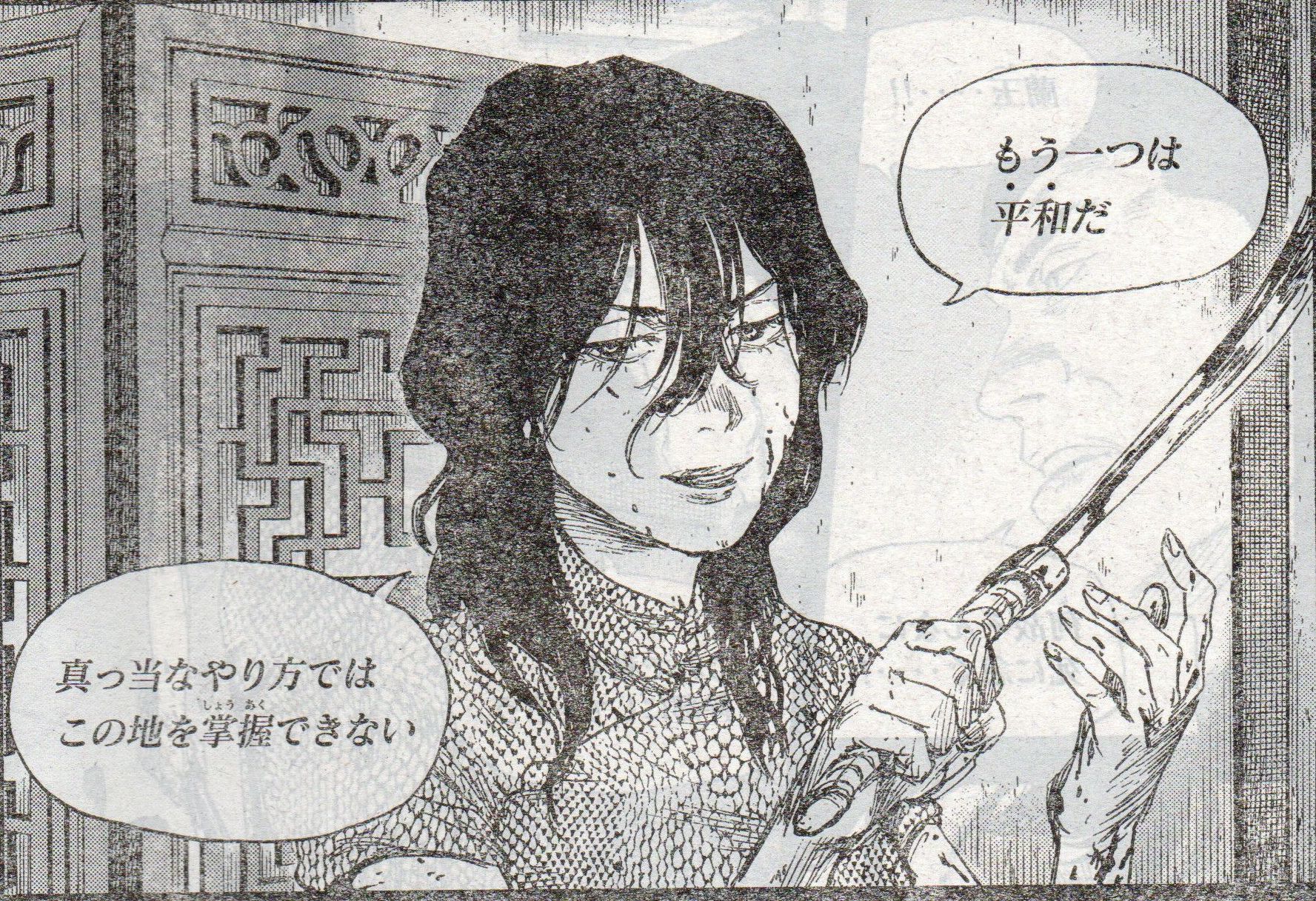
Manchuria Opium Squad, (Manshū Ahen Squad, Young Maagzine) written by Tsukasa Monma and illustrated by “Shikako”, charts the progress of an ex-soldier as he turns to the opium trade to support his family in 1937 China. Our leading man is Isamu Higata, a soldier in the infamous Kwantung Army that effectively seized the Chinese territory of Manchuria and turned it into a Japanese puppet state. Fallen on hard times, he starts out small in the illegal opium trade, eventually clawing his way up through a corrupt society in which the Russian mafia, Shanghai Green Gang and Kwantung Army duel over the extremely lucrative industry in a highly addictive and deadly drug.
This issue’s chapter is a flashback to Shanghai in the mid-1930s, as the Green Gang (a real organisation) stabs and beheads its way to the control of the local drug trade. I was in Shanghai only recently, and impressed not only by the photo-real accuracy of Shikako’s depiction of the city’s famous waterfront, but of its historical accuracy – there is a shot of a statue of Winged Victory, a monument to the Great War that dominated the Bund from 1924 to 1941, when the occupying Japanese ripped it down. Reviewers, however, have had mixed reactions to history as depicted in Manchuria Opium Squad, since Monma’s storyline inevitably walks into a series of political minefields. His leading man is realistically hard-nosed and pragmatic about the fact that Japan has appropriated an area the size of Colombia, and understandably ruthless in the way he creates and exploits addicts. He is a criminal, after all, and the depiction of Manchuria as a lawless narco-state is also entirely reasonable. But Japan’s invasion of China, a “Fifteen-Year War” that eventually blossomed into WW2, remains a touchy and emotive subject, and there are those who have accused Monma of pandering to Japanese power-fantasies and atrocity denials, not to mention a lurid interest in the running of an ever-growing harem of drug-addled Chinese slave-girls. It ultimately leads the reader to question when we started rooting for the bad guy. But before you start to wonder if this is manga’s Breaking Bad, Manchuria Opium Squad veers into horror in its depiction of opiate euphoria and addiction, and into pulpy satire in the form of Isamu’s foil, Lihua, the sassy, sinister Green Gang queenpin.

Himiko(Big Comic Original), by Richard Woo and Mariko Nakamura, is a glimpse at Japan in the Dark Ages, when the islands were still a patchwork of contending kingdoms in the shadow of distant China. Woo’s story is drawn from asides in contemporary Chinese chronicles, turning ancient Japan into a heady mix of sorceresses and kings who claim to wield magic swords – Game of Thrones with tattooed faces and thatched long-huts. A King Takeru is fated to become a mythological hero, but he is only a supporting character for the central cast of women – the witch Akame and the teenage girl Yanoha, whom I suspect will eventually be enthroned as the priest-queen Himiko.
This is great fun – perhaps the alien qualities of the names don’t quite come through in English, but Himiko presents a Japan that is both familiar and atavistic – it’s a chance to see the ancient Japanese as one step removed from the Dothraki, before their country was swamped by refugees from Korea and their native religion was over-run by Buddhism.
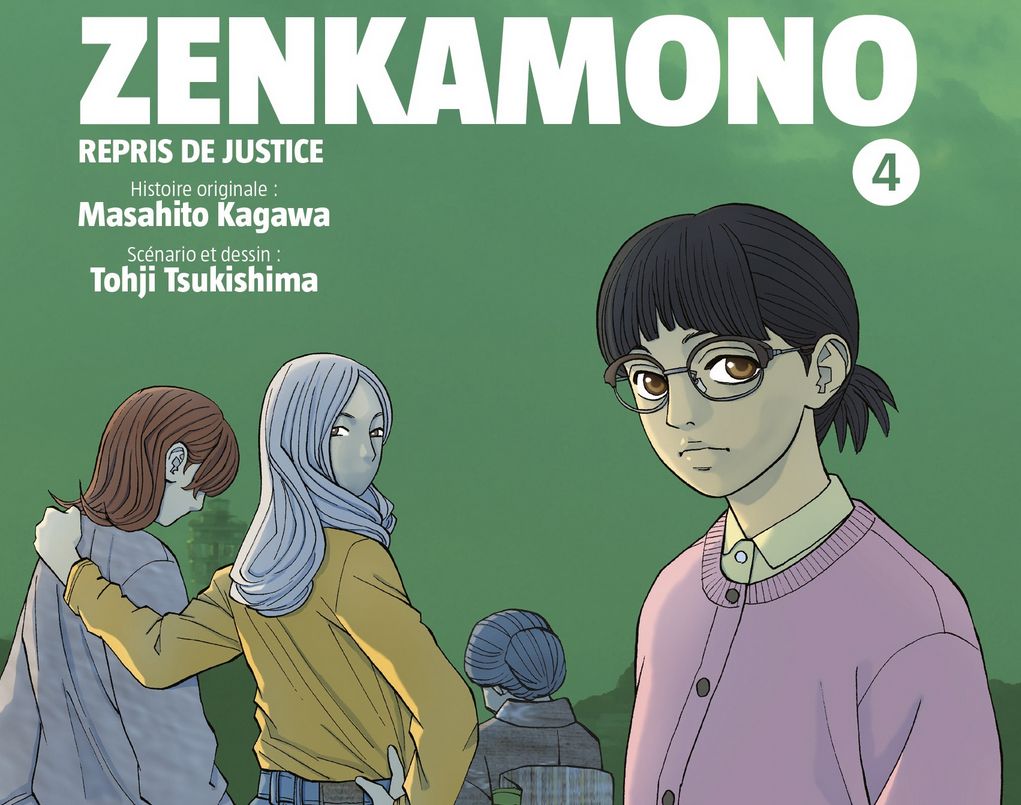
Prior Convictions (Zenkamono, Big Comic Original) by Masahito Kagawa and Toji Tsukishima is a bogglingly interesting topic – a slice-of-life drama in modern Tokyo, told through the eyes of a probation officer. Lawyer Kayo Akawa is an unpaid, voluntary parole officer, appointed by the Ministry of Justice. It’s a fascinating exploration of criminality and the return of offenders to society – Kayo’s unpaid (!) job brings her into contact with every level of society, from middle-class journalists serving supervisory probation for white-collar crime, to the stringy-haired former addict mopping floors in a convenience store.
After so many years of Manga Snapshots, Japanese comics can still give me a thrill. Prior Convictions is a marvellous idea for a story – a crime drama that takes place after the crime has happened, and often after the offender has paid their debt to society. But what happens next? Can criminals in Japan ever overcome the stigma of having been criminals? Can they get back on the job market? Can they find love? And what kind of temptations, reprisals or revelations can return to haunt them from their former life?
In this chapter, Tamiko has been out of jail for 18 months, and is bussing tables at a food court, where a rough customer seems ready to exploit her timidity and unwillingness to cause a scene. He thinks he’s starting a relationship with an indulgent new squeeze – Kayo puts him straight, telling him to back off a vulnerable young woman who needs a better break than he can give her. It’s a mix of psychotherapy and low-level crime-fighting that is just crying out for a TV remake (one was made in Japan in 2021). This manga appears to have been also released abroad, but in French.
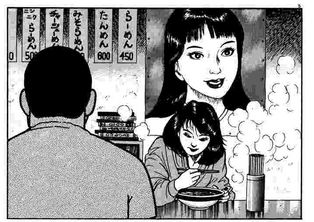
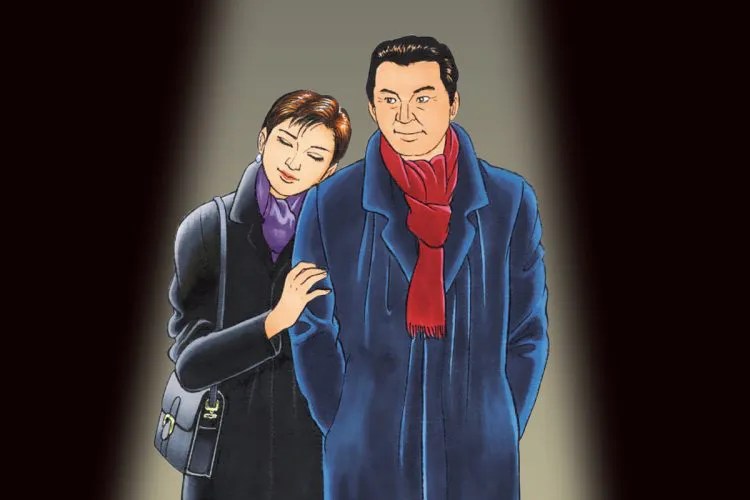
And saving my all time favourite until last, Like Shooting Stars in the Twilight (Tasogare Ryūseigun, Big Comic Original), by Kenshi Hirokane, practically switches its entire cast once a volume, because for the last 29 years, it has been running love stories for the over-50s. Ridiculously inventive, covering every genre conceivable from sci-fi to horror, it has been adapted for live-action television a number of times, since every one of its stories packs enough punch, at very least, for a TV movie-of-the-week. I first championed it in Manga Max magazine 25 years ago, but manga reading, even today, is still very much an occupation of the young in the English-speaking world, and it’s difficult to imagine that sales would ever do it justice.
Jonathan Clements is the author of Anime: A History. The Manga Snapshot column ran in NEO magazine from 2005 to 2024.
 The Official Schoolgirl Milky Crisis Blog
Manga Snapshot is cancelled!?
Oh damn I see Neo is gone. Any chance now of a Manga Snapshot book? Its the whole reason I bought the magazine!
Picture rights would be impossible to arrange. There were a few Manga Snapshots included in Schoolgirl Milky Crisis, and there will be a few more in my next article collection, whenever the publisher gets around to printing it.
These sound great. I particularly like the sound of This Does Not Fall Under Expenses! Is the main problem that the cost of translation is not worth it or that rights issues are so complicated to sort out that legal costs make it prohibitive?
I think in the case of This Does Not Fall Under Expenses, the average publisher would have needed to have read my column to even know it existed.
It’s unlikely that there are any rights issues affecting it — if a publisher wanted to buy it, they could probably just wave money and let it happen, but then there would be the awkward issue of a manga about specfic Japanese tax laws, which would probably have a rather small audience outside Japan. Probably just me and you, Russell.
I rather like the idea of becoming a manga publisher! For further discussion . . .