
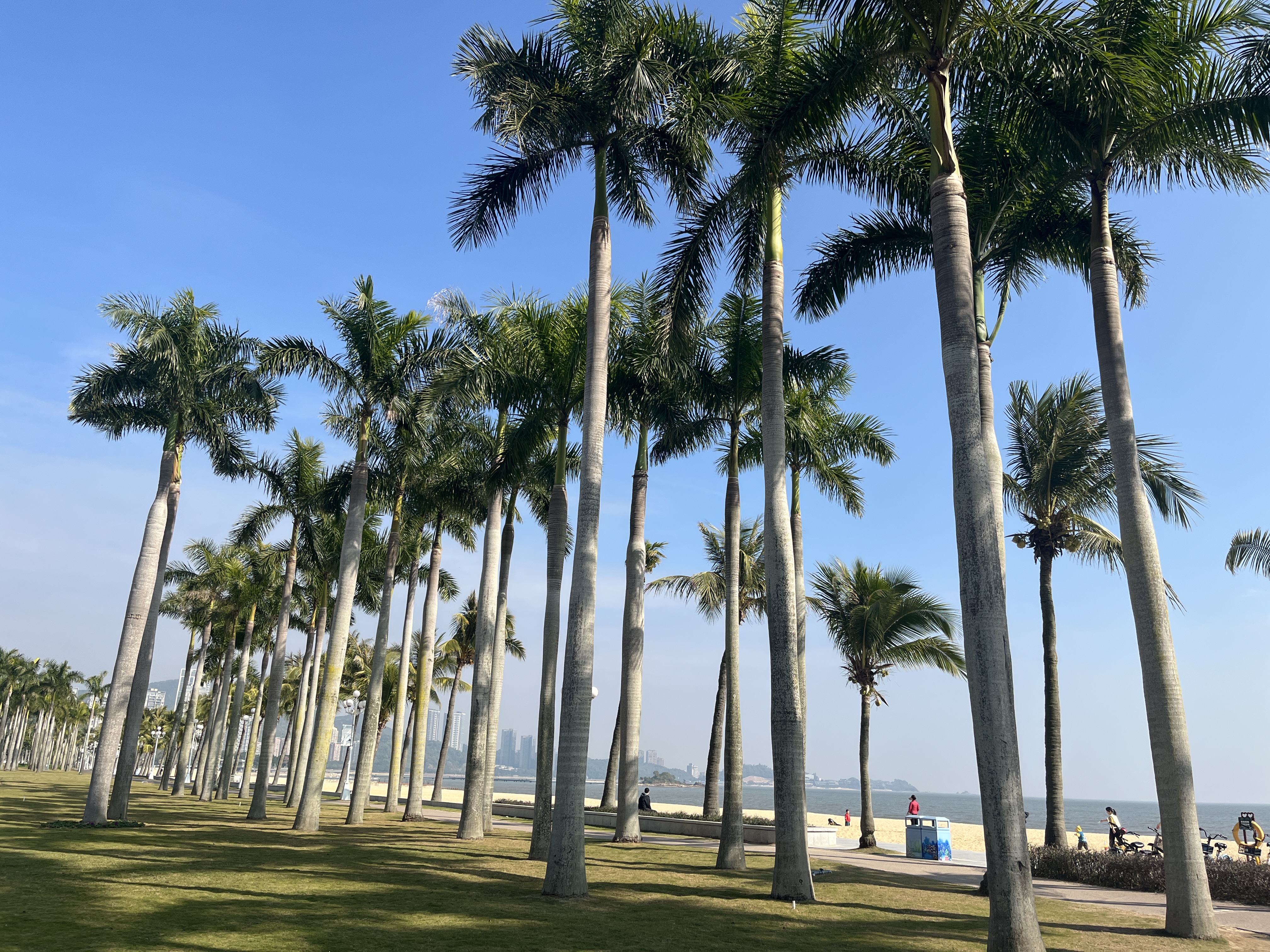
The seaside town of Zhuhai is famed for its seafood, its modernist clamshell opera house and its statue of a fisher girl, but my ongoing fascination with Red Tourism leads me to ignore all of that and instead go in search of the Zhuhai Martyrs Cemetery, a modest park with an on-site museum that proudly puts the city on the revolutionary map. For those who had never even heard of Zhuhai before it become one of the Special Economic Zones in the 1980s, the museum has a bunch of interesting stories, starting with the “Qi’ao Anti-British Skirmish” of autumn 1833, in which two Dutch cannons, said to have been liberated from Taiwan over a century earlier by local-born official Zhong Bao, were turned upon foreign opium-smugglers.
According to a 2016 article from the Guangzhou Ribao, the Manchu authorities had “not offered a single silver tael” for civil defence, turning the Qi’ao resistance into a moment of considerable historical moment, in which the Chinese people not only stood up for themselves eight years ahead of the Opium Wars, but did so with half a dozen locally-made guns and two antique cannons – the eight ordnance pieces are, supposedly, still there on the Qi’ao waterfront, elegantly rusting away.
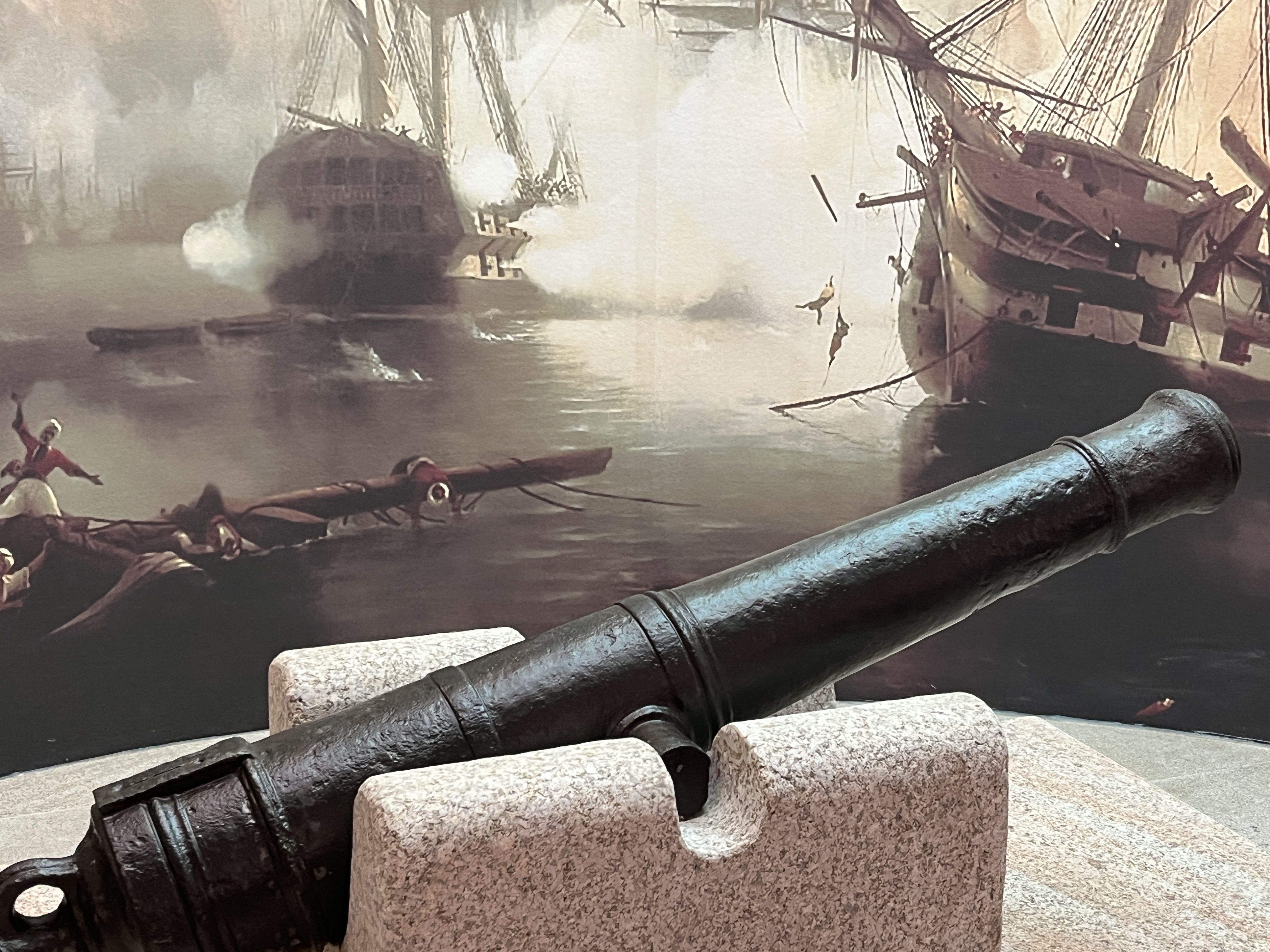
The defence of Qi’ao was a response to years of harassment from opium smugglers, who used the nearby cape as an anchorage, and thought nothing of stealing supplies and livestock and terrorising the villagers. A statue to Cai Yi, one of the defenders, claims that his cannon emplacement sank two of the enemy, leading to his local sobriquet Shen Paoshou, the Divine Gunner. Another commemorates the local men and women, who are said to have held off the attackers with pitchforks and kitchen knives. The British, according to the Guangzhou Ribao, were eventually obliged to hand over 3,000 silver taels in compensation, which was used to restore the local temple of the Goddess of the Sea – and, I suspect, initiated a new era in which the smugglers still showed up, but with a degree more respect.
“Qi’ao has not fallen,” brags the local monument. “And we draw our swords and volunteer to slay the enemy together; the British army [sic] seeks death, and throws away their armour and flees for their lives. Four years of haze are swept away in one day, and the mountains and rivers are forever preserved and the sun and moon are shining again.”
And I’m still only three steps inside the front door!
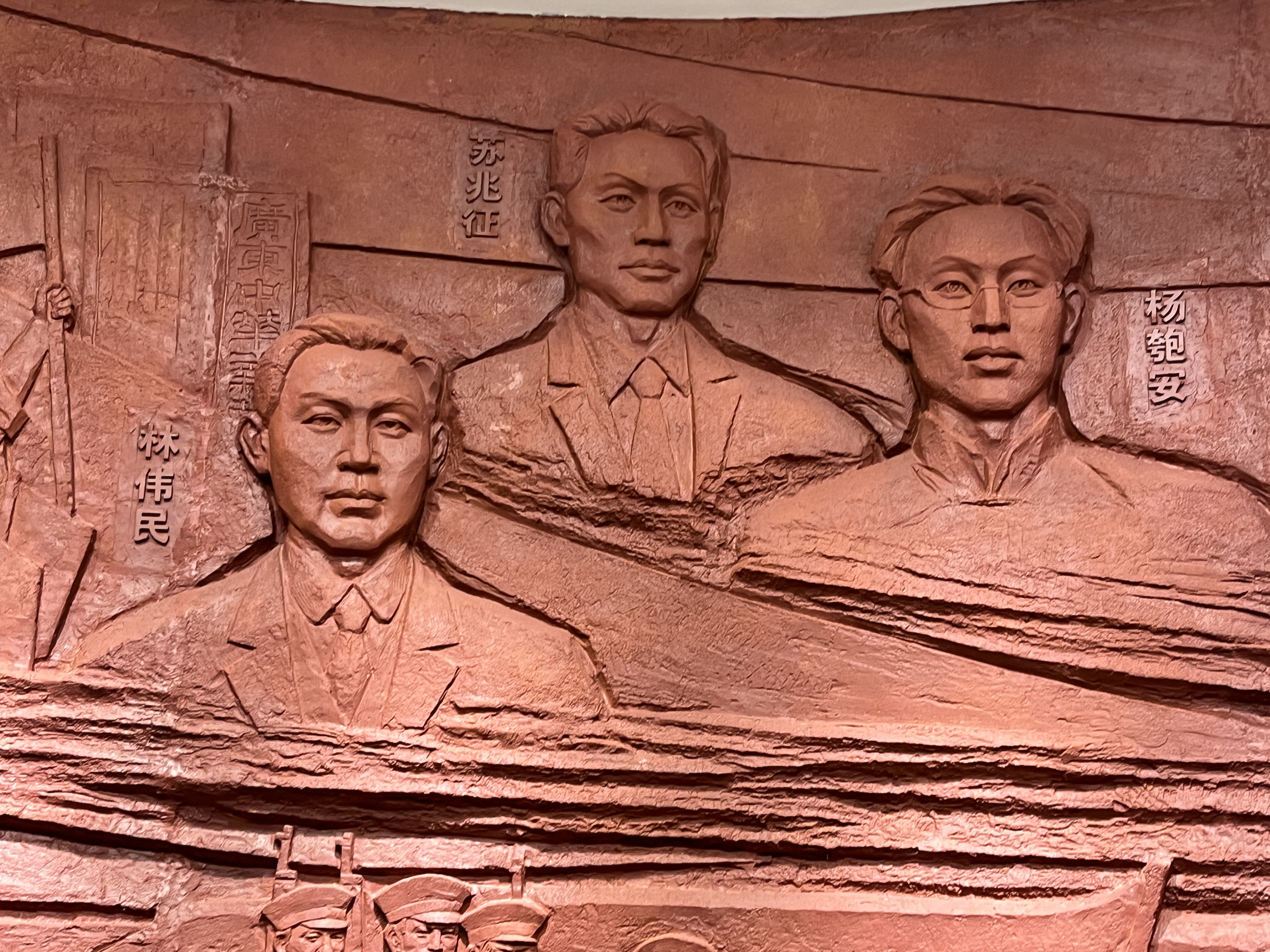
Pride of place in the opening bas-relief is given to three local boys who were instrumental in the Chinese labour movement. Qi’ao-born Su Zhaozheng (1885-1929) [centre] was the Seaman’s Union leader who masterminded the Hong Kong strike of 1922, over inequities in Chinese pay. Without answers for their demands for 40% pay rises, 1,500 deckhands and stokers walked out in January. Numbers grew to 30,000 by the end of the month, paralysing the colony’s shipping. By February, the numbers had climbed to 50,000, and included workers in the food and transport sectors, and even civil servants at Government House. With Hong Kong shut down, the authorities passed an Emergency Regulations Ordinance allowing the chef executive to enact extreme measures in times of crisis. [As a pre-existing law from colonial times, it remains a “nuclear option” on the statute books in modern Hong Kong, and was recently invoked in 2019 to ban protestors from wearing face masks].
Governor Edward Stubbs imposed strict passport rules, leading to a performative attempt by local union members to walk to Guangzhou to collect their strike pay. Four were shot and killed as they approached a line of colonial troops.
Lin Weimin (1887-1927) [left] went to Hong Kong to work on foreign ship, but became a key figure in the Canton-Hong Kong General Strike of 1925, inspired by the shooting of anti-colonial protestors in Shanghai and Guangzhou. Fearing that the authorities were about to retaliate by poisoning the water supply, a quarter of a million Chinese labourers fled Hong Kong, again shutting the colony down. Notably, he started out as a left-wing Nationalist, before joining the Communist Party and effectively becoming its representative for Hong Kong until his death, apparently from overwork at 40.
Yang Pao’an (1896-1931) [right] was the sole survivor of nine children, who embraced Marxism in his twenties as the only form of “scientific socialism.” He was an early representative of the Communist Party within the Republican government, which ousted him in 1926 on the grounds that he was a subversive and Communist recruiter. He embarked upon writing a Marxist history of the world and was arrested in Shanghai for pamphleteering and sedition. He was executed at the Longhua Garrison Command, now the Longhua Martyrs Cemetery.
Like the cemetery outside, the museum divides its main curation into the fallen heroes of the Revolution, of the war of resistance to Japan, of the civil war with the Nationalists (which actively stretches into the 1950s), and a rather vaguely defined Any Other Business, which I suspect, as in Shanghai, celebrates local-born people who have died in civil actions such as fire-fighting or sea rescue.
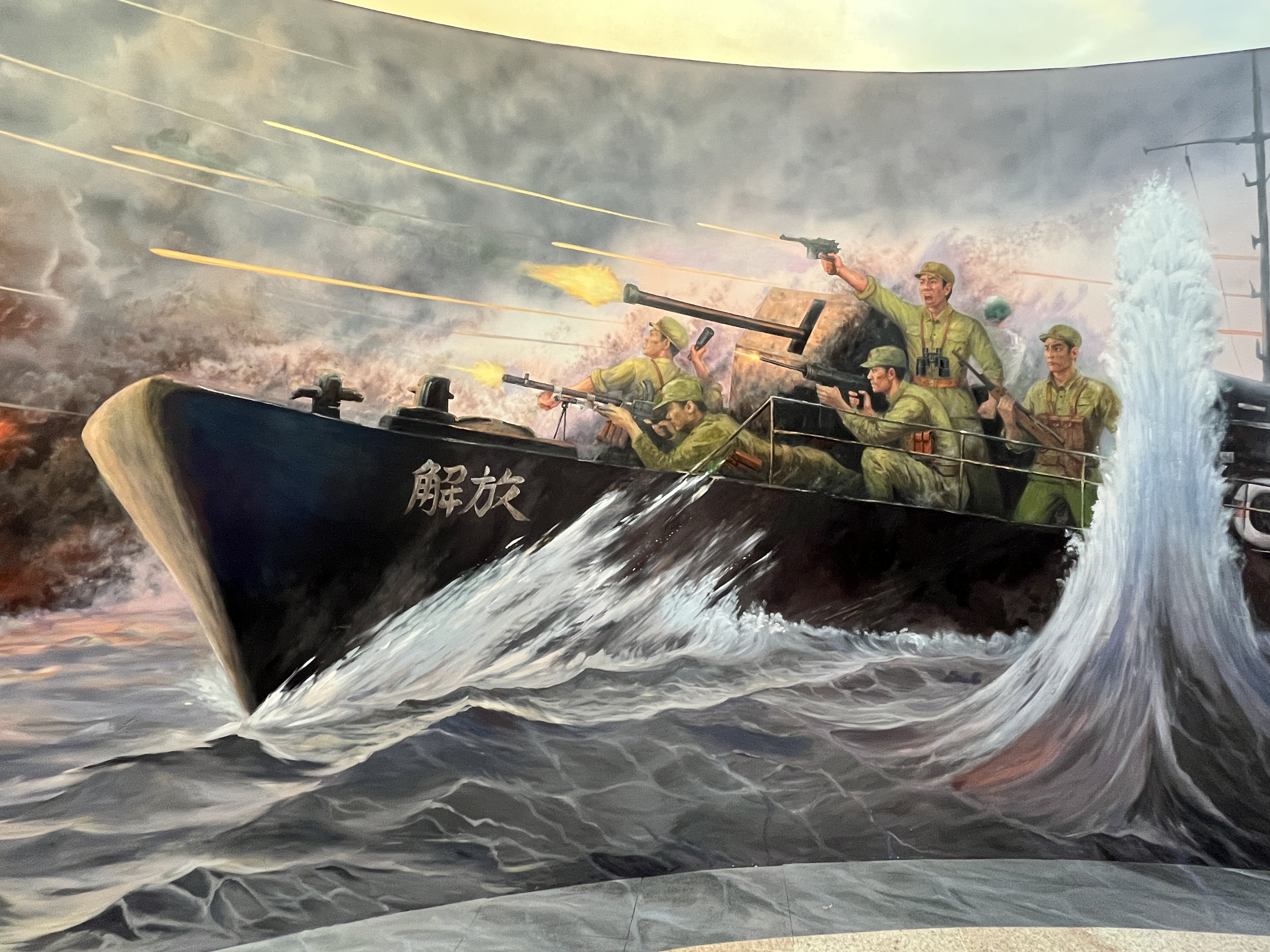
In particular there is a wall-length painting of Communist gunboats repelling Nationalists from islands near Zhuhai, bursting with pew-pew energy, and focussing on the immense dichotomy between the plucky little PRC boats and the Nationalist ships they are fighting – a victorious spin on the story that I have normally heard told by the other side, as a lament about lost territory.
Jonathan Clements is the author of Rebel Island: The Incredible History of Taiwan and A Brief History of China.
 The Official Schoolgirl Milky Crisis Blog