

On Christmas Day 1953, a huge fire tore through the slums and squats of Shek Kip Mei in Hong Kong. The blaze left 53,000 people homeless, and galvanised the authorities into a rapid building scheme to create new housing for the refugees and migrants that had been clogging the hillsides of the New Territories.
Mei Ho House is an unassuming apartment block in Berwick Street, but it is actually the last surviving example of these emergency housing blocks. Half of the H-block tower is a youth hostel today; the other wing has been preserved as a museum to daily life for thousands of Hong Kong residents in the 1950s, schooled in open-air rooftop classrooms, cooking on open fires on their balcony stoves, and sharing centralised washroom facilities at the building’s core.
The numbers of rehoused locals actually climbed higher in local reports, as they assimilated several thousand more refugees who were evicted from their shanty towns in order to make space for the “Mark I” estates like Mei Ho – several pundits noted that the speed of the government response might have been humanitarian, or might have been the sudden excuse to pull the trigger on an urban renewal project that was already in the pipeline.
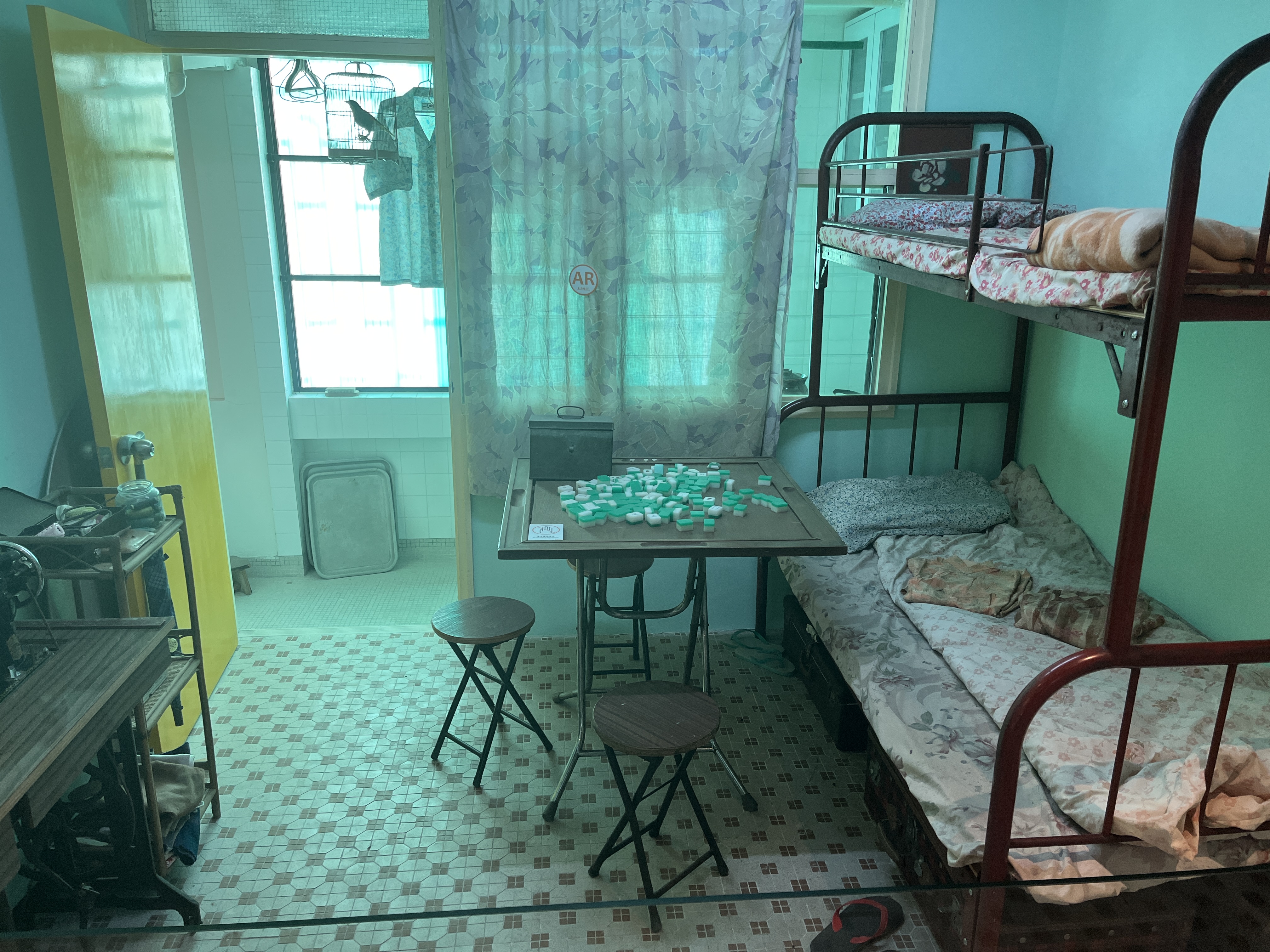
A simple public housing project unpacks into the many stories of the 800,000 refugees who formed a third of Hong Kong’s populaton by 1957, a cataclysmic number of new mouths to feed and people to house. A section of the Mei Ho museum pauses to wonder how they were entertained, providing a wealth of stories about the Hong Kong film industry in the period.
For the older generation, newly uprooted from what had become the People’s Republic, the Hong Kong film industry offered a huge number of filmed performances of Cantonese operas – between 1913 and 1990, Hong Kong churned out 1,092 filmed versions of Cantonese opera – and that’s straight ports of the stage shows, not action-movie adaptations like 14 Amazons. Only 800 of these films survive today, but they are largely overlooked. Their heyday was in the 1950s, when the aging population of migrants in Hong Kong, including the tens of thousands of refugees fleeing the People’s Republic, thrilled to old-time entertainments – in 1958 alone, Hong Kong produced eighty-nine of them. A generation later, their grown-up children were entertained by a hybrid of the old stories with a new mode of filming, what you and I might call kung fu movies.
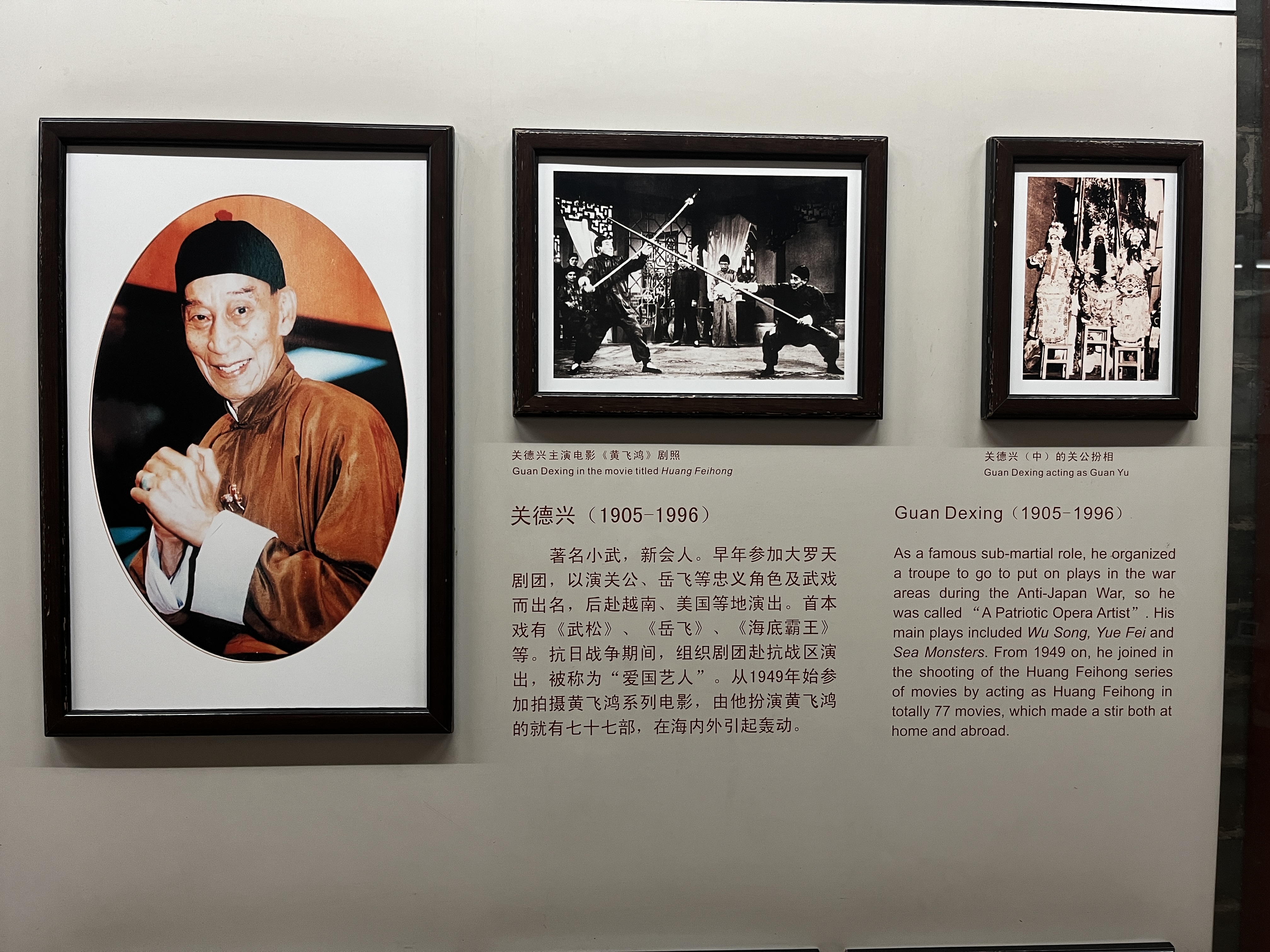
Upriver in Foshan, at the Guangdong Museum of Cantonese Opera, many of the galleries are dedicated to the cross-over between Cantonese Opera and Hong Kong film, not merely in subjects, but in performers. I recognise one of the actors immediately: the sign gives his name as Guan Dexing, but he is better known in Cantonese as Kwan Tak-hing, who played the hero Wong Feihong in 77 Hong Kong movies. I am, in fact, quite astonished that I have been in Foshan for two days and only once heard his famous theme song being played in a restaurant.
Wong Feihong has a whole museum dedicated to him inside Foshan’s Ancestor Temple – and his fame is widespread enough that it has separate galleries for his life story as told on television, in comics and in movies. The list merely of Wong Feihong movies is currently at 101, but the curators have left space on the wall for it to go up to 120.
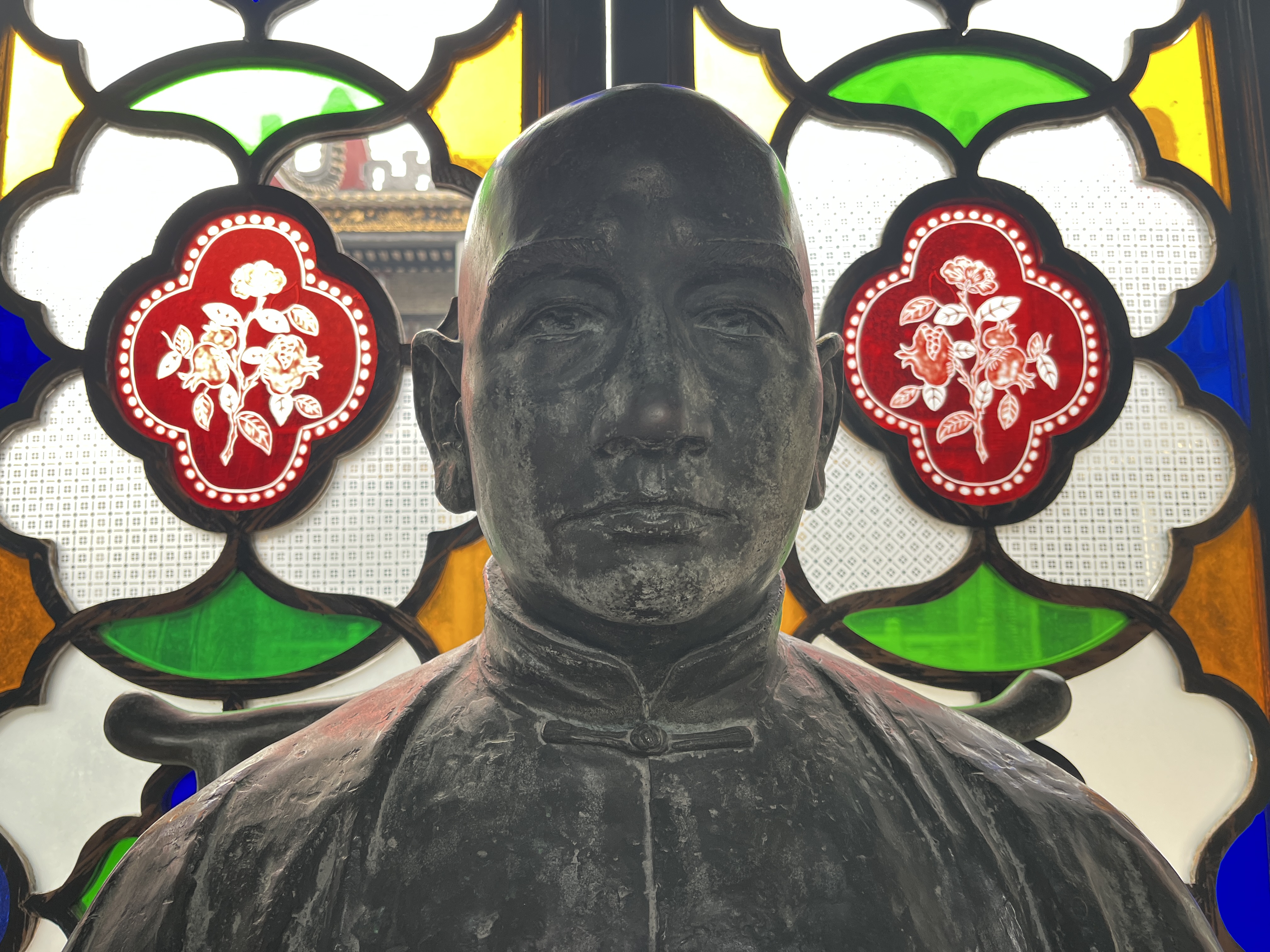
But Wong is not the only figure to unite Hong Kong film and Cantonese Opera. At Guangzhou’s Museum of Cantonese Opera Art, there is an extended display on the Red Boats – itinerant troupes of opera performers, who plied the waters of the Pearl River Estuary and its tributaries, putting on shows, wowing the locals, and so it was said, harbouring dissidents and revolutionaries.
The model ship in Guangzhou even features a group of martial artists practising with a Wing Chun dummy on its stern, whereas the museum in Foshan dedicates an entire gallery to the most famous of the Red Boat performers, Li Wenmao, who briefly led a rebellion and declared himself king of part of South China, before a savage government reprisal wiped out the theatre in the region for a decade. Li’s generals, so it was said, went into battle in their Cantonese Opera costumes, which must have been a sight to see.
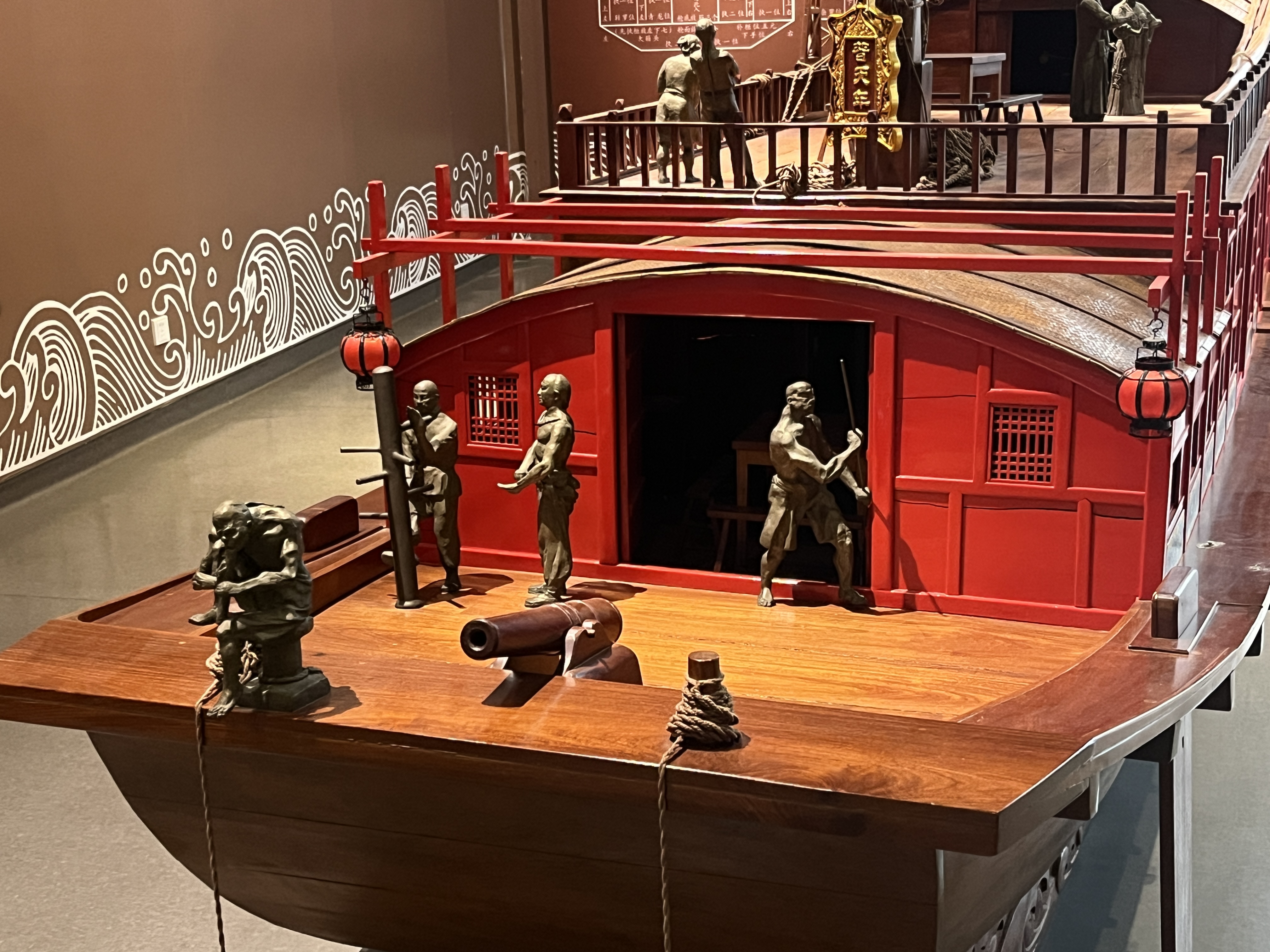
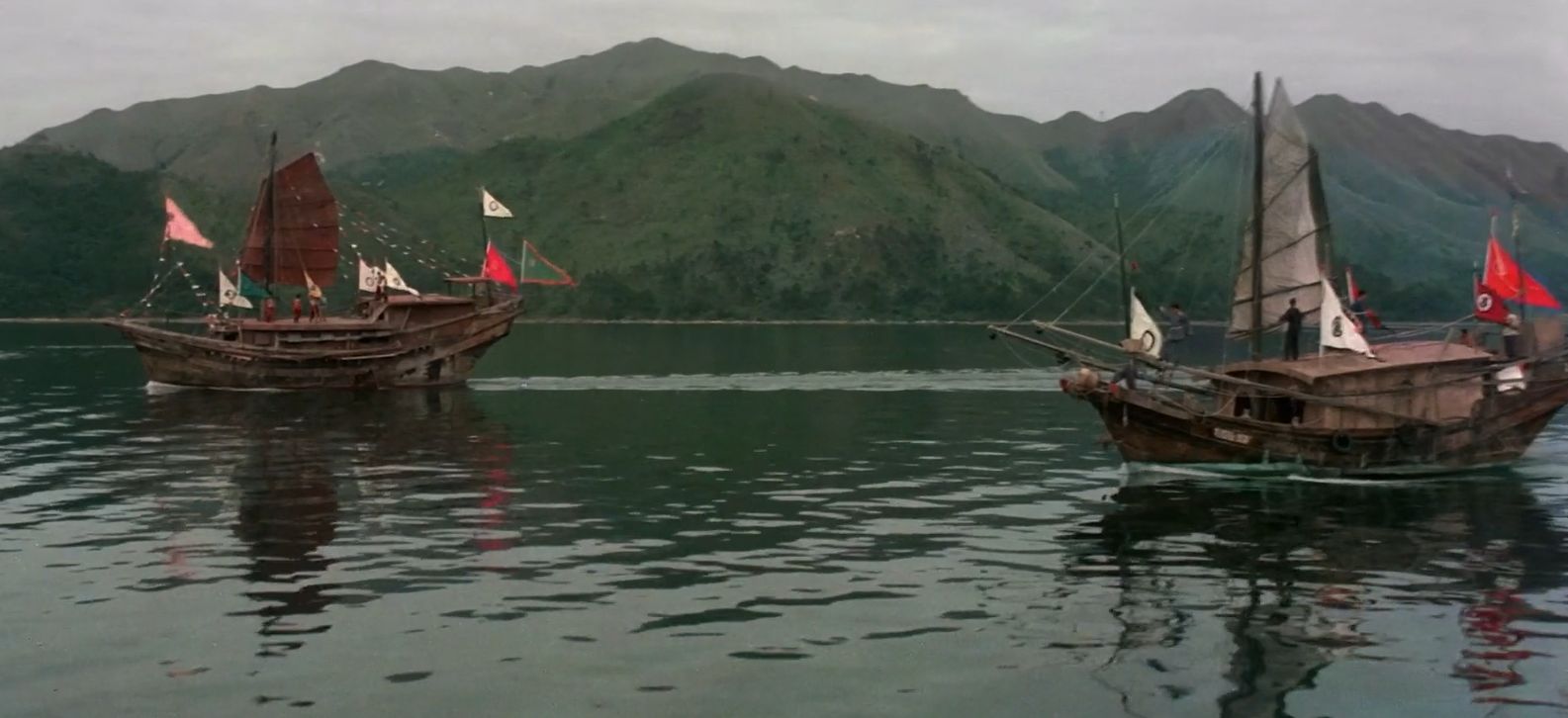
I’ve written several times about the Red Boats, mainly in my work for Arrow Films explaining all the real history behind their appearances in kung fu movies. There’s some fascinating stuff to be found out about life on these wandering minstrel ships, including timetables of shipboard life, and the logistics of being travelling players on the water. Most boats travelled in pairs – a Heaven and Earth boat that tended to reflect the division between drama players and the action troupe. The larger companies added a third vessel, the Picture Boat, which transported sets and extra props — the picture I have included below is a historical reconstruction, a screenshot from the Shaw Brothers film Executioners from Shaolin.
The average boat had its dockings booked two years in advance, and the culture is riddled with all sorts of interesting lore and ideas, such as the presence of four all-female troupes, and the fact that the term in Cantonese for a backstage prompter is a “local ghost.” The full list of Cantonese opera plays tops 11,000, but most Red Boat troupes had a revolving repertoire of just 18, of which ten were performed most often, with the final eight dragged out for special occasions. The first play performed in most venues was Tribute to the White Tiger, a staged fight between an actor and the spirit of onstage cock-up, who would depart chastened and defeated, and hence bless the performance. The last play performed each night was Sealing the Stage, a ten-second ritual in which a masked actor closed the performance and shut down the magic, in the fashion of Shakespeare’s “for their sake / In your fair minds let this acceptance take.”
Largely unexamined by theatre historians, for obvious reasons, are the Outline Plays, improvised operas for which the actors were handed a possibly randomised series of stock characters and situations and told to wing it. So there might be a board in the wings that reads (very hypothetically): “Comedy refugees from war / Farmboy argues with Uncle / takes them to the Hermit (old man with secret) / thence to harbour to seek passage with Pilot.” And if you were lucky, you might get something like the first thirty minutes of Star Wars. Sung. With six tones.
The Red Boats were wiped out in the Manchu retaliation after 1858, which toppled Li’s rebel state and murdered a million people in the region, outlawing theatre for a decade. They did return in the 20th century, and were a feature of local entertainment right up until 1938, when almost the entire fleet was unluckily anchored in Foshan harbour during a Japanese bombing raid. A cryptic comment in Toa Wong’s Time of the Red Boats notes: “The last known pair of Red Boats were spotted near Macau in 1951,” as if they might still be out there somewhere, haunting the coast.
Jonathan Clements is the author of A Brief History of China. He has recorded several film commentaries on Hong Kong movies, including Martial Arts of Shaolin, Heroes of the East and 14 Amazons. He is the writer and narrator of the Arrow documentary Rivers and Lakes: History, Myth and the Martial Arts Film.
 The Official Schoolgirl Milky Crisis Blog