
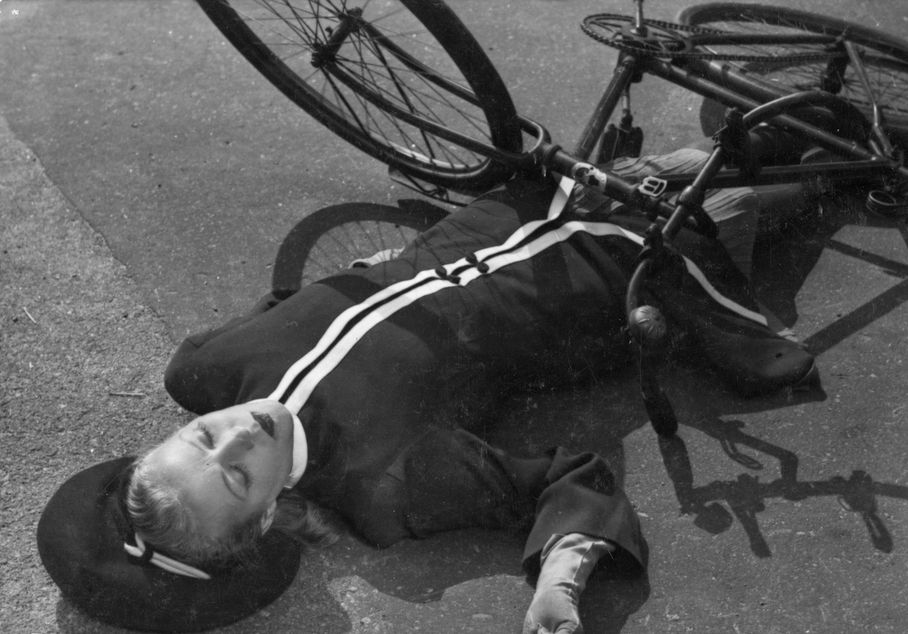
Fashionista Liisa Pesonen (Helena Kara) crashes her bike in the street, a happenstance which causes passer-by Raimo Kaarna (Tauno Palo) to offer her a ticket to his concert. She loses her handbag and switches apartments after nuisance calls from an unknown man. At Raimo’s concert, she meets his artist friend Loviisa “Lullan” (Elsa Rantalainen), and the two girls become fast friends.
When Lullan is invited to the Kaarna family mansion to paint a portrait, she insists on bringing Liisa with her, leading to further flirtations with the absent-minded Raimo, and Raimo’s mistrustful mother (Helvi Kaario) to forbid him from getting too close. This, of course, is the only thing that inspires Raimo to look up from his musical scores and consider Liisa as a potential bride.
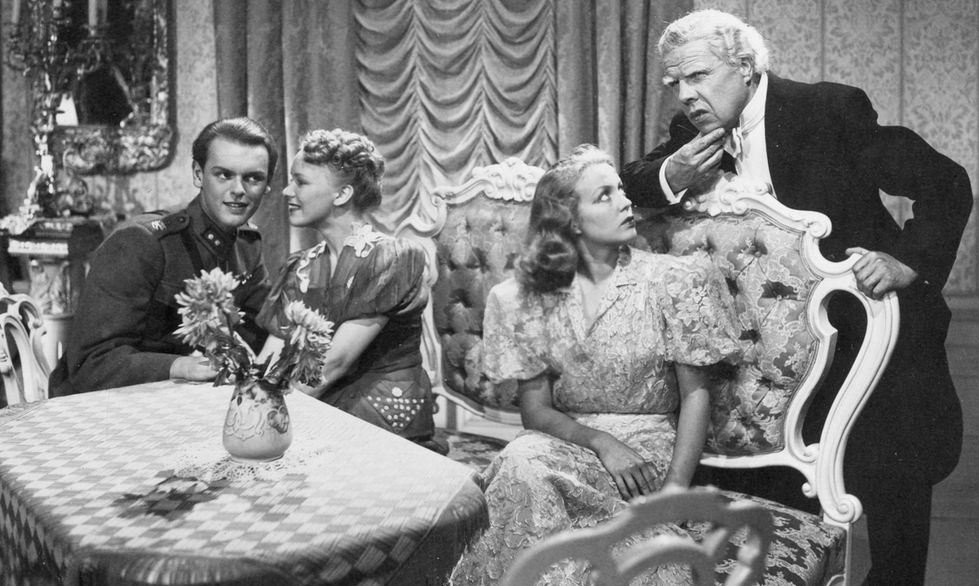
As if to prove her potential mother-in-law right, Liisa is the centre of an altercation at Mrs Kaarna’s birthday party, when she is accosted by a moustachioed man who has been stalking her around Helsinki. He is revealed as Bisse Holm (Thure Bahne), the “black sheep of the family”, who attempts to blackmail her into stealing 20,000 marks from the family. Raimo scares him off, but Liisa leaves in the night, proclaiming “The street’s where I came from and back there I’ll go.”
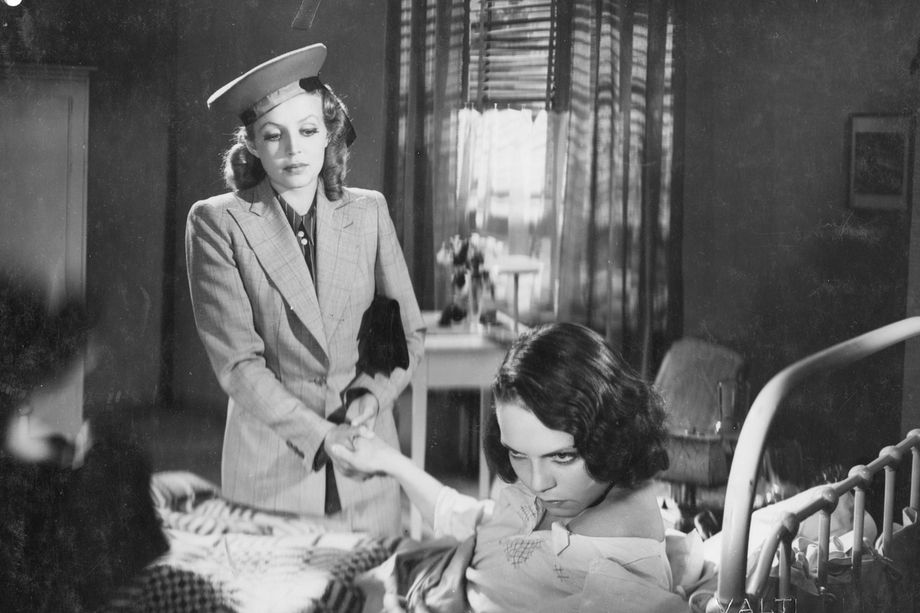
Bisse pursues her, but is happily hit by a car and killed, the third road accident in this road accident of a film, and Liisa faints in shock. At the hospital, an anxious Lullan renews her acquaintance with her suitor Dr Oksanen (Yrjö Tuominen), promising to give up her arty life and become a proper wife and mother. Sister Laurila (Aino Lohikoski), who is a nun but also somehow from the Salvation Army, explains that Liisa was a young girl on hard times, impregnated by a seducer, who suffocated her new-born illegitimate child by clutching it too hard to her bosom. Even though this is surely even more reason to banish her out of her sight, this story apparently moves Mrs Kaarna to sympathy, and she welcomes Liisa into the family!
It’s not merely that Puck feels like a pile-up of previous Finnish cinema hits (see, for example, The Mark of Sin, Safety Valve and Kara and Ilmari’s last work at their previous studio, Four Women, and that’s just in the year before); it’s that the crash is still ongoing as the film plays out, with easily enough plot to fuel several different movies. A simple romantic farce about missing theatre tickets and suitor misunderstandings is welded into a mystery about a Woman with a Past, while the synopsis above leaves out a bunch of side quests and mini-dramas that are not really pertinent to the plot. There’s a whole thing about a guy who is killed in a car accident, whose pregnant girlfriend Kirsti (Mirjami Kuosmanen) attempts to kill herself and has to be coaxed back to the world of the living by Liisa. The lovely Ester Toivanen, a favourite of this film blog, shows up in a minor role as Raimo’s sister, and there’s a pointless interlude in which the cast enact a scene from A Midsummer Night’s Dream, which is the origin of Liisa’s nickname and the film’s title. One presumes it was all so complicated that the advertising department didn’t even bother to watch it, since the poster showed a naked woman in a forest, which has nothing to do with the content of the film.

Puck began life as a 1934 novel by Gunnar Widegren, translated from Swedish into Finnish as Prinsessa Pesonen in 1940, and hence presumably being a rare publication event in the midst of war. Writer-director Hannu Leminen’s film adaptation strips out almost every Swedish noun, moving the action from Stockholm to Helsinki and Fennicizing almost all the names, but presumably kept every moment and scene that was crammed into its 296 pages.
The critics of November 1942 damned it with faint praise. “The plot is certainly not tainted by novelty,” carped Olavi Vesterdahl in Aamulehti, “but despite that, there is much in it that makes it a quality entertainment film.” Hufvudsbladet, Helsinki’s Swedish-language newspaper, thought that the whole thing was a breath of fresh air, although I can’t help but think that the critic, Hans Kutter, was putting a positive spin on its Swedish origins, and his assumption that if he didn’t like it, it must have been the sort of thing that appealed to the kidz. He was, however, quite merciless in his criticism of Elsa Rantalainen in the role of Lullan, who “…practically ruined the film with her shrill and tasteless performance.”
The anonymous critic for the Ilta Sanomat was much, much more exacting in his annoyance. “The film is not actually a ‘charming’ depiction of ‘old-fashioned love’,” he wrote, seemingly in answer to the marketing, or possibly even other critics. “It is an atmospheric relic from twenty years ago, an unintentional parody of everything that is artificial and offensive to modern taste, which in my opinion should already be confined to the archives of cinema. We are supposed to be amazed, yet again, by that old, tried-and-tested arsenal of clichéd elements of mundane Finnish cinema – tearful emotion, ridiculous outbursts of the tragicomic, over-acting, pathos that on this occasion would not even befit a weekly newspaper, a confusing backstory that defies even the most elementary psychological coherence, endless, empty chatter, and powerful ‘situational comedy’ sprinkled here and there – that’s the content of this film.”
As this film watchathon lurches on, there are signs of generational tension within the Finnish film business, particularly over issues of adapting novels and plays from decades earlier, and trying to cram them into the situations and morals of the 1940s. Widegren was born in 1886 – Puck feels like a baffled old man’s attempt to tell a story for the younger generation, occasionally forgetting what he is supposed to disapprove of, and often confused and uncomprehending of the degree to which times have changed.
Jonathan Clements is the author of A Short History of Finland. He is watching all the Finnish films, so you don’t have to.
 The Official Schoolgirl Milky Crisis Blog