
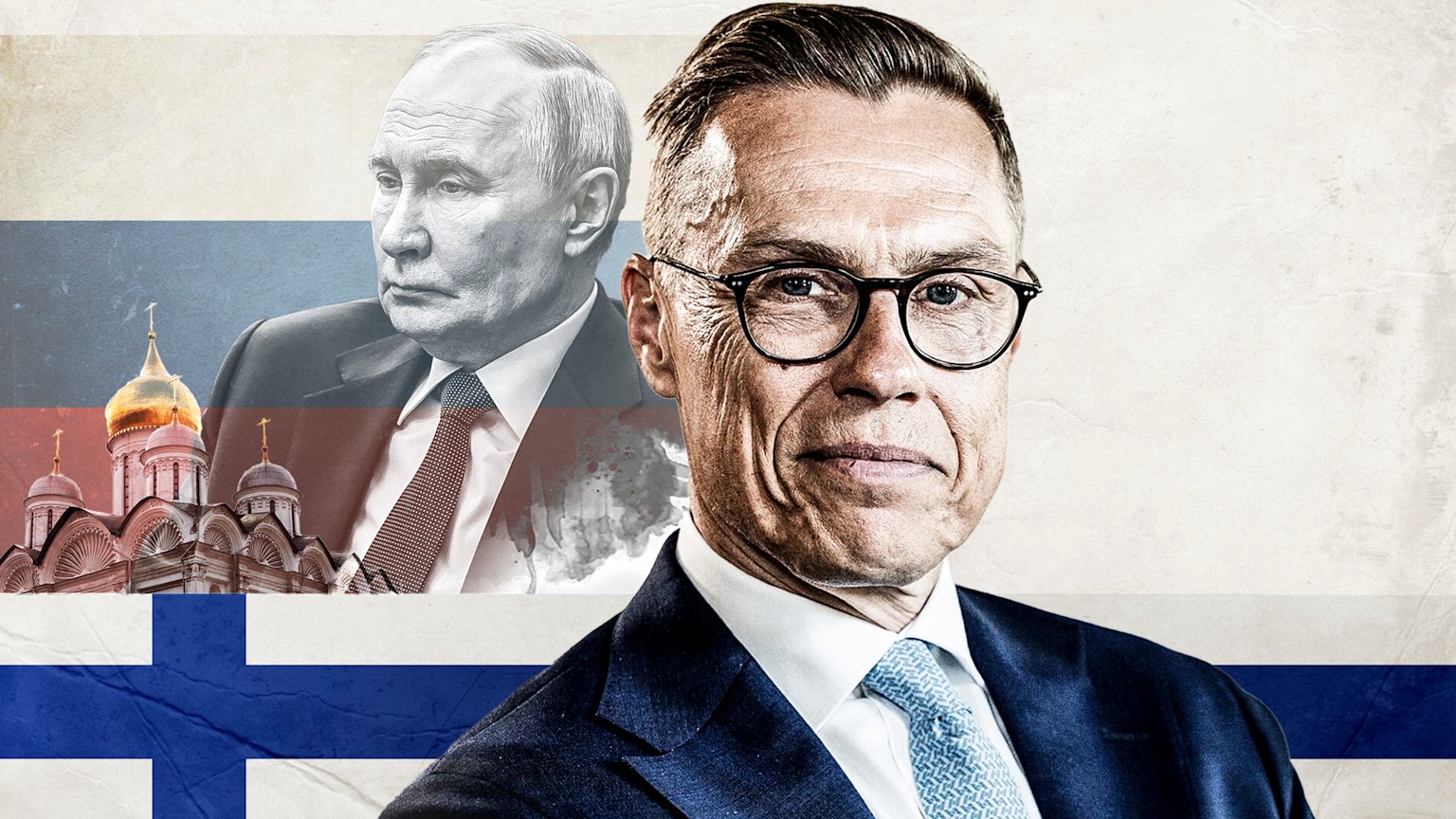
“Oh, how people scoffed at the idea,” Clements reflects. “Young Alexander Stubb, off to study at an American university on a golf scholarship. What possible use could that be? What possible situation could arise in his future political career where being a world-class golfer would suddenly … oh, yes, right.”
Over at the Sydney Morning Herald, Peter Hartcher interviews president Alexander Stubb and “Helsinki resident” (I am not a Helsinki resident) Jonathan Clements about life in Finland. The article is pay-walled, but here’s the full text of my interview, from which only a couple of quotes were used.
Finland is getting a lot of attention as the role model for smaller nations surviving against big, aggressive neighbours. In your view, what are the elements that account for its success to date?
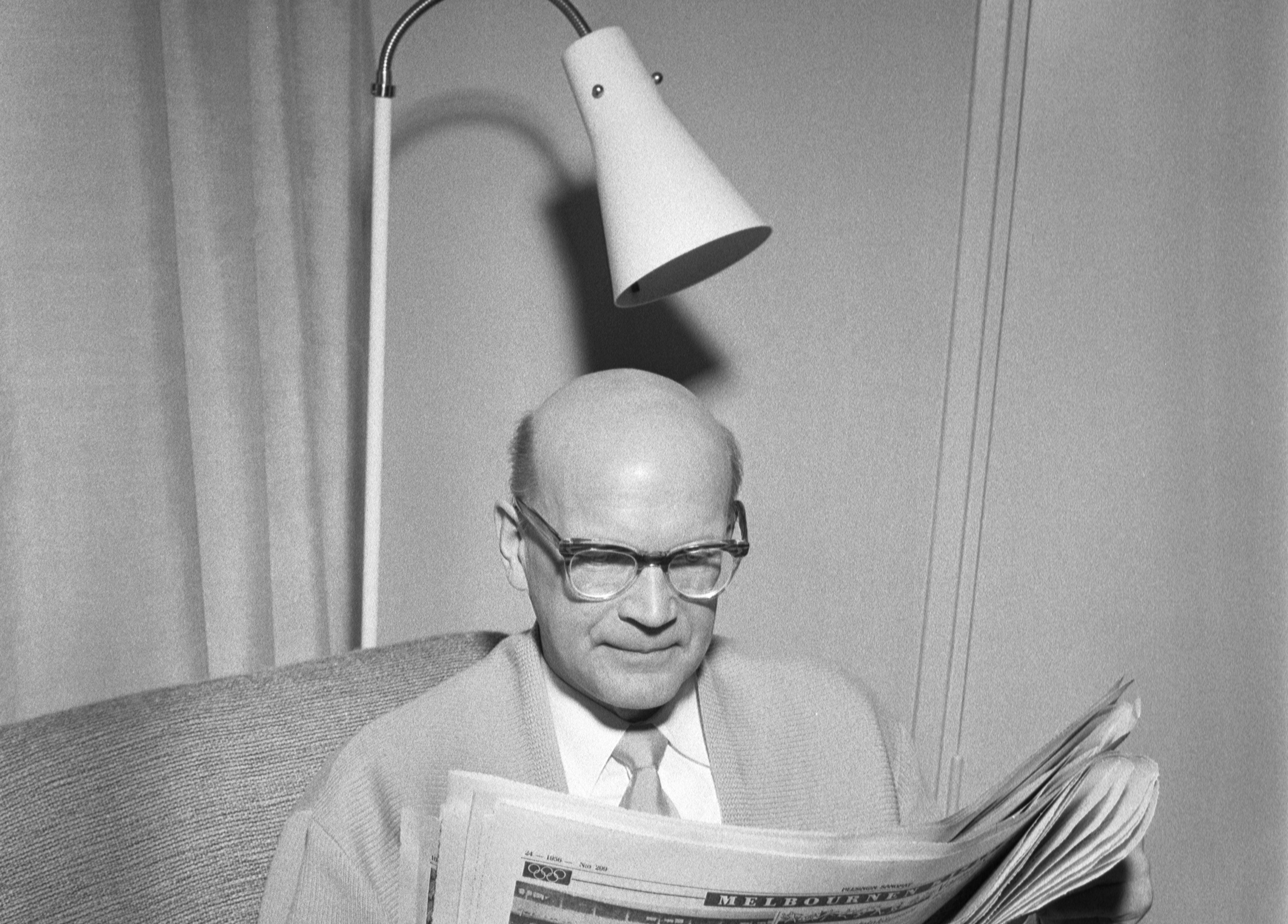
People tend to forget the brinkmanship of the Cold War, when Kekkonen so carefully tiptoed around the big Soviet bear and didn’t do anything to provoke it. As with so many other elements of its international standing, I can’t help but wonder, however, to what extent Finland’s reputation is founded on a uniquely Finnish situation that is difficult to replicate elsewhere. We have fantastic education because of the homogeneity of the student population, and because of the peripheral benefits of a socialist society, like school meals, and good housing, all of which makes all those Chinese researchers coming to “learn from Finland” on a hiding to nothing, because they think they can change what they teach in the classroom and that’ll do it.
Similarly, Finland has a robust series of elements in place to deal with a potential invasion. One is a border region that has *already* been sacrificed to Russia, as if, say, Ukraine had given up its eastern marches in 1945 so they were no longer Ukrainian territory for Russia to covet. Demographically and geographically as well, we have a terrain that will make life difficult for any would-be invader. As demonstrated in the Winter War, there are all sorts of choke points and bottlenecks created by the lakes and forests, hills and swamps, to make life difficult for Putin.
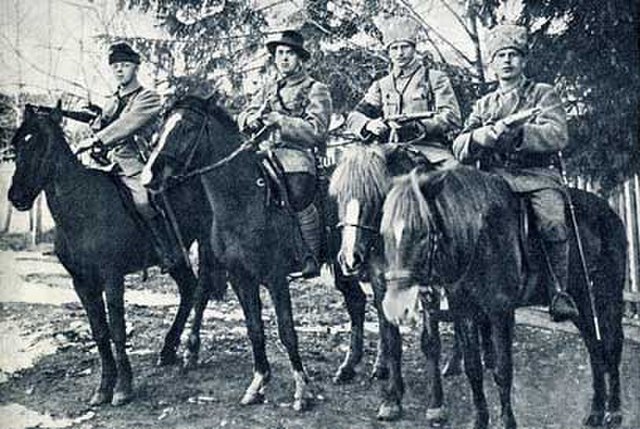
Another is a civil war that has *already* purged the country of Russians to function as a fifth column or excuse to bring in “aid” from over the border. Unlike Estonia or Ukraine, we don’t have a massive Russian-speaking ethnic minority here: the Finns killed half of them in 1917, and the rest were shooed out of the country and killed by Stalin. Another is an ongoing conscription programme that keeps the land chock full of territorial army soldiers, and a state of constant readiness designed to demonstrate to Russia that an invasion of Finland would make Afghanistan look like a tea party.
Is permanent mistrust of Russia one of the elements?
Yes. Although for a long time, the classes in the military colleges would try not to specify that the whole thing is aimed at curtailing a Russian advance. They would talk about playbook scenarios in which the aggressor might be anyone. I mean, it could be Sweden, right? Stubb’s comment recently that Finland is perpetually preparing for defence against aggression and that, newsflash, “it’s not Sweden” was a moment in which he finally spoke about the elephant in the room.
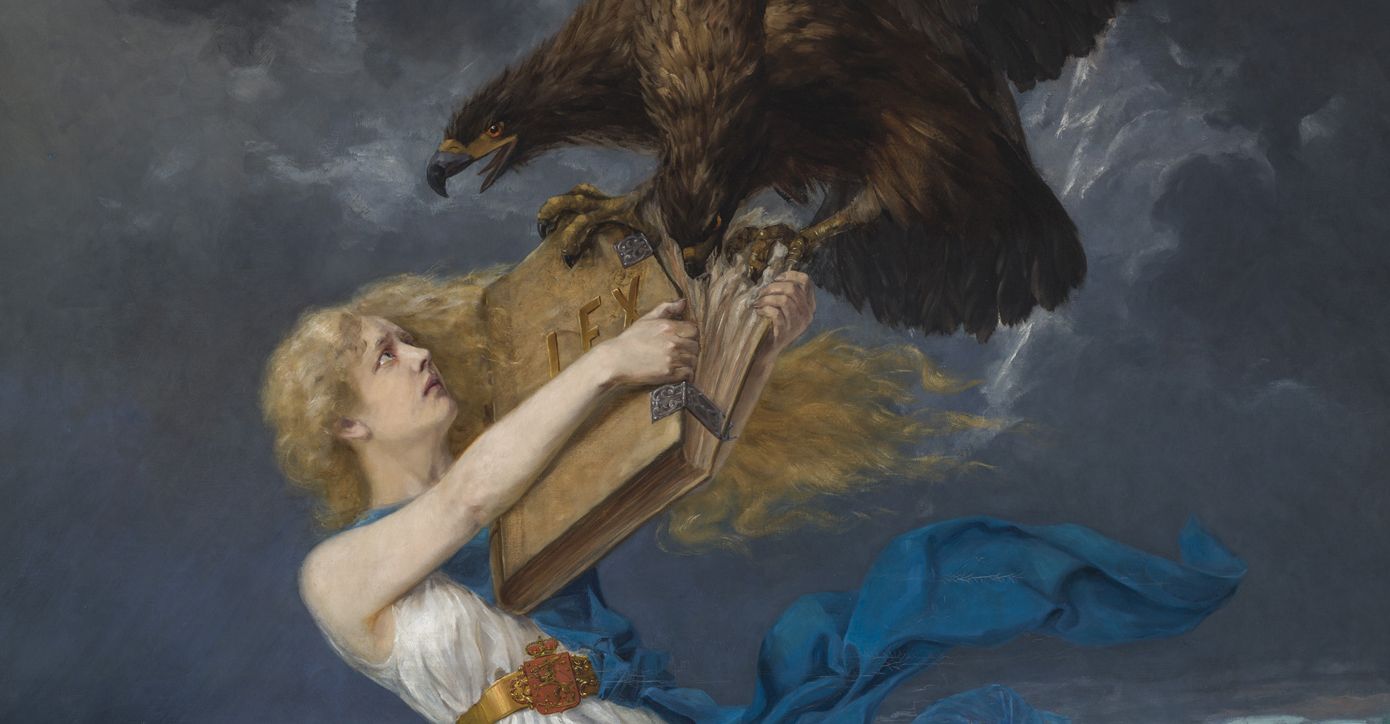
I think it’s also worth remembering that Finland and Russia have form going back before the 20th century. Finland was a loyal and enthusiastic member of the Tsar’s empire throughout most of the 19th century, until the Tsar started throwing his weight around and stripping away Finland’s freedoms of government and currency and infrastructure. Finland’s entire nationalist movement was reframed as a response to Russia, and Finland was the only part of imperial Russia not to go Red at the end of it all. “The only thing Putin understands is power,” says Alexander Stubb, but one could have said that of any Russian leader all the way back to Nicholas II.
What about sisu – is it a unique Finnish quality or do other peoples have it by other names (Ukraine, for instance, would seem to have something like it)?
Finland certainly recognises sisu in the Ukrainians. Every nation has got its bloody-minded nutters who just refuse to give up, but I think the Finns always had a reputation in the era of Swedish rule for being the forest folk with their trousers held up with string, who would volunteer for the insane missions. In WW2 of course, that became even more of a thing, and I think it has an individual, but also a national element. That huge Soviet army rolling across the border and the Finns just standing there and saying NOPE. There is a very Ukrainian feel to it.
Your book taught me about the viciousness of the Finnish civil war. It’s amazing that such a divided people was able to unite so successfully against the Soviets in the Winter War. What was their secret?
The best thing to unite a divided country is a big foreign aggressor showing up and giving them a bigger baddy to fight against. It worked for the Chinese against Japan (until it was over), and it worked for the Finns against the Soviet Union. As I point out in my book, you can still see vestiges of the civil war today, particularly at moments like veterans’ day or in particular family dynamics, but Mannerheim very famously said that it didn’t matter what side someone was on in the civil war. It mattered where they stood when the Soviets turned up. I think, however, that papers over something a little less gung-ho, which is that while there are still sympathisers with the civil war Reds in Finland, so many of them were purged.
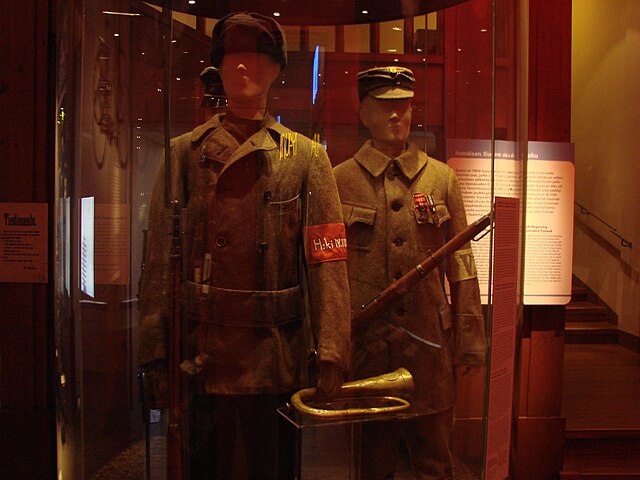
The Whites killed a bunch of Reds. A bunch of other Reds fled to Russia, where Stalin would eventually kill them, or emigrated overseas, where they formed enclaves of expats as far afield as Michigan and Melbourne. That removed them from the national conversation at home and made integration easier for the ones who were left behind. Or to put it another way, if you were a serious Red, there was a far better chance you didn’t hang around in White Finland to have to take the trouble to integrate.
I had no trouble selling a book about Mannerheim; in fact, my biography of him was snapped up by the Finns so eagerly that the Finnish translation was released a week before the English original. But I wanted to follow it up straight away with an account of the John Grafton incident, which is a story from 1905 about “Red” Finns. Nobody wanted it. Even though Mannerheim is one of my publisher’s best-sellers, they weren’t interested in a story of Red Finland. The readership for it, they said, isn’t there. They’re dead. Or they’ve faded into the population in Australia or America, and don’t want to hear about *that* aspect of the Old Country. I keep trying, but I’ve got nowhere in fifteen years.
Are they similarly united today? Please correct me if I have the wrong impression, but it seems that they currently are fairly unified in the main tenets of their geopolitical outlook – they are resolved to oppose Russia, to support NATO and to endure Trump. Or is that just the superficial impression of a blow-in, non-Finnish-speaking naif?
Yes. And as Stubb put it, it wouldn’t have happened without Putin. Finland went nowhere near NATO for seventy years. It seemed like a stupid idea to antagonise Russia, and the Finns learned the hard way in 1939 that they might be left all on their own to fight a Russian aggressor with little more than “thoughts and prayers” from the rest of the world. After the invasion of Ukraine, the Finns figured they might as well go right ahead, and the sea-change in that attitude took a lot of people, me included, by surprise. I genuinely wondered if there was some sort of Brexitty bunch of *Russian* influencers trying to steer Finland into that decision in order to provoke Russia — a sort of self-inflicted false-flag attack.
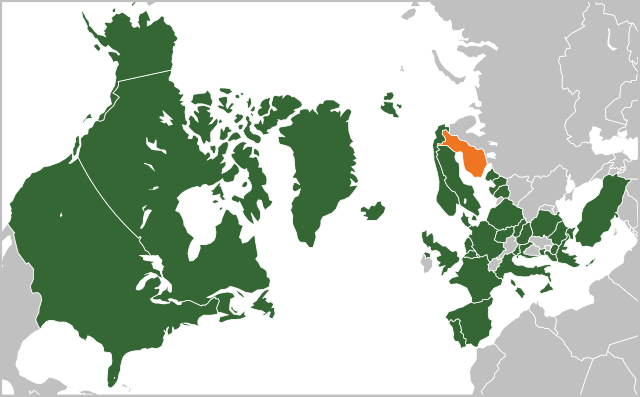
But even previously anti-NATO Finns suddenly came around within a matter of months. It was the ideal time to join, they told me. The bases on the Russian side of the border had all been emptied out and sent south. Ukrainian sisu was thinning out the Russian forces on behalf of Finland, hundreds of miles away. The one thing that Ukraine had been lacking, they thought, was a button they could press to throw all the armies of Europe into the country in their immediate and open defence. Joining NATO would be a vital final brick in the wall to keep out Russia, and not even Putin would want to fight a conventional war on two fronts.
I was sad when they shut down the trains to St Petersburg. It was one of the great joys of living in Finland, to be whisked away to Russia in just a couple of hours. But the Russians were even sadder. Thousands of them were pouring onboard to escape Putin’s Russia before the last train; hundreds of them left their cars at Helsinki airport as they raced off elsewhere in Schengen. Someone still leaves flowers at the base of the statue of Alexander II in Helsinki.
Any observations about Alexander Stubb’s performance in general, and his supposed emergence as a Trump whisperer in particular?
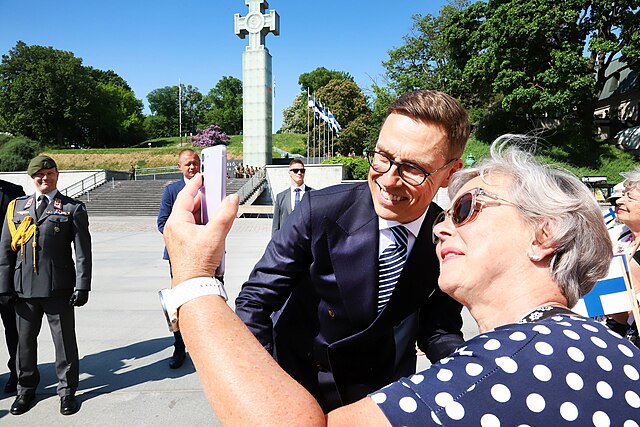
Oh how people scoffed at the idea. Young Alexander Stubb, off to study at an American university on a GOLF scholarship. What possible use could that be? What possible situation could arise in his future political career where being a world class GOLFER would suddenly–? Oh, yes. Right. He speaks perfect English. He went to school in Florida and college in South Carolina, and surely that makes the Americans feel that he is “one of them”. He’s safely on the Finnish right, which helps when Americans get twitchy at the term “social democrat.” He is the inheritor of seventy years of Finnish political history which has involved keeping a straight face when stuck in a conference room with an angry bear. He’s charming, and he’s smart, but like all Finns, he hides his light under a bush, so I imagine that he doesn’t intimidate them.
And I can’t resist asking – do you think it’s the happiest country in the world?
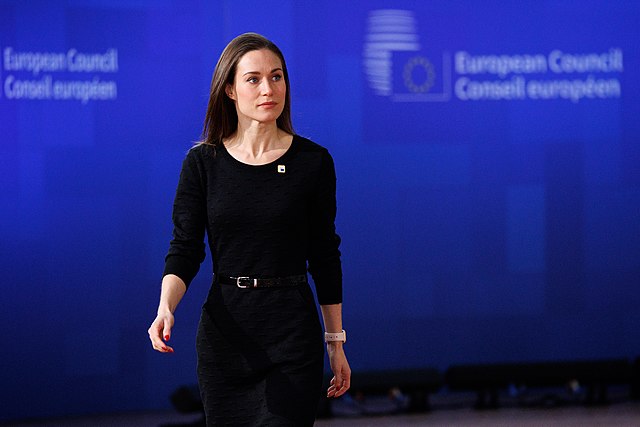
Surveys like that don’t necessarily ask the right questions. It’s not that the Finns are happy, it’s that they have built a nation where it is easier to be satisfied. I pay a lot of tax, but I know where it goes. I don’t have to worry about healthcare, or the transport system, or education. I am nurtured and cherished by a system built by women for women, where childcare is subsidised, home improvement is tax-deductible and Sanna Marin, a check-out girl raised by lesbians, can still get a Masters degree, become prime minister and lead the country through COVID. The Estonian right intended that line of commentary to be an insult, but the Finns are justly proud of it. We have opportunity. You have a better chance of living the American Dream in Finland than you do in America. You bet we are happy about it.
There have been a lot of government cuts lately, and the unions are agitating to prevent Finland becoming just like everywhere else, hence a lot of the recent strikes. I was tutting recently about the graffiti in my town. It’s an epidemic, I said. It’s suddenly come out of nowhere. KIds today, etc etc.
No, said my Finnish friend. There has always been graffiti here. It’s just in previous years it was gone the next day because the council had a budget to clear it up. Now it stays up for months and months, because of all the cuts.
When Finns complain, they sound so cute. Oh really, your train was four minutes late? Oh really, the neighbours were noisy last night nearby your heavily subsidised council apartment? I was talking to a Finnish surgeon about his rotation at a Helsinki Accident & Emergency department, and he said: “Well, Helsinki is a big city, so there are big city problems. People get into fights. There are drugs. There are accidents.”
What, I asked, was the average waiting time at the A&E.
“I’m sorry,” he said. “My English isn’t so good sometimes. What is this ‘waiting time’?”
Jonathan Clements is the author of A Short History of Finland.
 The Official Schoolgirl Milky Crisis Blog