
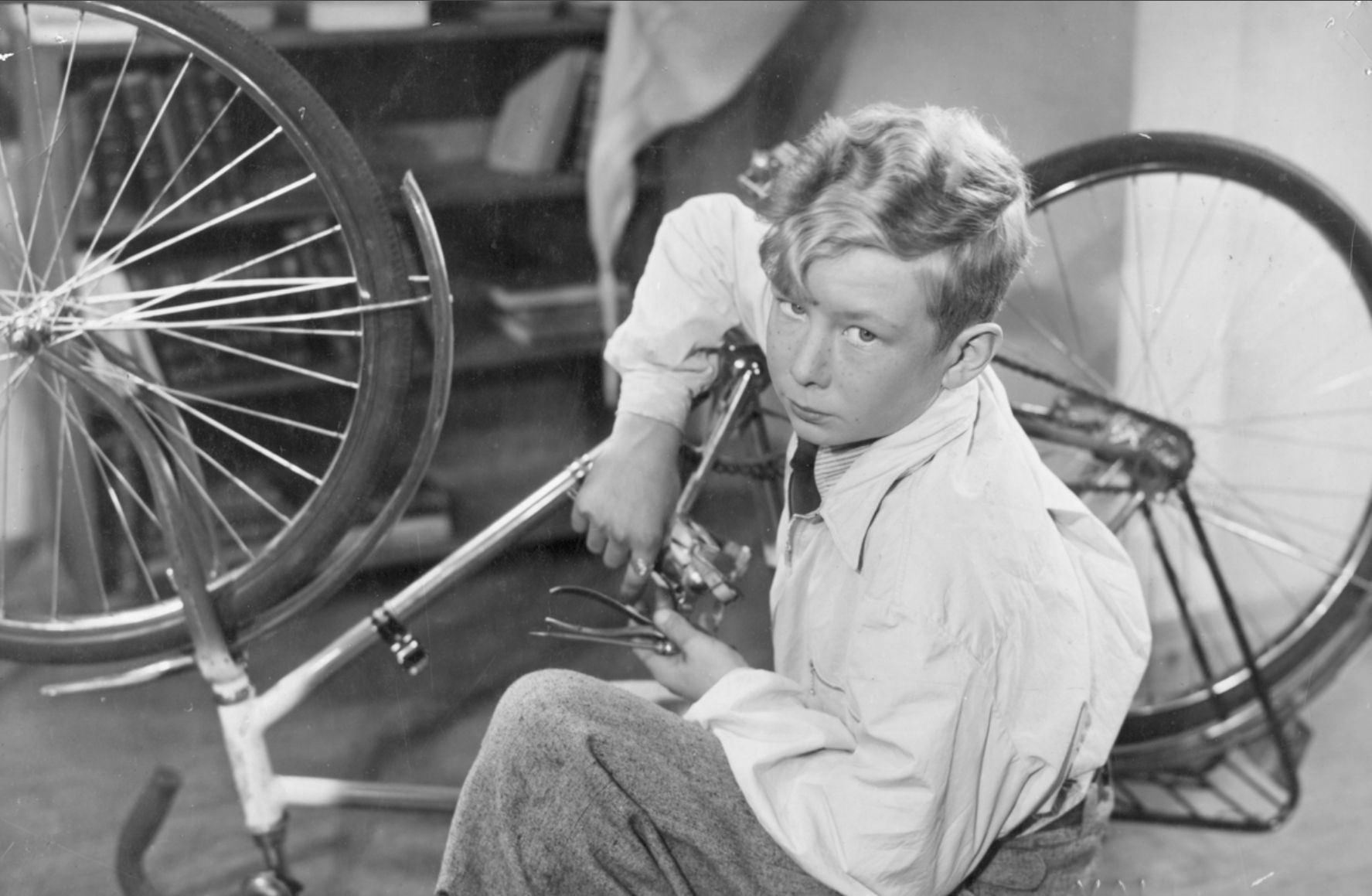
As his mother prepares to set off with her newly adopted twins to a country retreat, young Olli Suominen causes an accident in the street and is consumed with guilt. He is propelled into a series of misadventures as he tries to make amends by getting the money together to buy a doll for an injured girl, befriending her brother Jaska (Kalevi Hartti) in the process, and findind a veritable partner in crime. The two boys become mixed up in the case of a missing envelope of money, go on the run to a relocation camp, but eventually are exonerated, and all is well that ends well. In a nod to the wartime austerity that can be seen permeating much of the film, the family maid Hilda (Siiri Angerkoski) announces that they are going to celebrate with real coffee.
After the success of the radio spin-off The Suominen Family (1941), the Suomen Filmiteollisuus studio rushed straight into a sequel, jettisoning any cast members who weren’t immediately available for a reprise, and parachuting in some previously unmentioned relatives or doppelgangers to hang onto the momentum. Considering that child star Lasse Pöysti was 14 when filming started and pushing 16 by the time the premiere arrived, they were lucky that he didn’t visible shoot up like a beanstalk between scenes.
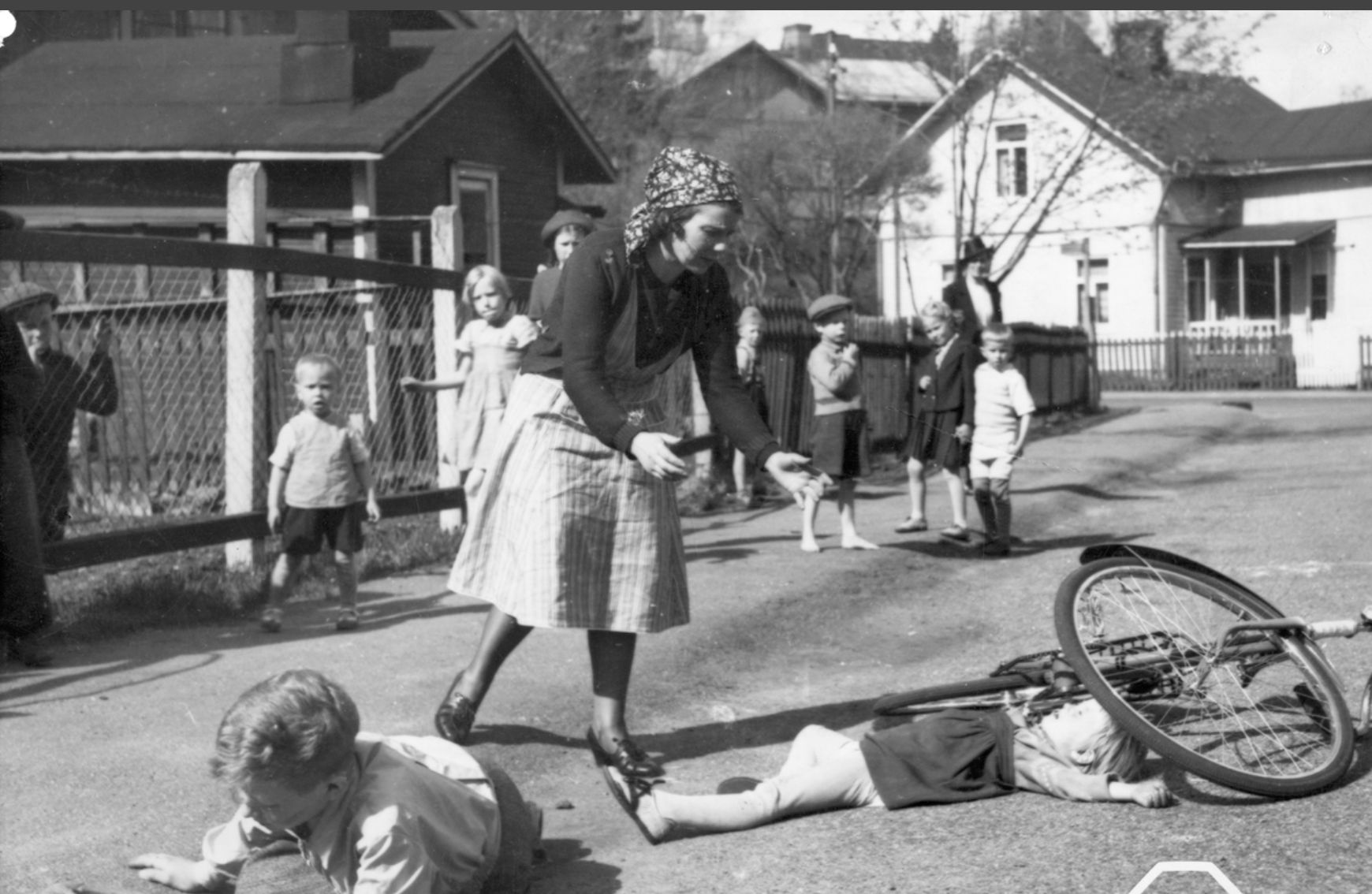
Although filming began on Suomisen Ollin tempaus in May 1941, it was postponed for a year and only resumed in summer 1942. The opening night did not arrive until November 1942, making it a mini time-capsule of life around the outbreak of the Continuation War with the Soviet Union. There is an incredible amount of location work, wandering all over contemporary Helsinki, and filming in several real-life houses.
There is no overt reference to the conflict, but all sorts of incidental details in backgrounds, technology and clothing that make it clear when it was shot. Cars have wood-powered boilers, an allotment plot is referred to as a patriotic duty, and the hospital has visible shrapnel screens over its windows. Much like August Fixes Everything (1941), it also features prominent propaganda regarding the desirability of adopting war orphans, featuring a pair of twins that had, in real life, been adopted by director Orvo Saarikivi and his wife.
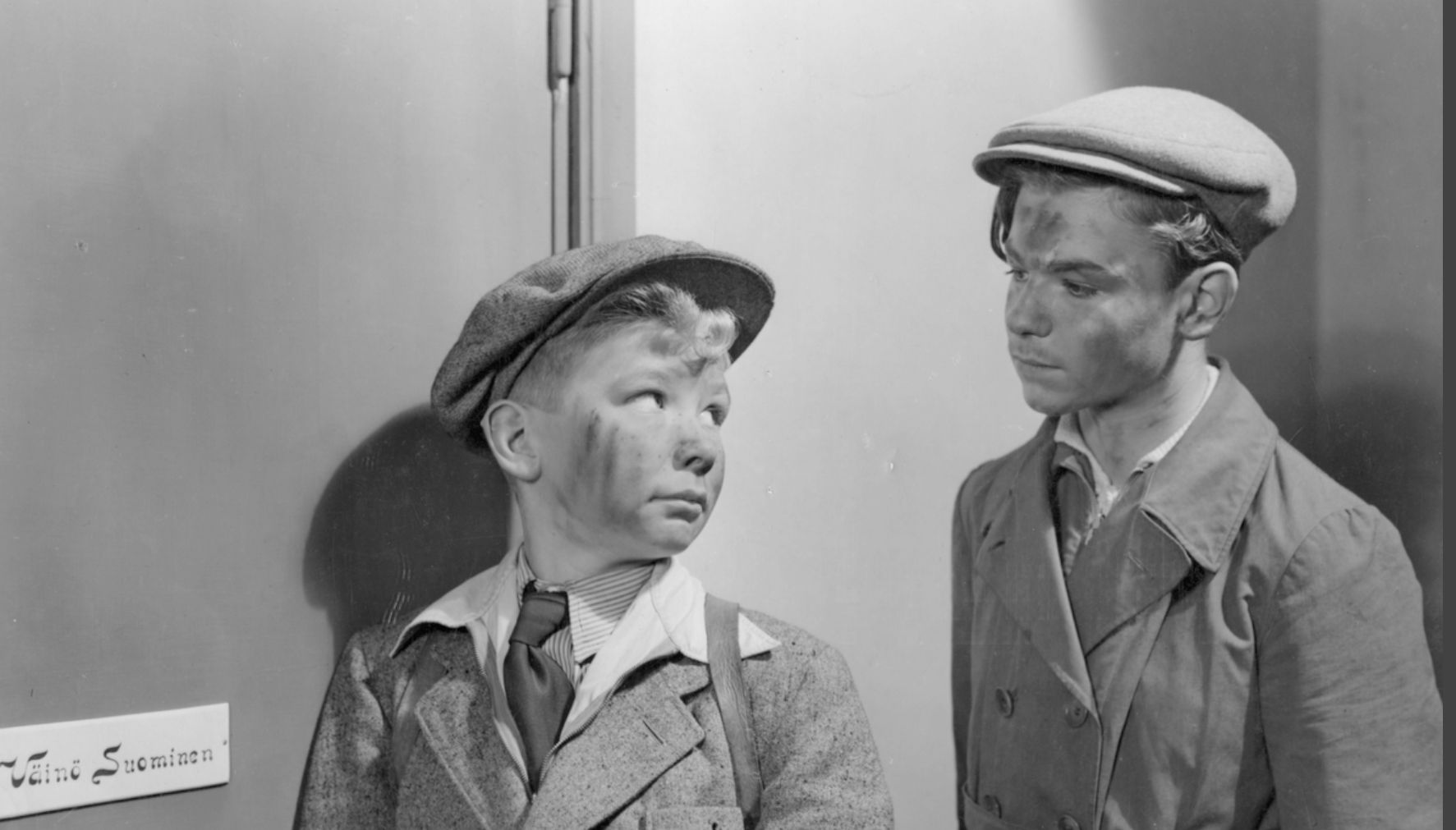
In a cunning ruse to make the middle-class Suominens more relatable, the film also focusses on a blue-collar family with the same surname. Jaska Suominen is the same age as Olli, but has already left school; his family grow crops in their yard to scrape up some additional nutrition, and all of the Suominens are in the same boat, no matter what their social position. With a surname that is already, as they say, “as Finnish as a wolverine,” it is a nice touch to add to a universal message. The chemistry between Jaska and Olli was so good that Kalevi Hartta returned in later films, starting with The Little Artists of the Suominen Household (1943), albeit in a different role as Olli’s best friend at school.
The Helsingin Sanomat’s unflappable Paula Talaskivi was won over by a film that she regarded as “almost a perfect match in its genre: a heartwarming, funny, refreshing and warmly presented piece about everyday life in the home of a Finnish family, mainly in the sphere of activity of its young offspring.” Olavi Vesterdahl similarly heaped on the praise in Aamulehti, calling it a “sorrow-buster” [murheentorjuja]. The rest of the Finnish press was similarly rapturous, bigging up the child actors as world class, and thanking the Suomen Filmiteollisuus studio for bringing the country a much-needed pick-me-up. With the hindsight of history, the broadcast of the film on television in 1986 was greeted with considerably greater reserve, as the critic for the Helsingin Sanomat grumbled that the desire to present a united front and a happy country resulted in a movie in which “all the problems solved themselves.”
To my twenty-first century eyes, it does seem awfully slow, with a minute at the beginning lost to an overture over a blank screen, and minute after minute of the Suominen family’s daily life as they faff around the kitchen and dither at the train station. But one imagines that such mundane scenes were a welcome tonic to many Finnish audiences in 1942, rather than the box-ticking filler they may appear to be today, as the director desperately tries to cram characters from the radio play into enough scenes to make them seem to have got their due.
Jonathan Clements is the author of A Short History of Finland. He is watching all the Finnish films so you don’t have to.
 The Official Schoolgirl Milky Crisis Blog