
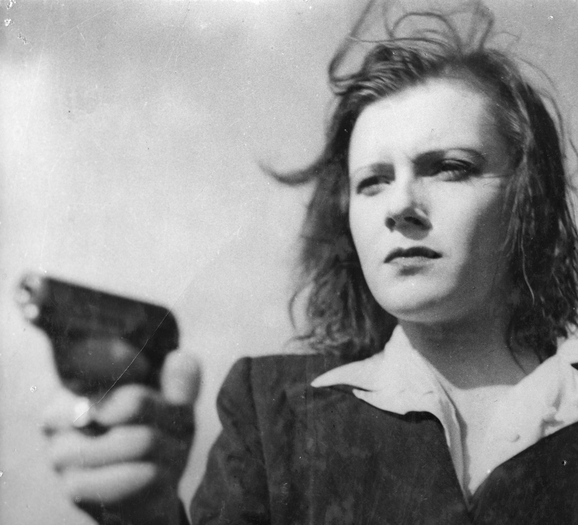
Tanja Bulkova (Eija Karapää) arrives in Finland on a fake British passport, and reports to Mr Rosenberg (Ensio Jouko), a spy-master who operates out of a Helsinki photo shop. Her path crosses repeatedly with Erkki Kari (Joel Asikainen), a newspaper reporter chasing down leads concerning a murder and an arson attempt at the Finnish Wood Export Company. Now calling herself Toini, Tanja is working as a secretary to the industrialist Rautavuori (Arvi Tuomi), from which position she hopes to acquire money, blackmail influence, and access to more factories for her associates to bomb. Unfortunately for her, it doesn’t take long for Erkki to realise that she is the same “English Lady” he took a shine to on the train from Turku, now operating under a different name and with a different hair colour.
There was a new kid in town in January 1943, with the sudden arrival on the scene of Fenno-Filmi, an upstart studio to compete with the big boys. Lauri Pulkilla was a former sound engineer and Theodore Luts was an Estonian-born cinematographer, who had worked for both Suomi-Filmi and Suomen Filmiteollisuus in the 1930s. They were soon joined by Yrjö Norta, another refugee from the majors who had to pay “protection money” to his employers to free him from his existing contract.
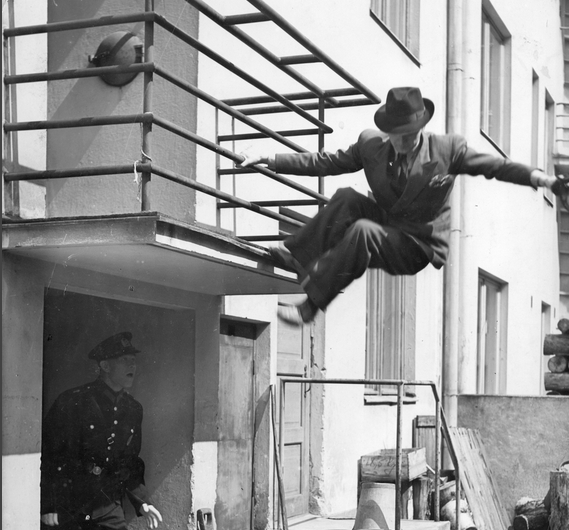
Fenno-Filmi had hoped to come up with a stirring war movie for their first production, but were kept waiting for weeks while their application to shoot near the front line sat, unopened, on the desk of Gustaf Mannerheim, who had other things on his mind. Eventually, they pivoted to their second script idea, a spy thriller more ideally suited to low-budget shooting in urban settings. And budgets don’t come much lower than working under austerity conditions in the summer of 1942. Real-world locations saved money on sets, but presented the film-makers with a new logistical problem for moving their equipment around town. They eventually accomplished this with a home-made handcart, which the grips had to wheel manually from street to street to set up each shot.
But what a story. Eija Karapää has a part that most actresses would dream of, or possibly have nightmares about, switching identities and allegiances several times in the film, transitioning in the course of the film from dastardly enemy spy, to long-lost sister, Finnish patriot, double agent and love interest! Meanwhile, a script written with input from a real-world counter-espionage operative shines a light on petty propaganda coups and nuisance operations – many of the espionage and sabotage jobs we see Tanja’s associates carrying out are relatively simple monkey-wrenching, seemingly in the hope that enough spanners thrown into the works of wartime Finland will accumulate to have an adverse effect on national morale and performance.
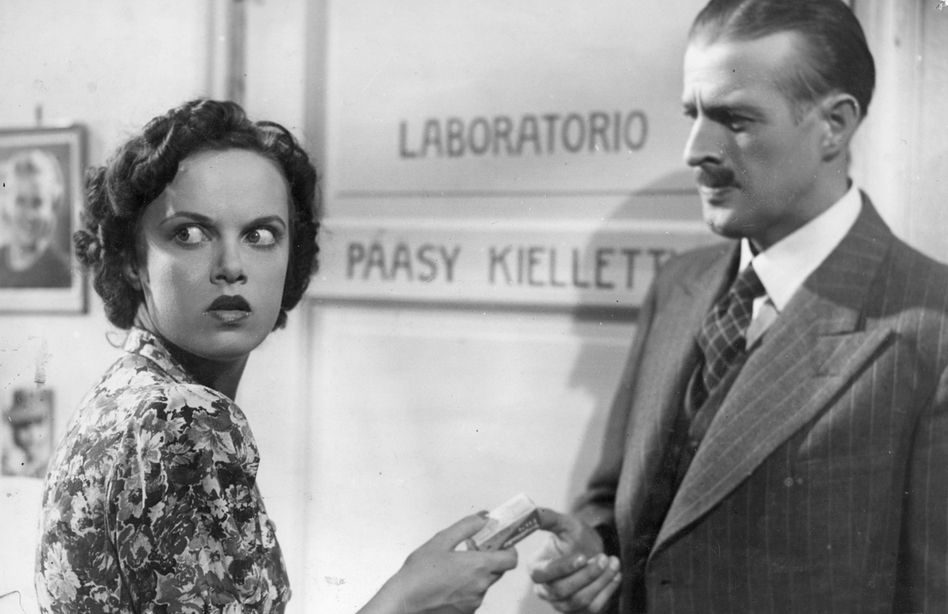
Salainen Ase was by no means the first film of its kind in Finland – we’ve already seen similar materials on show in The Last Guest (1941) and The Dead Man Falls in Love (1942). But with a cast and crew eager to make their mark, it is a breath of fresh air in this chronological trawl through Finnish cinema history, complete with arty compositions, dastardly deeds and daring, and some wonderful scene-stealers like Liisa Tuomi (previously seen as the lead in The Silver Betrothal Anniversary), who lights up the screen with her flirtatious, sassy scenes as “Olly”, the brisk and cheeky lab assistant at Rosenberg’s photo studio.
If there is anything that hobbles this film with the weight of Finnish cinema tradition, it’s a plot that somehow makes the steely enemy spy also the long-lost sister of one of the heroes, and a narrative arc that has her switching sides and turning on her own people. But the press of the time (and me, right now) were happy to forgive that in the light of the film’s many other redeeming features. Its archive review coverage is full of words like fast-paced, cinematic, fresh, new, action-packed and captivating. “The Secret Weapon does not shine with star names,” wrote the critic for Uusi Suomi, “but it is all the more pleasant to get to know the new faces and to note that there are discoveries among them who probably still have a lot of work to do on the big screen.”
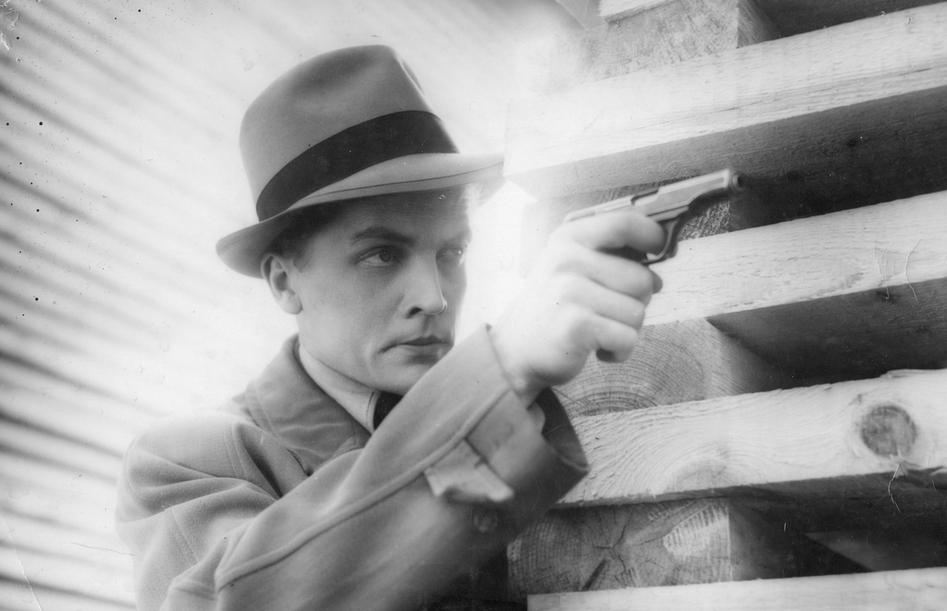
Nobody knew, at the time, that this first movie for Fenno-Filmi would also be its best received. Although the company would go on to make seventeen other movies, none of them would quite capture the shock of all these new faces and new ideas, which surely must have given Suomi-Filmi and Suomen Filmiteollisuus a bit of a wake-up call. The company would be back that October with Mascot (1943) and a month later with another spy thriller, Shadows Over the Isthmus (1943). I can only imagine the panic at the Big Two, where producers had spent many years happily waving through rural melodramas and prim romances. Surely there was at least one meeting about it? Surely the next year’s slate of Finnish movies would be new and exciting…? Right…?
Jonathan Clements is the author of A Short History of Finland. He is watching all the Finnish films so you don’t have to.
 The Official Schoolgirl Milky Crisis Blog