
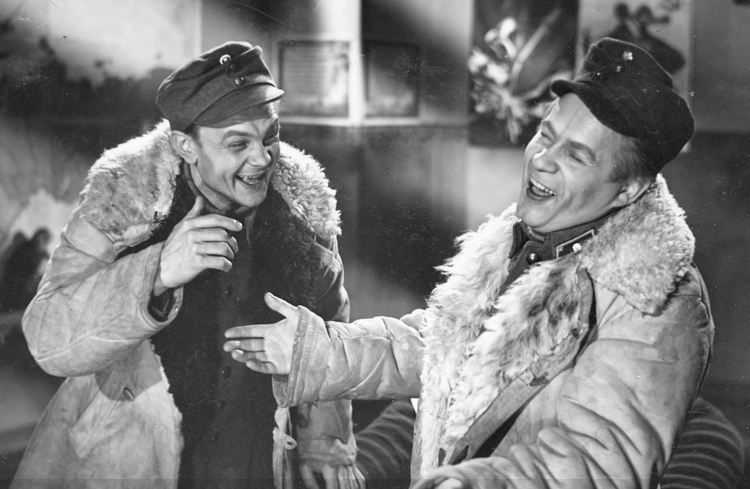
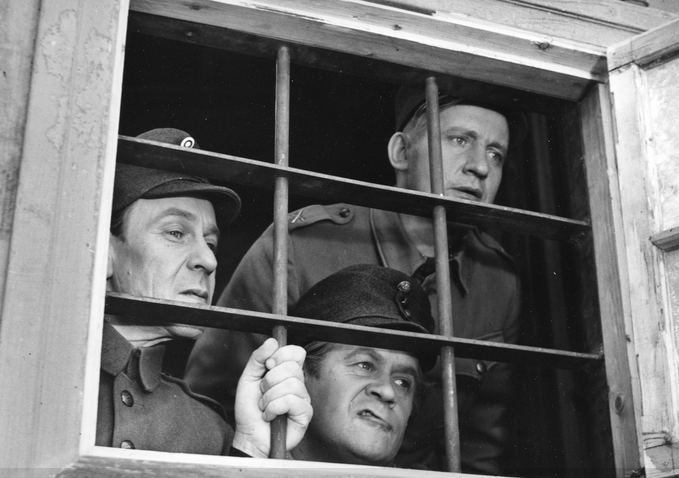
Lieutenant Romppiainen and his ever-present sidekick, Sergeant Ryhmy, are tasked with blowing up a Russian ammo dump, but are captured when a shell hits their dugout. Thrown into jail, where they run rings around their captors, they team up with their cellmates (a former prisoner and former jailer) to break out. As they sneak out of trouble, they accidentally rescue Peikko (Kullervo Kalske) and Eila Kaija Rahola), two Finns being interrogated by Natalia Vengrovska (Kirsti Hurme), the tough but vampy Russian commissar.
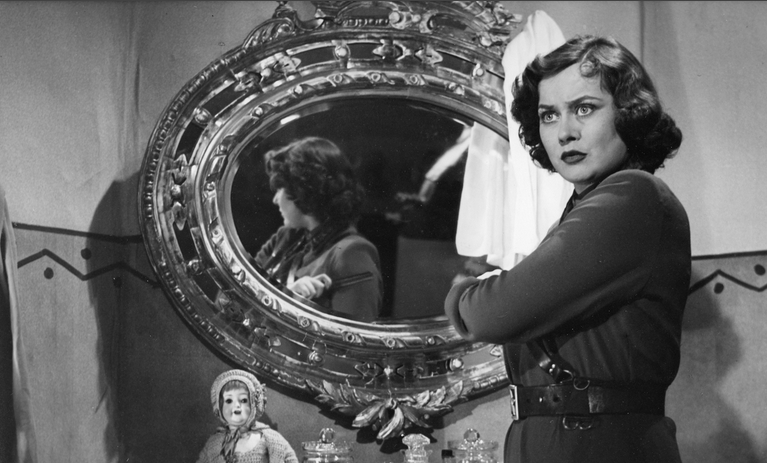
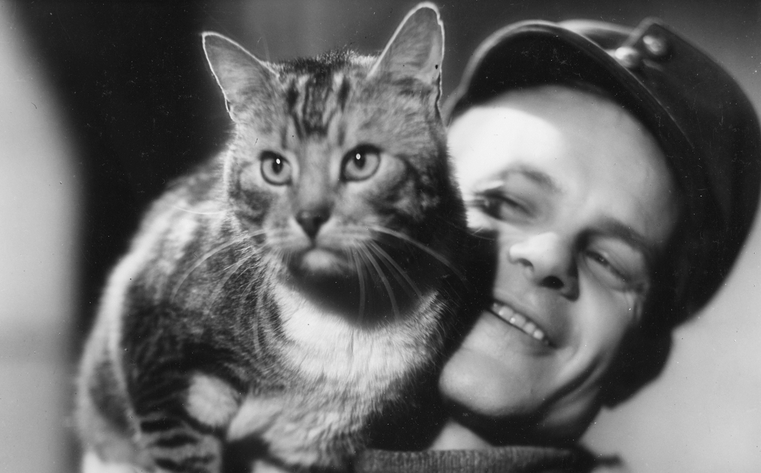
They run into members of the Kuusinen Finnish People’s Army, a division of ethnic Finns that in the real world, performed a lot of the occupation duties in captured Karelia. Stealing their uniforms and posing as Red sympathisers, they blag their way out, and set the charges for the ammo dump. Ryhmy, his pointless cat, and the ever-smouldering Vengrovska are trapped inside, but make it out seconds ahead of the explosion. Abandoning the unconscious Vengrovska in the forest, Ryhmy makes it back to Finnish headquarters, where they receive little thanks for their heroism, and are instead put to work making an inventory of everything they have lost.
“Even farce has its limits,” commented Salama Simonen in Uusi Suomi. This second movie adaptation of Armas J. Pullas’ novel series after Ryhmy and Romppainen (1941) was intended as a comic diversion, but crashed straight into a recurring issue with wartime movies – whether to make light of the enemy or take them seriously. Finnish authorities were not amused by the depiction of Russians as merry fools, and Finnish officers as bumptious moustaches. Seven decades later, the most shocking thing is the sight of Finnish collaborators working for the Russians – a realistic reflection of history, but not the sort of alternative image one expects from propaganda. Despite this, Jees ja juust was regarded as so problematic, and so riddled with slurs against the Russians, that it was pulled from cinemas in the summer of 1944 and not seen again until its video release in 1988. Compare such redactions to the similar fate of That’s How it is, Boys (1942), another wartime hit that was quietly cancelled in a changing political climate.
The film’s characters form a familiar line-up in forties film. The leads are rude mechanicals, salts-of-the-earth, who in peacetime were a vacuum-cleaner salesman and a bus driver – a skillset that is presumably intended to make them readily identifiable to audiences. The drippy romantic B-plot between Peikko and Eila is tacked on to fill some sort of snogging quota. But the stand-out star is Kirsti Hurme, who obligingly plays Commissar Vengrovska not as a snarling enemy, but as a frustrated vamp in need of a good cuddle, all torture and interrogation scenes presented more as some sort of dress-up bondage game. This, presumably, is why she became such a hit with army audiences, the most-requested star for public appearances on military bases.
Ryhmy and Romppainen would return in one further film, “Give Us the Olympics,” said Ryhmy (1952), in which trouble would still find them in peacetime.
Jonathan Clements is the author of A Short History of Finland. He is watching all the Finnish films so you don’t have to.
 The Official Schoolgirl Milky Crisis Blog