
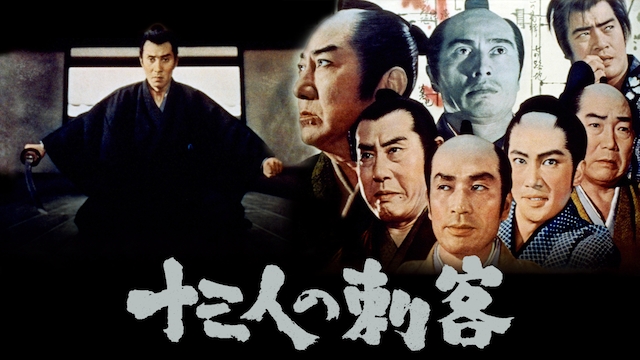
The inspiration for Thirteen Assassins was the assassination of the Austrian Archduke Ferdinand that led to the outbreak of the First World War. Storyliner Kyo Watanabe, eventually superseded on the writing credits by Kaneo Ikegami, was intrigued by the idea that the would-be killers had failed in their first attempt, but still managed to get the job done. He proposed a plot to murder a samurai nobleman – one of the many local warlords obliged to march up and down Japan for “alternate attendance” on the Shogun in Edo. What if, he argued, “there is an assassination attempt on the way, but some people die and it fails. So they have to lay in wait for him on his way back, and it succeeds.”
Watanabe’s idea was that the samurai would overcome vastly superior forces, in much the same way as the legendary 47 Ronin, by kettling, neutralising and ambushing them. He envisioned a prolonged closing battle in which thirteen wily warriors outwitted “a hundred” assailants (actually fifty-three) in order to get to their target.
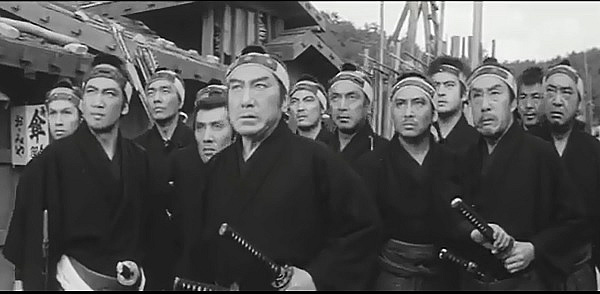
The problem would be finding a director prepared to work on such a movie, since it was usual for fight choreographers to handle the battle scenes. The producers hit upon the thirty-four-year-old Eiichi Kudo, a director who frequently surprised his crews by coming up with ideas of his own for sword fights.
Kudo was dragged in, and the film was scheduled to go into production as one of Toei’s second-string features: low-budget double-bill filler, lacking big-name stars or an appreciable budget. But the film veritably demanded an intricate set for its big finish – that climactic fight in a hastily fortified post-town. Unable to secure the financing for his set, Kudo stole someone else’s, having heard that his art director had previously built a village at a nearby army base for Sadatsugu Matsuda’s Duel of Blood and Sand (1963) and had “forgotten” to dismantle it. It was still sitting there, slowly falling apart, and nobody would mind if a bunch of samurai turned up and wrecked it.
Jonathan Clements is the author of A Brief History of the Samurai. Eiichi Kudo’s Thirteen Assassins is being released as part of Arrow’s Samurai Revolution box set this March.
 The Official Schoolgirl Milky Crisis Blog