
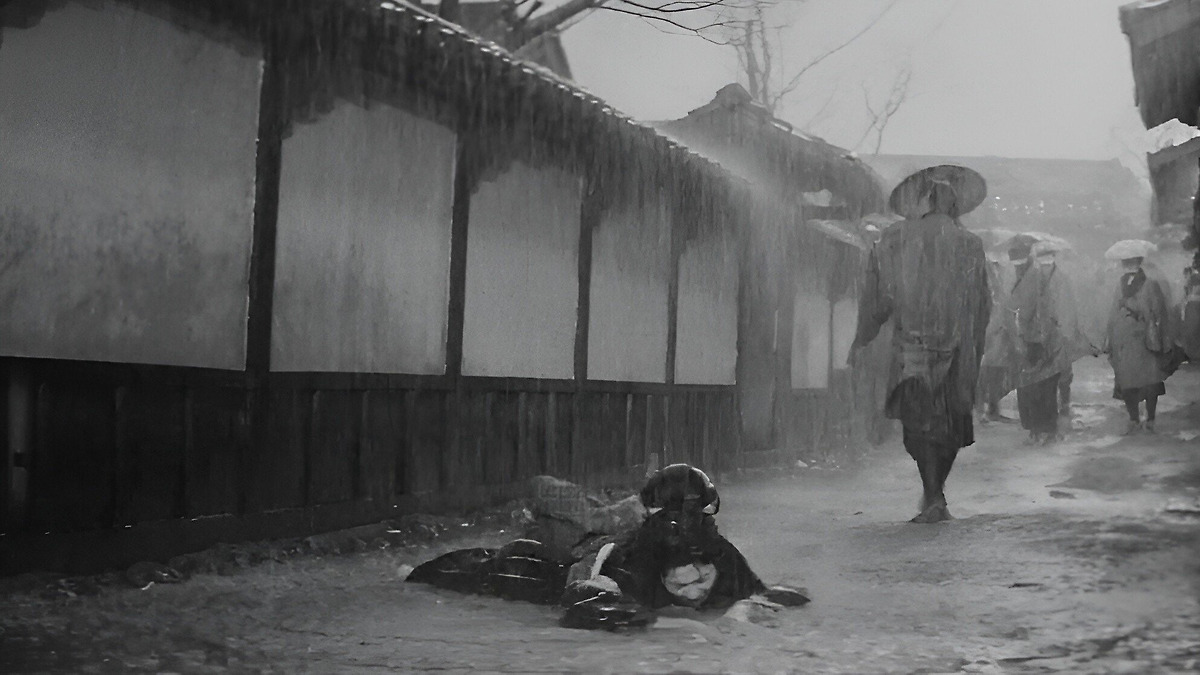
We are in the twilight of the samurai. Most of the castles have been dismantled and fallen into ruin, not because of war, but from two centuries of enforced peace and martial law. Samurai wives wave their husbands off to work as if they are going to the office, and indeed, many of them are. The cities thrum with bars and brothels, and the nobles ignore the rules restricting showy clothes and fine living.
The samurai don’t even want to be samurai any more. They resign commissions to become merchants. They tinker with musical instruments. They grasp at arts and culture that are denied to them because they are still supposedly members of a death cult that has seized the government, but is now ossified and stagnant.
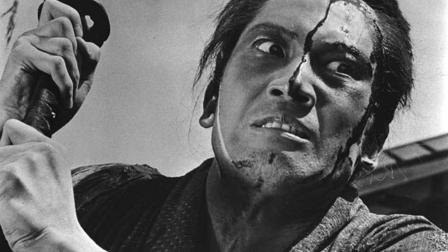
The gap in time, for example, between the events of The Great Killing and Eleven Samurai is 160 years, a similar distance between today and the 1860s. It is as if our own society was effectively unchanged from the time of Dickens, Darwin and the American Civil War until the present day. Director Eiichi Kudo is unafraid to re-use some footage from film to film, but that is partly because literally nothing has changed from year to year under the authority of the Tokugawa.
And what of swordsmanship? What of that skillset that served the samurai so well for 800 years of fierce warfare? Now it is evolving into a martial art – a series of sporting demonstrations and bloodless practices, as a warrior elite that comprises 10% of the state finds itself increasingly idle and unoccupied. The samurai are turning into parasites on the body of a Japan that relies increasingly on farmers and urban merchants. But every day, they still train for battles that never come.
Jonathan Clements is the author of A Brief History of the Samurai. This text is an excerpt from the video essay Fighting the Poison, included in Arrow Films’ forthcoming Samurai Revolution trilogy box set.
 The Official Schoolgirl Milky Crisis Blog