
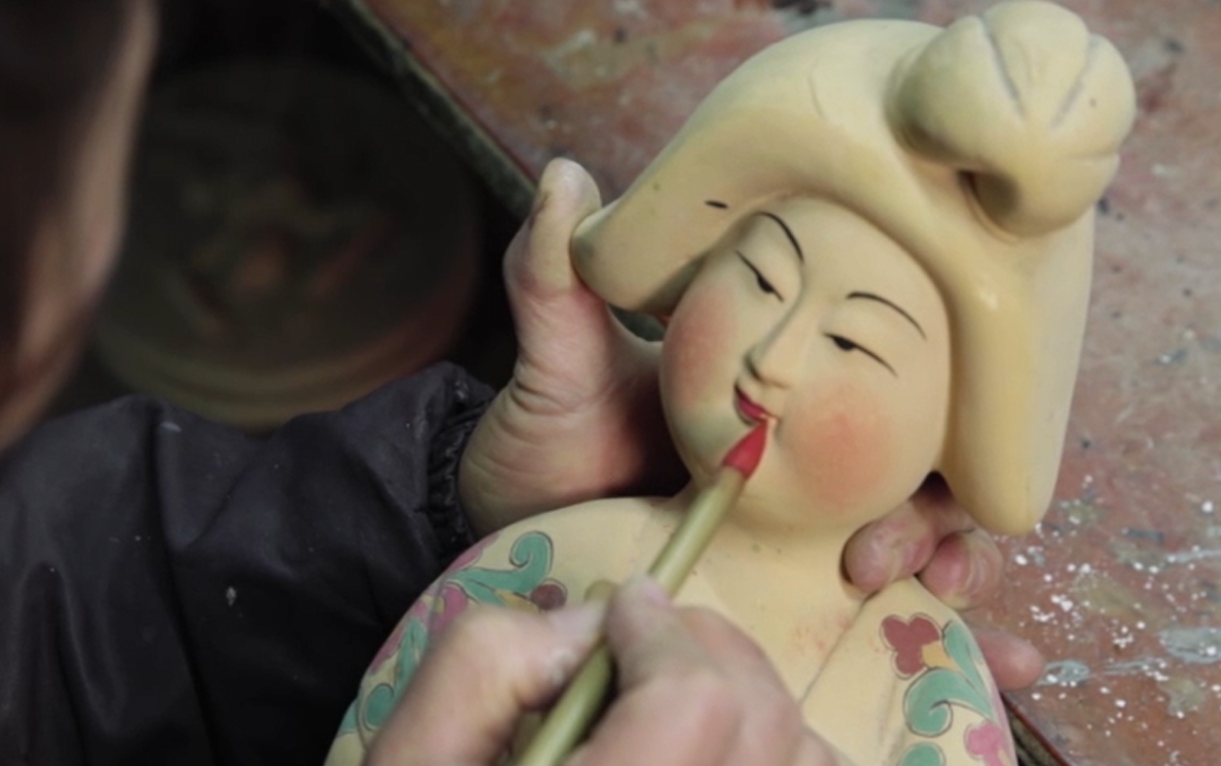
Sancai is the spinach-and-egg colouring to be found in a lot of Tang dynasty pottery. Or at least, it is today. In fact, although sancai as a technique spread as far as Italy in the late Middle Ages, it was over-written in China by later porcelain firing methods with higher temperatures and different glazes. It was practically forgotten in modern China until 1905, when workmen digging railway cuttings near Luoyang started uncovering buckets of the stuff in old tombs.
Archaeologists took it to the nearby village of Nanshishan, where they asked local tilers to come up with ways to restore it, leading to a transformation of their lifestyle. Nanshishan is now a centre for modern sancai production, practically an entire village of over a thousand people, devoted to making pottery.
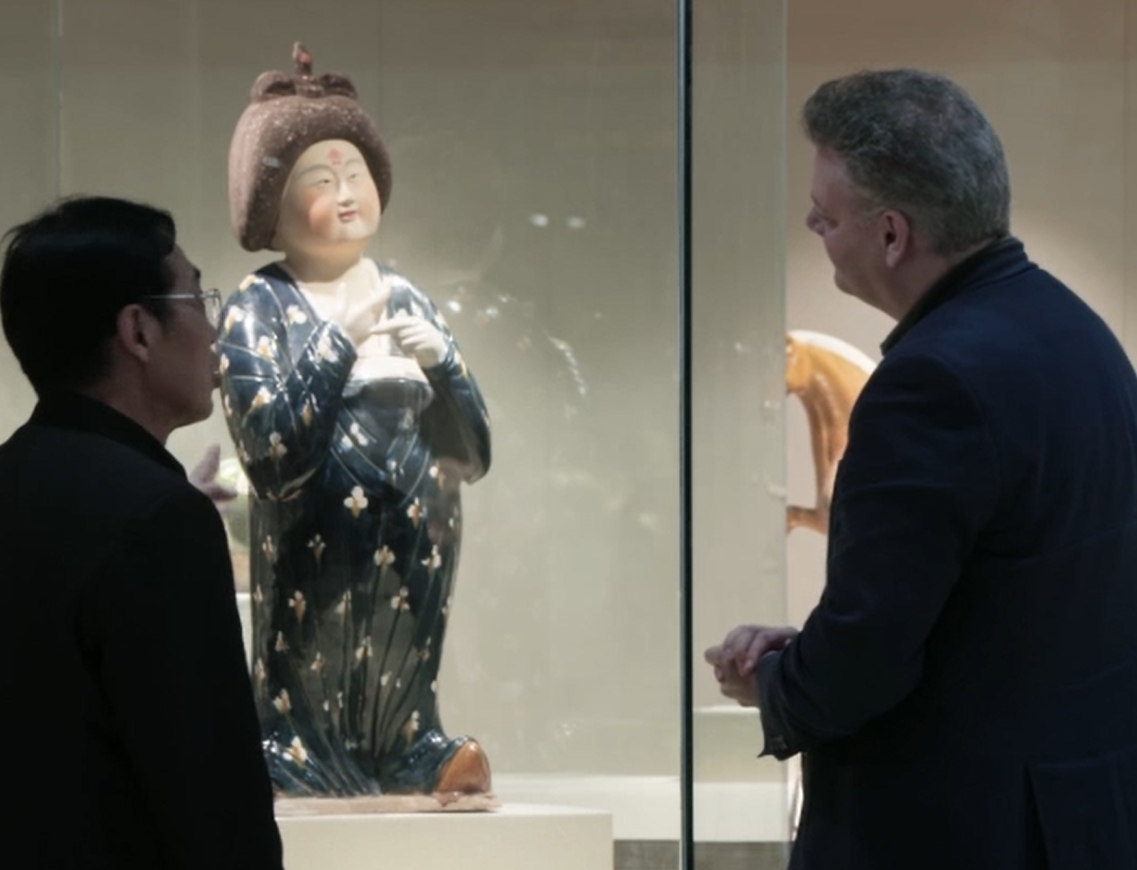
I’ve never liked sancai. Five years coming and going to Xi’an and I have never once been tempted to buy any of it. Horses are a speciality, but I have never thought of getting a sancai horse for my horse-crazy mother. Nor have I ever been all that tempted by a sancai camel or a sancai fat girl (the ideal body shape in the Tang dynasty). Eric the director of photography is not a fan, either.
“I hate it,” he says. “It’s evil. It’s all for dead people. I would NEVER have it in my house.”
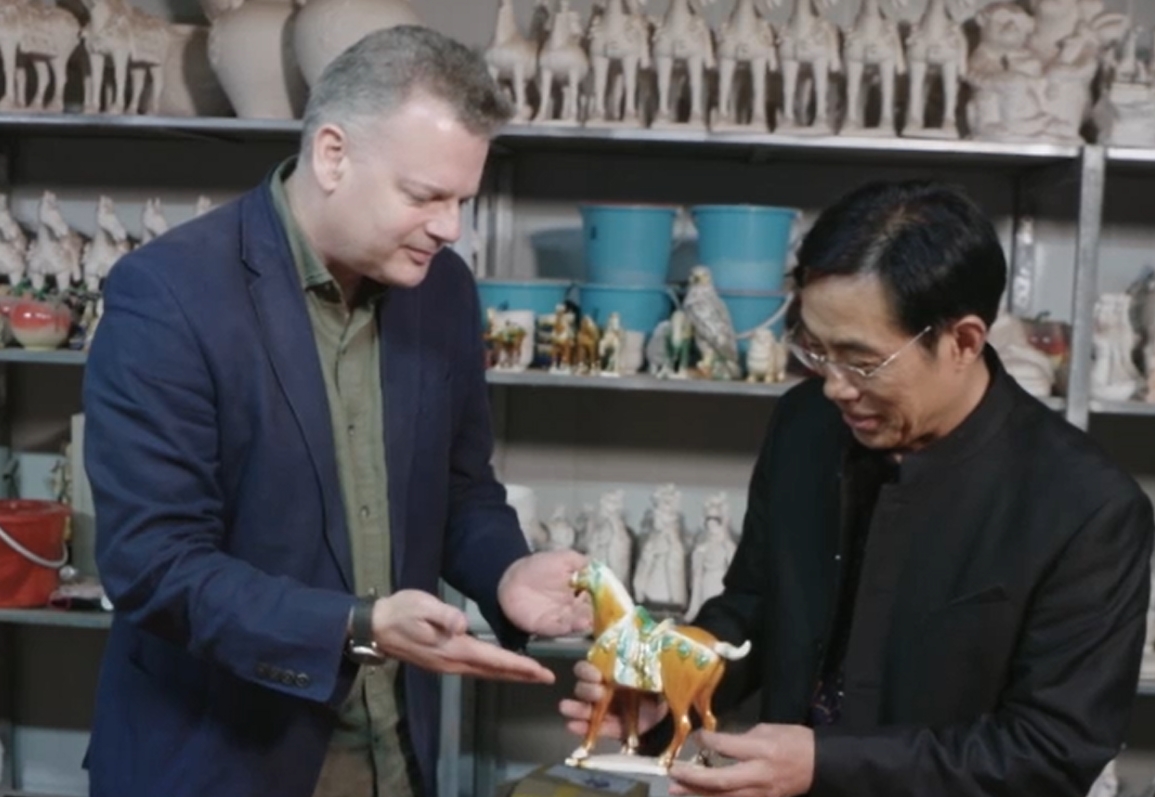
Gao Shuiwang, a relative of the original Gao who became the first restorer, has a swish workshop where they make the sancai. He has a sonorous 40-cigarettes-a-day voice, and is witty and chatty when discussing the question in advance. When he asks what the questions will be, the director jabs me in the ribs, and I say: “The first one, I guess, is what kind of relationship the people of Nanshishan have to the discovery of sancai.” (Wo renwei diyige shi Nanshishan cunmin dui sancai de faxian you shenme guanxi?) He’s ignored me until this point, assuming I am some kind of puppet, and his eyes pop out on stalks when he hears Mandarin coming out of my mouth. After that, things speed up a whole lot, and we are all laughing and joking about the story of sancai since 1905, the problems the villagers had experimenting with glazes and firing temperatures, the health and safety restrictions on wood-burning furnaces, and the difference made by cobalt, newly arrived in the Tang dynasty from Persian merchants along the Silk Road, and vital in the composition of new blues and blacks.
Gŭ – cobalt. A word I learned at six this morning while revising the vocabulary that was likely to come up, lest anyone think this is easy.
Filming time comes, and suddenly Mr Gao clams up. He assumes a rigid, upright position and starts declaiming at me as if addressing an assembly hall. He thinks that interviews have to be staid and staged, and the director pleads with him to go back to the chatty, smiling, witty man he was only minutes earlier. It takes a while to drag him back out of his shell, and convincing that, yes, it’s okay to have fun. Eventually, we drag it back out of him, I signal for Clarissa the fixer to stand behind me so he has a prettier face to look at while he answers, and before long we are back to normal.
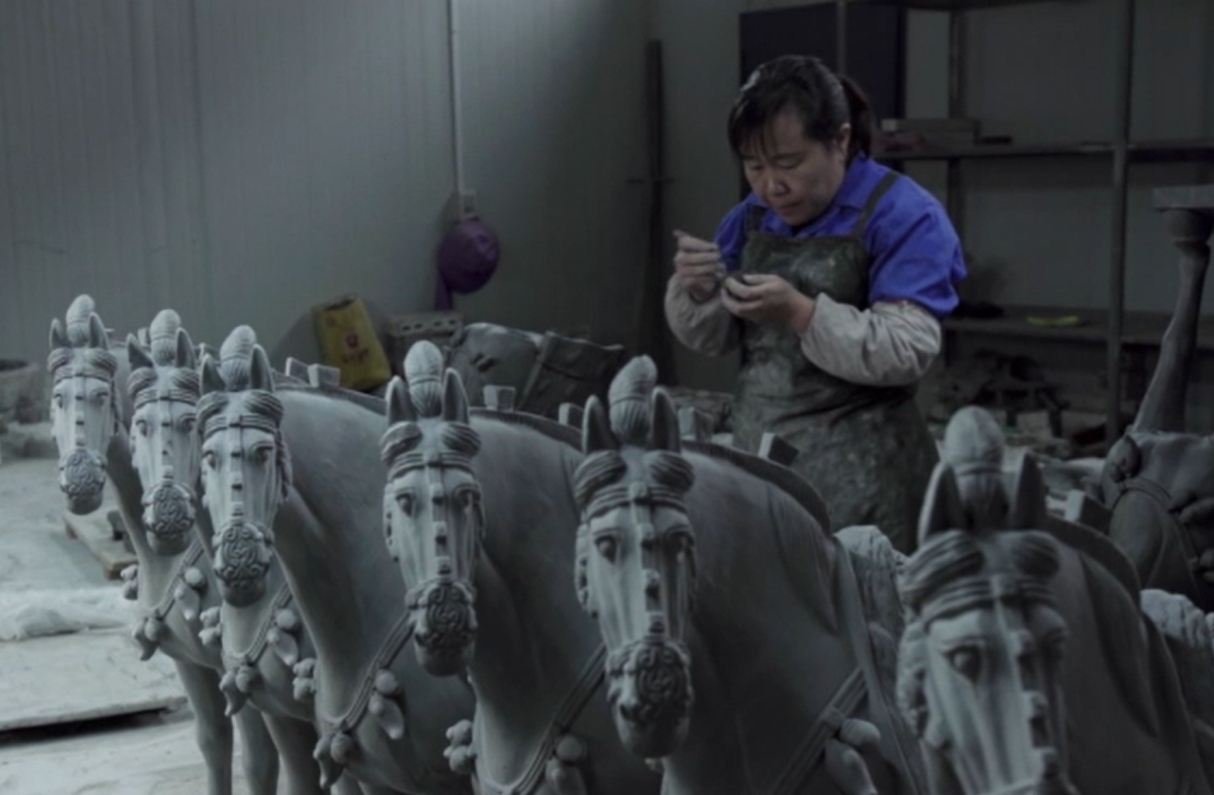
As soon as the interview is declared over, he is back to his previous, bounding self, and the director keeps the camera running in secret while I get him to show me around his favourite exhibits in the gallery, all the better to hear his enthusiasm come through. He then takes me down to his lab, where we see the plain white horses painted with three different kinds of red – all the glazes are oxides, and only change from reddish colours when they are fired in the kiln. Until that point, they all look almost the same.
“It’s a right bugger telling them apart,” says Mr Gao. “You wouldn’t believe the number of times I’ve had a brush for red-which-turns-into-green and gone and put it into the red-which-turns-into-white bowl by mistake.”
Mr Gao is effusive with praise for us for giving him such a good time and a good laugh, and is dismayed we can’t come to dinner. He stops us at the door to announce that he wants to give us a little present. A real sancai horse, like something you’d want in your tomb.
“Eric!” I shout. “Mr Gao has a present for you.”
Jonathan Clements is the author of A Brief History of China. These events featured in Route Awakening S05E01 (2019).
 The Official Schoolgirl Milky Crisis Blog