
I am driving He Yuling to the dig site, because it gives us the chance to put the car in shot for a few seconds.
“Any problems with grave robbers?” I ask, idly using my term of the week, daomu.
“Oh yes, lots,” he says. “And they’re usually local. Sometimes I wonder with this lot if we’re paying them to dig up something they’ve already worked over on their own time, if you know what I mean.”
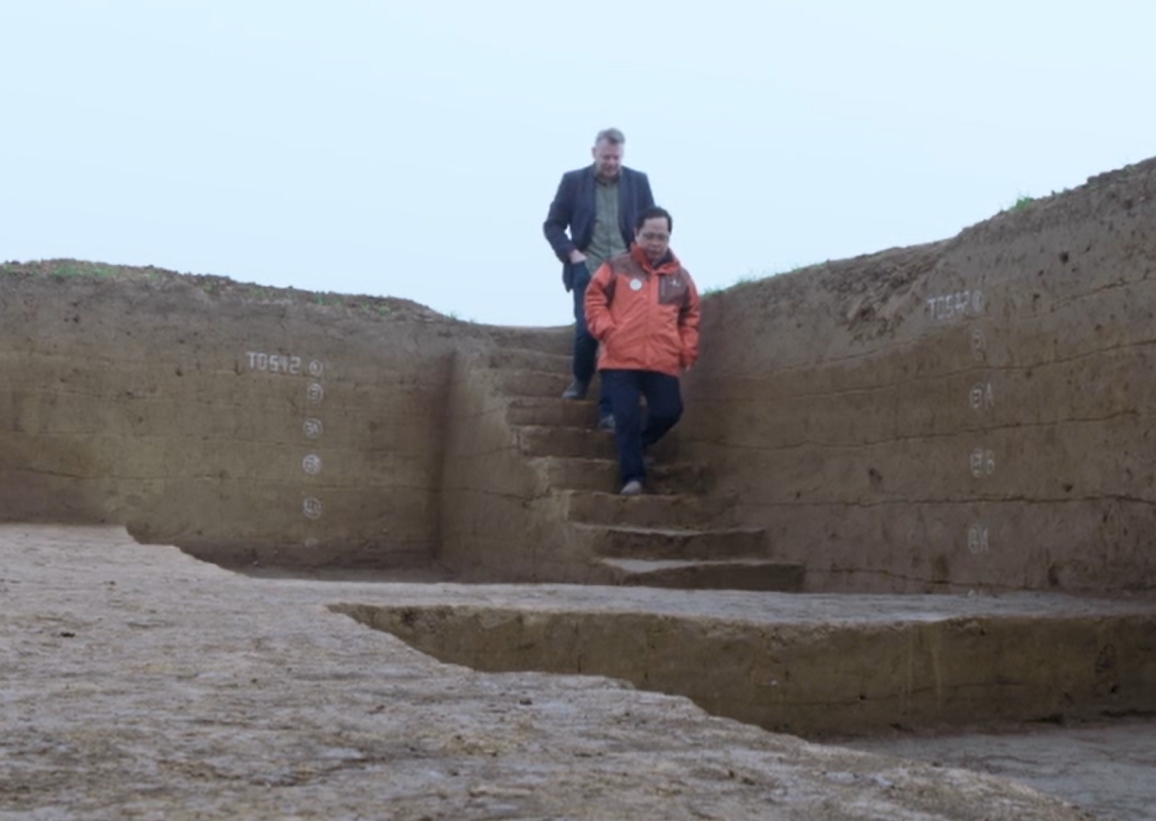
The dig site is a pit in a field somewhere on the edge of town. Dr He’s team have been digging it up in sections each year, working through the spring and summer when the earth is soft, and packing up each winter when it hardens. Each year, they pick an area the size of a couple of tennis courts, dig it down ten feet or so to the Shang era, and see what they can find.

In section T0442, where they are working today, they have found a Song-era grave, which they are obliged to carefully tag, catalogue and investigate before they can poke any deeper in search of anything from the previous three thousand years.
“Archaeology was so much easier thirty years ago,” sighs Dr He. “These days, there’s so much diversification – forensic archaeology, environmental archaeology, social archaeology, animal archaeology… but the one that’s become such a growth area is rescue archaeology. China today has so many new roads, new railway lines, new shopping centres, so of course they are going to run into a grave or a temple or something underground. It’s not like the Terracotta Army site, where they build a museum over it. Most of the time you just have a set amount of time to sift what you can, and then it’s a Starbuck’s.”
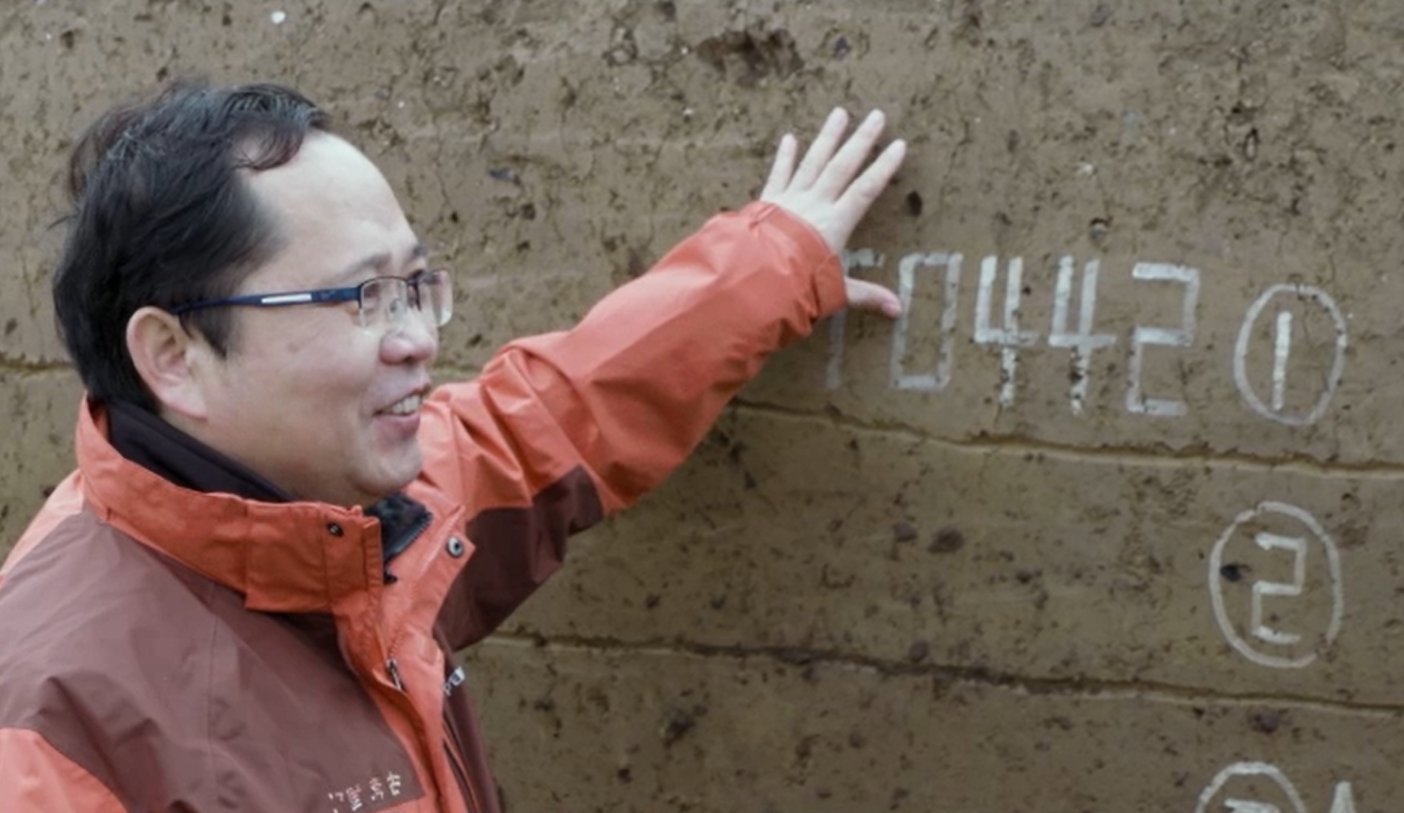
T0442 is in the middle of farmland, so the soil will be backfilled once they’re done, and the following year it will be growing cabbages again. The farmers don’t mind because there’s digging work for them on the site.
Dr He is such an easy interviewee. We just rattle through the questions, and his answers usually turn into five-minute rants, usually with a chance for me to interject something so it all seems natural and conversational. We joke about the likelihood of Tang dynasty archaeologists complaining that the Shang dynasty archaeologists are ruining their patch by digging right through it to the earlier strata. He talks about soil colours and Luoyang shovels, and we are done before lunch.
“You can see the level of topsoil,” he says. “The first half metre or so is modern. You find iPhones, computer chips, lots of shihui.”
“Shihui?” I look over at Michelle, the assistant producer from Singapore.
“Semen,” she declares.
“I don’t think that’s likely…” I begin gingerly.
“CEMENT!” shouts the director. “Speak properly, Michelle!”
Jonathan Clements is the author of A Brief History of China. These events featured in Route Awakening S05E02 (2019).
 The Official Schoolgirl Milky Crisis Blog