
For several days now, Jonathan the director and I have been trying to get a straight answer out of the Chinese about why we aren’t filming on Mount Tai. It is, after all, the most sacred mountain in China, and the site of the ancient ritual in which the First Emperor climbed to heaven and announced to the gods that he had created China. So if one were, say, writing a documentary about Shandong, it might be nice to begin with a nice aerial around the peak soaring above the clouds, with a few stories about how it was the place where China itself was born.
In more recent times, it was the site of a fateful visit by a young-ish Jiang Zemin, who was told by a local soothsayer that he would become an “Emperor”. Since he went on to become the president of China, it has been the site of many a middle-management boondoggle, by politicians hoping to get a similar nod. This has given the municipality of Tai’an, where Mount Tai can be found, ideas above its station, and when our production company came calling to set up a documentary to promote Shandong, the Tai’an government told them to get lost.
Tai’an refused to cooperate, claiming that they needed no further tourists nor foreign patronage, and although we could easily nab some archive footage, our production company has ruled that it would be unfair on the counties that are paying if we included materials from a county that was not. So now we will not even mention them in the documentary.
This is, as Jonathan observes, something of an own goal, since Shandong means “East of the Mountains”, and at least half the time, the Chinese assume that it means East of that Mountain. Take out Mount Tai, and you take out the Shan, leaving only a dong… if that makes sense. “Mount Tai crumbles,” as Confucius once lamented. We have to pretend it isn’t there.
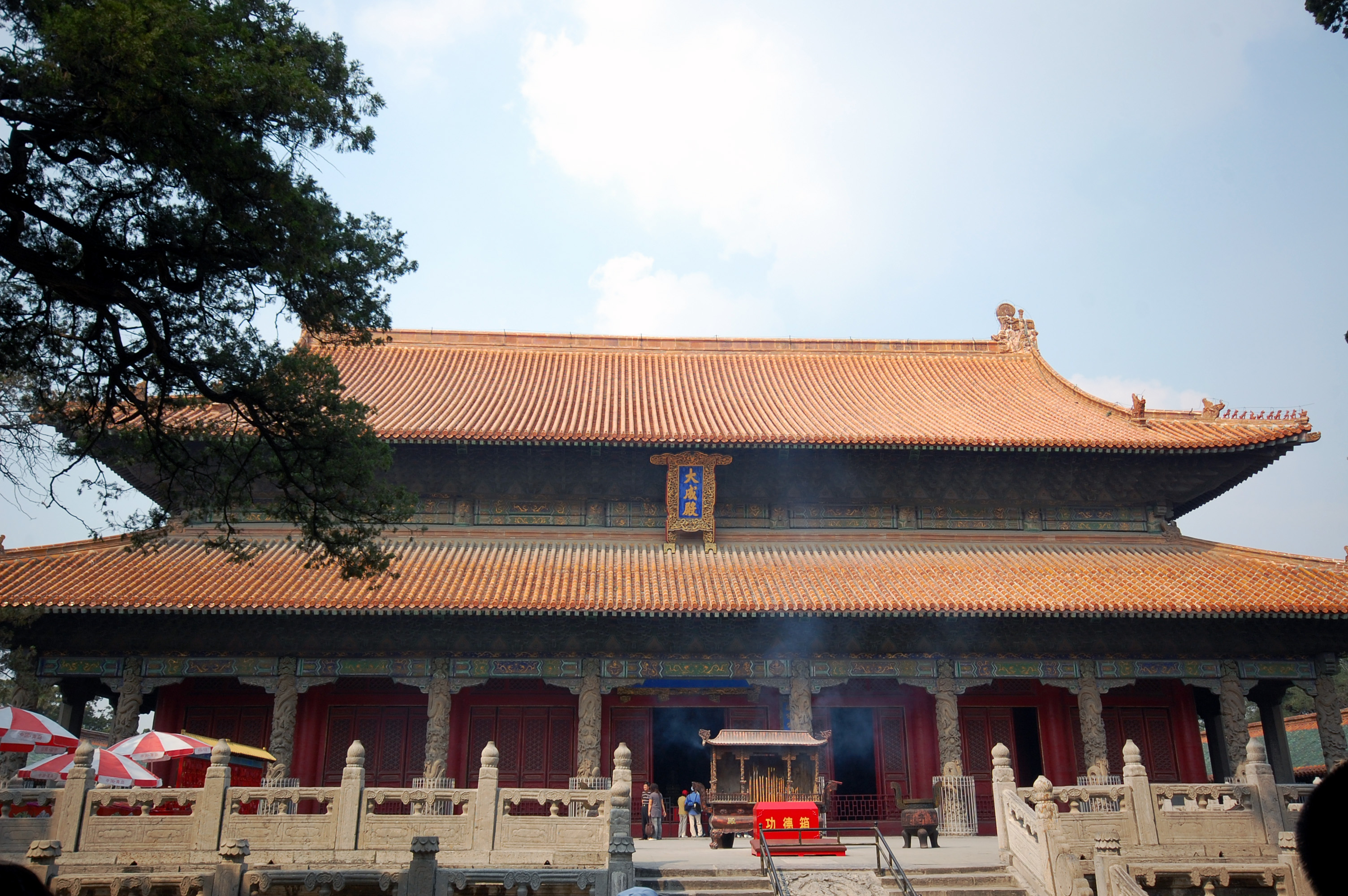
Today we are in Qufu, once the capital of the ancient state of Lu, and the birthplace of Confucius. Here, the main attractions are the Temple of Confucius, the mansion of Confucius’s descendants, and the grave of Confucius himself. It seems to be full of people whose idea of a pilgrimage to the home of China’s most famous philosopher seemingly involves turning up at the front gate, buying a fan and a plastic crossbow, tramping pointlessly around the courtyard for a while taking selfies, then buying some tat in the inner sanctum.
I am quite livid at the sight of hawkers in the very holy of holies trying to push Confucius comics, simplified versions of the Analects, and a bunch of “History of Your Surname” posters at passers-by. Could they really not find a better quality of souvenir?
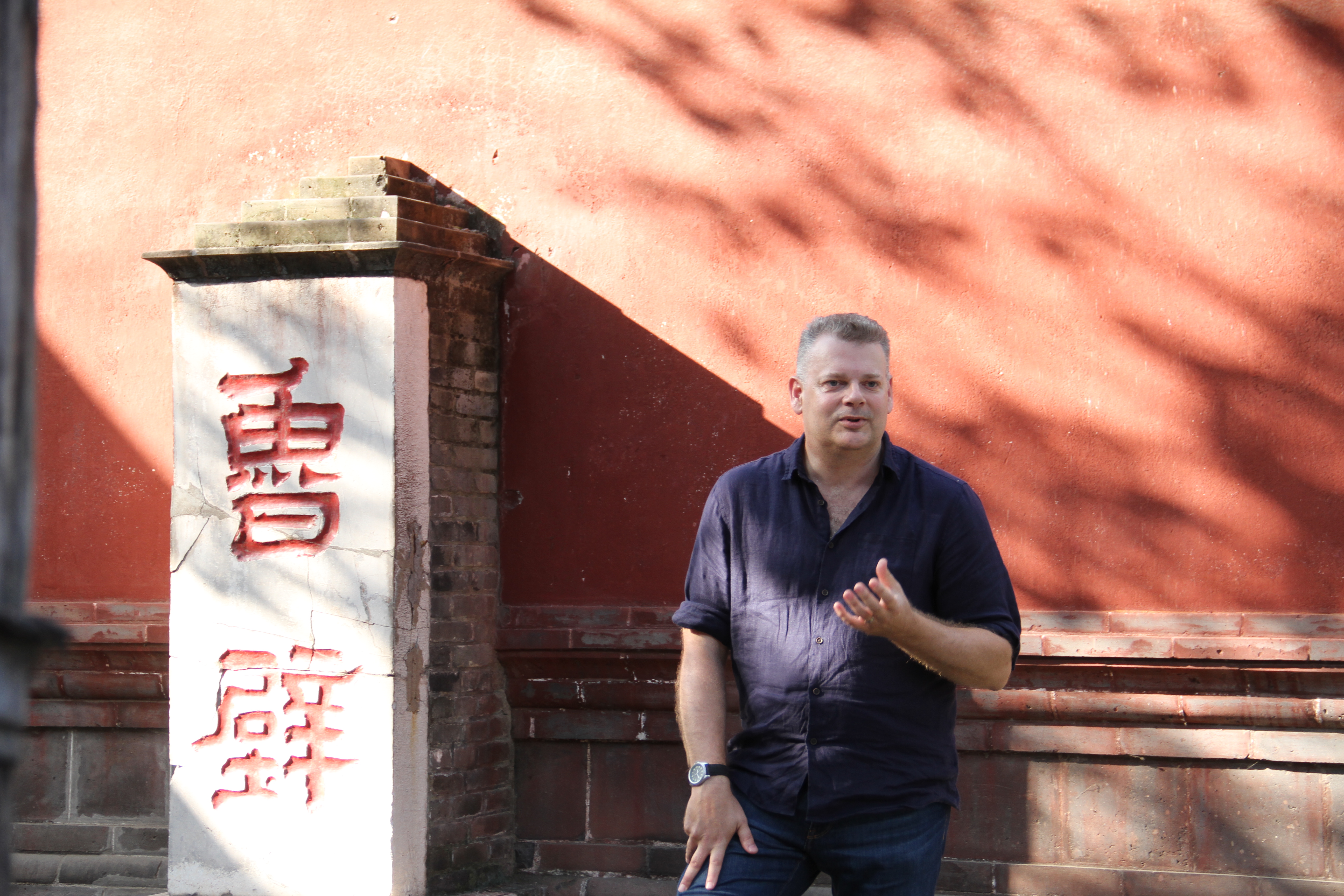
I find the Lu Wall, and round up the crew to do a piece to camera about the workmen in 154 BC who found copies of the Confucian classics bricked into a wall on that spot. The books found therein are the oldest and most complete version of The Analects, and the ancestors of all modern versions. They had been hidden there in 213 BC by Confucius’s 9th generation descendant, during the First Emperor’s Burning of the Books.
The graves of the Kong family are situated in parkland a mile away. Among the many little hummocks of grass, there is the larger grave mound of Zisi, the grandson of Confucius, and of Top Fish, the son of Confucius. And then there is the grave of Confucius himself, its forward-facing stele a patchwork of fragments held together with steel pins, after the Red Guards tried to destroy it in the Cultural Revolution. There is a scrum of tourists around it, and I sneak into their midst, turning to the camera amid the clamour to say: “People come from all around the world to see the last resting place of Confucius. But guess what, he isn’t here…”
Jonathan Clements is the author of Confucius: A Biography. These events occurred during the filming of Shandong: Land of Confucius (2018).
 The Official Schoolgirl Milky Crisis Blog