
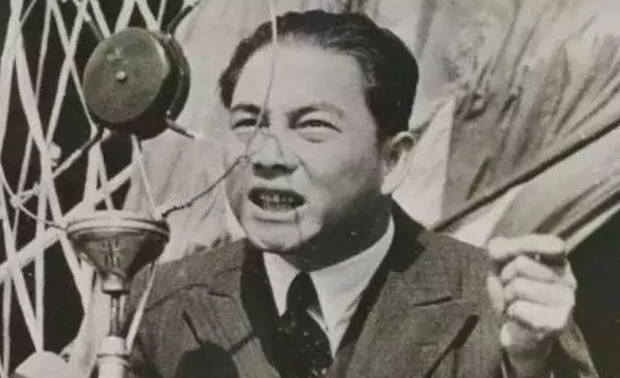
In January 1946, a crew of Chinese military engineers arrived in Nanjing at a fortified concrete-domed grave near the mausoleum of the Founding Father of the Republic of China, Sun Yat-sen. The smaller grave commemorated Wang Jingwei (1883-1944), who served for the last four years of his life as the head of state of the Reorganised National Government of the Republic of China. They packed 150 kilograms of explosive into the concrete dome and blew it apart; the body of Wang was removed and incinerated, his ashes scattered anonymously, all possibility of a commemorative site annihilated. But as noted by author Zhiyi Yang in her recent book on Wang’s complex life, “coerced forgetting begets remembrance in the form of haunting.” Wang Jingwei’s ghost has haunted Chinese history ever since.
Wang’s Reorganised National Government (RNG) was a puppet state of the Japanese – a thin veil over the fact that the Japanese military had overrun huge parts of China during the Pacific War. Now, with Japan’s defeat and control of China restored to Chiang Kai-shek’s Nationalists, Wang was an unwelcome reminder of collaboration and betrayal, a national traitor who deserved no memorial.

This was not how things started out. In his twenties, Wang had been sent abroad by the Qing imperial government as one of the bright young hopefuls for the twentieth century. Studying in Japan, he had come to see his imperial sponsors as part of the problem, and became a committed revolutionary. In 1905 he changed his given name from Zhaoming to Jingwei, in reference to the a mythical creature also celebrated in the poetry of Qiu Jin, a Canute-like bird devoted to holding back the sea one pebble at a time.
Although already widely respected as a writer and orator on republican issues, Wang’s most conspicuous revolutionary act was a plot to assassinate Prince Chun, the regent for the under-age “Last Emperor”. Wang happily pleaded guilty, using the dock as a pulpit for his beliefs. He was sentenced to life imprisonment in 1910, but released a year later as part of a general amnesty.
Wang refused to participate in the rival Chinese delegations at the Paris Peace Conference of 1919, instead fuming from the sidelines as the victorious powers refused to hand the German colony of Shandong back to China, despite the entreaties of the delegate Wellington Koo. Recalled to China in 1920 by Sun Yat-sen, he became a key figure in the struggling new republican government. Widely recognised as the most accomplished and eloquent public speaker of his era, he ghosted many of Sun’s speeches and proclamations, imparting classical allusions and winning turns of phrase to much of the documentation that even today forms the basis of “Sun Yat-sen Thought.”

With Sun’s death, Wang became the centre of one of the two factions contending for his legacy. His biggest rival was Chiang Kai-shek, the military leader devoted to stamping out Communists, while Wang cautiously tried to cooperate with them. Their struggle reached ludicrous heights of proclaiming different capitals of China, with Chiang raising the flag in Nanjing, while Wang attempted to run the country from Wuhan. Throughout the early 1930s, Chiang and Wang were comically unsuited allies within the Republican government, eternally disagreeing about the best way to solve China’s internal and external problems. While Chiang resolutely pursued military expenditure to fight coming battles, Wang arguably pursued diplomacy to keep the battles from happening at all, leading to his appearance on the cover of Time magazine in April 1935. Dubbing him with the unhelpful sobriquet “Whalebone Wang”, time called him the “versatile and brilliant Premier of China,” saddled with the awful difficulties of domestic instability and Japanese aggression.
In November the same year, Chiang Kai-shek beckoned Wang aside at a government photo-call and announced he was leaving. The constant to-ing and fro-ing was a shambles, he said, and risked turning into a security hazard. Chiang’s instincts told him to retreat to an anteroom until everything was in place, and he advised Wang to do the same. Wang refused, and was subsequently shot three times by a would-be assassin, meaning that, as Yang comments wryly, he “literally took the bullet for Chiang.”
Yang’s book zeroes in on an overlooked element in Wang’s life – his poetry. She argues that posterity, in the hands of his Communist enemies and his Nationalist rivals – universally writes him off as a collaborator and a traitor, whereas his poems tell a different story. Repeatedly, Wang’s poems refer to the tense geopolitical stand-off of the Song dynasty, when northern China was over-run with invaders, while the emperors in the south pursued a generations-long policy of appeasement. Wang also compares himself to the assassin Jing Ke, whose daring suicide mission was China’s last hope of holding off the First Emperor.
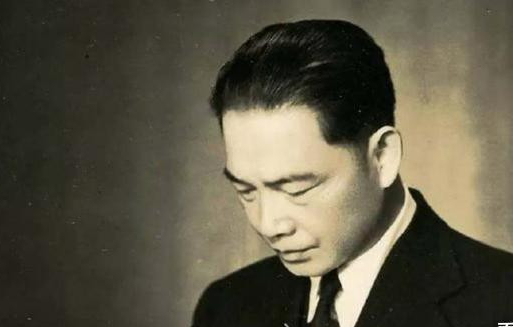
She points to clues in Wang’s writings that he saw collaboration with the Japanese invaders as a necessary evil, and his stance as the head of state of the Reorganised National Government as a temporary measure that would save Chinese lives. But she also points to the many signs that Wang was left swindled and heart-broken by his attempts at diplomacy, particularly with regard to the broken promises of the Japanese leader Konoe Fumimaro, who twice resigned from government in order to avoid having to follow through on treaties and deals, leaving Wang at the mercy of his militarist successor, General Tojo. Throughout the four years of Wang’s reign, he was irritable and often tearful at public occasions, tormented by his enduring injuries and his ongoing betrayals.
Wang died before the end of the war, railing against the Communists as a “Trojan horse” within China, suggesting that working with them would be like “quenching thirst by drinking poison.” Nor did he have any love for Chiang Kai-shek, whose scorched-earth military tactics, in his view, brought death and destructions to millions of innocent Chinese.
Yang suggests that if Wang had been executed in 1910, he would have been remembered as a martyr of the revolution. If he had died from the assassin’s bullets in 1935, he would have been a lauded statesman. Instead, he has become a mere footnote to the Second World War, the quisling who handed half of China over to the invaders. She picks through Wang’s poetic self-identification as a “fallen leaf” (a common analogy for patriotic rebels), but also the criticism of his peers. It’s all very well, noted the politician Liang Hongzhi, that he likens himself to Jing Ke, the would-be assassin who arrived in the king of Qin’s court with an offer to hand over his nation’s lands. But that was only a feint – there was a dagger hidden in the map, with which Jing Ke intended to kill his enemy. Liang remonstrated with a poem of his own: “Today the map has been unrolled / yet a dagger there hides not.”
At the end of the war. Chiang’s Nationalist government put Wang’s RNG on trial – Yang notes that while only 177 Nazis were ever tried for war crimes in Europe, some 50,000 people were purged by the Nationalists. Wang’s fiery wife Chen Bijun, a Malaysian millionaire’s daughter who had plighted her troth to him on the eve of his attempted assassination of Prince Chun, remained defiant in court. She damned Chiang Kai-shek’s military men for losing half of China to Japan in the first place and placing her husband in an impossible position. She also raked over the coals of one of Wang’s particular demands – that it was vital for China to rise up on its own, and stand to its own defence, not to go cap in hand to the British and Americans like Chiang.
With the judge angrily banging his gavel to shut down applause in the court, Chen was marched away to life imprisonment, signing autographs on her way out of the building. In 1952, she was offered amnesty if she would denounce her husband, but she refused.
Seven years later, the 67-year-old Chen woke in the night in her hospital bed and proclaimed that her husband was a beautiful man, who loved her for her mind, and not her looks. She died the next day.
Jonathan Clements is the author of A Brief History of China and Japan at War in the Pacific. Zhiyi Yang’s Poetry, History, Memory: Wang Jingwei and China in Dark Times is published by the University of Michigan Press.
 The Official Schoolgirl Milky Crisis Blog
Enjoyed the article. Time Magazine cover photos! As my grandfather, a contemporary missionary referred to the Time owner/publisher, the notorious Henry Luce.