
We drive an hour or so through the Xinjiang countryside and the vineyards of the Turfan Depression, to the Loulan Winery, which is not actually in Loulan at all, but has purloined its name. A private Chinese enterprise, it started up in the immediate years after the Deng Xiaoping economic reforms, transplanting French and Italian vines to Turfan soil. The chef de domaine is French: Grégory Michel, a man from Provence who could not possibly have wanted to live here, except for the handy fact that he is married to a Chinese woman and hence regards it as something of a cushy posting.
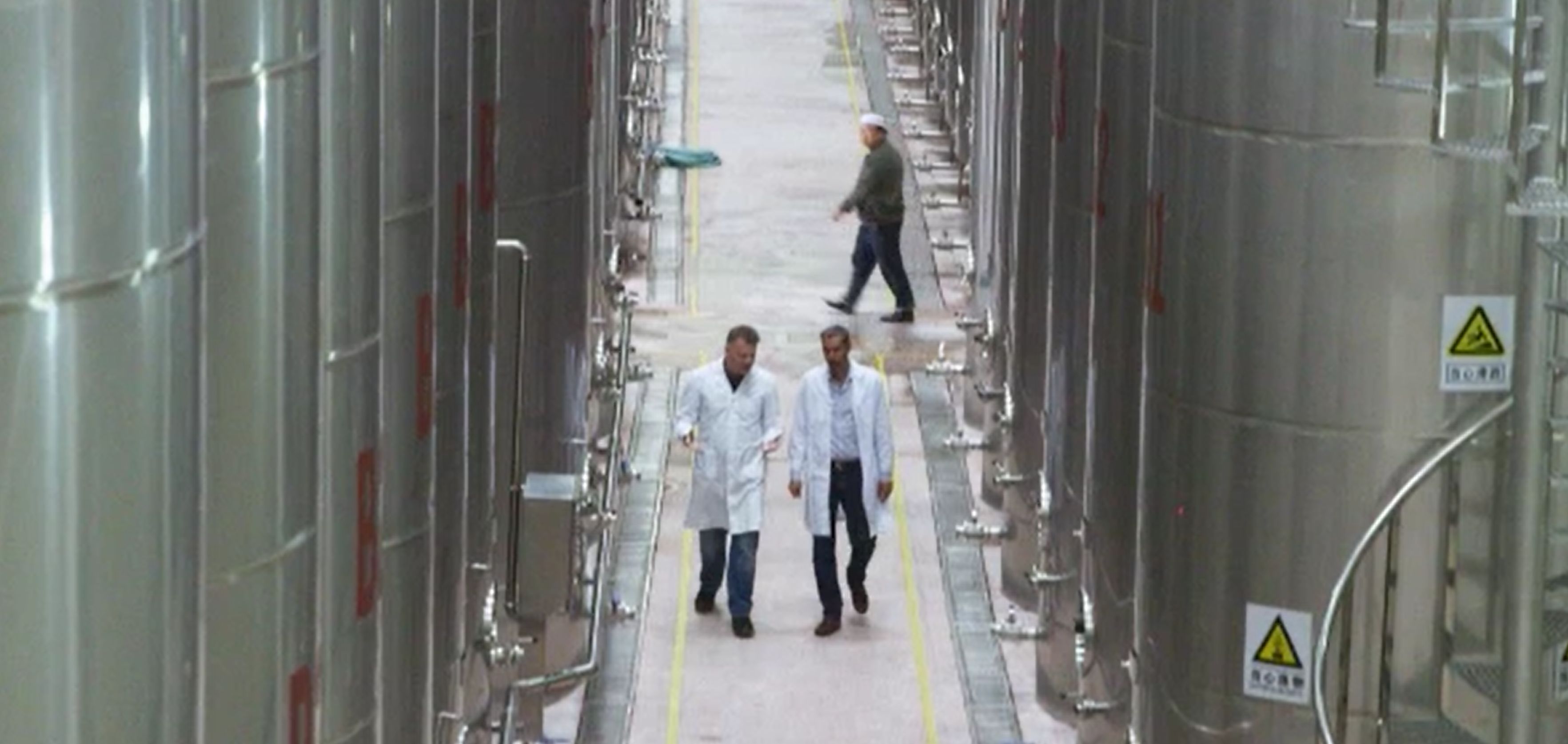
Grégory shows us around the huge factory, with giant steel vats towering thirty feet above us. We all wear little white coats, mine looking particularly petit since it is designed for a little girl, or so it seems. It’s a far cry from Ismayil’s hand-cranked meat grinder, repurposed to mash grapes. Grégory’s industrial-size, conveyor-belt macerator is big enough to throw a whole person into.
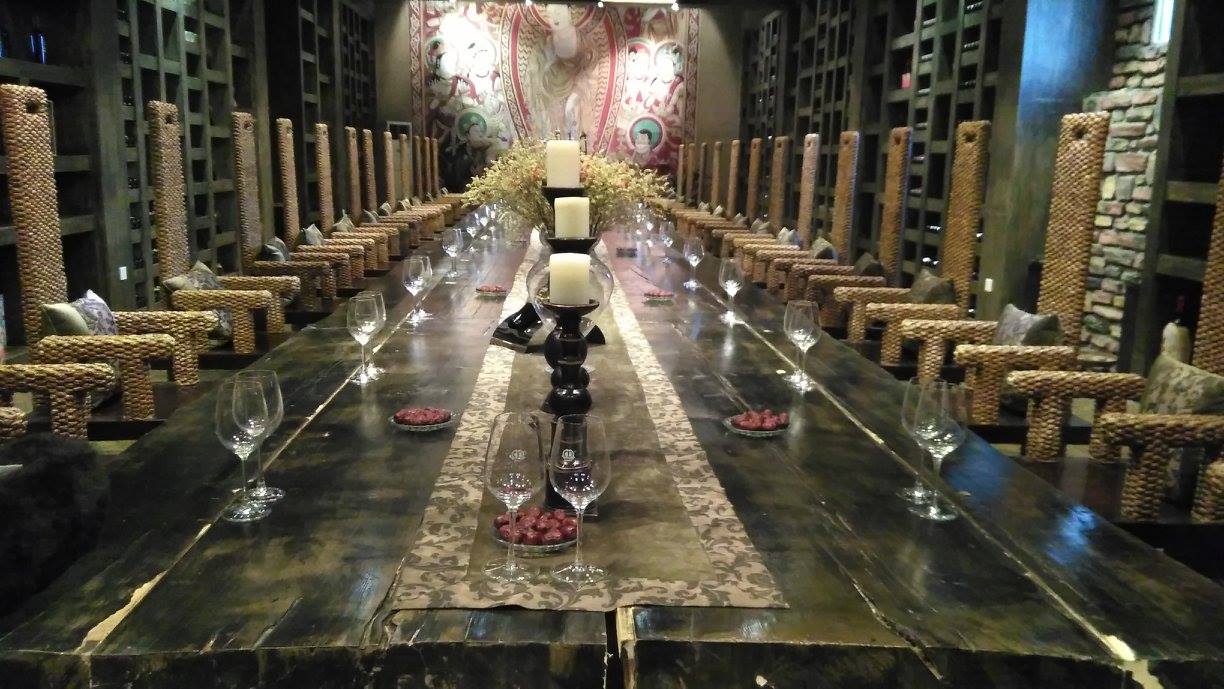
The Loulan Winery is clearly pushing for the luxury tourist market. We wander faux caves decorated with Buddhist art, and sit in an elegant VIP room, with posh chairs of knotted rope, and a giant slab of a Viking table.
Grégory plainly has no idea that a convoy of Buicks is about to descend on his factory, but brightens with each passing moment when he realises that we are the advance party for an entire posse of journalists, who are shadowing our travels in a long crocodile of cars. “I shall get zem drunque!” he promises me, as we wander the pipes and vats.
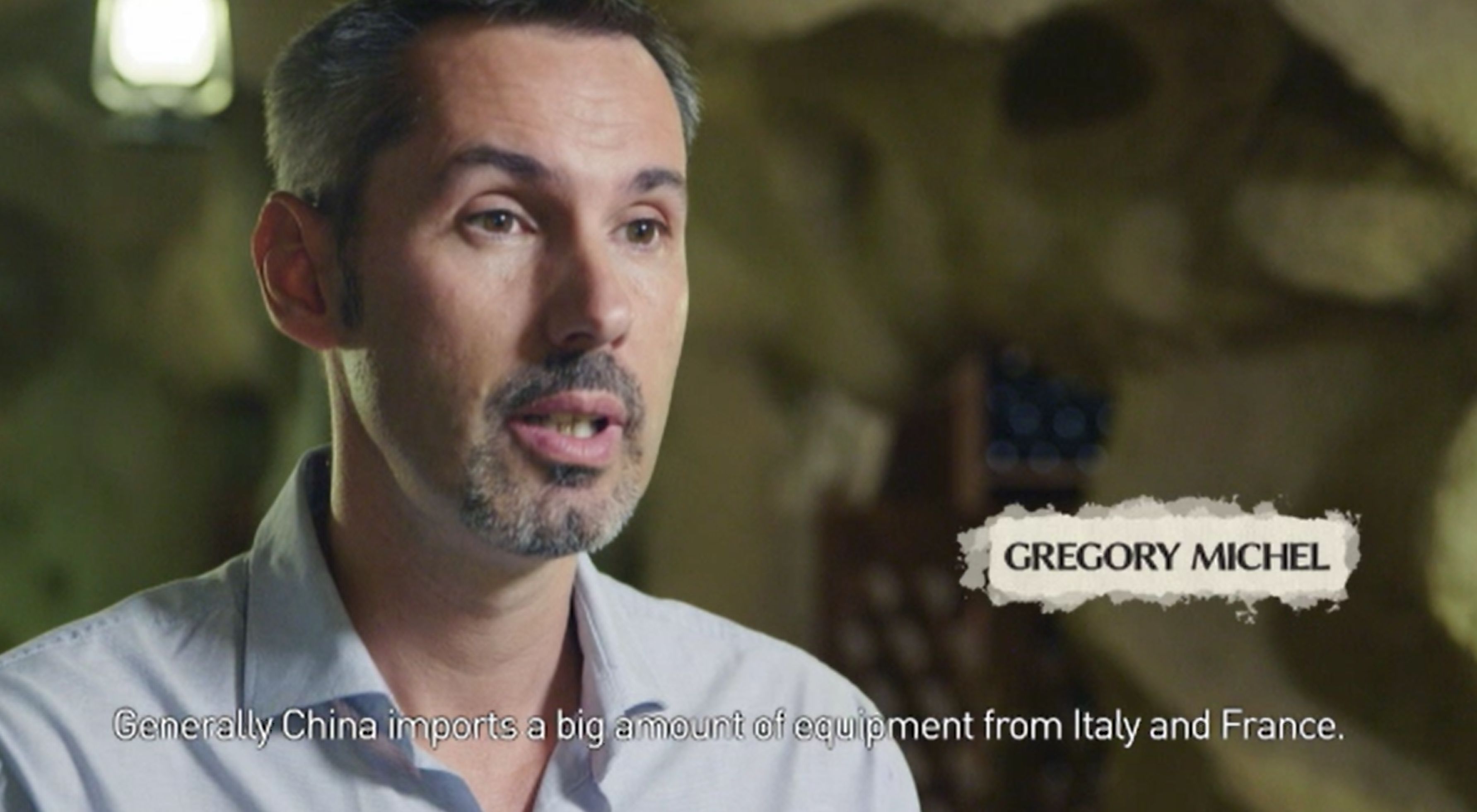
We do the interview to camera in French, which ought to help the programme look suitably cosmopolitan, and puts a smile on Grégory’s face, which is very difficult with a Frenchman.
The advance car of the convoy turns up at lunchtime, and we snatch the chance to get some shots of me driving it past some vineyards. Meanwhile, the usual too-many-cooks cacophony of the publicity team is at full throttle. Even though they approved my speech outline two days earlier, they have now decided that they wish that my speech was 20 minutes longer. Luckily for them, I am precisely the sort of guy who can write an extra page about Wine on the Silk Road in sixty minutes.
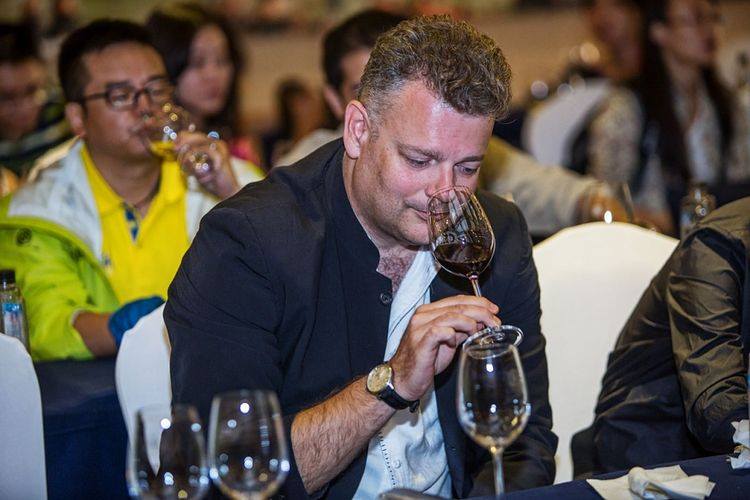
I do my speech about the stories associated with wine on the Silk Road, including the arrival of grapes in the Han dynasty, the sozzled poetry of Li Bai in the Tang, the Mongols drinking themselves to death, and so on. It fills the time nicely and gets several laughs. Grégory then takes to the stage while his minions pour samples for the crowd, and within another 20 minutes, everybody is thoroughly munted on Chinese wine.
The Loulan Cabernet Sauvignon is very nice. This being China, I have never actually been able to have it chilled before, and it is perfectly drinkable. Grégory has plainly done a good job on quality control, although it remains to be seen if he can turn a profit. He says that the cost of making a bottle of wine in China is roughly the same as making one in France, but the local market won’t bear high prices, and the country is so big that simply putting a bottle in every off-licence costs 1000 times as much. Most of the price label of a bottle of Loulan wine is taken up with marketing.
We are invited to dinner, but need to be in Urumqi for the evening, so we hitch a lift with our local fixer, Ali. Halfway to Turfan, the producer calls for a toilet break (we have long since learned not to ask for any more details), and I lurk outside the bogs with Ali, while he sucks on a cheroot that smells like someone has set fire to an old sofa.
“I realised yesterday,” says Ali, “how difficult your job is. You really have only a few seconds to get it right, and there are people on their phones, and shouting at the crew, and there are radios in the background, and people knocking on the door, and the sun moves – you actually become aware of the fact that the sun is moving and there are clouds in the sky… it’s very hard.”
He doesn’t know that he makes it worse by subjecting me to the Gipsy Kings for a two-hour drive through the desert, but I suppose it is his car.
Jonathan Clements is the author of The Emperor’s Feast: A History of China in Twelve Meals. These events appeared in Route Awakening S02E02 (2016).
 The Official Schoolgirl Milky Crisis Blog