
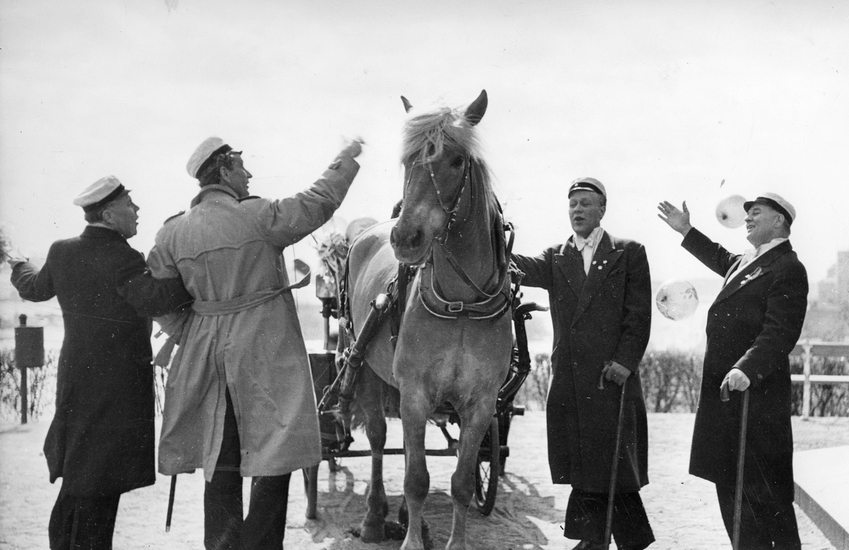
A bunch of old college friends assemble in Helsinki on the thirtieth anniversary of their graduation, revealing many of them to have gone down different paths from the one they expected. United by their “least” successful classmate Joonas (Urho Somersalmi, later the only prominent Finn in Sampo), it turns out that Esko the investor (Yrjö Tuominen) has been diddled out of his savings by a corrupt agent; doctor Risto (Hugo Hytönen) and judge Paavo (Ture Ara) have had a falling-out, unaware that their children have fallen in love with one another. Meanwhile, Paavo’s wife Agnes (Elsa Turakainen) is considering leaving him for the poet Seppo (Pentti Viljanen), a shady sort who is unaware that the father of the woman he has just impregnated is on his way to Helsinki to deliver some rough justice.
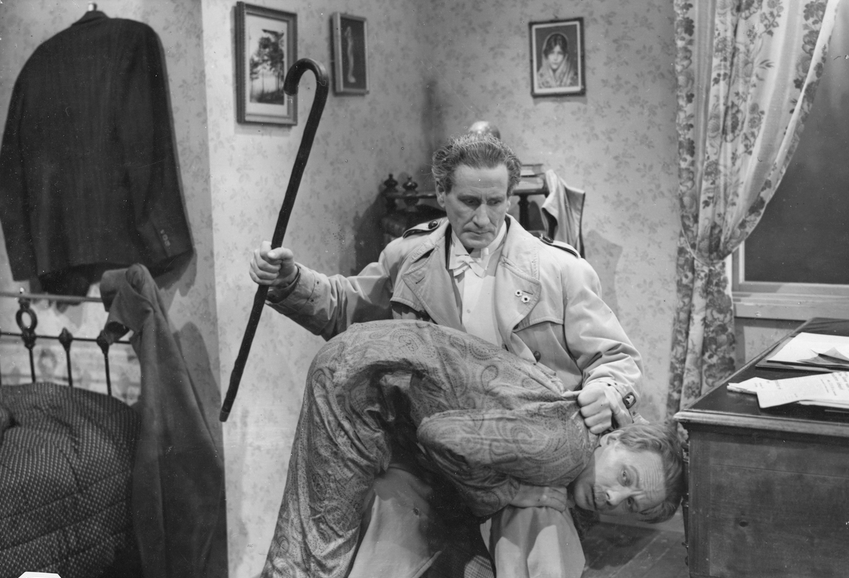
Despite supposedly never having made much of himself, it’s Joonas the everyman who fixes everyone’s problems, arranging a “courtroom” only partly in jest to adjudicate the dispute between his friends, making sure that Agnes is aware of Seppo’s craven nature, and badgering Esko’s swindler to return the money that he took in bad faith. At a celebratory party, Joonas sings of love and friendship, and the menfolk pile off home in a semi-drunken state, whereupon their taxi driver reveals that they still owe him for the fare thirty years ago, when they were also too busy singing the praises of their classmate Maj-Lis (Ruth Snellman) to remember to pay.
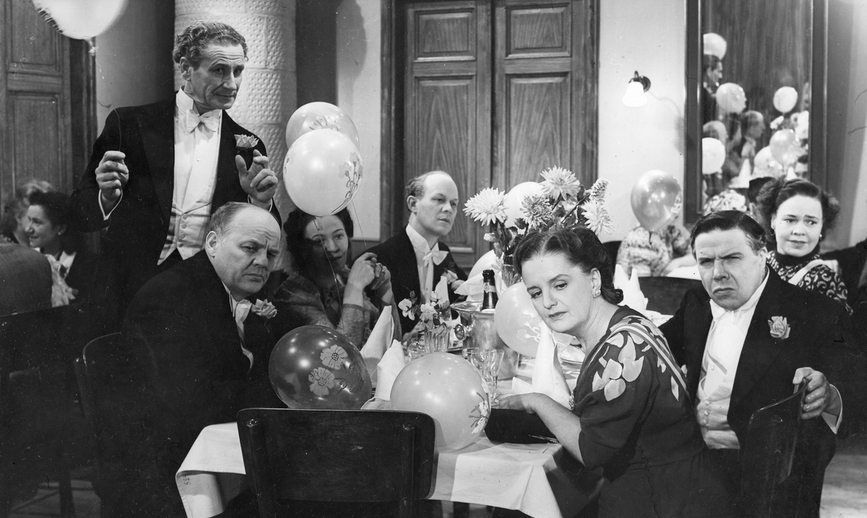
Maj-Lis is a bit of an afterthought, as is the seventh classmate Berta (Aino Lohikoski), because they are merely the wives of the guys, and this college reunion fable is really about how the menfolk have done for themselves. Setting aside that sexist implication, entirely understandable for the time, Oi, aika vanha, kultainen is an intriguing forerunner of the sort of Hollywood movies of latter years like Return of the Secaucus Seven and The Big Chill, which similarly revisit youthful dreams in middle age, and ask what went wrong… or right.
For a film that celebrates student days, it is strangely anti-intellectual, focussing on Joonas the rural gentleman, and the common ground of ylioppilas, which is to say, high school graduation, rather than the more rarefied air of university, to which several of the characters plainly went on to. But such a low-level achievement remains a sweetly egalitarian feature of modern Finnish society. Almost everyone can say they finished high school, which is why the nation still chooses on Mayday to invite everyone to put on their white graduation gaps and be smug about it together, as if the entire population was running through the streets wearing T-shirts that bragged they had once sat for some A-levels or a City & Guild in woodwork.
Adapted by Nisse Hirn from a Mätti Hälli novel that was still in galleys at the time, and would limp out some time after the movie that was based on it, Those Golden Days of Yore was regarded by director Orvo Saarikivi as his best work. Shot in the summer and autumn of 1941, but delayed in post-production by the outbreak of the Continuation War, it juxtaposes the youth of today with what would have been the youth of 1912, which is to say, the generation tthat had to live through the Revolution and Civil War. Hirn’s rumination on what had changed, and what hasn’t, hence has a melancholy turn to it, as one generation forged in war is forced to watch its children face it all over again. That, in fact, may even have been a factor in the production, allowing a middle-aged cast to dominate while the studio’s younger leads were presumably off making an entirely different film, possibly the same year’s The Wheel of Chance.
The anonymous reviewer in Ajan Suuta saw in it another aim, which was to educate rural audiences about the life and traditions of urban Helsinki, such as the vivid Mayday celebrations, captured here on location, and the student culture of compulsory bier keller sing-alongs, which I have always found unsettlingly regimented and Germanic. Much as such songs are inflicted on diners in Finnish restaurants by exuberant graduates, they similarly lurch unwelcome into the film here.
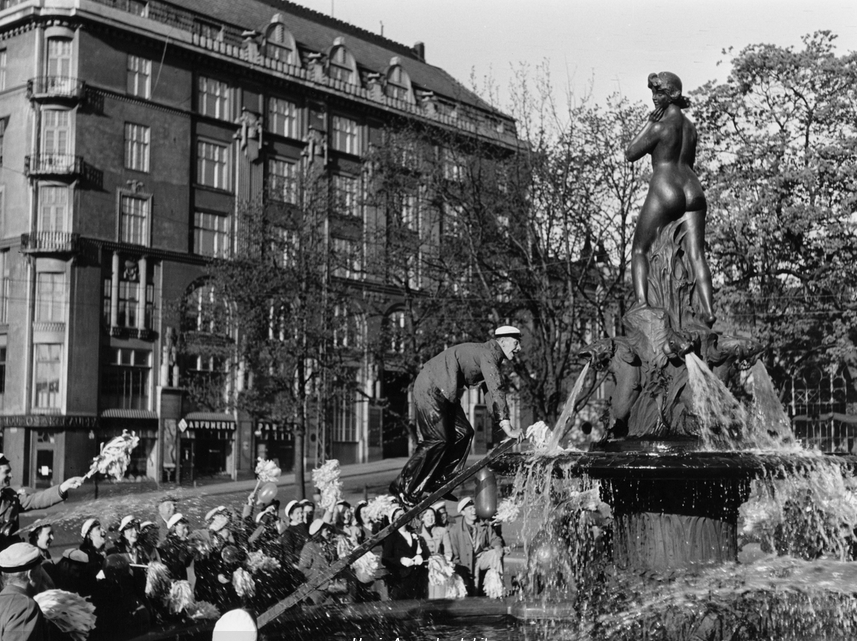
There is also footage of such new-fangled devices as a phone booth, the likes of which presumably had not been seen before out in the sticks. Amid the staged scenes of the cast’s celebration there also appears to be actual location work, snatched on the run, of such events as the traditional crowning of Havis Amanda, the naked statue on the Esplanade, with a student’s hat. Many critics were clearly in the sweet spot for such nostalgia, and grew misty-eyed at the restaging of songs from their own student days. The reviewer from Uusi Suomi, however, was having none of it, and observed: “Everything that is interesting in the story, ends already at the beginning, and usually it seems as if the whole production only happened in order to stage a few vocal performances.”
Jonathan Clements is the author of A Short History of Finland. He is watching all the Finnish films, so you don’t have to.
 The Official Schoolgirl Milky Crisis Blog