
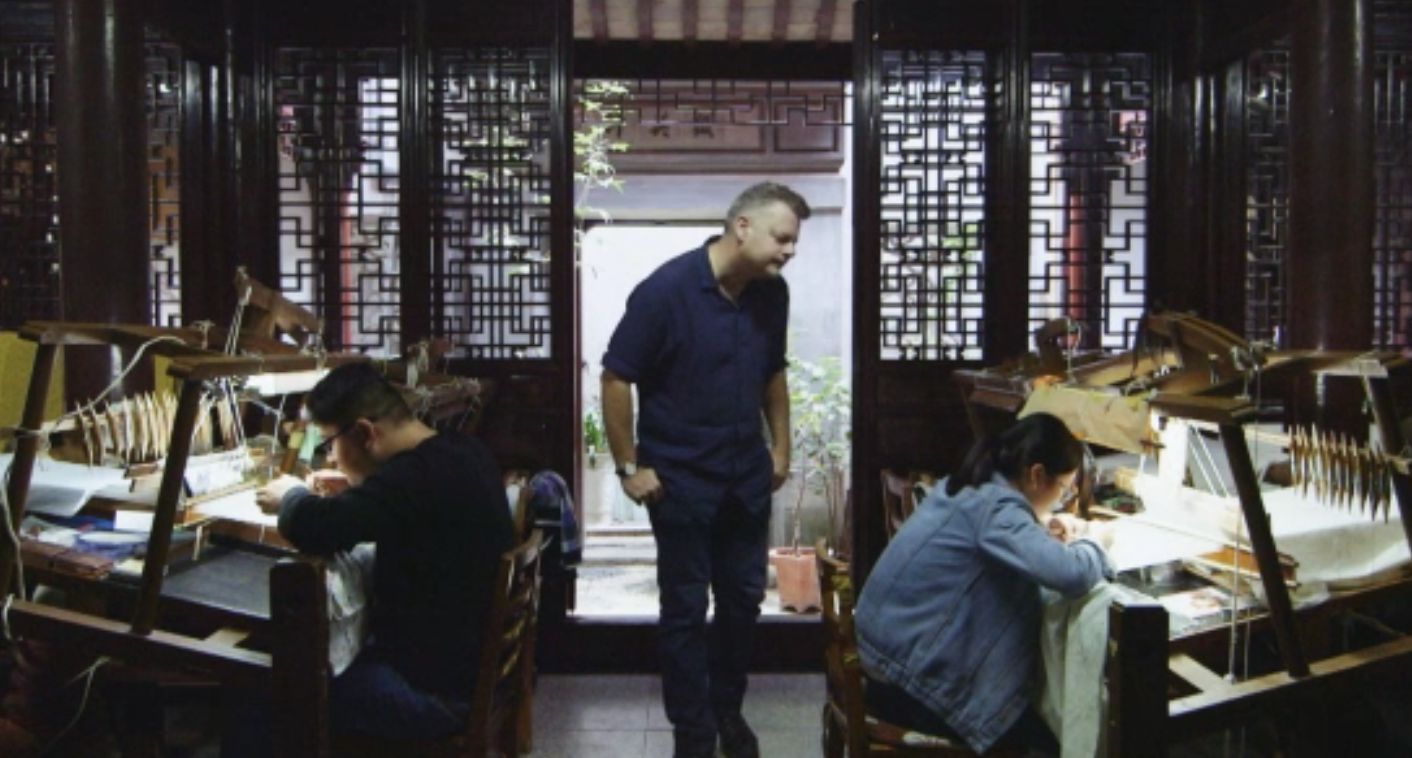
Mr Wang’s studio is literally next door to our hotel, which gives everybody a lie-in. I start to wish, however, that I had never got out of bed, since Mr Wang’s studio appears to specialise in pictures of pets. Why UNESCO accorded him intangible cultural heritage, I’ll never know, because his output seems to include funny pandas, twee scenes of traditional mountains-and-water, and the silk-weave equivalent of a painting of two dogs playing billiards.
The people in Mr Wang’s studio are heartily sick of film crews, and would really much prefer to be left to get on with their work. Mr Wang makes himself scarce when we arrive, thereby depriving us of the chance to interview anyone but his flunkies. But they tsk and tut and bend over their looms as I wander around them, enthusing to camera about the not-particularly-lost art of kesi, in a single 45-second speech that I manage to get right more often than not.
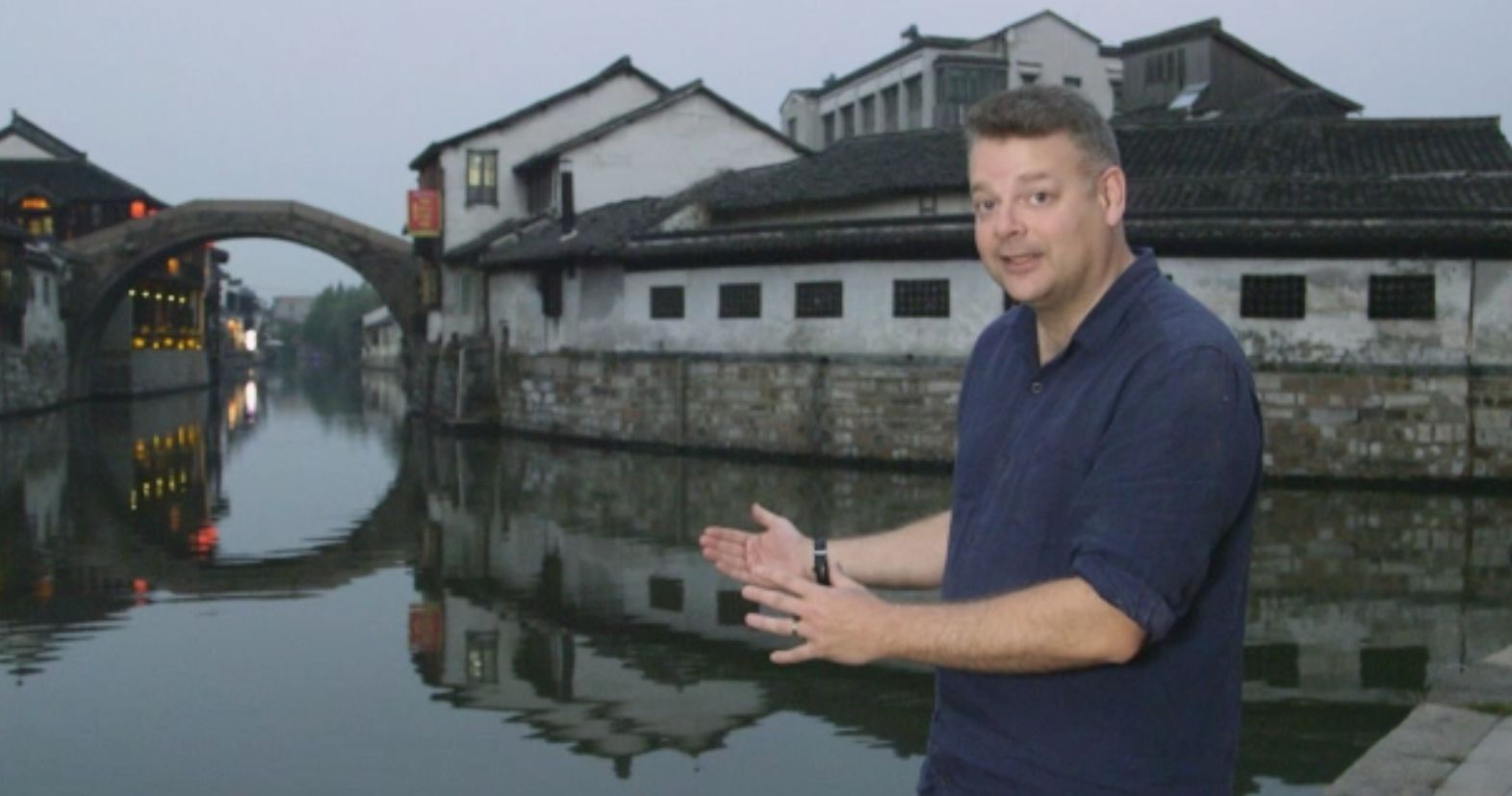
We drop in on a dye factory for more B-rolls, and then stop off at a water-town to send up the drone to get pictures of little pagodas and winding, flagstoned streets. This particular one, Shantang, stretches along either side of a seven-mile stretch of canal, and is infested with pushy rickshaw drivers and people who want to shout hello and/or stand behind the camera peering into the viewfinder.
The day finishes up back in Suzhou proper, next to another picturesque canal populated by fan shops, ice cream parlours and dumpling shops. We’ve come to see Chen Yingqin, a lady whose kesi is way, way better than Mr Wang’s. She seems to spend most of her time telling clueless customers in her shop that, no, the “watercolour” on the wall is not a watercolour at all, but actually an image composed of thousands of silk threads. She also does calligraphy, replicating everything from the pressure of the ink brush to little imperfections in the characters. I ask about one picture, of a Chinese landscape, and she confesses that it took her nine months.
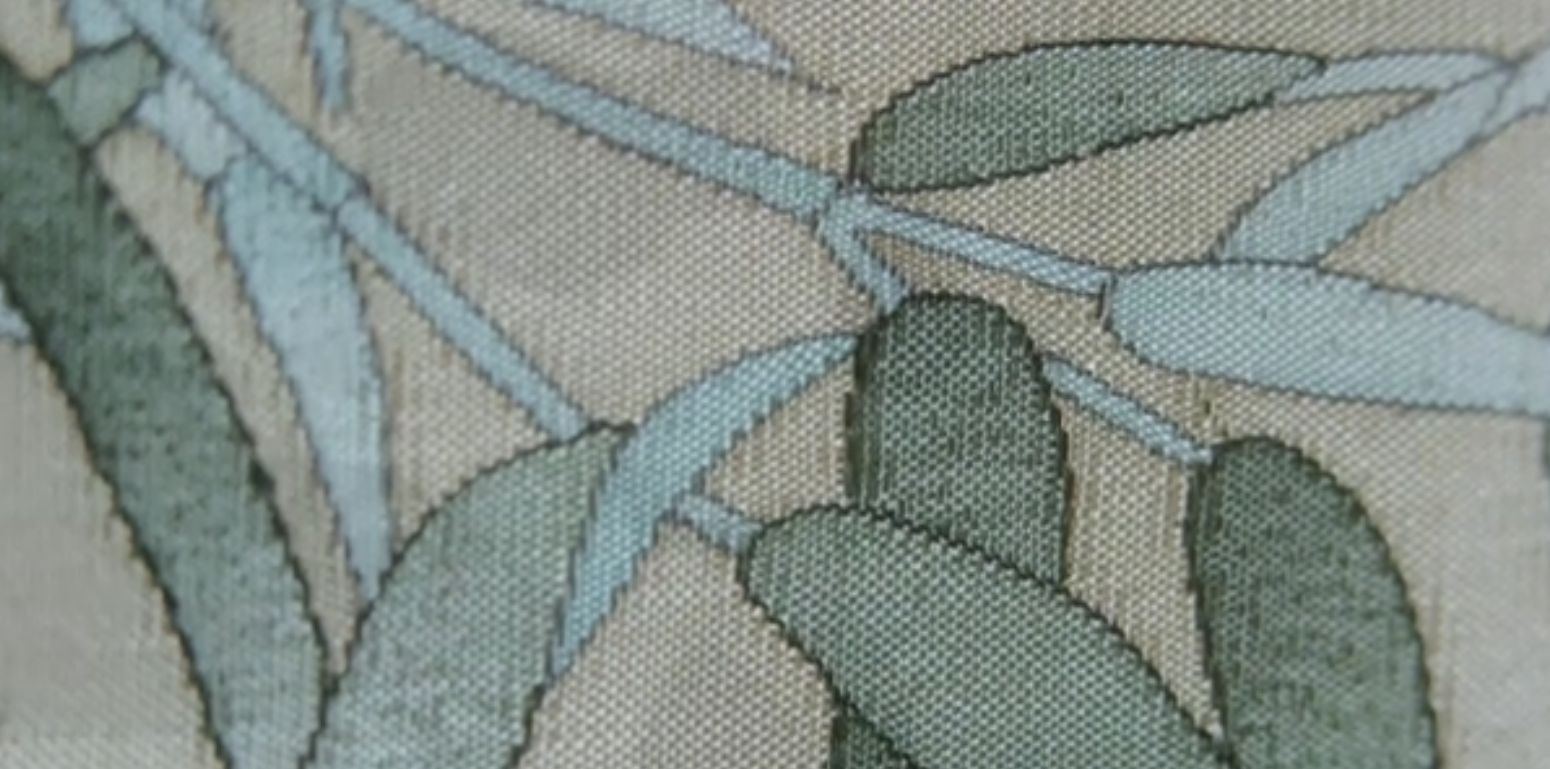
The prices reflect this. A square embroidered image of a single Chinese character, (Chan, which is to say, what the Japanese call Zen), the size of an LP, retails at a steep £3000. She also makes wallets at £100 a throw, and similar luxury goods for the super-rich.
A neatly “printed” series of characters on gold silk is recognisable to me from the simple layout, even before I get close enough to read it, or its title.
“Is that the Heart Sutra?” I ask.
“Yes,” she says, flabbergasted. “I am slightly disconcerted that you know that.”
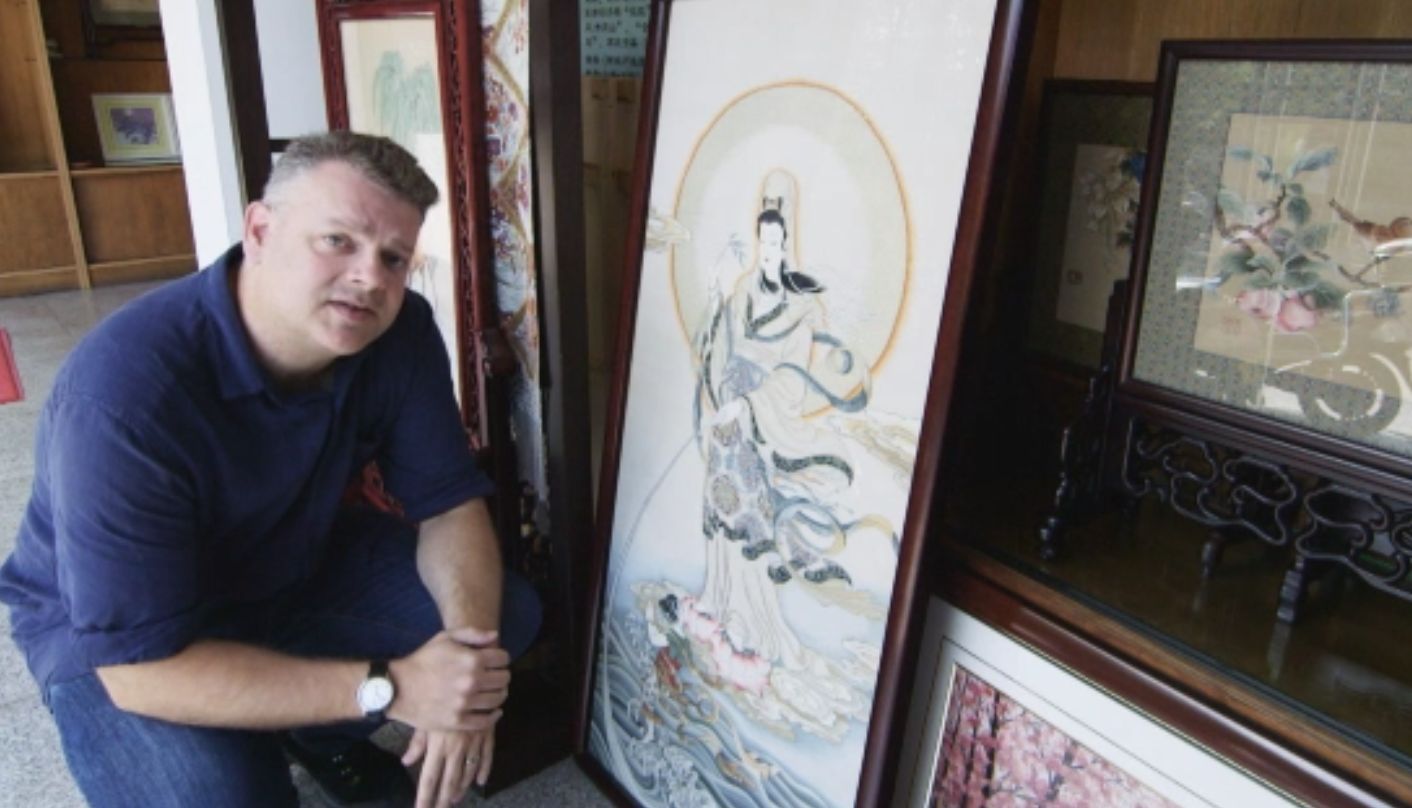
She is giggly and vivacious in her interview, which makes a nice change from stage-struck old men, and seems genuinely sorry to see us go. She even laughs along when the producer and I have a fight about the statue on the mantelpiece, with her maintaining that it is Guanyin, the Goddess of Mercy, and me maintaining that it is Buddha himself.
“If it’s Guanyin,” I protest, “then where are her tits?”
Apparently it is Buddha. Although Guanyin is also Buddha. It’s complicated.
Jonathan Clements is the author of A Brief History of China. These events featured in Route Awakening S02E04 (2016)
 The Official Schoolgirl Milky Crisis Blog