
Early morning interview with our landlord, Tubby (his real name is Yu), a jolly little man half my height who will shortly become the village chairman. This makes him something of a heavy-hitter with the locals, and he truly appreciates the value of TV coverage, so he is ready and willing to talk about the history of the Miao, their affection for the pheasant as their totem animal, and sundry other organisational issues to do with the village. He even obliges us by running down the hill to tell the singing competition, which has been running right through the night, to bloody shut up for half an hour so we can film him in relative quiet. When they get shirty with him, he literally steals their microphone, strolling back to the house with it and telling us all will be well.
The Tubby interview is swift and efficient, and it gives us ample material to cover our B-rolls and cutaways. Despite the misery of filming here in what is now our fourth day of impenetrable fog, we have enough in the can now for this episode to work. The fog has become part of the story, as have the armies of amateur photographers getting in the way. There is even a rival Chinese film crew, dubbed Mr Osmo and the Neckbeards, since their chief cinematographer is wielding an Osmo – a tiny steadicam like a gun on gimbals, allowing for running shots and action.
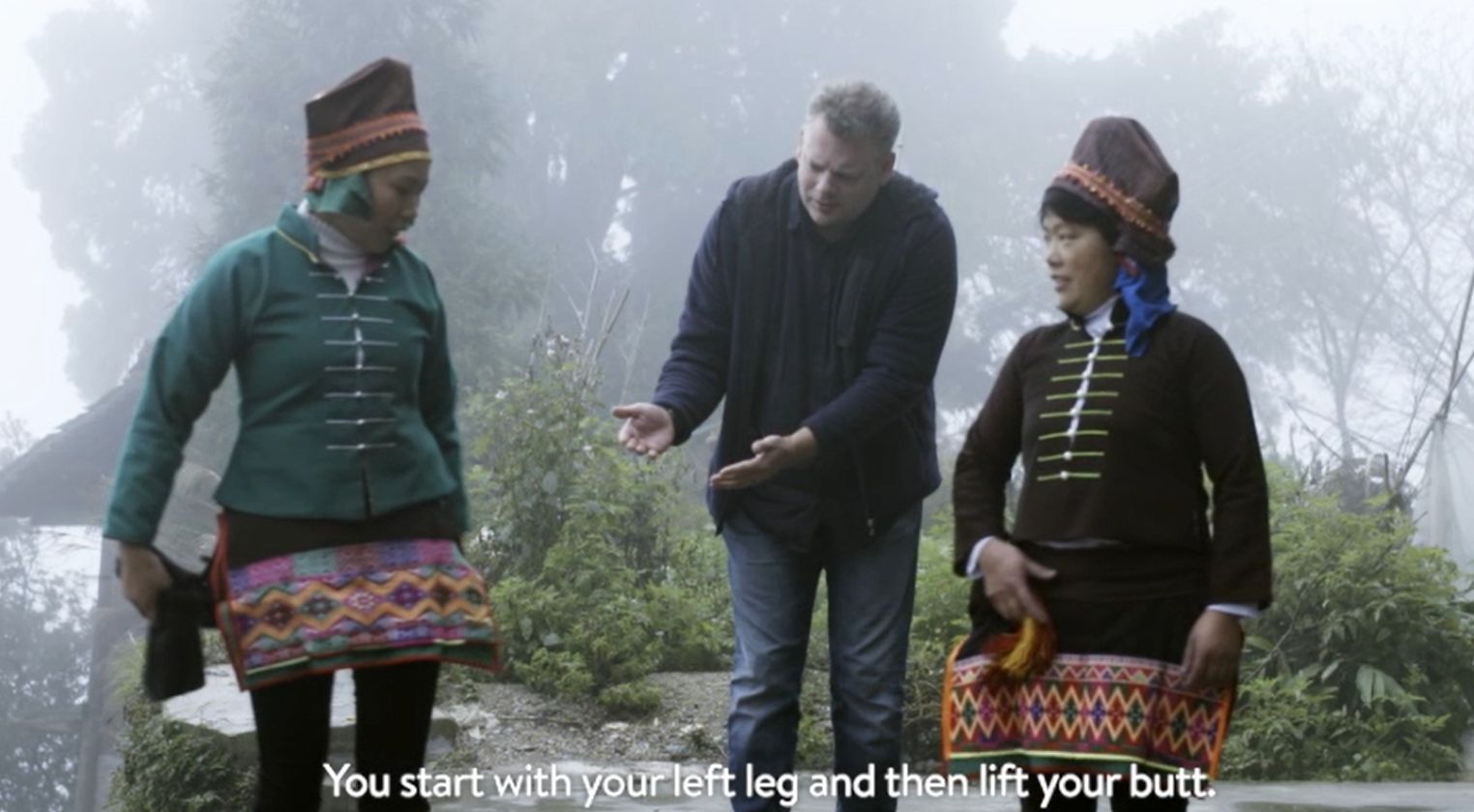
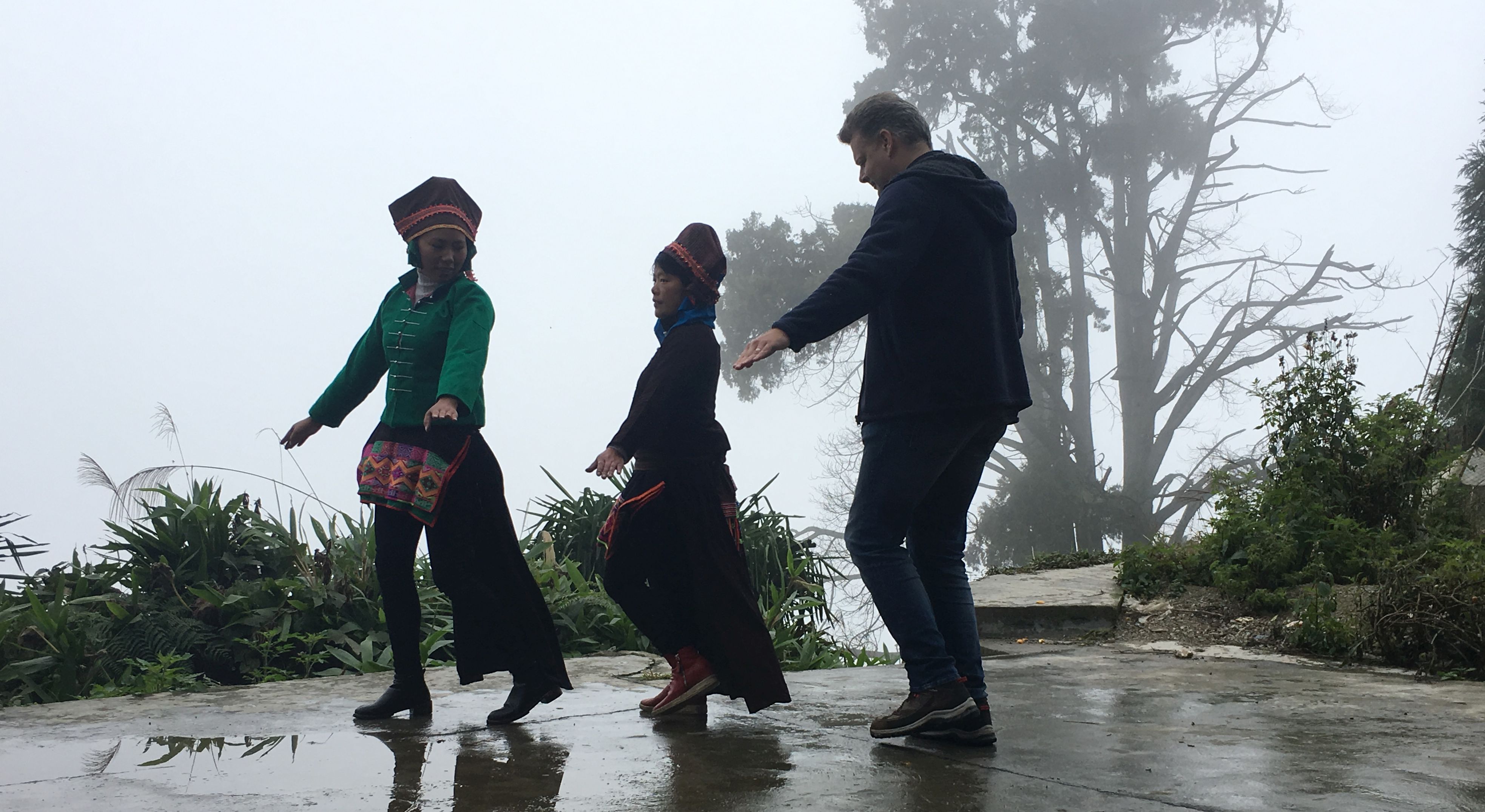
Mrs Yu (Tubby’s wife) and Miss Yu (Tubby’s sister) take me out onto a clifftop to teach me how to walk like a woman. This takes longer than expected, as they have to put their glad rags on and do their hair, and then we have to wait for the air-raid sirens to stop. Today is the anniversary of the Japanese invasion of China, and sirens all over China are going off to remind people of who the enemy is.
“Left foot forward,” says Mrs Yu. “Now watch my arse. I wiggle it this way, and then that way, then this way, then that way.” It’s only when the cameraman reframes for a close-up that she realises she is volunteering to wiggle her bottom on camera for viewers in 30 countries.
The sisters-in-law then move onto the Phoenix Dance, that slow-motion invisible skipping rope motion that combines their wiggly walk with flapping arms and steps that go left-right-left-right-right-left-right-left-left, over and over again.

“Do you think they enjoy doing this?” wonders our fixer.
“I hope so,” I reply. “Because this lot don’t seem to do anything else.”
Mrs Yu is very excited about the electric kettle we have acquired in a vain attempt to have some warm water to wash in every day. She walks around the house caressing it like an adored pet. I have not washed properly for four days now. It is theoretically possible to barricade the door to the combined toilet-shower, strip off and use a kettle, but such an enterprise would require washing the floor first, and drying off afterwards, which since we are literally living inside a cloud, would be a futile exercise. As for going to the toilet, don’t get me started. I am happy if I manage to hit the hole and remember toilet paper.
“When we get to the Congjiang hotel tomorrow,” says the director dreamily, “I’m going to turn the lights low, put on some ambient background music, light some aromatic candles, and have a massive dump.”
Jonathan Clements is the author of A Brief History of China. These events featured in Route Awakening S03E06 (2017).
 The Official Schoolgirl Milky Crisis Blog