
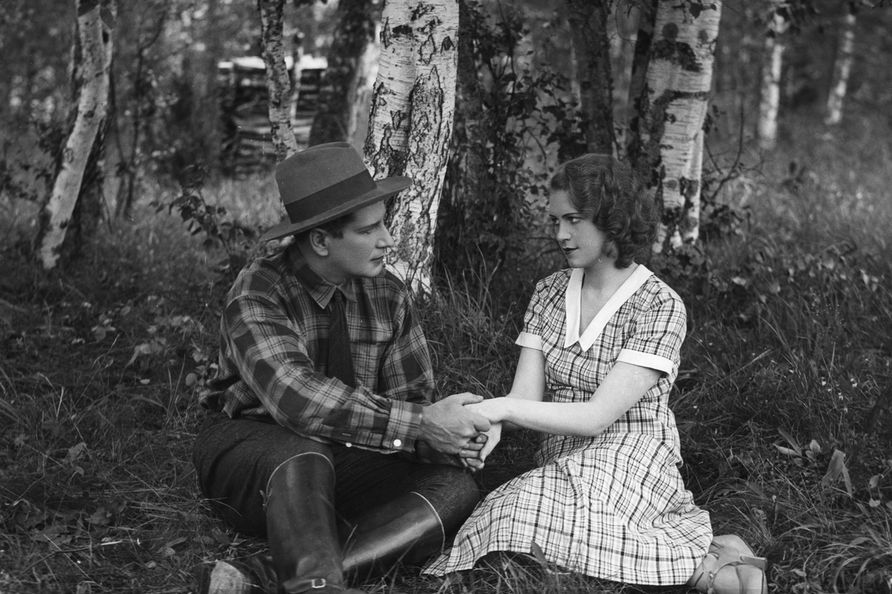
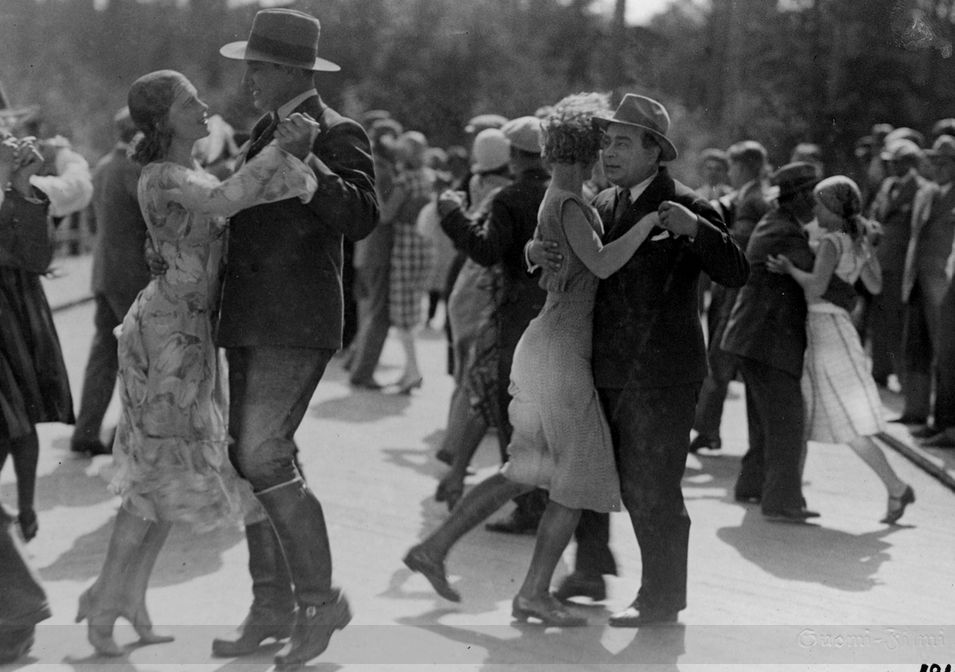
It’s Midsummer Eve, and the youth of a Finnish village have gathered for a big party. Eetu Mikkola (Aku Käykö), heir to the wealthiest estate in the region, asks the pretty Leena Kosken (Helena Koskinen) to dance, to which she agrees with great reluctance. Seeing that Eetu’s advances are growing increasingly unwelcome, logger Erkki (Urho Somersalmi) diplomatically calls for a dance in the round. Eetu bristles with irritation at the interference of the logger gang, and starts trying to whip up the local folk against them over the course of several evenings.
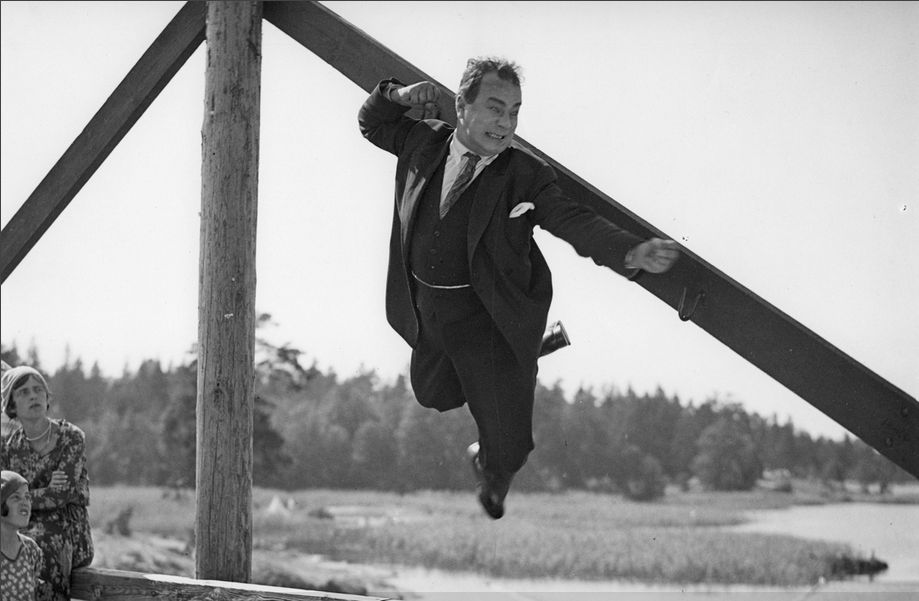
Eventually Erkki bodily lifts Eetu off the ground and hangs him from a bridge support, and when that fails to shut him up, he throws him in the river. The stand-off continues, between gangs of rich boys and blue-collar folk, while Erkki and his fellow loggers gather beneath Leena’s window to sing a serenade.
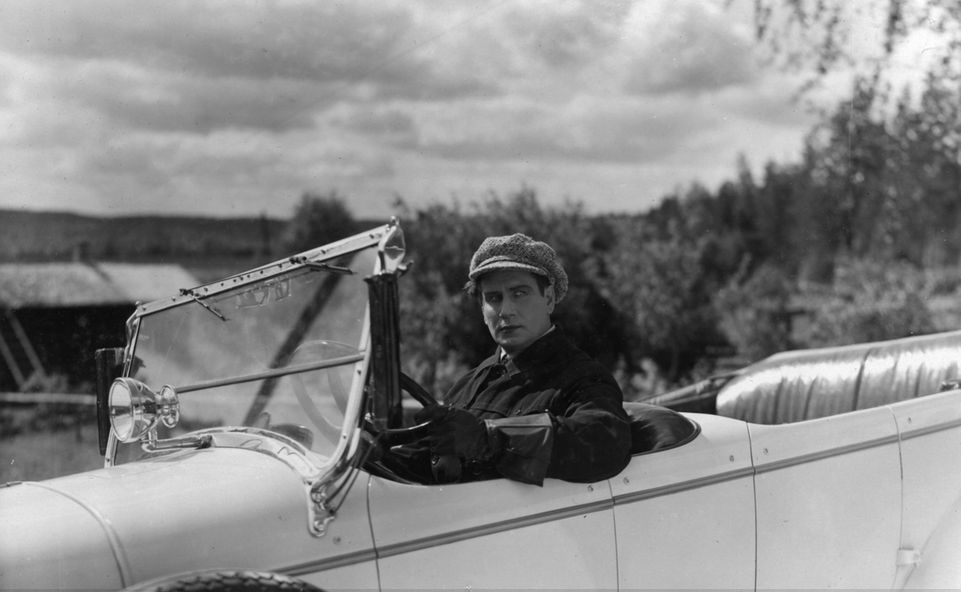
Called away to see his sick mother, Erkki asks Leena to wait for him, and gives her a ring made of birch bark. While he is away, the mansion where Leena lives is put up for sale, becoming the subject of a fierce bidding war between Eetu and a wealthy investor, who turns out to be Erkki’s father. Erkki the presumed penniless logger rolls back into town in an open top car for the traditional Finnish homily that money doesn’t matter, but it really helps, and the young couple race off to the altar.
The origins of this Finnish film blog lay in the release of a DVD box set of all the films of the Suomen Filmiteollisuus company a few years ago. What this means, is that although it aims to be complete, I have yet to go back before that company’s foundation in 1934 to watch the decade of movies that came before it. This Midsummer’s Eve, I caught Tukkipojan morsian on television, and decided to throw it in out of order.
Billed as the tenth anniversary production for the studio Suomi-Filmi, and Finland’s “first 100% talkie”, The Woodcutter’s Bride is a fascinating study in film technology. A few scenes are indeed recorded in studios with microphones, but much of the film is shot wild outdoors, overdubbed with sleight of hand, as characters retreat into the distance or turn their backs to avoid lip sync issues, narrate scenes in post-production, or take a back seat for long, space-filling song and dance numbers.
Large chunks of the drama are portrayed in mime, which writer-director Erkki Karu cunningly renders part of the story, by setting so much of the action at raucous barn dances, where nobody can make themselves heard.
Writing for the Helsingin Sanomat, reviewer Erkki Kivijärvi totally got it, praising the film for its depiction of “summer idylls, Midsummer bonfires, girls in national costume carrying milk churns, bridge dances, fights… rafting and other picturesque phenomena of our rural life – both everyday and sacred.”
The anonymous reviewer in Svenska Pressen gushed about the film’s “novelties in the choice of characters, camera settings and editing,” which only serves to remind us that even hoary old clichés were young once. Here, we see the roots of uncountable later productions like Rich Girl (1939) and Scorned (1939) – the good-hearted salt of the earth, the girl pressured into an unwanted marriage, the Finnish stand-off between good-hearted boys who work with their hands, and an entitled class of monied dastards. Since the title also constitutes a synopsis, the conniving Eetu is little more than a plot device, but theatre actor Aku Käykö brings a bewitching presence to the screen. For some reason, his eyes glint and flash in the camera, giving him a feline, replicant aura that I have failed to catch in my screengrabs.
In the role of the young male lead, the forty-something Urho Somersalmi is pushing his luck. He was destined to be superseded by a new generation of male leads in the next few years, and indeed, we are witnessing them, in turn, aging out of the spotlight in the 1940s in the main strand of this Finnish film watchathon. Then again, this would not be the last Finnish film to feature middle-aged men duelling over the affections of a barely-legal girl. See, for example, The Bachelor Patron (1938).
Love interest Helena Koskinen is bright and feisty, holding her own for as long as she can against Eetu’s effortlessly wielded privilege. Her film career fizzled out in the wake of The 45,000 (1933), an earnest film about the spread of tuberculosis, but not because of any lack of talent. She was one of the casualties of director Karu’s cataclysmic falling-out with the board of his own company, after which he stomped off to start a new studio, Suomen Filmiteollissus. Which is where we came in, with Our Boys in the Air (1934).
Jonathan Clements is the author of A Short History of Finland. He is watching all the Finnish films, so you don’t have to.

