
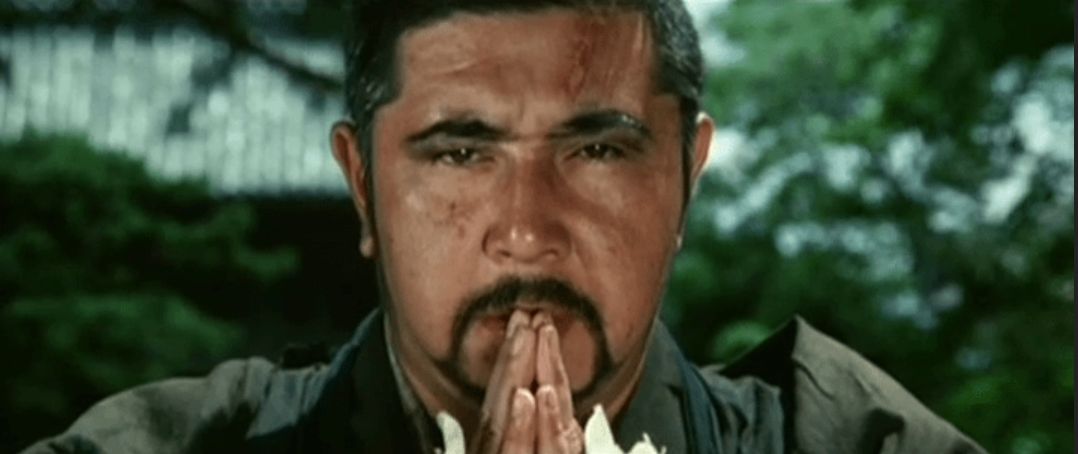
“The problem with Taisho-era Tokyo is that almost all of it was wiped out by the fire-bombings of the Second World War. Director Kiyoshi Saeki is forced to keep his camerawork close on street scenes and most exteriors, because a wide-shot of 1920s Tokyo, filmed in 1968, would have been an impossibility before the rise of digital effects. Only the temples remain constant, existing in a time warp unchanged for centuries, allowing the camera to linger on monastic scenes in a way it cannot do with the urban.
“The production team seize upon a fact that is often true the world over – that traditional events, like funerals, and traditional uniforms, like the Salvation Army, are much slower to change than other elements of society. Imagery of the Taisho era is instead telegraphed through the costuming, such as the plaid trousers and straw boater worn by Kentaro , the must-have fashion accessories of early twentieth-century Japan.”
From my video essay in Arrow’s forthcoming Blu-ray box set of the Wicked Priest films, starring Tomisaburo Wakayama.

