
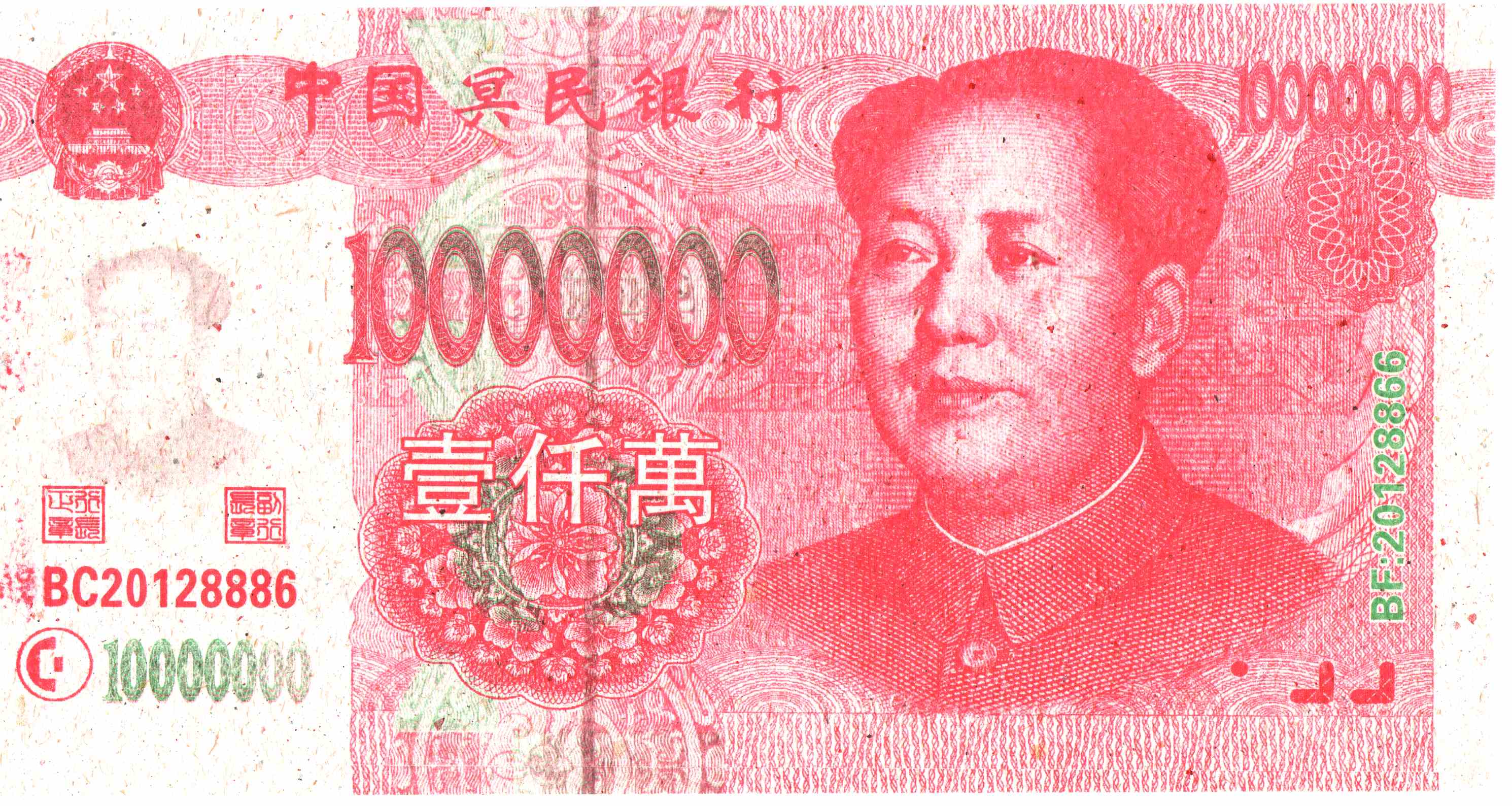
In the twenty years since I wrote the first edition, the imagery of Chairman Mao has gained new currency in modern China, sometimes literally. In 2012, I found two ladies selling trinkets on a street corner in Xi’an. Their baskets included stacks of ‘ghost money’ – counterfeit cash for filial Chinese to burn on pyres in order to send gifts to their ancestors in the afterlife. It was designed in a reasonable facsimile of real-life 100-yuan notes, printed in red ink and bearing the image of Chairman Mao. Each promised to pay the bearer on demand the sum of ten million yuan, redeemable at the ‘Bank of Hell’. I found it ironic that the man who had once tried to ban both money and superstition should endure as the figurehead on cash for use in the spirit world.
I bought a supposed fortune in ghost money for a knockdown price, since the women were trying to offload their Mao notes as fast as possible. Such realistic ghost money had recently been declared illegal, in a re-establishment of respect for Mao that would see a new edition of his Selected Quotations (the famous Little Red Book) republished a few months later. The following October, when I went looking for ghost money again, I could only buy notes bearing the face of the King of Hell. I would keep my Mao money for a decade, until I was persuaded to burn it on camera for William Shatner’s The UnXplained to demonstrate how to turn my ancestors into millionaires.
Only two months after I bought the last of the Mao ghost money on the street, China’s new president Xi Jinping delivered a stirring speech about his plans for the nation during what would turn out to be his lifelong term in office. He was determined, he said, for the Chinese Communist Party to celebrate its centenary in 2021 without any slanders or smears committed against it by hostile forces peddling an incorrect version of history. In doing so, he used the phrase ‘historical nihilism’ (lishi xuwuzhuyi), a term that has come to colour huge areas in subsequent discourse.
Thereafter, if I described myself as a historian, people became noticeably jumpy. There was, after all, now a hotline for concerned citizens to call if they encountered anyone suspected of harming the reputation of the Communist Party and its role in creating the new China. History was now whatever the Party said it was, which has effectively criminalised anyone who dares to question it.
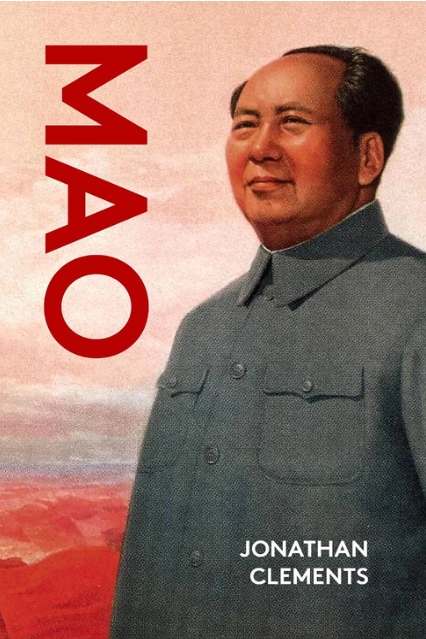
From the introduction to the new edition of Mao by Jonathan Clements.


History, as has been often noted, is continuously re-written by the winners.
Are there any Chinese time periods a historian could write about safely, say pre-WW1?
I cannot think of a single period in history where discussion would not be at risk of disappearing down a Maoist rabbit hole. For half of the last two thousand years, “China” has been an incomplete entity, with part or all of it under foreign rulers. Any time pre-1912 is “imperial” and thereby subject to censure about enjoying it too much. 1912-1949 is “republican” and subject to constant redaction, such as the removal of ROC flags from war movies set in the period. 1949 to the late 1950s is a Soviet love-in, since discredited, the 1960s are subject to the Cultural Revolution, and by the time that’s all over, we are in the 1970s for the fall of the Gang of Four…. so, no! It’s not a good time to be a historian in China.