
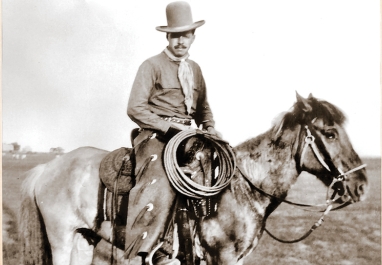
“Go west, young man. Go west. Way west.” Beyond the Rocky Mountains, beyond California, across the Pacific, there was still a place where cowboys could be cowboys. For nearly three decades, the out-of-work rodeo riders and cow punchers of the Old West had one last place they could live on – China.
Fred Barton (1889-1967) showed up in China at the tail end of the Qing dynasty, offering to help the Chinese military pep up its strength with a steady supply of proper warhorses, rather than the stocky Mongolian ponies they were used to. He stayed around after the Revolution of 1911, to supply vital mounts to the Chinese Republic and its various warlord helpmeets, including Manchuria’s Zhang Zuolin, who had an entire company of White Russian cavalrymen, the Mukden Lancers.
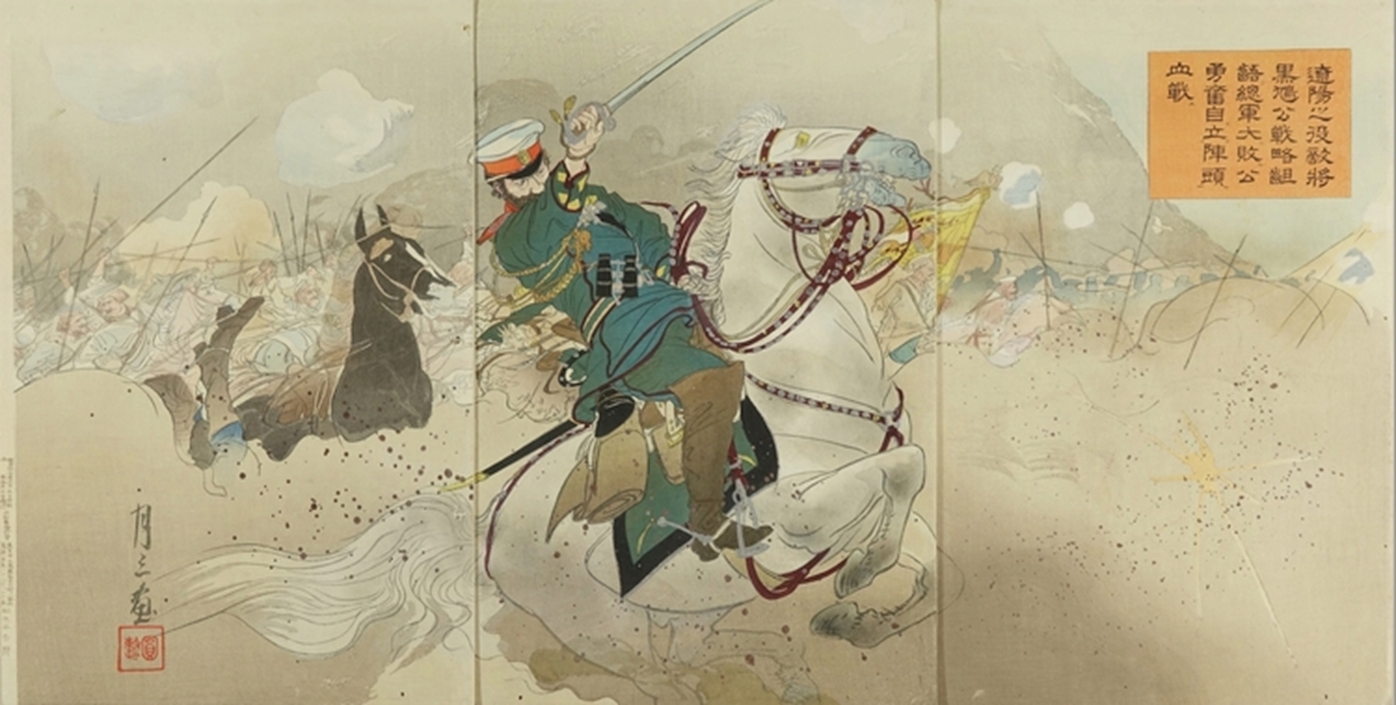
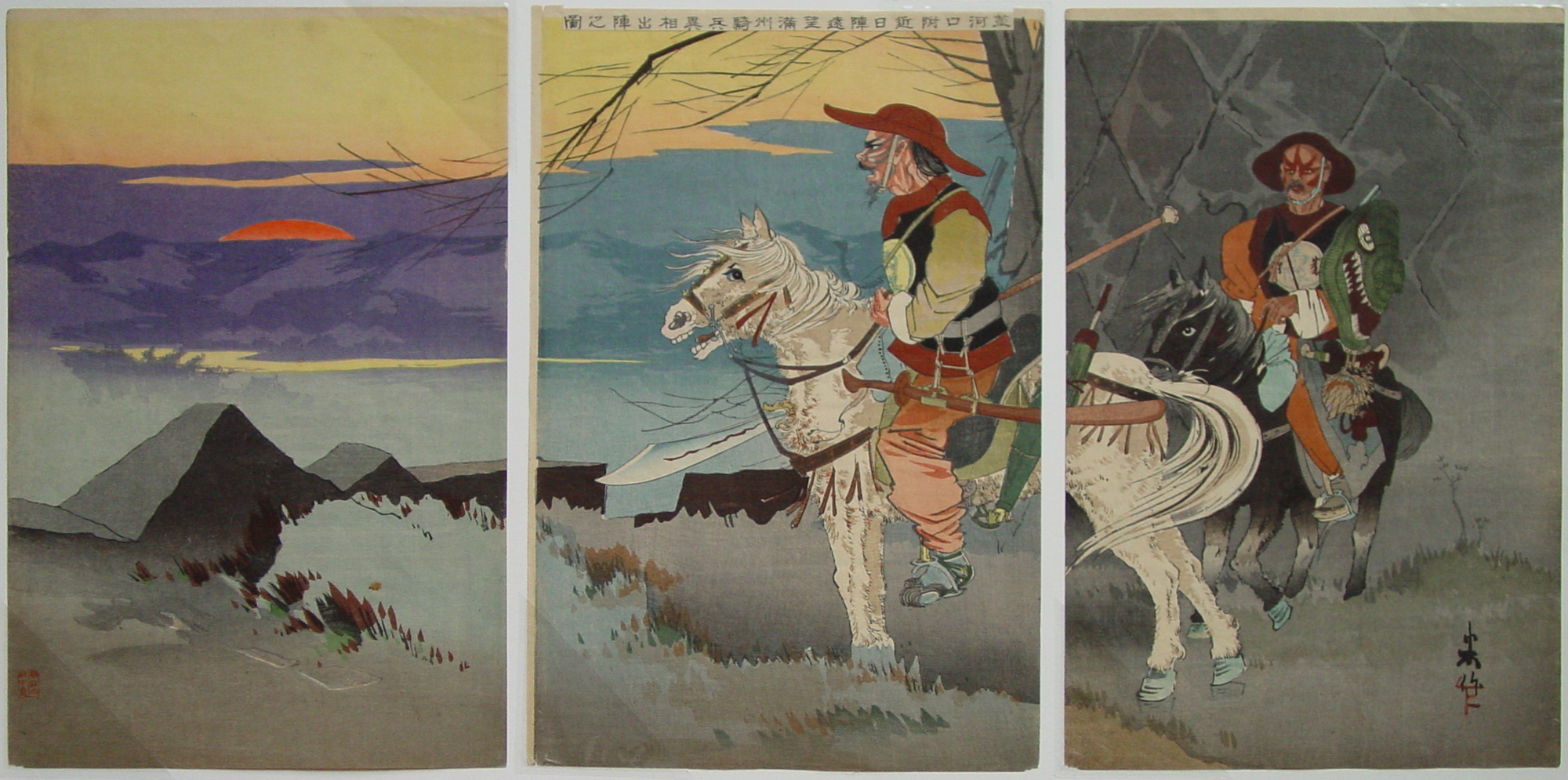
The green overcoat and brown boots foreshadow the uniform of the Mukden Lancers.
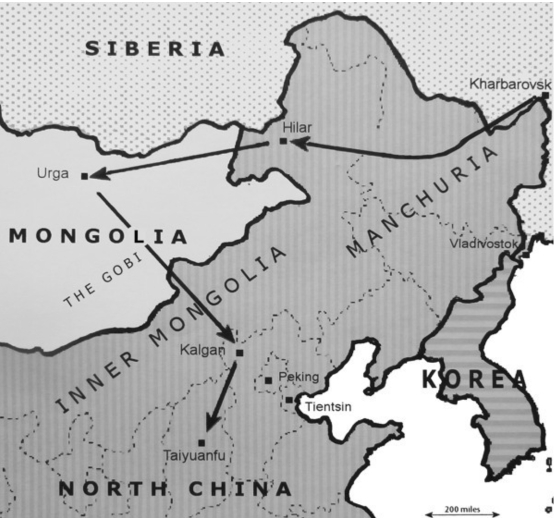
Barton proposed driving 3,500 Russian Orlov horses from Siberia, through Manchuria and Mongolia, to a ranch in north-west China, where he would breed them with several hundred American Morgans. Before long, this would generate an annual delivery of hundreds of towering battle-ready mounts, ready to supply China’s many conflicts of the 1920s and beyond.
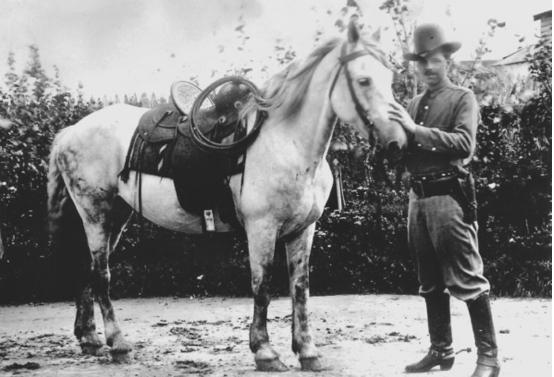
Montana cowboys and eight former horsemen on loan from the US 15th Infantry in Tianjin were drafted to help Fred Barton’s grand enterprise. It didn’t always go to plan. They were watering their 650 Morgan studs on the outskirts of Beijing, when the horses were spooked by the entirely alien odour of a passing line of camels. It took a week to round them all back up again.
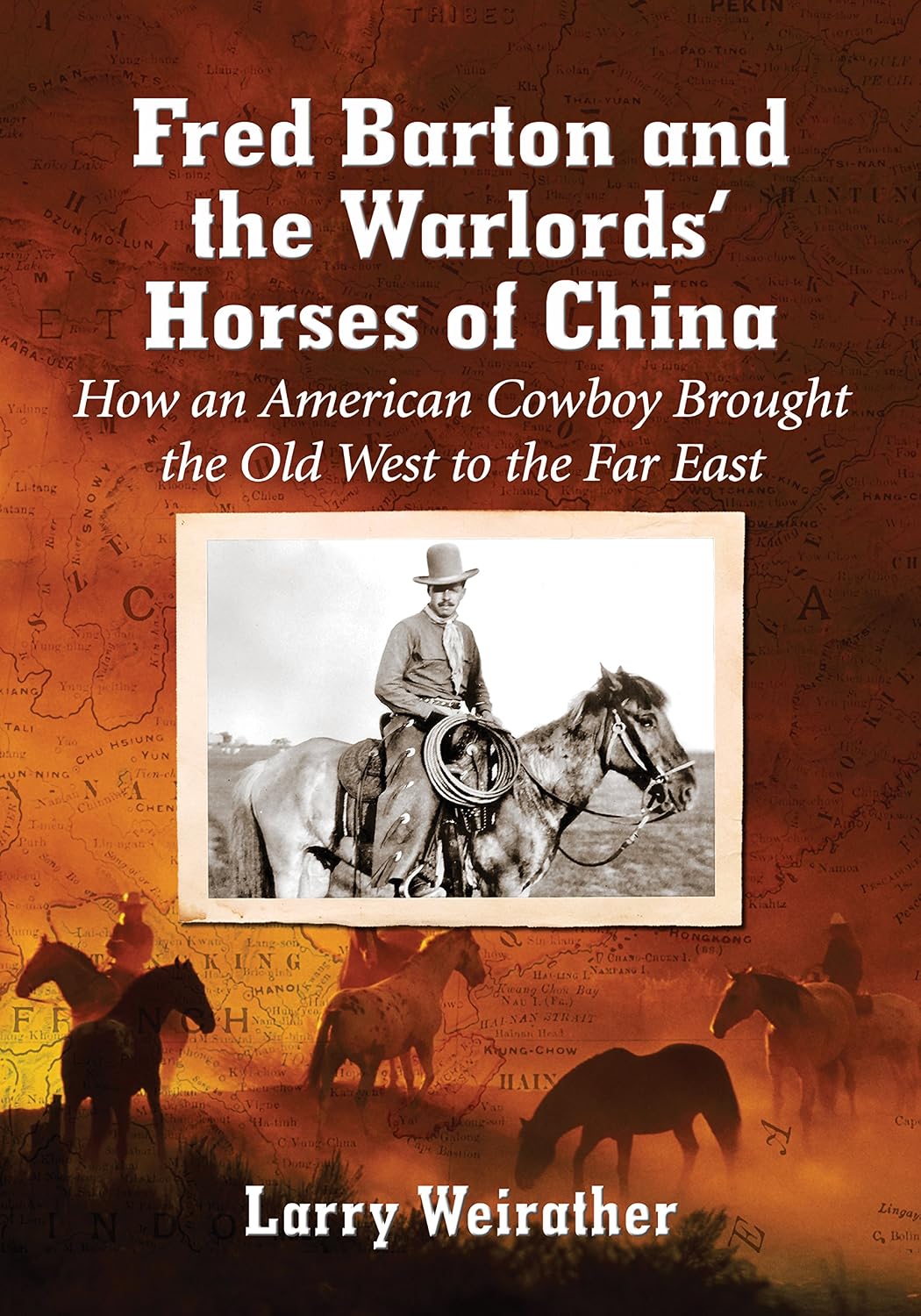
Larry Weirather’s book Fred Barton and the Warlords’ Horses of China: How an American Cowboy Brought the Old West to the Far East is thick with detail and local colour about this oddest of historical stories. He relates the unexpected trip-hazard of underground rodent warrens, close to the surface where the hoof of an unsuspecting horse could smash through the roof of a marmot lair. On the plus-side, marmot pelts could be dyed black and passed off as sable to the clueless ladies of the California elite.
The story is a fascinating clash of Wild West clichés with the shock of new, oriental hazards and tall tales. I was particularly taken with the depiction of Kalgan, the westernmost point on the railway that led to Beijing – which is why, incidentally Mannerheim’s ride across Asia stopped there in July 1908, because from that moment on, he could get the train. Weirather describes a city over-run with Mongols, whose steppe ways literally ride rough-shod over the manners and practices of the Chinese residents. Kalgan is the last bastion of the old Silk and Tea Road caravans, where camel trains from the west unload their cargoes.
Accomplished rodeo performers, Barton and his men show off some of their skills to the Mongols. The Mongols, in turn, teach them “horse skiing”, which is like an equine version of water-skiing, impossible on American plains scattered with cacti and scrub, but entirely feasible on the featureless grasslands near the Gobi Desert.
Weirather’s story is rooted in broader issues of climate and technology, some of which played out before Barton was even born. From 1875-1875 it rained a lot on the American prairie, creating huge swathes of verdant grassland, enough for the cattle- and horse-rearing barons to think of it as a practically infinite source of free food. In today’s money, an entrepreneur could clear a profit of a million modern-day dollars by delivering a thousand steers to market.
That all changed with the Great Die-Off of the winter of 1886-1887, which annihilated entire herds out on the prairie, and brought a sudden end to what had once been the “open range”. Grassland was suddenly a resource to be fenced in, and the great long-range cattle drives became a thing of the past.
Meanwhile, the American railroads were making a difference. Cattle could be killed and processed out on the plains, and shipped in refrigerated trucks to the east coast, or even outward across the Atlantic. The internal combustion engine was starting to make a noise of its own, and the prices of horses were fated to dip.
The First World War was the last great horse-trade in history, with the US military prepared to pay up to $225 for a strong beast fit to pull artillery. One and a half million horses went to war in the European theatre. At the outbreak of the war, Russia alone ordered twenty million horseshoes – a sign of the era’s true reliance on live mounts. But in peacetime, horses were soon outpaced by trains and cars and tractors. In 1919, the horse-driver Hadley Robinson reached the banks of the Yellowstone River, expecting to trade his herd at $100 a head. Instead, he was offered only $90, and turned his horses loose in disgust.
Before long, horse-traders were being offered only $12, and by the 1920s, the best deal a trader could get was $10 for the knacker’s yard.
There was, however, one exception. Chinese warlords would pay $350 a head for the best warhorses, which proved to be an irresistible temptation for the last entrepreneurs of the Old West. But Barton’s long horse-drive was fraught with perils, both natural and supernatural. Weirather reports him finding a vast field of impossibly lush grass, only for his Mongol guides to inform him that it is the site of an ancient battle, and that the pasture is so rich because it has fed for centuries on human blood. They have to move on, or risk a Mongol curse.
This whole edifice came crashing down in the 1930s, when the Japanese over-ran much of the Chinese Republican military. Barton’s Taiyuan ranch fell to the Japanese in 1937, whereupon he and his men escaped back to obscurity in the US. China’s next flirtation with foreign “consultants” would be its drive to recruit airmen for the Flying Tigers, but that is another story.
As late as the Korean War in the early 1950s, American POWs reported the sight of Chinese officers riding on what were unmistakeably Morgan horses. They were baffled as to how they got there. As for Fred Barton, he went into what some might describe as a “quiet” retirement, dedicated to preserving artefacts and memorabilia of the Old West, even as the media went crazy for it.
He even became an adviser for Wild West movies, although it seems his consultancy was often ignored. He was particularly animated, for example, about the shapes of the hats worn on screen, which had creases in them of which he highly disapproved: “The Movies and Television today show cowboys riding saddles with little or no cantle, looks like an English saddle with a horn. Also they put cheese hats on the cowboys. I never saw a [sic] open-range cowpuncher with a cheese cake hat.”
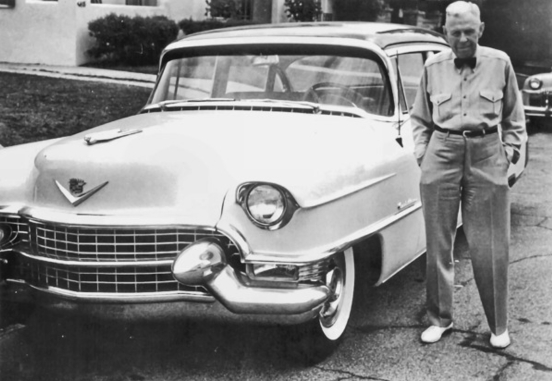
This story is not “untold.” Barton told it plenty himself when he was alive, and in 1977, Ralph Miracle published an extensive essay about it in Montana: The Magazine of Western History. Weirather himself has written a book previously on the topic, and this new version adds substantial new information that came to light after people knew where to find him to unload their stories — I will note, however, than in the oh-so-techy 2020s, it took me four tries to get Amazon to show me his book, as it kept correcting his name to “Weather.” Even so, as I so often find myself wondering in my researches, why isn’t this already a movie? Of course, there was Destination Gobi, starring Richard Widmark, which was a heavily fictionalised account of a true story from WW2, in which a band of Navy personnel in China ended up fighting the Japanese with horse-mounted bazookas, using steeds descended from Barton’s stock. But of Barton’s incredible ride, there is no sign in the mass media. Weirather even supplies the perfect framing device for the movie, in which bookseller Richard Upton visits the ageing Barton at his home in the 1960s.
He rings the doorbell, and waits expectantly while someone inside slides bolt after bolt, and unhooks chain after chain, in a series of locks that stretch all the way from the top to the bottom of the door. When it finally opens, Barton looks him up and down, and then says: “You’re five minutes early!”
He slams the door in Upton’s face, and switches back all the locks with agonising slowness, only to immediately unbolt them all again to open the door at the appointed time.
Jonathan Clements is the author of A Brief History of China. Pictures of Fred Barton are from the Archival Collections of the Montana Historical Society.


I do so love a cantankerous story from the Wild West (or is that East?).