
Unexpectedly, we have been given access to the site of the Marquis of Haihun’s tomb. The museum there is still a year away from opening, and we are not permitted to film the tomb next door that is still being excavated, but since we are meeting Yang Jun, the propaganda office can’t really say no.
In a windswept Chinese village strewn with inquisitive chickens, we meet Qiu Zongren, the happy security guard who is our morning interviewee. He grew up locally, and was there to witness the find, and ended up becoming a guard on the dig site, so has some handy stories to tell about what the locals made of the tomb.
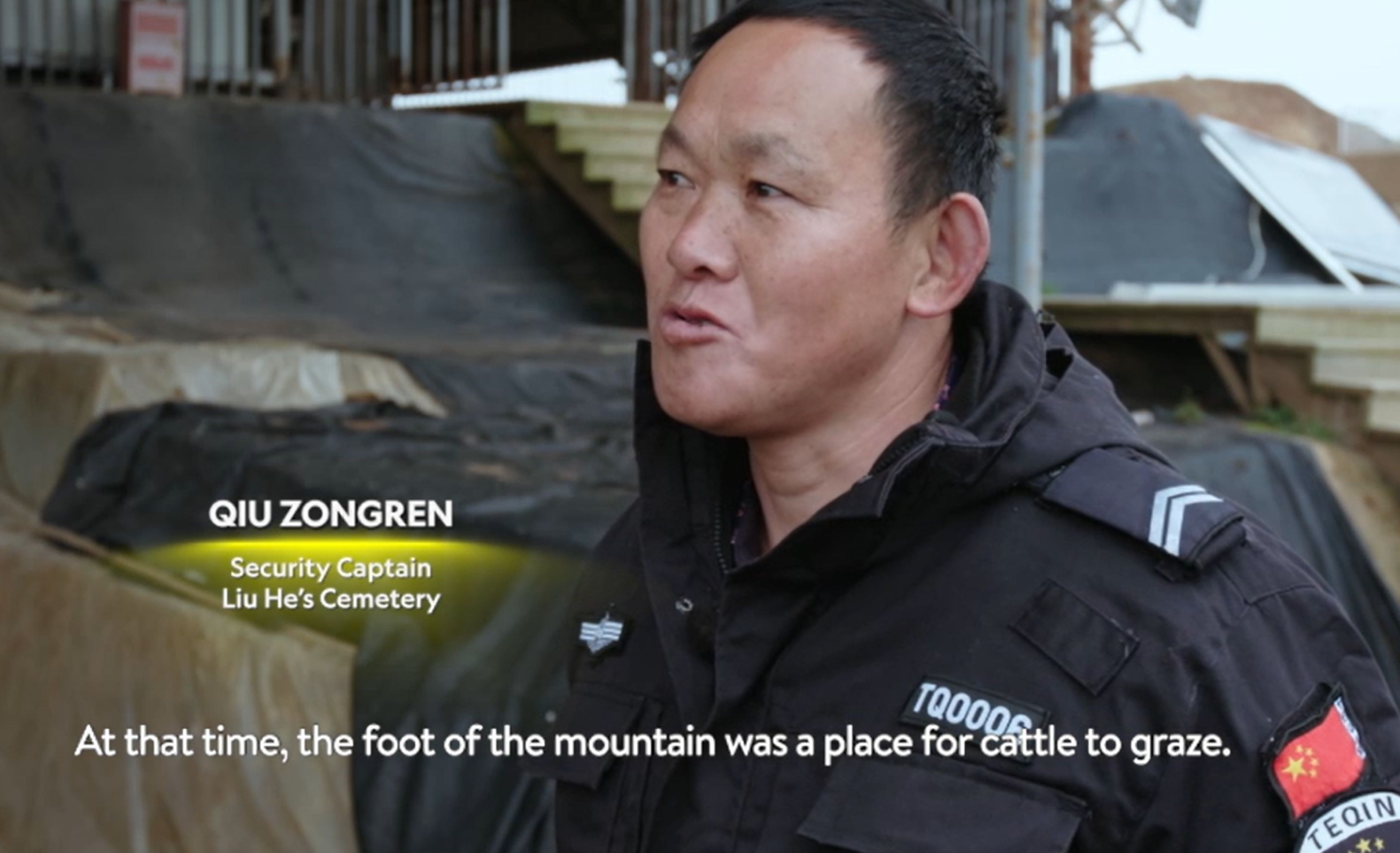
“Before the discovery, we never went there,” he admits. “Everybody said it was haunted. But then there was a night in 2011 when we saw lights on the hill, and realised that whatever was under the ground, someone was trying to rob it. We didn’t know what to do, so we called Jiangxi Television, and they called the police and the archaeologists. After that, I ended up in the guardhouse on the site all through the dig. I’d come home every night, and my mum and dad would ask me what was going on at work, and I couldn’t tell them. Because we weren’t just bringing up old pots and bits of bronze. We were bringing up so much gold, so it all got classified. We tried to make it all sound as dull as possible. ‘Just a few pots today, mum. Very boring. No gold. Definitely not.’”
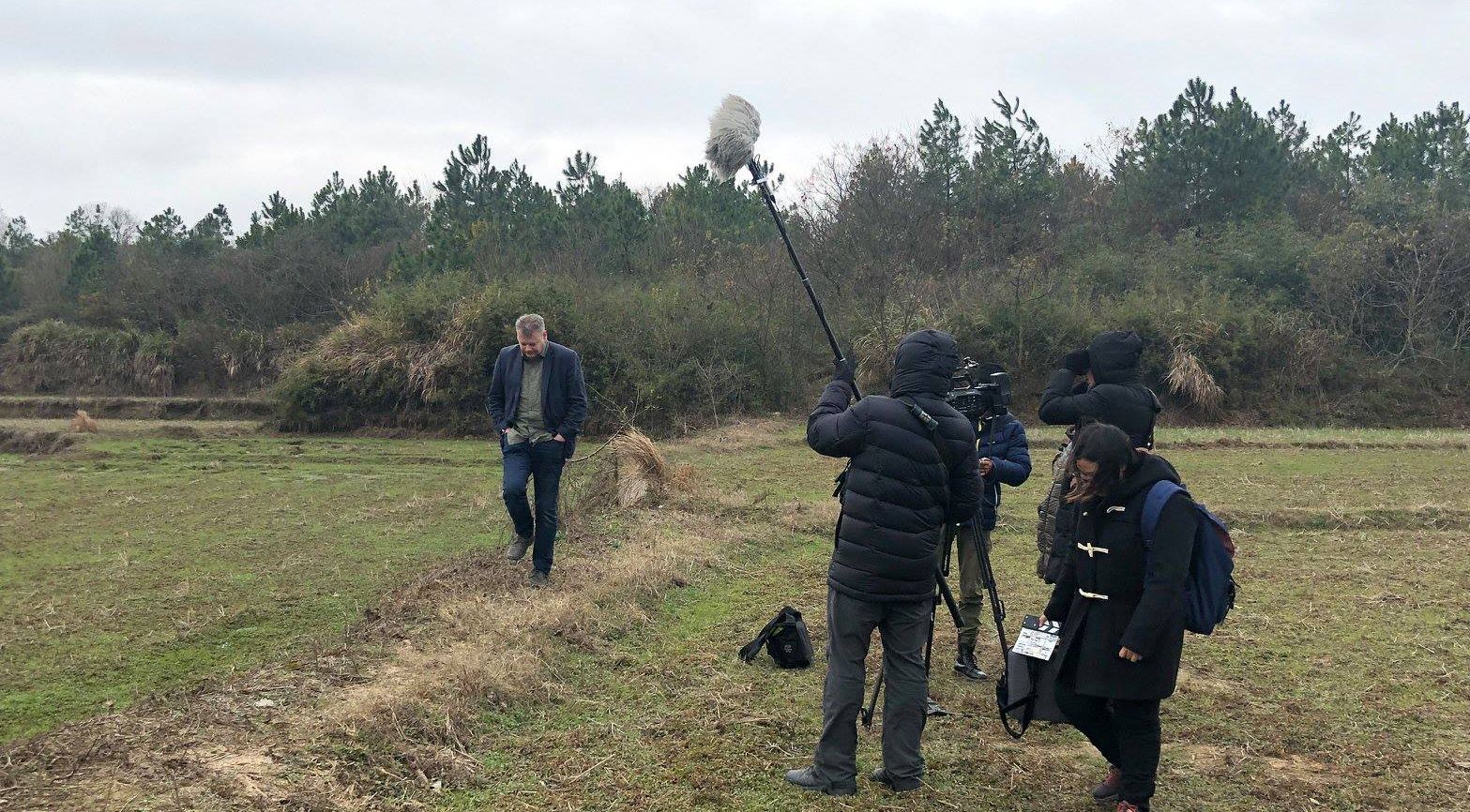
We head off to the rice paddies where the Marquis’s mansion used to be, now only vaguely recognisable by the rammed earth walls that now form a low, wooded hill around the perimeter. It is cold and windy, and I am supposed to sound enthusiastic about standing in a field.
The last event of the shoot is scheduled at the tomb itself, a hole in the ground topped by a garish bright blue Dutch barn.
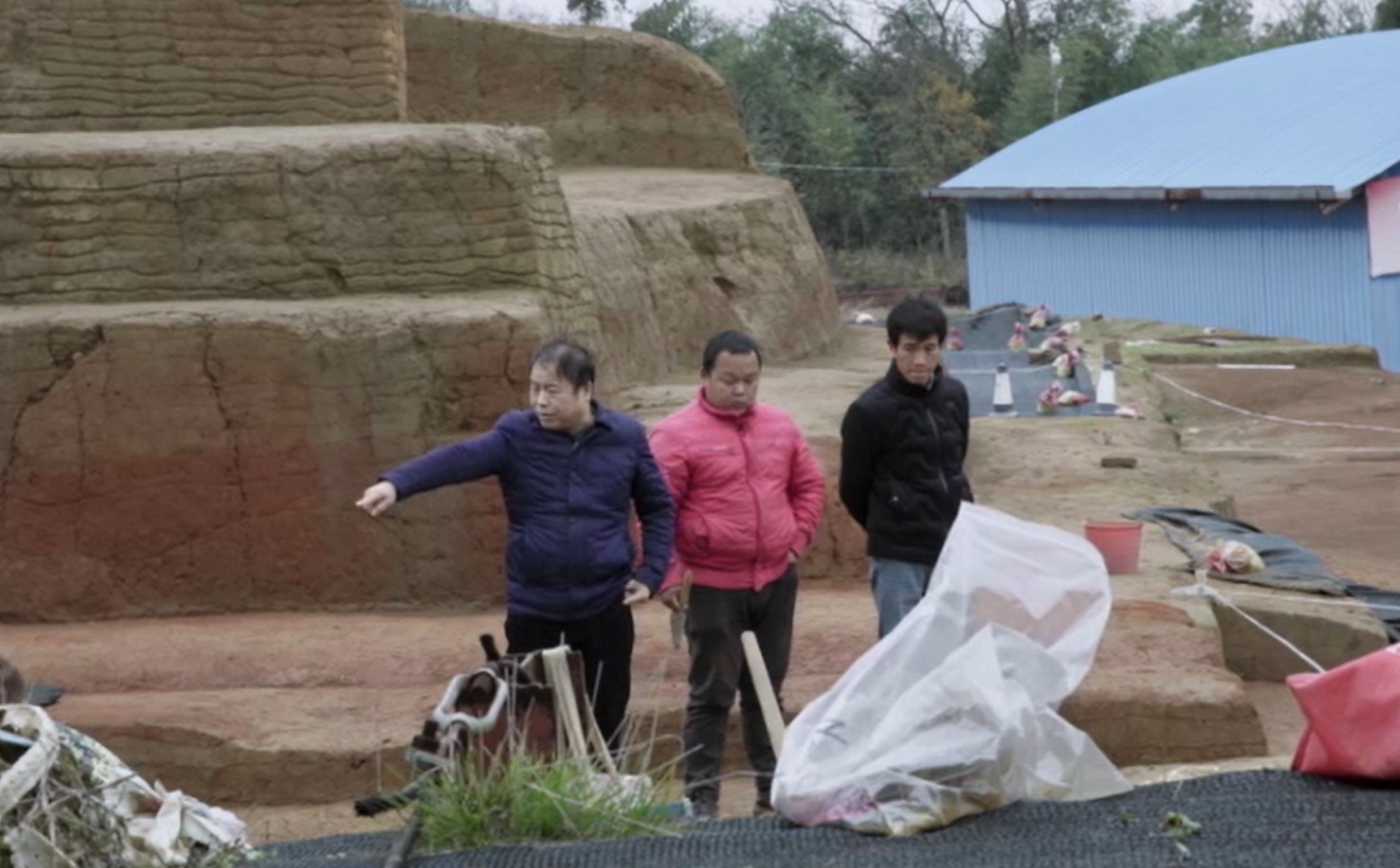
We can hear Yang Jun before we see him, because he is screaming at the technicians at the site of the tomb next to the Marquis’s. I don’t quite follow why he is so angry, but in the ten minutes before we arrive, he has idly ambled over to the new dig site and found them doing something that is apparently terrible. I don’t recognise a lot of the words he is yelling at them, except that something that should have been here is most demonstrably over there instead, and something that should be have been done one way is being done another way, and this has apparently ruined Christmas for someone. The scolding goes on for an embarrassingly long time, until the director herds the crew into a shed and tells them to stop watching. Clarissa the fixer begins to genuinely fret that Yang Jun will have lost his voice by the time we get to his interview.
But he trots down the hill towards us with a beaming smile.
“Did you get that on film?” he asks. “I thought it looked good.”
Er… no, says the director. We were giving you some privacy.
“All right,” he says. “I will go up there and shout at them again.” And before she can demur, he is running back up the hill, calling them a bunch of idiots and demanding to know if they’ve ever worked on an archaeological site before, because it doesn’t look like from where he’s standing, etc… Despite being friendly off-camera, I think he wants to cultivate an image as a tough taskmaster.
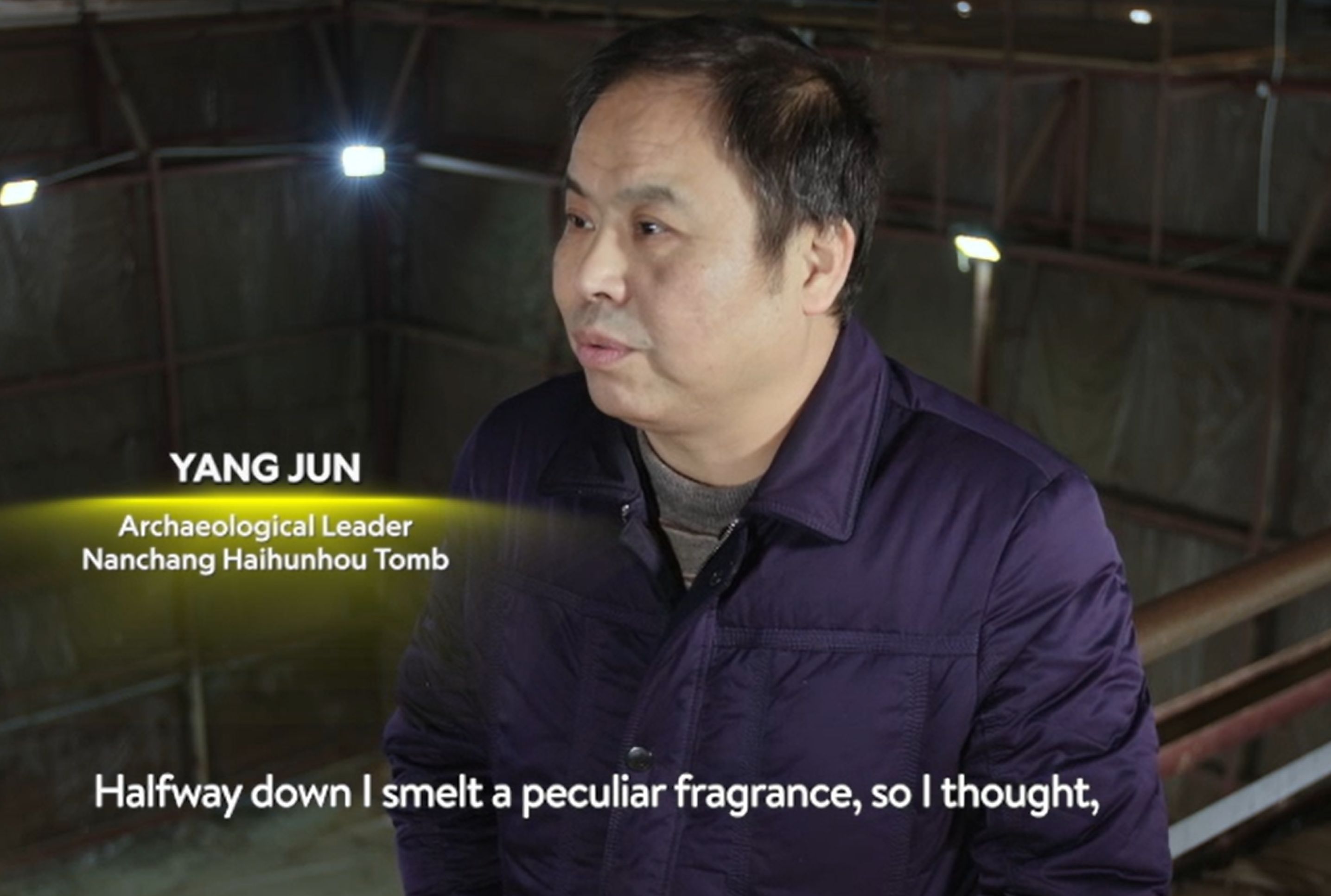
Only slightly hoarse, he assembles at the edge of the tomb to talk to me about the events of its discovery, which will inter-cut nicely with the same story heard from Qiu Zongren. You already know the story of the Marquis, so I won’t bore you with it again, except to quote Yang Jun’s explanation of why the tomb was so richly appointed. “Remember that this man started off as the satrap of a whole district in Shandong. Then he was the emperor. Then he was a marquis. And his father was the favourite son of the longest-ruling emperor of the Han dynasty, and one of the more storied beauties in Chinese history. So, yes, we have all those aspects of his life to consider in the grave.”
He then leads me into the grave itself, ten metres down on a perilous rammed-earth staircase, covered with slippery polythene. He points out the depression in the ground that marks the point where the grave-robbers had reached, and tells me of how he was lowered in the forbidding hole on a winch, down in the dark, to see what they had found.
“We were lucky,” he says. “Because people have tried to rob this tomb before. But about three hundred years after the death of the Marquis [i.e. around 300 AD] there was a massive earthquake in Jiangxi, and this whole area dropped down below the water table. It flattened the coffin and damaged some of the site, but it also left most of the tomb waterlogged. That put off robbers, and it also preserved the lacquerwork.”
The director and the crew come down to film us at ground zero, but Yang Jun reveals that he is only happy with us being shot from above. If the camera actually goes into the tomb space, it will notice how ratty it all is, and Yang Jun has already had a second eppy of the day after tripping over a pile of dog turds by the ramp. So we all have to head back up to the balcony, by which time it has started raining, drumming on the tin roof until we can barely be heard.
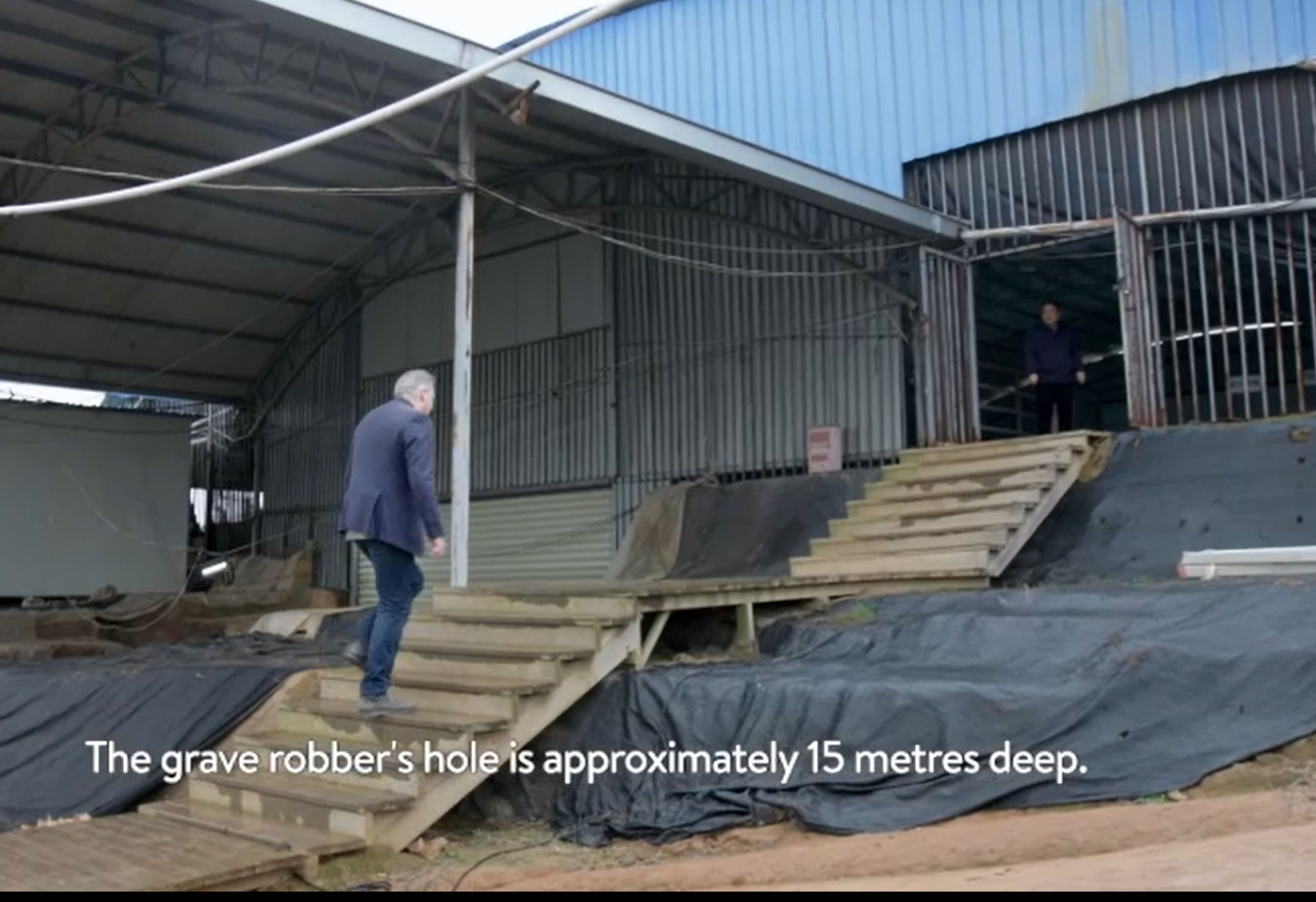
My last shot of the series is “meeting” Yang Jun, bounding up the wooden steps to shake his hand, and him leading me into the upper levels of the grave. As we move out of sight of the camera, I point into the gaping pit of the Marquis of Haihun’s tomb and say: “So, is this your house?”
He laughs, and the director calls cut.
Jonathan Clements is the author of A Brief History of China. These events featured in Route Awakening S05E04 (2019).
 The Official Schoolgirl Milky Crisis Blog