
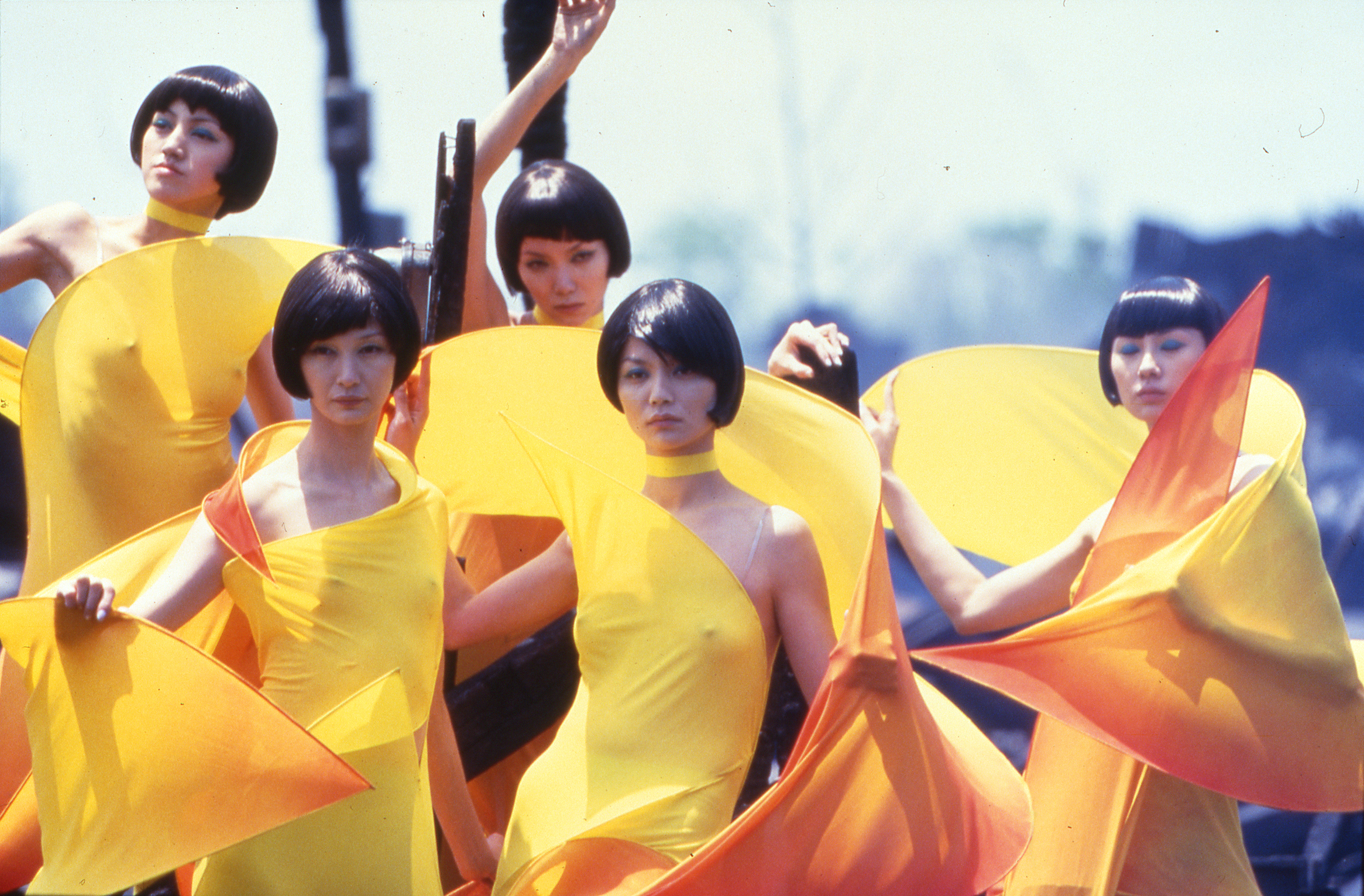
Nothing quite sums up the tone of Ango Sakaguchi’s 1946 short story as this surreal opening, in which idle, listless losers live in blank, carefree existences amid the destruction of their nation. Sporting the Vidal Sassoon haircut first popularised by Mary Quant in the 1960s, preening models cavort in the wreckage, while the traumatised victims of war stare blankly at them, still in monochrome, as if the past is watching the future.
We are in a world where the Second World War never stopped, where Japan somehow barrelled along, until the saccharine media performances of 1980s J-pop end up co-opted into national propaganda. We see cutaways to soldiers on the frontline; our starlet appropriates Siamese costume for her big number – this is a Japan where the Empire endures, and where the media pump out dross about how “Love’s Power Will Crush My Enemies.” The inanities of pop songs are here repurposed, as they once were in the 1930s and 1940s, as unsubtle allegories for military efforts.
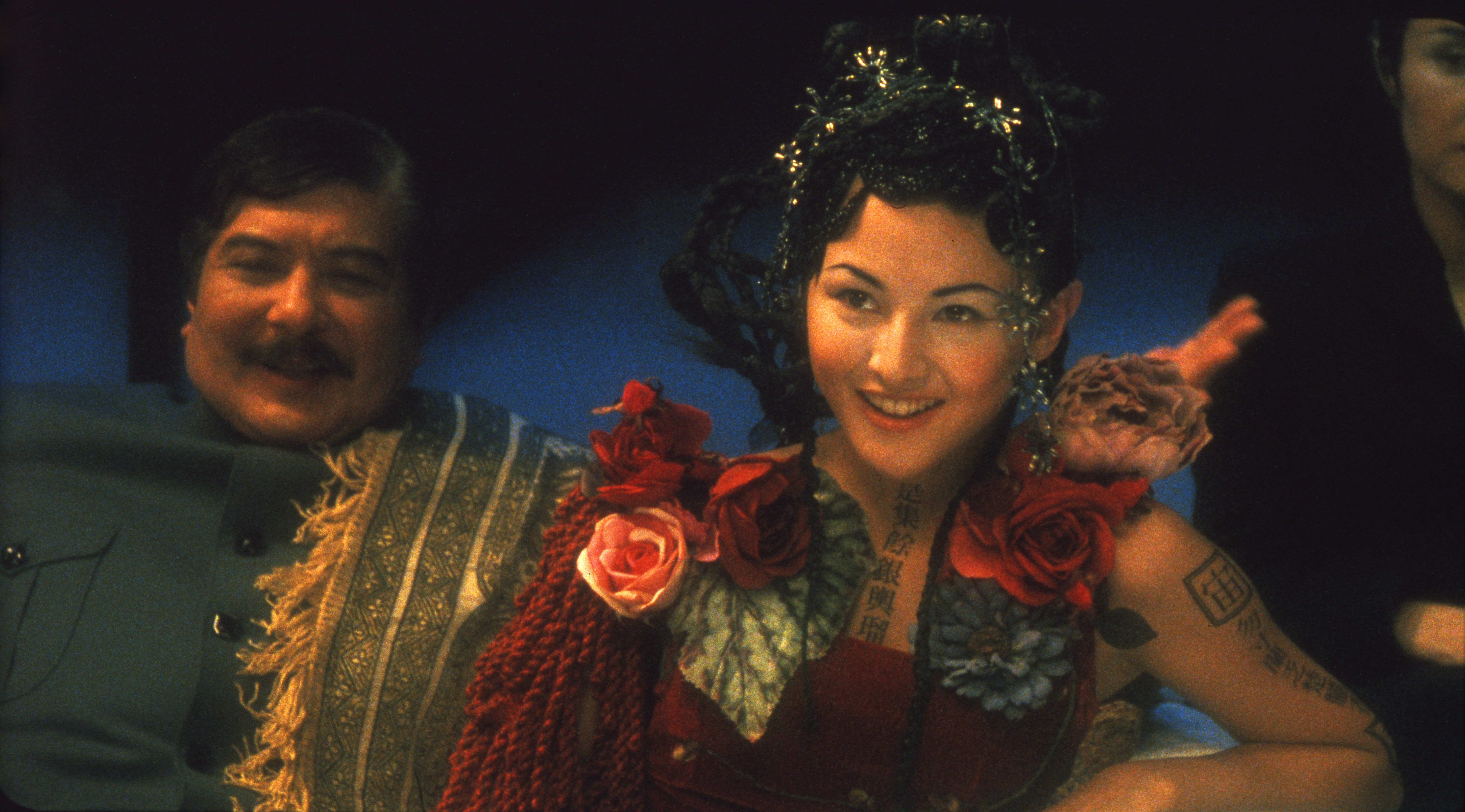
Initially staying out of the family business, the young Macoto Tezka chose to study film, one of many young wannabes working with 8mm and video, but inevitably one who could call upon his father’s monstrously powerful contacts in the business. He directed his first feature, Legend of the Stardust Brothers, when he was still a student, and went on to work in a dozen different media enterprises. His resumé includes not only directing, but novels, a computer game, theatrical events and even the opening ceremony of the 2001 East Asia Games.
His career has always had a strange, double-sided nature, in which Tezka often appears to be a fiercely original, low-budget independent film maker, and yet also serves on the board of the family business, Tezuka Productions, which remains a powerful presence in the Japanese media and a ready source of support. It gives much of his work a bizarre, metatextual shimmer, as if an indie director finds a magical address book that allows him to speed-dial anyone and everyone to call in favours. In particular, Tezka developed a habit of sneaking celebrity associates into his films as extras, such as a party scene in Hakuchi where the guests include the actor-photographer Masatoshi Nagase, the writer-director Kaizo Hayashi, and the writer-musician Sunplaza Nakano.
But there is also a degree of self-figuration here. Tezka’s own biography fixates on an 8mm film he made at college, which for him might well have been the one moment that he got to be himself in his early twenties, before he was dragged into a vortex of family legacy management and years of bill-paying jobs in advertising.
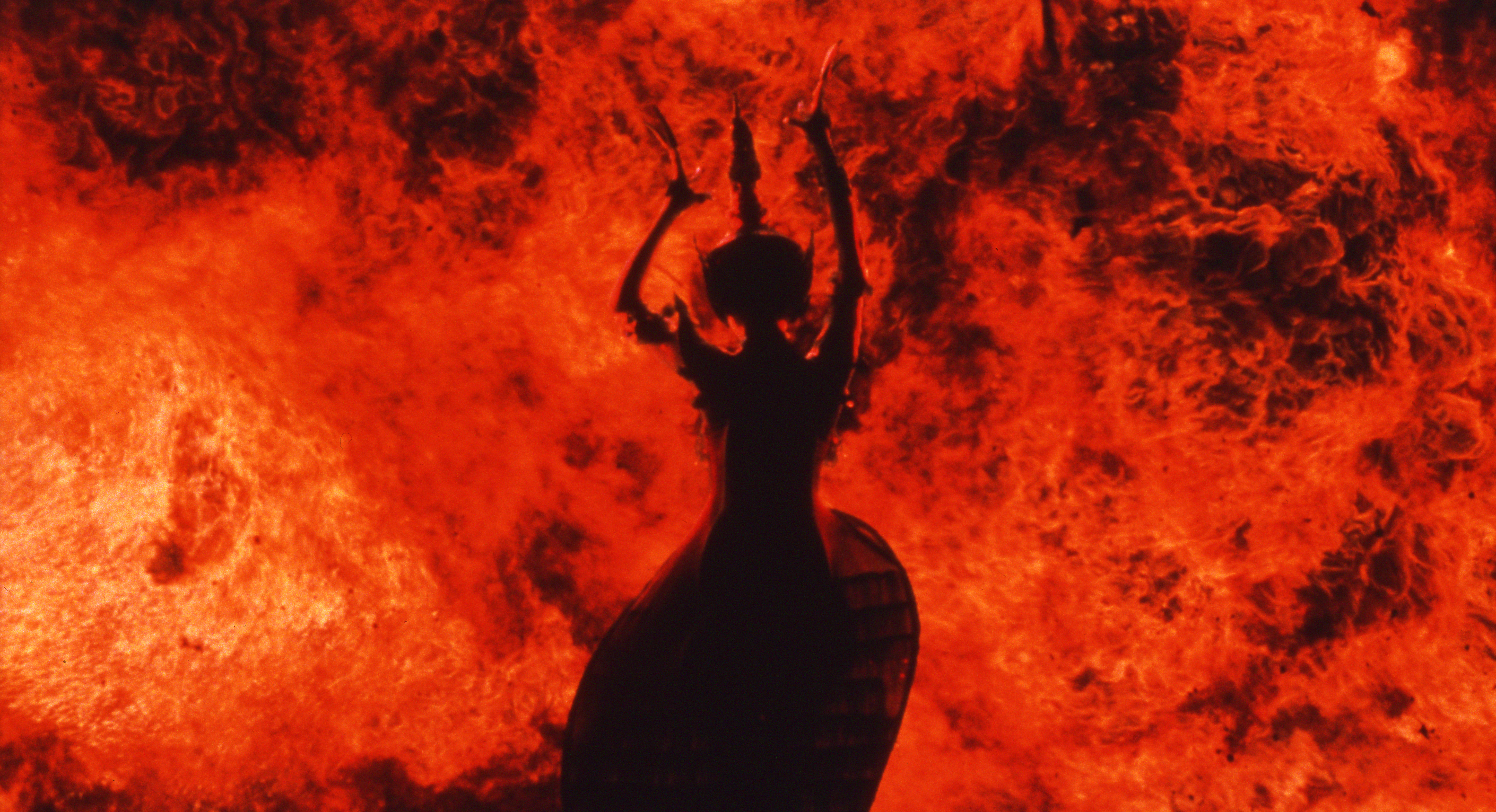
The casual viewer might be forgiven for thinking that Tezka was making two films at once, and considering Hakuchi’s long gestation period and running time, that may well have been what happened. A straightforward, narrative reading of Sakaguchi’s story is interwoven with a sci-fi media satire in the same vein as Tezka’s Legend of the Stardust Brothers, and the only real point of contact is that the protagonist in the original story also worked for a state media outlet. Tadanobu Asano, our supposed leading man, disappears for minutes at a time, while Tezka populates the film with towering models from his advertising contacts, comedy business from Japanese bit-players, and a lavish Busby Berkley-inspired that frames the star of the moment as a Thai goddess, surrounded by flying apsaras and dancers on giant prayer wheels.
We are asked a question common to many historical periods. It’s asked by Aaron Sorkin in Studio 60. It was asked by Japanese intellectuals during the war. And it is asked today, whenever you are hearing me say this. What use is art, at a time like this?
From my video essay on the Bu-ray of Macoto Tezuka’s Hakuchi: The Innocent, coming in January 2027 from Toy Robot.

