Mr Yuan is the baffled taxi driver I have commissioned to take me to the Shaolin Temple, who cannot believe his luck. Today he will make a whole £30 for driving me there and back from my hotel in Luoyang, although it’s a nail-biting journey for 90 minutes through awful smog, with only twenty feet of visibility. Giant coal trucks, overloaded to double their capacity, loom out of the gloom, along with buses, vans and tuk-tuks little better than tractors. All the vehicles have their hazard lights blinking, and it soon becomes clear that every time we overtake someone, we are on a winding mountain path with little between us and the plummet back into town. It doesn’t feel like we are heading up a mountain, although before long there are patches of snow on the ground.
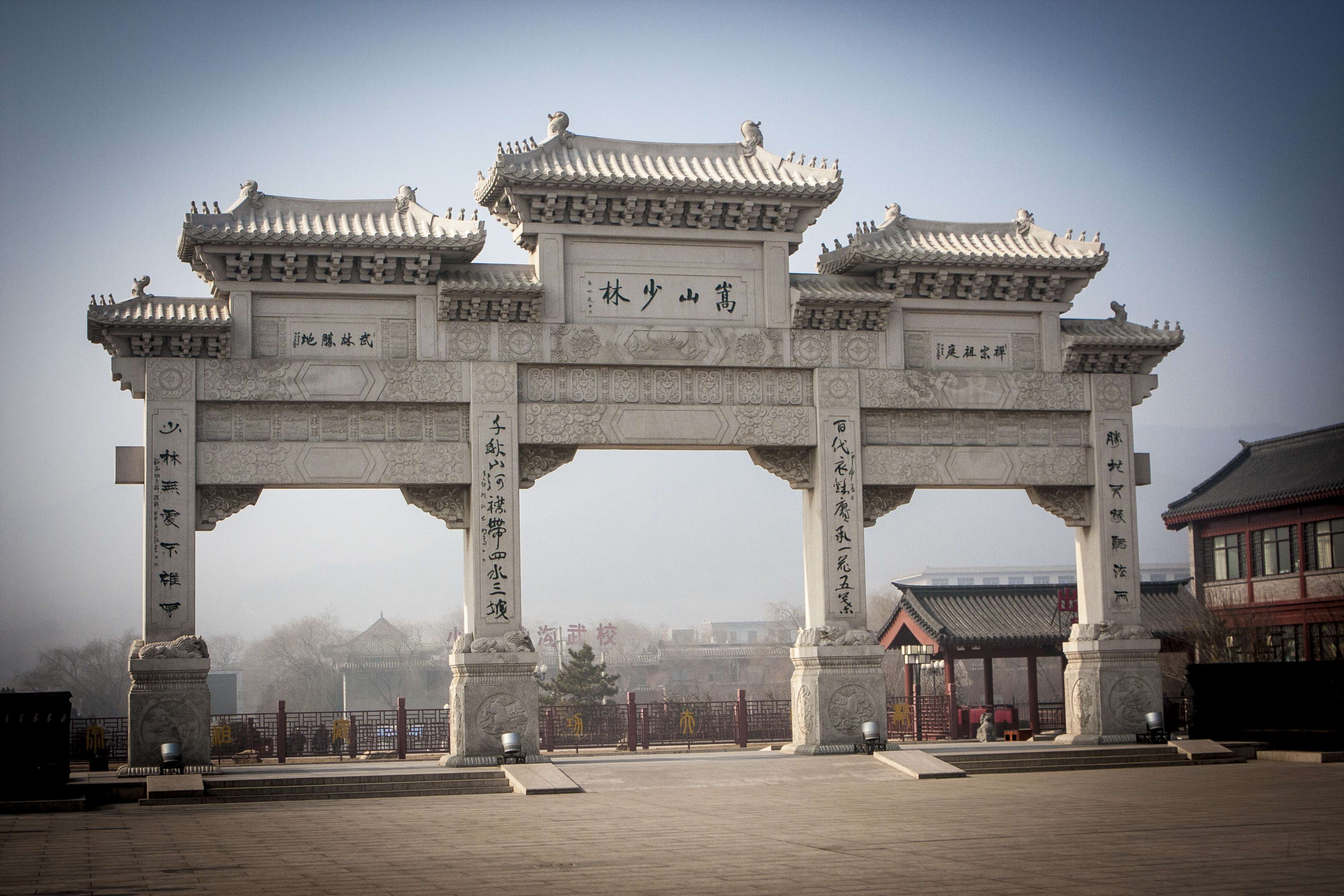
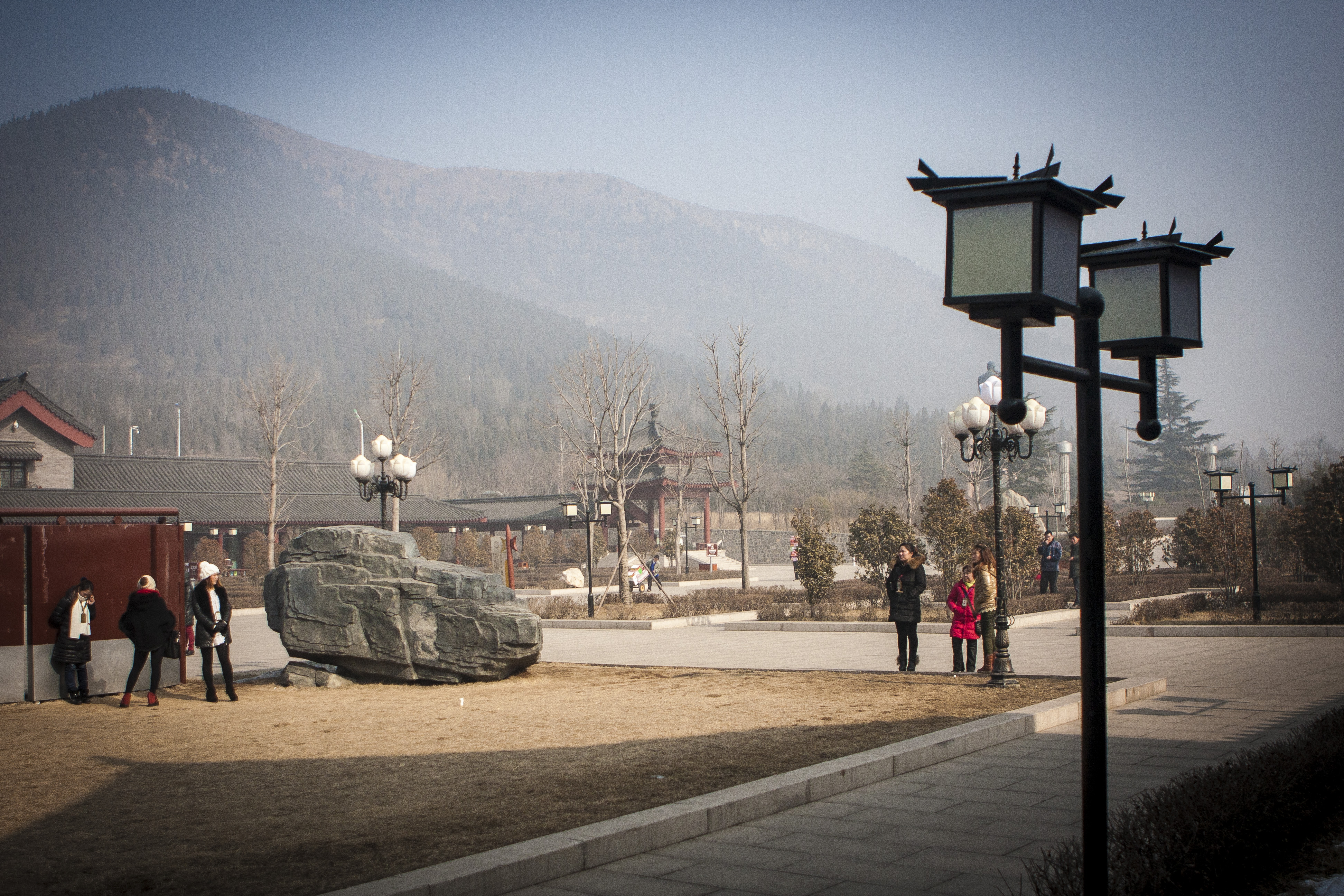
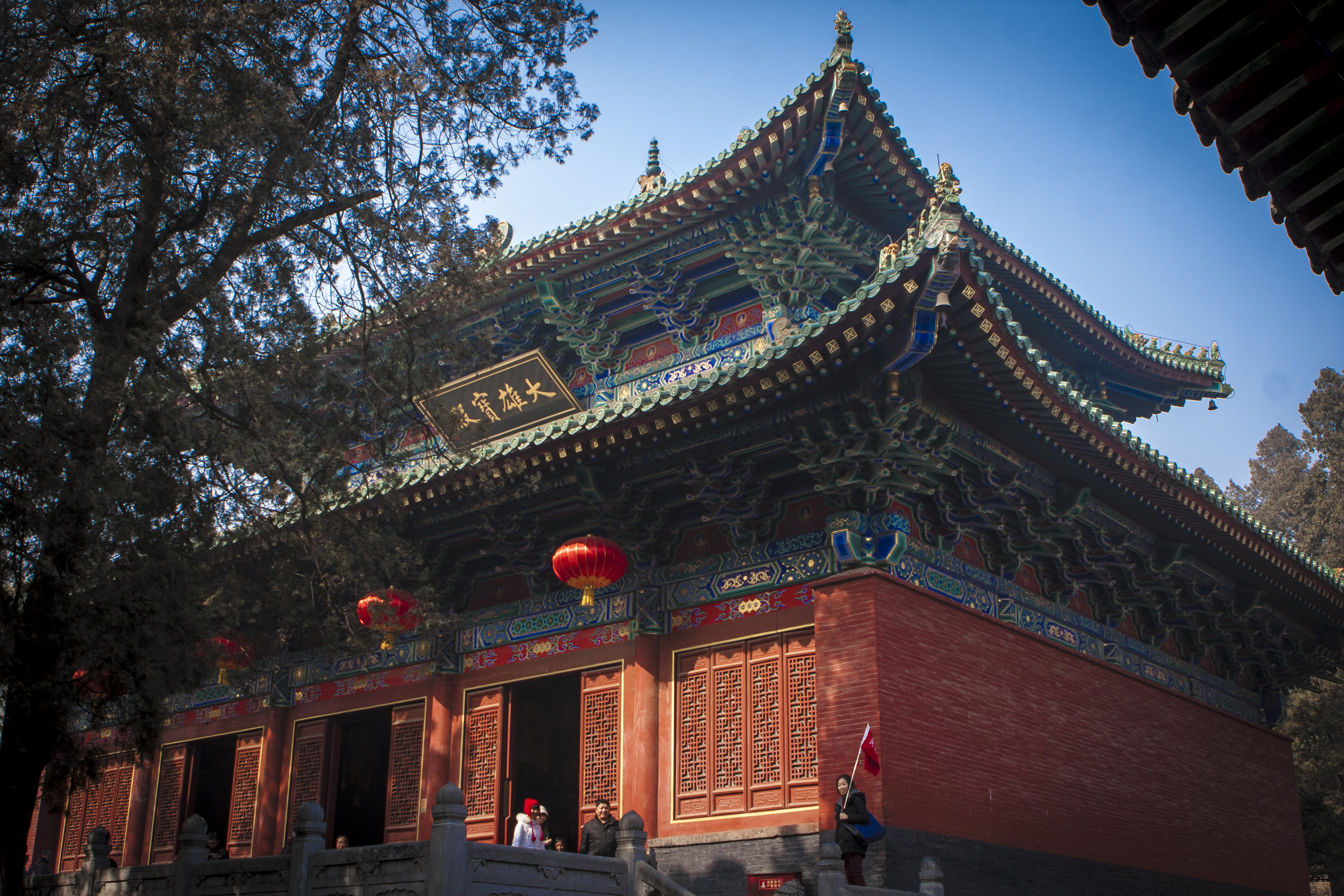
The Shaolin Temple itself is a little above the smog, living in a time warp where it is still the Ming dynasty and where the sky is still blue. Founded in the late 5th century AD by an Indian monk, it has been burned to the ground several times, but always risen from the ashes. Its location was chosen because it is circled by other mountains, which appear to the credulous eye to form a silhouette of a reclining Buddha. Thanks to the fame of Shaolin kung fu, and also of Zen Buddhism, which began here with the monk Bodhidharma, it has a lot of money to spend, and is a massive hilltop complex, attended by kung fu high schools, as well as halls of residence for the 200 remaining monks, and temples and pagodas in memory of great Shaolin achievements.
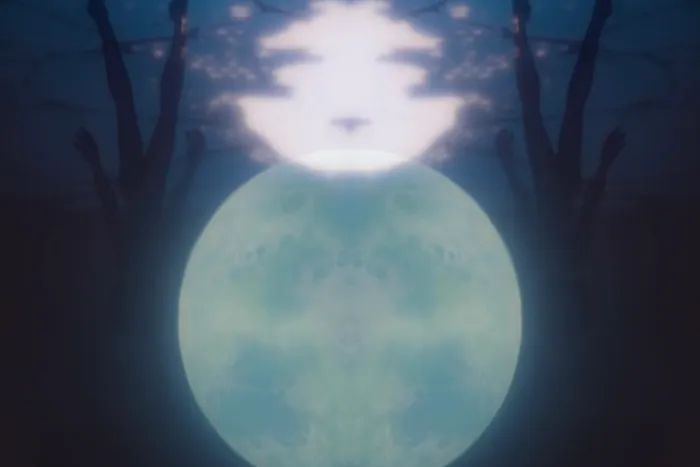
It is here that Bodhidharma meditated so long in a cave that his shadow literally burned into the wall, and here that his would-be pupil Huike stood stoically outside the cave, waiting to be invited to study.
Bodhidharma had no interest in teaching him, even when he found Huike standing up to his knees in snow.
“I will teach you when it snows red,” he scoffed, only for Huike to pull out a knife and slash his own arm*, spraying the snow with his blood. It is here that the Buddhist phrase, “Standing in snow, the heart is revealed” comes from, which I think ought to be the motto of the Finnish Shorinji Kempo Association. (*English-language documentation says slashes his own arm OFF, one of many places where Shaolin myths get a bit weird).
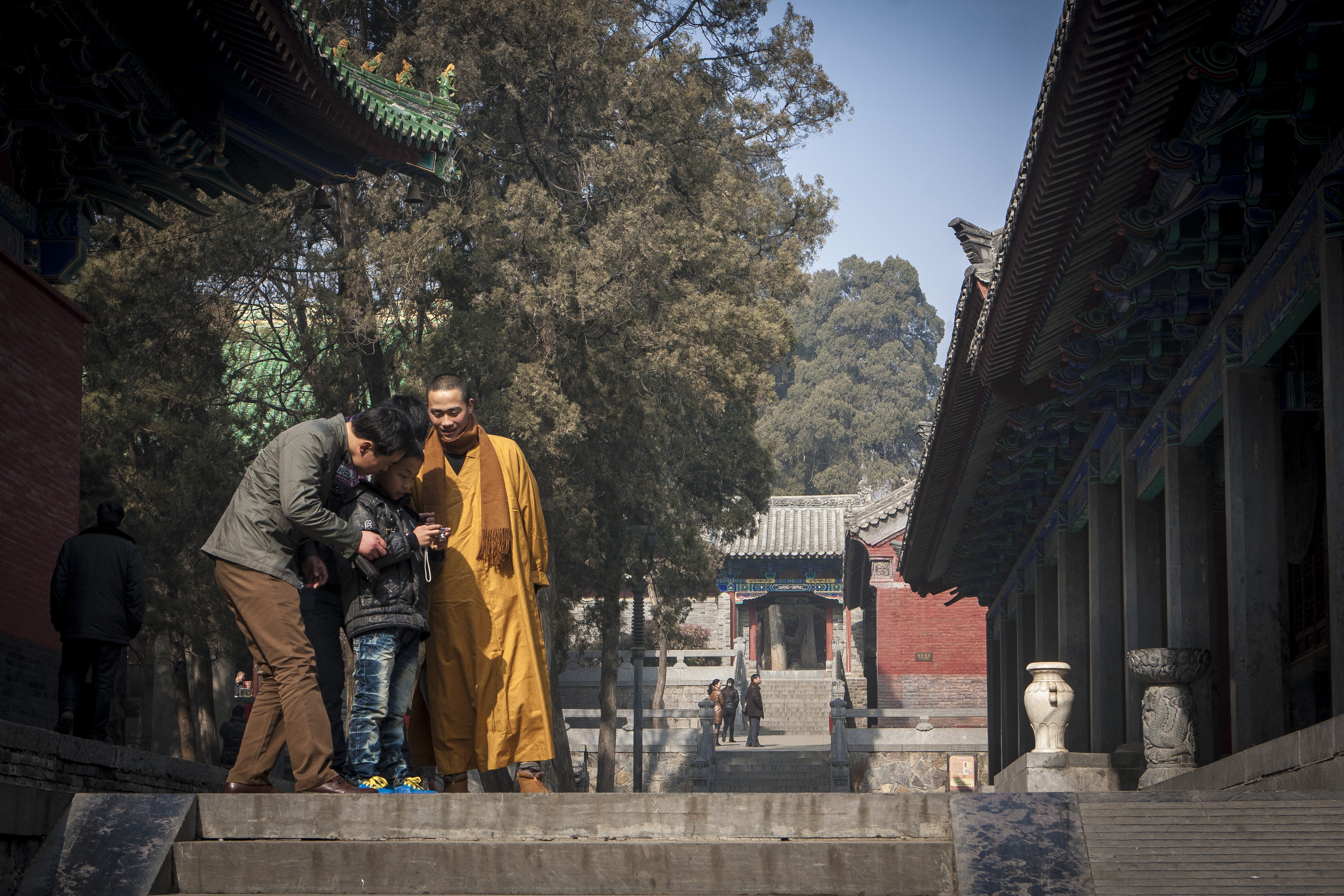
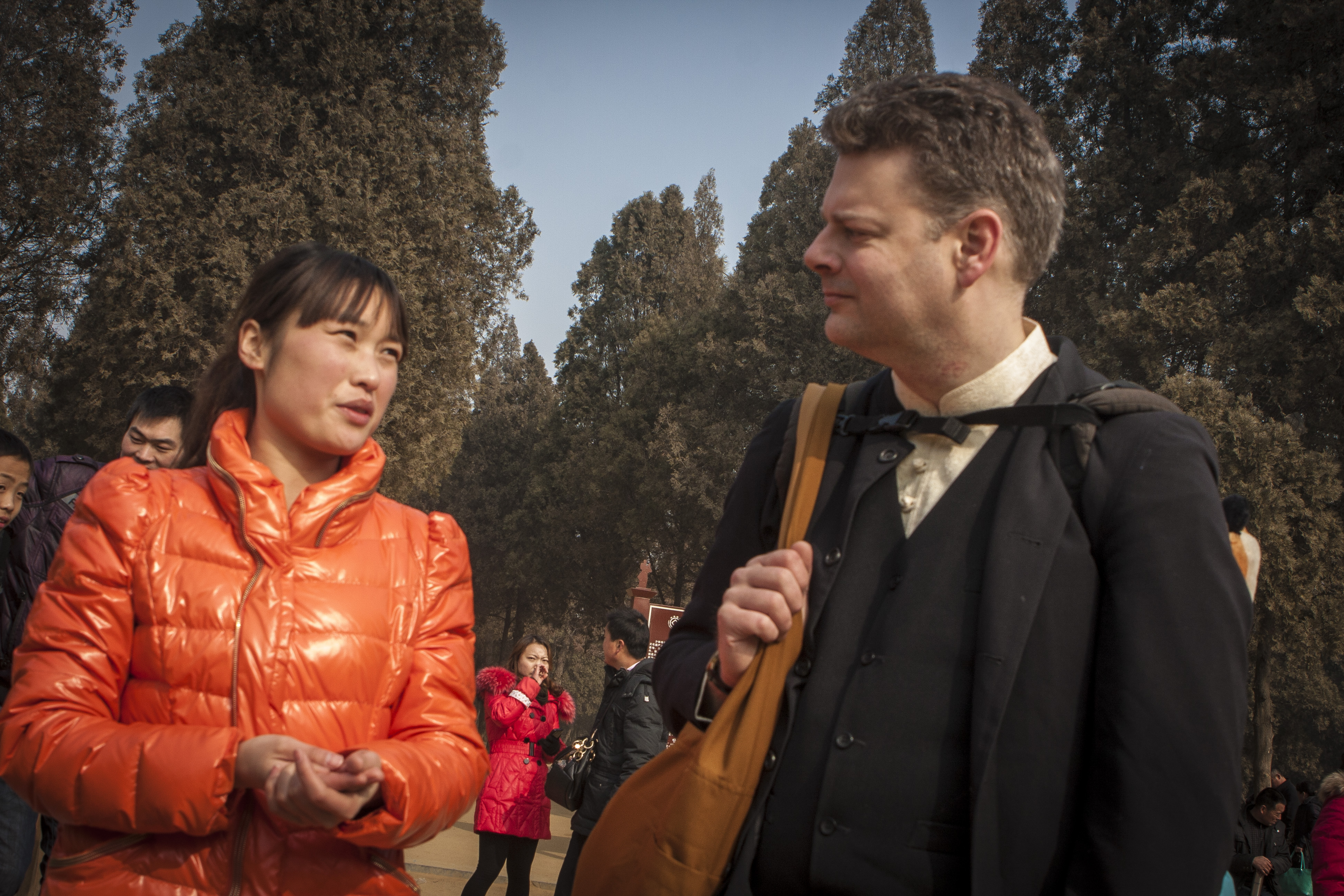
My guide is Lisa Lau (although her business card says Lili Liu), and in keeping with the colour theme of the Shaolin temple, her puffa jacket is a holy orange. Her services are a hefty £30, for which she confesses she usually waits around all week for a single commission. The rest of the time, she works in marketing for the temple.
She talks about of the early life of Tang Taizong, first husband of Empress Wu, who was rescued from captivity as a young man by thirteen Shaolin monks, leading to the long-term association of the monastery with the Tang dynasty’s ruling family. We see a pagoda dedicated to Empress Wu’s mum, and many steles carved with details of Tang history and/or famous donations to the monastery. One is carved with the words So Doshin.
“Oh yes,” says Lisa, “that one’s from Japan.”
We walk on the lucky carved lotuses to the central hall, and see the training ground where the monks have stamped 48 bowl-shaped depressions in the cobbles from constant training, and the “Bachelor Tree” where monks practicing the Two Fingers of Death have poked holes into its bark. I drop in at the Forest of Pagodas, where the remains of dead monks are enshrined in multi-stepped columns, and then head off for the show.
Yes, there’s a show. Monks punching holes in things and each other, slapping around sticks and swords, and bending their legs around their head. Although the monks were very good at what they did, a lot of what they did was conjuring and sleight of hand, and didn’t have a whole lot to do with Shaolin. Nor, to be honest, did five minutes of time-wasting comedy business when audience members were brought up on stage and asked to go through several punchy kicking movements for the entertainment of everyone else.
On the way back, the smog has lifted a little. We rumble slowly through squalid hamlets of shacks and barns, piles of coal and stacks of rags. People in the street are selling mud-caked leeks and oranges. A sleek limousine coming down the mountain ploughs into a three-wheeled pick-up truck and sprays sparks across the road.
“Ooh-hoo!” breathes Mr Yuan, as he swerves around the accident. It is all he says for the whole trip.
Jonathan Clements is the author of A Brief History of the Martial Arts, and the narrator of the commentary track on Arrow Films’ Martial Arts of Shaolin.Photographs by Kati Clements.
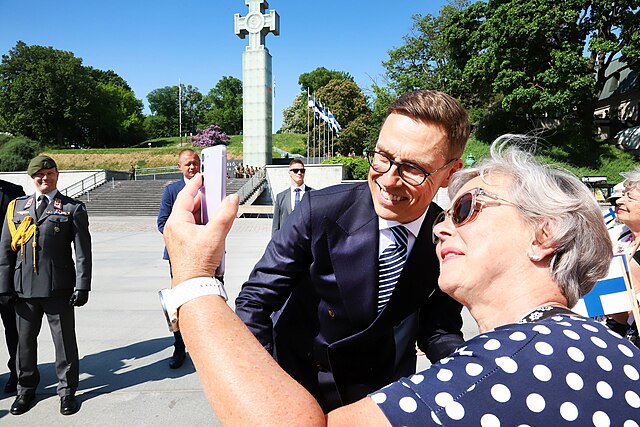
“Oh, how people scoffed at the idea,” Clements reflects. “Young Alexander Stubb, off to study at an American university on a golf scholarship. What possible use could that be? What possible situation could arise in his future political career where being a world-class golfer would suddenly … oh, yes, right.”
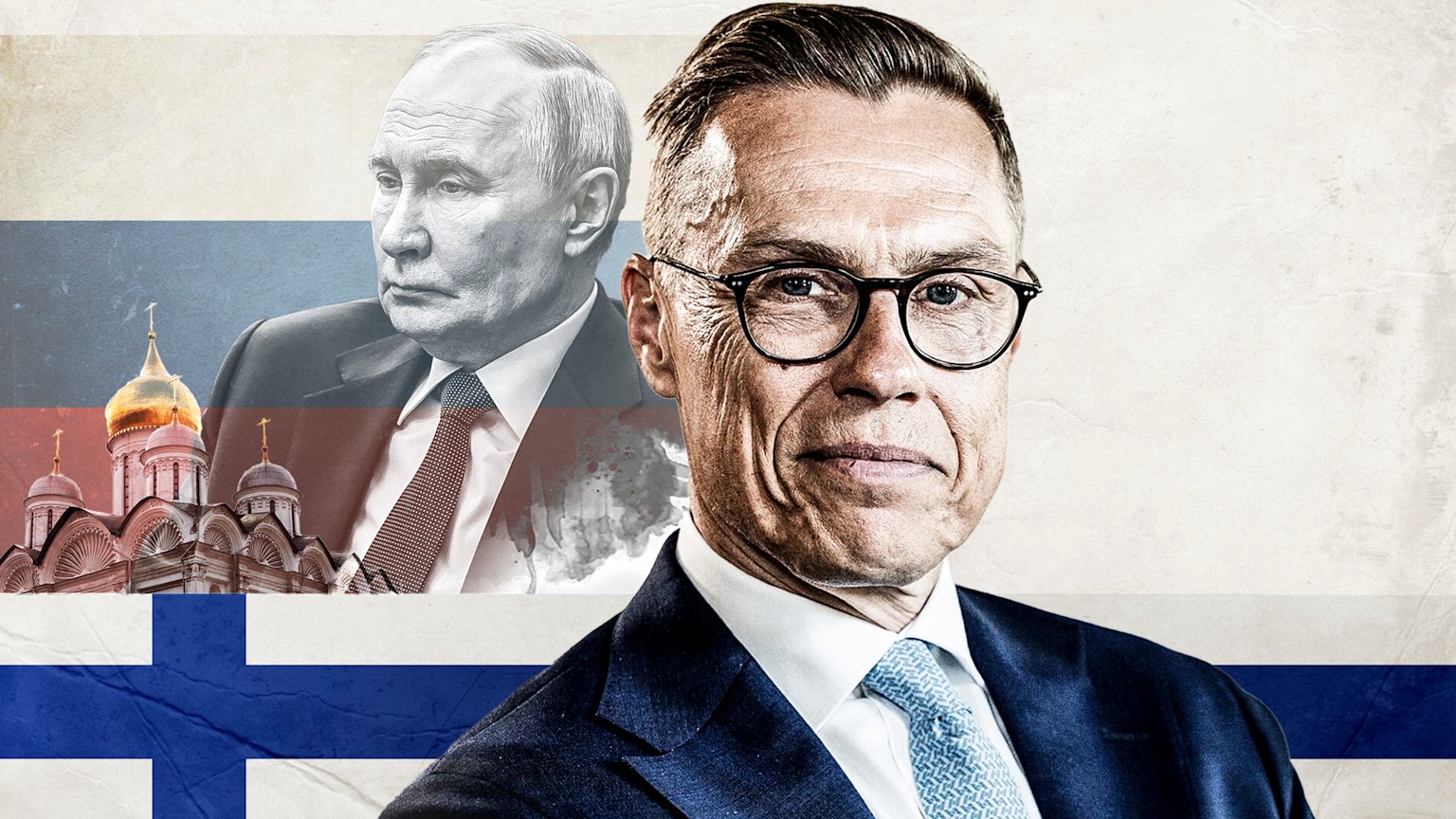
Over at the Sydney Morning Herald, Peter Hartcher interviews president Alexander Stubb and “Helsinki resident” (I am not a Helsinki resident) Jonathan Clements about life in Finland. The article is pay-walled, but here’s the full text of my interview, from which only a couple of quotes were used.
Finland is getting a lot of attention as the role model for smaller nations surviving against big, aggressive neighbours. In your view, what are the elements that account for its success to date?
People tend to forget the brinkmanship of the Cold War, when Kekkonen so carefully tiptoed around the big Soviet bear and didn’t do anything to provoke it. As with so many other elements of its international standing, I can’t help but wonder, however, to what extent Finland’s reputation is founded on a uniquely Finnish situation that is difficult to replicate elsewhere. We have fantastic education because of the homogeneity of the student population, and because of the peripheral benefits of a socialist society, like school meals, and good housing, all of which makes all those Chinese researchers coming to “learn from Finland” on a hiding to nothing, because they think they can change what they teach in the classroom and that’ll do it.
Similarly, Finland has a robust series of elements in place to deal with a potential invasion. One is a border region that has *already* been sacrificed to Russia, as if, say, Ukraine had given up its eastern marches in 1945 so they were no longer Ukrainian territory for Russia to covet. Demographically and geographically as well, we have a terrain that will make life difficult for any would-be invader. As demonstrated in the Winter War, there are all sorts of choke points and bottlenecks created by the lakes and forests, hills and swamps, to make life difficult for Putin.
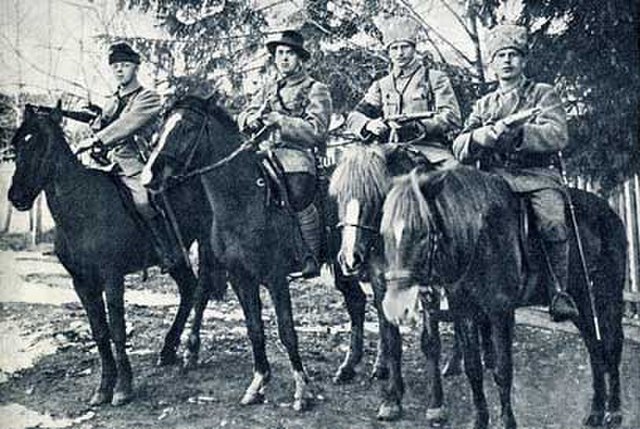
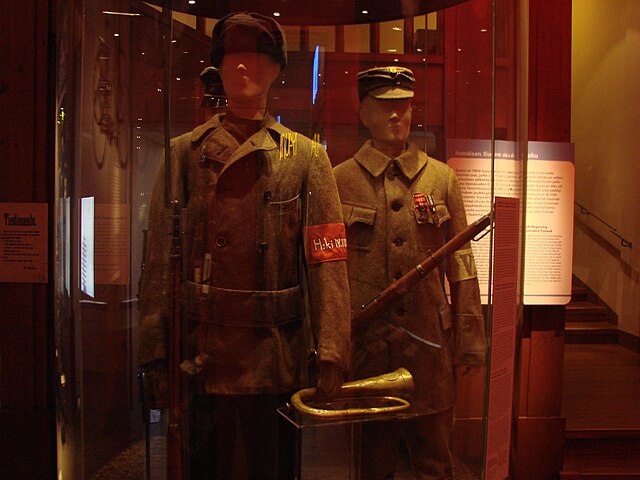
Another is a civil war that has *already* purged the country of Russians to function as a fifth column or excuse to bring in “aid” from over the border. Unlike Estonia or Ukraine, we don’t have a massive Russian-speaking ethnic minority here: the Finns killed half of them in 1917, and the rest were shooed out of the country and killed by Stalin. Another is an ongoing conscription programme that keeps the land chock full of territorial army soldiers, and a state of constant readiness designed to demonstrate to Russia that an invasion of Finland would make Afghanistan look like a tea party.
Is permanent mistrust of Russia one of the elements?
Yes. Although for a long time, the classes in the military colleges would try not to specify that the whole thing is aimed at curtailing a Russian advance. They would talk about playbook scenarios in which the aggressor might be anyone. I mean, it could be Sweden, right? Stubb’s comment recently that Finland is perpetually preparing for defence against aggression and that, newsflash, “it’s not Sweden” was a moment in which he finally spoke about the elephant in the room.
I think it’s also worth remembering that Finland and Russia have form going back before the 20th century. Finland was a loyal and enthusiastic member of the Tsar’s empire throughout most of the 19th century, until the Tsar started throwing his weight around and stripping away Finland’s freedoms of government and currency and infrastructure. Finland’s entire nationalist movement was reframed as a response to Russia, and Finland was the only part of imperial Russia not to go Red at the end of it all. “The only thing Putin understands is power,” says Alexander Stubb, but one could have said that of any Russian leader all the way back to Nicholas II.
What about sisu – is it a unique Finnish quality or do other peoples have it by other names (Ukraine, for instance, would seem to have something like it)?
Finland certainly recognises sisu in the Ukrainians. Every nation has got its bloody-minded nutters who just refuse to give up, but I think the Finns always had a reputation in the era of Swedish rule for being the forest folk with their trousers held up with string, who would volunteer for the insane missions. In WW2 of course, that became even more of a thing, and I think it has an individual, but also a national element. That huge Soviet army rolling across the border and the Finns just standing there and saying NOPE. There is a very Ukrainian feel to it.
Your book taught me about the viciousness of the Finnish civil war. It’s amazing that such a divided people was able to unite so successfully against the Soviets in the Winter War. What was their secret?
The best thing to unite a divided country is a big foreign aggressor showing up and giving them a bigger baddy to fight against. It worked for the Chinese against Japan (until it was over), and it worked for the Finns against the Soviet Union. As I point out in my book, you can still see vestiges of the civil war today, particularly at moments like veterans’ day or in particular family dynamics, but Mannerheim very famously said that it didn’t matter what side someone was on in the civil war. It mattered where they stood when the Soviets turned up. I think, however, that papers over something a little less gung-ho, which is that while there are still sympathisers with the civil war Reds in Finland, so many of them were purged.
The Whites killed a bunch of Reds. A bunch of other Reds fled to Russia, where Stalin would eventually kill them, or emigrated overseas, where they formed enclaves of expats as far afield as Michigan and Melbourne. That removed them from the national conversation at home and made integration easier for the ones who were left behind. Or to put it another way, if you were a serious Red, there was a far better chance you didn’t hang around in White Finland to have to take the trouble to integrate.
I had no trouble selling a book about Mannerheim; in fact, my biography of him was snapped up by the Finns so eagerly that the Finnish translation was released a week before the English original. But I wanted to follow it up straight away with an account of the John Grafton incident, which is a story from 1905 about “Red” Finns. Nobody wanted it. Even though Mannerheim is one of my publisher’s best-sellers, they weren’t interested in a story of Red Finland. The readership for it, they said, isn’t there. They’re dead. Or they’ve faded into the population in Australia or America, and don’t want to hear about *that* aspect of the Old Country. I keep trying, but I’ve got nowhere in fifteen years.
Are they similarly united today? Please correct me if I have the wrong impression, but it seems that they currently are fairly unified in the main tenets of their geopolitical outlook – they are resolved to oppose Russia, to support NATO and to endure Trump. Or is that just the superficial impression of a blow-in, non-Finnish-speaking naif?
Yes. And as Stubb put it, it wouldn’t have happened without Putin. Finland went nowhere near NATO for seventy years. It seemed like a stupid idea to antagonise Russia, and the Finns learned the hard way in 1939 that they might be left all on their own to fight a Russian aggressor with little more than “thoughts and prayers” from the rest of the world. After the invasion of Ukraine, the Finns figured they might as well go right ahead, and the sea-change in that attitude took a lot of people, me included, by surprise. I genuinely wondered if there was some sort of Brexitty bunch of *Russian* influencers trying to steer Finland into that decision in order to provoke Russia — a sort of self-inflicted false-flag attack.
But even previously anti-NATO Finns suddenly came around within a matter of months. It was the ideal time to join, they told me. The bases on the Russian side of the border had all been emptied out and sent south. Ukrainian sisu was thinning out the Russian forces on behalf of Finland, hundreds of miles away. The one thing that Ukraine had been lacking, they thought, was a button they could press to throw all the armies of Europe into the country in their immediate and open defence. Joining NATO would be a vital final brick in the wall to keep out Russia, and not even Putin would want to fight a conventional war on two fronts.
I was sad when they shut down the trains to St Petersburg. It was one of the great joys of living in Finland, to be whisked away to Russia in just a couple of hours. But the Russians were even sadder. Thousands of them were pouring onboard to escape Putin’s Russia before the last train; hundreds of them left their cars at Helsinki airport as they raced off elsewhere in Schengen. Someone still leaves flowers at the base of the statue of Alexander II in Helsinki.
Any observations about Alexander Stubb’s performance in general, and his supposed emergence as a Trump whisperer in particular?
Oh how people scoffed at the idea. Young Alexander Stubb, off to study at an American university on a GOLF scholarship. What possible use could that be? What possible situation could arise in his future political career where being a world class GOLFER would suddenly–? Oh, yes. Right. He speaks perfect English. He went to school in Florida and college in South Carolina, and surely that makes the Americans feel that he is “one of them”. He’s safely on the Finnish right, which helps when Americans get twitchy at the term “social democrat.” He is the inheritor of seventy years of Finnish political history which has involved keeping a straight face when stuck in a conference room with an angry bear. He’s charming, and he’s smart, but like all Finns, he hides his light under a bush, so I imagine that he doesn’t intimidate them.
And I can’t resist asking – do you think it’s the happiest country in the world?
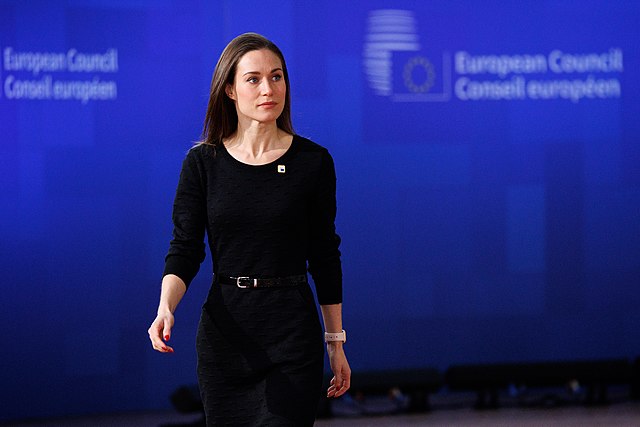
Surveys like that don’t necessarily ask the right questions. It’s not that the Finns are happy, it’s that they have built a nation where it is easier to be satisfied. I pay a lot of tax, but I know where it goes. I don’t have to worry about healthcare, or the transport system, or education. I am nurtured and cherished by a system built by women for women, where childcare is subsidised, home improvement is tax-deductible and Sanna Marin, a check-out girl raised by lesbians, can still get a Masters degree, become prime minister and lead the country through COVID. The Estonian right intended that line of commentary to be an insult, but the Finns are justly proud of it. We have opportunity. You have a better chance of living the American Dream in Finland than you do in America. You bet we are happy about it.
There have been a lot of government cuts lately, and the unions are agitating to prevent Finland becoming just like everywhere else, hence a lot of the recent strikes. I was tutting recently about the graffiti in my town. It’s an epidemic, I said. It’s suddenly come out of nowhere. KIds today, etc etc.
No, said my Finnish friend. There has always been graffiti here. It’s just in previous years it was gone the next day because the council had a budget to clear it up. Now it stays up for months and months, because of all the cuts.
When Finns complain, they sound so cute. Oh really, your train was four minutes late? Oh really, the neighbours were noisy last night nearby your heavily subsidised council apartment? I was talking to a Finnish surgeon about his rotation at a Helsinki Accident & Emergency department, and he said: “Well, Helsinki is a big city, so there are big city problems. People get into fights. There are drugs. There are accidents.”
What, I asked, was the average waiting time at the A&E.
“I’m sorry,” he said. “My English isn’t so good sometimes. What is this ‘waiting time’?”
I’m one of the interviewees over at the BBC website for Arwa Haider’s deep dive into the boom in anime music. As ever, only a couple of soundbites made it in, so here are my original answers in full.
Astro Boy‘s 1960s “Atom March” is often cited as the original anime anthem; would you say that’s true, or do you feel anime music’s roots lie elsewhere?
Yes, the Astro Boy theme was one of anime’s big successes, but the real hit came a couple of years later, when Jungle Emperor (a.k.a. Kimba the White Lion) was released. Slowly warming to the idea of spin-off merchandise, the producers put out anime’s first full-length 15-track LP, which sold 100,000 copies in short order. It made a lot of money for the composer, but created friction at the company when the musician’s union came looking for the lyricist, in order to hand him his royalty cheque. The lyrics to the Jungle Emperor theme had been dashed off by one of the animators, Eiichi Yamamoto, in his lunch-hour, leading to a fierce argument at the studio as to whether he had performed the task on “company time.” The studio eventually won, and Yamamoto forfeited his royalties.
By the 1970s, anime had settled into a groove whereby the ownership of the IP was often split between a manga company, a TV station, and a bunch of other interested parties in the production committee. Music companies got involved as a means of piggy-backing their records into what amounted to a weekly advert on primetime.
What qualities would you particularly associate with anime music, given its themes incorporate such a huge range of styles?
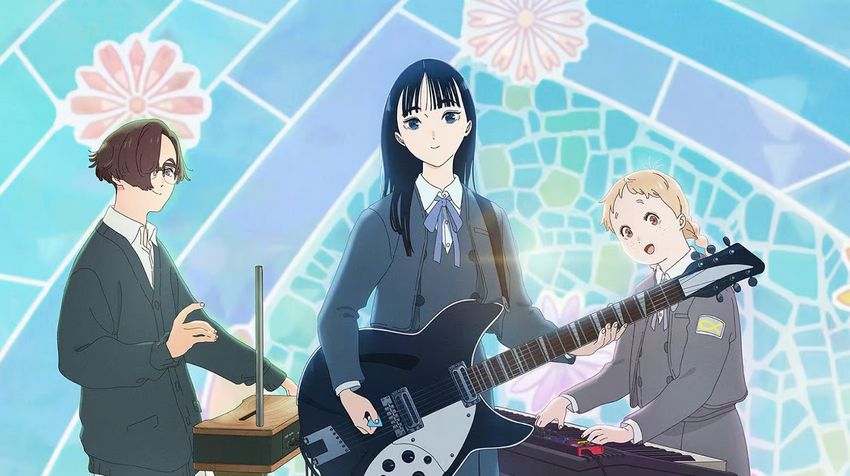
Some anime themes are entirely incongruous, wedged in by a music company on the production company desperate to get airplay for one of their new starlets or band signings. Some are ridiculously heavy-hitters, such as songs by the likes of Oasis or Franz Ferdinand, which can create legal nightmares outside Japan when the rights have to be renegotiated for overseas territories. But anime also has some absolutely superb composers, like Yoko Kanno, who produces fantastic orchestrations, with weird instruments and world-class soundtracks. Someone to watch out for is Kensuke Ushio, whose attention to detail and realism is truly astounding. On The Colours Within (2024) he had to come up with the sound of the in-film garage band, carefully crafting electronic pop inspired by the early days of Joy Division. He even went as far as recording ambient sound in Japanese church halls, in order to ensure that the onscreen rehearsal sessions had the right room tone.
I’m intrigued by Spotify’s stats reflecting that anime music global streams increased by 395% between 2021 and 2024 – what factors do you think have fuelled its modern surge in popularity?
I can only guess, but the strange attractor in all that is surely Covid. For a year, people were trapped in their houses, leaning on the internet. I had many parents coming to me and asking what streamer they should buy to keep their kids quiet watching anime. You’re looking at a massive spike in the availability of anime to new fans, and the time they had on hand to watch it. And in the four years since, a bunch of young fans have become consumerist teens with a love of anime.
Companies are also keener to monetise music, as well, because sometimes the music is merely the advert for the live event, which is an experience that can be sold, but more importantly, can’t be pirated.
International versions of seem to be an increasing range of international artist anime collabs (eg, this track by UK rapper Che Lingo for a Crunchyroll season trailer); do you feel the overall sound of anime is changing, or has this music constantly been in a state of flux?
Anime music has always striven to be globally appealing, and it has dragged in non-Japanese performers and composers for decades. In the last decade the rise of streaming has been likened by Japanese producers to the coming of the “Black Ships” of the US Navy in the 19th century. Netflix, Amazon, HBO… these companies are arriving with massive budgets and a desire for a global footprint, although that’s not always worked to the Japanese music industry’s advantage. When Netflix bought Evangelion, for example, they stripped out the multiple different versions of “Fly Me to the Moon” from the closing credits, because most people on Netflix skip the credits anyway, and the international rights would be so much wasted money. There was a sudden flurry of anime musicals in order to find somewhere for the music companies to put their tracks, if they couldn’t get any attention as the credits rolled.
But such companies also have big budgets available to bring in big names, and post Covid, everybody in the arts is more readily hired remotely. Meanwhile, the Japanese are more than happy to work with overseas artists if they like their work. Ludwig Göransson and Rasmus Faber, for example, have a rack of anime credits to their names.
Finally, do you have a favourite anime theme, or are there just too many to choose from?
My childhood joy was the theme from Science Ninja Team Gatchaman, which I first heard only in an instrumental version on what was known abroad as Battle of the Planets. When I went to Japan, I heard the lyrics for the first time: “That shadow dancing in the sky / the white wings of Gatchaman,” and the haunting refrain: “Earth is alone, Earth is alone.”
I think it’s hard for today’s youth to understand that there was a time before the connectedness of all things, when simply hearing Japanese music would require a long customer journey. I have several albums by Dragon Ash on my car stereo to this day, but I would never have heard of them in the 1990s if they hadn’t provided the soundtrack to the anime Virus Buster Serge. Today, you can find out about them just by asking your phone or your laptop.
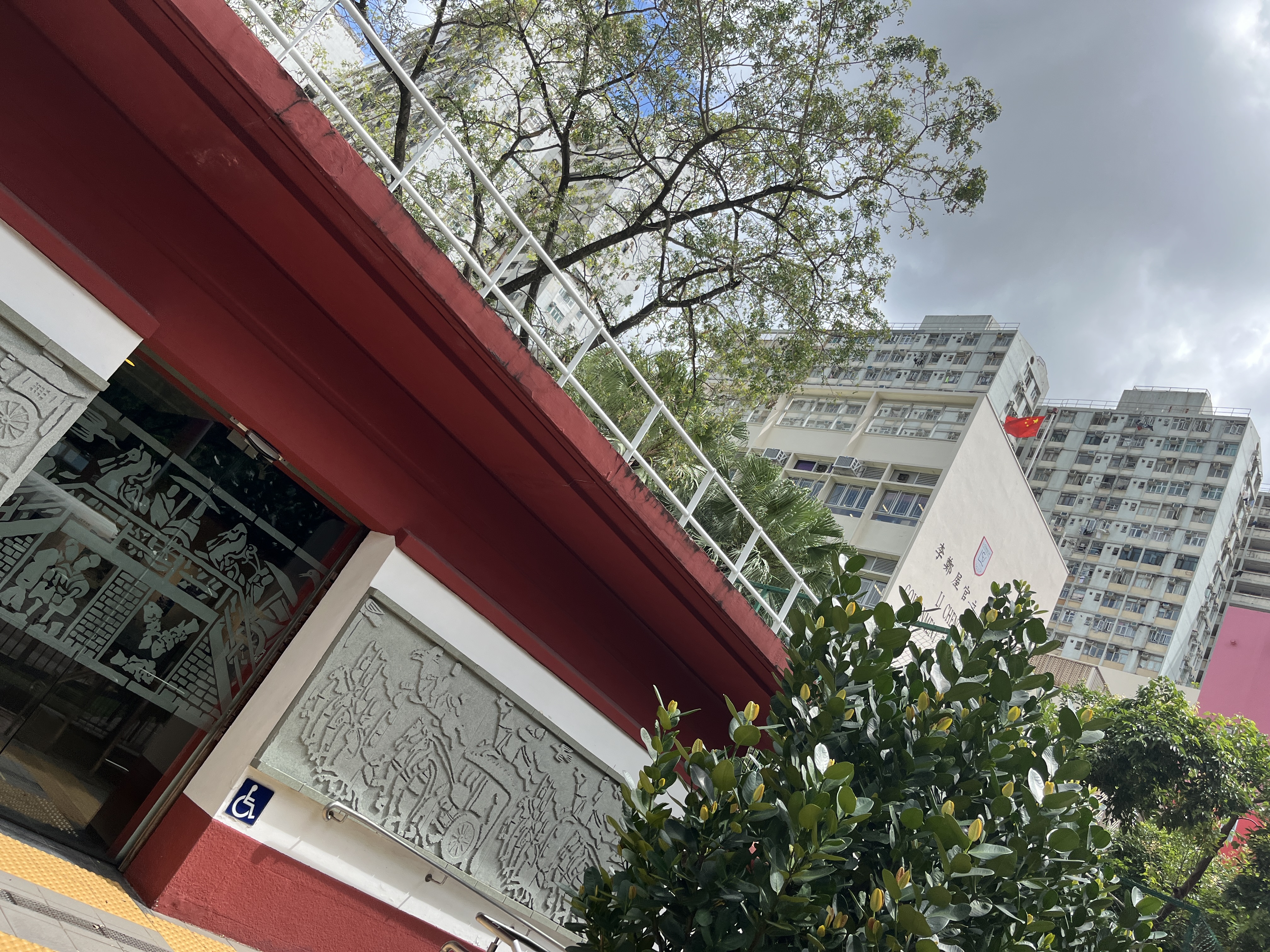
In the 1950s, a fire ripped through the illegal Hakka communities clustered in the hills near Cheung Sha Wan (Long Sands Bay) north of Kowloon. Scrambling to house the displaced locals, the Hong Kong government authorized a rapid resettlement scheme to create massive housing estates in the area. These were austerely functional buildings – shared toilet facilities, and kitchen ranges on the balconies to keep the fires out of the interiors. The local children were schooled on the rooftop. These estates are largely gone now, but in the meantime, they have created their own contribution to Hong Kong history.
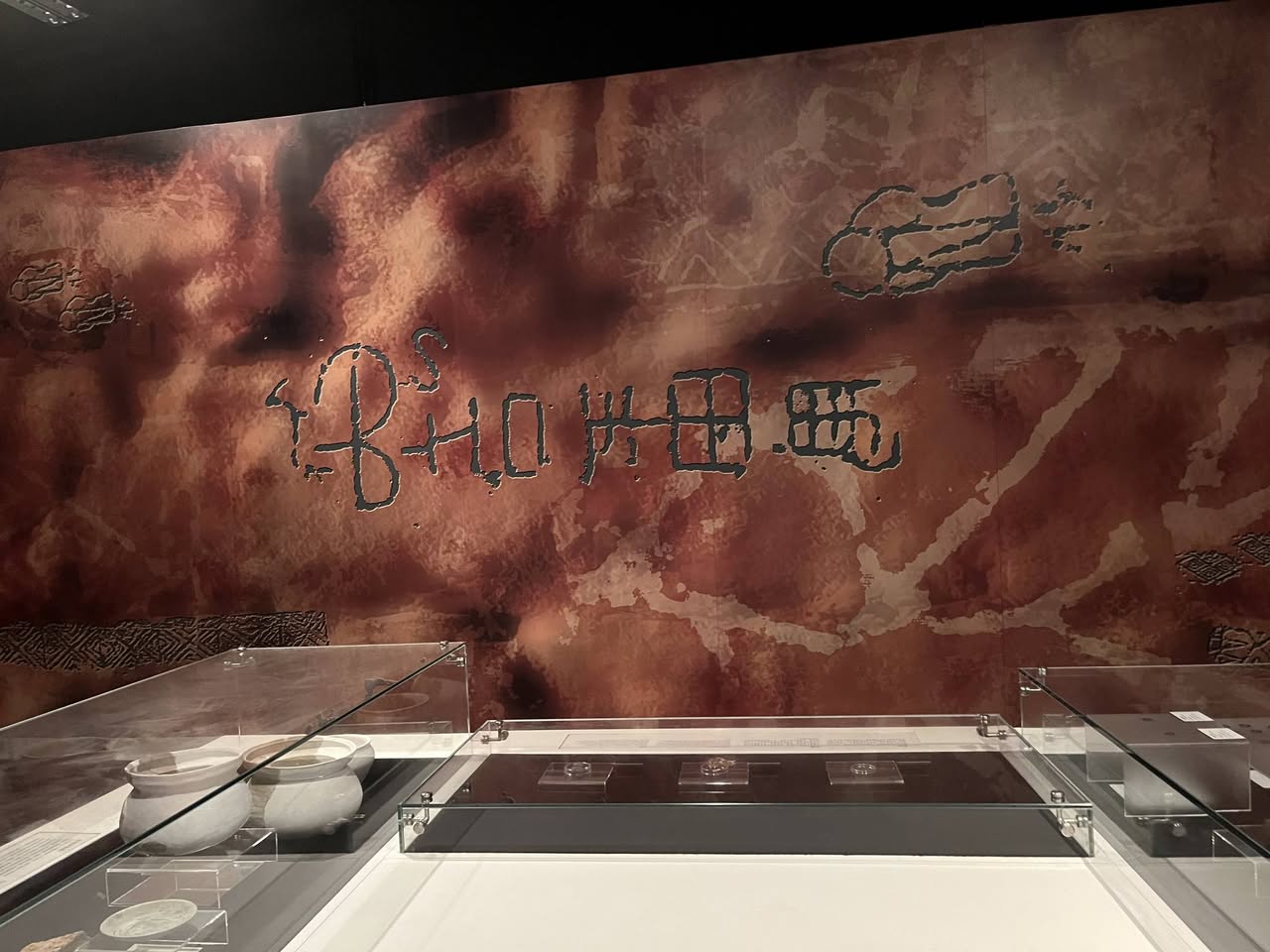
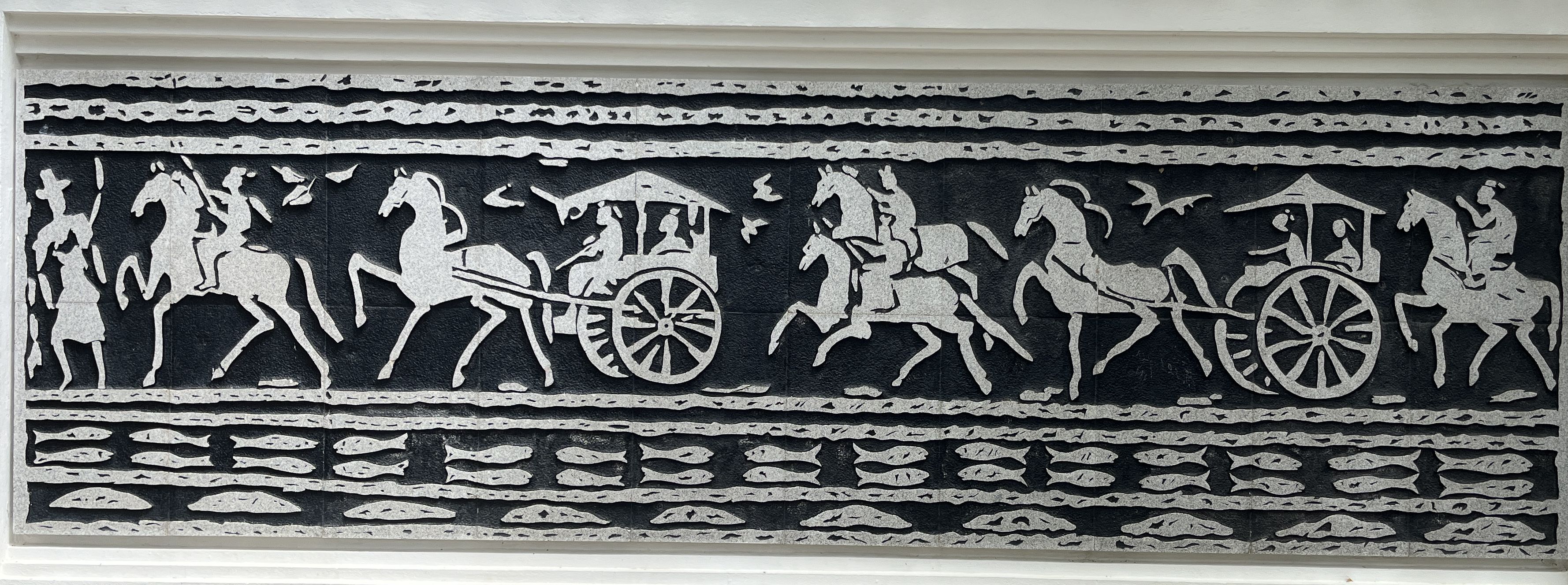
In one area, the “houses of Li and Zheng” (lei cheng uk), builders uncovered a brick tomb as they were laying the foundations. It turned out to be an unprecedented archaeological discovery – a tomb from the end of the Han dynasty, with its grave goods unplundered. The bricks on the wall bore the words GREAT FORTUNE TO PANYU, suggesting that they had been made either in what is now Guangzhou, or by craftsmen dispatched to the area to work on the project. The discovery locked Hong Kong into the orbit of China 1800 years before the present, even though there was perilously little inside the tomb.
Mainly, it contained pottery, and a tiny handful of bronze artefacts. There was no actual body in the tomb – possibly its intended occupant was never even interred there. “There were crowds all around,” comments Michael, one of the archaeologists in the on-site documentary. “Every time we brought something out of the dig, they would all cheer. I think they were having a lot more fun than we were.”
I am the sole visitor on a muggy Monday morning, to the modest little museum that now sits in the shadow of towering skyscrapers. The tomb, ironically, has outlived the emergency housing estate that led to its discovery, and is now an oddity in the middle of an all-new urban development. There is not even a Long Sands Bay any more – when the Lei Cheng Uk tomb was first built, it was on a hilltop by the sea; today, it is a mile inland, largely because of twentieth-century land reclamation projects. Long Sands Bay gives its name to the local metro station, but there is no sea in sight.
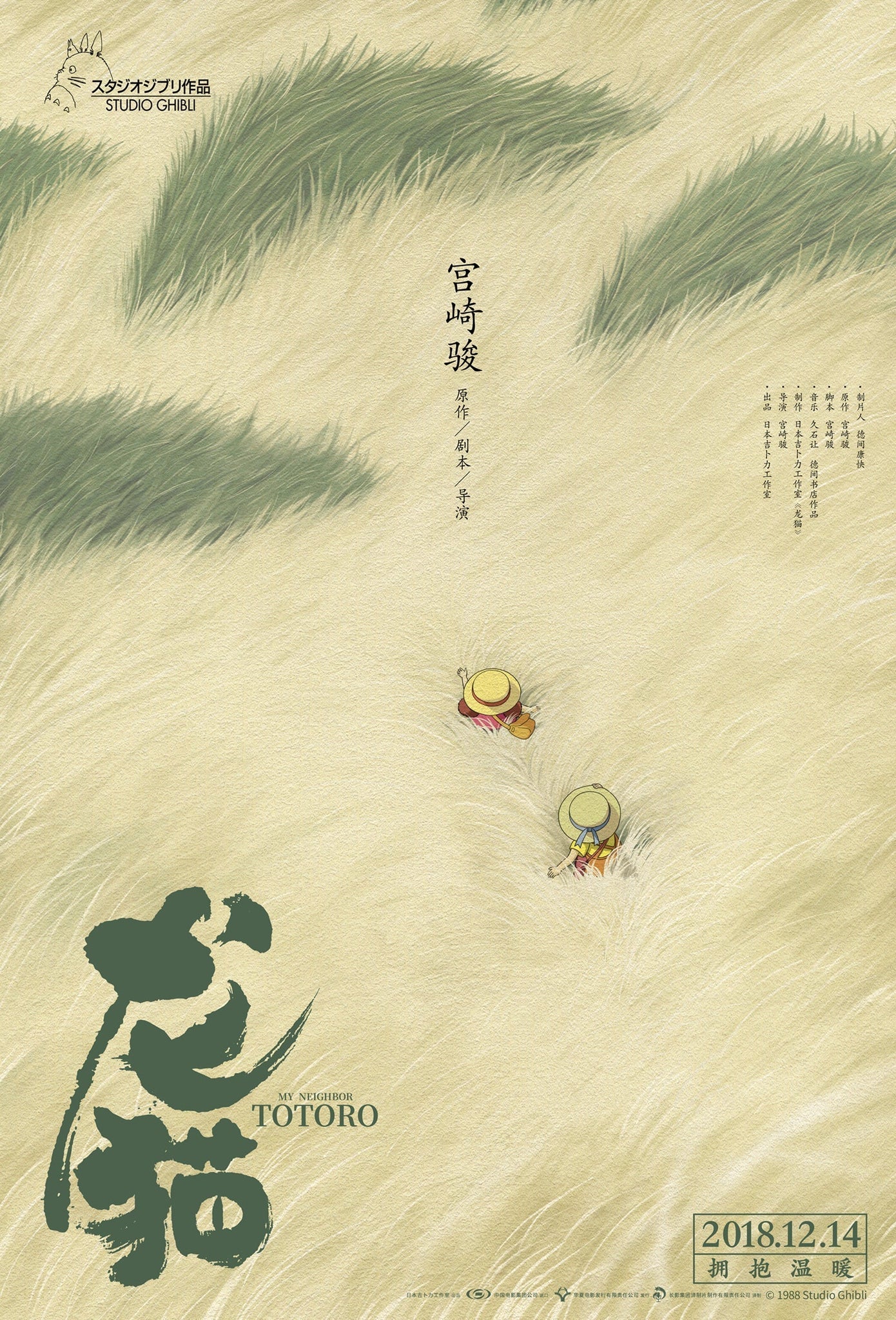
Today I am off up north, ready to give my keynote address at the University of Lancaster’s symposium on Transnational Perspectives on Anime this Friday.
“The history of anime in China is a roller-coaster ride of diplomatic boondoggles, under-the-radar industries, unsanctioned releases and censorship scandals. Jonathan Clements investigates the fluctuating fortunes of Japanese animation in China, not only in terms of its reception among audiences, but of its hidden impact in the production sector, the politics of its distribution and exhibition, and the effect of recent government backlashes and clampdowns as the People’s Republic seeks animation autarky.”


 The Official Schoolgirl Milky Crisis Blog