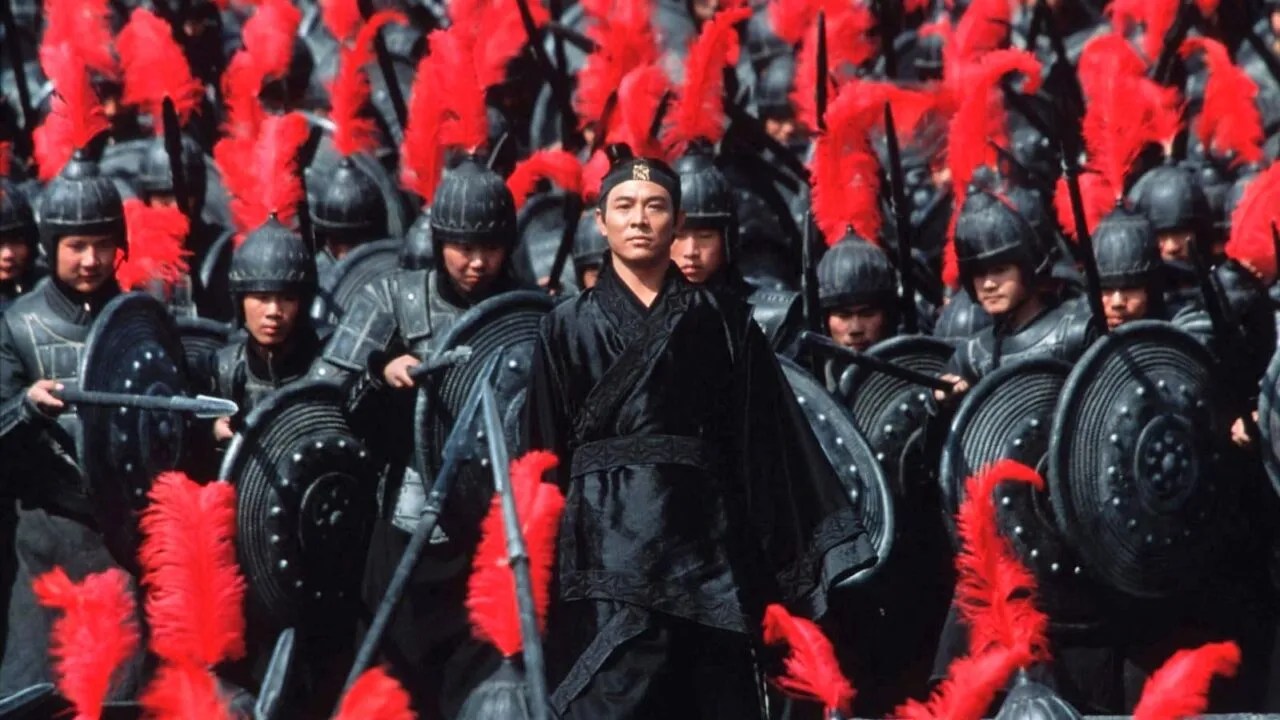
“Nobly deciding to film in the location where the original novel was set, Zhang Yimou was disappointed to discover that the locals had stopped growing sorghum altogether, instead preferring more lucrative cash crops like peanuts. In order to match the novel’s descriptions of tall, waving gaoliang grass, he would have to pay the locals to actually plant some, and so as the script was being written, farmers in Shandong were being paid to sow sorghum seeds on sixteen acres of waste ground.
“Shooting was delayed by almost a month, when Zhang and his crew returned to the area to find that the farmers had neglected to water the fields – sorghum can be a fast-growing crop, but it is thirsty, and the crew had to spend several weeks tending to it, while the production money bled on a daily basis.
“Mo Yan’s original novel ends in the present day of its composition – the 1980s – with the narrator visiting his family graves, and fuming at the sight of a new, modern form of sorghum. He angrily berates the locals for bringing in ugly, squat hybrid sorghum from Hainan far to the south.
“Hybrid sorghum is a high-yield crop, but tastes awful, causes constipation and, most importantly isn’t red. To Zhang Yimou’s great horror, his tame farmers had sown eight acres with the wrong kind of grass…”
From my video essay in the new Blu-ray of Zhang Yimou’s Red Sorghum, coming in July from Whole Grain Pictures (US).
Over at the Subject to Change podcast, I return to talk about my book on the First Emperor of China and the man who was sent to kill him: facts and fictions in Zhang Yimou’s movie Hero (2002), the evil mirror-universe version of Confucianism, an impossibly well-endowed “eunuch”, the construction of the Terracotta Army, the politics of archaeology, and how to spend a slave labour dividend.
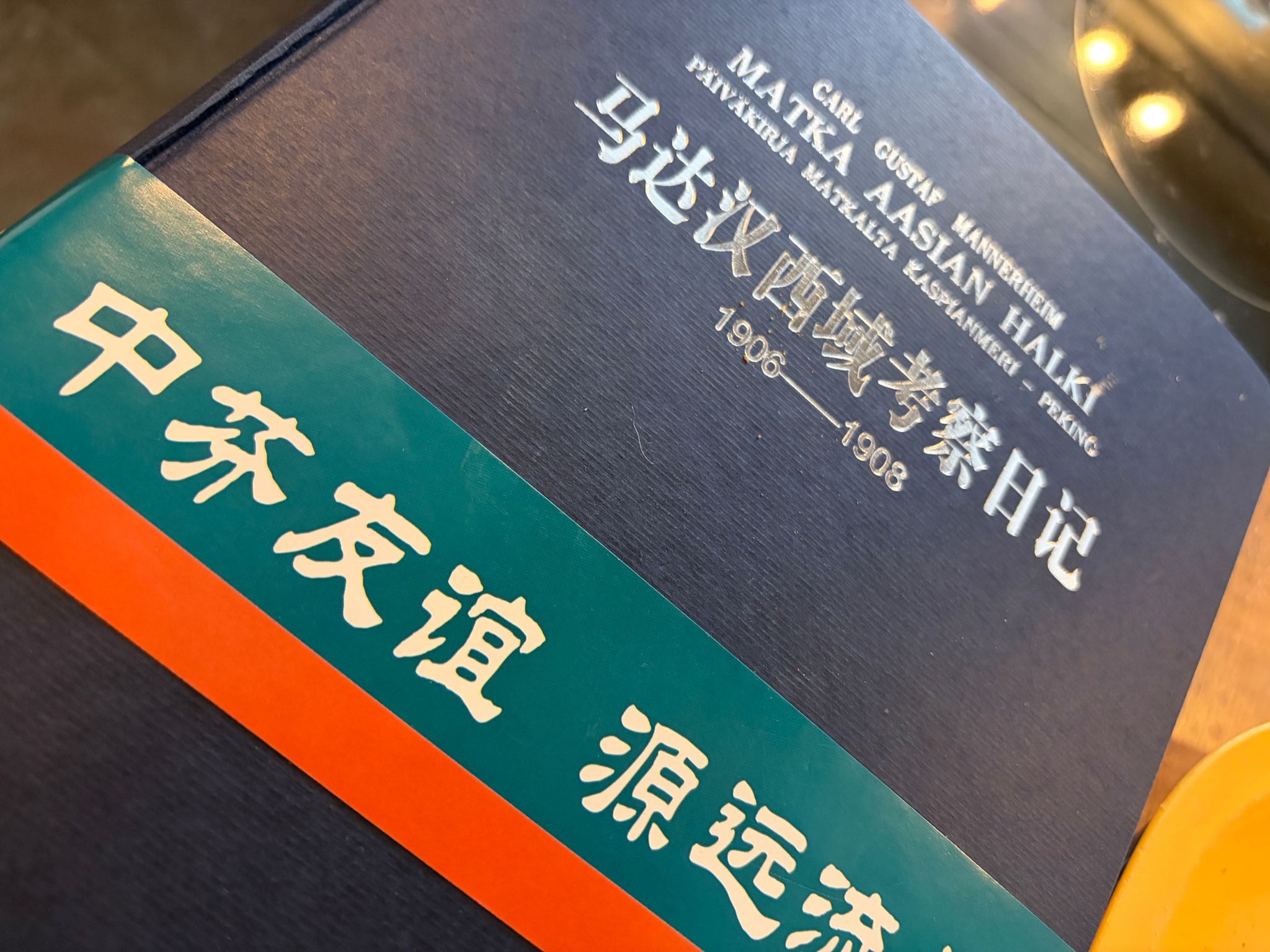
In an unexpected spin-off from my lecture last week about Mannerheim’s adventures in the Far East, I have obtained a copy of the Chinese edition of his epic Across Asia, published in 2004. “Sino-Finnish friendship,” proclaims a poetic belly-band bearing the logo of the Metso paper company, “is long-standing and well-established.”
Translator Wang Jiaji fulminates in his afterword about the pitfalls of trying to work out which godforsaken village Mannerheim might have been writing about in 1907, after 12 hours in the saddle and a rainstorm, when he got the name from an illiterate Kirghiz tribesman who couldn’t speak Chinese, seemingly unaware that even as the presses were rolling on this edition, Harry Halén was publishing his Analytical Index to Across Asia in faraway Helsinki. It’s this frightfully obscure work, for which I suspect I was the sole customer, that made it possible for me to get the names right in my own book.
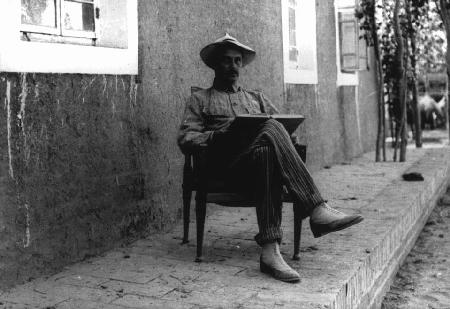
“The purpose of this trip was military in nature,” says Ulla-Maja Kulonen carefully in her preface, “but it also carried other investigation tasks.” Well, yes, that’s one way of putting it, I suppose. Mannerheim was sent into Central Asia to map terrain, probe military readiness, and investigate the penetration of Japanese influence, assembling the data for a 1909 military report, which handed Russian top brass a game-plan for invading Xinjiang, and a terse assessment of the lack of a threat that China presented.
To do so, he travelled undercover for two years, posing as a Swedish ethnologist, and performatively shipping back artefacts and observations by the crateful during his long mission. It is a testament to Mannerheim’s enthusiastic embrace of his cover story that his findings would become the subject of several academic papers, this brick-sized diary of his journey, a large chunk of the Central Asian holdings in Helsinki museums, and 1200+ priceless photographs of life in China at the turn of the 20th century.
His diary was published by in Chinese the China Nationality Art Photograph Publishing House, suggesting that a century later, it was his observations of local ethnic communities that turned into an unexpected bonus. An anonymous editor provides a frowning afterword in which he is a lot pushier about the whole spy thing.
“We must… recognise that as an explorer from a Western power 100 years ago, the author’s activities in our country’s west served the dual purpose of military espionage and scientific exploration,” say The Editors ominously. “This is a concrete manifestation of the colonial policy of the Tsarist government and the history of imperialist aggression against China.” Such commentary is not that unusual – the Mandarin translator of my own Short History of the Silk Road spattered the published edition with quibbling footnotes, although he stopped short of calling me an imperialist aggressor.
Wang Jiaji, himself the author of a Chinese book on Mannerheim, adds that the publication of the book in Chinese was the culmination of a massive effort by multiple Finnish organisations – including a translation subsidy from the Finnish Literature Information Centre, and big-name sponsors including a bunch of paper companies (Metso, UPM-Kymmene, Finnish Forestry Industries Federation), Nokia and Finnair. Although Across Asia was completed in 1908, it lay unpublished for three decades, which left it in an odd legal position regarding copyright – the Finno-Ugric Society waived all fees in order to get the Chinese edition off the ground.
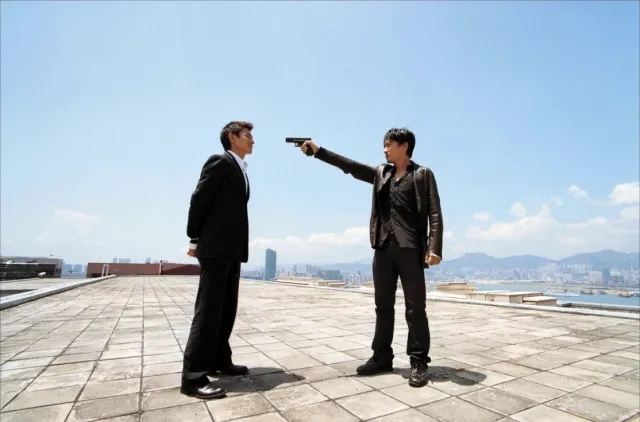
Reporting on Triad activities in the 1990s took on a new cross-border tone, as new arrivals from the People’s Republic refused to play by the carefully negotiated “rules” of Hong Kong’s local criminals. Even as the movie business struggled with the implications of complying in advance with likely post-1997 censorship restrictions, the criminal world, too, faced the possibility of an invasion by a different kind of gangster.
Hong Kong was stuck in the middle, its 1997 change in sovereignty described as a grudging “Handover” by the British media, as if London was being mugged for its lunch money, and an exuberant “Return” in China, as a long-lost sibling returned to the Beijing family. But by this time, Hong Kong had spent 150 years under British rule. Could there ever be any going back? Could it just revert to being “fully” Chinese, whatever that meant, as if it had simply been undercover on enemy turf for a long, long time? As Chan (Tony Leung) comments: “Everything will be okay after tomorrow,” but the idea comes loaded with misplaced optimism, and is repeated on several occasions in the series.
Excerpted from my sleeve notes to the new 4K Blu-ray release of Infernal Affairs by Umbrella Entertainment (Australia), which goes deep into the shadow line of different kinds of gangster operating in 1990s Hong Kong. I’m so pleased that Umbrella continues to recognise the value of meaningful extras, while so many other video labels are succumbing to the false economies of bare-bones releases.
It doesn’t look like I am going to China in 2026, so I am unable to fully update my popular article series on Surviving in Cashless China. But I do want to offer one note of warning, which is that WeChat (Weixin) is becoming increasingly difficult for foreigners to use.
I just tried to move my apps onto a new iPhone, only to discover that WeChat now has a ridiculously intricate system of verification and validation, that makes it nigh-on impossible to retrieve a forgotten password, and just as hard to set up a new account. I’ll leave it to this article at China Talk to explain the ins and outs of it, but the bottom line for me is that even though I managed to get back into my WeChat account for a whole minute, when I tried to change my Settings, it decided that, too, was “suspicious” and locked me out again, brightly advising me to rustle up three more friends with WeChat of their own, who didn’t mind being unpaid admin supports, to vouch for me.
One of them duly sent me the passcode they were asked to, only to receive a reply from WeChat that my account was no longer in use, even though I had wasted a busy hour trying to use it!
Another commented: “Once you have fully set WeChat up (again), make sure that you use it semi-regularly when not in China, i.e. – post the occasional photo on moments, chat with friends, or use related apps. WeChat accounts that are left inactive for long periods often suffer what is known as ‘digital death’ where the account is deactivated and the user can no longer login, but their friends still see that user in their contacts list, thereby causing much confusion. This has happened to many contacts of mine who left China during the pandemic and ceased using WeChat, then found they could no longer access their accounts months later when wanting to catch-up with friends.”
I will, at some future point, attempt once more to get back into the account that WeChat is telling my friends I am not using. In the meantime, I need to deal with the prospect that travel in south China, in particular, is going to be significantly harder for me when I can’t use the most popular payment app there. AliPay still works just fine, but not everybody takes AliPay.
I hope very much to update this article sometime with news that WeChat has stopped being an impossible torment. For those of you planning to go to China in 2026, be advised, as per the China Talk article, that setting up WeChat, with all its whistles and bells and grace periods, can take days, and requires access to a bunch of people who already have WeChat and don’t mind behaving “suspiciously” by vouching for you. So if you want to set it up on your phone, do so a good month before you travel.
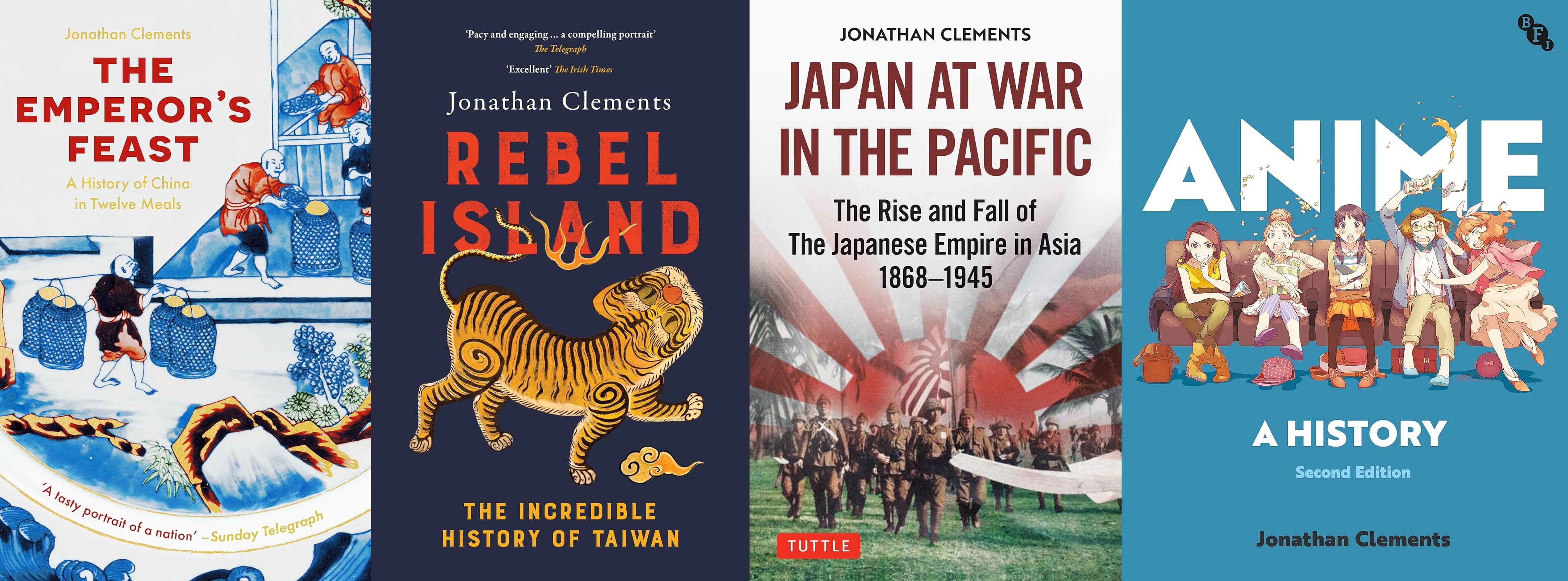
And if you already have all those recent Clements history books, then there’s always something lurking in the backlist, like an acclaimed translation of The Art of War, or a Brief History of the Martial Arts. And for those planning to travel in 2026, histories of Japan and China, Tokyo and Beijing.
‘There was an attack on Jin Yong’s writing in the Party newspaper, Zhongguo Qingnian Bao, by someone called Wang Shuo, which was a real hatchet job against his popularity with the young. Wang specifically called out Demi-gods and Semi-Devils for criticism, and said that it was unconscionably awful.
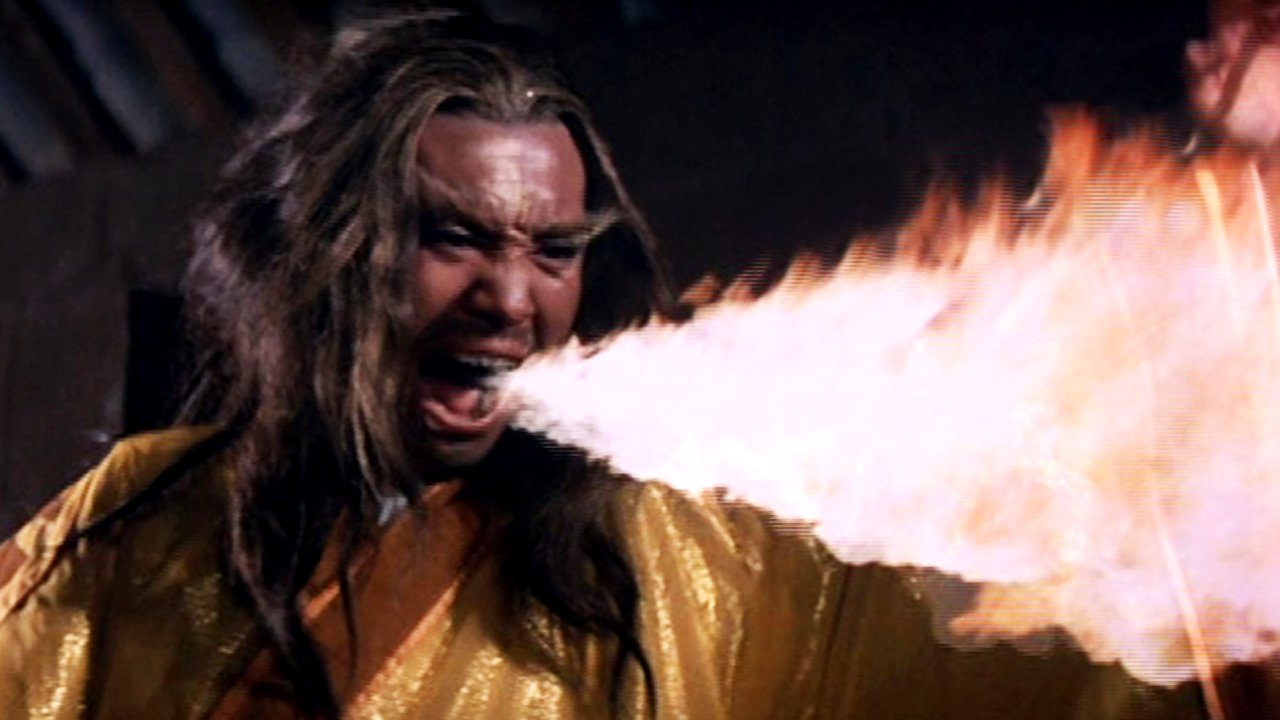
‘He only read the first volume, which is to say, the events that we see in this Battle Wizard movie, and said that he had to finish it “while holding his nose” accusing Jin Yong of “making every single error that someone can make in writing fiction” including shunting his characters around through predictable obstacles like “pigs driven through a narrow alley.”
‘So as you can perhaps already tell, it was a significant hatchet job, and went on and on about how Jin Yong’s books were so terrible, and so popular, that as far as Wang could see there was only one possible explanation, which was that people needed escapism from their modern lives, and that wuxia fiction served as, what he called, a “head massage.”
‘Unfortunately, Wang Shuo seemed to have forgotten the golden rule of literary criticism, which is not to pick a fight with someone who writes for a living, because only a few weeks later, Jin Yong published an absolutely rip-roaring response of his own in the Wenhui Bao newspaper in Shanghai.
‘He said that he was always pleased to read criticism of his work, and that he basically agreed that his fiction was over-rated, and he was sorry for all the awards it had won, and all the copies that it sold, and the millions of people who loved reading it. And, you know, it was probably a sign of terrible times that these books that Wang Shuo hated so much were the subject of a graduate course at Beijing University, and it was surely of great embarassment that American academics had staged a whole conference on his fiction in Colorado.
‘And he went on to say that it was kind of weird that Wang Shuo said he could barely finish the first of seven volumes, because the story actually only had five volumes, so it sounded to him that he was reading an illegal pirate edition, or maybe even a completely different book. But whatever, he was very grateful for millions of enthusiastic readers, and one troll whining about it didn’t bother him much.’
From my commentary track to Battle Wizard, to be found in Arrow Films’ new Shawscope #4 box set.
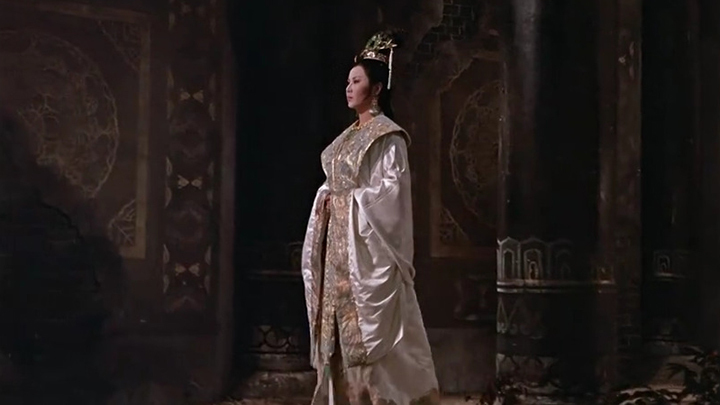
“Without enough bulbs to adequately light the set, Nishimoto focussed on key-lighting the principles, rendering many backgrounds into moody shadows. The resultant film, The Magnificent Concubine, was a visual triumph, going on to win the Technical Grand Prize at the Cannes Film Festival, although Nishimoto kept away from the celebratory party, in order to preserve the illusion of the film as an all-Chinese achievement.”
From my article on Tadashi Nishimoto and other Japanese film-makers working under false Chinese names in the Hong Kong industry, included in the Arrow Films Shawscope #4 box set.
“With the heart of a serpent and the nature of a wolf, she gathered sycophants to her cause and brought destruction to the just. She slew her sister, butchered her brothers, killed her prince, and poisoned her mother. She is hated by men and gods alike.”
I am back on the wonderful Subject to Change podcast to talk about my book on Wu Zetian (portrayed here by Fan Bingbing in the infamous TV show), the only woman ever to rule China in her own name. Rising from lowly concubine/chambermaid to God-Emperor, she outmanoeuvred courtiers, generals, monks and poets alike – sometimes with charm, sometimes with a knife — and ruled over the empire at the height of the Silk Road.
I describe Wu’s ascent through the Tang court: a place of whispered plots, divine omens, and women struggling to survive. Along the way we encounter girls on top, a boob-shaped tomb, a harem of 120 pretty boys, dogs on sticks, a honey-trap gone wrong, and an inadvisable attempt to train a cat not to eat a parrot.
The latest issue of the Journal of Anime and Manga Studies reprints some of the papers from this summer’s Lancaster University symposium on “Transnational Perspectives on Anime”, including my speech on anime in the People’s Republic. I don’t think I’ve ever seen a journal move so fast — sometimes you wait years, but JAMS have really kicked it out.
——–
The history of anime in China is a roller-coaster ride of diplomatic boondoggles, under-the-radar industries, unsanctioned releases and censorship scandals. Jonathan Clements investigates the fluctuating fortunes of Japanese animation in China, not only in terms of its reception among audiences, but of its hidden impact in the production sector, the politics of its distribution and exhibition, and the effect of recent government backlashes and clampdowns as the People’s Republic seeks animation autarky.





 The Official Schoolgirl Milky Crisis Blog