Aliens in Finland

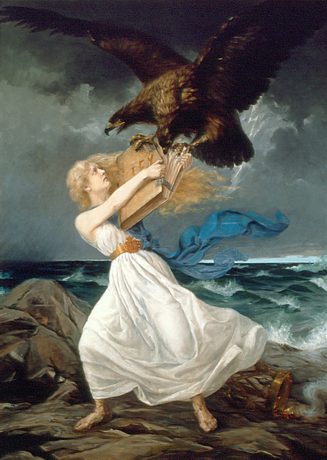
hyokkaysI’m only doing one event at Finncon this weekend, and that’s on Sunday at 3pm when I shall be one of the panel for Aliens in Finland, where I shall doubtless be explaining why there is a battleship named after the Finnish president in Strontium Dog: Ruthless, why the Martian language in Space: 1889 sounds awfully familiar if you come from Finland, and why my next book has a picture of a Finnish girl on the cover being attacked by a mutant eagle. It’s something you’re going to need if “Helsinki in 2017” becomes a reality…

Mannerheim Kindle

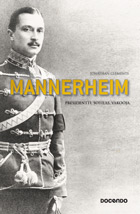
At long last, my biography of Mannerheim is out on the Kindle. Leading a charge on horseback against Japanese cannons in Manchuria? Two years undercover, spying on the Chinese, while disguised as a Swedish anthropologist? Standing up to a gang of Bolsheviks clad in nothing but a pink bathrobe and a pair of cavalry boots? Accidentally becoming the president of Finland? You wouldn’t believe it… but every word is true.

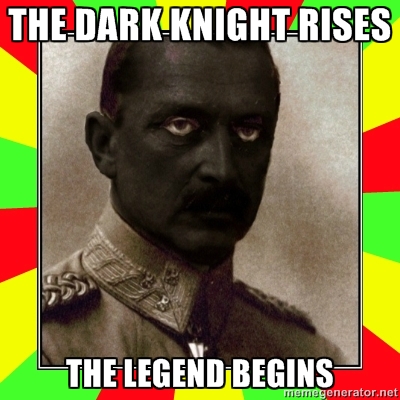
Black Mannerheim

God bless YLE, Finland’s public service broadcaster, for its ever-innovative ways of spending the TV licence fee. A malicious puppet show about national icon Carl Gustaf Mannerheim was apparently not enough. Now YLE is shelling out for an arty Swahili film, The Marshal of Finland, about Mannerheim’s love life, in which all the parts are played by Africans.

The Finnish right wing is having conniptions. I’m rather looking forward to it. How much of Mannerheim’s incredible life and bizarre adventures would translate to Kenyan locations? How might a black actor capture the character and hauteur of one of the whitest men in history? As far as post-modern drama goes, this is surely a world-class bonkers idea. It might even work. And if it doesn’t, it’s going to be the biggest car crash in the history of television.

Someone had a meeting about this. A group of earnest Finns sat around an Ikea table and picked at biscuits from a MariMekko tray, while a crazy-haired producer said: “Also, there’s a bunch of Kenyans who want to shoot a movie in five days about Mannerheim’s life story. In Swahili. Sounds great, right?” Nor is this likely to have been some manifestation of the deluded hyper-inclusionism of the BBC, which recently decided The Hollow Crown needed to have a black Duke of York. No. Someone at YLE thought this would be a really great idea, and they will either be running the channel soon, or looking for a new job.

The Finns are so animated about Mannerheim that nothing really surprises me any more. When I wrote my book about him, concentrating on his relationship with China and Japan, the Finnish translation was actually published a week ahead of the British “original”. Mrs Clements and I often play Mannerheim Bingo in Finnish bookshops, trying to guess what odd spin on his life will be the next to get published. There has been a comic about his tiger hunting days. There has been a (rather good) Mannerheim cookbook. And the aforementioned puppet show, which claimed he had a Kirghiz catamite, and showed him partying with the Grim Reaper during the battle of Tampere. But that’s a problem with being a national icon; you need to be robust.

I will definitely be tuning in for Black Mannerheim, but that’s because I am a Mannerheim fanboy, on the record as saying that he is one of the greatest figures of the 20th century. But one can’t help but wonder what the real agenda is behind this. Is someone at YLE making a post-modern point about icons and heroes, or is this that other recurring element of Mannerheim’s legacy — the substantial number of Finns whose ancestors were defeated Reds, and who can’t resist the chance to carnivalise his memory in ever odder combinations. If so, Mannerheim is sure to survive this latest assault on his dignity. Mannerheim’s enemies had a field day with the animated Butterfly of the Urals, because its vague and unsupported insinuation about his sexuality became a swift-travelling meme among young idiots who never saw the programme, but liked being able to repeat the new “rumour”. But there is no such message here — instead, its artistic heritage is far more likerely to be a restatement of a truth that many Finns already acknowledge, that Mannerheim’s story is so amazing, and so eternal, that even actors in distant Kenya are inspired by it.


Jonathan Clements is the author of Mannerheim: President, Soldier, Spy.

New Finnish Grammar

One day, I asked my Finnish teacher if it was true that her language had 30 different words for snow. She fixed me with her big, blinky eyes.

“No, you poor deluded fool,” she sighed. “We Finns only have one word for ‘snow’. The trouble is, you English think that everything white that falls out of the sky is ‘snow’.”

Finnish actually has more than thirty words for frozen precipitation in a variety of forms, including a word for “powdery snow that’s melted just a little bit” (nuoska), a “thin bit of snow on top of ice” (iljanne), and even “the grey lumpy stuff that turns up when slush refreezes” (kohva). Finns have a similarly large number of words for “reindeer”, and an oddly precise verbal toolkit for describing cupboards. However, their language doesn’t distinguish between sponges and mushrooms, and a single vowel sound separates the differing semantics of “My shelves are nearly full” from “My madness is soon to end.”

Of course, there is nothing “special” about Finnish. Every language has its little peculiarities, evolved in reaction to particular situations. The Navajo don’t distinguish between pilots, insects or helicopters, while the Chinese have over a dozen shades of red. And Japanese has 1194 ways to say “I love you”, along with a culture that refuses to use any of them. Having studied many languages and mastered none, I always return with joyous appreciation to English because it is such a catastrophic car-crash of Latin, Anglo-Saxon, Norman French and Viking Danish, with grammar rules deriving from several different countries, and a veritable multicultural bar-fight of contending nuances, much of which comes down not only to class, but to what someone’s great-great-great grandfather did for a living.

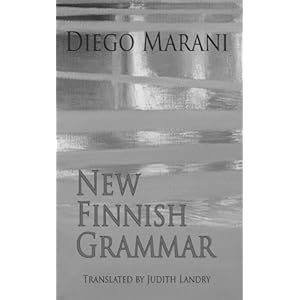
In his novel New Finnish Grammar, Diego Marani latches upon Finnish as a test subject for the human condition. In 1940s Italy, an expat Finnish doctor finds a patient with amnesia so severe that he cannot even remember how to speak. Finding evidence on the man’s person that he is a Finn, the doctor begins to teach him Finnish from scratch. As Sapir and Whorf once argued with their Linguistic Relativity Hypothesis, the language in which one thinks affects the thoughts that one can have. What if this man isn’t Finnish at all? What will this re-programming do to him?

And if he isn’t a Finn called Sampo Karjalainen, who is he? And who will he be when his brain is wired with thirty words for white stuff that falls out of the sky? There are numerous precedents in fiction, most notably the Kaurismäki film Man Without A Past, and many science fiction novels that deal with the power of language to shape thought. But Marani, a professional linguist, latches onto Finland and Finnishness itself for an extended meditation on human nature, patriotism and the soul.

Finnish has vowel harmonies and consonantal mutations like Turkish, and a cavalcade of odd little cases that make it infuriatingly precise. Most languages have basic items like singular and plural, nominative and genitive. Finnish has its own bonkers additions, like the abessive, which is the case you use for things that are nothing to do with you, and the partitive, which is a sort of superglue case to fix all the others.

Marani’s book returns to the age old tug-of-war between nature and nurture. Is Finnish the way it is because of Finland, or are Finns the way they are because of Finnish? He delves into the Kalevala, that crazy national myth of mighty duels over a sci-fi McGuffin, itself was knocked up as an exercise in bootstrap nationalism in the 19th century. He points to the savage rending of Finland into Reds and Whites during the Russian Revolution, an apocalyptic shattering of social cohesion that is still largely unspoken-of today, and yet which, only recently, I have still seen erupt into a bar-room brawl around me.

Talking to a Finnish history teacher this year, I heard the tale of her grandmother’s funeral, to which only a single cousin came. The reason: sixty years ago, grandma married someone of “the wrong colour”. Tellingly, I was not told which colour, Red or White, was wrong. It only mattered that the twain could never meet.

And, of course, there is Mannerheim, that national demigod – a former spy and orientalist, catapulted out of a dead-end military career into a role as the country’s leader in the unwinnable Winter War. Mannerheim, too, was a reluctant student of Finnish, living for most of his life with only a smattering sufficient to deal with the servants. It was only in middle age, called upon to deliver speeches to his public, that he swotted up sufficiently. Extant speeches show his Finnish to be halting and strangely accented – a sign that this hero of “Finnish” nationalism was a native speaker of Swedish, who had spent 30 years in the Russian army.

Marani is a good linguist, with a fine ability to romanticise issues that most people would find dull. He describes the construction of a Finnish sentence with allusions to orbits and trajectories in an imaginary solar system. He delves into the etymology of the simplest words with a verve that conjures wizards in primeval forests and witches chanting spells over swamps. He also writes himself a get-out-of-jail-free card, using his narrator’s student status as an excuse for numerous typographical and grammatical errors – annoyingly, even in a book that sings of the joys of vowel harmony, there are misplaced umlauts and errant letters.

One day, New Finnish Grammar is going to be a great movie. Some worthy agglutination of government funding bodies will knock up a Europudding that shoots in Trieste and Helsinki, starring a great Finnish actor like Mikko Kouki as the amnesiac Sampo. There is just enough plot in Marani’s narrative to sustain a movie, with cutaways to the essence of Finnishness, and fight scenes on the Eastern front against the Russians, perhaps even with magic-realist scenes that illustrate the wonder of Finnish grammar with Marani’s warlocks and witches, paintings of Akseli Gallen-Kallela come to life, or symbolic representations of what happens when a subject switches from accusative to partitive.

Well, maybe not the last. Three years into my Finnish lessons at the London School of Slavonic and East European Studies, mere weeks away from attaining my Lower Intermediate diploma, my teacher coughed nervously, and told the class to prepare themselves for a Finnish bombshell.

“The thing is,” she said, “Finnish doesn’t really have an accusative case. Don’t panic, we can use the genitive or partitive just fine, but everything I have told you so far about the accusative has been a convenient lie.”

She patted the arm of one of my fellow classmates, who had started to sob.

“Don’t cry,” she said. “It’ll be all right. It’ll be all right.”

Jonathan Clements is the author of An Armchair Traveller’s History of Finland.

Aspects of the Governing of the Finns

Aspects of the Governing of the Finns is far more vibrant and colourful than its stuffy title suggests; it challenges the reader to actively wrestle with it in search of elusive truths. Dr George Maude, a Knight of the Order of the Lion of Finland and the author of the Historical Dictionary of Finland (2006), begins as he means to go on, provocatively suggesting that the “dominant role” of German soldiers in the 1918 liberation of Helsinki may have prevented a massacre of the city’s Reds. He soon points out that Mannerheim the “youthful” Finnish general was actually a Swedish-speaker in his fifties who had loyally served the Russian Tsar for three decades, and who would soon skip town. But his words are chosen with the greatest of care; for the next 300 pages, Maude argues that Finland’s political history is littered with misleadingly archetypal public personae, unlikely alliances, and discarded alternatives.

Conservative Finns might chafe at Maude’s cynicism towards the sacred cows of the 20th century; more open-minded readers will appreciate his empathy for the enemies of yesteryear and his ceaseless questioning of what conservatives think they are conserving. Maude’s sources are wide-ranging, from PhD theses to newspaper archives, although some assertions rely on the less rigorous focus of recent TV documentaries. Meanwhile, he encourages a healthy mistrust of documents not only from WW2 and the Cold War, but also from the national birth trauma that he dutifully identifies with its twin titles: the Finnish Civil War/Revolution. If there is any problem with his scholarship, it is merely that he (or his publisher) has failed to codify it with an index – a regrettable omission in an academic work that will surely make it harder for other researchers to use.

Like most foreign authors on Finland (Screen, Upton, Clements…), Maude has married into his subject, in his case into a family with ties to the hotly contested city of Viipuri. Hence, his account often seems considered from the vantage point of a counterfactual Finland that might have been. This is a valuable approach to history, educating the reader in the “what-if” scenarios that had to be rejected before real history could happen. What if, as Britain once unhelpfully suggested, post-revolutionary Finland were re-incorporated into Sweden? What if, as Germany once urged, Finland embraced a notion of Finnlands lebensraum and seized the Kola Peninsula? What if, as Russia once hoped, Kuusinen’s Terijoki puppet regime had taken hold, and turned the country into a Soviet republic? Maude seems determined to ignite rewarding arguments everywhere that Finns talk about Finland – except, oddly, Lapland, with issues of Saami integration or autonomy unmentioned.

Maude dares us to consider paths not taken, even into his final 50 pages, where he assesses the years since 1981 in terms of “disequilibrium economics” – Finland’s dual position at the periphery of both the rising European Union and the collapsing Soviet Russia. He is particularly persuasive on the terrifying compromises and daunting realpolitik forced on Finnish governments during the Cold War, and demonstrates very well for foreign readers why figures such as Kekkonen are still revered at home. His book does not conclude so much as stop mid-flow, as if boisterous students have dragged him from his podium. In a hurried coda about the current economic crisis, he compares modern Finnish defences against Russia to those of the Afghan Taliban, ending as he began, with a mischievous reinterpretation of acknowledged facts; should the Russians ever invade Finland, they would indeed face decades of rural resistance from a fanatic populace with an already legendary reputation for defiance and sisu. It is a fittingly cheeky finale to an inspiring, exhilarating book that makes Finnish politics come alive, scattered with intriguing asides and wry observations.

Jonathan Clements is the author of Mannerheim: President, Soldier, Spy. This article comprises the original English text from a review published in Finnish in the latest edition of Ulkopolitiikka, the Finnish Journal of Foreign Affairs.

Into Songland

companyI have been out into the wilds of Finland, up near the Russian border on the edges of songland, the place that supplied so much of the material for the Kalevala, the Finnish national myth. In the company of Mrs Clements, Delia Sherman and Ellen Kushner, I spent a fascinating day at Kalevala Spirit, a recreation of a medieval Karelian stockaded clan-house, wherein the inhabitants lived, worked and cooked using only the means and materials described in the pages of the Kalevala.

As regular readers will know, I have been writing on matters Finnish for several years, but there was much to learn at Kalevala Spirit, thanks to Akke Virtanen, a man with a mission to codify and preserve some atavistic sense of Finnishness. Able to answer questions on any subject, from skis to saunas, bears to berries, he demonstrated old-world skiing and the right way to grill a salmon, and we kept him busy with plenty of the sort of questions that only authors really need to know. While our fish was gently tanning by the fire, Akke’s colleague Ilkka led us into the forest to inspect bear traps and fox snares, and to spend an idyllic time fiddling with hammer, anvil and bellows in a reconstruction smithy. Our tour ended on a distant hilltop, where amid totem poles depicting the ancient Karelian forest gods, there was an incongruous metal cube carved with intricate sigils in classical Chinese. I recognised it as the legendary sampo as depicted in the film Jade Warrior, now on permanent loan to the Kalevala Spirit in thanks for their pre-production assistance. And I can believe it, too — I left the place with Finno-Ugric metre in my head and the sting of embers on my hands, with new words and new connections roving around my brain in search of places to turn into prose.

We were even getting poetic ourselves by lunchtime, as witnessed by my Heroic Omelette: “To the fridge went Lemminkainen / searching for the milky dregs / on the upper and the lower / shelves he sought for several eggs”. Akke talked at lunch about his Damascene moment, as an advertising man who realised one day that he lived his life in airports, turning back into his native culture with a vengeance, not merely to recreate it, but to do so from solid, empirical bases in surveys of national character. And to use a book of poems and legends as the blueprint for an entire community… just think of the possibilities! You won’t get *that* with Harry Potter. Or at least, I hope you won’t.

After taking our leave of Akke and his minions, we headed into nearby Kuhmo, the home of the Juminkeko Foundation, an organisation dedicated to the Kalevala itself. If there were any proof needed of the international appeal of the Kalevala, it came in the form the guides on duty that afternoon, Natalia from Russia and Giorgia from Italy, without a Finn in sight. Juminkeko was perfect for me; it had a collection of music that included an Inehmo CD I have meaning to buy for four years, but also a selection of in-depth documentaries on the collection and compilation of the Kalevala. We had the place pretty much to ourselves, so we just took the lot, sitting in the auditorium and watching one excellent film after another, until we sheepishly got to the end and filed out in the realisation that we’d kept the gracious staff waiting past closing time.

It was an inspiring, wonderful day, and fired all of us up with thoughts of Finnishness and Karelianism, and the glorious, quixotic mindset that bootstraps a revolution and an entire country out of a book of poems. Ellen, I know, is already percolating ideas around for a story based on her experiences; Delia is sure that something fictional will come of it in her own work… and so am I.
Pictures from the Sea of Death

Last week, the blog rolled away on autopilot without me. This is what I was actually doing…

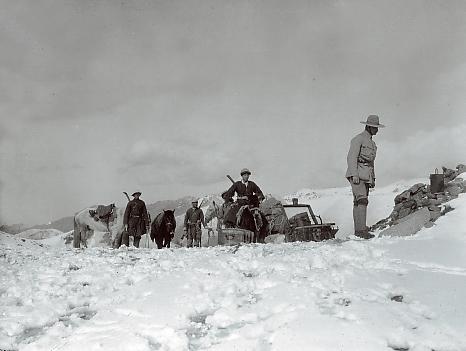
I was secretly hoping that Helsinki would be cool in summer, but it’s as warm as London, if not warmer with all the extra daylight. Today there is not a cloud in the sky and the Finnish girls are wearing little shorts. Because I can, I decide to take a route past the statue of Gustaf Mannerheim. I am, after all, in town to look at his photo albums.
Continue reading