Beautiful Regina of Kaivopuisto (1941)

1853/4: Regina Berg (Regina Linnanheimo) is an orphaned fisherman’s daughter who lives in Kaivopuisto, once nothing more than a pokey workman’s village, now the lynchpin of aristocratic Helsinki, a massive swathe of seaside parkland ringed by new villas and mansions. As a sometime delivery girl and flower seller, she is thrown into the lives of the nobles, specifically the entourage of the Russian princess Kristina Popoff (a welcome return from Ester Toivonen, absent from the screen since 1940’s Tenant Farmer’s Girl), who descends each summer on the “Finnish Riviera” to escape from St Petersburg. Regina is a hit with the serving girls at the manor, one of whom even shows her around the areas above-stairs.

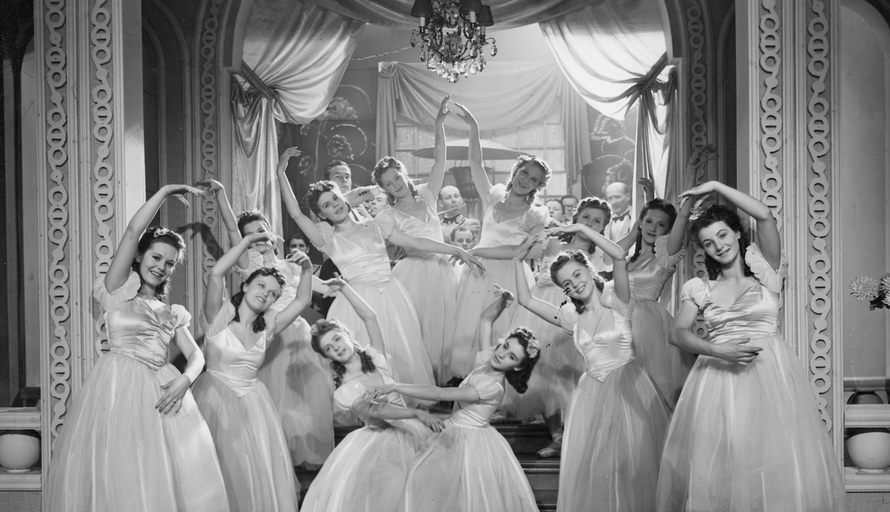
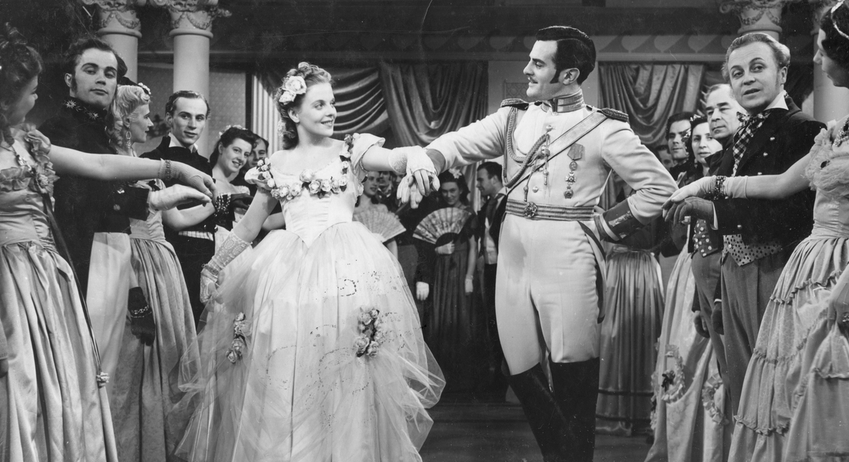
In a twist knowingly redolent of Cinderella, Regina purloins some of Kristina’s clothes in order to sneak into a ball at her mansion, where she flirts with Kristina’s cousin Engelbert (Tauno Palo), a member of the Chevalier Guard, winning his affections and losing a golden shoe as she flees the venue. The mystery is swiftly solved after Kristina interrogates the servants, but Engelbert refuses to return the shoe unless its wearer comes to see him in person. He waits for three nights on the coast, and although Regina eventually arrives, she in turn refuses to accept any gifts from him unless he has honourable intentions.
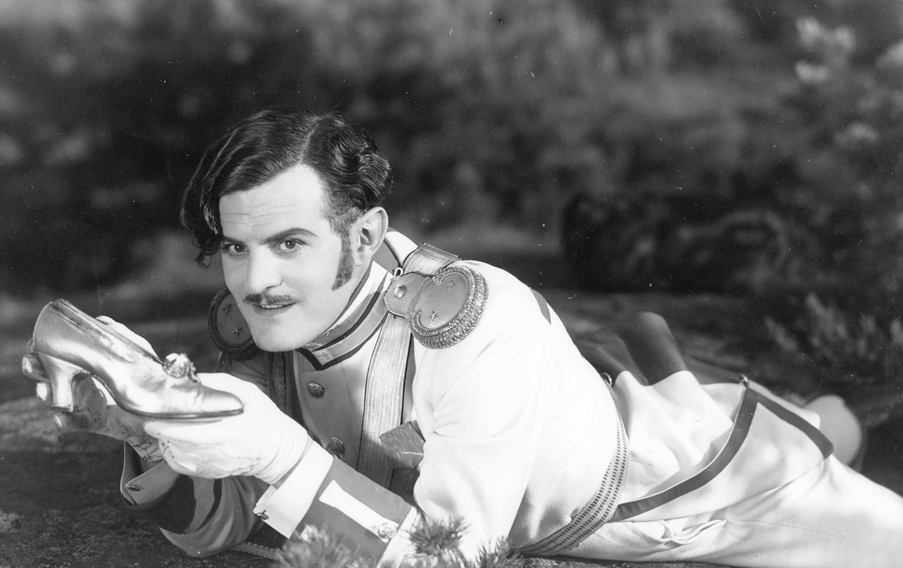
After Engelbert tries to grab her, Regina returns home without her dress, leading her own family to suspect the worst and forbid her from any further dealings with the aristocrats. Engelbert’s lieutenant Ontrei (Unto Salminen), who helped Kristina escape from his clutches, takes the opportunity to confess his own feelings for her, and after spectacularly failing to read the room, offers to set her up as his own mistress in a Karelian love-nest.

On the eve of the Crimean War, Engelbert apologises for his crass behaviour and woos Regina for real, and the uncomplaining Ontrei drives them both to a nearby chapel, where Engelbert presents her with a wedding ring as a sign of his true love. He even suggests eloping to Stockholm, but Regina continues to refuse to do anything untoward. Engelbert heads off to war, and Kristina takes Regina under her wing, arranging for her to learn the manners and customs of the aristocracy. She even throws a Christmas ball to take Regina mind off her absent betrothed, and we see Regina dreaming wistfully of a dance with Engelbert…

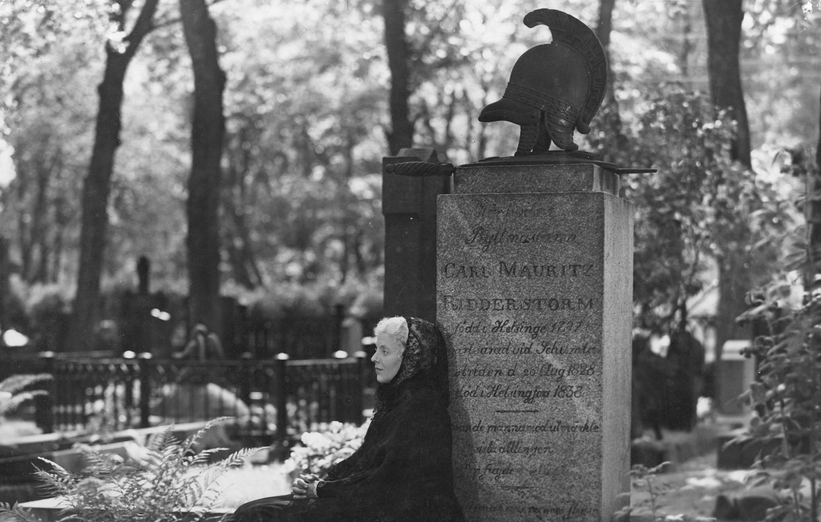
…who turns out to have been killed in the Crimea, as remembered by an aged Kristina, now an old woman sitting by his graveside.
The story derived from the novel Kaivopuisto’s Beautiful Elsa (Kaivopuisto kaunis Elsa, 1936), written under the pseudonym of Tuulikki Kallio by Kaarina Kaarna, the wife of the artist, writer and sometime director Kalle Kaarna. Resolutely hanging onto her anonymity through a mail-drop in Tornio, Kaarna had offered the film to both Suomen Filmiteollisuus and its rival studio Suomi Filmi – Risto Orkko at the latter rejecting the deal on the grounds that filming an epic period drama in modern Helsinki would be prohibitively expensive.

No such qualms bothered Toivo Särkkä at Suomen Filmiteollisuus, who enthusiastically shot location work in the real-world Kaivopuisto, where even today a judiciously placed camera and a bit of concealing foliage can create a reasonable evocation of the 19th century. Actor Tauno Palo reported standing in Kaivopuisto, dressed in the uniform of one of the Tsar’s elite Chevalier Guards, only to find himself face-to-face with Gustaf Mannerheim, commander in chief of the Finnish armed forces. Mannerheim had himself been a Chevalier Guard in his youth, and regarded Palo quizzically, as if encountering a ghost from the past. Perhaps he had noticed that Palo’s costume neglected the historically accurate chamois leather pants of a Guard, which famously were so tight that they had be dragged on wet.
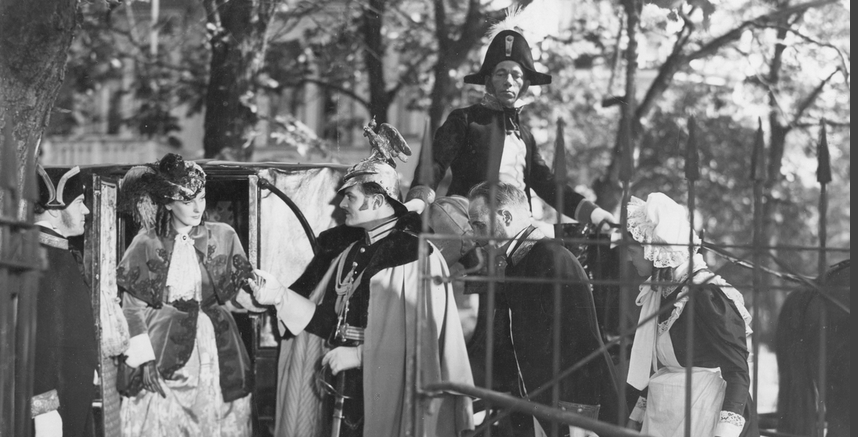
Filmed in the dying days of the summer of 1940, the story was renamed to reflect the big-name casting of Linnanheimo as the star – a rebranding so powerful as to lead to later editions of the book to be similarly altered. This blog has often asserted its disbelief that Linnanheimo was a star at all – to modern eyes, she often comes across as out-of-place as her contemporary Gracie Fields – but in the dour 1940s, ironically, she had finally learned how to smile.

Writer-director Toivo Särkkä was responsible for the shock ending, which deliberately disrupted the happy betrothal that closed the original with a bitter twist that only endeared the film even more to audiences reeling from the Winter War. The film is also fascinating for its treatment of sexual assault – not unlike the fierce Russian brute in The Great Wrath (1939), Engelbert assumes that Regina is his for the taking, that his interest in her is enough to justify her acquiescence. It’s something of a shock when he starts grabbing at her, and the camera lingers deliberately on her distress and denial, until her clothes come off and she (actually her body double) flees naked up the stairs. True to its setting, the film remains non-judgmental of Engelbert’s double standards, celebrating his ability to finally remember his manners, rather than damning him for not having any in the first place. Possibly, there is a nuance I haven’t noticed – that Engelbert has been somehow corrupted by Russian ways in St Petersburg, and needs to be reminded by a Finn of how a lady should be treated?
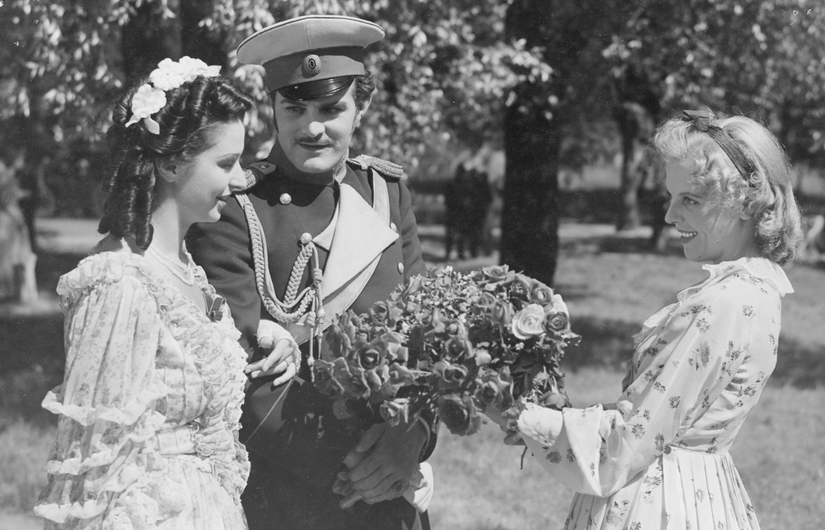
The film was the second-biggest box office hit of the year (beaten only by The Vagabond’s Waltz), the first Finnish movie to be exhibited at the Venice Film Festival, and exported to several other countries. Paula Talaskivi, in the Helsingin Sanomat, articulated what everybody else was thinking, that the number-one film had been so entertaining that its thematic follow-up could only be a disappointment, and that despite the largesse lavished on grand set pieces, the realistically verbose 1850s dialogue was wearing after a while. Toini Aaltonen in Suomen Sosialidemokraati agreed, noting that while it was okay on the surface, it was “half-hearted and naïve” in its inner soul. “But the saddest thing,” he wrote, “is the infinite, unrelenting cuteness of this movie story, which towards the end begins to be downright boring. After watching it, you definitely have the desire to bite on something salty.”

The critics have a point, but the ending stabs like a knife as it segues from the opulent dance sequence into the lone sight of Regina in the graveyard – the picture I share here is taken from an angle to the side of the filming, not the one which had Engelbert’s name added to the front of the tomb. It prefigures a similar juxtaposition of abundance and loss at the end of Alexander Sokurov’s The Russian Ark (2002), an entire world destroyed in the first half of the twentieth century, and surely all too real and raw for many in the 1941 audience. Sure, the film is twee and the story is ludicrous, but Särkkä’s final sequence hammers home the way in which war is the death of romance.

Jonathan Clements is the author of A Short History of Finland. He is watching all the Finnish films, so you don’t have to.
The Last Guest (1941)

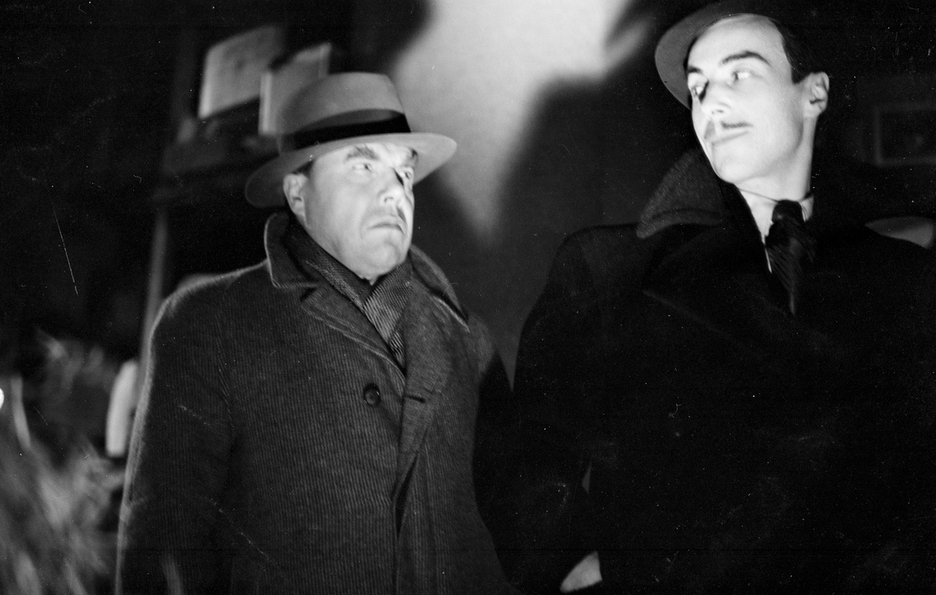
Commissioner Puosu (Hugo Hytönen) and the journalist Harni (Hannes Häyrinen) become reluctant partners as they try to solve the murder case of Nelly, a smuggler found dead in the Helsinki apartment where Harni had been the last… or presumably second-to-last person to see her alive. Their investigations plunge them into the middle of a menagerie of black-market spivs and shysters, many of whom might have had a motive or opportunity for offing their sometime supplier of contraband goods.

Puoso thinks he has uncovered the murderer – the shopkeeper Herttamo (Eino Jurkka), whose kerchief matches a thread found on the victim, but Herttamo is himself murdered on a train. It transpires that Nelly’s murder is the latest iteration of a decade-long drama unfurling from a bank robbery ten years earlier, as its survivors seek to cover their tracks and preserve their identities in hiding. Of particular note here is Irma Seikkula, star of Juurakon Hulda (1937), in the role of Ane, a seemingly unimportant secretary who turns out to be the daughter of a cashier killed in the robbery, whose subsequent life has been steered by a series of anonymous donations from the criminals.

Well, that escalated quickly. After years of shonky adaptations of repertory theatre-plays, unfunny sitcoms and musty old children’s books, Suomi-Filmi suddenly explode into the 1940s with an up-to-date thriller, drawing on H. R. Halli’s novel And the Murders Continued (1939, Yhä murhat jatkuivat). The original was set in Finland’s post-WW1 Prohibition era, but had a subject matter that lent itself well to being upgraded to a contemporary thriller in the wake of the Winter War.

And the critics went wild for it. Only a few days after they had been eviscerating The Solemn Hornblower for wasting literally everybody’s time and money, the Finnish press piled on with unbridled enthusiasm to welcome the dawning of a new and noirish age.

Olavi Vesterdahl in Aamulehti was fulsome in praise for “Finland’s first home-made detective film,” thrilling to its shadowy lighting and the “pleasant surprise” of its thriller narrative. Toini Aaltonen in Suomen Sosialidemokraati called it “exciting and fast-paced” and dared to suggest that it gave Hollywood a run for its money. The final level boss of any Finnish film’s critical response, Paula Talaskivi in the Helsingin Sanomat, was delighted by its impressive photography and naturalistic dialogue, and if she had any objections, it was to a somewhat muddled plot that came apart at the seams as the film went on, for which she was happy to lay the blame at the feet of the source novel, and not the film company that adapted it.

Posterity is not quite so kind – something that is repeatedly noticeable about Talaskivi’s reviews is how accurately they can predict the long view of a film. She is rarely caught up in the moment, but has a concision of appreciation and a frankly prophetic sense of how something like The Last Guest would be viewed not merely years, but decades after its premiere.

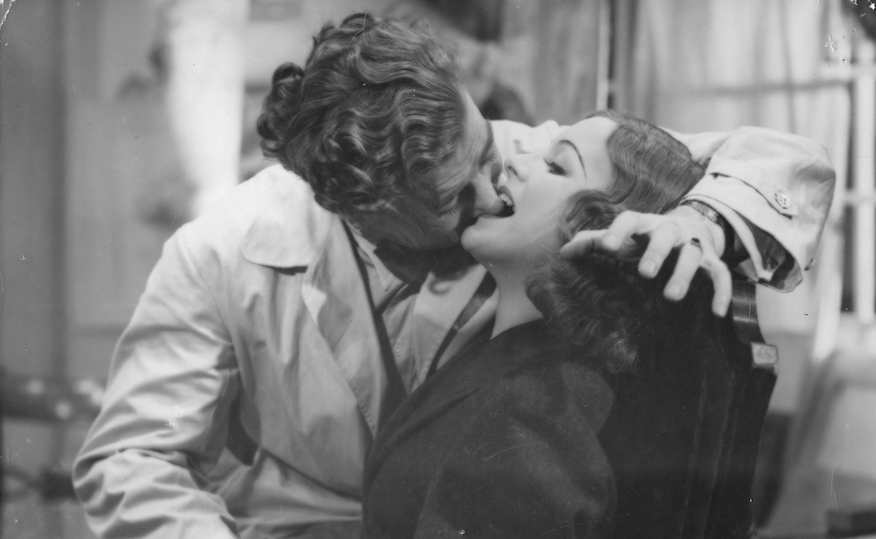
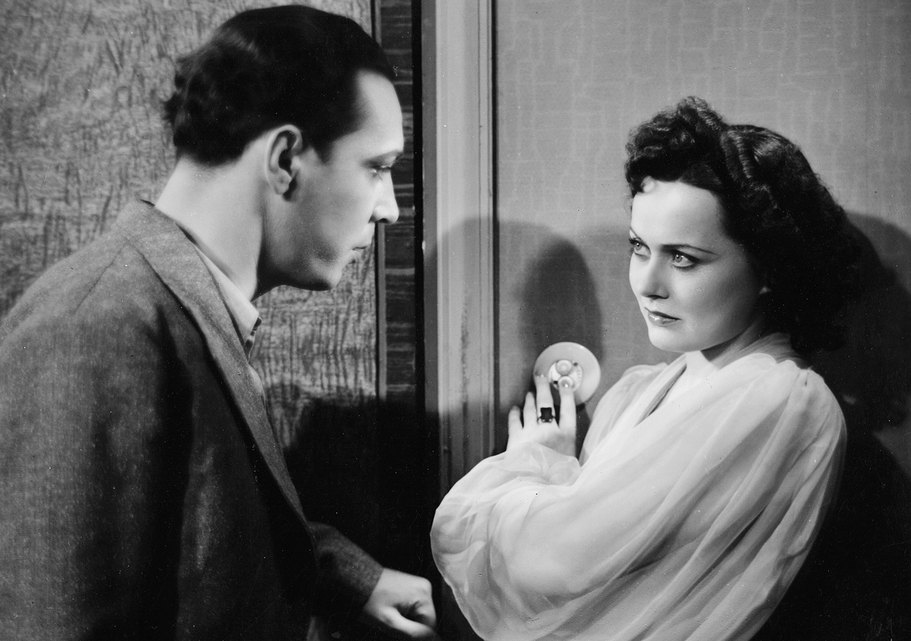
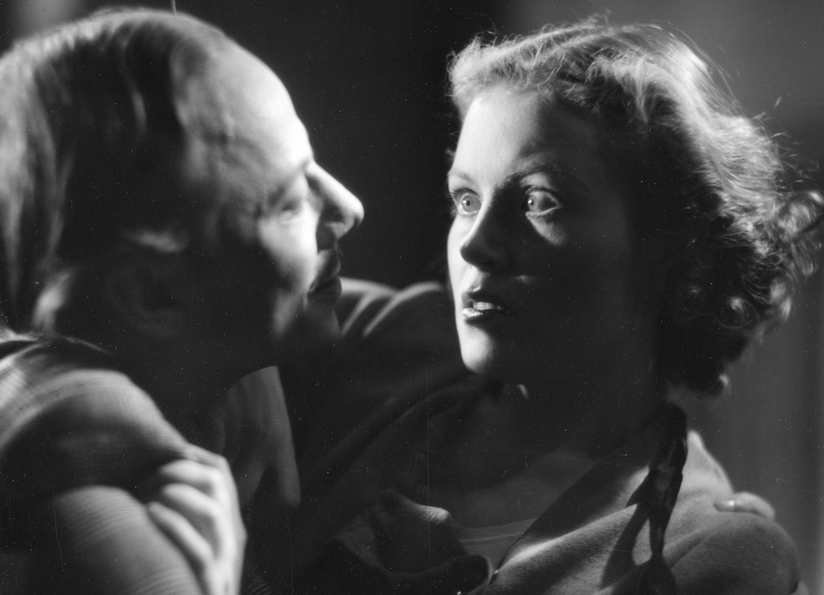
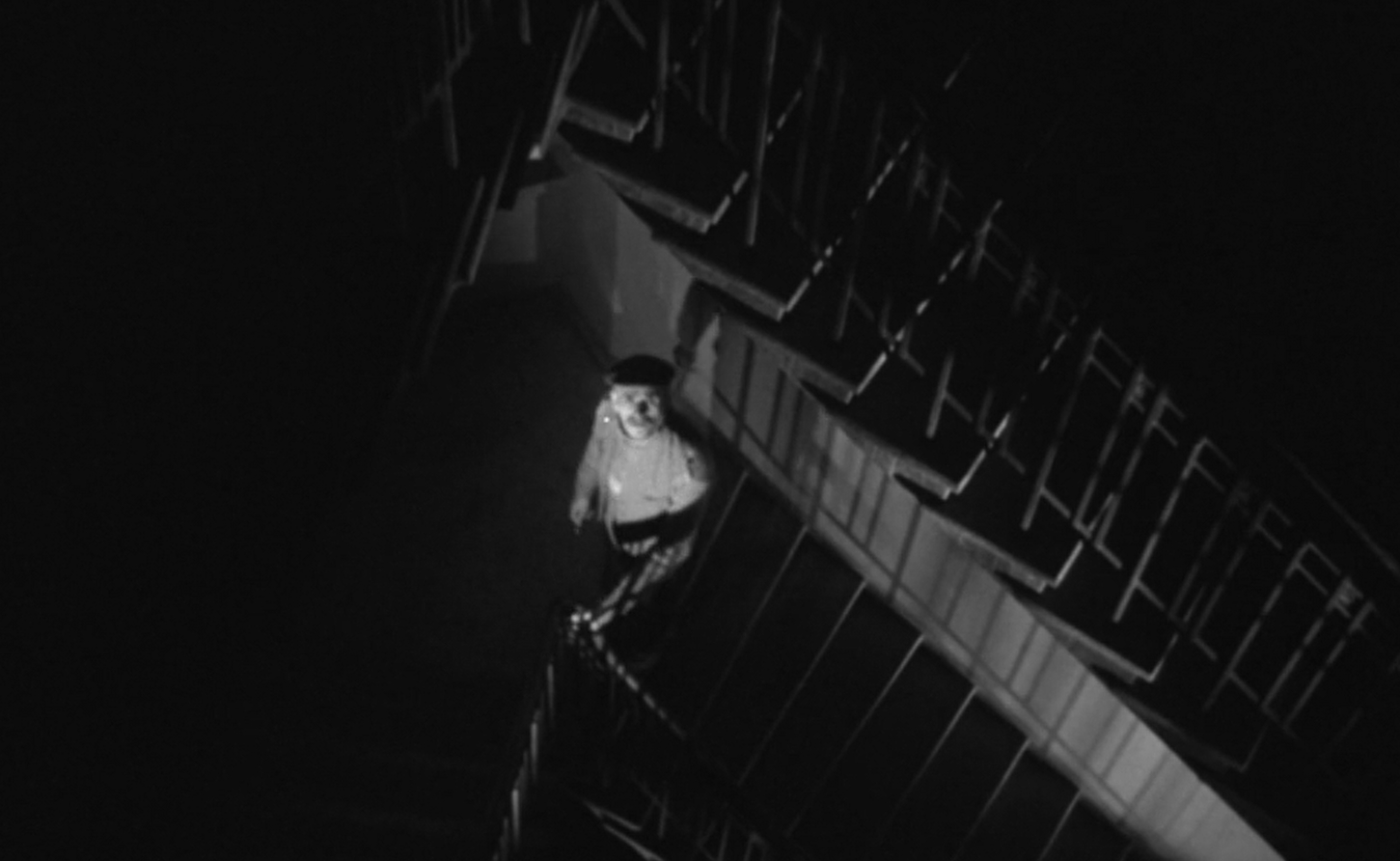
It’s worth mentioning that despite the enthusiasm of the critics of 1941, Finnish audiences were plainly not ready for such a kick up the creative arse. Box office receipts were below average for the film, which took two years to recoup its production costs. Co-director Arvi Tuome would not helm another film again, although his collaborator Ville Salminen, who also designed the sets and appeared in the role of the suspicious wholesaler Rajapalo, would be back in front of the camera before long, and behind it once more in the 1950s. I also find it interesting that none of the press stills preserved in the archives really showcase the film’s best and most creative camerawork. Suomi-Filmi’s photographers came up with the usual shots of men sitting in rooms and women about to be snogged, whereas Tuome and Salminen’s much-praised framing was not documented by their own studio. To get that shot of the man on the staircase that adorns this review, I had to do a screen grab from the film itself – an interesting aside in terms of the materials available for the discussion of historical media.

Jonathan Clements is the author of A Short History of Finland. He is watching all the Finnish films, so you don’t have to.
The Solemn Hornblower (1941)

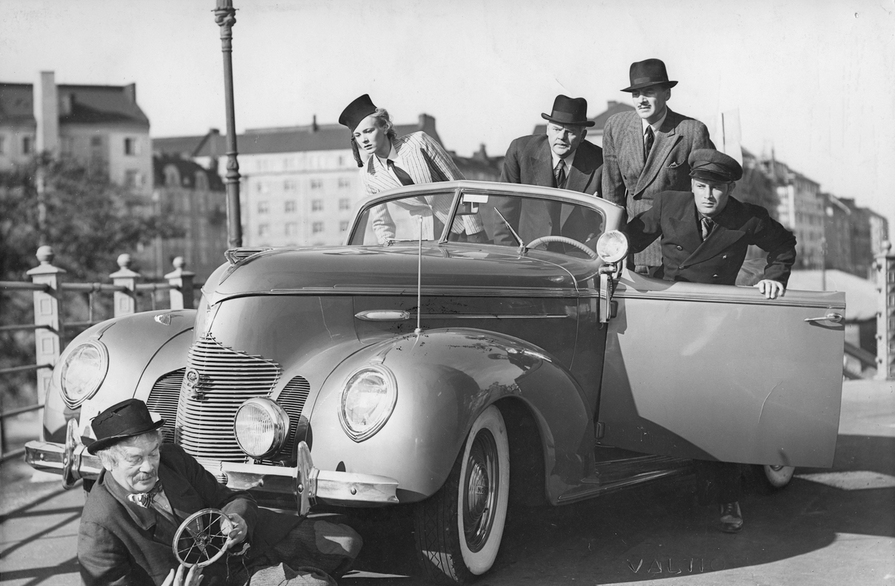
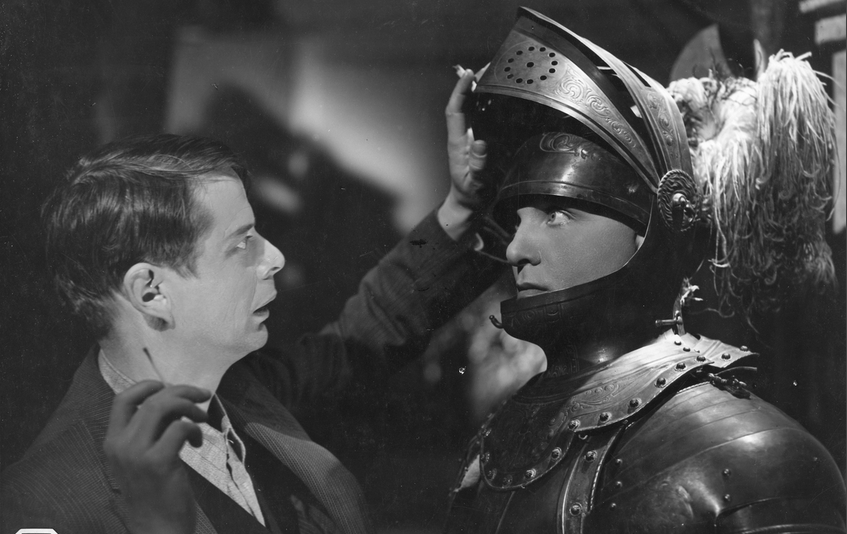
On his way to the engineers’ club masquerade ball, Volmari (Leo Lahteenmäki) wanders into a deserted museum and is locked inside. Spooking the janitor, he escapes into the street wearing a suit of armour, where he is arrested by the police, who think he is Armand (Lauri Kyöstilä), a trumpet player from the circus, who is out on a drunken binge while also inexplicably wearing a suit of armour.

Purportedly “high” jinks ensue, as a man in a suit of armour who may or may not be Volmari, cavorts on the dancefloor with Volmari’s would-be girlfriend Raili (Laila Rihte), only to be fondled by Bertha (Siiri Angerkoski), the circus’s singer, who wants “Armand” for herself. The armour turns into the film’s McGuffin, with Armand brow-beaten into handing his own suit “back” to the museum, while Volmari has to buy his own suit back to sneak it back into the museum, only to freak out when he finds Armand’s suit has already been “returned” in its place.

This blog has noted before how unfunny the “comedies” of Agapetus can be, and it seems that the Finns were finally bold enough to mention this themselves. Leading man Lahteenmäki himself would later describe it as a childish “emergency” project designed to fill cinemas in wartime, and Toini Aaltonen in Suomen Sosiaaldemokraati archly praised Suomen Filmiteollisuus for “adding to the number of bad Finnish films.” Olavi Vesterdahl in Aamulehti warned that Finnish cinema might be approaching an unsustainable tipping point of disappointed audiences, and that Tottinen Torvensoittaja was so bad it was almost impossible to review, “a pointless, aimless meander, with a hard-to-see plot and almost nothing worth watching.” The press reserved particular ire for the closing dream sequence, which numerous journalists familiar with the original 1933 novel correctly identified as nothing but filler designed to bulk out a script that had jettisoned an earlier part of the story – a boat trip that was presumably discarded due to the likely expense.

When shown on Finnish television in 1992, Antti Lindkvist in Katso magazine derided it as “a completely thoughtless car-crash that belongs among the weakest products of Finnish cinema.” Yes, Antti, but did you like it?

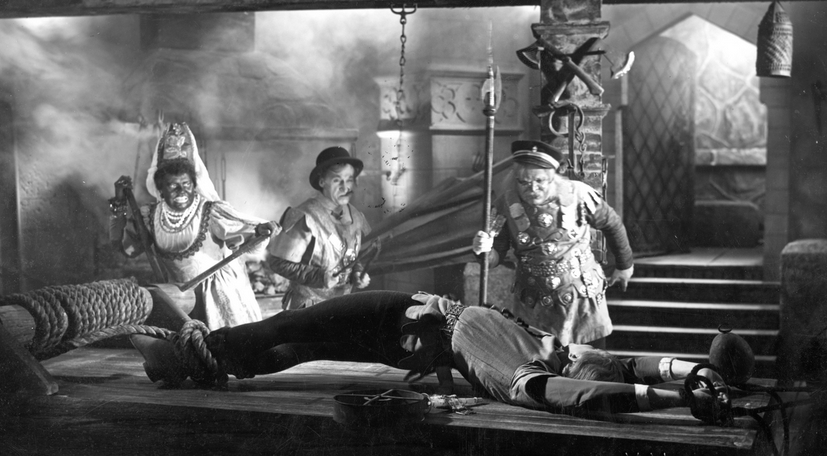
Remarkably, none of the reviewers seem to have mentioned the thing that renders this film truly toxic to modern audiences. The use of the term “black” (mustalainen) to mean “gipsy” in Finnish also rather obscures what I suspect to be the real reason for the absence of this film from the online Elonet repository – Siiri Angerkoski is not playing a gipsy, but a negro singer in outrageous blackface make-up, which might have been all right in Finland in 1941, but cause for torches and pitchforks outside the cinema today.

This is the last Finnish film to bear the name of Kaarlo Kartio in the credits; he was supposed to play Armand, but died before filming could commence, although presumably the credits were already printed and nobody could be bothered to change them.

Jonathan Clements is the author of A Short History of Finland. He is watching all the Finnish films, so you don’t have to.
The Suominen Family (1941)

Twenty years after leaving for America to seek his fortune, Sami Nenonen (Joel Rinne) returns to Finland to brag about his good luck. Now exotically calling himself “Sam Nelson”, he looks up his old buddy Väinö Suominen (Yrjö Tuominen) and persuades him that the shares he has to offer are a licence to print money. Although Väinö has a change of heart, Sami has already invested 100,000 marks, and after a tense interval, the Suominen family starts to earn dividends.

Daughter Elina (Sirkka Sipilä) graduates from high school and starts courting a young suitor, much to her father’s annoyance. As the money continues to roll in, the household gains disruptive modern conveniences and distractions, and the maid, Hilda (Siiri Angerkoski) struggles to cope with having a maid of her own – Angerkoski, incidentally, steals the opening scene for me by making pancakes like a boss. The traditional Thursday night austerity dinner of pea soup and pancakes is replaced with newfangled consommé, leading some family members to question what they are really gaining. It is Väinö’s wife Aino (Elsa Turakainen) who really puts her finger on it, when she is poured into an uncomfortably expensive dress and subjected to a night out with Sami and his wife, whom she finds to be cynical and brittle.

This leads to a subtle dig at haters of Finnish cinema. At the Nelsons’ snooty soiree, Aino innocently asks a guest if he has seen “the last [latest] Finnish film.”

“I haven’t seen the first one!” he scoffs. “Smart people don’t bother with them.” Such metatextual japes extend to a scene in which a film director tries to persuade Elina to become an actress, in which Arvo Kuusla, in the innest of in-jokes, impersonates the director Nyrki Tapiovaara, whom members of the film community alone would recognise as the director of the previous year’s One Man’s Fate (Miehen tie) for the rival studio Eloseppa.

One of the film’s most strikingly self-aware moments is where Aino persuades Elina to stick to her previous career choice of becoming a nurse, rather than giving it all up to become a singer-actress. It strikes an oddly discordant note, in which a bunch of actors earnestly hector their audience about how careers in the arts are for the privileged few, and it is far more noble to have a useful job. But Aino is fighting a one-woman front against Mammon, sternly informing her family that “money isn’t everything”, and for once, not winking at the audience that it still really helps – see for example, the grasping money-mindedness of Rich Girl (1939) or The Vagabond’s Waltz (1941). Instead, she is practically overjoyed at the news that Väinö’s investments have failed, and that henceforth the family is back to normal, scrimping and saving and meeting every Thursday for a hearty, happy dinner – compare, here, to the similar make-do-and-mend austerity of the same season’s If Only I Had the Power (1941).

Suomisen perhe began life in 1938 as a radio show, and would go on to chronicle Finnish middle-class life for the next twenty years. Only a handful of the 400 broadcast episodes survive today, along with half a dozen movie adaptations, of which this is the first – four more were made before the end of 1945, and a finale arrived in 1959 after the radio show came to an end. With a peak audience share of 52%, it functions today as a fascinating barometer into the way that Finns saw, or hoped to see themselves in the good old days: Dad with a safe job as a civil servant, mum and three kids in the family home, and a merry housemaid performing all the tasks that would be taken over by machines in the post-war era. One can still find Finnish homes from the 1940s that have a small bedroom oddly en-suite to the kitchen – such architecture is a hold-over from the days when a live-in housemaid was common.

The series moved with the times, often in step with government policy – during the war, the family gained two evacuated children in order to normalise such issues with the general population. This first movie adaptation introduces “Sam Nelson” as a handy catalyst to suddenly transform the lives of the family, only to bring them crashing back to normality by the end in a handy reset. The combination of an American visitor and good Finnish people was also catnip to expat audiences – at least one print of the film would surface in America among the cinema screenings of Michigan’s Upper Peninsula, and other areas with strong Finnish emigrant populations.

The Finnish press enjoyed the movie’s celebration of normal life, particularly its look back to the simple days of the pre-war era, with Uusi Suomi praising its appeal to “Finnish hearts both young and old”, and enjoying its “gentle jibes at human frailties.” Olli Ohtomies in the Ilta Sanomat was similarly touched by its celebration of the little highs and little lows of everyday life, and “a silent hymn of praise to a peaceful and warm home, happy parents and their healthy children.” Paula Talaskivi in the Helsingin Sanomat also loved it, but offered insightful comments about the degree to which it owed its look, feel and presentation to the Hardy family movies beginning with A Family Affair (1937), which made a star of Mickey Rooney. She was bang on the money – in fact, director Toivo Särkkä at Suomen Filmiteollisuus had made the young Lasse Pöysti watch a number of the Hardy films, of which ten were already in existence by 1941, and to imitate Rooney as best he could in his own performance as Olli, the young son of the family. He did so in the expectation that as the years went on, if the Suominen films became a series of their own, Olli would age into the role of the young lead, as indeed he did with Olli Suominen’s Stunt (1942).

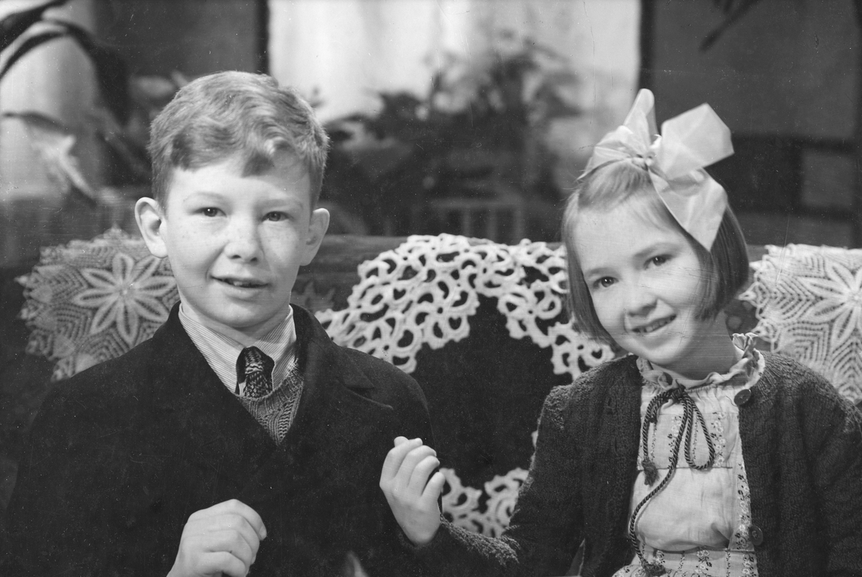
Pöysti and his fellow child-actor were new for the movie – their radio originals were played by actors in their thirties, who could never have got away with it on camera. Among the Suominen children, Maire Suvanto’s career struggled to escape from being identified as Pipsa – her sole role as an adult actress was as the older Pipsa in The Suominen Family is Here Again (1959). In adulthood, she found a new career as a teacher, firstly of drama, and latterly of deportment to the sales-clerks at the Stockmann department store in Helsinki. Lasse Pöysti, on the other hand, stayed in the limelight, becoming an accomplished actor on stage and screen, and the manager of several well-known theatres.

The Suominen films themselves did not age well, written off by Tapani Maskula in the Turun Sanomat as little more than “stiff theatre” when they were rebroadcast on television in the 1990s. Still, he conceded, “the merits of the work are more historical than artistic. It offers an excellent sample of the lifestyle of the Finnish middle class in exactly the decent and innocent form in which it wanted to be marketed at the time.”

Jonathan Clements is the author of A Short History of Finland. He is watching all the Finnish films, so you don’t have to.

If I Only Had the Power (1941)

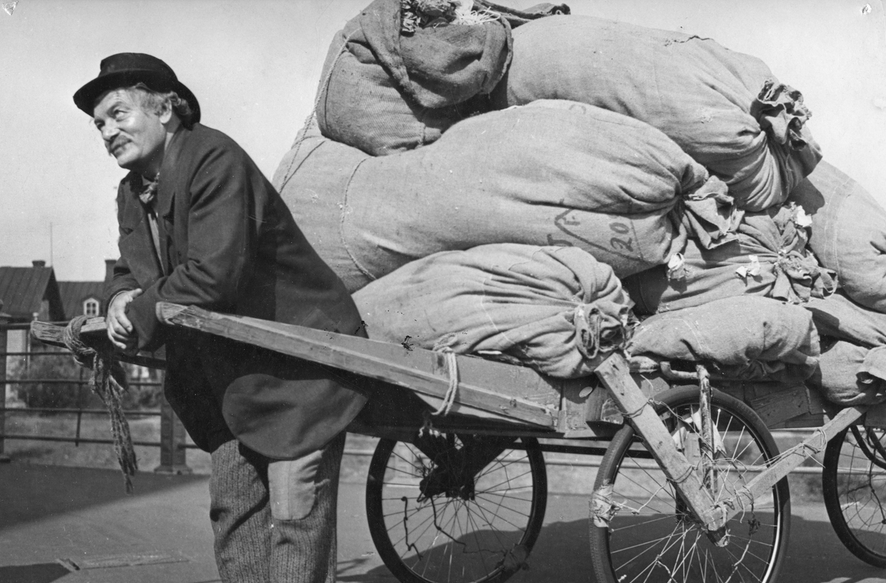
Cheery waste-paper collector Mikko (the ever-reliable Aku Korhonen) falls asleep in a bin and concocts a fantasy lifestyle for himself that incorporates the people who hit him with their car earlier in the day, along with some of the detritus he has found on his rounds – news of a company merger, a nickel-mine find, a lottery win, and the love of a good woman, in the form of Aune (Sirkka Sipilä) the attractive daughter of a wealthy industrialist.

It is, however, all a dream. The viewer has long enough to forget about the framing device that introduced Mikko as little more than a kind-hearted vagrant. We are encouraged to forget about his real-world problems, and instead to fret about the relatively low-intensity drama of whether or not he can win Aune’s heart. It is therefore something of a jolt in the final reel when Mikko wakes up again back in the real world, with Aune a stranger to him, along with any chance of money or power. He accepts this fate with a good-hearted shrug, and goes about his business.

Many Finnish films of the period were obsessed with wealth and social climbing, which made Jos oisi valtaa’s gentle satire somewhat more palatable in the eyes of Finland’s left-wing press. Toini Aaltonen in the Suomen Sosiaalidemokraati called it “a rather modest and childish film” and praised it for disrupting the “postcard truths” of so many other romances and comedies. Paula Talaskivi in the Ilta Sanomat complained that “the dream should have started more clearly as a dream.” And she has a point – it’s not 100% obvious when Mikko’s dream starts. Is it when he is hit by Aune’s car, or when he goes to bed that night, or is it, in fact, that the whole movie is a dream up until the moment he wakes up? We see him regain consciousness in the bin, but we never actually see him go to sleep in it, meaning that an entire chunk of the early film may or may not be the reveries of a woozy rag-and-bone man.

Like many a movie in the period, the film also shoe-horned in as much variety performances as it could, leavening its thin plot with several sequences of puppetry and opera. Olavi Vesterdahl in Aamulehti was unimpressed, noting that even though the film only lasted 93 minutes, it was still dragged down into “slowness and long-windedness” by a surfeit of unnecessary dance numbers and songs, including chunks of Puccini, Strauss and Bizet and a full-on ballet sequence shot at the Helsinki opera house. But one wonders if Vesterdahl had not seen the variety sequences for what they really were – not merely padding for the film, but a scramble to find work and publicity for Finland’s many performers and entertainers, fallen on hard times after a war in which dancing had been literally declared illegal until the soldiers came home.

If I Only Had the Power artfully encapsulates the contradictions of Finland in the days immediately after the end of the Winter War – our hero enjoys a meteoric success, a lavish lifestyle and a romantic denouement, only to wake up in dire straits, his happy ending revealed as a mere illusion. One can readily imagine austerity-era Finns thrilling to its allegory of their predicament, daring to dream of better days amidst the deprivations of the real world… but one would be wrong. The film under-performed at the box office, and it was the last to be directed by Yrjö Norta for Suomen Filmiteollisuus. His contract dropped by the studio bosses, Norta defected to Fenno-Film where his first work would be Maskotti (1943).

Jonathan Clements is the author of A Short History of Finland. He is watching all the Finnish films, so you don’t have to.
Black Sheep of the Family (1941)

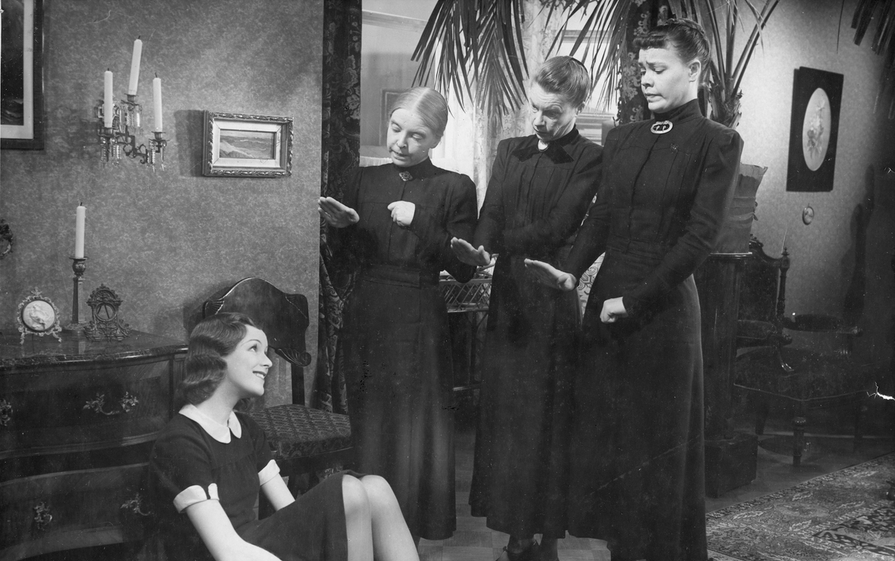
After what has plainly been a long, long wait through her teenage years, enthusiastically modern orphan girl Raili Wirma (Sirkka Sipilä) collects her inheritance and prepares to flee the stern supervision of her maiden-aunt guardians – a terrifying trinity of scowling women, who glower at her as she joyfully packs. They warn her that she might be biting off more than she can chew, but she laughs it off and skips out the door, ready to make her fortune as a secretary in That Fancy Helsinki.

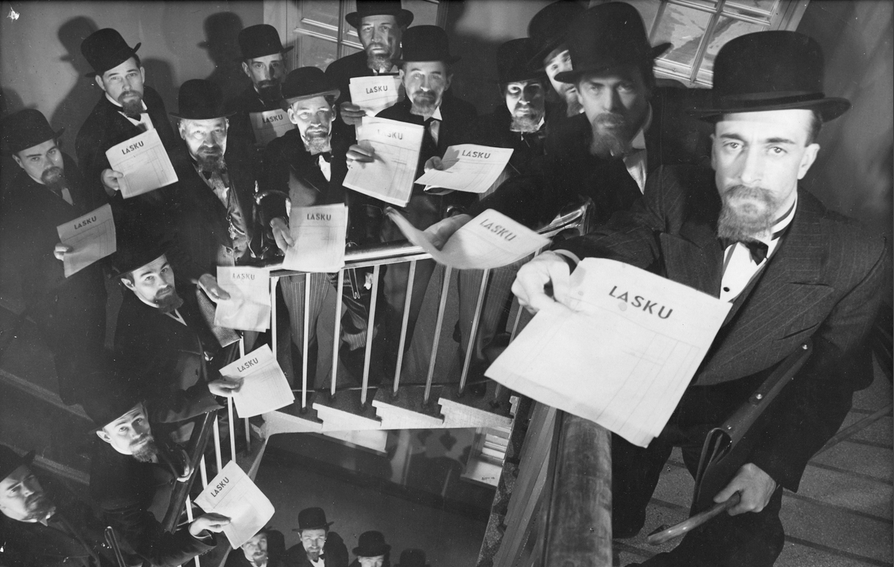
Before long, she is overwhelmed by the mounting costs of her bachelorette apartment, literally crowded by men on the staircase proffering bills. She is vanquished in office politics by Saara (Kaisu Leppänen), the boss’s favourite who even appears to be winning the flirtatious attentions of eligible bachelor Topi (Jorma Nortimo, directing himself, in his own script adaptation). Attempting to drown her sorrows at a “bachelor boy” party where all the girls dress up as boys, she becomes trapped in a series of misunderstandings, ejected from Topi’s house after she catches him a clinch with Saara, and roped into helping the drunken Captain Nilsson (Jalmari Rinne) find his way home.

Kindly offered a floor for the night by Mrs Nilsson (Lilli Sairio), Raili repays her kindness by delivering a package for her to the Femme Belle beauty salon. Since she is still dressed as a boy, she is a hit with the lusty proprietor Mrs Schmitt (Elsa Rantalainen) who laments that if only Raili were a girl, she would offer her a job. Seeing the chance to get back on the employment ladder, Raili announces that “he” has a twin sister who would be ideal…

Now living a double life as “Risto” the delivery boy and “Tytti”, Risto’s twin sister, Raili must keep switching disguises to evade the police, who want to arrest her for defaulting on her debts. The creepy artist Erkki (Joel Rinne) witnesses one of her elevator quick-changes, and uses the information to blackmail her into becoming a model. When he badgers her to take off more clothes (there is, in fact, a wholly gratuitous nude shot, much appreciated by your correspondent), she throws herself on the mercy of the deputy judge Olli (Finland’s Shatner, Eino Kaipainen), who inevitably falls for her himself.

Raili soons runs into trouble at the salon, where she avenges herself on the oblivious Saara by agitating her delicate skin and giving her indelible mascara freckles. Fired by Mrs Schmitt, she returns, dejected to the family home, where her day is brightened by the news that some other relative has died, leaving her enough money to bail herself out of her self-made problems as if she is an American conglomerate or a British politician. She invites Erkki to a restaurant to tell him that his blackmailing no longer works, only for the lovelorn Olli to see them together and assume the worst. Donning her Risto disguise for the last time, Raili arrives at Olli’s house, ostensibly to deliver a painting of herself. Olli recognises her for who she really is, and proclaims that for her “crime” he will sentence her to life imprisonment.

Marriage… he means marriage. To which Raili replies that his punishment will be to be her jailer.

She accepts… that means that she accepts.

Unmentioned on this blog since her welcome state of undress in Dressed Like Adam and a Bit Like Eve (1940), Sirkka Sipilä lights up the screen with her modern charm, bopping to jazz and wearing a skirt scandalously above the knee. Like her counterpart Helena Kara in The Bachelor Patron (1938), she is a creature that we can only in hindsight understand to be out of her time. Nowhere is this more obvious than at Topi’s naff party, where a singer with crimped hair warbles through a dance number, and revellers in tuxedos and frilly ballgowns seem inexplicably excited by the sight of paper streamers. There are times, in fact, when Raili parades around in deco chic, while the other actresses seem largely clad in tablecloths and animal pelts.

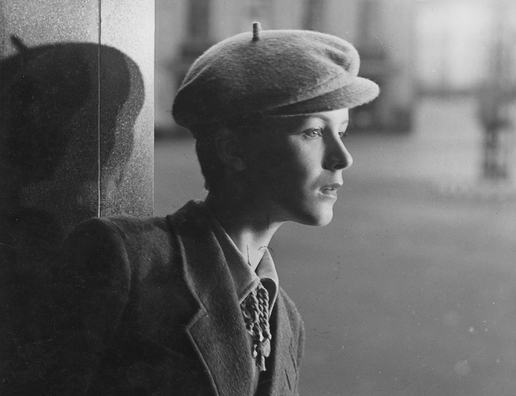
Of course, once she turns up the androgyny as “Risto”, she becomes even more anachronistic, tucking her hair under a flat cap, and drifting ever closer to a French gamine look that would be regarded as the height of sexiness a generation later. In part, this is because she isn’t actually very good at playing a man – compare to Tauno Palo’s similar cross-dressing exploits in Dressed Like Adam and a Bit Like Eve.

Based on the young adult novel Mörk punkt (Black Spot, 1934) by the Swedish-Finn Melita Tång, Perheen musta lammas replays the cross-dressing comedy of The Man from Sysmä (1938) in a contemporary urban setting. Eino Palola, writing for the Helsingin Sanomat, damned it with the faintest of praise, calling it “different in a nice sort of way”, albeit lamenting that “a little cutting and gluing here and there” would have streamlined the film’s dramatic cul-de-sacs and lagging pace. “The film lacks focus,” agreed the critic for Uusi Suomi, “taking the second step before the first.”

Right at the end, the film writes itself into and out of a veritably queer spot, as Olli’s housekeeper looks on in tight-focus horror as her boss appears to be passionately fondling a teenage boy. But when we cut back to the young lovers, Olli waves the housekeeper away, his fiancée now magically transformed back into her feminine self, dress and all. Phew, that’s a relief.

Jonathan Clements is the author of A Short History of Finland. He is watching all the Finnish films, so you don’t have to.
The Vagabond’s Waltz (1941)

Carefree Finnish nobleman Arnold (Tauno Palo) makes the mistake of beating a Russian prince at cards, and is challenged to a duel over the attentions of a lady. Fearing he is wanted for murder, he flees from St Petersburg back to his native land, switching clothes and identities on the train with a violinist. Hiding out among circus folk, he becomes the unwitting centre of a love triangle between an acrobat and a strongwoman, and has to flee once more, throwing in his lot with a band of gypsies who love his violin-playing.

He soon charms local lady of the manor, Helena (Ansa Ikonen), who is torn between the man she believes to be little more than a tramp, and local rich boy Eric (rent-a-cad Jorma Nortimo, sneaking back in front of the camera after many months directing behind it). Arnold plays up his vagabond status, wriggling out of an illegal fishing charge by pretending he can’t read the sign, and eventually accepting Helena’s charitable offer of a low-ranking job at her mansion in order to “better himself”. The two would-be lovers are surprised by the apparently justifiably jealous Eric, leading to a tense wedding in which Arnold and his gypsy band dominate proceedings. Arnold and Helena elope, only for him to drive her up to his own family mansion, and reveal that he has, somewhat cruelly, been lying to her all along.

All’s well that ends well, because he’s rich.

Leading man Palo is initially unrecognisable beneath a 19th-century moustache, in a film that comes loaded with baroque, imperial sets, hearkening back to the Bad Old Days when Finland was but a Grand Duchy within the Tsar’s Empire, and even posh Finns were little more than servants to the Russians. Much of the fun derives from the slurry of women that Arnold leaves spattered in his wake, including Athalia (Lida Salin), the incredibly enthusiastic circus strongwoman, and Cleo (Laila Jokimo), the lithe acrobat. Regina Linnanheimo in a black curly wig is uncharacteristically joyous and smouldering as “Rosinka the beautiful gypsy girl” for whose affections Arnold briefly wrestles, before being told something borderline racist about how “gypsies should keep to their own kind.”

Of course, he’s also “keeping to his own kind,” pursuing the usual wet-lipped and grasping Finnish film romance of a woman with pots of cash, although one imagines that the producers would plead that, at the time she elopes with him, Helena doesn’t believe he has two pennies to rub together. Ansa Ikonen’s face, in the final scene, is a picture of wounded pride, as she gets a happy ending, but only through a deception that has been perpetrated on her for the entire movie. She genuinely looks like she’s going to slap him, and then she actually does. Their romance is only saved at the last moment by Arnold’s fearsome mother (Elsa Rantalainen), who literally commands them to kiss – a dramatic device we have seen before in The Regiment’s Tribulation and Did Emma Laugh at the Sergeant.

The “Vagabond’s Waltz” was originally a Swedish tune written in 1909 by J. Alfred Tanner. It was the film director Toivo Särkkä who decided that such a well-known ditty deserved a film built around it, in a sort of precursor to modern juke-box musicals. He threw 50,000 marks at the writer Mika Waltari, whose summery script was then lensed in the dark and rainy days of a Finnish autumn, leaving the cast looking somewhat drab and bedraggled when they are supposed to be having fun.

Despite such tribulations, the film became one of the most popular ever at the Finnish box office, circulating in a dozen prints and making it as far afield as Bulgaria and Turkey. “One of the finest products of the Finnish film industry,” enthused the unimpressable Paula Talaskivi in the Ilta Sanomat. “A beautiful, glossy picture,” agreed Olavi Vesterdahl in Aamulehti. “The viewer is happy to forget all the impossibilities of the plot for a couple of hours and surrender to the flow of events when they happen quite effortlessly and in a brisk good-natured way.”

“The film is the Finnish counterpart to the melodrama Gone with the Wind,” wrote Antti Lindqvist in Katso magazine in 1990. “Both works nostalgically describe the idyll of a bygone era that never existed.”

The real stand-out star, however, is Regina Linnanheimo, usually a bored-seeming and often sulky blonde onscreen, suddenly transformed into a vivacious dancer with flashing eyes. Maybe it was the wig?

Jonathan Clements is the author of A Short History of Finland. He is watching all the Finnish films, so you don’t have to.
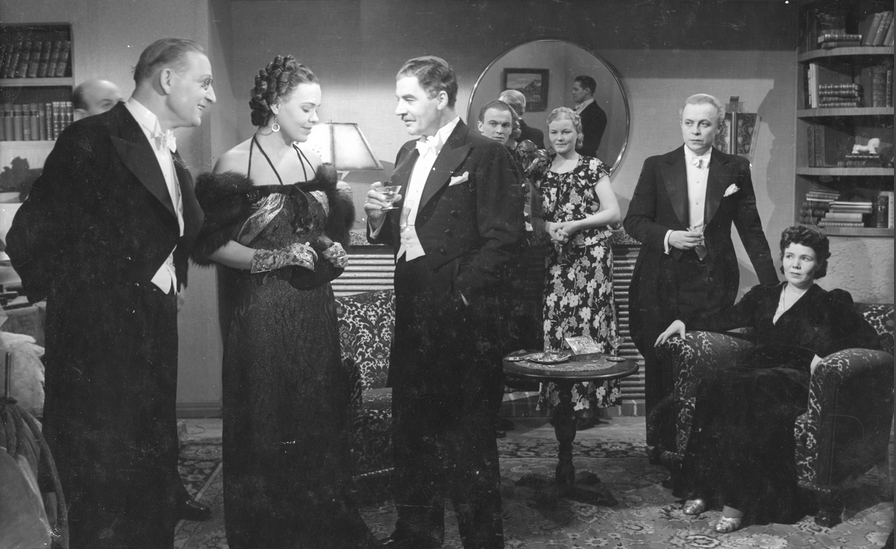
Antreas and the Sinful Jolanda (1941)

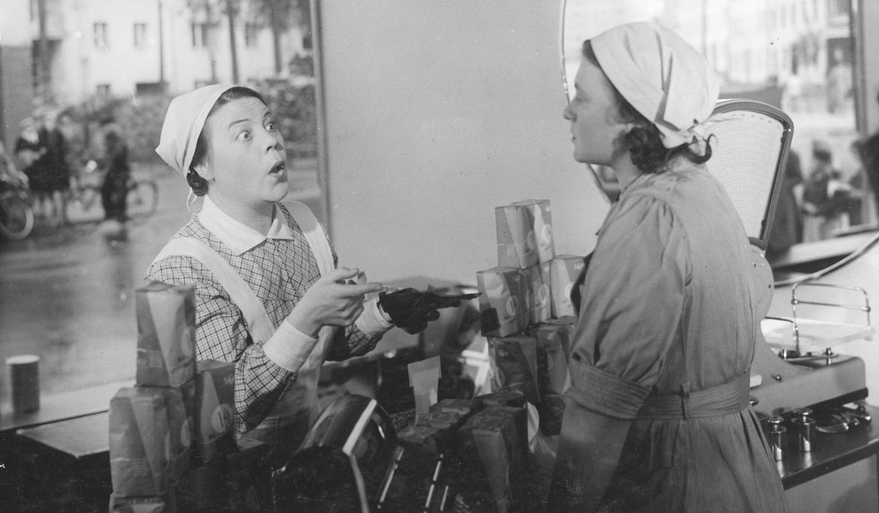
Antreas (Olavi Reimas) is a blind man who sells brushes in the Helsinki marketplace. He charms everybody around him with his sunny disposition, including his neighbours, whom he invites in for the occasional booze-up. But Antreas is at the centre of an unwitting love-triangle, pining for the yuppie secretary Jolanda (Kirsti Hurme), and unaware that his neighbour’s daughter Martta (Kaija Rahola) harbours unrequited feelings for him. Jolanda, however, is busy climbing the social ladder in search of a suitably placed husband, and has no time for the kind-hearted salesman.

Matters change when Antreas turns out to be a millionaire, thanks to the discovery of a vein of silver ore on his late brother’s Australian farm. Jolanda suddenly changes her tune, agrees to Antreas’ previously spurned advances, and betroths herself to him before any other gold- (sorry) silver-digger can get her claws in. She then sets about busily spending his money, while embarking on an increasingly intimate series of liaisons with the musician Reimar (Kille Oksanen).

Suomi-Filmi’s melodrama begins with a bewitching slice-of-life of Helsinki’s harbour-side marketplace, where to this day you can be cheerily over-charged for a sausage. It’s as if director Valentin Vaala and cinematographer Eino Heino are drunk with enthusiasm for the restoration of normality after the Winter War, cramming in little bits of real-world detail just for the hell of it. This also comes across in some of the blocking, for which their sound recordist seems ill-prepared to capture scraps of dialogue amid throngs of students – Martta is supposedly a starry-eyed teenager, although, with the best will in the world, the 31-year-old Kaija Rahola has trouble not looking like one of the lecturers.

A kindly constable (Aku Peltonen) warns the blind Antreas that time is marching on, and hands him a fallen brush-head. Antreas thanks him and cheerily calls out; näkemiin (“see you later”), which the constable acknowledges with a melancholy smile. Much like a country struggling to come to terms with a hard-fought armistice, Antreas puts a brave face on his condition, and on his recurrent self-medication through alcohol, smiling unapologetically as he tap-tap-taps his way into the Alko store to buy a restorative tipple.

Shooting on Antreas and the Sinful Jolanda started in the summer of 1940, for some pick-ups in Helsinki, Turku and Nantaali, although as the year wore on, some of the later shoots had to move indoors. One sequence in a backyard has been plainly filmed in a studio. They did, however, risk the weather for a location shoot on Tehtaankatu in central Helsinki (home to today’s Russian embassy), where a kind-hearted passer-by did not realise that filming was underway, and tried to persuade the “blind” Olavi Reimas not to go into a booze shop. The film also seems notable for an animated credits sequence in which the stars’ names write themselves out in swirling calligraphy – something I don’t remember seeing previously in Finnish film, although possibly I have merely not noticed it before.

Early set-ups celebrate a blue-collar world of hard work and chirpy enthusiasm, not unlike the plucky Brits gurning their way through the Blitz. As all too commonly seems to happen in Finnish film, the antagonist gets all the best looks and the best lines, while the supposed romantic lead is forced to drip about on the sidelines. Fresh from her simmering bad-girl role in In the Fields of Dreams (1940), Kirsti Hurme delineates Jolanda’s “sinful” nature in several discreet tics and mannerisms, particularly her arched eyebrows at the banter of her office colleagues, and her surreptitious checking of her make-up. She is harshly lit in her scenes with Antreas, artfully imparting her features with a sinister cast that only we can see as she whispers sweet nothings, and even managing to turn a song about light-hearted fun into a sinister harbinger of doom.

It’s left to the ever-faithful Martta to take Antreas to Turku, where a German doctor is conveniently able to restore his sight – not for the last time in the 1940s, Germany is presented as a kindly and tech-savvy ally of Finland. The pair return to Helsinki, where Antreas pretends that he is still blind, although he now literally sees the terrible way that Jolanda is carrying on with Reimar – she is trying to get Antreas to sign a cheque for far more than the amount she tells him, and even openly snogging Reimar in front of him. Confronting Jolanda with her plan to swindle him out of 300,00 marks, he sends her packing, although he forgives Reimar, who earnestly refuses to accept a cheque written in bad faith. In a lovely moment, it is only when Antreas bends down to pick up the crumpled cheque that Jolanda realises he has been able to see through her dastardly plot.

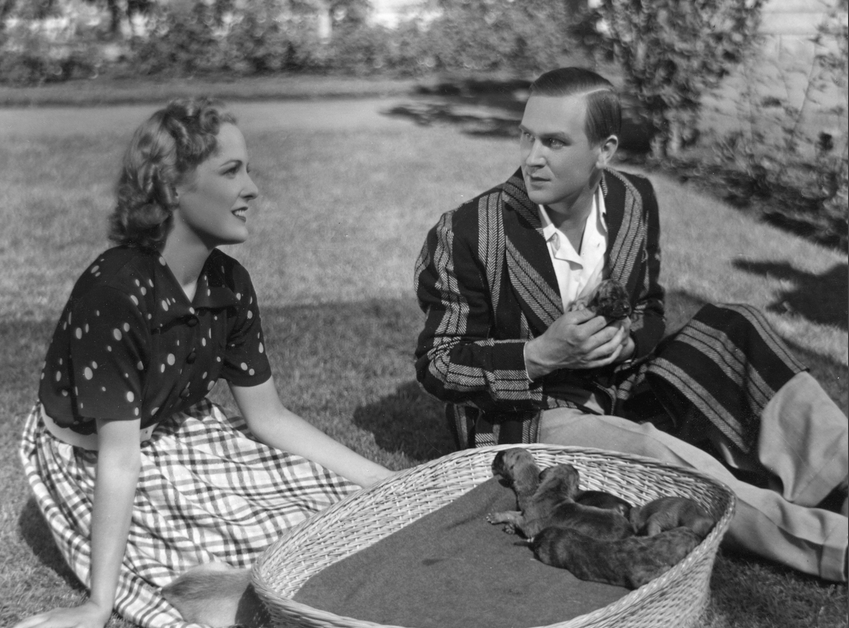
Martta invites Antreas to the garden to see some puppies (no, really), whose eyes have just opened. “Only today have my eyes finally opened,” Antreas says. “And you, Martta, are the first person who begins to look beautiful in my eyes.”

The Finnish press in its day was largely approving, acknowledging that it was a difficult time and a difficult conditions to be squeezing out a dramedy. Even Toini Aaltonen in the Suomen Sosiaaldemokratti observed that for all its “naïve emotion”, there was something profound in the way that it focused on what was truly important to Antreas. Money is no object – Antreas literally hands Reimar all the cash that Jolanda has been trying to obtain by underhand means – but it’s more important to him that he has the love of a good woman. Olavi Vesterdahl in Aamulehti was similarly impressed with a film he found “psychologically interesting.” I concur with Salama Simonen in Uusi Suomi, who enjoyed the “countless small details” in both filming and acting that made this more than the sum of its parts, even if the idea of a life-changing disability that can so easily be waved away is liable to leave many 21st-century viewers uncomfortable.

Jonathan Clements is the author of A Short History of Finland.  He is watching all the Finnish films so you don’t have to.
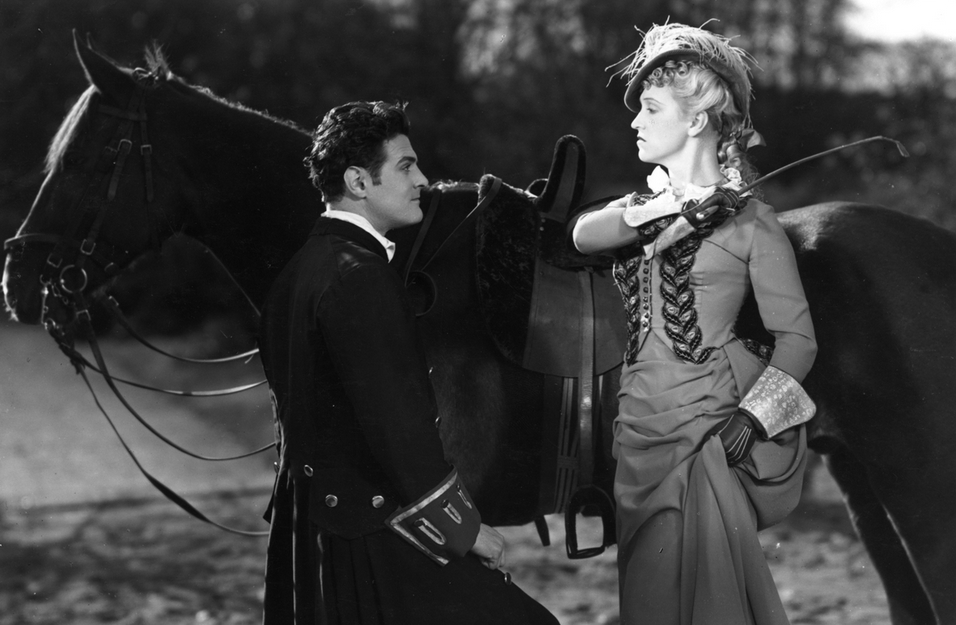
Helsinki Crimes (2022)

Timo Harjunpää is a dour, distracted detective who commutes into work on the train from the Helsinki suburbs. He has to deal with a series of quirky crimes, including a policeman’s son on a killing spree, a millionaire pushed over the edge by aggressively woke tormenters, and a male prostitute accused of murder. Meanwhile, Harjunpää’s wife hectors him about “never” spending time with his family, but does so while they’re at the beach, and continues complaining about it while they are sailing around in a yacht.

Sneaking without fanfare onto Netflix, the Finnish crime series Harjunpää is based on the novels by Matti Yrjänä Joensuu, retitled Helsinki Crimes for the international market, on the grounds that there is no point in having a hero whose name nobody can pronounce in the Home Counties. The character has appeared before in multiple adaptations, including a Swedish-language TV series in the 1980s and a Finnish series in the 1990s. Here, he is dusted off once more for the Scandi Noir generation, with adaptations of four of the Harjunpää novels, carefully dragged into the 21st century. Harjunpää and the Policeman’s Son, for example, was originally published in 1983, but here gains a subplot about online identity theft that would never have even occurred to the original author. Harjunpää and the Bullies, originally published in 1986, is here entirely transformed into a story of net stalking and catfishing.

The original novels were written between 1976 and 2010 by a serving police officer with a deep interest not only in the police procedural, but in the psychological grind of police work. Harjunpää himself was named in honour of a fellow cop, killed in the line of duty in 1968. Joensuu’s original novels focused on the damage done to Harjunpää by his encounters with crime and criminals. As noted in Sally Wainwright’s Happy Valley, police officers tend to encounter people on “the worst days of their lives”, and the series zeroes in on Harjunpää’s troubles reconciling his day-job horrors with his distant family life.

Much of the appeal to Finnish viewers surely stems from the way that forty-year-old thrillers are updated for a new generation, but none of that will be visible to audiences overseas. Instead, they are liable to see an oddly well-off, reticent detective, blundering through a series of crime scenes, with a will-this-do? theme tune and a touchy-feely boss.

The subtitling team push their translation to the redline of acceptability, throwing in a bunch of policier slang (all “vics” and “K-9 units” and “broads” and even saying “911” when the emergency number in Finland is actually 112), which makes the script sound a lot cooler than it really is. The best scene in episode one, however, is completely wordless, as a father identifies his daughter’s body at the morgue, and the entire thing is played in Finnish silence.

Some truly interesting local nuances may slip past the casual foreign viewer, such as the calm and conciliatory behaviour of the police, who often seem to treat the criminals as if the crime they have just committed is something that has happened to them. Harjunpää has none of the “YOU’RE A LOOSE CANNON!” spats we might expect with his captain, who is, instead, a kind-hearted matron who asks him if he is fulfilled at the workplace. His conflict with his partner Onerva is not about the usual buddy-cop tensions, but about her unreconstructed opinion that criminals cannot possibly be reformed, and are only learning enough psychobabble to gain parole.

The filming schedule appears to have made the most of the short Finnish summer, although one sequence may play differently with foreign viewers. It looks at first as if someone is doing a terrible job of shooting day-for-night, but is in fact naturalistically filmed at midnight in July, which truly has an eerie teal pallor, like some otherworldly twilight.

Jonathan Clements is the author of A Short History of Finland.

Foxtail in the Armpit (1940)

Evacuated from the city of Viipuri, recently lost to Russia in the war, Valle (Arvo Lehesmaa) sets up a musical group with his old war buddies Nalle (Leo Lähtenmäki) and Jalmar (Martti Lohikoski). The boys are soon thrown into the company of a trio of fun-loving office ladies, who unwittingly drag them into a series of misunderstandings about a valuable fox-fur scarf that comes into their possession. Eventually, all’s well that ends well, three couples find love, but the women dutifully donate their engagement rings to the Finnish war effort, since every little helps.

Released in the last week of 1940 and not making it to many provincial theatres until the following spring, Ketunhäntä Kainulossa rounds up a bunch of B-list actors, overlooked by the Suomi-Filmi and Suomen Filmiteollisuus studios. Leading ladies Mirjami Kuosmanen and Aune Häme, for example, had only managed bit-parts in films for the majors, while Aino Angerkoski might have a familiar surname, but only because the recently deceased star Kaarlo Angerkoski was her brother. All gamely throw themselves into a farce that tries to make light of the war raging just outside – famously, Finland had banned dancing during the Winter War as a mark of respect to the hardships on the frontline, and the jazzy, toe-tapping resumption of fun times seen here would soon be repealed again when hostilities resumed. As a result, the cast desperately try to cram in as much singing and dancing as they can, from impromptu a cappella singalongs on apartment stairwells, to a full-on variety show that bulks out the running time in the last reel.

The film’s odd title derives from a Finnish slang term – a foxtail in the armpit, not unlike a wolf in sheep’s clothing, denotes a wily predator trying to pass himself off as something he is not. In this case, it refers to a folktale about a fox trying to pass as human by cramming itself into an overcoat, only for its tail to poke out, giving it away. It is also the title of one of the many songs sung during the course of the film – in this case, at a bizarre masked ball that the cast attends, and where people throw paper streamers in an attempt to make things more interesting. The song is reprised at the end in a song-and-dance number in which Lähteenmäki is surrounded by a bunch of lissome Finnish girls in hotpants, so life could be worse.

The film was written to order by Reino “Palle” Hirviseppä, a prominent radio scenarist hired to dash something off to capitalise on the armistice. His revue-style caper (compare to the contemporary S-F Paraati and the same company’s earlier Kaksi Vihtoria), throwing together a bunch of stock characters better known from Finnish radio, often lumbers towards incomprehensibility when divorced from the memes and call-backs of its original era. Hirviseppä openly feuded with director Blomberg over liberties taken with his script – rushed into production so fast there was no time to wait to shoot planned summer scenes, losing most of the first-choice cast to also-rans, and a bunch of rewrites that he regarded as ruinous. He would later comment that the premiere at the Helsinki Savoy was an unmitigated disaster, and that he was ashamed to be present. Audiences agreed, in a year for which cinema attendance was already in a slump – this was the fifth and last film for the production company Eloseppä, and its box-office failure caused the cancellation of the planned follow-up, Singing Cinderella (Laulava Tuhkimo).

The Helsingin Sanomat was unimpressed, with movie critic Paula Talaskivi archly noting that a movie billing itself as the “funniest Finnish movie of all time” failed to elicit a single chuckle in the cinema. Instead, she found it to be “the saddest thing imaginable,” betraying the audience’s trust by committing the most unforgiveable crime for any comedy: being boring. Olavi Vesterdahl was similarly damning in Tampere’s Aamulehti, berating the film for even bothering to staple its song-dance routines together with such a flimsy plot. The Swedish-language press commentary is beyond me, but I cannot resist sharing the Google translation of the review in Hufvudstadsbladet, which reads: “”This is an insertion for the whole of the landfill and the landfill of the landfill. However, the number of landfills used is not open to the public from the operative coupling of the ramp.” Say what you mean, Sweden.

Critics were more easily swayed in the Finnish provinces, where the Savo Sanomat called it a veritable “herring salad” (sillisalaatti – this is apparently a good thing if you come from Savo), and commented: “There’s such a vibrancy and momentum in the movie, so that no one sleeps at all while watching it. In places, the film touches such limits of respectability that it should be categorically kept from children.”

Two years later, director Erik Blomberg would marry leading actress Mirjami Kuosmanen, so I suppose someone found it raunchy enough outside Savo. Hirviseppä and Blomberg, however, never spoke to each other again, and were still bitter about the whole thing in interviews four decades later.

Jonathan Clements is the author of A Short History of Finland. He is watching all the Finnish films so you don’t have to.