Hiroki Yamaguchi “…was working within the constraints of shoestring funding, a largely amateur or volunteer cast and crew, and shooting on a Panasonic DVC-Pro – a video camera with a price-point and capabilities that can be matched today by a second-hand iPhone. Nobody on the production was paid; the props and set were literally scavenged from a junk yard. Even the advertising was low-tech, with the cast hefting a poster-board through the streets of Tokyo, exhorting passers-by to give Love, Actually a miss and try the little indie film playing in a smaller screen at the same cinema.”
From my sleeve notes to the bonkers Hellevator, coming in May from Treasured Films.
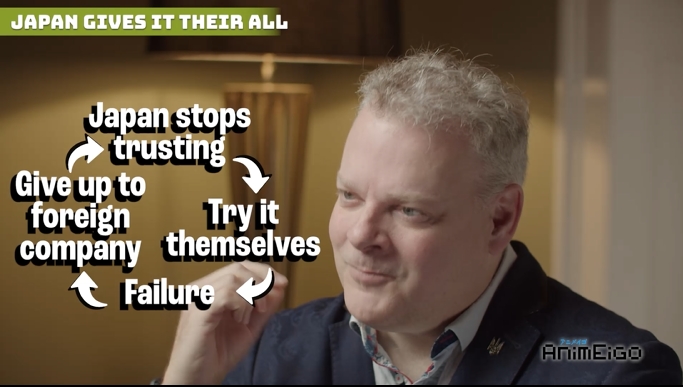
Over at Animeigo’s Youtube channel, they make their bonus footage available from their oral history of the anime business, which means you get to hear me talking about the logistics (and the finances) of festival guests and interviews, gossip about Leiji Matsumoto, Naoko Yamada, Mamoru Hosoda and others, the creation of Smith Toren and foreigners in the anime business.
“I stepped ashore,” wrote A.B. Mitford in 1911, “and, rubbing my eyes in amazement, saw myself in a world younger by six centuries than that which I had left behind me. Feudalism is dead, but its ghost haunts me still. I shut my eyes and see picturesque visions of warriors in armour with crested helms and fiercely moustachioed visors.”
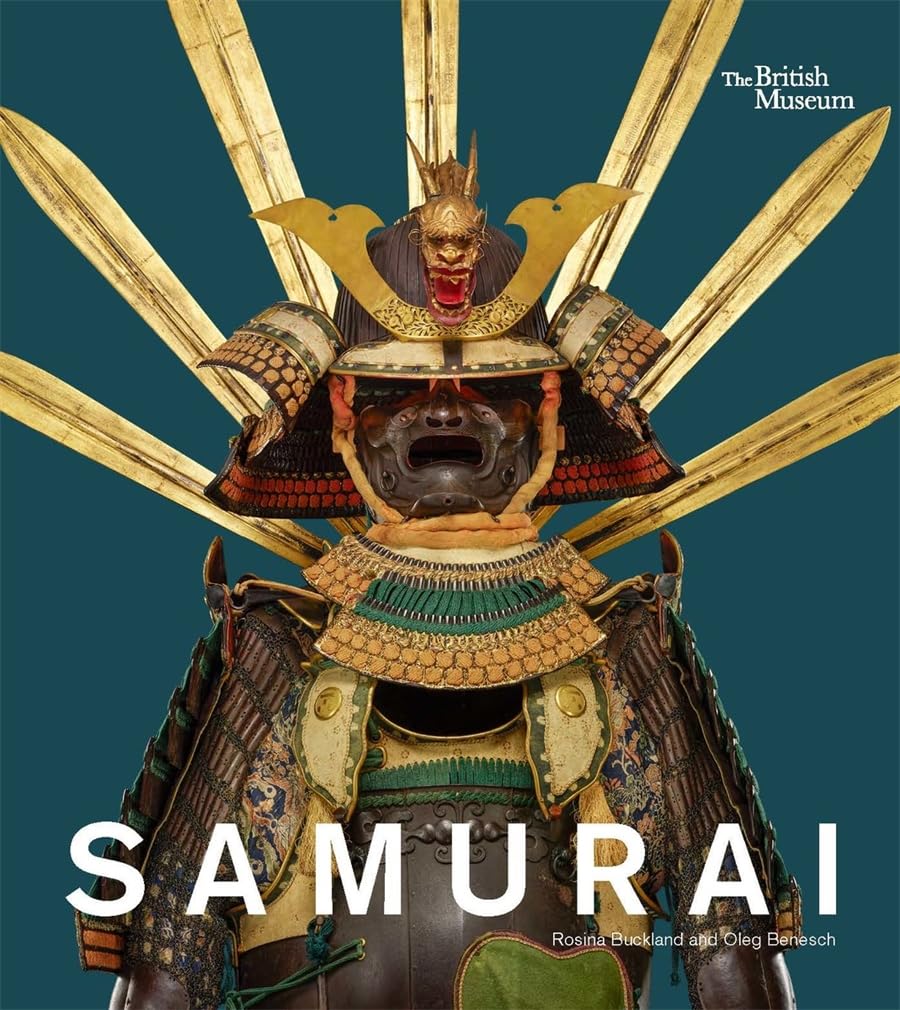
His comments are quoted by Natasha Bennett as part of her essay on “Collecting samurai armour in nineteenth century Britain”, which summarises the passion and obsession that the Victorians had the newfound Samurai, a discredited, failing military elite whose swords and helmets, woodcuts and silks were being offloaded on the European market by the crateful. The British Museum’s lavish exhibition Samurai deals in even-handed and intricate care with the sides in a modern battleground, in which the truth of the historical samurai contends with the stories they told themselves about themselves, in ancient war chronicles, in the twilight of the rule of the shoguns, in the long and tragic 20th century, and in modern myths.
The exhibition catalogue, expertly overseen by Rosina Buckland and Oleg Benesch, gently deals with the expectation that many of the visitors to the British Museum are likely to think of the samurai as figures from a fantasy movie or a heroic myth, rather than real-world people with everyday concerns. One image beautifully encapsulates the attitude not only of Mitford but of the Japanese Imperial Army itself, as Japan’s victory in the very modern 1905 Russo-Japanese War is celebrated with an Army-approved image of three samurai: “the triumphal celebration in the Middle Ages.”
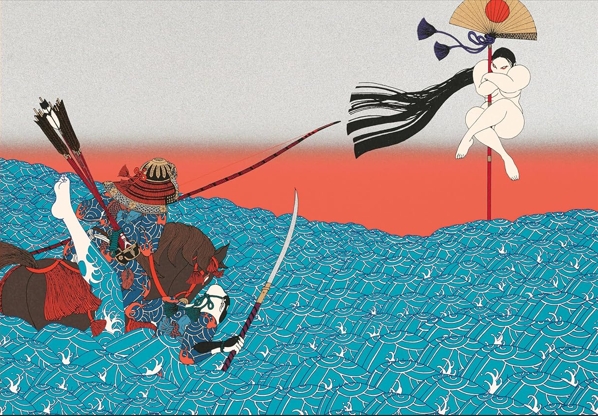
An entire final third of the materials are taken up with the end of the samurai and their incorporation into tourism and popular myth – a tale with as many switch-backs and double-crosses as any military campaign. The curators offer jaw-droppingly beautiful representations of the samurai’s self-celebration, such as a fantastic 1863 portrait of the wrecked Mongol fleet, its drowning sailors clinging to driftwood in a swell caused by a conspicuous sunburst.
One might quibble, as many museum-goers do, that visitors to the exhibition are often paying cash money to see things that they could have seen for free only a few weeks earlier. But while many of these images do have tell-tale donation dates going back decades or even centuries, the whole point of curation is to place such elements in new and interesting contexts, which the British Museum exhibition delivers by the spadeful, with multiple temporary loans from world-class collections like that of the London print-dealer, Israel Goldman.
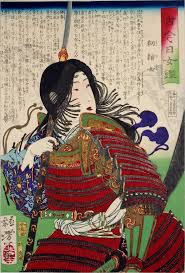
A lot of the coverage so far of the BM’s exhibition online has been weasel-worded rage-bait about the alleged emphasis on “female samurai”, which is not misguided wokery, but an undeniable historical fact. The samurai were a social class – fully half of them were women, otherwise there was no means of making little samurai. Samurai girls were trained in home defence – the use of the anti-cavalry naginata being most prominent – and samurai warlords were frequently entertained by girls doing “sword-dances.” There is even battlefield evidence of female corpses in samurai armour, although the issue, really, is the extent to which women habitually fought on the battlefield, and whether the fearsome Tomoe Gozen, who rides in and out of the Tale of the Heike in three wild pages, was an entirely everyday sight or a one-off nutcase.
The catalogue is peppered with illuminating mini-essays on all sorts of unexpected spinoffery. Hiromu Nagahara, for example, points out the telling implications of samurai photography, both of the grim bruisers to be seen in a shot of Satsuma samurai, and of the dapper men in western suits, who gather incongruously around the leader of the Iwakura Mission overseas, who still clings to his outmoded samurai costume. Mark Ravina writes about the idealised views of the Satsuma Rebellion of 1877, which is either a futile flex by past-it conservatives, or the valiant stand of the “last samurai”, depending on who you listen to.
Chika Tonooka notes that in the wake of Japan’s 1905 victory over Russia, HG Wells decided to name the elite in A Modern Utopia the “samurai.” Tatiana Linkhoeva writes on the attitude of the Soviet Union to the samurai, seeing them as a poisonous tumour that prevented true proletarian revolution from taking hold in Japan. Clemens Büttner offers a valuably Chinese perspective, that Chiang Kai-shek regarded the code of the samurai as the root cause of Japan’s foreign aggression in the twentieth century. But over in Nazi Germany, writes Sarah Panzer, Heinrich Himmler was all for it, telling Hitler that the “SS should become the German samurai.”
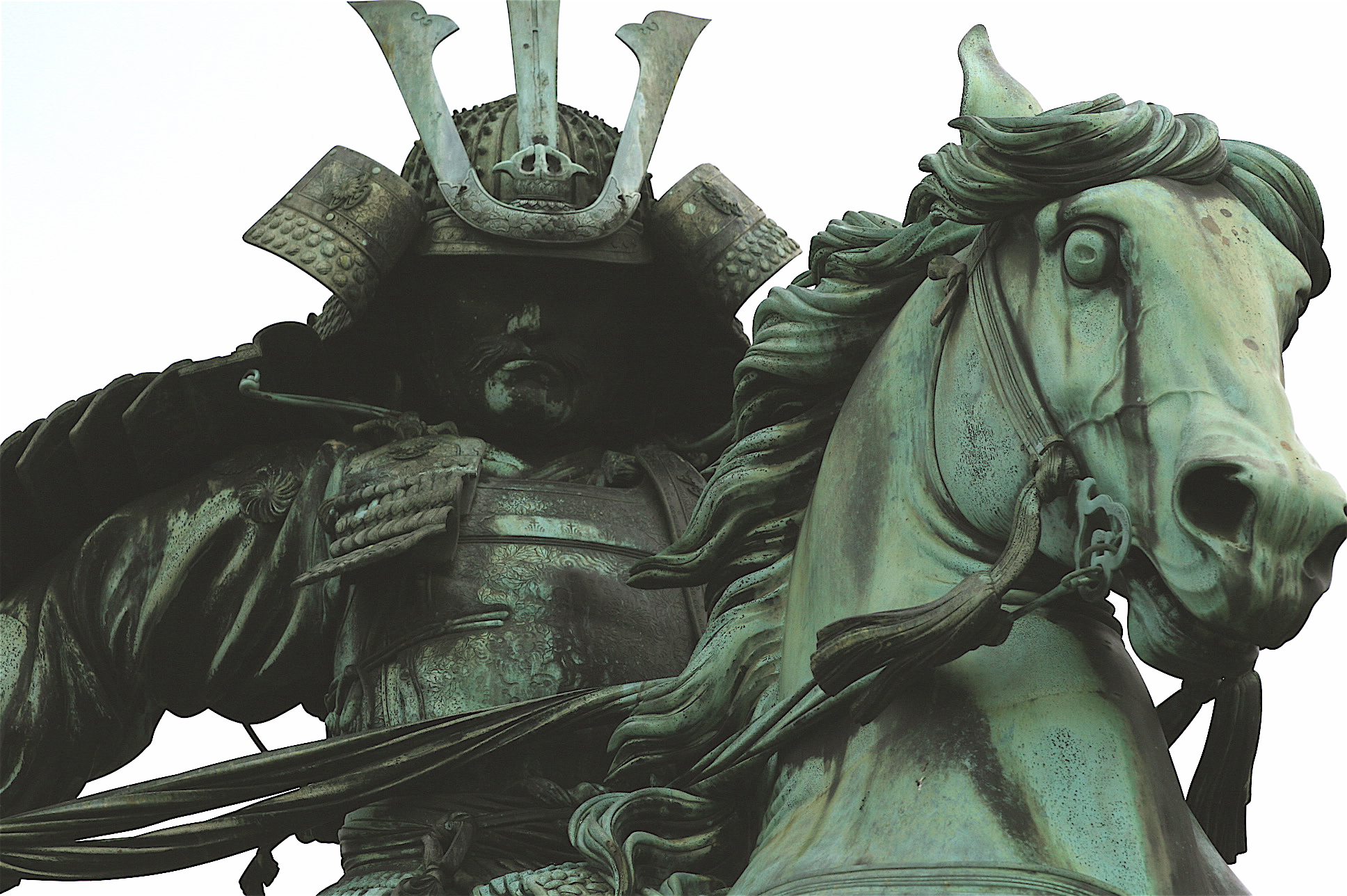
Sven Saaler, whose fantastic book on statues I have reviewed elsewhere, is back to talk about the striking sculpture of Kusunoki Masashige, seen by many a visitor to the Imperial Palace in Tokyo, although from my own observations, many still do not really know who he was. Judith Vitale offers a history of the association of samurai with cherry blossom imagery, which she dates back to the planting of cherry trees at the Yasukuni Shrine in 1879. I lack the space to list them all, but every one is a spark of insight into the long, long tail of Japan’s warrior elite, from Yukio Mishima’s fatal obsession with samurai philosophy, to John Belushi’s crazy samurai character Futaba on Saturday Night Live, to George Lucas’s ransacking of the samurai panoply to create the costume for Darth Vader.
The catalogue, and exhibition, close with such modern icons, often beautifully subtle, such as the katana swooshes to be seen on the shirts of Japan’s football team, the Samurai Blue. Rachael Hutchinson’s closing notes on samurai in video games also drag up the long shadow of the past, when she reveals that Mitsurugi in Soulcalibur was re-skinned as “Arthur”, a blond European knight, for the export of the game to South Korea, where locals were sure not to be all that keen on the sight of a Japanese warrior.
Jonathan Clements is the author of A Brief History of the Samurai, which is also available in the British Museum bookshop if you have any pennies left over. The Samurai exhibition is running at the British Museum until 4th May 2026.
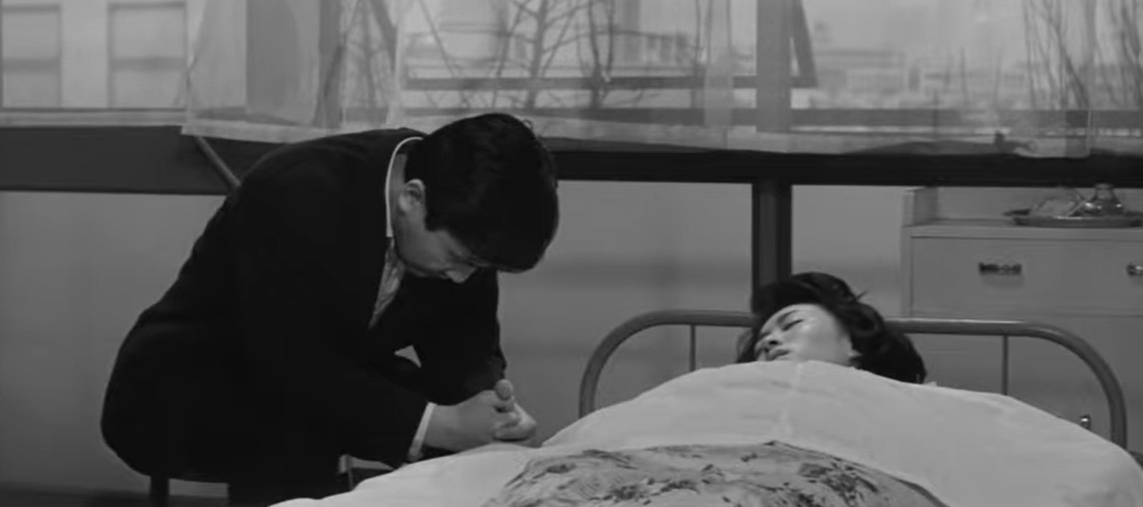
The audience know they have sat down to watch a film called Cruel Tale of Bushido. They are expecting samurai and swordplay, and yet the opening shot is a contemporary ambulance haring through the streets of Shibuya. A heartbroken girl has tried to kill herself with sleeping pills, and an entirely modern melodrama plays out as her fiancé rushes to the hospital to check on her.
Are we in the right cinema? The grief-stricken Susumu Iikura ponders what possible shift in their relationship could have led to her decision to end it all. And he realises that it was the change in his own character, brought about by his reading of old family records in the aftermath of his mother’s death.
Cruel Tale of Bushido is relentless in its take-down of late samurai culture, dismissing 250 years of the Shogunate as a wrong-turn in history, a terrible torment for the Japanese people, a nightmare from which they should be grateful to have awoken. Except we begin at the end, with the nightmare still enduring.
Director Tadashi Imai is here to remind us that the past is so poisonous that it can even unsettle those who were not there to see it, dropping in at seven points in a dozen or so generations of the family history.
We are in the twilight of the samurai. Most of the castles have been dismantled and fallen into ruin, not because of war, but from two centuries of enforced peace and martial law. Samurai wives wave their husbands off to work as if they are going to the office, and indeed, many of them are. The cities thrum with bars and brothels, and the nobles ignore the rules restricting showy clothes and fine living.
The samurai don’t even want to be samurai any more. They resign commissions to become merchants. They tinker with musical instruments. They grasp at arts and culture that are denied to them because they are still supposedly members of a death cult that has seized the government, but is now ossified and stagnant.
The gap in time, for example, between the events of The Great Killing and Eleven Samurai is 160 years, a similar distance between today and the 1860s. It is as if our own society was effectively unchanged from the time of Dickens, Darwin and the American Civil War until the present day. Director Eiichi Kudo is unafraid to re-use some footage from film to film, but that is partly because literally nothing has changed from year to year under the authority of the Tokugawa.
And what of swordsmanship? What of that skillset that served the samurai so well for 800 years of fierce warfare? Now it is evolving into a martial art – a series of sporting demonstrations and bloodless practices, as a warrior elite that comprises 10% of the state finds itself increasingly idle and unoccupied. The samurai are turning into parasites on the body of a Japan that relies increasingly on farmers and urban merchants. But every day, they still train for battles that never come.
Jonathan Clements is the author of A Brief History of the Samurai. This text is an excerpt from the video essay Fighting the Poison, included in Arrow Films’ forthcoming Samurai Revolution trilogy box set.
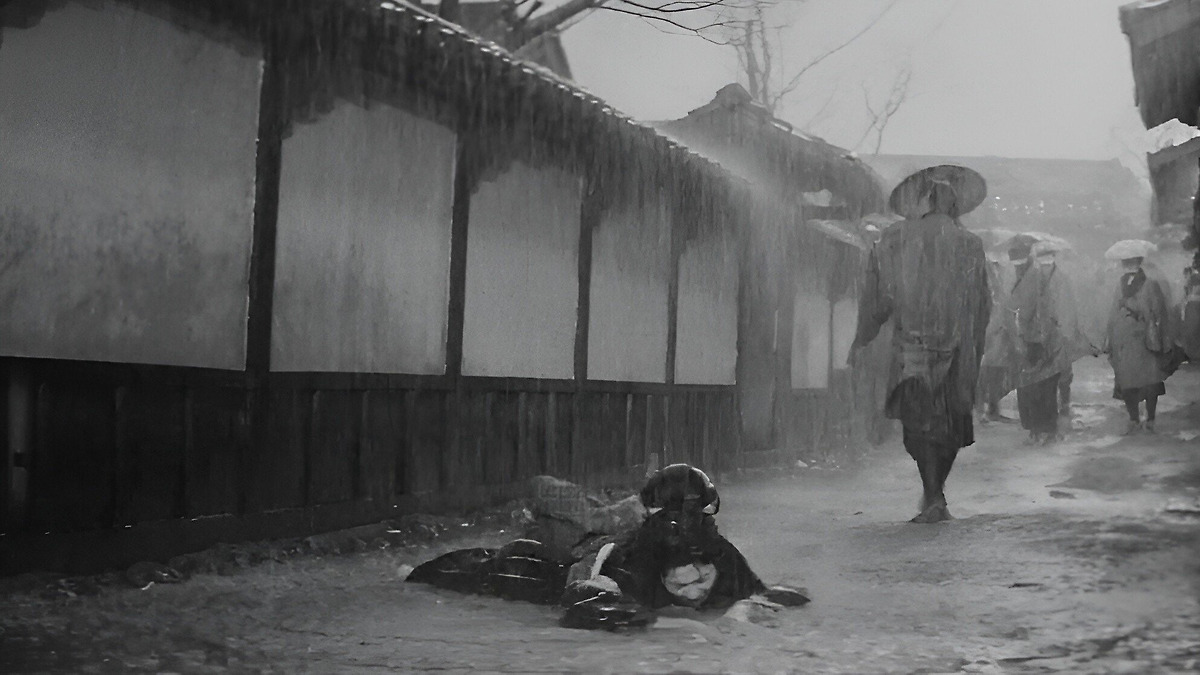
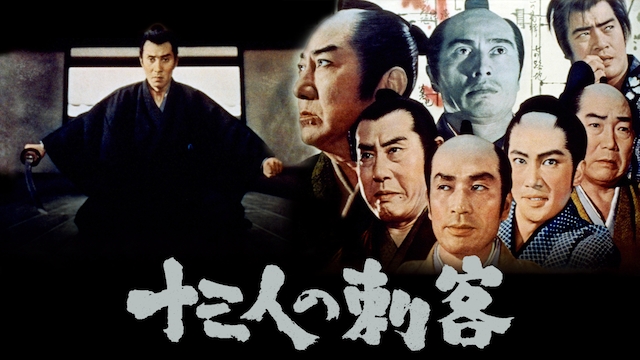
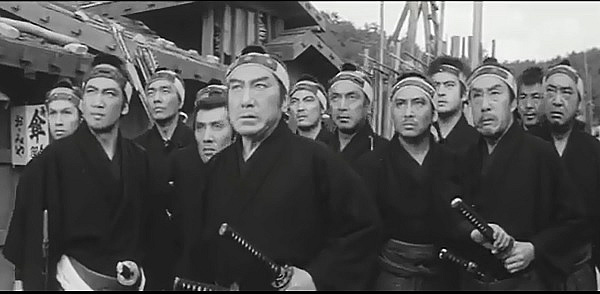
The inspiration for Thirteen Assassins was the assassination of the Austrian Archduke Ferdinand that led to the outbreak of the First World War. Storyliner Kyo Watanabe, eventually superseded on the writing credits by Kaneo Ikegami, was intrigued by the idea that the would-be killers had failed in their first attempt, but still managed to get the job done. He proposed a plot to murder a samurai nobleman – one of the many local warlords obliged to march up and down Japan for “alternate attendance” on the Shogun in Edo. What if, he argued, “there is an assassination attempt on the way, but some people die and it fails. So they have to lay in wait for him on his way back, and it succeeds.”
Watanabe’s idea was that the samurai would overcome vastly superior forces, in much the same way as the legendary 47 Ronin, by kettling, neutralising and ambushing them. He envisioned a prolonged closing battle in which thirteen wily warriors outwitted “a hundred” assailants (actually fifty-three) in order to get to their target.
The problem would be finding a director prepared to work on such a movie, since it was usual for fight choreographers to handle the battle scenes. The producers hit upon the thirty-four-year-old Eiichi Kudo, a director who frequently surprised his crews by coming up with ideas of his own for sword fights.
Kudo was dragged in, and the film was scheduled to go into production as one of Toei’s second-string features: low-budget double-bill filler, lacking big-name stars or an appreciable budget. But the film veritably demanded an intricate set for its big finish – that climactic fight in a hastily fortified post-town. Unable to secure the financing for his set, Kudo stole someone else’s, having heard that his art director had previously built a village at a nearby army base for Sadatsugu Matsuda’s Duel of Blood and Sand (1963) and had “forgotten” to dismantle it. It was still sitting there, slowly falling apart, and nobody would mind if a bunch of samurai turned up and wrecked it.
Although he was not yet the overall boss at Toei, Shigeru Okada’s responsibility for approving budgets gave him a de facto power to control productions. By the early 1960’s, he’d had enough of the diminishing returns from period dramas, particularly since the “price of horses was going up” and audiences seemed uninterested in more samurai films.
“Television has completely kidnapped all the children, housewives, and the elderly,” he announced at a production meeting. “The only people coming to the cinemas now are youths and men over thirty, and they are drawn by a delinquent sensibility. Wholesome films for the whole family at Toei just won’t get an audience anymore.”
Instead, Okada pushed for his writers and directors to knock up films about yakuza, set in the late 19th century or later, so that they could use the tail-ends of period sets, or real-world locations.
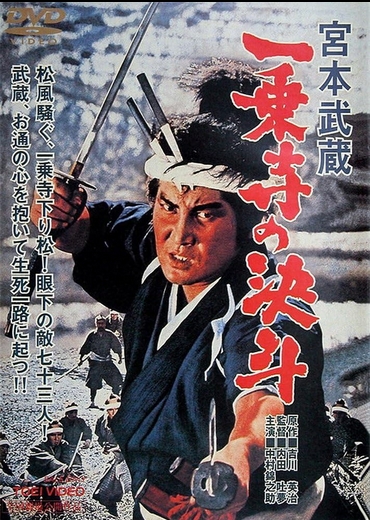
The last major exception at Toei was the five-year span of the Miyamoto Musashi series, for which Tomu Uchida would direct a complete adaptation of Eiji Yoshikawa’s brick-sized novel. The first three films all made it into the top five annual box office scores, leading Uchida to pull out all the stops for the fourth, Duel at Ichioji, in which Musashi would have to face his nemeses at the Yoshioka school in a massive fight.
Uchida became obsessed by a phrase in the script, which he felt obliged to reproduce exactly: “The thick morning mist gradually disappears, and the topography centred around a drooping pine clearly emerges.”
Intent on coming up with a moody swordfight amid rice paddies covered with a thin sheet of ice, Uchida proclaimed that “if it doesn’t exist, we will have to invent it.” Selecting a location near Japanese military training grounds in Shiga, he ordered the art department to make a tree, fixing cedar bark to a steel frame, and then planting it in the soil.
Concrete was poured all around the paddy fields, in order to allow pathways for cast and crew. The art department, realising that water and ice wouldn’t show up on the film stock being used at the time, repeatedly poured wax over the fields so that something would be visible when warriors’ feet kicked through the mud.
Eventually, it took two months to prepare the ground for one twenty-minute fight sequence, which Uchida further extended by insisting on filming for a single “magic” hour each day, so that the dawn light would remain constant. “I want to film the duel only at the time when the sky begins to whiten,” he said, “the same time the actual duel took place.”
This, in turn, meant they had to leave their equipment in place every day, and start setting up at three each morning so as not to waste the day, every day, for two weeks. Unfortunately, Uchida’s efforts amounted to little, since Duel at Ichioji failed to outperform the previous three movies at the box office, and barely broke even. A fuming Okada refused to approve the full budget for the fifth and final film, which was completed with a number of corners cut and shots fudged. It would take years for Okada to be persuaded to return to the samurai epic on film in any big-budget way.
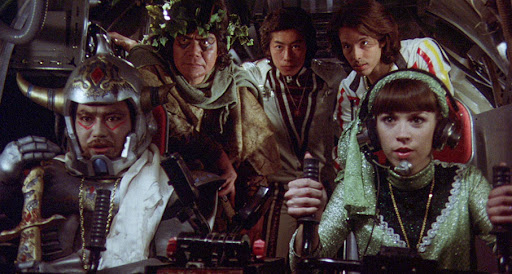
Despite lacklustre reviews from the American press, Message from Space endured far beyond what might have been expected, buried in the children’s slots at American theatres, paired on a double bill with Luigi Cozzi’s Star Crash (1978). Message from Space might have sunk below the radar of mainstream film, fading into the background noise of Saturday morning screenings for the next decade, but that gave it an oddly broad footprint with an audience of 1970s and 1980s children.
To put such American numbers in context, the smash-hit Pokémon – the First Movie (1999), was shown on a mere 3,041 screens, although that was a first-run record in the United States. The cross-over hit Shall We Dance? (1997) barely managed 268 screens. Kurosawa’s acclaimed samurai epic Ran (1985) was shown on a mere 30 screens. Unloved and largely unappreciated, Message from Space ultimately ran in over 17,000 theatres, where adults left their kids for a couple of hours’ respite, unaware that they were watching a fantastic swordfight finale between Shinichi Chiba and Mikio Narita, or the height of Tōei’s SFX work onscreen.
From my sleeve notes to Message from Space (1978), released by Umbrella in Australia as part of their Out There by Toei collectors’ box.
Justin Sevakis’ oral history of the anime industry gets around to interviewing me about the development of anime in the UK, the philosophy of memorabilia, “a bunch of women called Glenda,” the agonies of Dark Myth and the concept of Silver Otaku.
There’s also a bonus for AnimEigo subscribers, with further footage in which I discuss the logistics of festival guests and interviews, gossip about Leiji Matsumoto, Naoko Yamada, Mamoru Hosoda and others, the creation of Smith Toren and foreigners in the anime business.
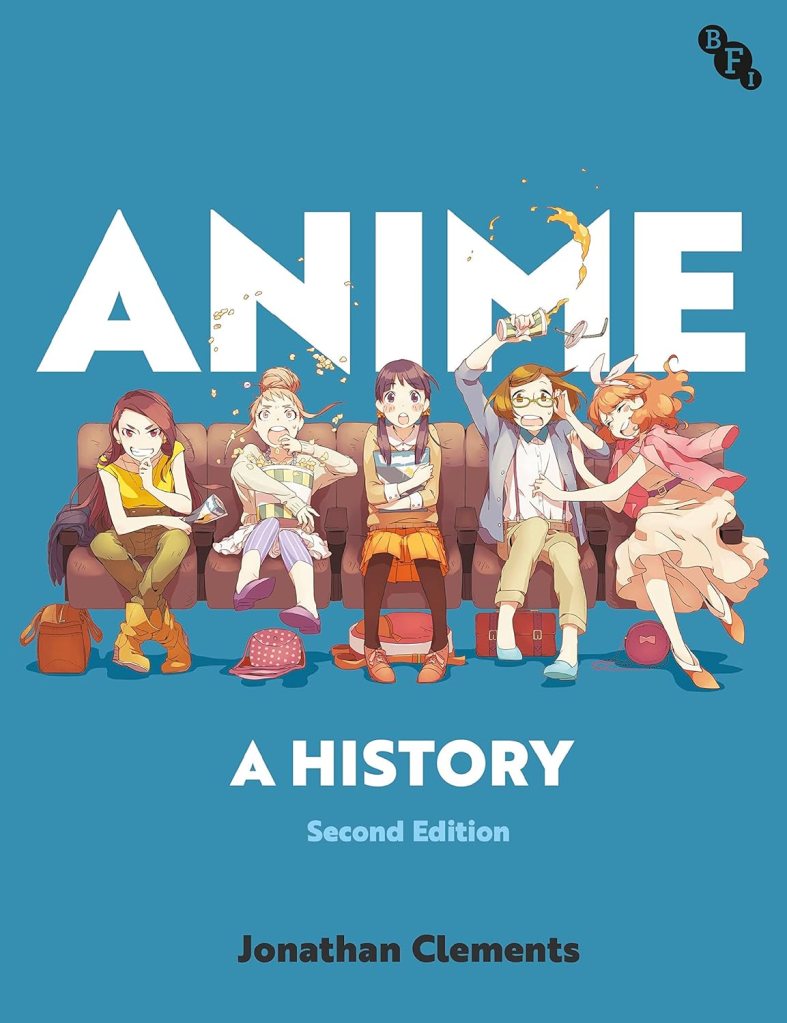
Further details of the anime business from the inside, of course, can be found in my book Anime: A History.
The History Channel’s Ancient Aliens series gets to Japan, which means I get to sound like the voice of reason when discussing the possibility that the Japanese imperial family’s ancestors came from space. It’s all in my Brief History of Japan.




 The Official Schoolgirl Milky Crisis Blog