“It’s not quite some teenager’s fan fiction thrown up online and then stuck between covers as IP bait to lure in an anime company, but that’s largely because I can see that an editor has been near this: the first chapter is the work of a much better author than the second, as if the experience of writing the book has already taught Nahuse some tricks of the trade, and he snuck back to write a better opening. Either that, or he had his whole life to write chapter one, but chapter two came swiftly afterwards, against a deadline.”
Over at All the Anime, I review the first volume of Nahuse’s Rebuild World.
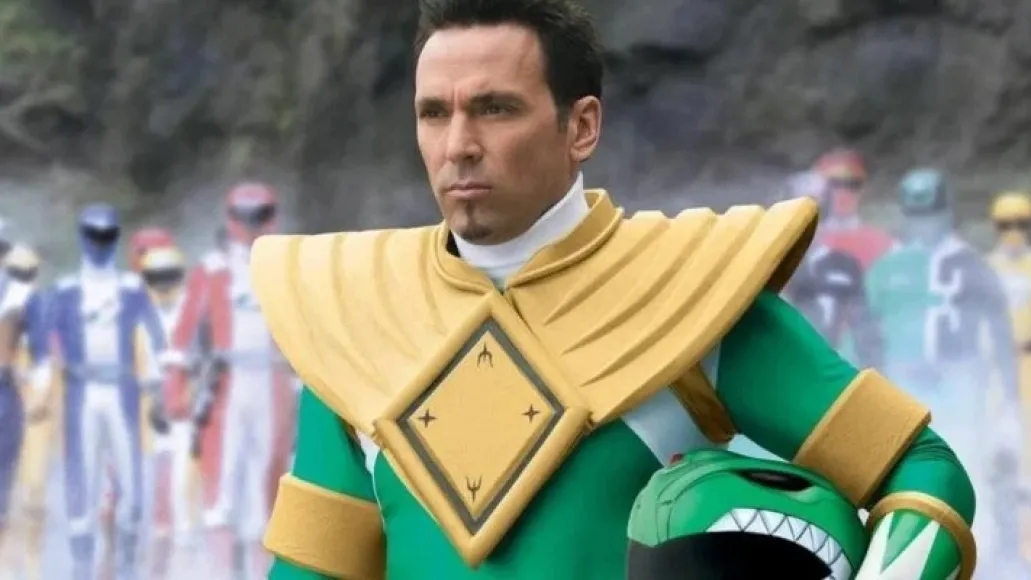
When I met Jason David Frank for the first and only time, I was a 24-year-old newshound for a children’s magazine, and he’d drawn the short straw, dispatched on a press tour of Europe to promote Mighty Morphin’ Power Rangers: The Movie.
It was driving him slowly crazy. He was holed up in a west London hotel suite, with only an old school buddy of his to keep him company. The publicity people, usually hands-on and clock-watching, were nowhere to be seen.
I introduced myself and showed him our magazine, and he laughed heartily at our electric rotating lollipop cover-mount, which everybody agreed looked like a sex toy.
“The thing is,” I said to him as we sat down to talk, “when I watched the film–”
“You watched it!?” he said. “Dude, nobody who’s come through here today has seen anything more than the trailer.”
“Well, I thought it would be smart to watch it.”
“D’ya think?” he laughed around the rotating electric lollipop in his mouth. “Go on, man.”
“I saw that some of the actors were under-cranked so they looked like they moved faster. But you– ”
“Yeah! Right!” Suddenly he sat bolt upright, flinging the electric lollipop onto a coffee table, looking at me with intense focus. “They don’t have to speed me up. Sometimes I think they want to slow me down. It’s because we’ve all got our skill sets, you know, like one’s a dancer and one’s a gymnast and so on, but I’m a martial artist. This is what I do.”
We talked about the martial arts, about how he’d taken the job as the Green Ranger and been so overwhelmed by the love of his fans – an entire generation of children who thrilled to have him back in successive iterations of the franchise, as the White Ranger. In later years, he would be a Red Ranger, a Black Ranger and a Green Ranger again. He boasted that he was throwing all the money he could spare from his starring role into real estate, because this might be the only chance he got to make proper money. I don’t think it ever registered with me that he was still only 22 – he had a presence about him that made him seem much older.
The next journalist in line had been kept waiting for almost half an hour as we ran over. But Frank didn’t want me to go. “A lot of these guys,” he confided. “They don’t care. It’s just great that someone appreciates the work, you know.”
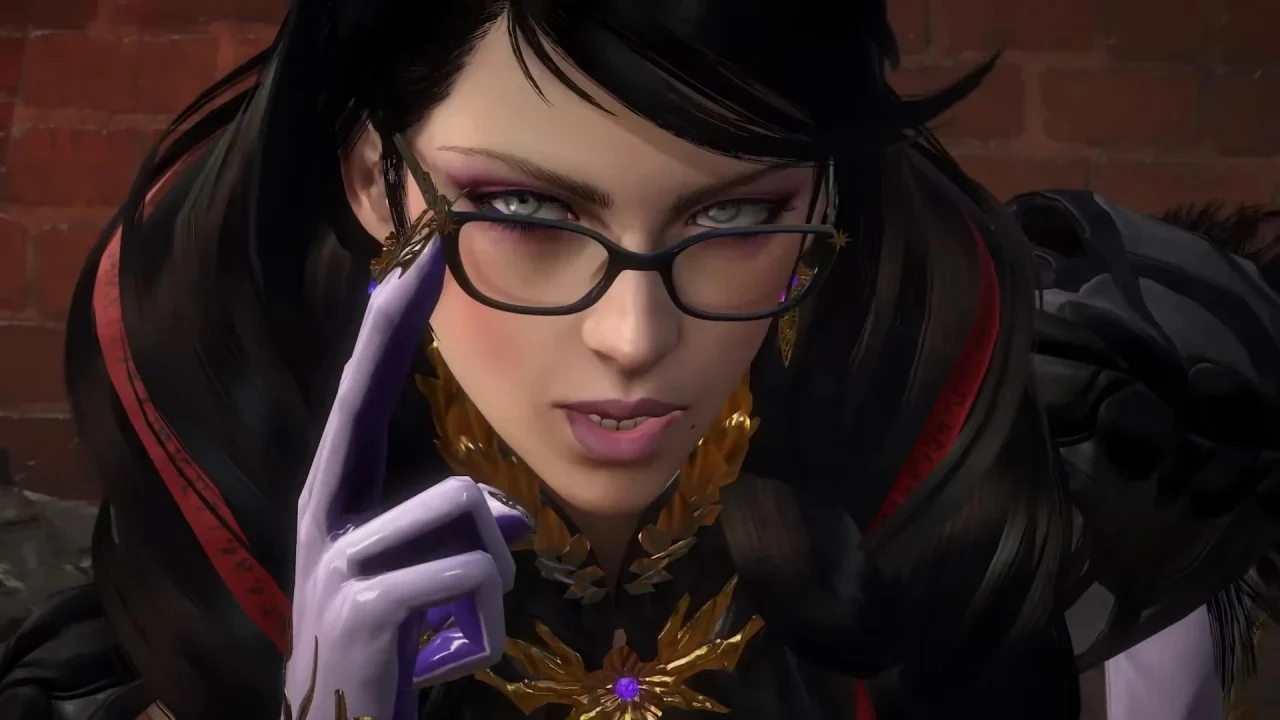
As if the acting world needed any more drama, Hellena Taylor, the voice of Bayonetta in the games and anime spin-off, was made to re-audition for her own part in Bayonetta 3, and then given such a low-ball offer that she walked.
Taylor is by no means the first actor to find out she is replaceable. When he was shunted aside for Kiefer Sutherland in the Metal Gear Solid franchise, David Hayter was similarly annoyed. He, too, was asked to read for the part that had previously thought of as his, on the grounds that maybe he had “aged out” of the role. Such a concept would be particularly insulting to Taylor, since, without getting into specifics about a lady’s age, she is still seven years younger than Atsuko Tanaka, the Japanese voice of Bayonetta (and Ghost in the Shell’s Motoko Kusanagi), who is still in the role.
In an online video post, Taylor noted that the Bayonetta franchise had made $450 million, “not including merchandise.” She enumerated her various places of training and education, a total of seven and a half years at drama schools, and observed that the final offer for her to provide all the lines, shouts, and barks for the next game in the series, was a buy-out of $4,000 – no royalties, just guild minimum for a single eight-hour day.
What’s in play here is the timeless argument over whether voice actors are above- or below-the-line talent. Some of you, and some producers, might be thinking that all you’re buying is some guy to come in off the street and yell a bit. On my first dubbing job, after some idiot (me) sent home one of the actresses early, we had to rope in a runner, literally drag her away from making coffee, to shout “THE TOTEMS HAVE COMBINED!” It wasn’t Shakespeare.
But for the last generation, voice acting has become part of a media mix. Certainly in anime, and also in games, it provides a chunk of the content that magazines write about. It provides bodies to be onstage at conventions; human beings, as stand-ins for cartoon characters, who can sign your video boxes and hold forth with anecdotes. The industry has spent 20 years trilling about this actor or that actor bringing their talent to a role – their voice and wisdom and (sometimes) physicality in motion capture. And if $4,000 still sounds like a lot of money to you, remember that might be the only work someone sees in six months.
Jonathan Clements is the author of Anime: A History. This article first appeared in NEO #225, 2022.
“Shiranui is trying, really, really hard to be a good person… so hard, in fact, that he risks dragging other people into his own self-generated drama.”
Over at All the Anime, I review the manga Natsume & Natsume by Shunsuke Sorato.
“We need a witness to our lives. There’s a billion people on the planet… I mean, what does any one life really mean? But in a marriage, you’re promising to care about everything. The good things, the bad things, the terrible things, the mundane things… all of it, all of the time, every day. You’re saying ‘Your life will not go unnoticed because I will notice it. Your life will not go un-witnessed because I will be your witness’.”
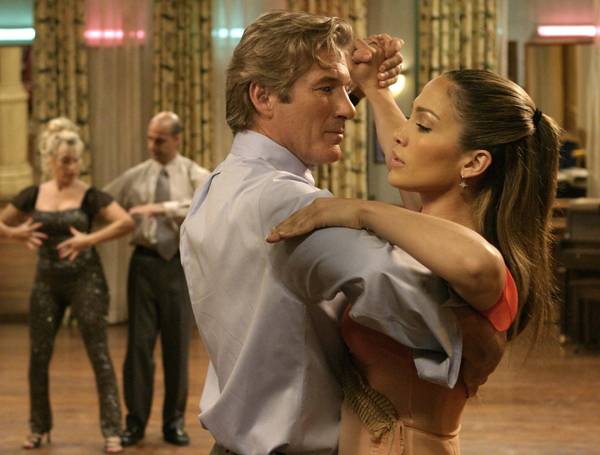
Quite by accident, I caught the 2004 remake of Masayuki Suo’s Shall We Dance, with Richard Gere standing in for Koji Yakusho, and Winnipeg standing in for Chicago standing in for Tokyo. It’s often a shot-for-shot remake of the original, complete with its celebration of platonic friendships and quirky obsessions, but Audrey Wells made several alterations to Suo’s script that I list here because that’s the sort of nonsense this blog covers.
1: It features a man torn between Susan Sarandon and Jennifer Lopez, which is an unanswerable conundrum.
2: One of the characters is eventually revealed as gay.
3: Stanley Tucci, as the secret office dancer, gets a moment in which he twirls one of his tormenters, in a sort of kung fu dance vindication.
4: A scene is inserted in which Richard Gere conspicuously chooses his wife and his marriage over his hobby, only for her to insist that he goes off and indulges his hobby. It’s a little bit of a replay of the ending of An Officer & a Gentleman, and I suspect deliberately so.
5: Miss MItzi, the dance teacher, has her own redemption arc in which she is revealed as a struggling alcoholic who is weaned off the booze by her students’ successes.
Otherwise, it retains much of the humour and the narrative beats of the original, as well as two pointless voice-overs that could have been oh-so-easily shot as real scenes to show-not-tell. Notably, however, Gere and Sarandon have two children in this remake, not the only child of the Japanese original.
“What really comes across is Dockery’s enthusiasm for telling a story about something that, for him as a child and for many of his likely readers, was initially just a hobby. In his investigation of all sorts of areas that ten-dollar wordsmiths might describe as historicity, technological determinism, and industrial economics, he provides his readers with a tantalising, alluring glimpse of the kind of fun you can have when you get to study what you enjoy.”
Over at All the Anime, I review Daniel Dockery’s lively account of the irresistible rise of Pokemon, and can’t resist the opportunity to also plug something that isn’t in the book, which is the terrifying Russian Pikachu song pictured above.
Commissioned to mark the 25th anniversary of the television channel NHK, Future Boy Conan (1978) was the first and last time that Hayao Miyazaki would oversee a television production from start to finish. A ratings disappointment on its initial broadcast, it became one of the focal points of early anime fandom, and shows the early signs of many tropes and ideas Miyazaki would use in his later works.
Jonathan Clements and Andrew Osmond trace the dramatic story of the “directorial debut” of anime’s most famous visionary, taking the reader on an analysis of this landmark television series, its production, release and historical footprint.
The second part of Anime Limited’s Future Boy Conan complete set includes a 90-page book by me and Andrew Osmond, tackling the history of the series within the anime industry and the career of Hayao Miyazaki. For those that have been asking, unlike my solo work on the life and work of Mitsuyo Seo, this will not be available separately as a Kindle edition — for legal reasons, we were only allowed to write it as an extra in a box set, not as a third-party book in its own right.
To Suzhou, China, where the slow clamber back to post-Covid tourism suffered an embarrassing knock this August, when a woman was arrested for wearing a kimono. She had been cosplaying as Ushio Kofune from Summertime Rendering, and was berated by a police officer for dressing up as a Japanese person.
Apparently, everything would have been fine if she had been wearing Hanfu, or traditional Chinese dress.
“If you came here wearing Hanfu, I wouldn’t say this,” he can be heard yelling on snatched phone footage. “But you are wearing a kimono, as a Chinese. You are a Chinese! Are you Chinese?”
The woman’s social media handle was Shi yingzi bushi benren, “This is a shadow, not my real self,” which seems like an aptly self-aware comment on the nature of costuming. Such subtleties, however, were lost on the authorities, who questioned her for five hours until 1am, searched her phone and took away her costume.
One wonders about the context of such an arrest, in a city that, until now, has been famed for its laid-back quality and friendly attitude. My sole encounter with the authorities in Suzhou’s shopping precincts was when I was photo-bombed by a security guard who then pranced off, giggling. But that was in 2017, and a lot has changed over the last five years. Attitudes towards Japan have certainly frosted over, particularly when it comes to cosplaying, which has come to be seen in some quarters as some sort of badge of sedition.
Clearly, clampdowns on Japanese media in China can’t have been that draconian, as otherwise how would she even know what Summertime Rendering was? Yasuki Tanaka’s manga first appeared five years ago, but one assumes the sudden interest in Suzhou was occasioned by Ayumu Watanabe’s anime adaptation, which only ran on TV Tokyo in April this year – both manga and anime versions are accessible in China through the online service BiliBili.
If anything, Summertime Rendering is a cultural ambassador for China, since one of its episodes is essentially a history lesson about how sushi originated there, and is not a Japanese creation by any means. You would think that the Chinese would be super-excited about such as assertion, but instead social media is awhirl with people asking if even dressing up is now off the table.
Jonathan Clements is the author of Anime: A History. This article first appeared in NEO #224, 2022.
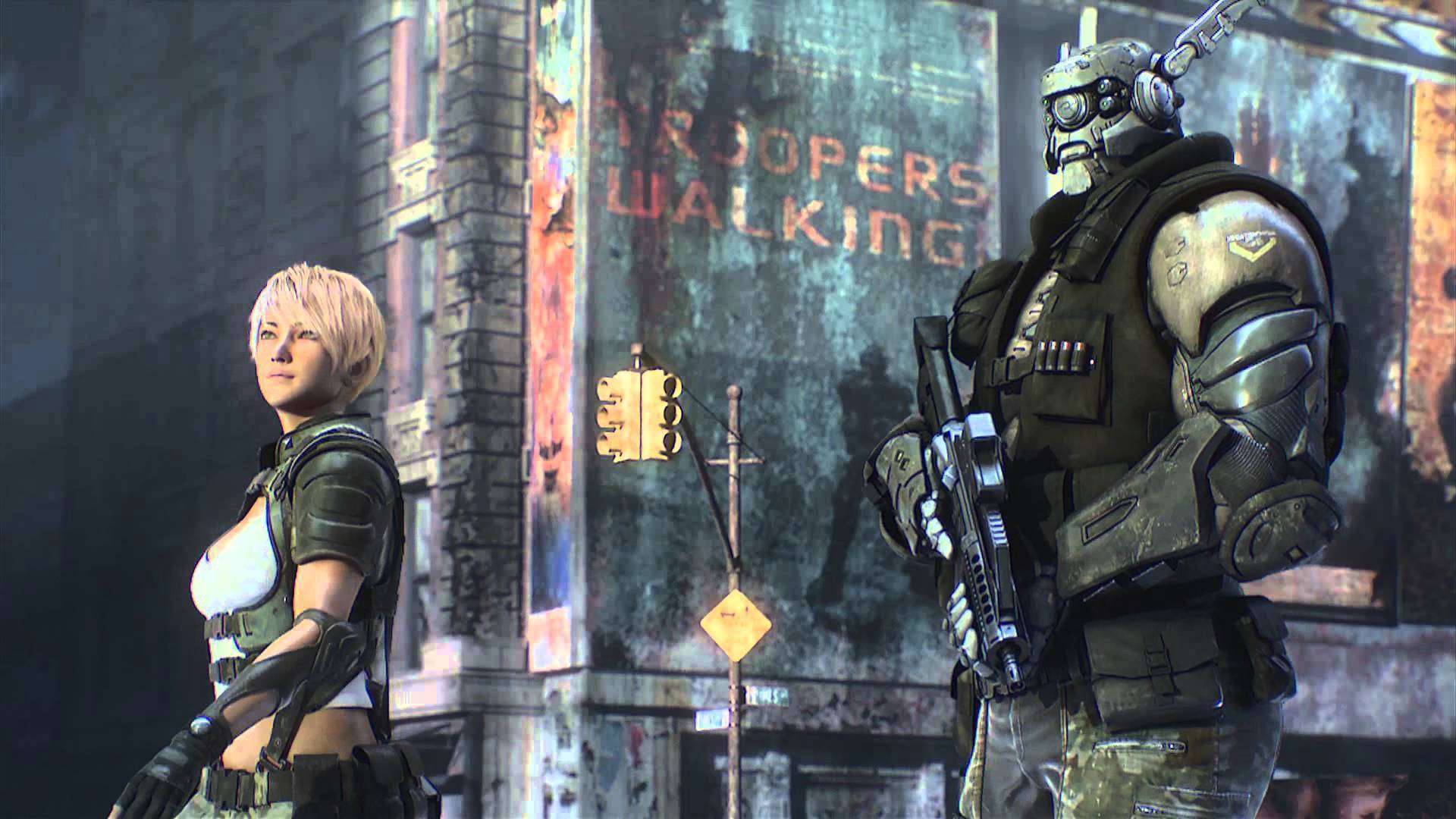
The Appleseed franchise has ever been the Cinderella at the anime ball, never quite making the right connections to realise its potential. It was a state-of-the-art cel anime in the year before Akira wiped the floor and changed the rules. It was a forerunner in CG animation before getting bogged down in an acrimonious fight between its producers, some of whom wandered off to make Vexille, while others stayed around for Ex Machina. Despite having the potential to pack similar punch to its sister title Ghost in the Shell, it has been defeated in the past by a series of naff scripts and gung-ho interpretations, hobbled by the limitations of under-funded CG.
Shinji Aramaki’s Appleseed: Alpha is a marked improvement on previous Appleseed CG features, although the bar has been set so incredibly low that that in itself is not much of an achievement. Set before the opening of the manga, in a post-apocalyptic New York and the Wild West desert that is apparently nearby, it plumps for an intriguing zombie aesthetic in its cyberised goons, mixing biomechanic textures, chrome implants and carbon patches with distinctive camo-influenced body art. The film’s design excels at showing rather than telling, hinting at the messy clean-up after a high-tech war, and offering a world in which Deunan Knute appears to be the only unaugmented human – at least, the only one we see.
With a series of box-ticking MacGuffins, wandering-monster encounters and vaguely defined side missions, Appleseed: Alpha feels all too often like one is watching someone else playing a computer game, not the least because several crucial moments are bodged or oddly framed, so that it is not always clear what’s going on. A series of level bosses have convenient Achilles heels, and a series of coincidences serve to impart the feeling of playing on rails, even with the whole of the American wilderness to explore. The plot is so bonkers that even the cast seem incredulous at some of its twists, while there are some odd slips of logic – like a kingpin who is prepared to leave his office to do his own grunt work and a vaccine that nobody seems to actually need.
The script itself is one of the greatest mysteries, packed with redundancies, half-hearted exposition and a series of quips that are less dialogue than they are “barks” – one-liners yapped at one another by sprites in a game when someone presses a certain button or stands on a certain place. The notable exception to this is Chris Hutchison as Dr Matthews, who imparts real meaning and character to his clichéd dialogue. The other voice actors do their best with their one-dimensional material, but are infected with a Marvel Comics virus that forces them to repeatedly think of something witty to say in the middle of every strenuous fight. Credited to a non-Japanese writer, it appears to be the “original” language of this Japanese film, with lip sync matching English words, much as the characters in Resident Evil added a cosmopolitan cachet by speaking English even in the Japanese game.
Oddly, the smart decision to make this latest film a prequel to the action of the original is undermined by the inclusion of a plot device that earlier versions have used at least twice before – a rogue robot tank. The comedically indestructible gang leader Two Horns blunders through the story like an NPC with a malfunctioning loyalty algorithm, sometimes threatening to kill everybody, sometimes lending a hand, accompanied by random bodyguards who forget to leap to his defence when he is threatened, allow armed enemies to walk into his office, and turn out not to be able to shoot straight, even when they open fire. He is involved in his own private war with the rival cyborg Talos and a sleek lady-android, who turn up late to the party like dinner guests who couldn’t find anywhere to park.
Many elements of the film recall 1980s cyberpunk, with several shots recalling iconic moments from James Cameron movies. But this could easily be another design decision, recalling the inspirations that were so obvious in Masamune Shirow’s original manga. Appleseed: Alpha is a step closer to the idealised Appleseed franchise that producers and fans undoubtedly dream of, but one wonders how many more missteps it will take before it actually delivers the goods. For the crowd at the screening I attended at Glasgow’s Scotland Loves Anime, much of the film’s shortcomings were taken on the chin and greeted with increasing, good-natured hilarity, as if we were watching a much-loved cheesy action movie from our childhood, complete with quotably corny dialogue and a plot written by a teenage dungeon master who just wanted to get to the fight scenes.
Jonathan Clements is the author of Anime: A History. This article first appeared on the Manga UK blog in October 2014, and is reprinted here after the disappearance of that website.





 The Official Schoolgirl Milky Crisis Blog