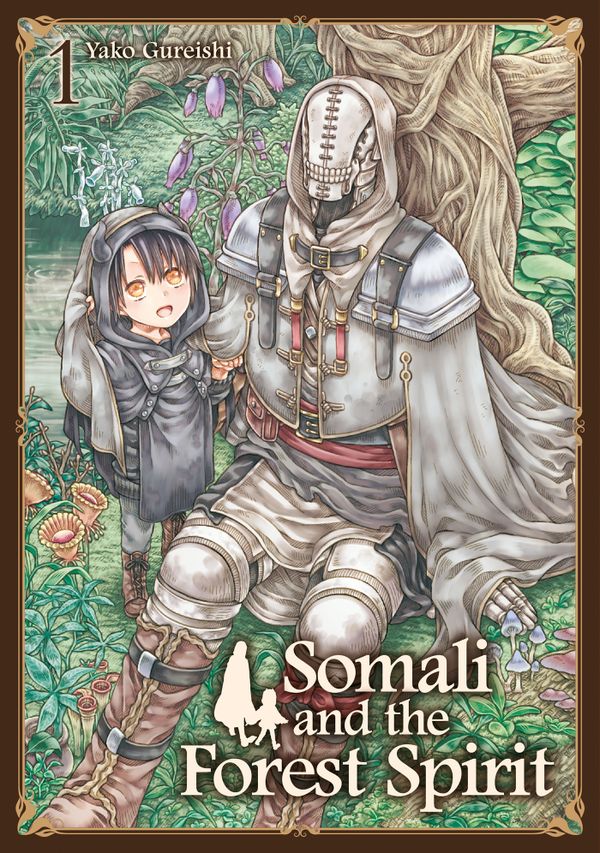
Explore a world from the hit anime of the same name, a world ruled by goblins, spirits, golems, and all types of strange creatures… but not humans, who were nearly persecuted to extinction for their reckless disregard of the natural world.
When a golem, a guardian of the forest chances across a young girl lost in the woods, he vows to take care of her… despite his life coming to an end. He must find other humans for her to live with, but in a world that despises them, is that even possible?
Yako Gureishi’s Somali and the Forest Spirit, translated by Motoko Tamamuro and me, and out soon from Titan Comics in manga form.
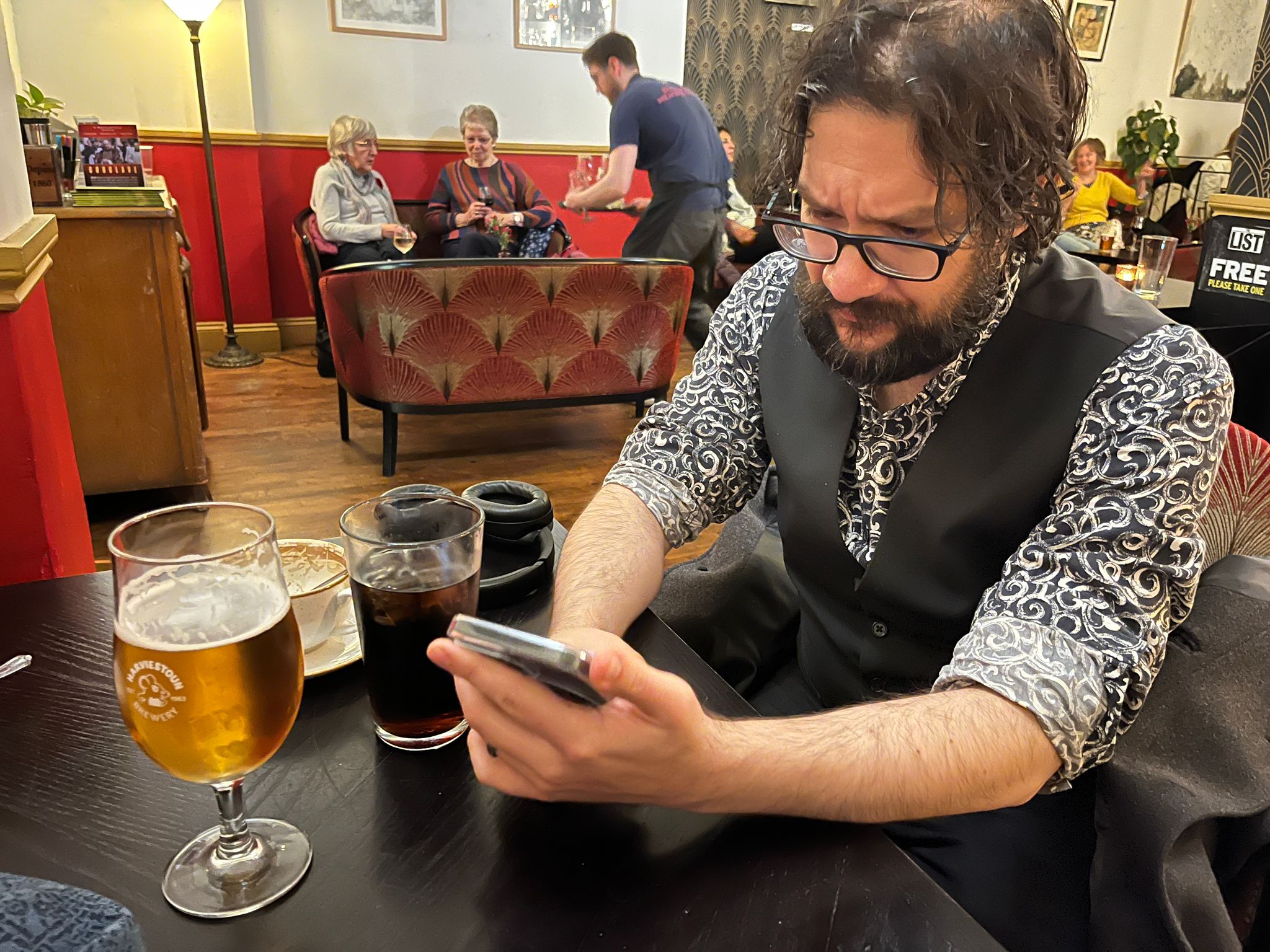
Festival director Andrew Partridge is seen here trying to run a triple-venue film event in two countries from a table in a cafe at a cinema. We’re coming to the end of the Edinburgh leg of Scotland Loves Anime, which has included a landmark event in which Japanese animation was running in all three screens of the Cameo cinema at the same time. We’ve had Naoko Yamada and Kensuke Ushio up onstage in Glasgow discussing 1980s UK electronica, and Maho Takagi from Comix Wave trying to explain why their studio’s relaxation room has a hammock and an open bar.
But there’s still another weekend to go, because Scotland Loves Anime is counter-intuitively in London from next Friday at the Picturehouse Central, just off Piccadilly, featuring a live interview with the director of Totto-chan: The Girl at the Window, me quizzing POPREQ, the impossibly young director of A Few Moments of Cheers over Skype, and all the films competing for the coveted Golden Partridge Award.
When Yukino is sacrificed by his father to the all-powerful goddess Mitama, he prays that he can finally be without religion. He wakes up in a placid world free of faith and begins a new life there.
But when the truth is revealed that the ruling empire is purging and exploiting the citizens, Yukino must find his faith and summon Mitama to protect them!
Motoko Tamamuro and I translate Aoi Akashiro’s very silly religious satire Working for God in a Godless World, out soon from Titan Comics.
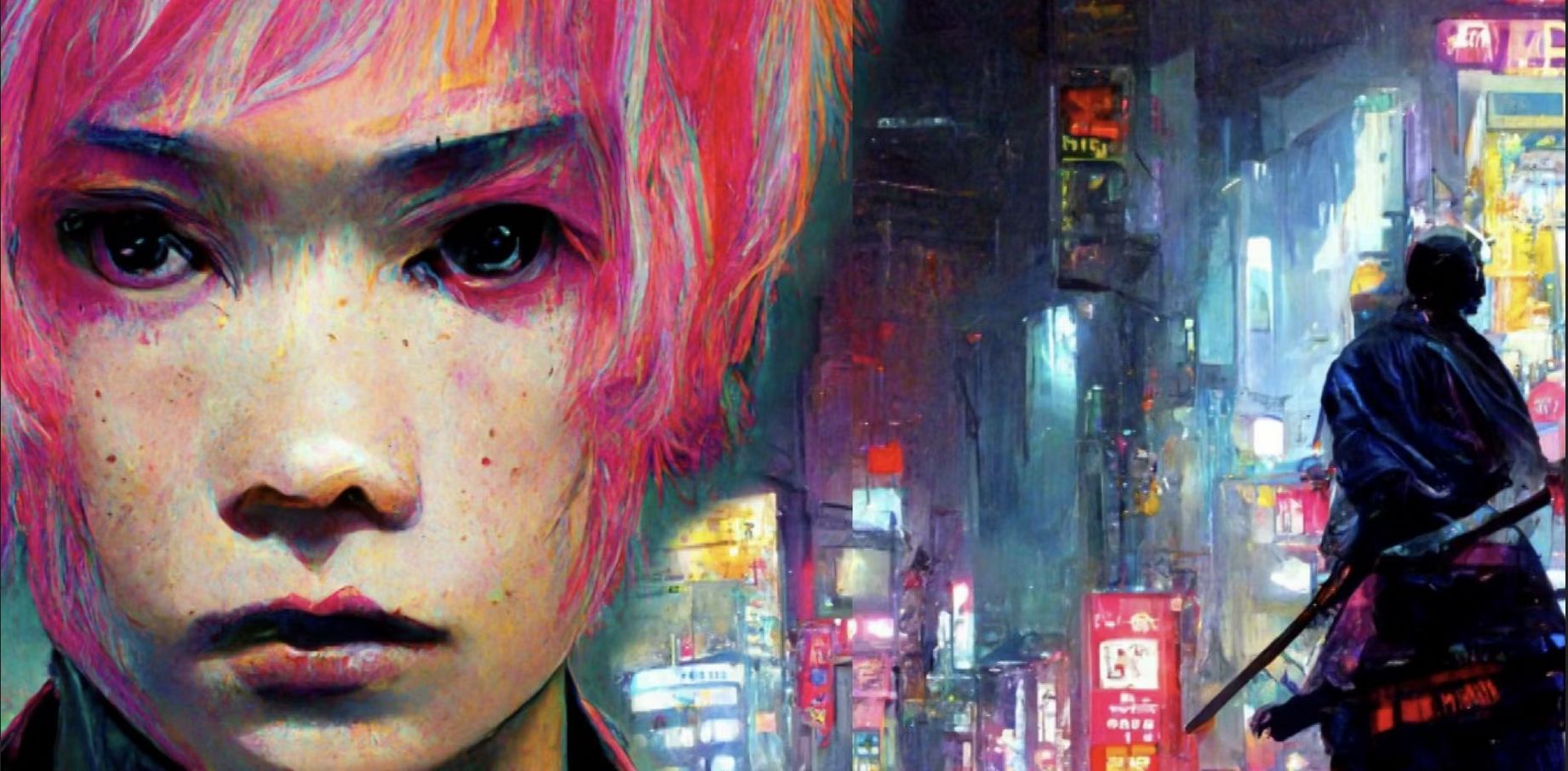
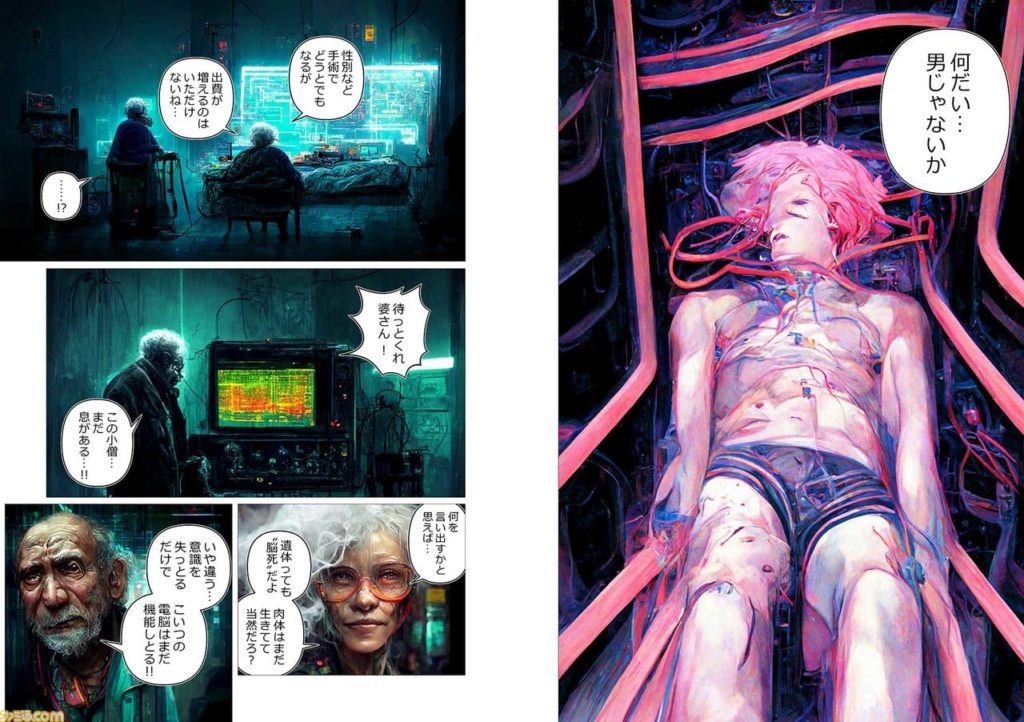
Rootport’s Cyberpunk Peach John is widely known in the manga world, mainly because it was the “first manga drawn by AI”. But at least in the near future, it may be edged out of official histories because nobody wants to get their hands dirty writing about it.
An editor gets in touch to say that he loves the two-page piece I’ve written about Cyberpunk Peach John, but that the comics history he is publishing will not be printing it.
The pseudonymous Rootport helpfully bulked out his debut work with an afterword about the perils of working with 2020s machine learning, supplying context and gossip about what we now called “promptives”. So there’s lots to talk about there, even in sense of being outdated before something’s even hit the shelves – Rootport was using a version of Midjourney that has already been superseded twice since he made his manga.
Cyberpunk Peach John is a fascinating proof-of-concept – a comic drawn by a machine while an irate programmer threw prompts at it in attempts to get it to keep the leading lady’s face on the right way round, and not to forget what the leading man looked like. Rootport relearned a bunch of tricks already common in the anime world, for decorating his characters with big, bold quirks and statements (pink hair, cat ears) to help hide the number of times that his characters slipped off-model.
But they weren’t his characters, were they? And they weren’t his models. A publisher seeking the rights to run images from a manga as part of a visual work (as opposed to fair comment for criticism and review) has to find someone to hand the cash to. They could, of course, pay an image fee to Rootport and his publishers, but lawyers coughed politely from the sidelines. Midjourney had based its designs on an unknown mish-mash of other peoples’ art, and the chance remained, however distant, that one of those people might pop up and say they’d been ripped off.
This is a problem that will have to be resolved sooner or later. Already, I see contract clauses in which authors and artists must indemnify their employers that no AI has been used in the generation of a copyright work. Last month, the Authors Licensing and Collecting Society (ALCS) started polling its members about the possibility of a “Prompt” or “Learning” licence, which would pay a royalty to someone whose work was harvested for machine use. Until someone makes a ruling, however, at least one major publisher refuses to wade into AI image-use at all. And part of me thinks that’s a welcome stand to take.
Jonathan Clements is the author of Anime: A History. This article first appeared in NEO #243, 2024.
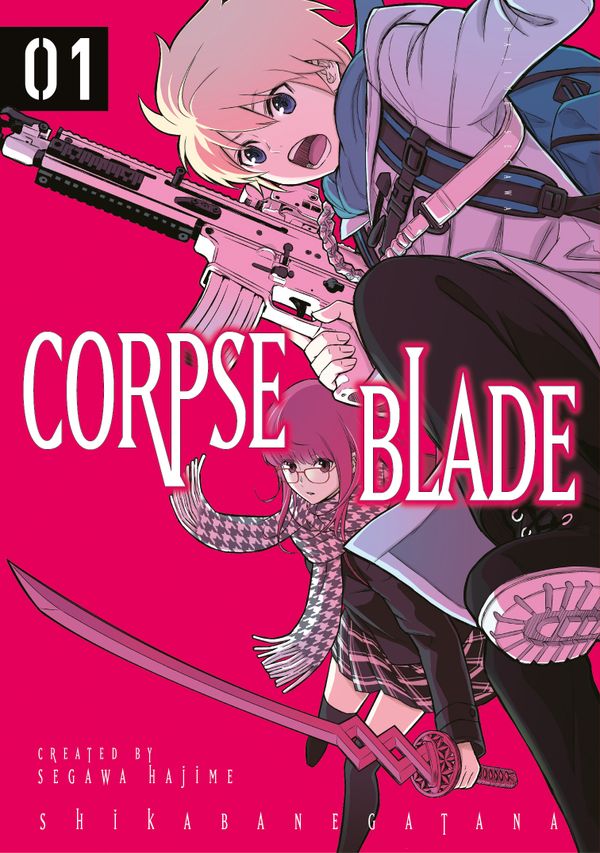
The first volume in the legendary Corpse Blade series, an action packed romp through a zombie infested Tokyo! School, chores, killing the undead — all in an average day for Tsuranuki Tsutsuki! After his sister is kidnapped by the zombies, this middle schooler sets out to save her, becoming handy with a gun — but he won’t be alone, as he encounters another kid on a quest, a mysterious high-school girl who can command the awesome power of the Corpse Blade!
Out tomorrow from Titan Comics, Hajime Segawa’s Corpse Blade, with translation by Motoko Tamamuro and yours truly.
Failed film director Daisaku Imari is gifted a mysterious mannequin with the power of shapeshifting. She is “I.L”, intended by her patron “Count Alucard” to be his leading lady in a series of performance pieces that take place in the real world, righting wrongs, wreaking revenge and saving lives.
I.L is being published in English for the first time, meaning fans can journey through Osamu Tezuka’s innovative and contemporary themes within a classic by the pioneer of manga.
Whether an enthusiast of Tezuka and Manga, or not, the nuanced exploration of thought-provoking themes and characters, and a compelling storyline coupled with captivating illustrations, is a reading experience that will linger in the minds of readers.
So says the blurb, for I.L, translated by Motoko Tamamuro and yours truly, and out now from Titan Manga. I don’t actually remember ever having translated anything by Tezuka before, so this is a first for me.
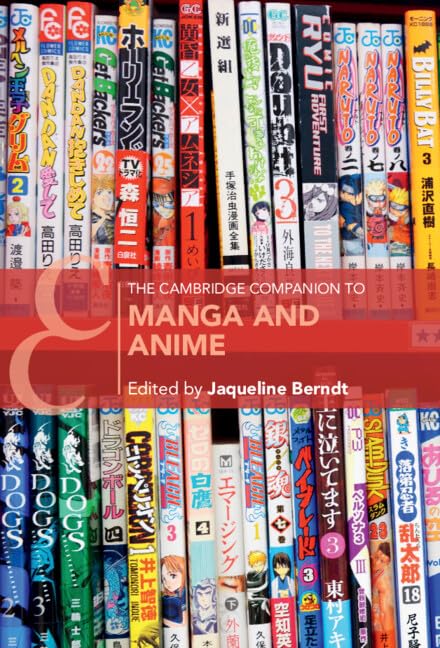
Jaqueline Berndt’s curation of the Cambridge Companion to Manga and Anime delivers a series of informative one-two punches, each one gradually firing a potential student reader up with new materials and ideas for approaching a new area of study.
Version 1.0.0
I own several Cambridge Companions already, and they are often on subjects I was approaching as a putatively intelligent layman, hoping to get up to academic speed fast on topics as varied as Old English Literature or Viking Sagas. I tried to bear that in mind when reading the new Cambridge Companion to Manga and Anime, considering the degree to which the book would serve to allow a newcomer to slice through the noise and junk that inevitably accrue around a discipline, in order to understand its most important elements and examples.
The Companion certainly ticks the boxes for the series – it is authoritative, it has chapters by most of the leading figures in the contemporary field, it’s lively and it’s accessible. It also repeatedly manages a neat trick of doubled chapters, in which one writer sets up a theoretical idea, to be followed by another who applies it with immediate effect. In particular Lukas R.A. Wilde, examines the chara, rather than a character as an element in the construction of anime. The takeaway here is his discussion of “ludic realism”, in which so many manga and anime adopt a sense of reality that owes less to our world than it does to the respawns and gamified narratives of modern gaming.
Yeah, you might be thinking, but so what? As if by magic, you turn the page, and here’s Stevie Suan discussing the way that the characters in anime act, not only through the replication of human movements and emotions, but through all sorts of little cues like the way their hair moves. Here, Suan zooms in on Yuri!!! On Ice to demonstrate the way that anime can uniquely employ its toolkit to tell a complex story about the way that ice skating scores its performances.
Stand-out chapters in this volume, for me at least, include an incisive essay by Koo Boonwon that crunches the statistics of manga sales. Koo points out the massive digital elephant in the room, which was that even as sales figures for paper manga magazines continued to plummet, the medium’s move in the 2010s into pixels has continued to grow from strength to strength. Row after row of Japanese commuters staring at their phones are not necessarily playing Chucky Egg – many of them are reading, and 2019 was the year in which digital manga sales first outstripped those for magazines and compilations volumes combined. Manga on paper peaked in 1995; but manga as a whole enjoyed its highest-ever sales year in 2020, largely buoyed by digital transactions, and doubtless nudged along by a global pandemic keeping everybody shut indoors.
Koo offers some fantastic nuggets of information about the manga business, including the observation that Shonen Jump was a relative newcomer to an established manga scene, and hence found a new gimmick to sell itself – pushing new artists. This, in turn, forced the magazine’s editors to adopt a substantially more hands-on policy with their creators, since many of them were fresh off the figurative boat. The shape of the manga publishing field is given a vital introduction elsewhere in the volume by Dalma Kálovics, who also deals with digital publishing, but only after siting it within the history of other forms of presentation, from the post-war akahon, through the rise of the magazine and its contemporary decline. Hers is such a useful foundation for understanding manga, in fact, that I query its location near the back of the book – this is a chapter that could really do with having been front-loaded.
Jaqueline Berndt has always been a stickler for definitions, and tries hard in her introduction to warn people off making errors of tradition – arguing strongly that both manga and anime are modern artforms that owe remarkably little to their supposed antecedents. In doing so, I fear she might have scared some of the contributors away from drawing useful historical parallels or chronological approaches. However, this may have been necessary purely in terms of space. Opening my copy of the Companion, I was boggled by the size and scope of the table of contents, but there simply isn’t the space in a single volume to contain all the possible iterations of its aims. In that regard, excluding historical whataboutery from the outset may have allowed Berndt to focus more concisely on pertinent issues, and make the book compact enough to lift.
Sometimes, this places unfair restrictions on the stories that some writers are trying to tell. Deborah Shamoon, for example, approaches the world of manga genres, pointing out the way in which the broad definitions of shonen, shojo, and so on were first arrived at, and noting that such rigid boundaries have come under fire elsewhere in literary studies for establishing arbitrary rules that then become pointlessly rigid. She investigates two the genres of sports manga and isekai stories in search of ultimate truths, although she barely has a page to cram such applications in – see Jeannette Ng here, for example, on a broader analysis of isekai fiction, in contexts that Shamoon was unable to fit into her wordcount.
But like so many other chapters in this collection, what first appears to be a sudden truncation turns out to be the lead-in for a levelling up. After Shamoon has primed the reader, Bryan Hikari Hartzheim is soon on the scene to discuss genres in anime, rewardingly as a subject that researchers should consider approaching on the basis not of authors or content, but of studios. Hartzheim chooses as his example the peerless Gainax, outlining the way in which the studio came to be associated with a particular look and feel. However, as Rayna Denison has pointed out elsewhere, in her deconstruction of myths about Studio Ghibli, such an approach can risk missing the wood for the trees. We need to ask difficult questions, like the degree to which we can determine an effable Gainax-ness in both Wings of Honneamise and Gunbuster, when even the studio staff themselves regarded them as very different projects. Space forbids Hartzheim from advancing any further than Gunbuster in the story of Gainax anime, which is a shame considering all the contentious titles that were barrelling down the pipeline after it.
Olga Kopylova concocts a vocabulary for describing some of the tropes and traditions of manga and anime artwork – not just the obvious ones like super deformation, but many subtle nuances and hacks. She notes, for example, that part of the “iconic abstraction” employed by manga artists means that heroes never have double-chins, regardless of the angle they are shot from. In doing so, she takes Santiago Iglesias’ concept of “ratio dynamics”, conceived to help explain how anime creators assign workloads, and points out that it also applies in the comics world, where some pages are more detailed than others. I think she could have gone a lot further with this – she does point out the various impacts of digitisation on the creation of Japanese graphic arts, but a more historically focussed account would have also pointed out the various technological determinants of earlier periods – the uses of offset printing, for example, the impact of Letraset and Screentone, or the uses and abuses of art assistants. It’s not Kopylova’s fault, but she simply lacks the space to investigate anything beyond the most modern developments in a long chronology.
Gan Sheuo Hui sneaks some history into her account of anime graphics, arguing that even though multiplane cameras are often museum pieces today, the formats of their operation have largely steered the way that digital animation programs composite their frames. This is a lovely idea, and I wish there was more of it in other aspects of anime studies – I have long been fascinated, for example, by the fact it took the some OAVs literally decades to shake off the legacy format of being anything more than a TV episode that happens to be on video, even to the extent of fake ad breaks in the vague hope that TV-senpai might one day notice you and put you on the air.
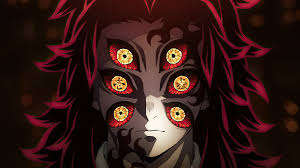
Gan’s account, not only of the rise and fall of the multiplane camera, but of the way that its absence steered some productions, culminates in a breakdown of some sequences from Demon Slayer, illustrating not only her own thesis, but helping some of Kopylova’s points land, as well.
Ronald Stewart writes a welcome chapter on four-panel (yonkoma) newspaper strips, outlining their close connections to foreign “funnies”, and investigating the impact and content of things that are undoubtedly Japanese comics, seen by huge domestic readerships that would not necessarily identify themselves as manga fans, and often unseen abroad.
Such nescience can be aesthetic. There are, for example, entire magazines of nothing but yonkoma comics like Manga Times, but I have never covered them in my Manga Snapshot column in NEO magazine because illustration is problematic – “fair comment for criticism and review” might permit me to use sample images, but when it comes to yonkoma, it’s difficult to show a sample that doesn’t also show the strip in its entirety, and thereby exceeds the bounds of fair dealing.
Stewart offers a fascinating outline of the theory of yonkoma, beginning with a form allegedly derived from classical Chinese poetry, and then examining the approaches of contending artists, with Ippei Okamoto so invested in the third panel that he even suggests the artist draw it first, while Osamu Tezuka advises putting all the stress on the fourth-panel punchline.
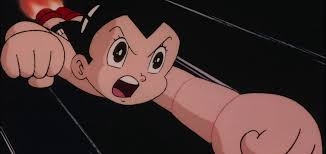
Kim Joon Yang relates Astro Boy to wartime science stories for children – asking how it is that a children’s superhero and friend to all can be designed with machine guns built into his body. In doing so, he wanders into some intriguing areas of military history, such as a study that suggested children of the war era, hot-housed in “absolute-pitch training” to teach them how to identify aircraft by their engine noises, were unable to enjoy music in later life.
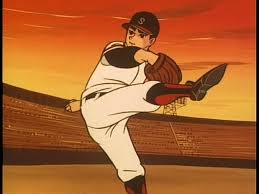
Blanche Delabord, as far as I can tell, breaks new ground in her account of “hearing manga”, going beyond the well-established discussions of sound effects and onomatopoeia to discuss the sound-picture that can be evoked through syllabaries and fonts. She carefully defines “mimetic words” – which is to say, those sound effects that denote emotions rather than actual sounds, such as the infamous “sound of silence” shiiin, or her example here, the gan noise that once signified a tolling bell, but came to mean an emotional shock after its use in an iconic scene in Star of the Giants.
Again, she could have gone on for much longer, and any manga translator worth their salt will tell you of the awful minefield of unexplained in-jokery, not to be found in any dictionary, that confronts an editor who thinks everything is just POW and WHOOSH. I fondly remember a sound effect in Ranma ½ that was specifically “the sound of an explosion, but amusing” as opposed to any other explosion.
When it comes to sound in anime, the world authority is undeniably Minori Ishida, and she’s here in person for a chapter on the subject, detailing the effects of pre-scoring and the dynamics of voice acting. She doesn’t disappoint, with a riveting account of the “Dubbing Controversy of 1962”, a spat in the newspapers about whether or not voice acting was a noble art or a slumming craft. With evident relish, Ishida charts the rise of voice actors as celebrities in their own right to a mere three years after the argument, when the magazine Television Age began covering not only the stars of shows like The Man from U.N.C.L.E., but the actors who provided their Japanese voices.
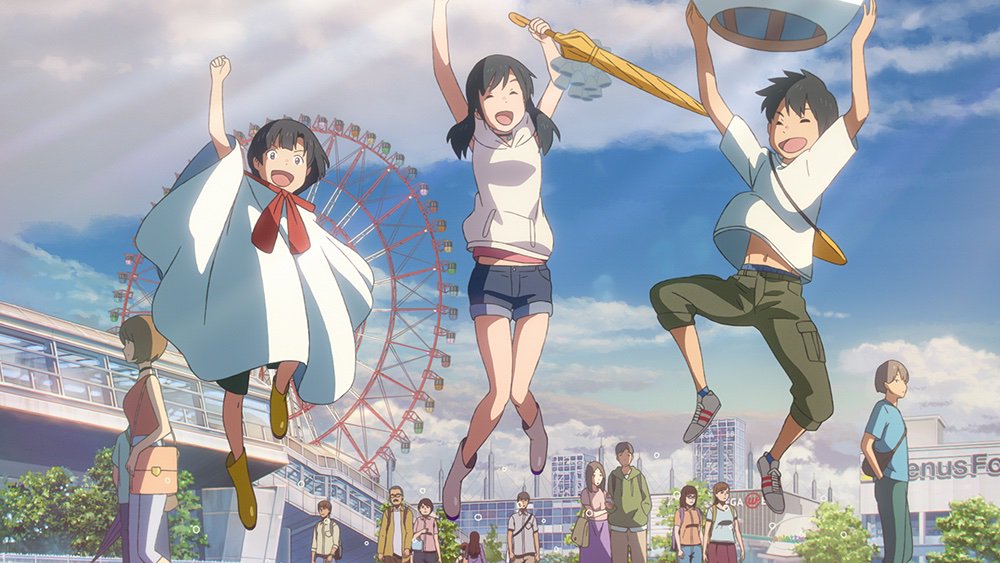
Renato Rivera Rusca offers an overview of modern anime production, noting that an industry that was once literally concentrated in just a couple of Tokyo neighbourhoods now sprawls across the whole country and beyond, at least in part thanks to the sudden disruption caused by having to cope with the COVID pandemic. In one moving example, he points to Ekakiya, a studio that contributed to the production of Weathering with You, but did so from a house in Okayama, where the owner had moved in order to care for her ailing father.
In a lovely historical insight, Rivera Rusca also adds a prologue to histories of “holy land” tourism, pointing out that first anime-inspired tourism boom was outwardly focussed in the 1970s, as fans flocked to see the Alps of Heidi – Akiko Sugawa-Shimada also makes this point later in the book.
COVID also looms large in Patrick W. Galbraith’s account of the erotic manga market, in which he points to the unexpected own-goal caused by the migration of fan-created dojinshi events online. For many years, Galbraith argues, certain publishers had turned a blind eye to pornographic parodies of their titles, only for the sheer visibility of an online appearance obligating them to take legal action.
Koichi Morimoto breaks down the act of reading a manga story into a panel-by-panel process. Selen Çalik Bedir breaks down the use of the 3DCG in Gantz 0, examining in the process the ways in which a medium that luxuriates in unpredictability and absences can work with a digital tool that laboriously creates every element of every process. How, asks Bedir, can 3DCG inject a note of unpredictability or noise into a cartoon?
Finishing with fandom, Akiko Sugawa-Shimada points out that there is more than one type of fan, suggesting that the 1970s success of Space Cruiser Yamato derived from its overlapping appeal to fans of anime and sci-fi, which, then as now, were not necessarily the same thing. Drawing on Frenchy Lunning’s history of cosplay, she narrates the arrival of the critic Mari Kotani at a 1978 convention, dressed as Tavia, the six-armed green fugitive slave girl from Edgar Rice Burroughs’ Fighting Man of Mars. Kotani had been inspired to do so by the sight of costuming at an American convention, but was mistaken in Japan for a character from the obscure anime Triton of the Sea.
Dario Lolli examines the phenomenon of Gundam’s fortieth anniversary, asking what it tells us about the way in which anime is marketed to different generations. This was an interesting thesis, although I was asking myself throughout how these events different from Gundam’s 39th anniversary, or 20th, or 10th. One of the things that soon infuriates the anime professional is how much ink is wasted any year “celebrating” the tenth birthday of Schoolgirl Milky Crisis, or five weeks since the last time we mentioned Nausicaa. It’s not quite the once-a-minute “comebacks” of Korean pop, but nearly…! However, that’s not what Lolli is getting at here – instead he is identifying the implicit elements of the market for anime today, in the sense that a show made for ten-year-old children can have a 40th birthday, and to what extent those former ten-year-olds, some of them now grandparents, might be expected to spend money on it.
It should not be taken as a failing of the book that I was left repeatedly wanting more from many of the chapters. It is after all, an introduction to the field, and brings with it a challenge to the reader, that the next step is all theirs.
The body has long been an obsession with Shinya Tsukamoto. He has taken it over with metal viruses, in the two Tetsuo movies. He transformed it through violence in Tokyo Fist and Bullet Ballet. With his last film, A Snake of June, he announced that he was renouncing violence, but while Vital may be gentler in its execution, it is still very much a part of Tsukamoto’s corporeal corpus.
Where Tetsuo seemed to allude to J.G. Ballard’s Crash (1973), with its bodies distorted through meshing with metal, Vital seems to owe more to the same author’s Kindness of Women (1991), in which Ballard recounted the stirrings of his emotions as a medical student for the woman whose cadaver he was dissecting.
Vital also references the elusive Blue Bird of Happiness, both in the theme of its title song and in the tattoo of its ghostly female lead. Maurice Maeterlinck’s 1908 play is perhaps better known in Japan than in the UK, both through translations of the original, and its use in the late Hisashi Nozawa’s Blue Bird (1997), a TV drama series about a criminal on the run who finds refuge in the tropical island paradise of Saipan.
Tsukamoto’s actual inspirations for his film are more prosaic: a terrible back twinge that left him bedridden for days, and a chance viewing of Leonardo da Vinci’s anatomical sketchbooks. Tsukamoto first saw the books at the house of Alejandro Jodorowsky in 1992, where he had been perusing the director’s sketches for his abortive Dune project.
“I looked at many of da Vinci’s drawings,” he told biographer Tom Mes, “and I could really sense his curiosity for the interior of the human body.” Tsukamoto’s research took led him to witness actual hospital dissections, not with the ghoulish voyeurism one might expect from the director of Tetsuo, but with a curiously reverent respect.
For his film, he utilised both old and new talents. Leading man Tadanobu Asano is a familiar face in Japanese film, and previously appeared in Tsukamoto’s Gemini as a vengeful samurai. But Tsukamoto and Asano had also worked together as actors in the Quiet Days of Firemen, an obscure Japanese workplace-oriented movie from 1994. Asano welcomed the chance to work with Tsukamoto again, and was surprised to discover a personal association with the movie’s location. Sensing something familiar about the abandoned Yokohama hospital where Tsukamoto shot the bulk of his real-world footage, Asano called his own mother, to discover that the very same Aiji Centre had been the place of his own birth.
Asano’s female co-stars are less well-known as actresses. Tsukamoto cast the model Kiki for her vulpine eyes, and ballerina Nami Tsukamoto (no relation) for her homespun spontaneity and her ability to dance in the role of Ryoko. As an unknown in the film world, she was also less likely to voice complaints about her role, which would require a full-size cast to be made of her naked body.
Ryoko’s scenes are largely shot in a dream-world, for which Tsukamoto elected to use Japan’s southern island of Okinawa. Other islands are equally idyllic, but only Okinawa offers direct flights to Tokyo for a film unit working against the clock. The island was also the prime location for Takeshi Kitano’s Sonatine, and its use in Vital would lead Tsukamoto to take drastic steps in production. Regarding natural beauty as a crucial element of the film, Tsukamoto elected to shoot on 35mm, a lavish choice for the notoriously low-budget film-maker, and one which required an airtight seven-week shooting schedule to preserve the budget. To shorten the period of post-production, Tsukamoto used digital editing methods for the first time.
In Iron Man: The Cinema of Shinya Tsukamoto, the director discusses Vital as a continuation of his earlier work: “When I finished [it], I somehow felt refreshed, like I’d found a new environment for myself. In Tetsuo II, Tokyo Fist and Bullet Ballet, the protagonists hurt their own bodies trying to find out whether they are living in a dream. In Vital, the protagonist is confronted with a dead body and enters it. In the end, he crossed through the gate, from the agonised, suffocating life of the city; he emerges in the vast realms of nature. One day I would like to make a movie that would take me even further and deeper into nature, far away from that gate. For now, though, I would like to keep exploring just outside that gate, the way I did with Vital.”
This article was originally included in the sleeve notes of the 2006 release of Vital by Tartan Video.
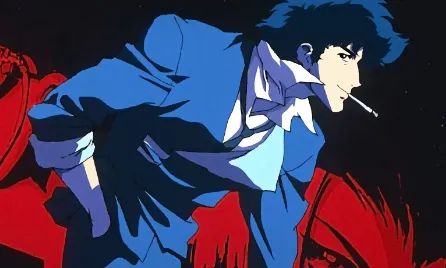
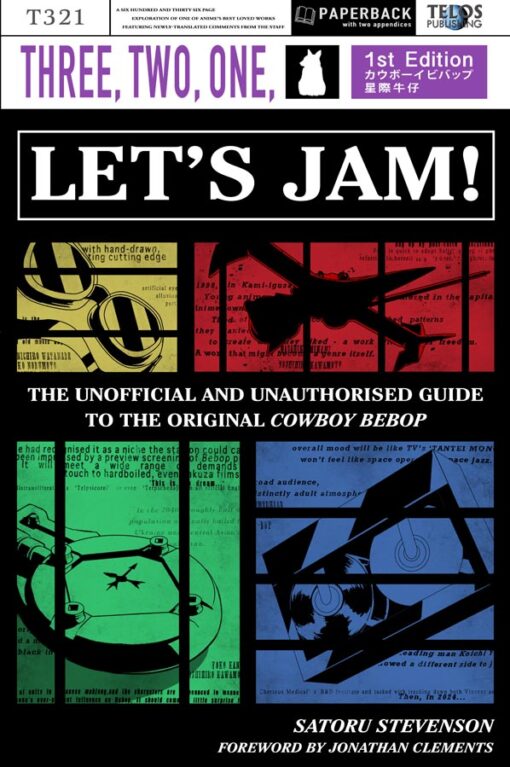
On the original, terrestrial broadcast of Cowboy Bebop, the disgruntled production team signed off with the message: “This is not the end. You will see the real Cowboy Bebop someday.” Shinichiro Watanabe’s vision had been trammelled by a series of restrictions, including timid broadcasters still reeling from the 1997 Pokémon epilepsy incident, and a jumpy censorship regime hyper-sensitive after several widely publicised real-world incidents of supposedly media-inspired violence.
As this book recounts, Cowboy Bebop existed in two versions – the defanged, episodic 12-part light version as first seen on TV Tokyo, and the uncut, adult-focussed 26 episodes with a complete story arc and more mature content that was broadcast four months later on WOWOW. It’s this latter version that was exported abroad, most notably to the United States.
The Cartoon Network had been waiting for months. The Cartoon Network, in fact, had bought it purely on the strength of the opening credits, and in the words of producer Jason DeMarco, “didn’t even know what it was about.” As episodes began to drift in, channel buyers knew it was too racy for the daytime slots, and the arrival of Cowboy Bebop helped propel CN into creating a new late-night block of animation: Adult Swim. Cowboy Bebop closed out the first night’s broadcast, and stayed on the channel for over a decade.
If you were watching the Cartoon Network in the 2000s or the 2010s, at some point you were going to see Cowboy Bebop. You might only catch a single episode, but you’d be sure to remember it. With little merchandise to cash in, its US following was not immediately obvious. The ratings remained a trickle in the graveyard slot, but whereas the average terrestrial anime comes and goes in thirteen weeks, Cowboy Bebop lived on Adult Swim for thirteen years.
Watanabe’s vision was sufficiently retro to be future-proof. The animation didn’t suffer from shonky turn-of-the-century CG or Digipaint. The sci-fi diaspora was suitably diverse to weather changing attitudes. As each fresh crop of viewers identified as anime fans, Cowboy Bebop was one of their gateway anime, not just for them, but for the parents who asked what this anime thing was, and could be shown something that wasn’t cringeworthy.
Even within the industry in Japan it was widely understood that Cowboy Bebop was lightning in a bottle — a fantastic synergy of creative talent that you couldn’t explain with a spreadsheet and copy with a focus group. Cowboy Bebop wasn’t something that you could cynically recreate, and that’s part of its classic status, suffused with, as Yoko Kanno so memorably put it: “the smell of fermentation, like natto.”
This book delves into the whys and hows of such a phenomenon came about, and the nooks and crannies of its various spin-offs. It’s a fantastic account of a show that is now demonstrably older than its current crop of new fans on Netflix. It’s been a long wait, but Cowboy Bebop finally has a critical appraisal that delves deep into its inspirations and effects.
But enough from me. I think it’s time we blow this scene. Get everybody and the stuff together. Okay…
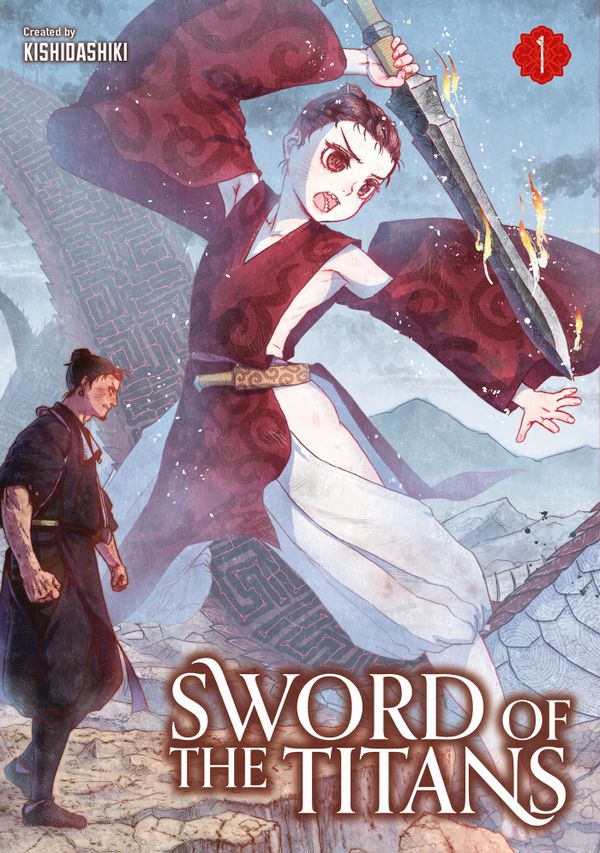
For fans of epic fantasy and supernatural battles between gods and demons, this manga will take you on an epic quest, as the young boy Tsuchimaru acquires a powerful sword for a mysterious artisan and joins the gods to fight fiends himself.
In a time when gods and humans live and fight together the young boy Tsuchimaru was helpless, a mere child in the face of those mighty struggles… until a mysterious wandering artisan came by with a sword they had forged and gifted it to the child, enabling him to take up arms in the titanic conflict!
Out tomorrow from Titan Manga, volume one of Kishidashiki’s Sword of the Titans, a fantastically bonkers re-reading of ancient myths as borderline sci-fi, translated by Motoko Tamamuro and me.








 The Official Schoolgirl Milky Crisis Blog