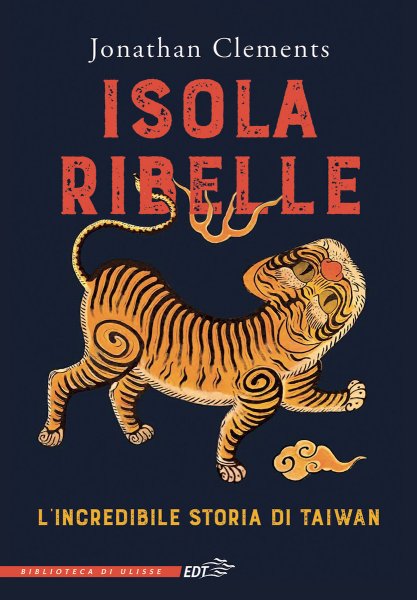
Out now in Italian, my book Rebel Island: The Incredible History of Taiwan.

Out now in Italian, my book Rebel Island: The Incredible History of Taiwan.

“Among the new politicians voted into office, a stand-out was Freddy Lim Tshiong-tso, a man who might reasonably be described as the Nationalists’ worst nightmare. Born in 1976, and hence growing up with no memory of the martial law era, Lim ceased to follow the KMT party line during his school days, instead becoming an enthusiastic supporter of Taiwanese independence. He initially entered the public eye as the convenor of pro-independence rock concerts, and would eventually serve as the head of Taiwan’s branch of Amnesty International, and a key figure in the Sunflower movement.
“Throughout the late 1990s and the early years of the 21st century, he was also the lead singer of the death-metal band Chthonic, releasing a series of politically charged works, including a concept album about the 1930 Musha Incident (2005, Seediq Bale), allusions to the February 1947 unrest as an earthly manifestation of Hell (2009, Mirror of Retribution), and an album dedicated to the conflicted loyalties of indigenous soldiers serving in the WWII Japanese military (2011, Takasago Army).
“Donning a suit instead of his habitual leathers and tribal face-paint, Lim became one of the founders of the New Power Party, and proved to be enough of a diplomat to shoo away other DPP-leaning candidates in a western Taipei suburban district, where he defeated the KMT incumbent. He then aligned his New Power Party, its emblem in stark Sunflower-yellow, broadly within the ‘Green’ policies of the victorious DPP.”
– excerpted from Rebel Island, by Jonathan Clements.
And now he is Taiwan’s new envoy to the world’s most metal country, Finland.

ABC Radio in Australia takes the chance to repeat my October 2024 interview about Taiwan, “one of our favourites from last year,” on the grounds that I said a lot about semiconductor chips that has become more relevant today in these tariff-obsessed times.
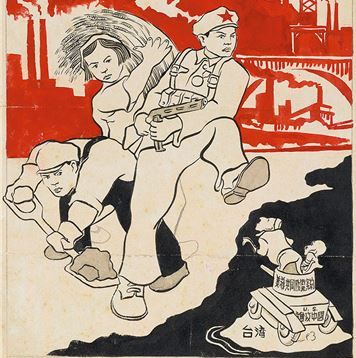
Some interesting comments over on Reddit over one of the last paragraphs to be written in my book Rebel Island, itself a response to the publisher’s sensitivity reader about whether or not I should refer to the place on the opposite side of the Taiwan Strait as “China.”
This is the passage in question:
Over the years, particularly after my time in Xi’an in the 2010s, my own Taiwanese accent faded away almost completely. Every now and then, something still sneaks in, such as my habit of referring to dalu (‘the mainland’ or ‘the continent’), which continues to give me away as someone who learned his Mandarin in Taipei. The term is so common on Taiwan because referring to the land across the Strait as ‘China’ would rather imply that Taiwan was not-China.
And this is the comment from Lonely-Variation6940 that accurately carbon-dates my time in Taiwan — I was sent there to learn Mandarin in 1991, shortly after martial law was lifted, but when a lot of its cultural policies were still in force.
The 1980s was the era of Chiang Ching-kuo. I grew up in that era. The book you mentioned is generally correct. In school we were taught to use “mainland” or “mainland area.” When I was in high school, if I used words like CCP, Mainland, and China randomly in the essay questions on the Three Principles of the People, I would not only fail the test but also be called in for questioning by the instructor. That was a term used in the era of the Kuomintang’s ideological control before Taiwan’s democratisation. It remains in our current constitutional system. For example, the government department in the Executive Yuan that handles Chinese affairs is called the “Mainland Affairs Council.”
You can hear me talking in greater depth about some of the linguistic politics at work here in my recent interview on Late Night Live.

Anthonius Hambroek was a Christian minister on Taiwan, who fatefully became embroiled in the negotiations between the besieged Europeans in Fort Zeelandia, and the Chinese who surrounded them. In a moment celebrated in paintings and plays, he returned to deliver bad news to the “pirate king” Koxinga, sure in the knowledge that he would be executed. Despite his daughters’ pleading, he went back to Koxinga and was never seen alive again. Later on, his daughters were among the Dutch girls handed out to Koxinga’s men as part of the spoils of war – one of them allegedly serving briefly as Koxinga’s own bedmate.
Pastor Hambroek’s sacrifice was one of the most iconic moments in the siege of Fort Zeelandia, an event already riddled with high drama and cinematic spectacle. It’s also become the lynchpin of many a fictional account, beginning with a Dutch stage play by Johannes Nomsz, Anthonius Hambroek, or the Siege of Fort Zeelandia (1775).

Its most recent manifestation in popular culture is as the background to Yao-cheng Chen’s historical novel A Tale of Three Tribes in Dutch Formosa. Before he turned to fiction in his long retirement, Chen was a pioneering Taiwanese specialist in bone marrow transplants – a background that surprisingly produces one of the most gripping passages in his book. On hearing that one of the legendary ancestors of his own clan was a Dutch woman, he counts the incidences of ankylosing spondylitis (a type of arthritis), and determines that 4% of modern Taiwanese have a north European ancestor somewhere in their genes.
This is what inspired him to write his story, which comes deeply invested in the interlocking politics and tensions of the Dutch, Chinese and indigenous Formosans in the 17th century. They are, supposedly all given equal weight, although that Hambroek girl inevitably takes centre stage.
Who was she? In Nomsz’s play her name was Cornelia. In Joyce Bergveldt’s novel Lord of Formosa, her name is Johanna. In Chen’s book, her name is Christina, although her fate is kept discreetly off-stage, and instead we focus on her sister Maria, who may, or may not be, Chen’s own distant ancestor.
Chen realises that there’s a whole rack of Iliad allegories to be had, with a long siege, a vainglorious enemy and even a last-ditch hoped pinned on a ship called the Hector. His heroine, Maria Hambroek, archly observes that she is a bit like Cassandra, the seer cursed to always be ignored. I would suggest that there might have been more poetic currency to be had with her similarity to Briseis, the captive concubine whose fate is deeply entwined with that of the heroes.
One of the most compelling elements of the story of Koxinga’s invasion of Taiwan, for me at least, is the treatment of the Dutch women, a number of which were parcelled out among the Chinese. Modern authors seems to shy away from what this might have really meant; Bergveldt concocts a subplot in which Koxinga merely pretends to ravish a Hambroek girl as part of a bigger scheme; Chen is delicately coy about the sexual politics at play here, limiting himself to mentioning a few inter-racial “marriages”. Contemporary documentation, however, is considerably more forthcoming about it, particularly Frederik Coyett’s Neglected Formosa (1675), in which he mentions a number of Dutch girls returned pregnant to the East India Company at the final hostage exchange, as well as their widely varying reports of their treatment at the hands of the Chinese.
Dutch girls handed to soldiers who already had Chinese wives were often put to work as skivvies and slaves, complaining about months of hard labour under fierce mistresses. But this is where Chen’s Mills & Boon romanticism finds a legitimate purchase, since Coyett also reported that the Dutch girls who found themselves berthed with unmarried soldiers were “considerably caressed” and “did not complain too loudly, despite having half a Chinese in their belly.” He adds, in an arch footnote, that: “Those who had been kept honest by the ugliness of their faces, those were the women who were the loudest of all and who accused their companions of whoring and merry-making with the Chinese.”
I don’t know what really happened to that Hambroek girl. But I bet she had a story to tell.
Jonathan Clements is the author of Rebel Island: The Incredible History of Taiwan.

I’m on Late Night Live tonight in Australia (and online for listeners elsewhere) discussing my book Rebel Island with David Marr, on all sorts of issues including Australia and Taiwan’s similar experience of indigenous issues, jungle warfare on the Kokoda Track, and “semiconductor sovereignty.” With 50,000 Australians having been born in Taiwan, I’m expecting a chunky audience.
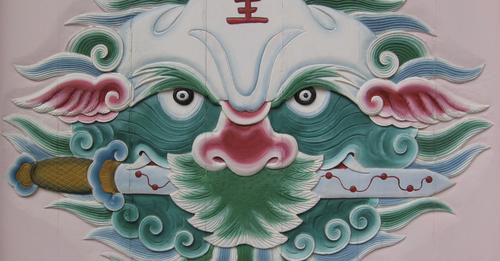
I’m back at the London School of Oriental and African Studies on 4th November to discuss the Zheng regime on Taiwan, 1661-1683.
Author and TV presenter Jonathan Clements discusses the rise and fall of the so-called “Kingdom of Dongning”, an enclave of Ming loyalists that held out on Taiwan for twenty years after the Manchu conquest of China. Torn between opposing ideologies of resistance and accommodation, Dongning clung to the memory of the Ming dynasty, even as its last pretenders died out and mainland support thinned and faded.
A mere footnote in most accounts of Asian history, it was nevertheless a pivotal influence on the history of Taiwan. Includes incest, strangling and sword-lions.
“And while it is a serious and meticulously researched history it is also genuinely gripping with ‘Blimey! I didn’t know that!’ moments on every other page. Really terrific stuff.”
Over on Russell Hogg’s wonderful podcast Subject to Change, I discuss the history of Taiwan, with reference to an unexpected appearance by the Daleks, things to do with a dead deer, genocidal acts, the pirate king, the Zombie Ming dynasty, a “racist excuse”, “the most shameful thing the British have ever done” and a bunch of other things to be found in my book Rebel Island. Part one can be found at this link.
And then there is part two: How to take over an island chain by invading somewhere else; a world-class stamp-collecting scam; the “uncrowned king” of Taiwan; the Musha Incident reconsidered as a high-school shooting, the rise and fall of the Takasago Volunteers; uses and abuses of Triad assassins, and the rise of the “outside the party” movement.

Kathrin Hille in the Financial Times includes Rebel Island in her run-down of new books on Taiwan.
“Clements delves into the creation myths and languages of Taiwan’s different indigenous groups and discusses their similarities with certain Pacific island peoples but also with some tribes in southern China. He describes the complexities of Chinese migration to Taiwan since the 17th century and the different settler groups’ interactions with each other and with indigenous groups.
“The reader encounters the powers that over the centuries landed on Taiwan’s shores and made shortlived attempts at setting up colonies — the Spanish and the Dutch — or otherwise exploiting its natural riches and strategic location — the British and the French.
“Clements, a British writer who has authored both fiction and history books about east Asia and benefits from his literacy in Mandarin and Japanese, makes all this come alive through the key characters whose stories he tells.”
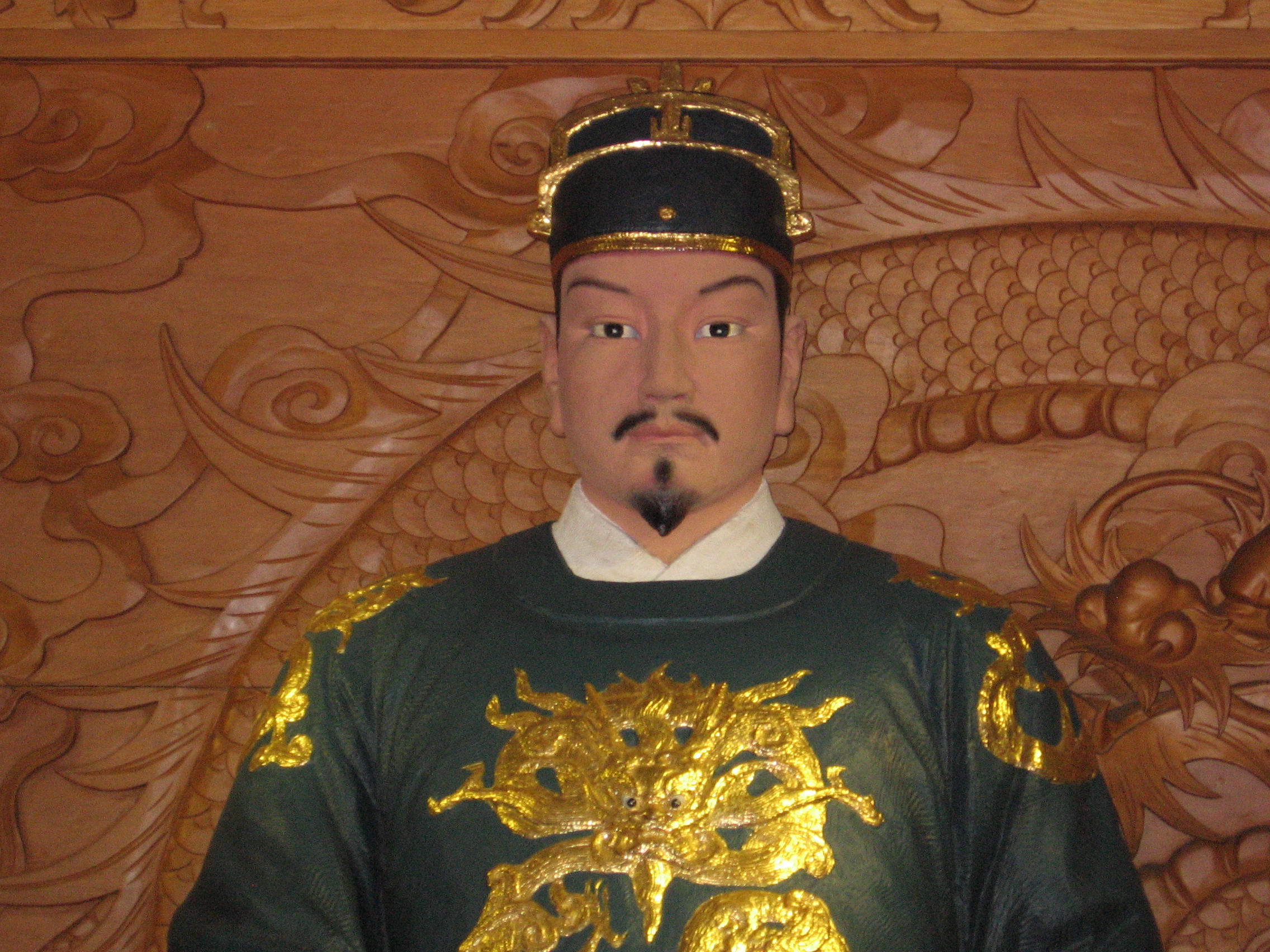
I’m popping up at London’s School of Oriental and African Studies on Wednesday 29th May (7pm at the Khalili Lecture Theatre) to talk about one of Taiwan’s most famous residents:
Jonathan Clements discusses the life, death and strange afterlife of the “pirate king” Koxinga (1624-62), the Ming loyalist and conqueror of Taiwan, variously derided as a pirate and a rebel; lauded as a resistance leader and prince, twice deified, spuriously reclaimed as both a Japanese patriot and a Chinese “People’s Hero”.
Along the way, there are some unlikely legends, some suspicious shenanigans, and his co-option into a 2010 mayoral campaign that threatened to turn into a fistfight among historians.
*All SOAS Centre of Taiwan Studies events are open to all and not needing to register.
Jonathan Clements has presented three seasons of Route Awakening for National Geographic, a TV series about icons of Chinese culture and history. His latest book is Rebel Island: The Incredible History of Taiwan.
 The Official Schoolgirl Milky Crisis Blog