Marriage, Inc. (1942)

Paavo Kannas (Tauno Palo) is an architect who is struggling to get work done at his interior design office, because of the “trouble” caused by all his beautiful female assistants. His friend Professor Thorelius (Urho Somersalmi) offers to provide him with a plain and efficient girl, but since this is Finland, has to work hard to make his student Hilkka (Brigit Konström) not look like a supermodel. Hair in a bun and a pair of spectacles produce the desired look [actually, they really don’t; she ends up looking exactly like Julia Sawalha, which works for me!], and Paavo settles in for a happy life with his new efficient underling.

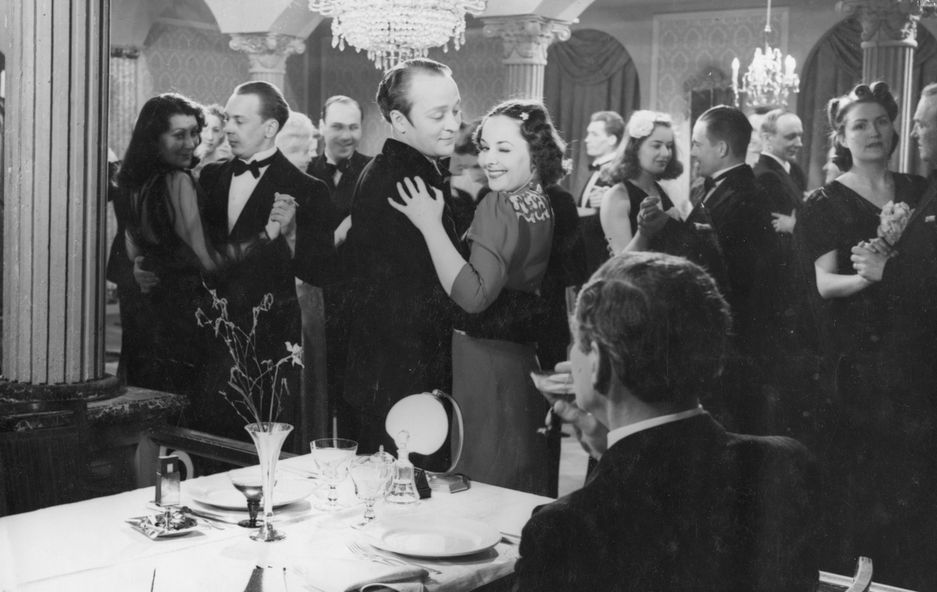
Inevitably, Paavo runs into Hilkka while out on the town and she is not wearing her disguise. Not wishing to lose her job, she pretends to be Miss Pallero, a Karelian girl. Smitten with “Miss Pallero”, Paavo begins to suspect that Hilkka might be putting one over on him, and schemes to put her in a position where she has to take off her spectacles and let down her hair. Eventually, they come clean with one another about their feelings, and get married.

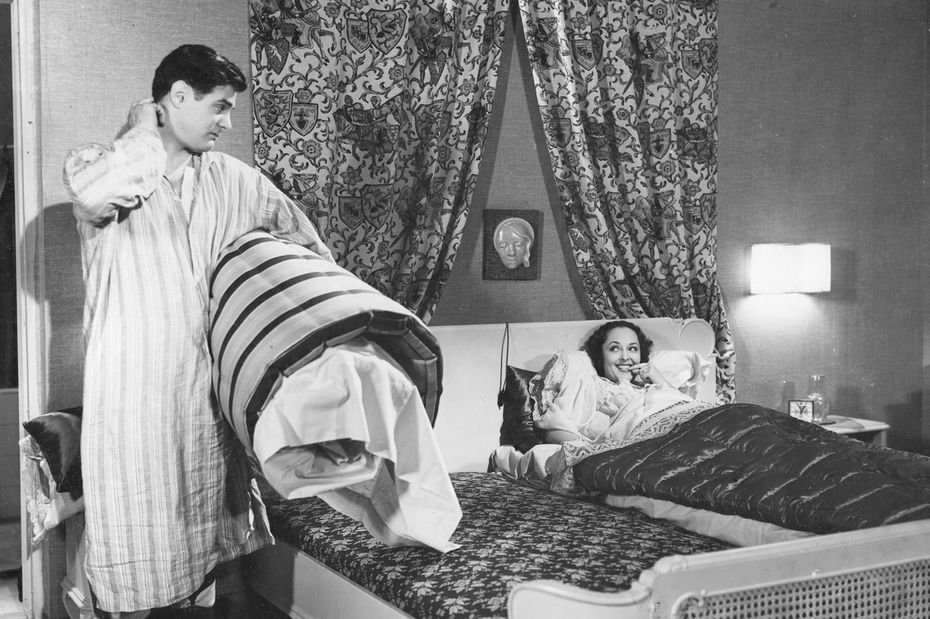
Wait! That’s not the end! We’re still only partway through, because now Hilkka is Mrs Kannas, getting increasingly annoyed at all the pretty young women who continue to flap around her husband. Hilkka drops in unannounced at one of Paavo’s workplaces, and believes that she sees him snogging the lady of the manor, Brita (Sirkka Sipilä). Meanwhile, it turns out that Professor Thorelius has plans on nabbing Hilkka for himself and is inviting her to meet his parents as if they are already courting.

Despite a looming divorce, Paavo and Hilkka must collaborate on a fast-track remodelling job, as the returning Finnish-American Makkonens (Aino Lohikoski and Jalmari Rinne, bellowing and code-switching like a pair of nutters) turn up making brash demands to have their Helsinki residence ready in a single day. The Makkonens reveal that they have only selected the Kannas company because it is run by a happily married couple, forcing Paavo and Hilkka to impersonate their younger, happier selves. Predictably, their feelings for each other are truly rekindled.
While I might jest about how difficult it is to find an unattractive Finnish woman, Marriage, Inc. actually began life as a Swedish play, adapted for the screen in 1941 as Så tuktas en äkta man (This is How to Discipline a Real Man). Seeing its potential, but presumably also realising that it needed to be fully localised, Suomen Filmiteollisuus’ Toivo Sarkka bought the rights, mothballed it from ever having a Finnish release, and instead commissioned his own remake, directed by Hannu Leminen and written by Turo Kartto, who drowned, aged 32, near Espoo shortly before the premiere.

Several moments in the film point to its wartime setting – Paavo mentions that the country is in “an exceptional situation”, and there are glimpses of blackout curtains, wood-fired cars and censored mail. In fact, the film was wrong-footed in production by the drafting of several of its intended crew, leading to a filming delay that required scripted scenes of winter activities to be hastily retooled for the summer. The filmmakers, however, do not seem to have been able to bring themselves to remove a dance sequence – dancing was frowned upon in wartime as an insult to the men at the front, but here seemed vital to move along the plot. The weirdest thing about it for me is the episodic structure, which feels less like a 102-minute feature and more like four TV episodes stitched together. The way that such formatting changes the narrative course makes this film seem strangely ahead of its time, aimed at the shorter attention-spans and quicker resolutions of a television audience, years before anyone in Finland even owned a television.
As also happened during the Winter War, the Finnish press seemed to have a mixed reaction to such fripperies, with some welcoming them as a light-hearted distraction in wartime, and others harrumphing at the very idea of making light of life in troubled times. Paula Talaskivi in the Helsingin Sanomat carefully negotiated these contradictory reactions, calling it flexible, witty and sure-footed, but also decrying “the illogicality, the lack of naturalism, and tasteless scenes…. Moreover, the whole story is not particularly suitable for our environment… In addition, the development of the events is so obvious that it is not very interesting.”

Birgit Konström’s acting is much broader than usual, as if she is playing to the cheap seats in a stadium rather than performing for an intimate camera. Nevertheless, Marriage, Inc. still made me laugh eight decades on, not the least for Tauno Palo’s double-take when a breathless lady customer starts thrusting her boobs under his flustered eyeballs, or the way that Konström feverishly begins rootling around in her handbag to avoid his gaze at the restaurant, and the unintelligibly bubbly Karelian accent she puts on to throw him off the scent.

The movie’s stand-out song “Shamppanjakuhertelua” (Champagne Party) notes the fact that the farce is playing out on both sides of the gender divide, pointing out that men and women can be as shallow as each other when it comes to only noticing surface appearances, and that “men can miss beauty / repelled by spectacles” a somewhat Finnish take on Dorothy Parker’s more concise turn of phrase: “Men seldom make passes at girls who wear glasses.”

Jonathan Clements is the author of A Short History of Finland. He is watching all the Finnish films, so you don’t have to.


Working for God in a Godless World

When Yukino is sacrificed by his father to the all-powerful goddess Mitama, he prays that he can finally be without religion. He wakes up in a placid world free of faith and begins a new life there.

But when the truth is revealed that the ruling empire is purging and exploiting the citizens, Yukino must find his faith and summon Mitama to protect them!

Motoko Tamamuro and I translate Aoi Akashiro’s very silly religious satire Working for God in a Godless World, out soon from Titan Comics.

Cyber Swipe

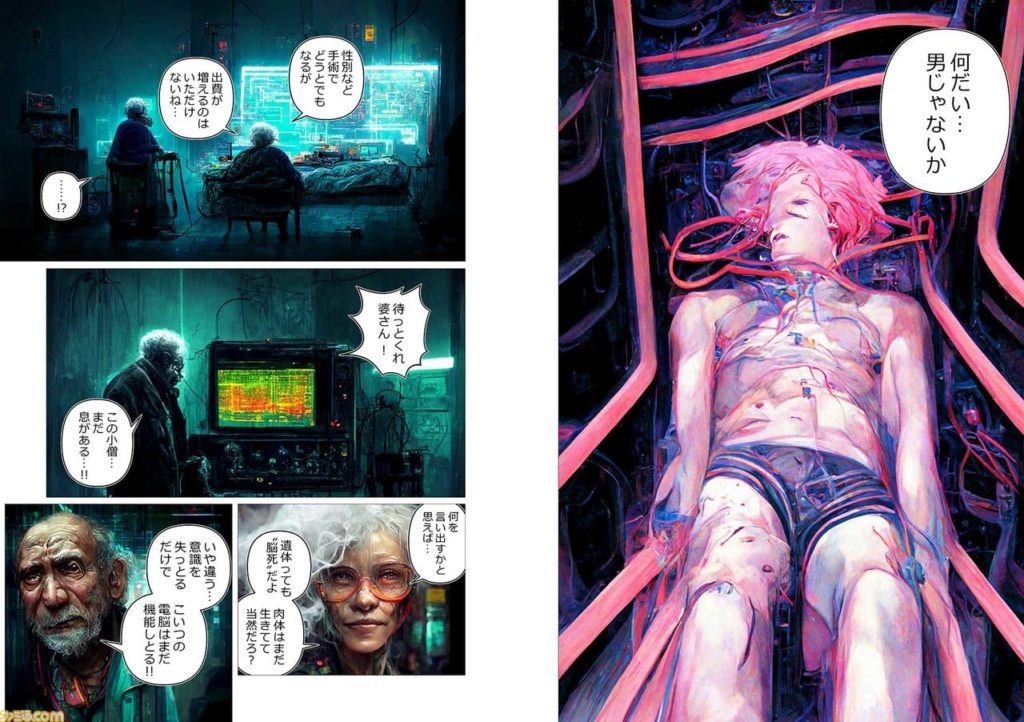
Rootport’s Cyberpunk Peach John is widely known in the manga world, mainly because it was the “first manga drawn by AI”. But at least in the near future, it may be edged out of official histories because nobody wants to get their hands dirty writing about it.

An editor gets in touch to say that he loves the two-page piece I’ve written about Cyberpunk Peach John, but that the comics history he is publishing will not be printing it.

The pseudonymous Rootport helpfully bulked out his debut work with an afterword about the perils of working with 2020s machine learning, supplying context and gossip about what we now called “promptives”. So there’s lots to talk about there, even in sense of being outdated before something’s even hit the shelves – Rootport was using a version of Midjourney that has already been superseded twice since he made his manga.

Cyberpunk Peach John is a fascinating proof-of-concept – a comic drawn by a machine while an irate programmer threw prompts at it in attempts to get it to keep the leading lady’s face on the right way round, and not to forget what the leading man looked like. Rootport relearned a bunch of tricks already common in the anime world, for decorating his characters with big, bold quirks and statements (pink hair, cat ears) to help hide the number of times that his characters slipped off-model.

But they weren’t his characters, were they? And they weren’t his models. A publisher seeking the rights to run images from a manga as part of a visual work (as opposed to fair comment for criticism and review) has to find someone to hand the cash to. They could, of course, pay an image fee to Rootport and his publishers, but lawyers coughed politely from the sidelines. Midjourney had based its designs on an unknown mish-mash of other peoples’ art, and the chance remained, however distant, that one of those people might pop up and say they’d been ripped off.

This is a problem that will have to be resolved sooner or later. Already, I see contract clauses in which authors and artists must indemnify their employers that no AI has been used in the generation of a copyright work. Last month, the Authors Licensing and Collecting Society (ALCS) started polling its members about the possibility of a “Prompt” or “Learning” licence, which would pay a royalty to someone whose work was harvested for machine use. Until someone makes a ruling, however, at least one major publisher refuses to wade into AI image-use at all. And part of me thinks that’s a welcome stand to take.

Jonathan Clements is the author of Anime: A History. This article first appeared in NEO #243, 2024.

Hieroglyphics

Awake before dawn so that the three-hour drive back to Lijiang still puts us there before breakfast, all the better to get a day out of it. But nobody knows what day to have. We need something Naxi-related and preferably fertility related, and the best Mack can rustle up is an afternoon masterclass in pictograms with Mr He, our favourite wizard. So we do some driving shots around Baisha and select a restaurant to charm so that we can use their upstairs room as a jury-rigged studio. We end up in a place that has its own micro-brewery, with predictable results.

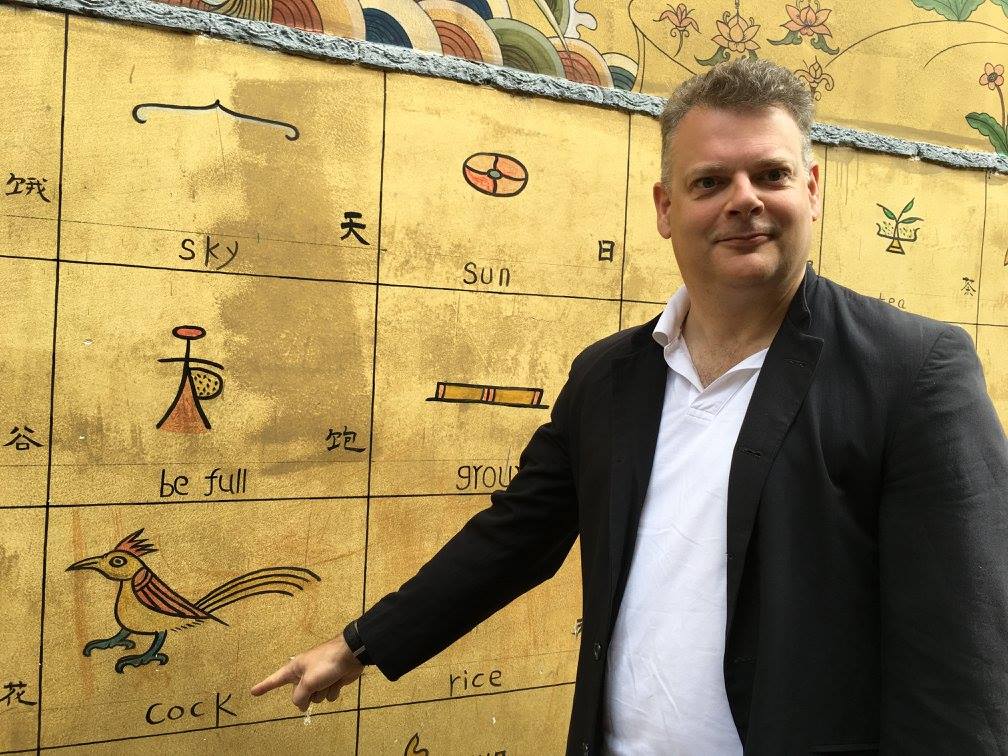
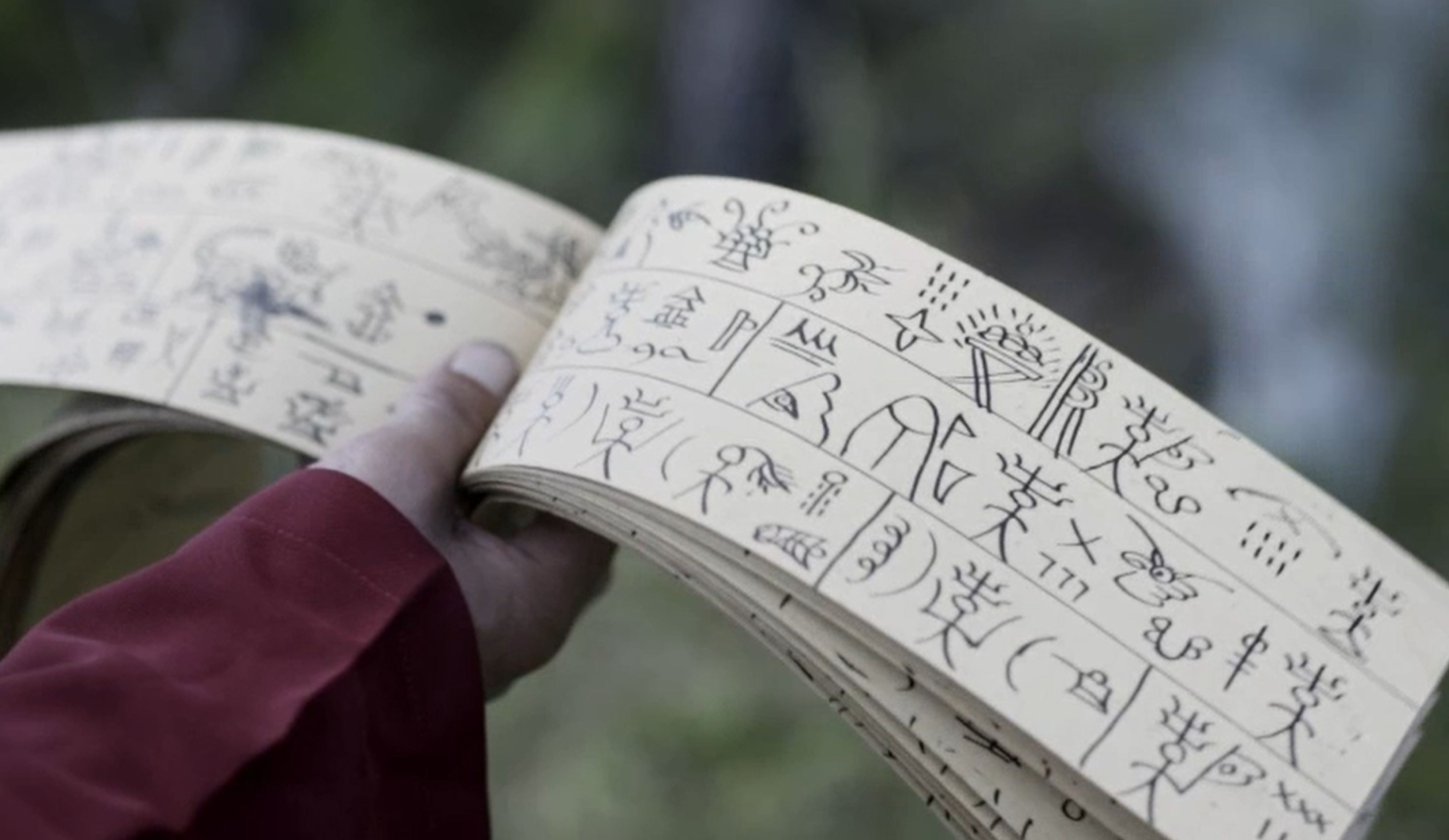
Somewhat merrier, we set up for the wizard, who has come to teach me some of the Naxi pictograms – the world’s only living hieroglyphic script. We start with some simple ones like house, man, and family, and soon progress to more complex ones like the various words for animal or a particular kind of sacred mountain. I ask him how the Naxi handle modern inventions, and he takes a new piece of paper to show me the words for aeroplane, television and computer.

Fine, I say, you can draw an aeroplane. But what about the wizard down the road?

Oh, says Mr He, there’s a dongba council that rules on the correct way to draw new words. So we all draw them that way.

We finish up with him writing a sentence in hieroglyphics and asking me to translate it. It contains seven characters, only two of which he has taught me, so I have to wing it. The seventh is “home” and the sixth is a man on two lines, which I guess means “walk”. The second is river and the fourth looks almost exactly like the Chinese character for rice paddy, while the fifth is a man who appears to be carrying a bag.

Crossing the river,” I say, “I harvest crops and return home.”

Not crops, he says, “corn”, but he is plainly impressed. But this is how I have been reading Chinese for twenty years. It wouldn’t be the first time I had to deduce meaning from a sentence with only two reference points.

Jonathan Clements is the author of A Brief History of China. These events featured in Route Awakening (S03E04), 2018.

Heavier Trip (2024)

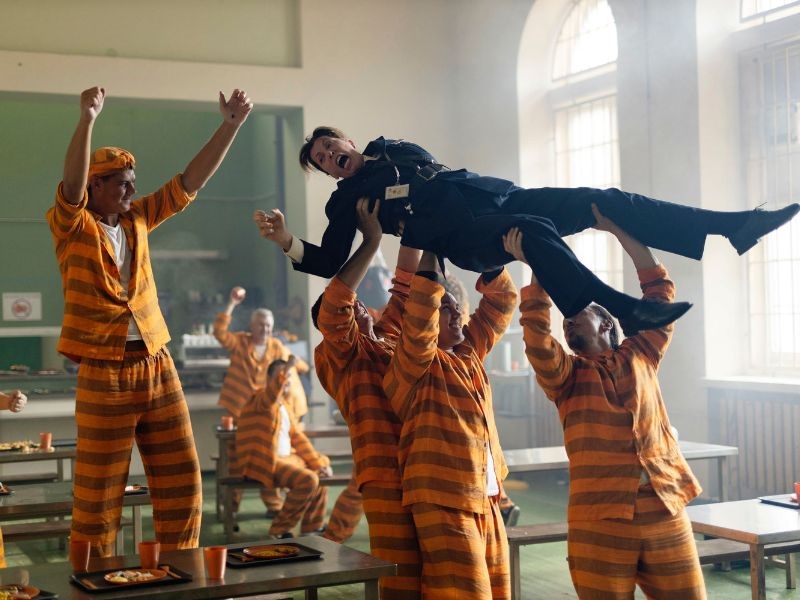
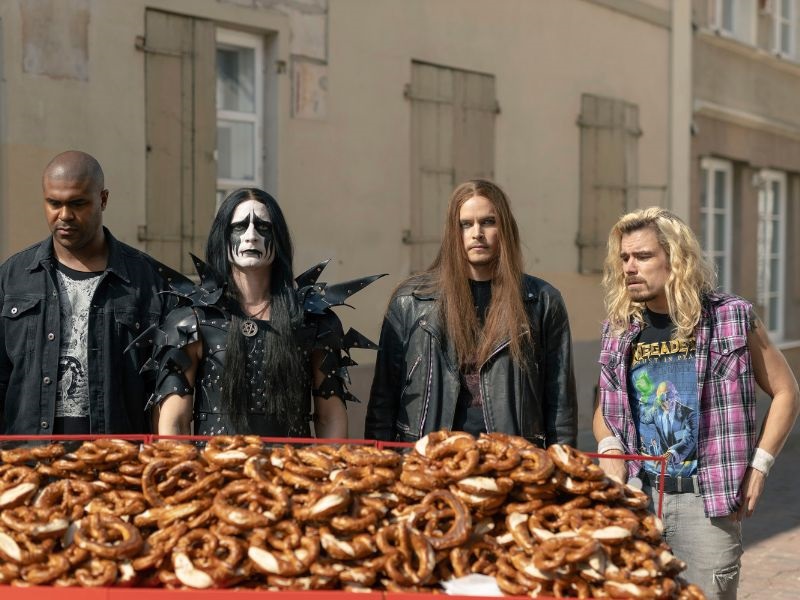
Convicted of starting a minor border war between Norway and Finland, the symphonic post-apocalyptic reindeer-grinding Christ-abusing extreme war pagan Fennoscandian metal band Impaled Rektum serve their time in an island prison, where they are forbidden from playing anything but dance music but get to enjoy a highly regarded salmon buffet.

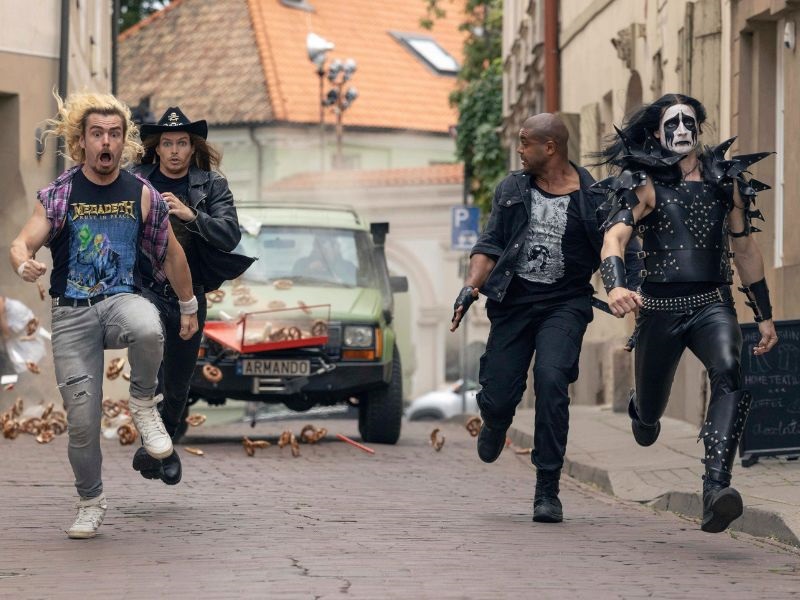
When bank foreclosures threaten the reindeer farm owned by lead guitarist Lotvonen’s dad, the band bust out of prison and run for Lithuania, where they have been promised a literally Faustian record deal by the impresario Fisto (Anatole Taubman). They cross the Gulf of Finland by stowing away in the tour bus of Blood Motor, a once-great band now in unstoppable decline, fronted by the doleful, leonine Rob (David Bredin).

Bass player Xytrax (Max Ovaska) sees Fisto for what he really is, and refuses to have any truck with his desire to dumb down Impaled Rektum’s sound by adding… urgh… synthesisers and friendlier fonts. He even wants to put drummer Oula (Chike Ohanwe) in lederhosen, which only a psychopath would ever do. But lead singer Turo (Johannes Holopainen) is eager to please and tempted by the allure of fame, prepared to repeatedly compromise and even forgetting that the band are supposed to be in this for the money to save Lotvonen’s farm.

Partway through Juuso Laatio and Jukka Vidgren’s joyous Heavier Trip (a sequel to 2018’s Heavy Trip), German news reporters descend on a crime scene in Rostock, where a museum of priceless rock memorabilia has burned to the ground during a fight started by a Finnish death metal band. They push a microphone into the face of a dazed Norwegian witness, who mumbles: “Monarch to the kingdom of the dead, infamous butcher, angel of death.” All the Slayer fans in the cinema cheered.

So… just me, then. Not for the first time at a Finnish comedy film, I was the lone laugher at many of the jokes: the eternally flaming guitar of Jimi Hendrix; Lou Reed’s old liver, preserved in a jar; Dave Mustaine’s six-fingered hand; Lemmy from Motorhead’s hat (“If hats could talk, this would be a very traumatised hat”), and the sight of a very small Stonehenge.

But it’s the music that is the real star of Heavier Trip, with composer Mika Lammassaari presiding once more over truly loving, thumping recreations of rock classics, from the “found” sounds of a malfunctioning washing machine, to full-blown death-metal epics. I was left alone in the cinema as the credits rolled, waiting for the closing list of song titles and arrangements, sure that somewhere in there was a thrash metal cover of Barry Manilow or something equally crazy (sadly, no), as well as a bunch of bands that I thought were throwaway joke names, but turned out to be real. The (fictional) Blood Motor’s performance is fantastic, until the ailing Rob is dragged into the crowd by shrieking groupies, and Turo has to step up to the microphone to finish his song for him.

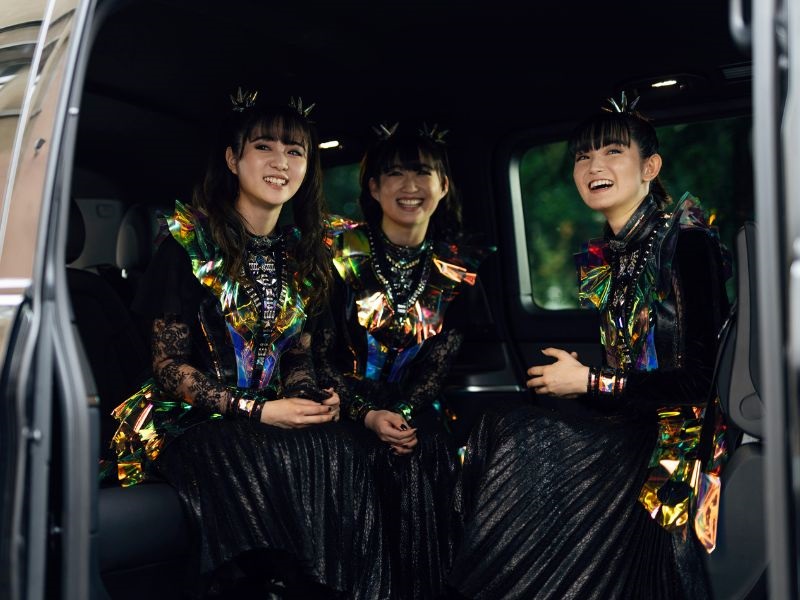
Heavier Trip is unapologetic in its celebration of heavy metal, both the bombastic, pompous form of, say, Celtic Frost’s Into the Pandemonium, and the sell-out, commercial folly of…. well, Celtic Frost’s Cold Lake. Xytrax struggles with his disdain for the perky Japanese rockers Babymetal, despite overwhelming evidence that they are just as hardcore as he is, just in a different way. As he sits, dejected at a bus stop, mirroring the set-up for a famous scene from My Neighbour Totoro, he encounters not a Catbus, but Babymetal’s tour van – the real life Babymetal play a pivotal role in the film, but seem to leave it a scene too early, as if they were afraid of turning into pumpkins.

Many of the gags will fly over non-metal heads. Fisto takes separate phone calls from someone called James and someone called Lars, which only Metallica fans will understand. Turo gains a pair of bat wings modelled on those of the Eurovision game-changer Lordi, and nobody asks why Norwegian rockers Abbath seem to require a fresh corpse backstage as part of their performance conditions. But there are also some lovely little gags that will only hit home with Finns, such as the moment that Mrs Lotvonen (Sinikka Mokkila) respectfully tries to address Xytrax by his preferred band name, but instead calls him Zyrtec, the name of an over-the-counter anti-histamine.

Few of the small-town supporting cast from the first film are to be seen here – there is no sign of Turo’s lounge-singer nemesis, or florist would-be girlfriend. Apart from the reindeer-farming Lotvonens, who provide the McGuffin that gets the band out of jail, the only other holdover from Heavy Trip is Ms Dokken (Helén Viksvedt), unconvincingly demoted from border guard to prison guard in order to give the film someone to chase the band across Europe.

Sometimes, it does seem that there’s rather a lot going on – including the chase plot as Dokken pursues her escaped prisoners and the gotta-save-the-farm plot that is largely forgotten and resolved in a hurry over the credits. But the real heart of Heavier Trip is the band’s clash with the world beyond the small-town fame of the original film, in the dog-eat-dog struggle of bands that have found success, but don’t know what to do with it. It is quite literally the “difficult second album” of the saga of Impaled Rektum. Surely a Heaviest Trip awaits in the future…?

Jonathan Clements is the author of A Short History of Finland, the country with the largest number of metal bands per capita in the world.

Corpse Blade

The first volume in the legendary Corpse Blade series, an action packed romp through a zombie infested Tokyo! School, chores, killing the undead — all in an average day for Tsuranuki Tsutsuki! After his sister is kidnapped by the zombies, this middle schooler sets out to save her, becoming handy with a gun — but he won’t be alone, as he encounters another kid on a quest, a mysterious high-school girl who can command the awesome power of the Corpse Blade!

Out tomorrow from Titan Comics, Hajime Segawa’s Corpse Blade, with translation by Motoko Tamamuro and yours truly.

Late Night Live: Rebel Island

I’m on Late Night Live tonight in Australia (and online for listeners elsewhere) discussing my book Rebel Island with David Marr, on all sorts of issues including Australia and Taiwan’s similar experience of indigenous issues, jungle warfare on the Kokoda Track, and “semiconductor sovereignty.” With 50,000 Australians having been born in Taiwan, I’m expecting a chunky audience.

Hot Metal

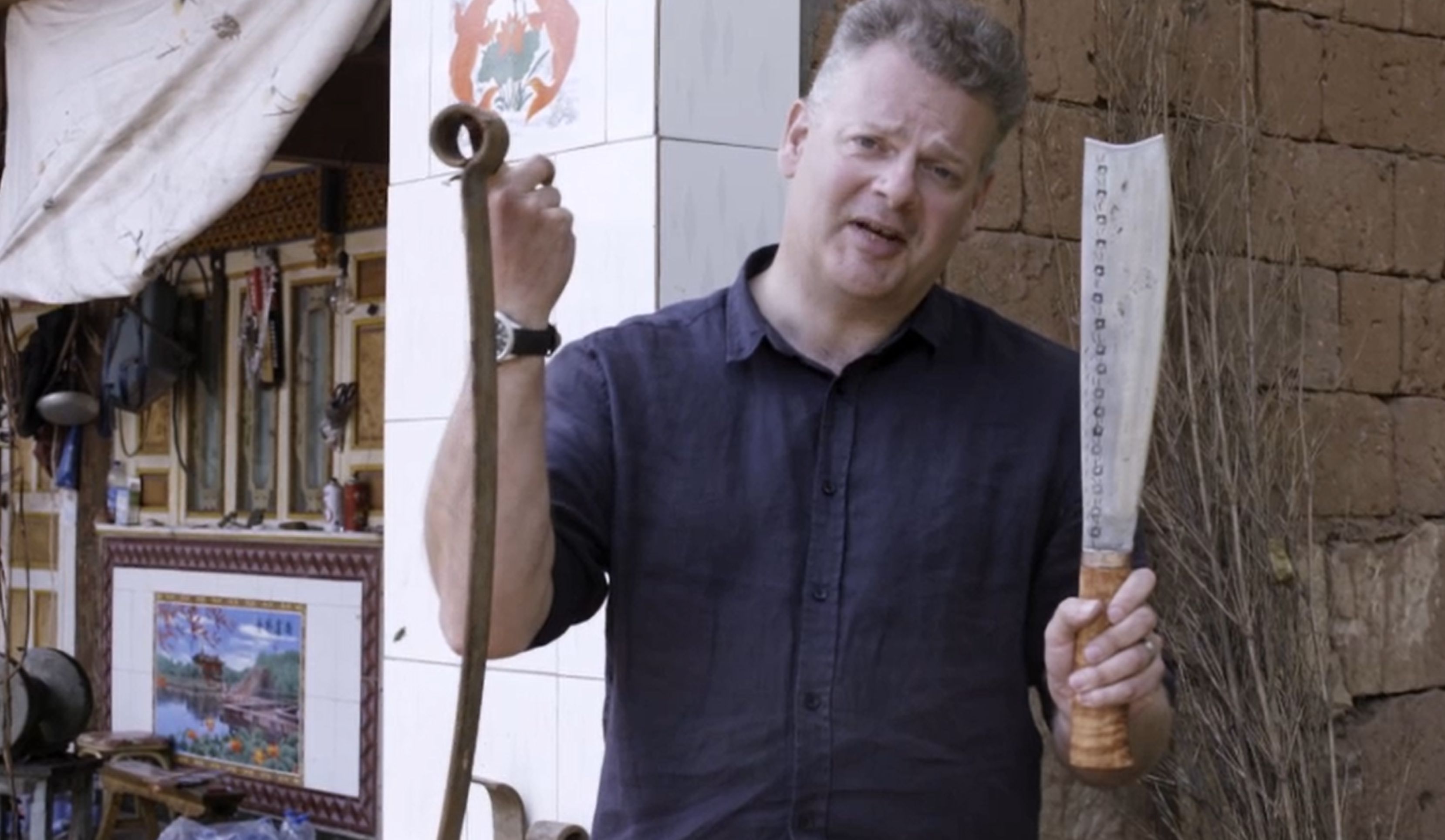
Hongyan, the village where we have spent this week, is three hours from Lijiang. We have driven a further three hours on the winding mountain roads, which have turned into single lane tracks, and peter out here, on a precipice, above a squat, concrete dam. Two Chinese men are waiting for us in a flatbed tractor, the only vehicle that can make it up the slope and along the muddy pathways for the next half an hour before we reach our destination – a remote hilltop farmhouse where Master Peacock makes knives.

This is the second Peacock we have had to deal with here, so I shall redub him John Craven in a Lenin Hat. John Craven in a Lenin Hat doesn’t just make knives, he makes the iconic fork-topped machetes that are an iconic symbol of Lisu manhood, and even show up on the Lisu crest.

He makes them out of truck suspension springs, which turn out to be good steel even when the truck is broken up. He breaks off a piece of roughly the right size, and hammers it in his forge until it is done, firing the flames with a bellows the size and shape of a coffin, operated by a giant pump handle. I briefly step in with his son to hammer on one side of the anvil, but John Craven in a Lenin Hat doesn’t speak Mandarin, so there are no interviews to be done – most of today’s shooting is B-roll of him at work, while I sit on a rock and wait for my next 20-second piece to camera.

For lunch, his wife lays out freshly made bread and a bowl piled with oozing honeycombs. The director tries to stage a dinner scene, but the Craven in a Lenin Hat family are all petrified of me, and the set-up ends up looking like Saddam Hussein trying to be chummy with hostages.

John Craven in a Lenin Hat’s two-foot knives are rather wonderful, and very cheap here at the source, seven hours from the nearest airport. I am tempted to buy one for myself, but it is now illegal to have knives in one’s luggage, even when checked in, thanks to the Islamist knife attacks at Kunming airport a while ago. Postage restrictions are unclear, and I am not going to blow my cash on a machete that I have to dump at the airport.

The director has strictly ruled that we must leave by 3pm. It will take half an hour to get back to the car, and another three hours to get back to the village, and this evening we have to be there to watch another of our interviewees climb the Ladder of Knives and throw himself into the Sea of Fire. This is the big finale of the local show, but he can’t be arsed to perform it if there are less than 20 people in the crowd, so we have had to bribe him with 500 kuai to perform it regardless. All of which means we don’t have the time to do pick up shots of John Craven’s chickens, nor to drone among the majestic mountains, tightly clad in green firs, that tower above the shadowy, narrow valley.

But John Craven won’t let us leave. His wife has made dinner and we have to eat it or he will lose face. They’ve killed a chicken and everything. So we glumly pick our way through gizzards and feet, the director sucking on the liver, until it is decreed that we have put on enough of a performance of eating to be allowed off the mountain-top.

Jonathan Clements is the author of The Emperor’s Feast: A History of China in Twelve Meals. These events featured in Route Awakening (S03E04), 2018.

Zombie Ming

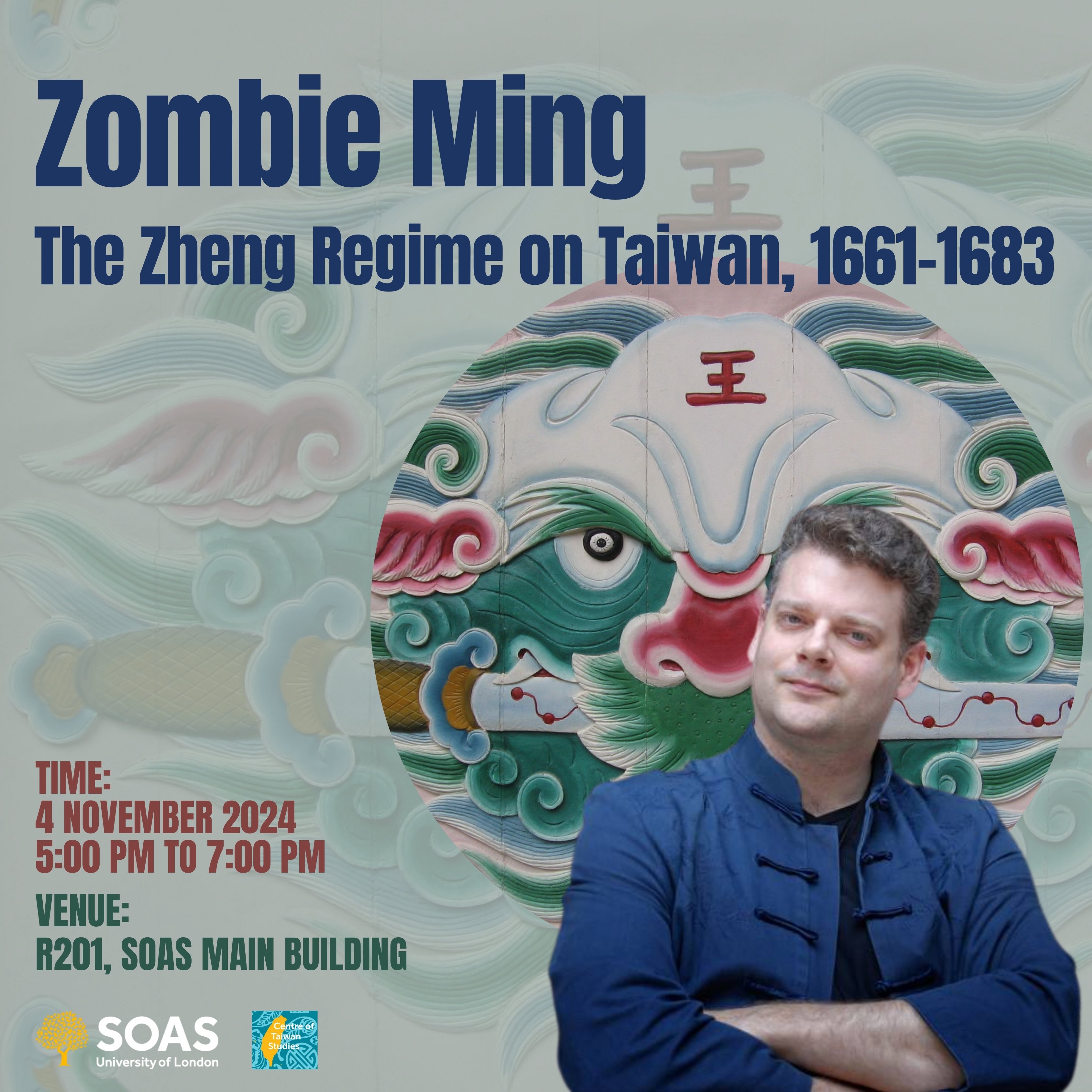
I’m back at the London School of Oriental and African Studies on 4th November to discuss the Zheng regime on Taiwan, 1661-1683.

Author and TV presenter Jonathan Clements discusses the rise and fall of the so-called “Kingdom of Dongning”, an enclave of Ming loyalists that held out on Taiwan for twenty years after the Manchu conquest of China. Torn between opposing ideologies of resistance and accommodation, Dongning clung to the memory of the Ming dynasty, even as its last pretenders died out and mainland support thinned and faded. 

A mere footnote in most accounts of Asian history, it was nevertheless a pivotal influence on the history of Taiwan. Includes incest, strangling and sword-lions.