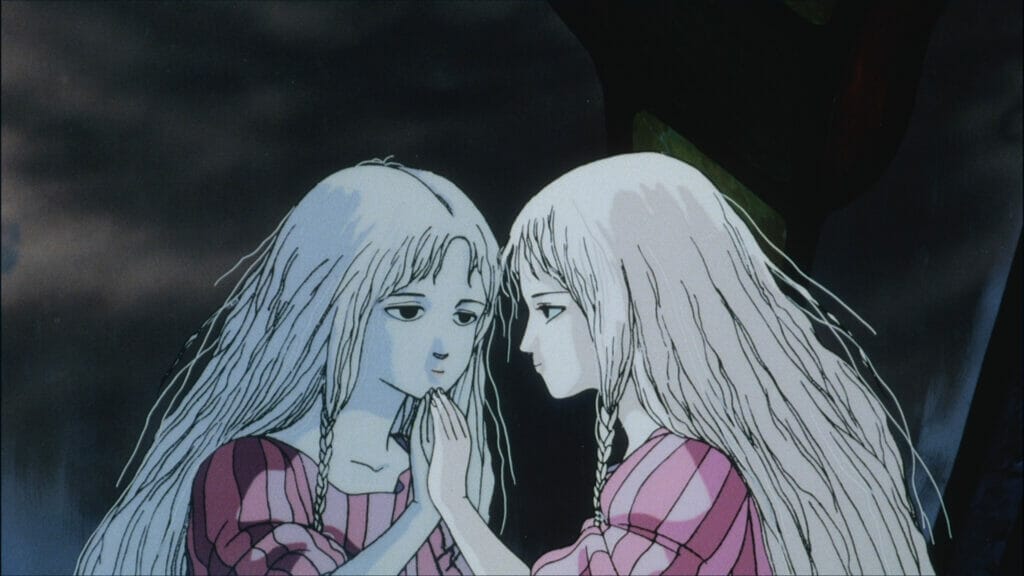
Like several other notable titles of the 1980s, Angel’s Egg was briefly shown in a Tokyo cinema in order to qualify it as a “film”, and hence command attention from movie magazines. However, it was hardly a major splash – an early morning screening on Sunday 22nd December at the Toei Hall, a week after the video cassette was already on sale, ironically on the release day of the fourth film in the Urusei Yatsura franchise that Oshii himself had once helmed, and only a day after the premieres of both Vampire Hunter D and the Captain Tsubasa movie. If you were an anime fan that weekend, you would have had a busy schedule. Angel’s Egg, it seems, lost out in all the competition, an avowedly arthouse project in an anime scene that had a very different idea of what “grown-up” cartoons should be.
The reaction to the film on its original release was muted. Yoshikazu Yasuhiko damned it with faint praise in Animage by comparing it to Eiichi Yamamoto’s Belladonna of Sadness (1973), itself a film that flopped on its original release, only to be praised by later critics as an arthouse classic. Hayao Miyazaki commented that Oshii had gone on a “one-way trip” with no notion of how to come home. In the most cutting of bad notices, Oshii’s own mother told him that she doubted anyone would want to see another one of his films ever again.
From my article in the sleeve notes to the Umbrella (Australia) release of Mamoru Oshii’s Angel’s Egg.
And if you already have all those recent Clements history books, then there’s always something lurking in the backlist, like an acclaimed translation of The Art of War, or a Brief History of the Martial Arts. And for those planning to travel in 2026, histories of Japan and China, Tokyo and Beijing.
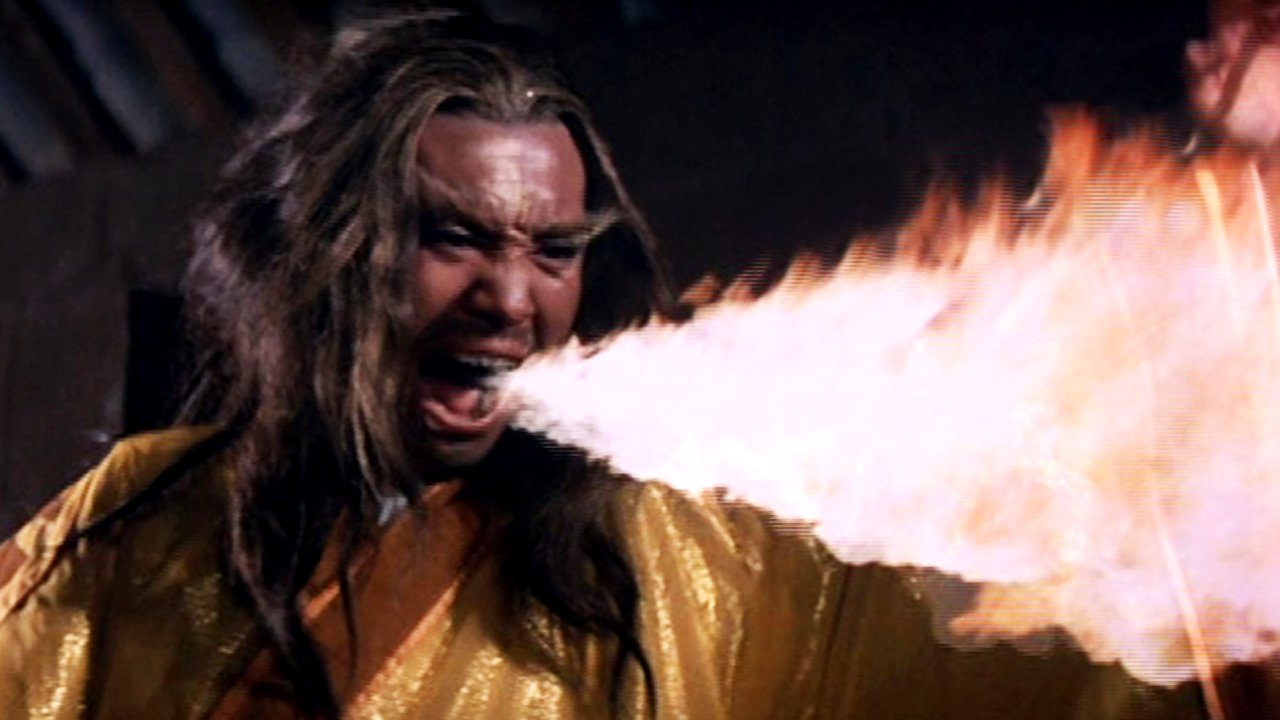
‘There was an attack on Jin Yong’s writing in the Party newspaper, Zhongguo Qingnian Bao, by someone called Wang Shuo, which was a real hatchet job against his popularity with the young. Wang specifically called out Demi-gods and Semi-Devils for criticism, and said that it was unconscionably awful.
‘He only read the first volume, which is to say, the events that we see in this Battle Wizard movie, and said that he had to finish it “while holding his nose” accusing Jin Yong of “making every single error that someone can make in writing fiction” including shunting his characters around through predictable obstacles like “pigs driven through a narrow alley.”
‘So as you can perhaps already tell, it was a significant hatchet job, and went on and on about how Jin Yong’s books were so terrible, and so popular, that as far as Wang could see there was only one possible explanation, which was that people needed escapism from their modern lives, and that wuxia fiction served as, what he called, a “head massage.”
‘Unfortunately, Wang Shuo seemed to have forgotten the golden rule of literary criticism, which is not to pick a fight with someone who writes for a living, because only a few weeks later, Jin Yong published an absolutely rip-roaring response of his own in the Wenhui Bao newspaper in Shanghai.
‘He said that he was always pleased to read criticism of his work, and that he basically agreed that his fiction was over-rated, and he was sorry for all the awards it had won, and all the copies that it sold, and the millions of people who loved reading it. And, you know, it was probably a sign of terrible times that these books that Wang Shuo hated so much were the subject of a graduate course at Beijing University, and it was surely of great embarassment that American academics had staged a whole conference on his fiction in Colorado.
‘And he went on to say that it was kind of weird that Wang Shuo said he could barely finish the first of seven volumes, because the story actually only had five volumes, so it sounded to him that he was reading an illegal pirate edition, or maybe even a completely different book. But whatever, he was very grateful for millions of enthusiastic readers, and one troll whining about it didn’t bother him much.’
From my commentary track to Battle Wizard, to be found in Arrow Films’ new Shawscope #4 box set.
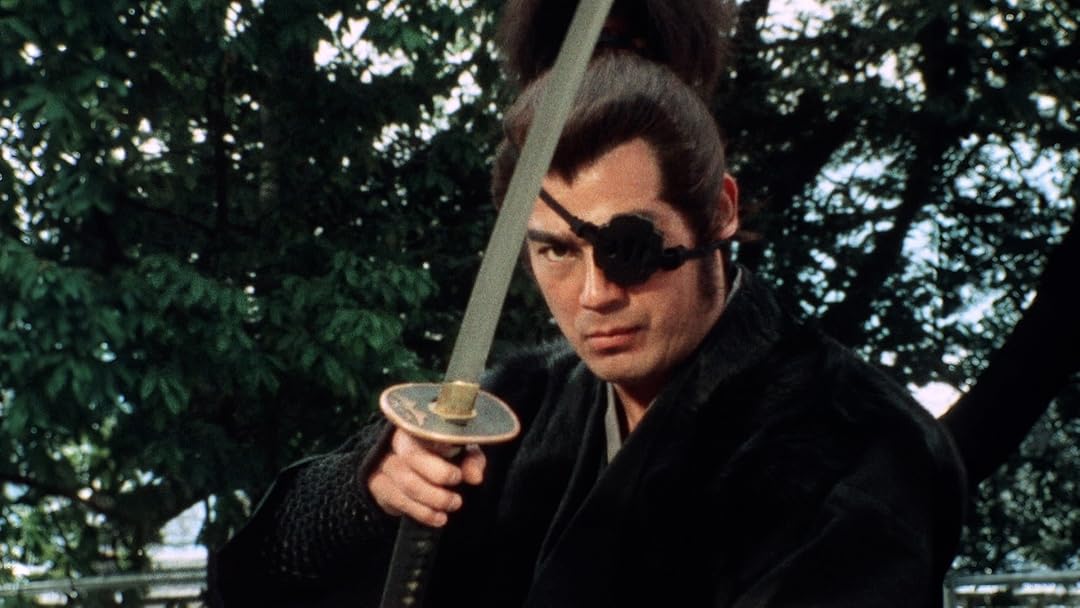
Two years previously, when the Studio Park had been opened to great fanfare, Toei had sent sixteen truckloads of cinema-grade scenery, costumes and armour off to the trash heap, convinced that it would be a waste of money to keep storing samurai sets and material in an era of thrillers and detective dramas.
Red-faced producers were obliged to rebuild many interiors from scratch, leading to complaints from the studio head, Shigeru Okada. Despite his earlier enthusiasm, he now remembered somewhat tardily that he had been the bean-counter who had shut down period dramas at Toei in the first place. It was all very well making samurai films, he fumed, but horses now cost ten times what they used to.
From my booklet article in the new Eureka Blu-ray release of Shogun’s Samurai, a.k.a. The Yagyu Conspiracy.
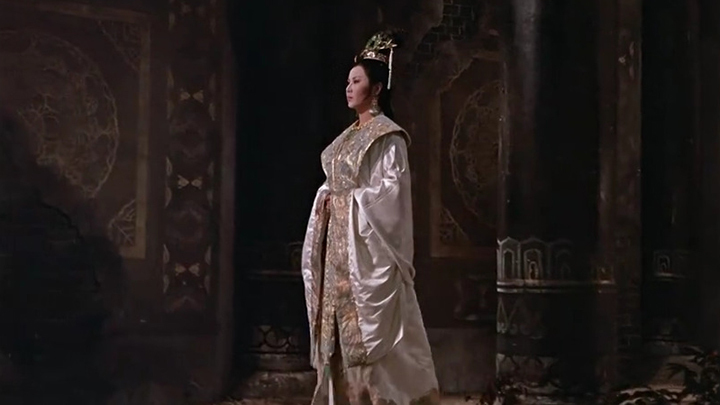
“Without enough bulbs to adequately light the set, Nishimoto focussed on key-lighting the principles, rendering many backgrounds into moody shadows. The resultant film, The Magnificent Concubine, was a visual triumph, going on to win the Technical Grand Prize at the Cannes Film Festival, although Nishimoto kept away from the celebratory party, in order to preserve the illusion of the film as an all-Chinese achievement.”
From my article on Tadashi Nishimoto and other Japanese film-makers working under false Chinese names in the Hong Kong industry, included in the Arrow Films Shawscope #4 box set.
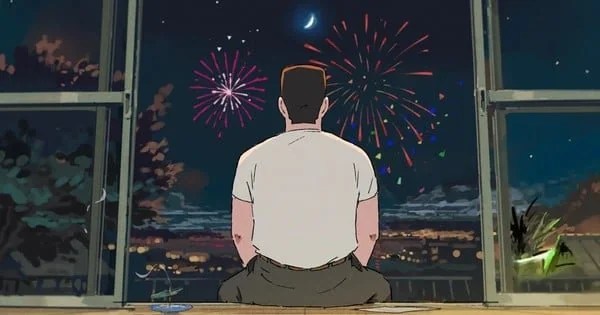
And while the rest of you were sleeping, I was on a train from London, where I interviewed the directors of ChaO and All You Need is Kill this weekend, to Edinburgh, where tonight there is a second bite of the ChaO cherry with director Yasuhiro Aoki, and later in the week I will be interviewing Baku Kinoshita about his gentle movie The Last Blossom, a love letter to the mid-1980s before everything fell apart. For Japan, not for me.
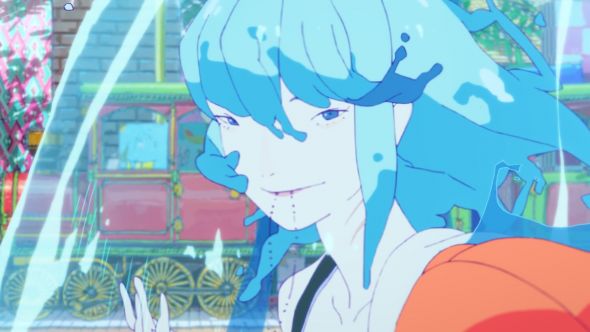
And I’m off again, this time to That Fancy London for a weekend at the Picture House Central, which features two director Q&As. I shall be onstage interviewing Yasuhiro Aoki, whose new movie ChaO (pictured) is the tale of an arranged marriage in Shanghai between a man and a mermaid, and Kenichiro Akimoto, whose All You Need is Kill adapts the same original novel as was turned into Tom Cruise’s Edge of Tomorrow, this time in anime form.
On Sunday, I introduce the last film of the London leg, and get straight on the sleeper for Edinburgh, where ChaO gets its Scottish premiere on Monday evening, with the director present once more at the refurbished Film House. The rest of the Edinburgh film week, including an onstage interview with Baku Kinoshita, director of The Last Blossom, is being hosted at the Cameo Picture House.
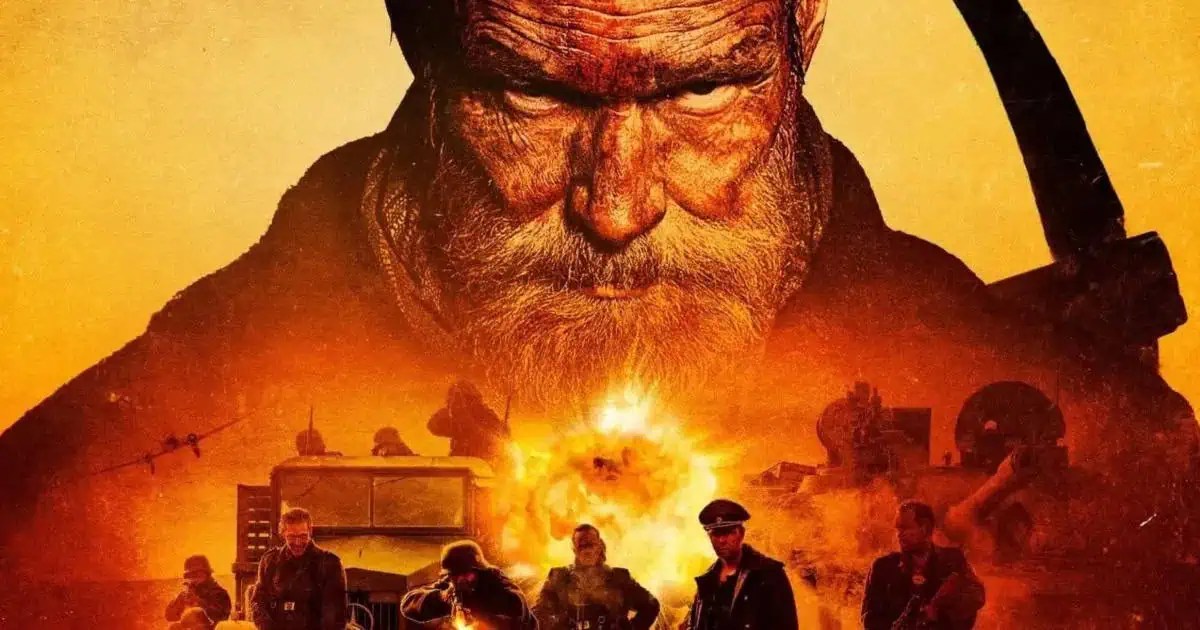
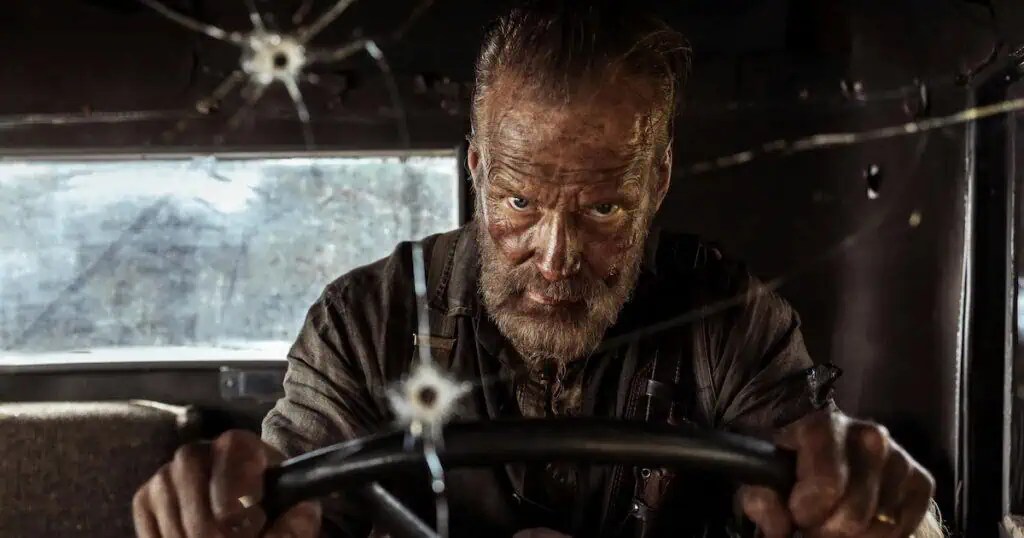
A year after he massacred a bunch of smug Nazis who tried to steal his golden nuggets, retired Finnish commando Aatami Korpi (Jorma Tommila) drives over the newly drawn border with the Soviet Union in to the lost land of Karelia. It is revealed that he is one of the 420,000 Finns who fled Karelia when it was ceded to Russia in 1940, but that he intends to dismantle his old homestead, drive it back to free Finland, and rebuild in memory of his late wife and children.
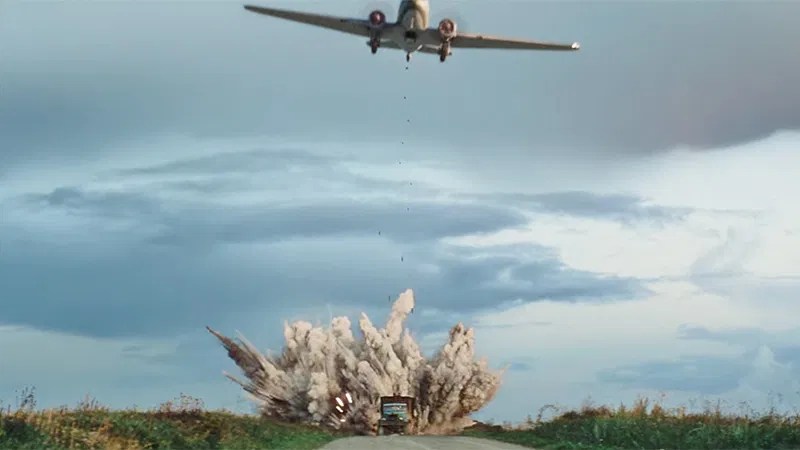
Oh yes, about that… “Meanwhile, in Siberia” discredited Soviet death squad commander Igor Draganov (Stephen Frame) is sprung from prison and given a mission he can’t refuse. As he is the man whose atrocities drove Korpi to become the unstoppable “immortal” soldier, he should be the man to destroy him. Draganov sets off in pursuit of Korpi, who is doggedly driving a battered old truck across Karelia.
In my review of the first Sisu film, I speculated about the Mad Max: Fury Road and Indiana Jones image board that director Jalmari Helander might have in his office. This time, with Sisu 2: Road to Revenge, I would add a few choice moments from a bunch of other films, including William Friedkin’s truck-in-jeopardy movie Sorcerer, tips of the hat to the original Die Hard, and even Tom & Jerry. This over-the-top saga of Lumber in the Tundra sees Korpi dispatch an entire division of hapless Russian soldiers, with everything from his bare hands, to a handy missile, several useful poles, a bit of bent piping and a winch – I was the lone laugher in the Finnish cinema, while the locals around me seemed to be largely taking notes.
Some of the set-ups prove to be unnecessary dead ends – there’s a whole bit with a puukko knife that goes nowhere, and there are some odd anachronisms, like a Russian banquet that comprises crab sticks and Soave – and I felt that Helander missed a real trick by not featuring an onscreen massacre in which Korpi murders a bunch of Soviets with, say, a hammer and a sickle.
Helander also returns to what I’ve previously called his “Finland of the mind”, not only in terms of redressed Estonian locations, but of the very idea of Karelia as a liminal, thinning fairyland – a place that was once home, but is now seen slowly drowning in red weed. As I have mentioned before on this blog, 12% of the population of Finland were Karelian refugees in the 1940s, and that has translated in modern times to, at a rough guess, one in four of everybody’s grandparents. There is an overwhelming sense of melancholy and loss in Korpi’s return to his former homestead, and a gritty determination to repatriate it far in excess of the passion with which he went after his Nazi tormenters in the first film.
In a moving sequence of a talkoot, Korpi finds himself unexpectedly and briefly among friends. As an immigrant who has also been accepted by Finland after my homeland sold me out, I seemed to be the lone crier in the cinema, too.

 The Official Schoolgirl Milky Crisis Blog