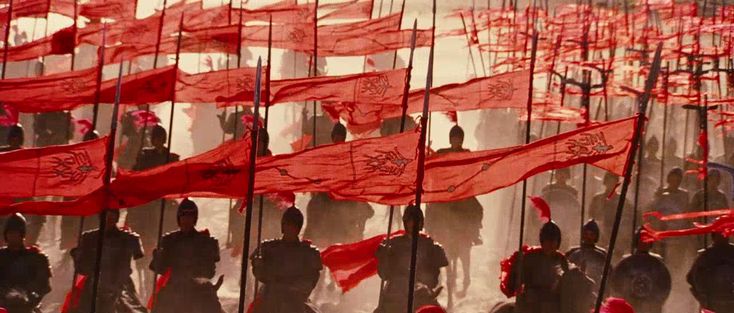
“Nobly deciding to film in the location where the original novel was set, Zhang Yimou was disappointed to discover that the locals had stopped growing sorghum altogether, instead preferring more lucrative cash crops like peanuts. In order to match the novel’s descriptions of tall, waving gaoliang grass, he would have to pay the locals to actually plant some, and so as the script was being written, farmers in Shandong were being paid to sow sorghum seeds on sixteen acres of waste ground.
“Shooting was delayed by almost a month, when Zhang and his crew returned to the area to find that the farmers had neglected to water the fields – sorghum can be a fast-growing crop, but it is thirsty, and the crew had to spend several weeks tending to it, while the production money bled on a daily basis.
“Mo Yan’s original novel ends in the present day of its composition – the 1980s – with the narrator visiting his family graves, and fuming at the sight of a new, modern form of sorghum. He angrily berates the locals for bringing in ugly, squat hybrid sorghum from Hainan far to the south.
“Hybrid sorghum is a high-yield crop, but tastes awful, causes constipation and, most importantly isn’t red. To Zhang Yimou’s great horror, his tame farmers had sown eight acres with the wrong kind of grass…”
From my video essay in the new Blu-ray of Zhang Yimou’s Red Sorghum, coming in July from Whole Grain Pictures (US).
In 1939, Helsinki port authorities refuse to allow 29 Jewish refugees to disembark on the grounds they do not have jobs or places to stay. Prominent Helsinki businessman Abraham Stiller (Ville Virtanen) says that if that is the only problem, he will vouch for them all. His rash promise ruffles feathers among the understandably jumpy congregation at the Helsinki synagogue, but he remains true to his word.
Stiller is a confident, proud Finnish Jew, berating the uppity official Arno Anthoni (a chilling Kari Hietalahti) who objects to Jews outside the store, unaware that his suit has just been tailored for him by Janka, one of Stiller’s refugees. But as the Soviet Union orchestrates a reopening of hostilities on the frontier, and Finland contemplates a “co-belligerency pact” with the Nazis, Stiller finds his power begin to erode.
At first it is little things – objections to English-language newspapers; schoolboys shouting “Heil Hitler” – but as the years pass, the accommodation of the Nazis leads to a hardening of attitudes towards the Jews. In a cunning ruse, the film’s feel-good title does not derive from some TV-movie-level message of hope, but from the slogan on a propaganda poster celebrating Finland’s military team-up with the Third Reich.
Like Oskar Schindler, with whom he would inevitably be compared, Abraham Stiller is a complicated figure, a holy fool unjustifiably confident in his ability to fix things. His promise on the dockside secures the safety of 29 people, but his similarly brash assurance that his charges shouldn’t flee for Sweden as the noose tightens ultimately costs several of them their lives.
A snarling Nazi officer demands to know what he is doing in Lapland, and he cheekily answers: “I’m on Finnish territory. I could ask you the same thing.” Despite a Luger only recently pointed at his head, he insists on wading back across the marsh to his friends in a work gang, in order to finish their celebration of the Sabbath.
Stiller’s over-confidence comes back to bite him, when it is revealed that the Nazis’ wish-list of Jews derives from the congregational lists that he himself gave to the authorities in order to guarantee the sanctuary of the original group of refugees. As Anthoni gloats over the news, he quotes Casablanca (1942). This is something that Stiller will regret: “…maybe not today, maybe not tomorrow, but soon.” It’s Anthoni who comes up with a work-around to placate the Nazis without annoying the Finnish authorities – instead of deporting Finnish citizens, they will start with refugees with foreign passports.
The opening titles of Klaus Härö’s Ei koskaan yksin are a procession of production partners of almost comedic length, revealing a large-scale Europudding – a Finnish story, bolstered with German and Scandinavian financing, backed by the Austrians, and partly shot in Estonia. The crew makes the most of what was plainly a very restricted shoot on Helsinki’s Bulevardi, a street that has frankly remained unchanged for the last century, and which can easily be repurposed for the 1940s – if I remember rightly, it was also the location of Aatami Korppi’s bank in the closing scene of Sisu (2022). Unfortunately, this means that the passage of four or five years of historical time is lensed on what appears to be the same drab October day, but Härö makes the best of this look, shooting his film as if it takes place in a world where it is forever autumn.
A black and white framing device, reversing the use of colour in Schindler’s List, reminds us that 1972, when the dying Stiller is interviewed about his life, is actually further away from our own time than it was from the time of the Holocaust. It also hides the aged Stiller from the harsher glare of full lighting, allowing actor Virtanen to get away with his old-man make-up.
The film is a glorious mash-up of contending languages, not only Finnish and German, but haunted throughout by sudden outbreaks of Yiddish, whenever the Jews are in their own company. I have always been charmed and unsettled by the sound of Yiddish, ever since I first heard it in a cold open for The West Wing – like German from another universe. It is a topic most brilliantly pursued in one of my favourite books, Aaron Lansky’s Outwitting History, about how this language could go from being one of the most widely spoken in the world, to a forgotten orphan, over-written not only by the Holocaust, but also by the migration of so many of its surviving speakers to the United States, where their children grew up speaking English, or Israel, where their children grew up speaking Hebrew.
Drawing on the work of the real-life author Elina Sana, the film grapples with the fact that free Finland, which was, unlike Norway and Denmark, not actually occupied with the Nazis, nevertheless was prepared to send seven people to their deaths in Auschwitz, one of them a Helsinki-born child.
Its closing reel, and the catch-up titles that end the film, struggle with this scandal, seemingly unable to reconcile the matter of the film itself with the facts of history. These seven, we are told, were the only Jews that Finland gave up, and it was thanks to Stiller and the Helsinki synagogue that no more were sent to their deaths. But we see nothing of this later struggle, nor of the fate of the dastardly Anthoni, who fled for Sweden at the end of the war, but was repatriated to face trial, released with little more than a slap on the wrist, and died conveniently before Elina Sana’s late twentieth-century investigations began poking at the true story behind it all. The book Finland’s Holocaust is the best account of it all in English, and has much on Anthoni’s lick-spittling trip to Berlin to appease the Nazis, played for dark humour in the film, in which his enthusiastic “Heil Hitler!” to Heinrich Müller is greeted with an icy stare, as the Nazi officer insists on finishing the piano sonata he is playing before answering.
Instead the film ends with a trip to Israel, where the sole survivor is cajoled into making a token gesture of forgiveness to Stiller. It is an unfortunate mis-step, attempting to tie everything up with a bow, and seemingly contradicted by the film’s closing title card, which reveals that after seeing his wife and son die in Auschwitz, Georg Kollman “never spoke of Finland.”
Jonathan Clements is the author of A Short History of Finland. He is watching all the Finnish films so you don’t have to. Never Alone is currently one of the in-flight movie options on Finnair.
Hiroki Yamaguchi “…was working within the constraints of shoestring funding, a largely amateur or volunteer cast and crew, and shooting on a Panasonic DVC-Pro – a video camera with a price-point and capabilities that can be matched today by a second-hand iPhone. Nobody on the production was paid; the props and set were literally scavenged from a junk yard. Even the advertising was low-tech, with the cast hefting a poster-board through the streets of Tokyo, exhorting passers-by to give Love, Actually a miss and try the little indie film playing in a smaller screen at the same cinema.”
From my sleeve notes to the bonkers Hellevator, coming in May from Treasured Films.
“A lovingly curated and researched deep-dive into some of the most important Japanese animated feature films ever made.” — Jerome Mazandarani, Answerman, Anime News Network
“It’s a solid introduction to the genre with enough depth to teach even devoted fans a thing or two.” — Publishers Weekly
“You can’t go wrong with this fascinating and fun new book about anime. It is, after all, by Jonathan Clements, an icon among anime experts, who has watched more anime than most doctors would advise, and written (with wit and expertise) about it for decades.” — Frederik L. Schodt, translator of Astro Boy and author of Manga! Manga! The World of Japanese Comics
“Jonathan Clements’ knack for storytelling takes readers on an adventure every bit as exciting as the productions he profiles.” — Matt Alt, author of Pure Invention: How Japan Made the Modern World
“…makes an erudite case for each film’s inclusion with insight built on decades of writing about anime and Japanese culture.” — Zack Davisson, translator of Space Battleship Yamato and author of The Ultimate Guide to Japanese Yokai
“Do you want to go through the Mists of Time?” he asked.
No, I said. I’m in a bit of hurry, and there’s somewhere else to be. How long is the big filmy thing?
“Twenty-eight minutes,” he said.
I’d better skip it, I said, darting into the next hall, which turned out to be a series of remarkably wide-ranging exhibits linking the Viking Age to the Silk Road, including a fragment of Tang-dynasty textile, found in a Swedish grave, and a cowrie shell, found in Denmark, that might have come from as far away as the Maldives. It ended in the café, and I realised that I had inadvertently refused to go through the main event at the Vikings The Immersive Experience.
Sheepishly, I sidled back to the guardian of the Mists of Time. It was half past nine on a Tuesday morning, and I was the only person there.
Okay, I said. I am ready.
It’s been thirty years since Janet Murray’s Hamlet on the Holodeck, but we still struggle to find the words to describe hybrid media events. Vikings: The Immersive Experience is not a museum exhibition, but several inter-linked multi-media happenings, separated by a holding area packed with replicas related to the world of the Vikings, some of them also interactive. It is not the sort of place for a hurried historian to dash through, snapping signage with his phone. It is intended to be the length of a movie, and so it should be.
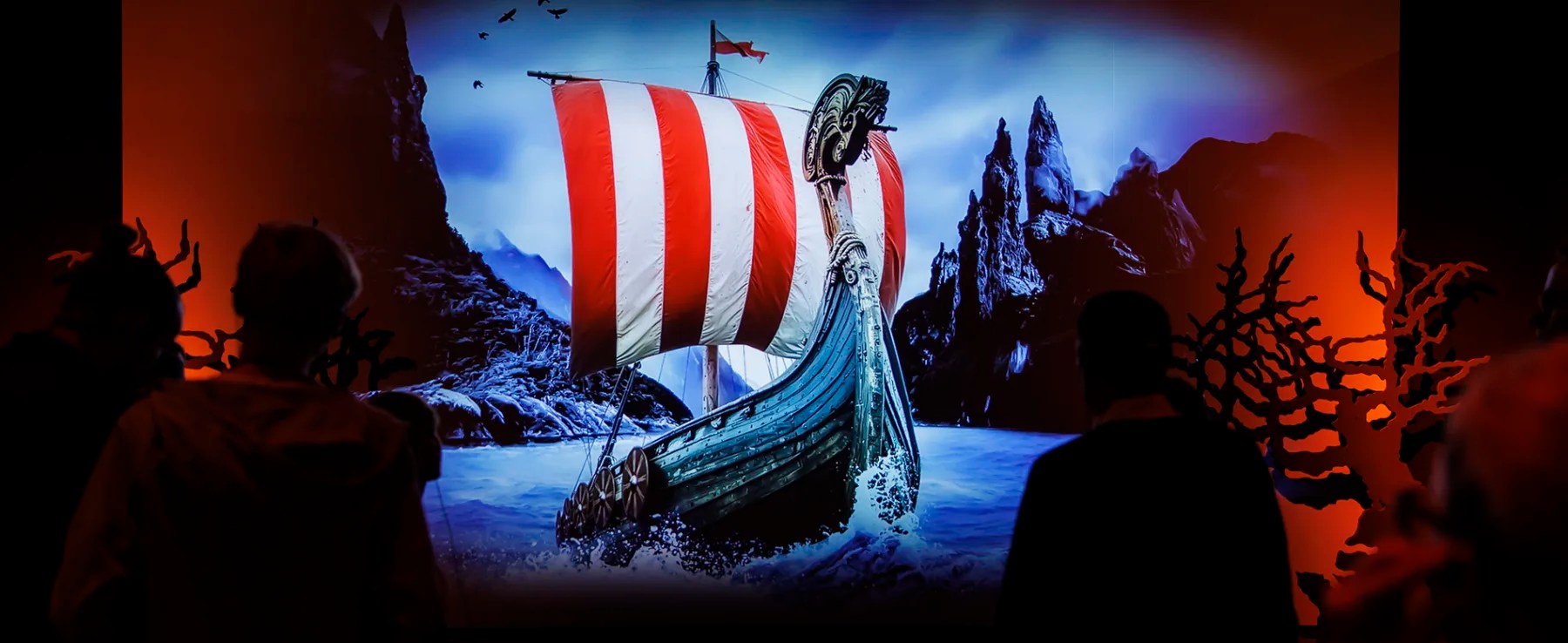
The story derives from the Tale of Ragnar Lothbrok (most famously used as the inspiration for the History Channel’s Vikings series), and cleverly runs with the doubtful claim therein that Ragnar’s wife, Kraka, was really Anlaug, the last of the Volsungs, daughter of Sigurd and Brynhildr. This allows the Immersive Experience to begin with a VR event retelling ancient myths beneath a rune-hung World Tree. This first presentation ends with Anlaug/Kraka boarding Ragnar’s longship to sail off for her wedding.
Beyond, there is a scattering of displays and interactive booths, while “the Professor” on my audio guide made repeated offers to go deeper into any subject I liked the sound of. The Immersive Experience does everything it can to showcase the high points of the Viking age, and then waits for the visitor to ask to know more.
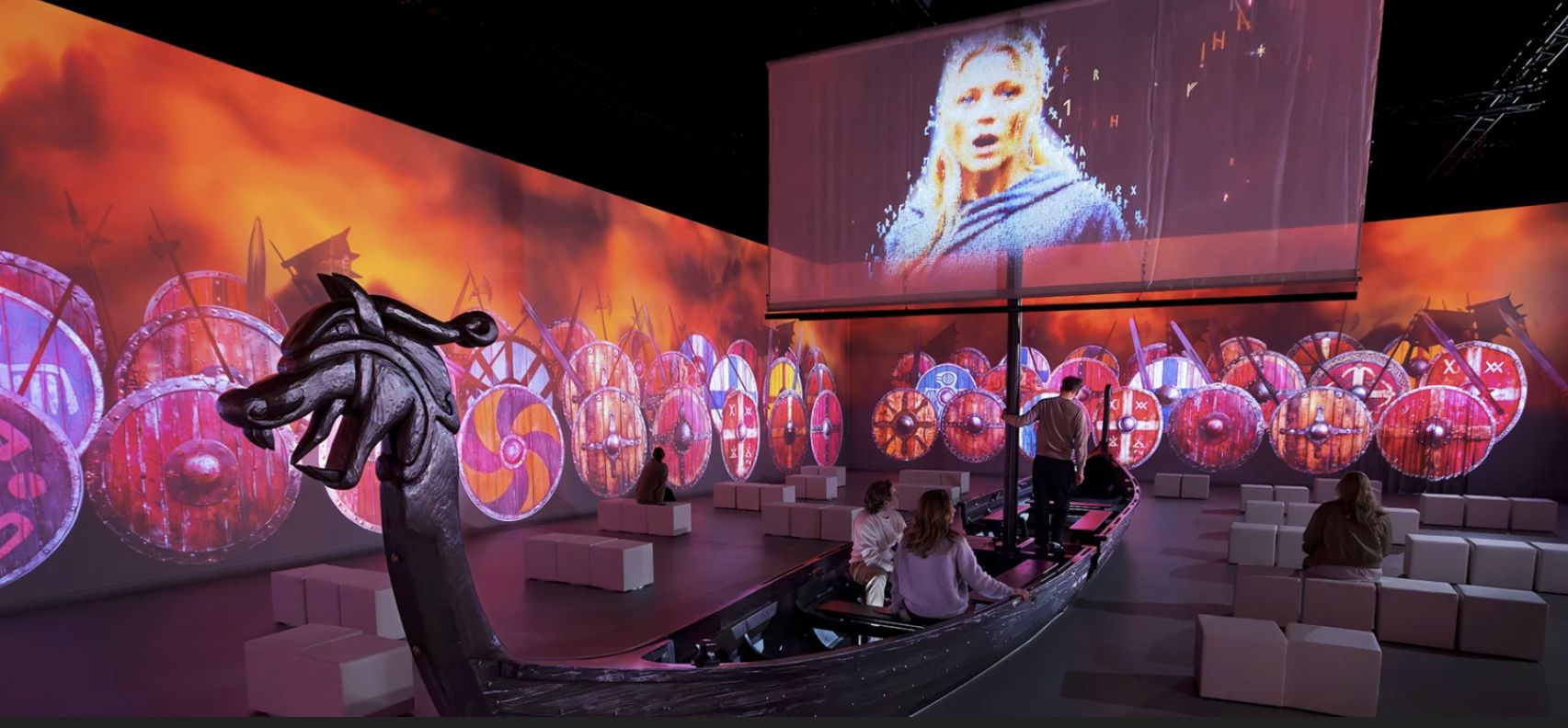
It’s Anlaug/Kraka’s wedding that begins the second and larger multi-media experience – a 360-degree movie which the audience is invited to watch from their very own longship. It offers dizzying bird’s-eye views of a Norse community, and then plunges the viewer into a prolonged sequence in which Kraka develops the power of prophecy, thereby allowing her to foretell the next 200 years of Viking history, her sons’ wide-ranging travels and conquests, and (in the only linguistic mis-step) landfall on a distant coast that she anachronistically refers to as “the Americas.”
The narrative is unrepentantly, exultantly the story the Vikings tell about themselves, without any of the coughs, cavils or asides of modern scholarship – apart from an opening speech recounting the destruction of Lindisfarne, the story is one of a bunch of sea-kings taking whatever they want, and reacting with fierce anger whenever anyone stands up to them. I actually found this lack of hand-wringing rather refreshing, and ideally suited to the implied viewer: a teenager ready to be thrilled by tales of derring-do by entitled thugs. As a popular historian, I concede that it is necessary to meet one’s audience halfway. Coming out of the Immersive Experience into the inevitable gift shop, one is invited to pillage fridge magnets and baseball caps, as well as a selection of introductions to the Vikings aimed largely at a young-adult readership. More detailed accounts of the Viking age can wait, but the Immersive Experience is sure to hook them in.
It finishes with another cunning link, suggesting that Anlaug/Kraka, might be the unidentified Viking queen buried in the Oseberg ship grave. This allows the experience to close with the sight of the archaeologist Gabriel Gustafson and his little dog, poking around an unassuming hillock in Norway, connecting a tall tale that begins in ancient myth with the first Victorian-era finds that would define our modern sense of the Viking age.
The guardian of the Mists of Time was waiting for me on the other side.
“Would you like to have your picture taken on the Viking throne?” he asked.
Over at Animeigo’s Youtube channel, they make their bonus footage available from their oral history of the anime business, which means you get to hear me talking about the logistics (and the finances) of festival guests and interviews, gossip about Leiji Matsumoto, Naoko Yamada, Mamoru Hosoda and others, the creation of Smith Toren and foreigners in the anime business.
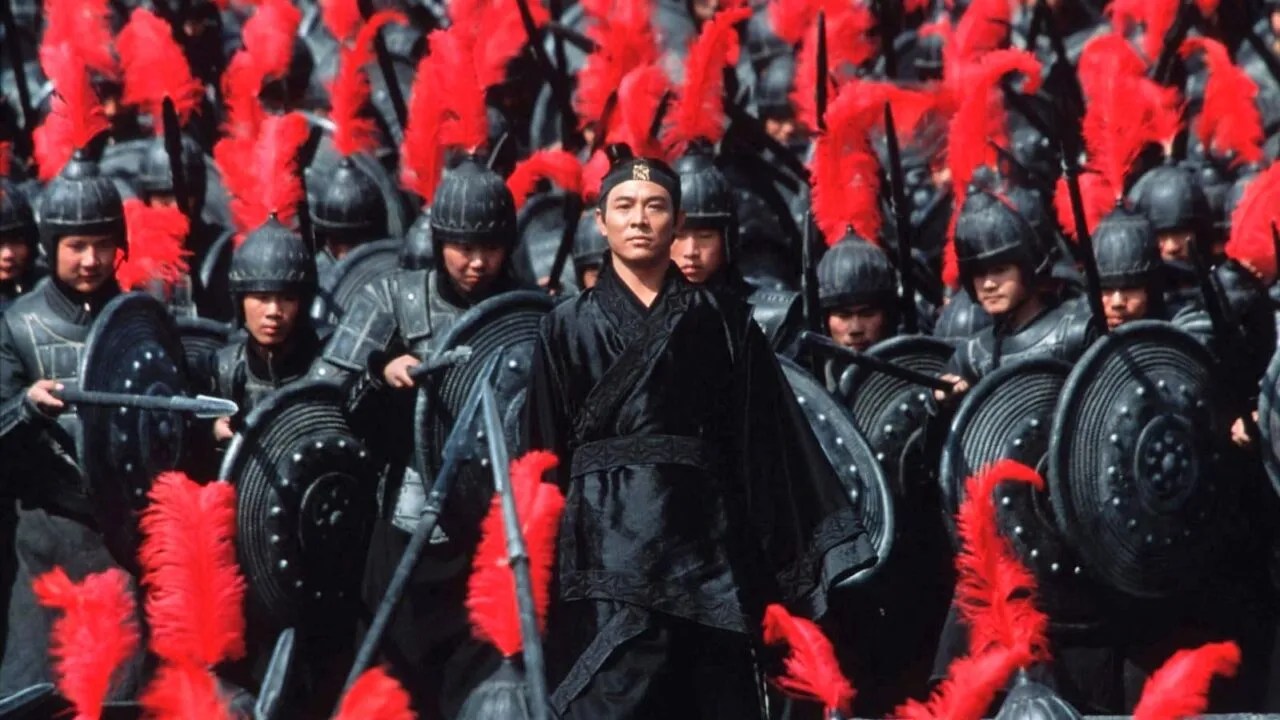
Over at the Subject to Change podcast, I return to talk about my book on the First Emperor of China and the man who was sent to kill him: facts and fictions in Zhang Yimou’s movie Hero (2002), the evil mirror-universe version of Confucianism, an impossibly well-endowed “eunuch”, the construction of the Terracotta Army, the politics of archaeology, and how to spend a slave labour dividend.
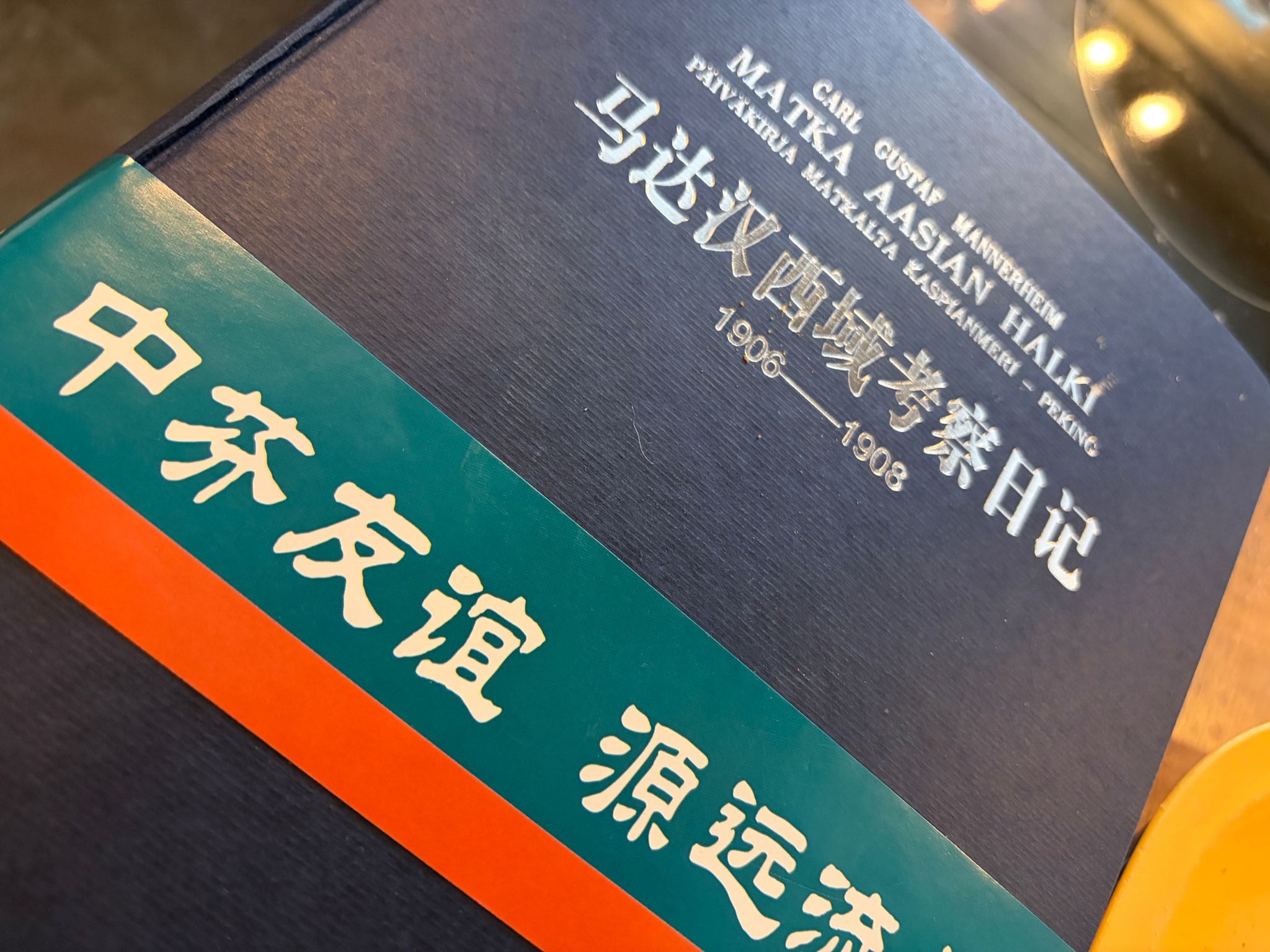
In an unexpected spin-off from my lecture last week about Mannerheim’s adventures in the Far East, I have obtained a copy of the Chinese edition of his epic Across Asia, published in 2004. “Sino-Finnish friendship,” proclaims a poetic belly-band bearing the logo of the Metso paper company, “is long-standing and well-established.”
Translator Wang Jiaji fulminates in his afterword about the pitfalls of trying to work out which godforsaken village Mannerheim might have been writing about in 1907, after 12 hours in the saddle and a rainstorm, when he got the name from an illiterate Kirghiz tribesman who couldn’t speak Chinese, seemingly unaware that even as the presses were rolling on this edition, Harry Halén was publishing his Analytical Index to Across Asia in faraway Helsinki. It’s this frightfully obscure work, for which I suspect I was the sole customer, that made it possible for me to get the names right in my own book.
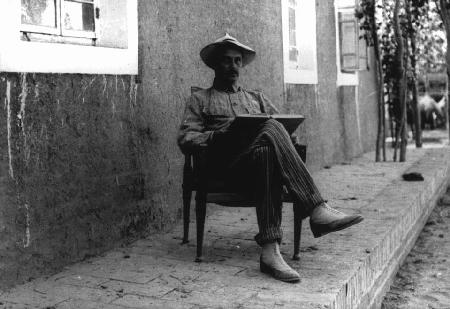
“The purpose of this trip was military in nature,” says Ulla-Maja Kulonen carefully in her preface, “but it also carried other investigation tasks.” Well, yes, that’s one way of putting it, I suppose. Mannerheim was sent into Central Asia to map terrain, probe military readiness, and investigate the penetration of Japanese influence, assembling the data for a 1909 military report, which handed Russian top brass a game-plan for invading Xinjiang, and a terse assessment of the lack of a threat that China presented.
To do so, he travelled undercover for two years, posing as a Swedish ethnologist, and performatively shipping back artefacts and observations by the crateful during his long mission. It is a testament to Mannerheim’s enthusiastic embrace of his cover story that his findings would become the subject of several academic papers, this brick-sized diary of his journey, a large chunk of the Central Asian holdings in Helsinki museums, and 1200+ priceless photographs of life in China at the turn of the 20th century.
His diary was published by in Chinese the China Nationality Art Photograph Publishing House, suggesting that a century later, it was his observations of local ethnic communities that turned into an unexpected bonus. An anonymous editor provides a frowning afterword in which he is a lot pushier about the whole spy thing.
“We must… recognise that as an explorer from a Western power 100 years ago, the author’s activities in our country’s west served the dual purpose of military espionage and scientific exploration,” say The Editors ominously. “This is a concrete manifestation of the colonial policy of the Tsarist government and the history of imperialist aggression against China.” Such commentary is not that unusual – the Mandarin translator of my own Short History of the Silk Road spattered the published edition with quibbling footnotes, although he stopped short of calling me an imperialist aggressor.
Wang Jiaji, himself the author of a Chinese book on Mannerheim, adds that the publication of the book in Chinese was the culmination of a massive effort by multiple Finnish organisations – including a translation subsidy from the Finnish Literature Information Centre, and big-name sponsors including a bunch of paper companies (Metso, UPM-Kymmene, Finnish Forestry Industries Federation), Nokia and Finnair. Although Across Asia was completed in 1908, it lay unpublished for three decades, which left it in an odd legal position regarding copyright – the Finno-Ugric Society waived all fees in order to get the Chinese edition off the ground.
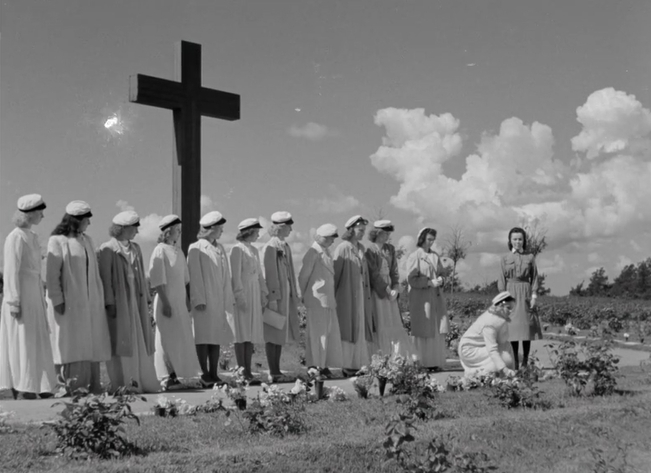
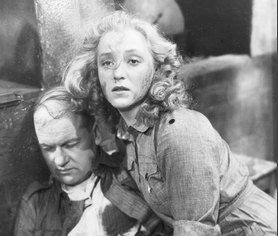
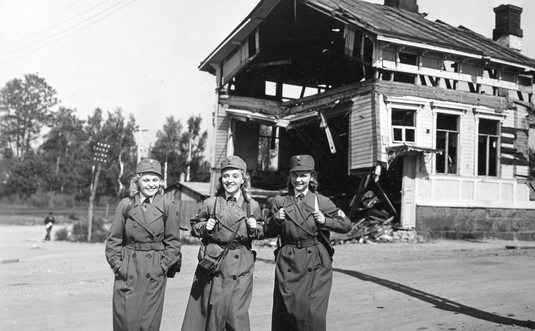
In the summer of 1941, Finland is in the midst of its Continuation War with the Soviet Union, and girls at a Helsinki college are laying flowers at the graves of fallen classmates. Maija (Mervi Järventaus) is clad in the distinctive grey uniform of the Lotta paramilitary auxiliaries, and tries to encourage the students to join up. Instead, she is veritably snarked at by Elli (Ansa Ikonen), an entitled rich girl who only has time for parties and fun.
Elli changes her tune when she runs into Maija collecting for the Lottas at a restaurant, where her male dining companions eagerly make donations. Joining up, she finds a newfound satisfaction in cooking for large groups of people, and is fast-tracked through a series of promotions until she finds herself on the front line, ducking away from artillery bombardments in between stirring the soup.
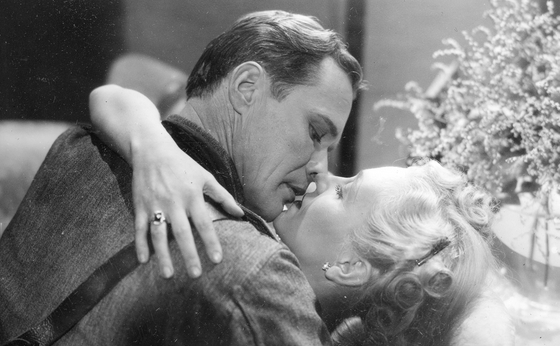
A Soviet patrol breaks through the lines, leading to a fight in the kitchens, where Elli’s co-worker Mälli (Ossi Elstelä) dies protecting the women. Evacuated to Helsinki, Elli realises that her old life of parties and booze no longer appeals. She introduces her parents to her new boyfriend, Lieutenant Tani (Eino Kaipainen, sure to be the male love-interest the moment he walked in), and the couple return to the front line, ready to do their duty.
Drawing their name from Lotta Svärd, the fictional helpmeet of a fallen soldier in a poem by Johan Runeberg, the Lottas began as an all-girl auxiliary service to the White Guards in Finland’s Civil War, and mushroomed into a huge component of the war effort after 1939, as bakers, cooks, nurses, truckers, and anti-aircraft gunners.
Mika Waltari’s film scripts rarely disappoint, and Tyttö astuu elämään pokes around the experiences of hundreds of thousands of Finnish women, usually overlooked in the background in many a male-centred movie. It plays like a retort to the smug peacetime romances like Rich Girl (1939); while Elli does indeed get her man at the end, it is hardly a happy-ever-after when there is still a war to fight. There are some lovely touches and reversals, like the revelation that one of Elli’s louche dining companions, presented at first as a drunk and a waster, is actually a veteran himself, which only becomes apparent when he gets up to leave and produces his crutches from under the table.
Such moments speak to a writer grappling meaningfully with the contradictions of war and human character – how bastards can be heroes, and heroes can be arseholes, peacetime failures turn into wartime martyrs; or former soldiers find it impossible to re-integrate. Waltari’s scene-setting presents wartime Helsinki as a glorious cacophony of such conflicting characters, refusing the easy option of making everybody a hero or a villain. I will note, as well, the subtle way in which Eino Kaipainen, the heroic male lead in many a previous film, is gently sidelined here. He still gets to save the day; he still gets the girl, but he is very much a supporting character in a woman’s story.
However, the Finnish film industry isn’t known for its grasp of nuance, and the press was almost universal in claiming that Waltari was phoning this one in. While they recognised the important and innovation of a theoretical “Lotta movie” sub-genre, the critics found Waltari’s storyline to be too overblown with pathos and big speeches, spending not nearly enough time on the nitty-gritty of Finland’s female paramilitary volunteers. For once, I think even the peerless Paula Talaskivi, writing for the Helsingin Sanomat, may have got it wrong. What she saw as “inconsistencies” in the script, I see as a glorious refusal to accept a one-note account of wartime society. There are oh-what-a-lovely-war moments where Elli thrills at the camaraderie and frisson of her posting, and others where she is confronted with anguish, danger and loss.
Ansa Ikonen’s performance is a triumph, beginning in the opening memorial scene, where she signals her insouciant lack of respect for the fallen by hanging onto one of the flowers in her bouquet, shoving it down the front of her dress to save for later. It is difficult to visualise quite how shocking this bit of early comedy business might have been for cinema-goers who had themselves lost loved ones in the war, but the film toys, however briefly, with the prospect that the snide Elli is on the right side of history, and the pious Maija is a bit up herself.
But as the Soviet soldiers ransack the kitchen, Elli shrieks in incoherent anguish as they start to loot the body of a fallen Finn. Interrogated in broken Finnish by an angry, gun-wielding soldier, she shakes in fear but refuses to answer him, sure she is going to die, but refusing to cooperate anyway. As someone comments in an early scene, there is more than one kind of sisu.
The film has its cake and eats it, too, fuming in quiet rage at Elli’s sordid nightlife, while also stopping the action so we can gawk along with her at a sultry belly-dancer (an uncredited Laila Jokimo, previously seen in The Activists, and as the acrobat Cleo in The Vagabond’s Waltz). Eighty years on, it also offers a fascinating glimpse of 1940s technology and logistics, as we see the earnest Lottas at work, peeling potatoes for an entire division of hungry soldiers, and Elli’s simple glee when her cooking meets with the dour nod of approval from her group leader.
Like many other films from the period, it was chopped around a little as political winds changed, and the version that exists today lacks several elements: discussions also excised from That’s How It Is, Boys (1942) of a “greater Finland”, as well as a sequence involving Soviet prisoners, and a radio address by president Risto Ryti, who was later cancelled for accommodating the Nazis.
The film has an oddly limited artistic heritage. It was screened in Germany under the much more poetic title, Ein Mädchen in Grau, but was unseen in Helsinki cinemas after 1944. There are very few archive stills (some of the best pics in this article are screen-grabs I took myself), and although a feature-length print exists, some of the key scenes are lacking sound. One can only assume, as with similar Russian-baiting curios like The Great Wrath (1939), that the curation of the film assets during the Cold War may have been aggressively incompetent.
Jonathan Clements is the author of A Short History of Finland. He is watching all the Finnish films so you don’t have to.
Somehow, I find myself in Jyväskylä today, giving a lecture at the university that is being live-streamed to 20 or 30 other locations around Finland. I will be talking about a subject dear to my heart: the Asian adventures of Finland’s former president Mannerheim.
I offered the organisers a series on “Finns in the Far East”, and they said that the first one should probably be on this subject, as nothing gets the Finns out of bed on a Wednesday faster than the chance to hear more about the M-word.









 The Official Schoolgirl Milky Crisis Blog