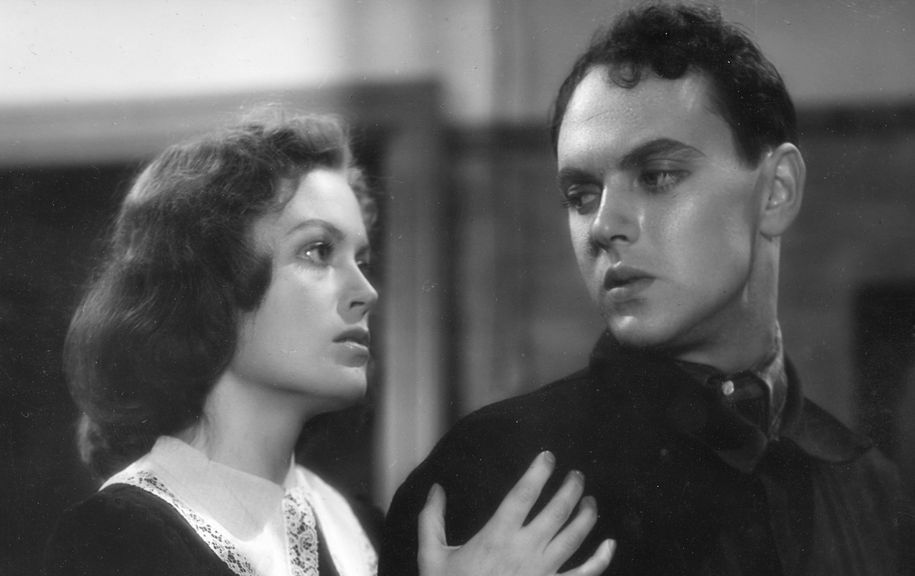
Born in the early 1900s, Stiina (Irma Seikkula) is a foundling child, left on a doorstep in Helsinki’s Hermanni district, and taken in by Maria Berg (Anni Aitto). Maria is suffering from empty-nest syndrome after her grown-up son Martti (Tauno Majuri) has gone to sea. Stiina is christened at the same time as the neighbour’s son Vesa (Rauli Tuomi), and the two grow up more like siblings than strangers.
After her foster-mother dies, the adult Stiina is working at a grocery when Martti returns from sea. He is impressed with her sunny attitude and charitable acts, and recommends that she study home economics. At college, she shows sympathy and affection for an illegitimate child, remarking that she, too, bears the “Mark of Sin”, despite having no say in the matter herself.
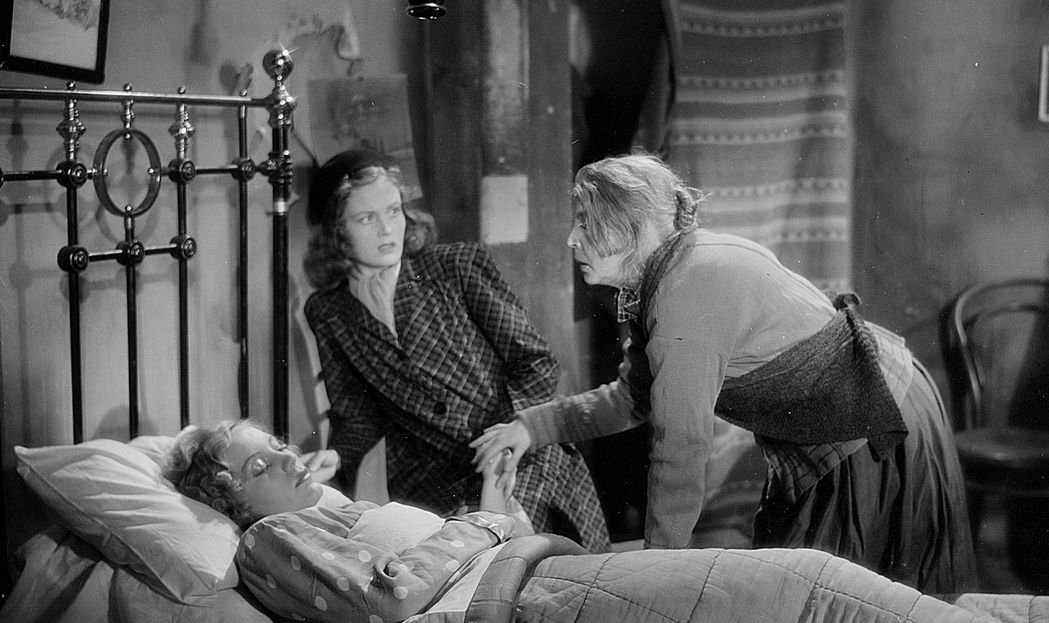
Eventually, she discovers that the frail old lady Helviira (Henny Waljus) works as a backstreet abortionist, and is dying “haunted by the footsteps of all those I have killed.” Tragedy strikes when an abortion goes wrong and the patient, Stiina’s friend Martta (Heilka Helinä) died. The grieving pharmacist’s daughter, Kaarina (Emma Väänänen) reveals that Martta was her own illegitimate daughter, conceived with her fiancé Martti before he went to sea. Or at least, so she thinks. In fact, it is Stiina who was the infant handed to Helviira to dispose of, and Helviira who left the baby Stiina on Maria’s doorstep. Martti and Kaarina are reunited, and Stiina and Vesa are married, two whole families created out of chaos.
I can’t help but wonder if The Mark of Sin (Synnin puumerkki), like the same year’s Safety Valve, is another rumination on the generation that has grown up in Finland since women won the right to vote in 1907. Based on a 1928 novel of the same name by Laura Soinne, its narrative of illegitimacy and discrimination is intensely familiar from many a previous tale of foundlings and single mothers, but whereas such children were McGuffins and plot points in films like The Child is Mine (1940), here they are the protagonists and the agents of their own fate. Many of the tribulations that Stiina faces are rooted in the tensions of the gender divide – a pretty girl without financial security or an official guardian, she is regarded as an easy target by the menfolk of Finnish society. Some of them are genuinely predatory, others are simply unheeding of the pressures she is under simply by being born into her situation.
Writer-director Jorma Nortimo started out as an actor with the rival Suomen Filmiteollisuus studio, before moving into directing – The Mark of Sin was his first movie for Suomi-Filmi, and makes much of Hermanni, a one-time meat-packing district that has been the location of the city prison since 1888. Today, it is a warren of boxy apartment blocks, but Nortimo’s camera thrills in its clapper-board houses, allotments and laundry lines, back in the day when it was not-quite-town and not-quite-country, like so many of the characters that inhabit it.
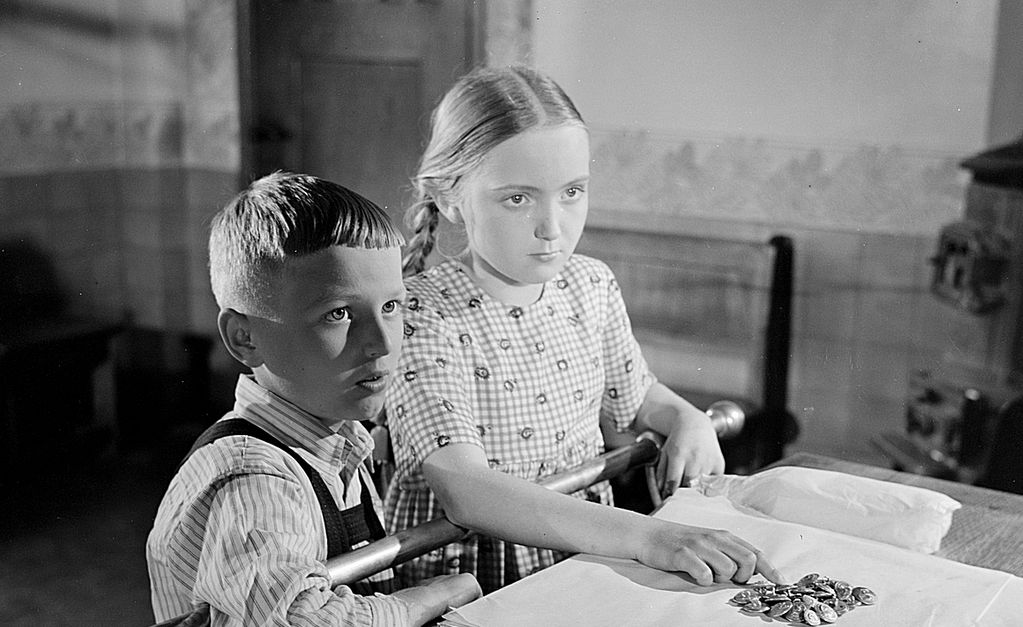
The ease with which a novel can leap across the years is compromised on film, where one actor cannot play someone for their entire lifespan – although then again, they tried very hard with Ester Toivonen in Scorned (1939). Consequently, much of the establishing moments of the first 20 minutes are left in the hands of two child-actors, Suvi Soila (actually Suvi Orko, daughter of the producer Risto Orko), and Orvo Kalevi, who appeared as Orvo Kontio in the same year’s Four Women.
It’s they who have to carry the narrative weight of Stiina being bullied as a child, and Vesa coming to her rescue; as well as the character-defining moment when Stiina tries to offer her button collection as payment for her foster-mother’s vital medicine, thereby winning the approval of the local pharmacist. But as critics were quick to point out, there are an awful lot of defining moments in this film. “There would be enough material for several different films,” observed Toini Aaltonen in the Suomen Sosialidemokraatti. “Towards the end, the viewer becomes so numb that they completely apathetically accept everything, no matter what happens. Nothing seems impossible anymore.”
Others were quick to point out that life in modern Finland was not quite so Dickensian for illegitimate children as the 1928 source material suggested, although I would counter that they might like to ask a few illegitimate children about that. I was present in the room on a fateful day in the 1990s when the father of my then-girlfriend realised that the man he had always thought of as his uncle had actually been his dad. It was a shocking revelation that stopped him in his tracks, as a whole bunch of familial slights and dramas, unspoken tensions and kindnesses suddenly made sense. It also opened a whole new can of worms, since the outed “uncle” had been a Catholic priest.
It all happened in mere seconds, before my very eyes, and it pole-axed him with a dramatic weight you only usually see in movies. It called into question his whole life, years of self-doubt, insecurities and gaslighting, as well as the often-odd behaviour of the people he now realised were his adoptive parents. All of this fell like an anvil on a man who had been born in the 1940s, a whole generation after Finnish critics were scoffing that the drama in The Mark of Sin was all outmoded and forgotten.
Jonathan Clements is the author of A Short History of Finland. He is watching all the Finnish films, so you don’t have to.
Over at Russell Hogg’s history podcast Subject to Change, I keep things festive by discussing Japan’s Christian Century and the apocalyptic revolt that ended it in 1638. Part one features sneaky Jesuits, mass conversions, crucifixes as fashion statements and a secret Spanish plan to conquer China.
How did a street fight in Macao escalate into a naval battle off the coast of Nagasaki, leading to an executed nobleman and a fateful change in management in Shimabara? Features me impersonating Batman and speaking Spanish.
And then in part two we deal with the teenage messiah, the siege of Hara Castle, and the craziness of the Mirror of the Future, a supposed prophecy or, if you like, the departing curse of an angry Jesuit:
“When five by five years have passed / Japan will see a remarkable youth / All-knowing without study / See his sign in the sky / In East and West the clouds will burn / Dead trees shall put forth flowers / Men shall wear the Cross on their heads / And white flags shall flutter on the sea / Fires engulf fields and mountains, grass and trees / To usher in the return of Christ.”
Grandma Ella (Leena Uotila) may be starting to lose her marbles, trilling with dead-eyed wonder at the height of the ceilings in the new Lahti Citymarket. Her daughter Susanna (Ria Kataja) wouldn’t know, because she “only shops for groceries in Sokos”, although what appears at first to be the airs and graces of a nouvelleriche turns out to be a matter of staff discount for a corporate minion. Each declaims random thoughts at the other as they muddle through the preparations for Christmas Eve, in Family Time (2023), a film that this chronological Finnish film blog will not get to in sequence for twenty years or more, but which your correspondent happened to stumble across on Finnair.
Grandpa Lasse (Tom Wentzel) heard a funny story at the fishing club. Daughter Susanna has got a promotion at the department store. Sister Helena (Elina Knihtilä) isn’t as impressed as Susanna thinks she should be. Helena’s son Simo (Sakari Topi) is just about to move out, considerably later than one might expect. Susanna’s kids just want a real Christmas where Grandpa doesn’t watch the telly with a beer in his hand. And Susanna’s husband Risto (Jarkko Pajunen) buries himself in tech support because at least that makes him useful. Literally nobody cares about what anyone else is doing, because nobody really wants to be there.
There is something of a shock for the Finnish film watcher who is hoisted suddenly out of this blog’s current location in the 1940s, to Tia Kouvo’s searing and empathetic study not so much of lost dreams, but of people who never got around to dreaming in the first place. Her modern-day Lahti is a soulless, joyless series of boxy supermarkets; her family gathering is a tense series of misunderstandings from a group of virtual strangers just waiting for it to end. This, then, is what is going to happen to the Family Suominen children when they grow up and have kids, and their kids have kids, and those kids don’t want to do anything but spin doughnuts in the Karkkianen car park.
Kouvo has an incisive eye for people who made a wrong turn so long ago that they can’t even remember which road they were on – a well-deserved win for her as both director and writer at this year’s Finnish academy awards, for this expansion of her 22-minute 2018 short. The film’s Finnish title, Mummola (“Grandma’s Place”) is supposed to invoke cosy winter reunions, but instead is revealed as a series of unwelcome culinary compromises, accompanied by a constant litany of people’s aches and pains. In English, it is called Family Time, alluding to an excruciating workplace workshop that Risto attends, in which he is exhorted to make the most of the eight hours a day that he isn’t sleeping or working. Risto does his best – he is the only person in the film seen reading a book – but even as he attempts to mansplain Isaac Asimov’s Foundation to his wife, she harrumphs that he has no interest in sex any more. Their subsequent confrontation in the garage, where the light sensor plunges everything into darkness unless someone is gesticulating wildly, is a study in pressure cooker drama and black humour.
Kouvo’s feature debut is a series of locked-off shots, the family often in shadow or off-screen, as a series of Pinteresque conflicts unfold. Nobody wants the awful Christmas dinner, Grandma has bought three packets of raisins “because they were cheap” but nobody got any walnuts. Grandpa isn’t just watching the rally in his pants (“NOBODY WANTS TO SEE YOUR BALLS!” shouts Grandma) but it’s a video of the rally, while his grand-daughter Hilla (Elli Pajanen) harangues him for not watching a Christmas movie at Christmas.
In one beautifully executed sequence, Risto and the kids tardily decorate the Christmas tree in silence while his off-screen wife and sister-in-law embark upon a nuclear argument about the difference between butter and margarine. Remarkably little happens in Family Time, but one is left with the impression that remarkably little has happened to these people for their whole lives. At least Hilla makes an attempt at being the voice of reason, gently chiding her grandfather for the amount of money she presumes he has thrown away on booze. These are quintessentially Finnish heroes, living embodiments of what Tolkien once called “sadly unsentimental lovers,” speaking wonderfully clear Finnish, for all you language students who want to be able to practice: “Grandpa shat on the carpet right in the middle of Hilla’s lovely song.”
Jonathan Clements is the author of A Short History of Finland. He is watching all the Finnish films so that you don’t have to.
One of the photographers staying in the same building as us seems different from the rest. She is a slim Chinese girl in a bobble hat, dubbed “Alice” by Mickey the sound man because we are living next door to her – one of many obscure 20th century pop references in Mickey’s everyday banter. He noticed her because she alone seemed to know how to operate her camera, and it turns out that she is a genuine professional. She sells prints of her photos, but is wandering China, somewhat aimlessly, in the help of selling a book about it, because “foreigners don’t know anything about any tribe apart from the Han.” I resist the urge to point out that even if it were true, there are thousands of pre-existing picture books about China, none of which she appears to have heard of.
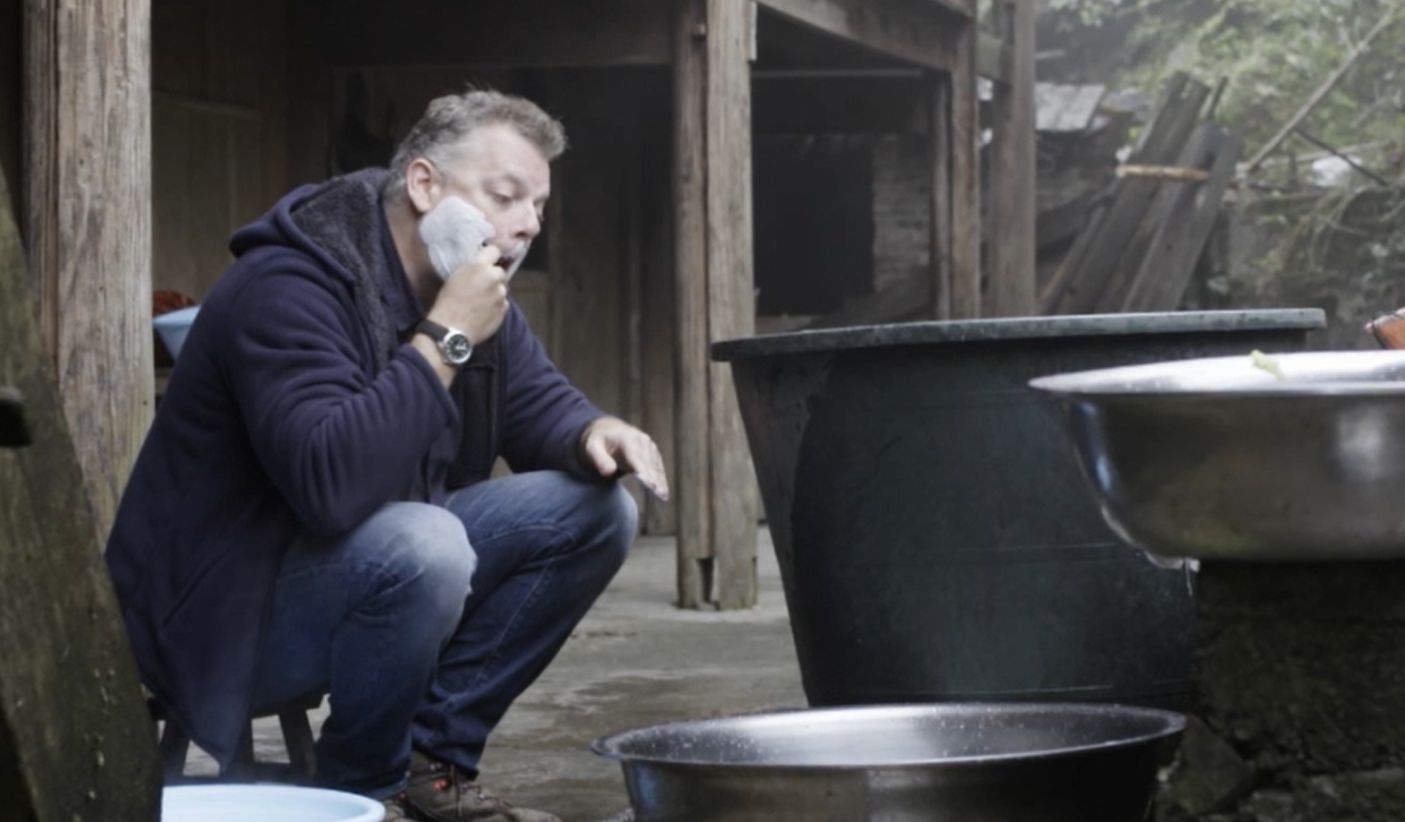
Alice was born in Hong Kong and now lives in New York, and is one of those Chinese girls who believe that being Chinese is the sole qualification required for understanding China, that she has learned everything she needs to know solely through her DNA, and that foreigners are all clueless. She has already pegged me as a high-maintenance idiot after overhearing half a conversation between me and the director the day before, about the best time for me to shave when there is no hot water.
Yes, I say, we were going over what kind of timing was needed to make my face look presentable in 4K digital. If you’re behind the camera, you can look like shit warmed up and nobody will care. But if you’re in front of it, you need to look like you’ve run a comb through your hair, or it is distracting.
“Oh,” she says in surprise, “you appear to understand quite a bit of Chinese.”
Behind their porridge bowls, the crew snicker and snort.
“Have you been to China before?” she asks, and the snorts turn to giggles.
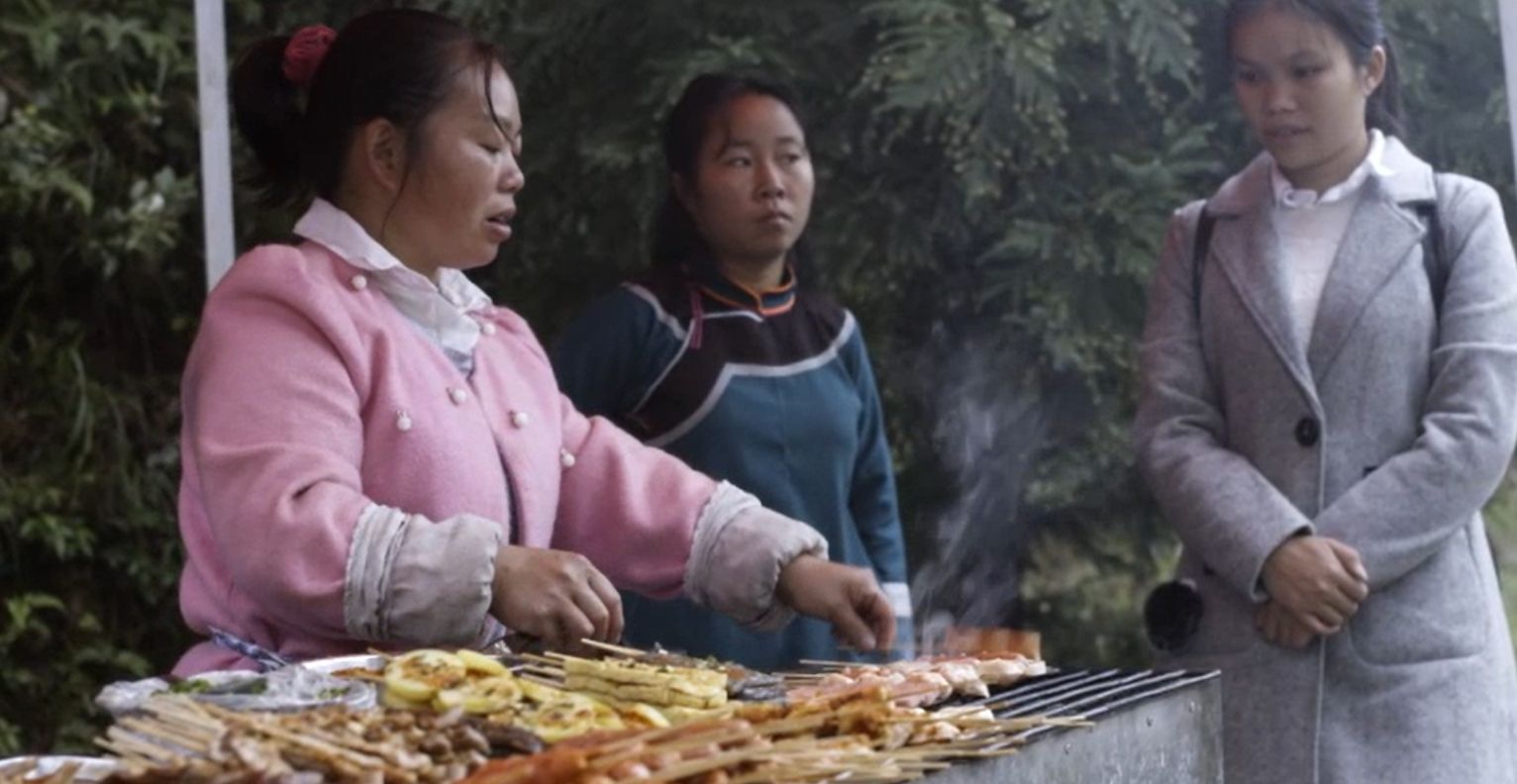
A village fete of some sorts has sprung up around the village gate. There’s a mobile convenience store on the back of a truck, a fruit seller, a lady selling gristle on sticks, a lucky dip and a spin-the-wheel stall where you can win a live terrapin in a cup.
The Very Slow Motorcycle Race is another of the town committee’s attempts to keep the young people interested. Chalk marks in a wavy chicane are drawn across the car park, and the local bikers are made to traverse the path in the slowest time possible. Not that that is much of an issue, because only two bikers actually make it all the way along the fiendishly winding path at all. The director decides that I shall have a go, and purloins a bike from a passing man.
It is a 250cc white Chinese model, and as I sit astride it with entirely misplaced confidence, I remember that I haven’t actually sat on a motorbike for 25 years. The locals immediately cluster around with helpful advice, including “Starting in second gear is a stupid idea, mate”, and “If you rev it that much, you’ll go over the cliff.”
Luckily, I have vague memories of the five minutes I once spent in a Taiwanese car park on Gilbert Mackay’s little 150cc bike in 1991, so at least I know that what would be the left brake on a bicycle is actually the clutch on a motorbike. I know where the gears are to shift it down into first (they’re by your left toe), and I know that pulling too hard on the front brake will pitch my head over the handlebars.
I gingerly wheel it to the starting line with only two stalls, and then head off when Tubby, our landlord, blows his whistle. It’s all over in barely a second, as I careen along the opening leg, fail to correctly take the first corner, and whirl off into the crowd, through a screaming flock of onlookers, and around the car park, coming to a juddering halt a couple of feet away from the precipice that leads down into the rice paddy.
The camera catches not just my comedy performance, but all the Chinese laughing at me at the starting line, as well as the fleeing onlookers as I charge through them. It’ll look good.
I chug the bike over the man we got it from, and thank him for letting us use it.
“Oh, it’s not mine,” he says. “I have no idea whose bike you just stole.”
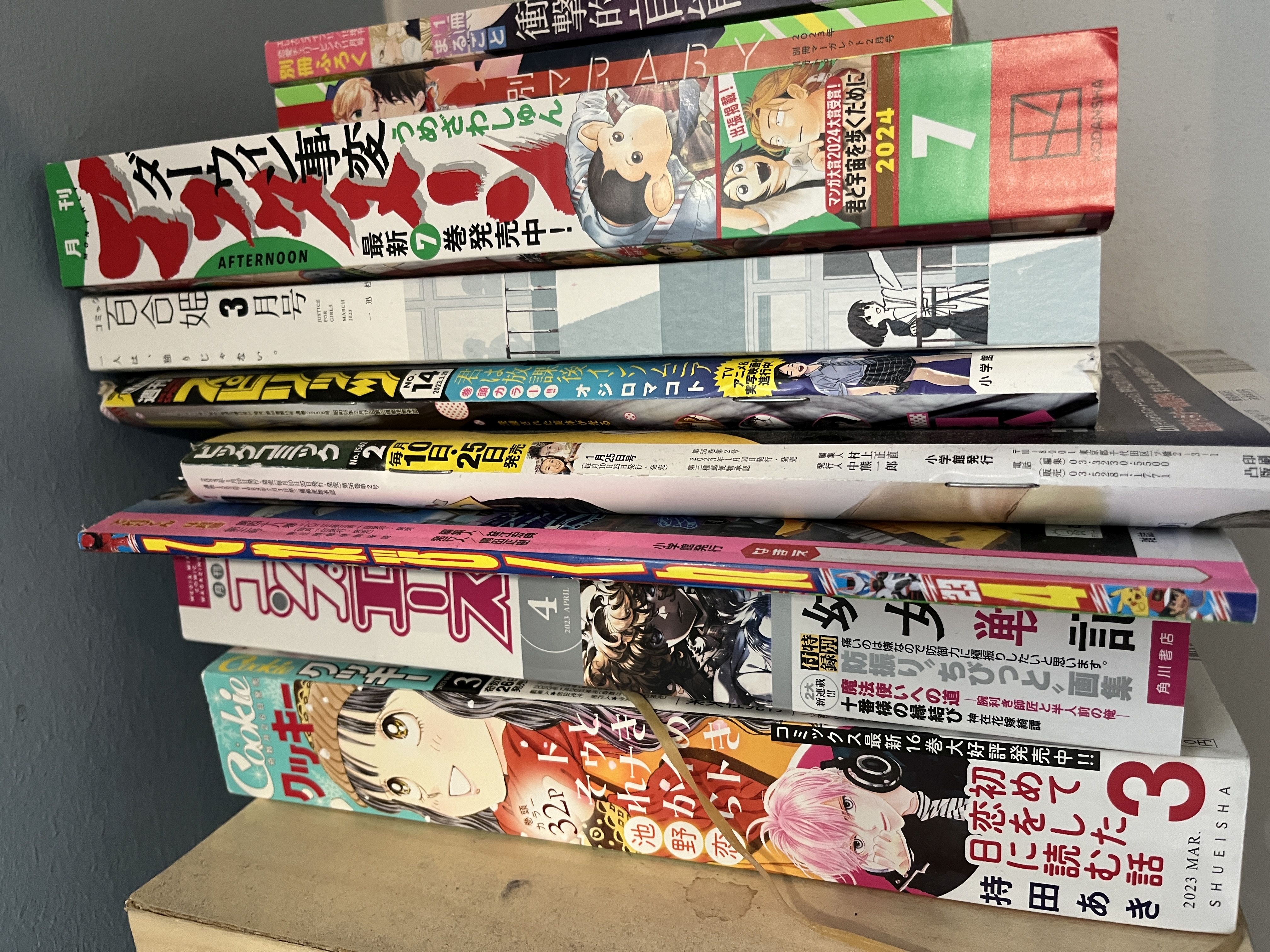
In a moment of historical irony, this column inadvertently predicted its own demise, back in NEO #233, with a comment on the rising costs of paper. That picture there is a stack of all the Manga Snapshot titles I had ready to roll for the rest of the year, which I can now chuck in the bin.
It’s been exactly twenty years since I handed in my first article for issue one of NEO magazine, a young whippersnapper of a title that would be destined to outstay them all. Anime UK and Anime FX and Manga Mania and Manga Max combined covered UK anime journalism from 1991 to 2000, but NEO magazine spanned a huge chunk of time, from 2004 to today. Gemma Cox became the longest serving anime magazine editor in British history some years ago, and I doubt very much whether anyone is going to break her record.
Gemma has spoken in interviews about the haptic joy of a print magazine – the simple value of being able to flick around and cherish, and indulge in reveries with a collection of printed pages. There’s a poster for your wall. There’s a picture of that thing. There’s an article you stuck in your scrapbook. You won’t get that on the interwebs. As of today, you won’t get it in your newsagents, either.
Twenty-five years ago, Jim McLennan, the editor of Trash City magazine, stated that the ultimate aim of anime journalism was to render itself obsolete. The last anime journalist out of the building, he said, could turn off the lights, because if the mainstream was carrying anime coverage alongside real films, interviewing anime directors, and reviewing the new titles, then there was no need for a specialist sector.
When athletes are flashing Dragonball Z hand signals, and Uniqlo sells Evangelion T-shirts, anime is certainly mainstream… in a sense. But for every Makoto Shinkai interview in Sight & Sound or SFX, there are a dozen TV shows that go unnoticed, and a cluster of movies that get no attention at all. That’s going to be someone else’s problem from now on.
Print costs money, and everybody on the web wants everything for free. When the All the Anime blog was shut down earlier this year, I was told that kidz today aren’t interested in “long-form journalism”, which apparently means 800 words or more.
So, what happens next? After 33 years of print anime journalism in the UK, I guess it’s time for me to go looking for another job, and for the internet to put its money where its mouth is. What happens next could even be up to you.
Jonathan Clements is the author of Anime: A History. This article first appeared in the 245th and final issue of NEO magazine, November 2024.
Asked recently if I could “recommend” ten manga for an unspecified group, I wondered if I could come up with ten that I had encountered in my recent (and now cancelled) Manga Snapshot columns that had yet to be legally translated into English. It turned out that almost everything I had most enjoyed in the last few years remains unavailable. Not that these titles are best-sellers in waiting – many are niche titles that only appeal to weirdos like me. But nevertheless, this is my top ten of untranslated manga at the time of writing. Comments have been harvested from the last couple of years of the Manga Snapshots.
The Honest Real Estate Agent (Shōjiki Fudōsan, Big Comic), based on a book by Takeshi Natsuhara, adapted for manga by Mitsuhiro Mizuno and drawn by Akira Otani. Our leading man, Nagase, is an estate agent, and initially a proud exponent of the industry known in Japan as the “1003” – as in, for every thousand words spoken, only three are true. However, after bullishly desecrating a Shinto shrine during a ground-breaking ceremony, he is cursed to only tell the truth, and forced to radically rethink the way he sells houses, homes, apartments and development plots to the Japanese public. I know, right – it’s a lovely idea, and again one that is sure to appeal to older readers who have ever had to go through the misery of trying to buy a house. Somehow, it’s managed to run in Big Comic for the last six years… there is obviously a market for honest real-estate. Or for people who like watching the conniptions that Nagase has to go into in order to still close a deal. Turned into a live-action TV series in 2022.
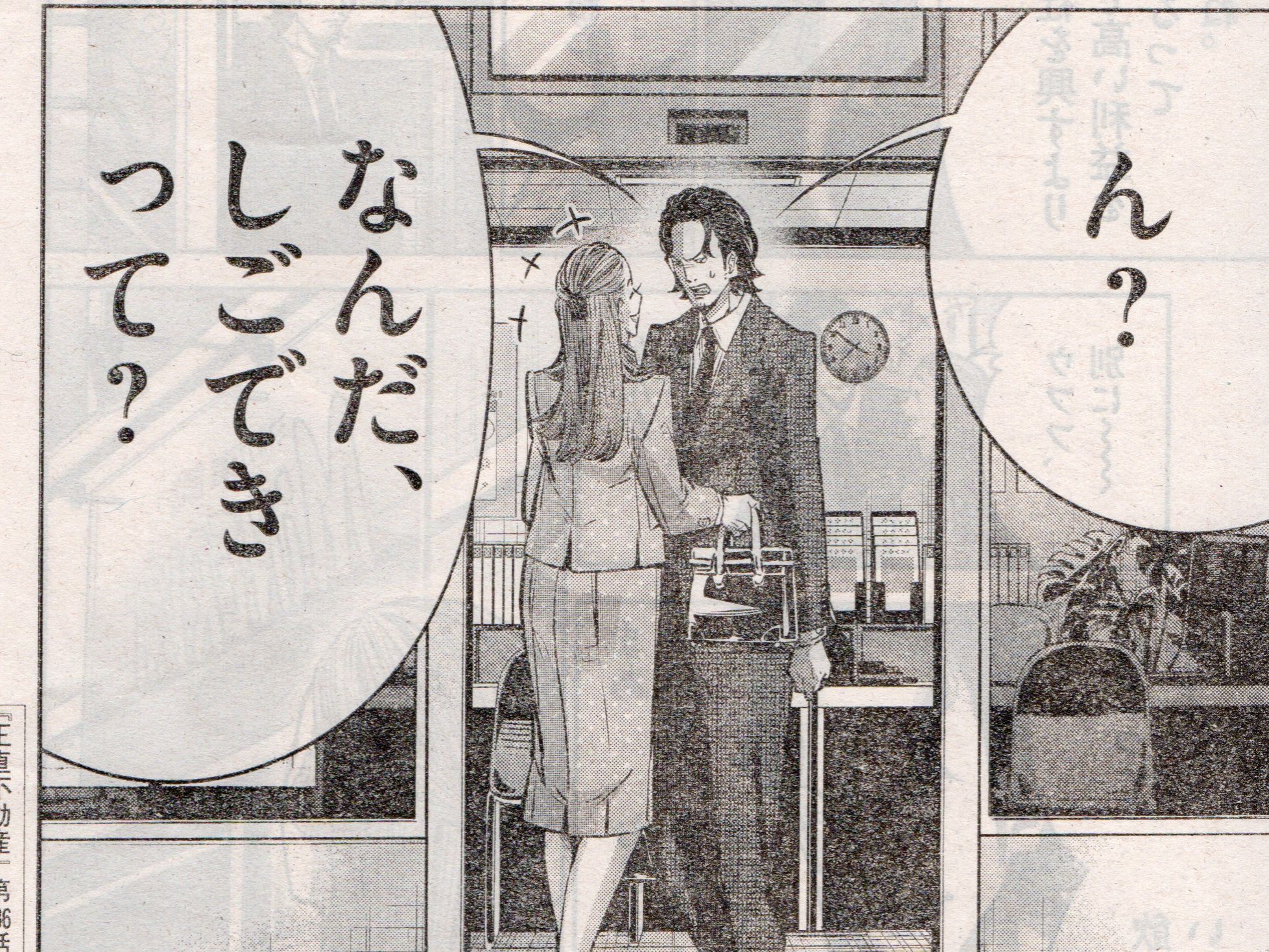
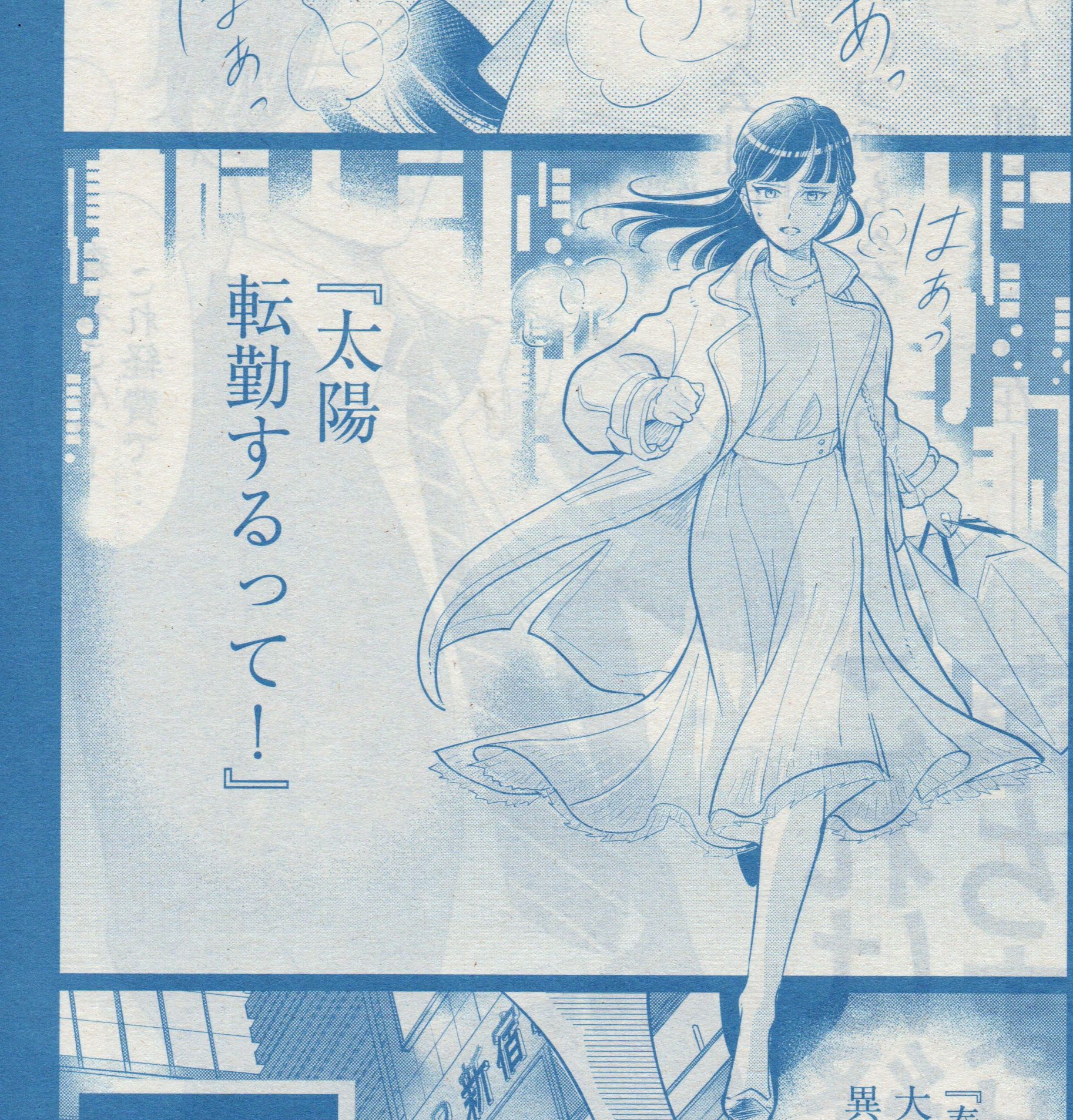
This Does Not Fall Under Expenses! (Kore wa Keihi de Ochimasen, Cookie) drawn by Kosachi Mori from the light novel series by Yuko Aoki, is the tale of 27-year-old accountant Sanako Moriwaka, who has landed the unenviable position of processing expense receipts at the large Tenten Corporation. Unlike the patronisingly dismissed “office ladies” of many a corporate manga, Sanako is a woman with qualifications and power, but also a minion who has to police the invoices of people substantially higher-ranking than herself. Sanako is thrown into the middle of an ongoing territorial dispute between Sales and Accounts, the constant chancers of the Publicity department upstairs, and a high-up personal assistant with a hand-wavingly vague attention to receipts. In particular, she is thrown into tense stand-offs with Taiyo Yamada, the ace of the sales department whose new project, Paradise Café, involves so many entertainment expenses and travel boondoggles that he and Sanako see a lot more of each other than either is comfortable with…. At least at first.
This Does Not Fall Under Expenses! is that most amazing and rare of new creations, a criminal procedural that often runs without crime; a drama of reluctant partners investigating corporate skulduggery, a deeply involved study of due diligence in the workplace, and a fantastically forensic account of just what we can tease out of the metadata of receipts. So if you were in Kyoto on the night of the 26th, why are you putting in an receipt for an evening bowl of noodles in Fukuoka? Only a bullet train ticket from before 4pm on that day will save you…. But please don’t tell me you went first-class, because THAT DOES NOT FALL UNDER EXPENSES! In this issue’s chapter, Sanako and Taiyo fight in the street over his slapdash expense claims, and her personal policy of “not chasing rabbits” – which appears to be an attempt to get the staff at the company to police their own expensing. Turned into a live-action TV series in 2019.
Tempus Ethicae (Big Comic Superior) by Yuichiro Okamoto and Yukio Tamai, is set in a near future where advanced artificial intelligence is on the verge of breaking through, it features the hapless humans whose job it is to teach thinking to computers. AI machines will make their own decisions unless they can be steered into having a bit of empathy for humans, which means as various elements of government and society are handed over to machines, someone has to walk our future metal masters through the pros and cons of making difficult decisions.
And these aren’t black and white decisions like “is it a good idea to support a cataclysmic isolation policy that will destroy your country’s economy for the next decade and make you the laughing stock of Europe?” Oh no, these are far more unanswerable questions, much more akin to the lose-lose scenario of Star Trek’s infamous Kobayashi Maru test. Terrorist attacks, unstoppable accidents and situations which are sure to kill someone are all presented as case studies for the humans, who have to debate in front of the machines in the hope that some sort of ethics will rub off. Of course, what makes it all so chilling is the fact that these things have to be taught at all, and that should someone’s debating powers go wrong, an AI somewhere will make Donald Trump dictator for life, cancel NEO magazine, or otherwise create some other terrible situation.
The Departed Become Distant Over Time (Sarumono wa Hibi ni Utoshi, Young Champion) by Ryo Orikasa and Kyo Hatsuki derives its title from an early medieval Chinese anthology of poetry and literature, the Wen Xuan… which makes it all the more surprising when the opening pages of this chapter feature an adult movie being shot on the quiet in a deserted gymnasium. The Departed… zooms in on the lives of the young adult-video actresses who bunk together in a Tokyo flat, presided over by their stern-faced matron, Ms Itadori. The action sweeps from eye-poppingly explicit sequences of the filming underway to the mundane downtimes of the cast and crew, some of whom throw themselves into their work with gung-ho pragmatism, while others wish they were anywhere but here. Anywhere…? Ah, that’s where Mikoto comes in – a handsome, bespectacled young man who works at a Buddhist altar shop, and has a mysterious sixth sense that allows him to detect when a human being is approaching the end of their life. And one of Ms Itadori’s girls has that aura about her.
Hospital Cop: The Snake of Aesclapius (Innai Keisatsu: Asclepius no Hebi, Young Champion) based on a story by Tsutomu Sakai but adapted for manga by Ichi Hayashi. As the main title suggests, the setting is a mega-hospital so large that it counts as an entire city district, and hence has its own police box. And that means that the local bobby Osamu Murai, a rakish youth plainly destined for detective, walks a beat that is largely indoors, around a teaching hospital thick with wacky students, a cancer ward plagued by serious illnesses, a research wing where bespectacled boffins might be up to no good, and an emergency room with a bunch of suspicious gunshot wounds. Sakai’s storyline is a brilliant idea for creating a clash of popular dramatic styles, as if Holby City were mashed into Line of Duty in a BBC cost-cutting exercise, and it is an idea so winningly populist that I am amazed nobody has thought of it before, not the least because there should be sirens and police tape all around resident surgeon Moeko Kamijo, a smouldering sawbones whose clashes over jurisdiction and boundaries with Sakai may well conceal a mutual attraction that neither of them is prepared to acknowledge. Also, I think there might be ghosts.
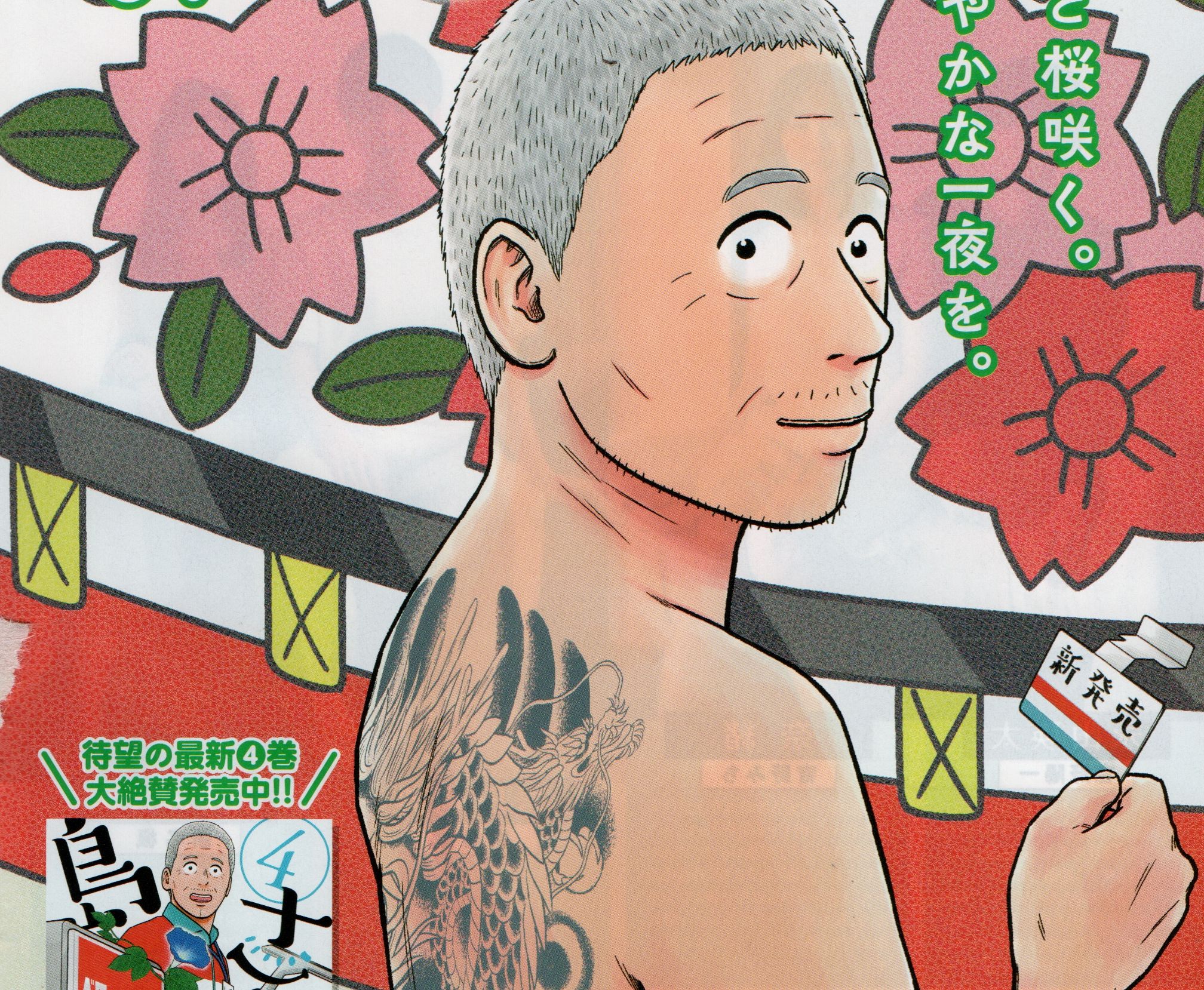
The hero of Kawano Yobundo’s Shima-san (Manga Action) is an old man who really should be retired by now, but instead holds down two menial jobs. By day, he works as a “traffic security guard” – one of the glorified human traffic cones whose sad fate in corporation car parks often disguises a management figure being constructively dismissed, shunted into a lower-paid menial position. In the evenings, Shima-san comes to work at the Better Days convenience store, where his younger coworkers are aghast at his attitude. When a young woman brings in a radio, complaining that the batteries are already dead, Shima replaces them with an apology, even though she didn’t buy the radio at Better Days.
Shima-san’s staid, unimaginative artwork belies its charming examination of Japan’s generation gap. Shima is a throwback to the literal “better days”, a shop assistant who believes in customer care, even when he is merely the frontman for a faceless corporation. He’s a man who carefully nurtures a sense of community in an anonymous suburban street, ready to bend the rules when it’s the right thing to do, and to enforce them with steely resolve when people try it on – woe betide the giggling underage teenagers who try to buy a packet of fags.
But there’s more, because Shima has a past. He alludes in conversations with Hiroyuki, his teenage coworker, to “making mistakes” in his youth, but its only when you see the elaborate dragon tattoo on his back that you put two and two together. Shima-san is the last of a long line of yakuza – his dead-end jobs are not merely a sign of dropping out of the mainstream rat-race, but of having somehow failed at being a gangster. Artist Kawano’s story suggests that back in the good old days, even the criminals had a better sense of honour and duty. Shima-san is the quintessential 2020s manga – a gentle workplace reverie about trying to make a difference where it counts, in the hope of paying it forward.
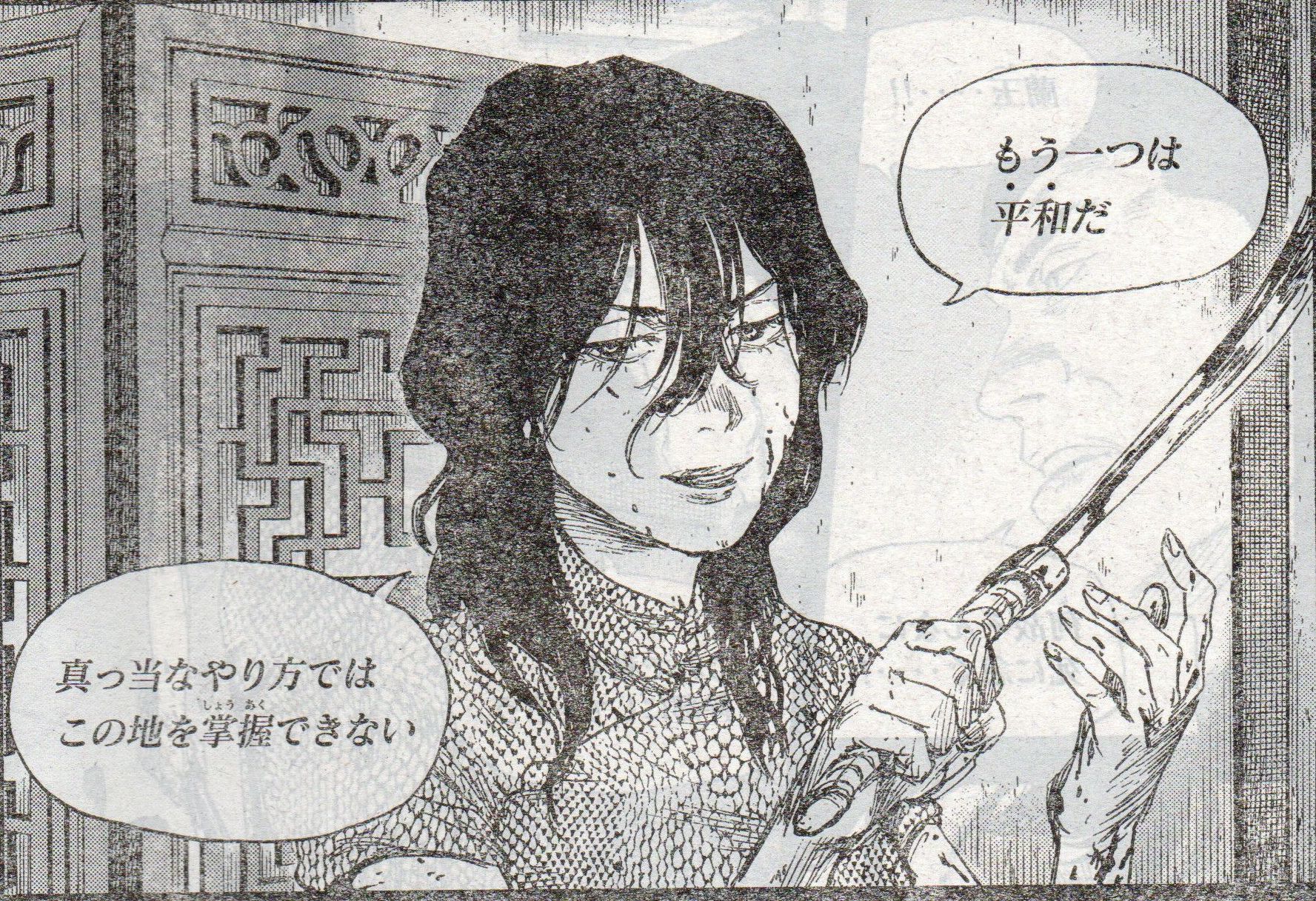
Manchuria Opium Squad, (Manshū Ahen Squad, Young Maagzine) written by Tsukasa Monma and illustrated by “Shikako”, charts the progress of an ex-soldier as he turns to the opium trade to support his family in 1937 China. Our leading man is Isamu Higata, a soldier in the infamous Kwantung Army that effectively seized the Chinese territory of Manchuria and turned it into a Japanese puppet state. Fallen on hard times, he starts out small in the illegal opium trade, eventually clawing his way up through a corrupt society in which the Russian mafia, Shanghai Green Gang and Kwantung Army duel over the extremely lucrative industry in a highly addictive and deadly drug.
This issue’s chapter is a flashback to Shanghai in the mid-1930s, as the Green Gang (a real organisation) stabs and beheads its way to the control of the local drug trade. I was in Shanghai only recently, and impressed not only by the photo-real accuracy of Shikako’s depiction of the city’s famous waterfront, but of its historical accuracy – there is a shot of a statue of Winged Victory, a monument to the Great War that dominated the Bund from 1924 to 1941, when the occupying Japanese ripped it down. Reviewers, however, have had mixed reactions to history as depicted in Manchuria Opium Squad, since Monma’s storyline inevitably walks into a series of political minefields. His leading man is realistically hard-nosed and pragmatic about the fact that Japan has appropriated an area the size of Colombia, and understandably ruthless in the way he creates and exploits addicts. He is a criminal, after all, and the depiction of Manchuria as a lawless narco-state is also entirely reasonable. But Japan’s invasion of China, a “Fifteen-Year War” that eventually blossomed into WW2, remains a touchy and emotive subject, and there are those who have accused Monma of pandering to Japanese power-fantasies and atrocity denials, not to mention a lurid interest in the running of an ever-growing harem of drug-addled Chinese slave-girls. It ultimately leads the reader to question when we started rooting for the bad guy. But before you start to wonder if this is manga’s Breaking Bad, Manchuria Opium Squad veers into horror in its depiction of opiate euphoria and addiction, and into pulpy satire in the form of Isamu’s foil, Lihua, the sassy, sinister Green Gang queenpin.
Himiko(Big Comic Original), by Richard Woo and Mariko Nakamura, is a glimpse at Japan in the Dark Ages, when the islands were still a patchwork of contending kingdoms in the shadow of distant China. Woo’s story is drawn from asides in contemporary Chinese chronicles, turning ancient Japan into a heady mix of sorceresses and kings who claim to wield magic swords – Game of Thrones with tattooed faces and thatched long-huts. A King Takeru is fated to become a mythological hero, but he is only a supporting character for the central cast of women – the witch Akame and the teenage girl Yanoha, whom I suspect will eventually be enthroned as the priest-queen Himiko.
This is great fun – perhaps the alien qualities of the names don’t quite come through in English, but Himiko presents a Japan that is both familiar and atavistic – it’s a chance to see the ancient Japanese as one step removed from the Dothraki, before their country was swamped by refugees from Korea and their native religion was over-run by Buddhism.
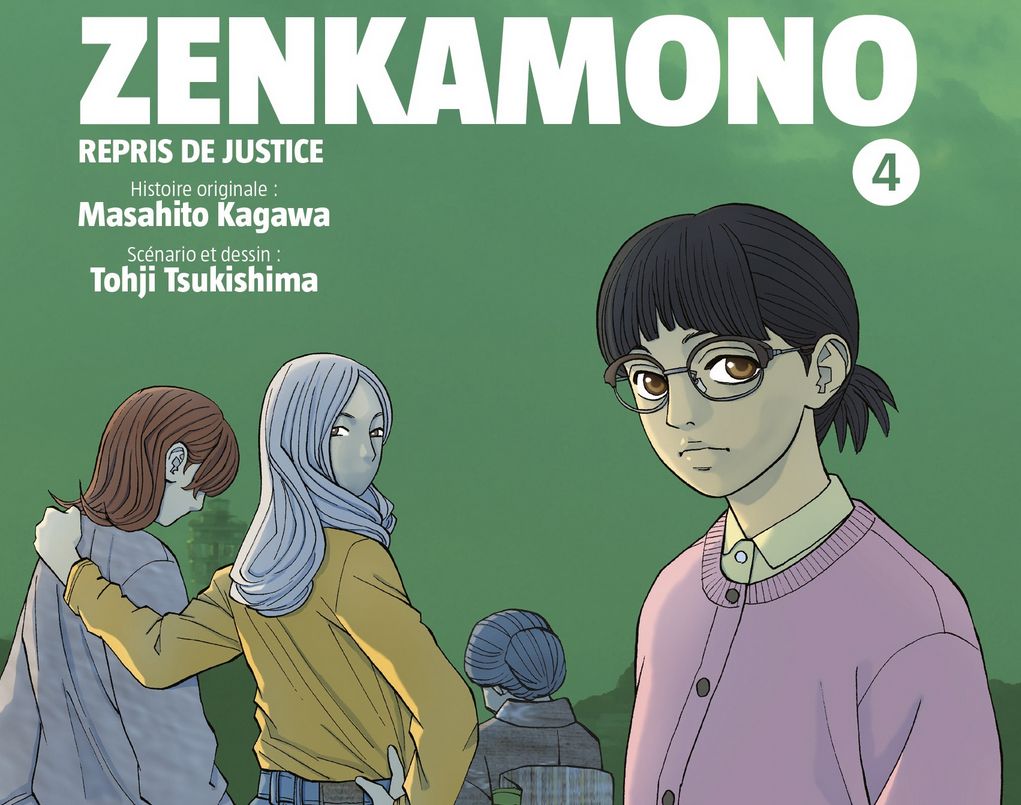
Prior Convictions (Zenkamono, Big Comic Original) by Masahito Kagawa and Toji Tsukishima is a bogglingly interesting topic – a slice-of-life drama in modern Tokyo, told through the eyes of a probation officer. Lawyer Kayo Akawa is an unpaid, voluntary parole officer, appointed by the Ministry of Justice. It’s a fascinating exploration of criminality and the return of offenders to society – Kayo’s unpaid (!) job brings her into contact with every level of society, from middle-class journalists serving supervisory probation for white-collar crime, to the stringy-haired former addict mopping floors in a convenience store.
After so many years of Manga Snapshots, Japanese comics can still give me a thrill. Prior Convictions is a marvellous idea for a story – a crime drama that takes place after the crime has happened, and often after the offender has paid their debt to society. But what happens next? Can criminals in Japan ever overcome the stigma of having been criminals? Can they get back on the job market? Can they find love? And what kind of temptations, reprisals or revelations can return to haunt them from their former life?
In this chapter, Tamiko has been out of jail for 18 months, and is bussing tables at a food court, where a rough customer seems ready to exploit her timidity and unwillingness to cause a scene. He thinks he’s starting a relationship with an indulgent new squeeze – Kayo puts him straight, telling him to back off a vulnerable young woman who needs a better break than he can give her. It’s a mix of psychotherapy and low-level crime-fighting that is just crying out for a TV remake (one was made in Japan in 2021). This manga appears to have been also released abroad, but in French.
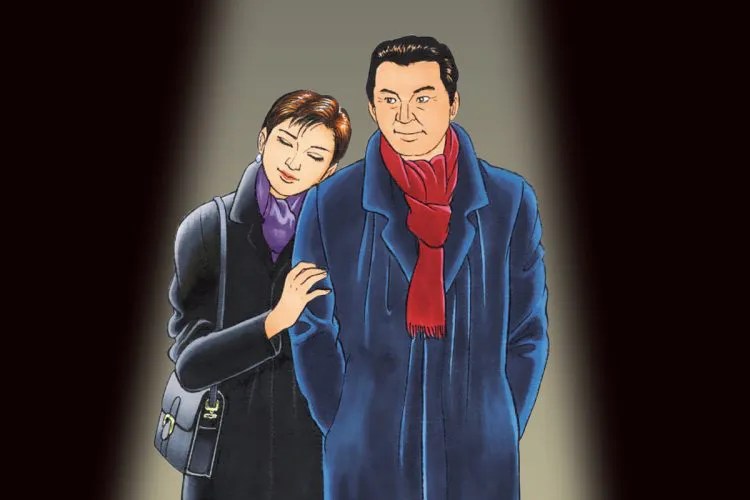
And saving my all time favourite until last, Like Shooting Stars in the Twilight (Tasogare Ryūseigun, Big Comic Original), by Kenshi Hirokane, practically switches its entire cast once a volume, because for the last 29 years, it has been running love stories for the over-50s. Ridiculously inventive, covering every genre conceivable from sci-fi to horror, it has been adapted for live-action television a number of times, since every one of its stories packs enough punch, at very least, for a TV movie-of-the-week. I first championed it in Manga Max magazine 25 years ago, but manga reading, even today, is still very much an occupation of the young in the English-speaking world, and it’s difficult to imagine that sales would ever do it justice.
Jonathan Clements is the author of Anime: A History. The Manga Snapshot column ran in NEO magazine from 2005 to 2024.
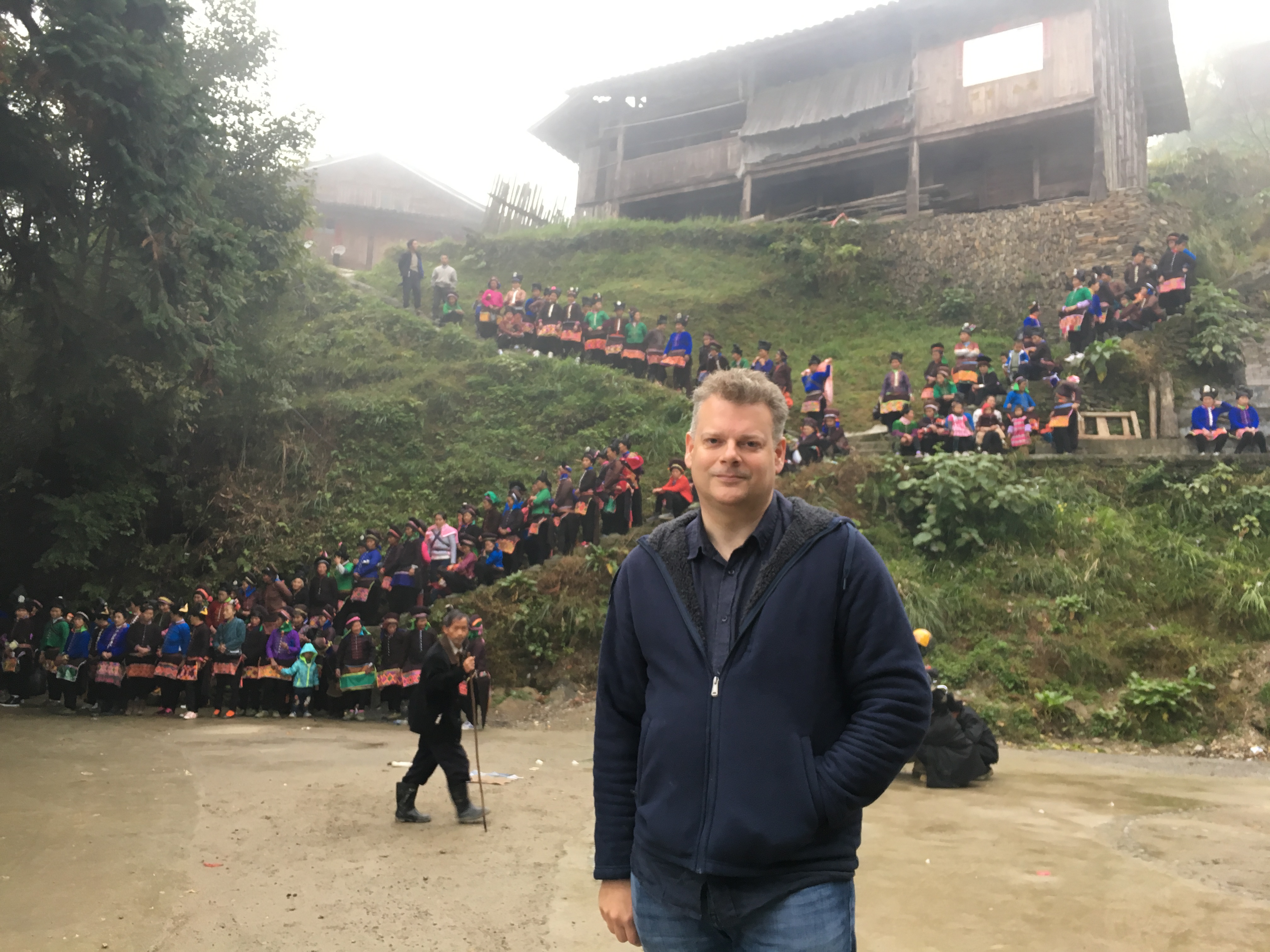
Breath freezes in the air in the morning, and there is no view past the next house, since we are level with the clouds and the whole place is shrouded in fog. I grit my teeth and dowse my hair in cold water in an attempt to get it to assume a reasonable shape. Nobody elsefrom the crew wants to wash.
The fog has not lifted. If anything, it is even worse. We cannot see to the next house, let alone the allegedly stunning vista below. The hill-climbing race has been postponed, if not cancelled, and there is no point in sending up the drone, because all it will be able to film is the inside of a cloud.
With nothing else to shoot, the crew are trying to get footage of the family cooking in their kitchen, but there are already six photographers blocking the view and getting in the way. Some of them are wearing the logo of the Guizhou Photography Club, and have plainly been bussed in with the same vague hope as us of catching something suitably ethnic.
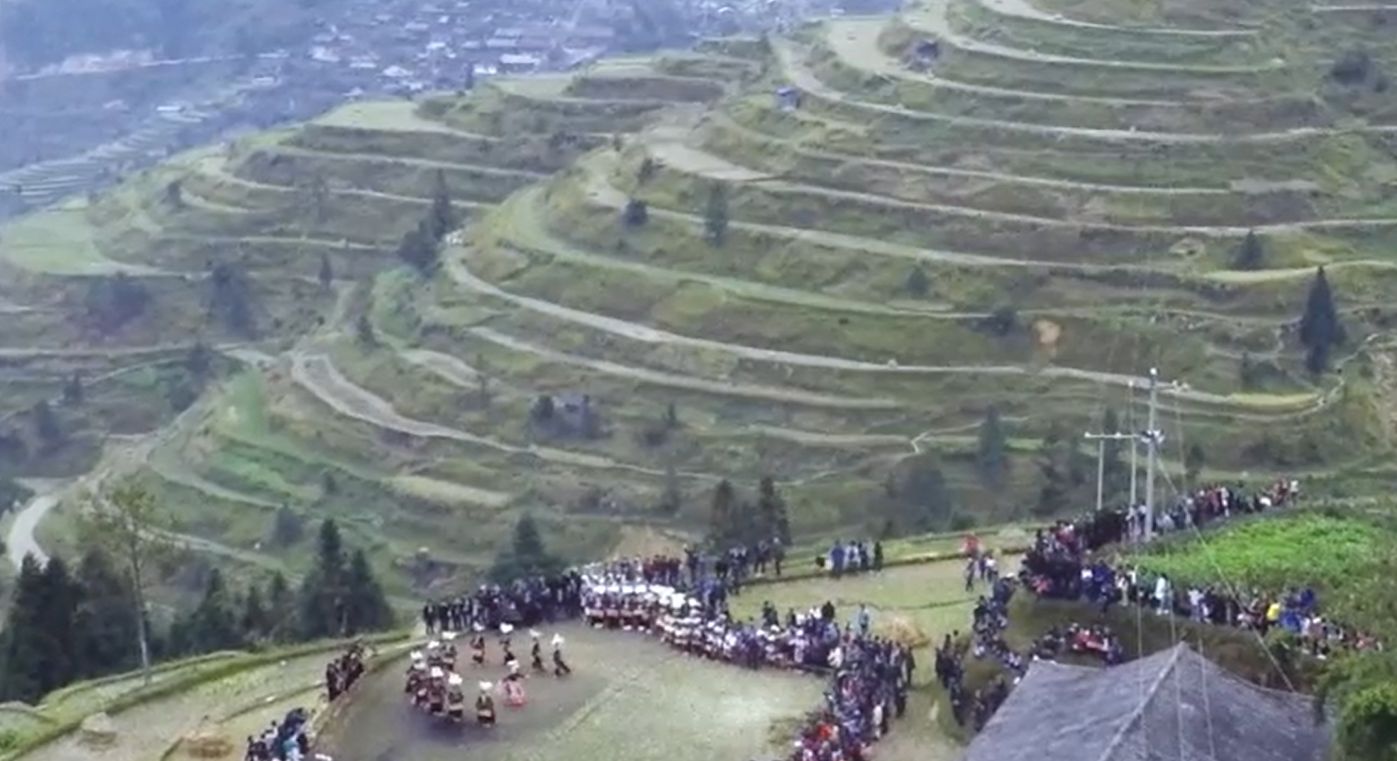
The Miao village women are assembling for the Pheasant Dance in the square. A lusheng band, some of them carrying instruments twelve or more feet high, are blowing a farty, unchanging tune that sounds like The Doors trying to tune up to play “Light My Fire”, with an additional unnecessary tuba player co-opted into the band. The Pheasant Dance involves making a half-hearted motion with one’s hands, as if skipping with an invisible rope, and then shuffling left-left-right-right-left-left-right, endlessly, endlessly, for hours.
There are fourteen or so dancers and a five-man band, already outnumbered by a crowd of photographers, toting expensive Nikons and Canons that they seem ill-equipped to use, with lenses that cost more than a year’s wages for some Chinese. Our cameraman is already getting pissed off with the two dozen, then soon three dozen interlopers, who keep ruining his shots, wandering into the frame and talking over the music. There are even several foreigners – desiccated pensioners with Tibetan jackets and Spock haircuts, grimly pointing their own cameras at the mess.
The village women are crowned with elaborate headdresses topped with pewter birds and foil ribbons, wearing dresses that give them bulky hips, tailing embroidered streamers. The embroidery is all done themselves, serving as advert for their potential wifely skills.
The crew and I lurk around the village gate, where we are soon accosted by a bunch of local characters. There is the drunken, bespectacled man from Beijing, who has plainly necked far too many dishes of welcome booze, and wants to talk to me about Northern Ireland. There is the local Party secretary, whom I have dubbed Man With a Stick, because he walks everywhere with a nobbly branch that he insists is used in massage techniques. And there are two giggly girls from a Beijing college who want their photograph taken with me because they have never met an American before. And they still haven’t.
A Pheasant Dance competition breaks out in a drained rice paddy… well, partly drained, as my shoes soon discover. Different Miao tribes compete over their interpretation of the Pheasant Dance, but since the music is the same every time, and you can’t score them for having better headdresses just because they come from a different tribe, the judges (and indeed the crew) resort to judging them on entirely arbitrary criteria – matching shoes, boob size, and whether or not they look as bored as we are. There really is no contest, since the last group on is the local girls from this village, Maniao, who actually have a bunch of different steps and a Eurovision costume-change gimmick where the outer dancers grab the skirt ribbons of the lead girl, and form a pheasant tail behind her.
The director is phoning it in from the house, supposedly because we are droning from that vantage point, but actually because the chaos is unfilmable, and she knows that the best our cameraman can do is snatch some cutaways. It’s not like we need new audio when everybody plays the same song; the light is fading; the background looks like a building site in the mist, and the place is full of middle-aged men with preposterously expensive cameras, trying to snatch a “National Geographic”-style bit of local colour, and ironically preventing National Geographic from doing so.
I am perhaps the last to realise that today is a disaster. I have been hired, at least in part, for my curiosity about such things, and I confess that I stayed to watch the welcoming ceremony because I wasn’t going to travel for ten hours and not see it. Our director and cameraman, with an eye on the visuals, probably worked out at lunchtime that there was no point in shooting any more footage today. The rest of the crew just took the path of least resistance.
A huge dance, a swirling circle of all the Miao tribes, is kicking off in the main square as the sun sets, with all visitors invited to join the end of the invisible-skipping-rope conga line. But by the time it begins, I am all alone from the crew, radioing back up to the house with increasingly plaintive reports about the number of dancers and the tribes who have joined the fray.
“Thank you for the commentary, Jonathan,” says the director carefully over the walkie-talkie. “But come back to the house. Today is a wrap.”
It was not until July of this year that Jan Scott-Frazier tardily returned to her first love of illustration. Confessing that she had not really attempted a picture for fifteen long years, she set about with modern tools, an XPPen Magic Drawing Pad and Clip Studio Paint, to create “Moonlit Beach,” the first of several of what would become her latest and last works of art.
“Of the artistic ‘manual’ jobs,” she confessed in her younger days, “I guess I liked background painting the most. It allows you to be very creative and is difficult but very mellow.”
Jan, who died on Tuesday, was a surprise hiring in the anime business. She was 22 in 1987, the year that she quit working at Radio Shack and headed off for Japan, where she became rarer than hen’s teeth – a gaijin in the anime business. She studied at the International Animation Institute, somehow being put in charge of teaching classes before she graduated, and was soon working for Noboru Ishiguro’s Artland studio on such shows as Locke the Superman, Bubblegum Crash and Shurato.
“I have worked,” she told Charles McCarter at EX magazine, “as an inbetweener, key animator (briefly), animation checker, cel painter, cell checker, Ink & Paint department chief, cameraman, background artist, production assistant, production manager, production coordinator, computer/digital systems consultant, ANIMO operator, teacher for most of those subjects, director’s assistant, producer and most recently director.” In particular she seemed to find herself working below the line on the so-called “flight films” – the piece-work assembled on behalf of anime companies by subcontractors overseas.
That was how she found herself in Hangzhou, China, as news started to break of tanks rolling into Tiananmen Square. She seemed doomed to live in interesting times.
“The company I was working with decided that it would turn into a revolution and wanted to get me out of the country. I was supposed to be on a chartered flight out of Nanjing to Taiwan and we raced to get to the airport on time. When we got into the city, we had to clear some junk off the road so we could drive our pickup truck through and some soldiers way down the street opened fire on us. It sounded like hornets flying past and I got showered with debris from the wall near me and got nicked by something hot. (Cinderblock? Wood? Bullets? Still don’t know.) I thought that it was all over for a minute. It was really scary!”
In search of somewhere safer to work on the likes of Moldiver, Genocyber and SWAT Kats, Jan was packed off to Bangkok to found her own studio, TAO Corporation. TAO made use of cheaper Thai labour to assemble colouring and inbetweening for foreign clients, but adventure still seemed to find her.
Trapped in the city in the midst of democracy riots, Jan sandbagged the doors shut and spent the next three days huddled in her office, with one eye on the internet and the other on the barricades, clutching a loaded Heckler & Koch MP5K and waiting for trouble. She personally reported that she did not find it as scary as her exit from Hangzhou “except for seeing some guys that had been shot in the head when we went out for groceries one morning.”
Jan was only in the anime-anime business for a decade or so, and I suspect may have outstayed her welcome with some companies through her naturally American bluntness. She was unforgiving about tin-eared writing in anime shows, and unafraid to point it out to her bosses when she thought they were going to look stupid. She hated the lazy diversions of fan service, fumed about characters with unlikely body language, fulminated about the cavalier attitude of anime heroes to collateral damage, and reserved particular ire for writers who just recycled stereotypes.
“Getting a cold from being wet is a traditional belief about health,” she explained to Jagi Lamplighter-Wright at Manga Max, “and although such cultural shorthand is inevitable it shows a lack of conscious thought on the part of the writer. I hate stories where the best of modern science cannot cure something but the old medicine woman comes and jiggles her charms and wipes the sickness out immediately. Well, except The Exorcist….”
Famously, she once quit one production on the spot when she saw a fax from the producer that used a racist slur. She would also mount unwelcome arguments about the effects of movie violence, which many of her producers were reluctant to consder.
“If you think about it,” she argued in Manga Max, “if TV did not influence the viewers, especially the kids, why would there be advertising, and why would advertisers spend so much and fight so hard to get good spots? We’re talking about only 30 seconds that influences a kid to push his parents into buying a product. So a 30-minute show has less influence? A game where the kid is totally immersed has less effect? That doesn’t make any sense at all.”
By the middle of the 1990s, Jan had sensed the way the wind was blowing and was moving into digital work, repping Cambridge Animation System’s Animo software and teaching animators how to use it. She loved the teaching but hated the schmoozing, saying that the only thing she despised more than the grind of inbetweening was false bonhomie of pitch meetings and sales conference. In collaboration with the artist Izumi Matsumoto she worked on Comic ON, a manga publication released on CD-ROM and one of 1994’s non-game computer best-sellers in Japan.
By 1995, she had moved on again, becoming the president of the American wing of Production I.G, working on a number of games such as Grandstream Saga and Kyoushin Senki, as well as the Panzer Dragoon video. As she had with Artland, Jan helped smooth the Japanese creatives communications in the English language, working as the uncredited translator of innumerable interviews and press notes. She was, however, aghast to discover that I.G had taken her very rough first draft of the script for Blood: The Last Vampire and gone into production with it.
By the turn of the century, she was working for Celsys USA on the next generation of its RETAS production system, working as a freelance director. I had my own magazine by then, and later an editorial job at All the Anime, and in both positions, I begged her to bring over her “Beyond TV Safety” column, a biting series of articles about her life and career, showcasing the anime business warts and all. I never quite understood why she wouldn’t take the gig – I wanted to fund her to write a book, one article at a time, which would set down all her crazy stories for posterity but for some reason she never agreed.
She was always a hit at conventions, and had an ease of dealing with voice actors that often made her a bridge between the chalk-and-cheese animation/acting communities in a convention green room. She was instrumental in the founding of the Voices For charity, and as her health worsened, plunging her into a spiralling series of crises amounting to a decade of complications from kidney failure, it was the voice-acting community that most conspicuously rallied around her with crowd-funding calls and charity drives to keep her alive.
Jan always thought the world needed more heroes, railing against the surfeit of “brats and anti-heroes” in entertainment, which she regarded as the creations of cynical film-makers foisted on credulous children.
“I think that’s fine for adult shows,” she said, “but I think that it’s important to have at least some shows with heroism for children to see. Adults often forget that children are experiencing all of this for the first time and that they haven’t become jaded and bored with such stories. I see kids who were raised on a TV diet of brats and anti-heroes and they’re just not as strong as the kids of 10 years ago. They’re lazy and soft.”
Atsuko Tanaka, who died in August, was already thirty years old when she got her big break, providing the Japanese voice for Madeleine Stowe in Unlawful Entry. She had spent the previous decade moonlighting as an occasional dancer and movie extra, while holding down a humdrum job as an office lady. It was only in her late twenties that she resolved to turn her childhood passion for drama into more than a hobby, retraining at the Tokyo Announcement Academy. Her parents heartily disapproved of her throwing away six years of office work, but she was adamant. They would eventually relent when she landed a role in Lupin III, which even they had heard of.
Throughout the 1990s, she lucked into a series of Hollywood voicing roles with up-and-coming young actresses whose stardom would keep her active – Kate Beckinsale, Jennifer Lopez, Gwyneth Paltrow, and her own personal favourite, Nicole Kidman.
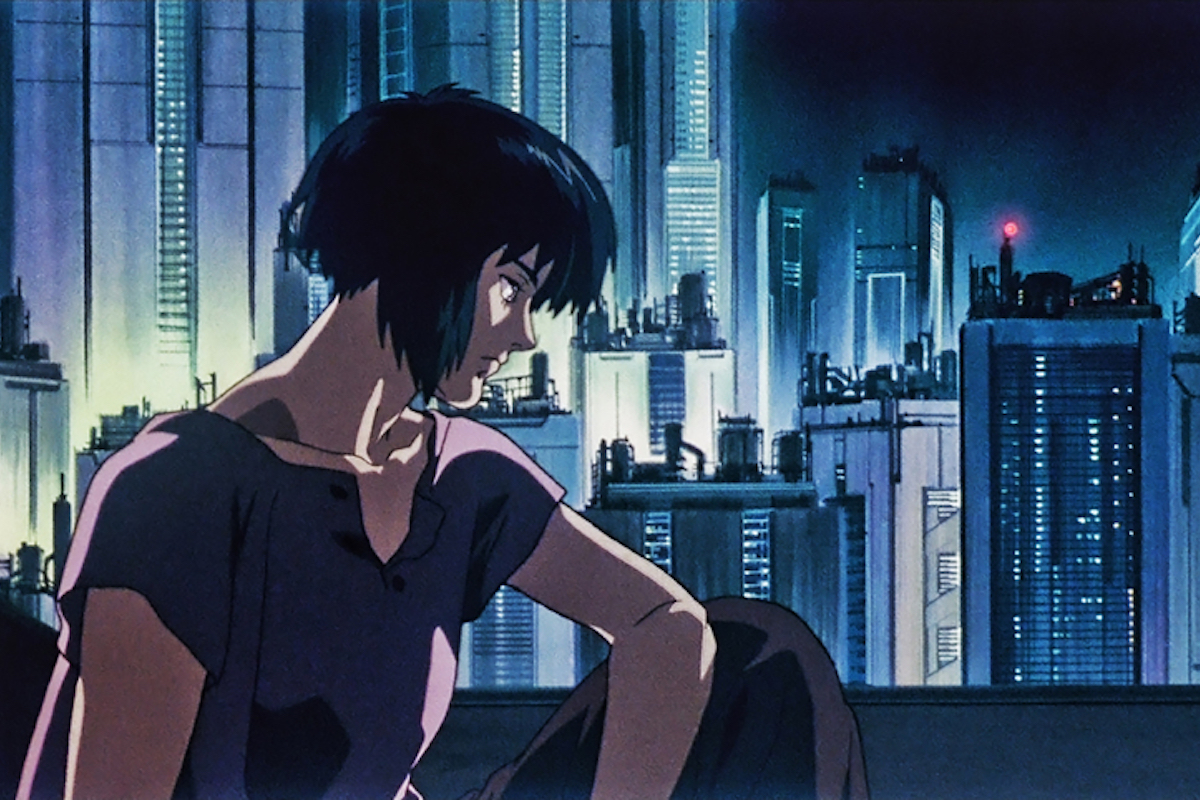
In the anime voice community, her nickname was “The Major”, deriving from her most famous role in 1995, for which she initially considered herself ill-suited, and whose philosophical dialogue she often didn’t understand. As Major Motoko Kusanagi in Ghost in the Shell and its various spin-offs, she became a memorable audio icon for tough, steely femininity, repeating the type in numerous anime and games, most memorably as the eponymous Bayonetta.
That’s not to say she couldn’t bring the ditz when she had to, also providing the Japanese voice of Phoebe from Friends, and the more sinister Dolly in the Toy Story franchise. She also added a note of invisible continuity to the Japanese version of The Mummy – whereas Rachel Weisz was replaced in the third movie by Maria Bello, Tanaka provided the voices for both, making the transition somewhat more seamless for Japanese audiences.
In the English-speaking world, the original English voice of Bayonetta, Hellena Taylor, found herself controversially edged out, partly because she was apparently “too old” now that she was in her fifties. Tanaka was already pushing 60, and still merrily barrelling along in the role of the demon-hunting witch.
Outside the voice-acting booth, she lived a relatively private life, known only for a couple of things – her fandom for the Nippon Ham Fighters baseball team, and her role as one of the “godmothers” of pandas donated to Japan by the People’s Republic of China. Her death was announced on social media by the actor Hikaru Tanaka, only then revealing that he was, in fact, her son.
Jonathan Clements is the author of Anime: A History. This article first appeared in NEO #244, 2024.
Consul Ahrman (Paavo Jännes) and his son Timo (Tauno Majuri) believe that they are being followed by enemy agents. Timo is dispatched to Muursalo with a sealed envelope, and confesses to the family’s loyal military friend Rainer Sarmo (Joel Rinne) that he might need help in outrunning would-be saboteurs. Nor are the men paranoid – it turns out that their housemaid Leena (Rauha Rentola) is indeed working for foreign powers, as is revealed when Sarmo catches her doctoring the consul’s tea so she will have time to search his safe.
Sarmo apprehends Leena, only to be disturbed in turn by a masked agent (Hilkka Helinä), who helps her escape. Later on, Sarmo runs into Berita Lopez in a restaurant, falls in love with her, and also realises that she was the masked agent. Berita is the daughter of Luigi Lopez (Wilho Imari), once the richest man in Bueno Aires, ruined by the machinations of the enemy agent Thomas Gardner (Santeri Karilo), who is somehow also responsible for Timo’s fiancée breaking up with him.
Oh dear, what a mess, like trying to make sense of Casablanca through its reflection in a dented kettle. Believe it or not, this was the winning entry in a 1940 script competition hosted by Suomi-Filmi, netting a 50,000-mark prize for its author, the journalist Uuno Hirvonen, who would go on to pen two further adventures for Rainer Sarmo, a.k.a. Dettman, a.k.a. Deadman, in international espionage. The miracle, of course, with Casablanca, which was made a year after this, is that it, too, went into production as a forgettable retooling of the conventions of bedroom farce into espionage with papers and letters of transit and whatnot. It happened to work, in exactly the same way that this film… doesn’t.
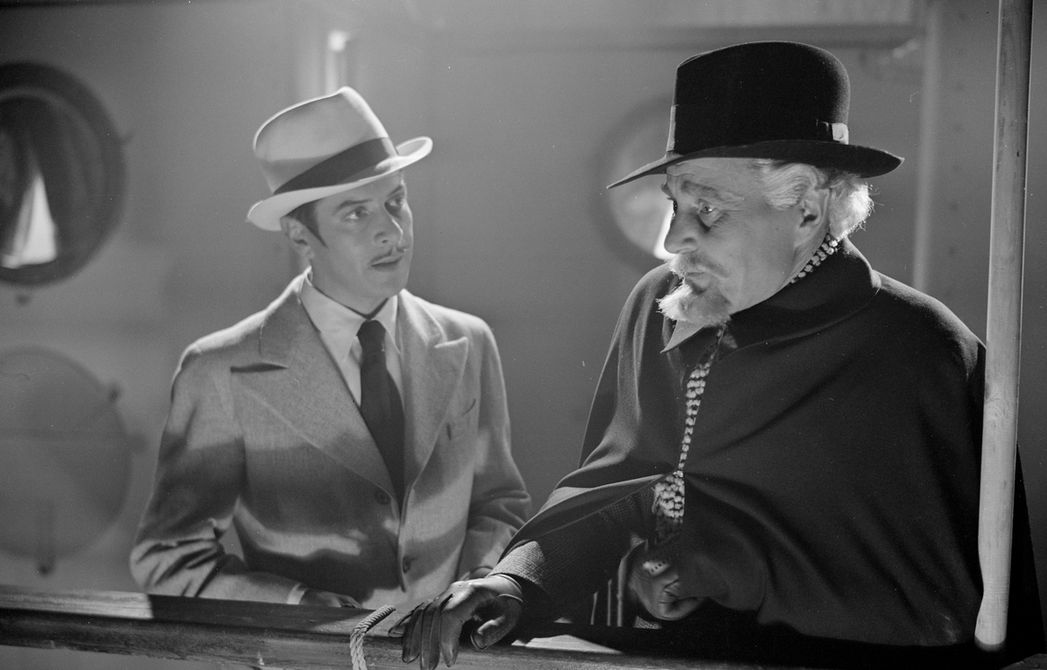
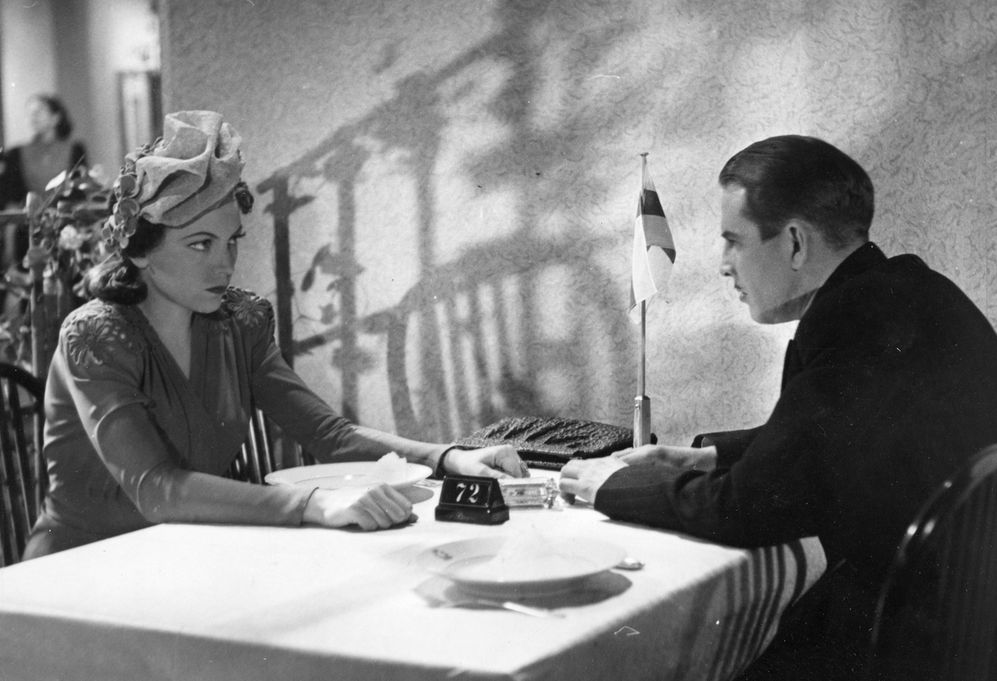
The critics, however, loved it, like a breath of freshly noir air, a worthy successor to the earlierThe Last Guest (1941). “”The suspenseful atmosphere is especially enhanced by the excellent cinematography,” enthused Toini Aaltonen in the Suomen Sosialidemikraatti. “The camera angles are varied, the lighting effects are inventive and generally the dark tone of the filming is so effective that you are startled when you come out and notice the bright daylight around you.” And, indeed, while the script might be an incomprehensible garbage fire, further compromised by the traditional coyness about revealing who the dastardly enemy power might be (Russia – it’s always Russia), the camerawork is superb. The stills from the film make it look far, far more exciting than it actually is. Hilkka Helina, in particular, is a smoldering onscreen presence, managing to make even an argument over coffee look like a battle to save the world.
Posterity has been less kind. When the film was released on television in 1989, Tapani Maskula in the Turun Sanomat let it have it with both barrels: “Watching the film today, one inevitably wonders about how bad the other stories submitted to the competition must have been when the one that won first prize doesn’t even make any sense.”
Jonathan Clements is the author of A Short History of Finland. He is watching all the Finnish films, so you don’t have to.

















 The Official Schoolgirl Milky Crisis Blog