
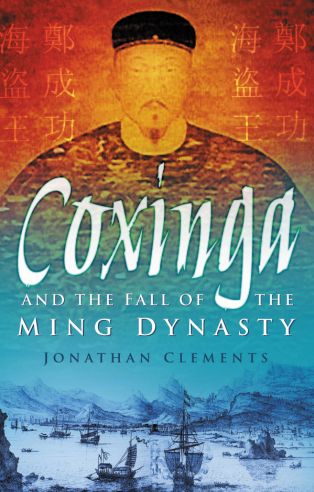
Throwing stuff in a suitcase for tomorrow’s trip. I’m off to Taiwan for a week’s work on a National Geographic documentary about Coxinga. We shot some footage in London a year ago, but this is the big one: much delayed, much rescheduled, but finally we’re off to the place he made his home.
There’s some historical consultant stuff to do for the re-enactment scenes, and then I am a talking head, discussing my long-standing interest in the man otherwise known as Zheng Chenggong, the leader of the resistance against the Manchu conquerors of China. His father was a former smuggler who became one of the richest men in the 17th century world, and an admiral in the dying days of the Ming dynasty. Coxinga was the half-Japanese son, raised as a Confucian scholar, groomed for a quiet existence as a minister, who was barely 20 years old when the Manchu invasion of China turned his world upside down.
Coxinga and the Fall of the Ming Dynasty was the first history book I wrote, back in 2003. When I first pitched it to my agent, she had to ask twice whether it was fact or fiction – the story is that fantastic. But his life has obsessed for even longer than that – I first wrote about him in 1992, as part of a course on “Pre-Modern Japanese Foreign Relations” that I took at university in Japan. So you could say it’s taken 18 years to get to this point. And there are still stories to tell about him, so many stories…


 A little namecheck for Empress Wu in today’s
 The Official Schoolgirl Milky Crisis Blog